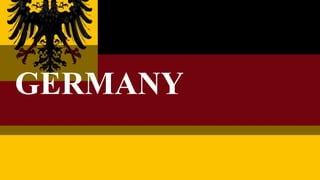
GERMANY
GERMAN
Germany includes 16
constituent states, covers
an area of 357,386 square
kilometres (137,988 sq
mi),[4] and has a largely
temperate seasonal
climate. With 83 million
inhabitants, it is the second
most populous state of
Europe after
Russia,Germany has a
population of 81 million
people.
FOOD
Brezel
Schnitzel and apple
strudel
Wurst
MONEY
EURO
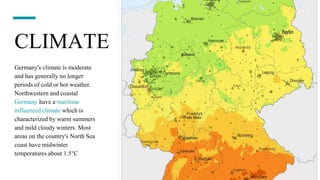
CLIMATE
Germany's climate is moderate
and has generally no longer
periods of cold or hot weather.
Northwestern and coastal
Germany have a maritime
influenced climate which is
characterized by warm summers
and mild cloudy winters. Most
areas on the country's North Sea
coast have midwinter
temperatures about 1.5°C
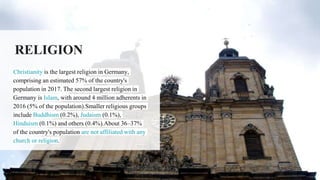
RELIGION
Christianity is the largest religion in Germany,
comprising an estimated 57% of the country's
population in 2017. The second largest religion in
Germany is Islam, with around 4 million adherents in
2016 (5% of the population).Smaller religious groups
include Buddhism (0.2%), Judaism (0.1%),
Hinduism (0.1%) and others (0.4%).About 36–37%
of the country's population are not affiliated with any
church or religion.
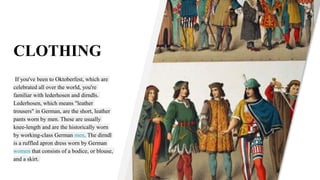
CLOTHING
If you've been to Oktoberfest, which are
celebrated all over the world, you're
familiar with lederhosen and dirndls.
Lederhosen, which means "leather
trousers" in German, are the short, leather
pants worn by men. These are usually
knee-length and are the historically worn
by working-class German men. The dirndl
is a ruffled apron dress worn by German
women that consists of a bodice, or blouse,
and a skirt.
TOP FACT
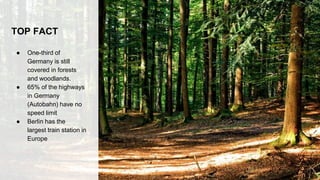
● One-third of
Germany is still
covered in forests
and woodlands.
● 65% of the highways
in Germany
(Autobahn) have no
speed limit
● Berlin has the
largest train station in
Europe
SPORT
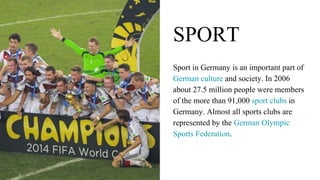
Sport in Germany is an important part of
German culture and society. In 2006
about 27.5 million people were members
of the more than 91,000 sport clubs in
Germany. Almost all sports clubs are
represented by the German Olympic
Sports Federation.

Germany

  • 1.
  • 2.
    GERMAN Germany includes 16 constituentstates, covers an area of 357,386 square kilometres (137,988 sq mi),[4] and has a largely temperate seasonal climate. With 83 million inhabitants, it is the second most populous state of Europe after Russia,Germany has a population of 81 million people.
  • 3.
  • 4.
  • 5.
    CLIMATE Germany's climate ismoderate and has generally no longer periods of cold or hot weather. Northwestern and coastal Germany have a maritime influenced climate which is characterized by warm summers and mild cloudy winters. Most areas on the country's North Sea coast have midwinter temperatures about 1.5°C
  • 6.
    RELIGION Christianity is thelargest religion in Germany, comprising an estimated 57% of the country's population in 2017. The second largest religion in Germany is Islam, with around 4 million adherents in 2016 (5% of the population).Smaller religious groups include Buddhism (0.2%), Judaism (0.1%), Hinduism (0.1%) and others (0.4%).About 36–37% of the country's population are not affiliated with any church or religion.
  • 7.
    CLOTHING If you've beento Oktoberfest, which are celebrated all over the world, you're familiar with lederhosen and dirndls. Lederhosen, which means "leather trousers" in German, are the short, leather pants worn by men. These are usually knee-length and are the historically worn by working-class German men. The dirndl is a ruffled apron dress worn by German women that consists of a bodice, or blouse, and a skirt.
  • 8.
    TOP FACT ● One-thirdof Germany is still covered in forests and woodlands. ● 65% of the highways in Germany (Autobahn) have no speed limit ● Berlin has the largest train station in Europe
  • 9.
    SPORT Sport in Germanyis an important part of German culture and society. In 2006 about 27.5 million people were members of the more than 91,000 sport clubs in Germany. Almost all sports clubs are represented by the German Olympic Sports Federation.