GEOLOGIC TIME SCALE
• EONS
–an immeasurably or indefinitely long period of
time. Lasts for hundreds of millions of years.
• ERA
– a period of time known for particular events
or developments. One Era is hundreds of
millions of years in duration.
UNITS OF TIME
• PERIOD
–This is the basic unit of geologic time. A Period
lasts tens of millions of years, which is the
time it takes to form one type of rock system.
• EPOCH
– unit of geological time during which a rock
series is deposited.
UNITS OF TIME
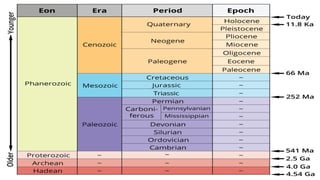
EONS
• Hadean
• Archean
• Proterozoic
• Phanerozoic
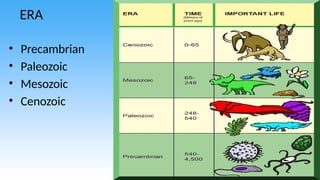
ERA
• Precambrian
• Paleozoic
• Mesozoic
• Cenozoic
PERIOD
• Precambrian
– Beginning of earth
• Paleozoic
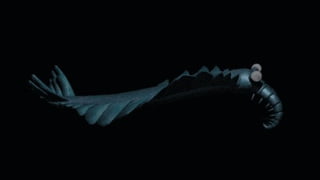
– Cambrian
The Cambrian Period marks an important
point in the history of life on Earth; it is the
time when many kinds of invertebrates
and the first vertebrates—fishes—
appeared in the fossil record.
PERIOD
• Paleozoic
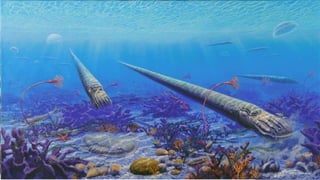
– Ordovician
During the Ordovician period, part of
the Paleozoic era, a rich variety of
marine life flourished in the vast
seas and the first primitive plants
began to appear on land.
PERIOD
• Paleozoic
– Ordovician
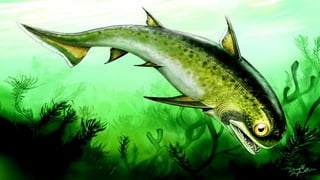
Possibly the most remarkable biological
event during the Silurian was the evolution
and diversification of fish. Not only does this
time period mark the wide and rapid spread
of jawless fish, but also the appearances of
both the first known freshwater fish and the
first fish with jaws.
PERIOD
• Paleozoic
– Devonian
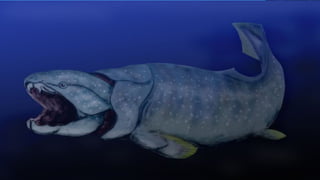
The Devonian, part of the Paleozoic era, is
otherwise known as the Age of Fishes, as it
spawned a remarkable variety of fish. The
most formidable of them were the armored
placoderms, a group that first appeared
during the Silurian with powerful jaws lined
with bladelike plates that acted as teeth.
PERIOD
• Paleozoic
– Mississippian
During the Mississippian sea lilies
dominated the seas and reptiles began to
appear on land, along with ferns. Shallow,
warm seas supported dense meadows of
crinoids and blastoids along with corals,
arthropods and mollusks.
PERIOD
• Paleozoic
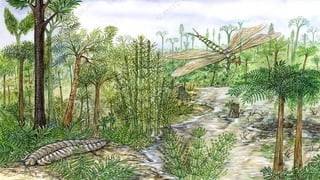
– Pennsylvanian
The Pennsylvanian was a time of major
climate change, with oscillations between
glacial and interglacial phases and overall
increased warming and drying over the
duration of the subperiod. When rainfall was
high during glacial periods, swamp forests
thrived in the equatorial regions.
PERIOD
• Paleozoic
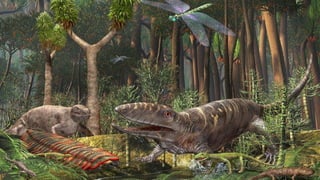
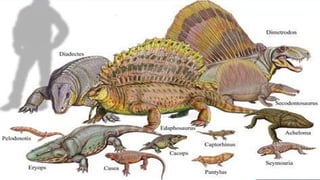
– Permian
Earth's crustal plates formed a single, massive
continent called Pangaea. In the correspondingly
large ocean, Panthalassa, marine organisms such
as brachiopods, gastropods, cephalopods
(nautiloids and ammonoids), and crinoids were
present. On land, reptiles replaced amphibians
in abundance.
PERIOD
• Mesozoic
– Triassic
The start of the Triassic period was a desolate time in
Earth's history. Something—a bout of violent volcanic
eruptions, climate change, or perhaps a fatal run-in with a
comet or asteroid—had triggered the extinction of more
than 90 percent of Earth's species. But it was also a time
of tremendous change and rejuvenation. Life that
survived repopulated the planet, diversified into freshly
exposed ecological niches, and gave rise to new
creatures, including rodent-size mammals and the first
dinosaurs.
PERIOD
• Mesozoic
– Jurassic
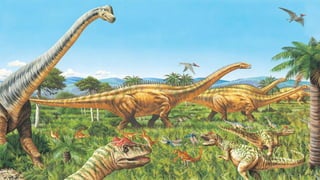
The Jurassic period (199.6 million to 145.5
million years ago) was characterized by a
warm, wet climate that gave rise to lush
vegetation and abundant life. Many new
dinosaurs emerged—in great numbers.
Among them were stegosaurs, brachiosaurs,
allosaurs, and many others.
PERIOD
• Mesozoic
– Cretaceous
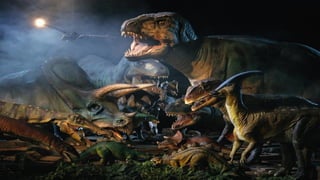
The Cretaceous Period ends with one of the greatest
known extinction events, so severe it also marks the end
of the Mesozoic Era. During this period, oceans formed
as land shifted and broke out of one big supercontinent
into smaller ones. The Cretaceous is usually noted for
being the last portion of the "Age of Dinosaurs", but that
does not mean that new kinds of dinosaurs did not
appear then. Tyrannosaurus rex arose during the
Cretaceous period about 85 million years ago, and
thrived as a top land predator.
PERIOD
• Cenozoic
– Tertiary
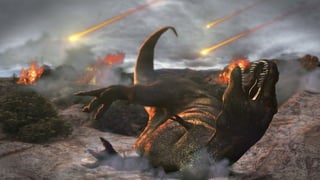
The Tertiary Period began abruptly when a
meteorite slammed into the earth, leading to
a mass extinction that wiped out about 75
percent of all species on Earth, ending the
reptile-dominant Cretaceous Period and
Mesozoic Era.
PERIOD
• Cenozoic
– Quaternary
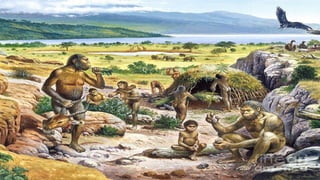
The Quaternary Period has involved dramatic
climate changes, which affected food
resources and brought about the extinction of
many species. The period also saw the rise of
a new predator: man.
Geologic Time lesson for grade 11  .pptx

Geologic Time lesson for grade 11 .pptx

  • 1.
  • 2.
    • EONS –an immeasurablyor indefinitely long period of time. Lasts for hundreds of millions of years. • ERA – a period of time known for particular events or developments. One Era is hundreds of millions of years in duration. UNITS OF TIME
  • 3.
    • PERIOD –This isthe basic unit of geologic time. A Period lasts tens of millions of years, which is the time it takes to form one type of rock system. • EPOCH – unit of geological time during which a rock series is deposited. UNITS OF TIME
  • 4.
    EONS • Hadean • Archean •Proterozoic • Phanerozoic
  • 5.
  • 6.
    PERIOD • Precambrian – Beginningof earth • Paleozoic – Cambrian The Cambrian Period marks an important point in the history of life on Earth; it is the time when many kinds of invertebrates and the first vertebrates—fishes— appeared in the fossil record.
  • 7.
    PERIOD • Paleozoic – Ordovician Duringthe Ordovician period, part of the Paleozoic era, a rich variety of marine life flourished in the vast seas and the first primitive plants began to appear on land.
  • 8.
    PERIOD • Paleozoic – Ordovician Possiblythe most remarkable biological event during the Silurian was the evolution and diversification of fish. Not only does this time period mark the wide and rapid spread of jawless fish, but also the appearances of both the first known freshwater fish and the first fish with jaws.
  • 9.
    PERIOD • Paleozoic – Devonian TheDevonian, part of the Paleozoic era, is otherwise known as the Age of Fishes, as it spawned a remarkable variety of fish. The most formidable of them were the armored placoderms, a group that first appeared during the Silurian with powerful jaws lined with bladelike plates that acted as teeth.
  • 10.
    PERIOD • Paleozoic – Mississippian Duringthe Mississippian sea lilies dominated the seas and reptiles began to appear on land, along with ferns. Shallow, warm seas supported dense meadows of crinoids and blastoids along with corals, arthropods and mollusks.
  • 11.
    PERIOD • Paleozoic – Pennsylvanian ThePennsylvanian was a time of major climate change, with oscillations between glacial and interglacial phases and overall increased warming and drying over the duration of the subperiod. When rainfall was high during glacial periods, swamp forests thrived in the equatorial regions.
  • 12.
    PERIOD • Paleozoic – Permian Earth'scrustal plates formed a single, massive continent called Pangaea. In the correspondingly large ocean, Panthalassa, marine organisms such as brachiopods, gastropods, cephalopods (nautiloids and ammonoids), and crinoids were present. On land, reptiles replaced amphibians in abundance.
  • 13.
    PERIOD • Mesozoic – Triassic Thestart of the Triassic period was a desolate time in Earth's history. Something—a bout of violent volcanic eruptions, climate change, or perhaps a fatal run-in with a comet or asteroid—had triggered the extinction of more than 90 percent of Earth's species. But it was also a time of tremendous change and rejuvenation. Life that survived repopulated the planet, diversified into freshly exposed ecological niches, and gave rise to new creatures, including rodent-size mammals and the first dinosaurs.
  • 14.
    PERIOD • Mesozoic – Jurassic TheJurassic period (199.6 million to 145.5 million years ago) was characterized by a warm, wet climate that gave rise to lush vegetation and abundant life. Many new dinosaurs emerged—in great numbers. Among them were stegosaurs, brachiosaurs, allosaurs, and many others.
  • 15.
    PERIOD • Mesozoic – Cretaceous TheCretaceous Period ends with one of the greatest known extinction events, so severe it also marks the end of the Mesozoic Era. During this period, oceans formed as land shifted and broke out of one big supercontinent into smaller ones. The Cretaceous is usually noted for being the last portion of the "Age of Dinosaurs", but that does not mean that new kinds of dinosaurs did not appear then. Tyrannosaurus rex arose during the Cretaceous period about 85 million years ago, and thrived as a top land predator.
  • 16.
    PERIOD • Cenozoic – Tertiary TheTertiary Period began abruptly when a meteorite slammed into the earth, leading to a mass extinction that wiped out about 75 percent of all species on Earth, ending the reptile-dominant Cretaceous Period and Mesozoic Era.
  • 17.
    PERIOD • Cenozoic – Quaternary TheQuaternary Period has involved dramatic climate changes, which affected food resources and brought about the extinction of many species. The period also saw the rise of a new predator: man.

Editor's Notes

  • #3 Ka- kilo annum 1k years Ma- Mega annum 1m years Ga- Giga annum 1b years
  • #4 Hadean –Archean- Proterozoic