Genomic Prediction Methods
Darby Kammeraad - Field Application Scientist
20 most promising
Biotech Technology
Providers
Top 10 Analytics
Solution Providers
Hype Cycle for
Life sciences
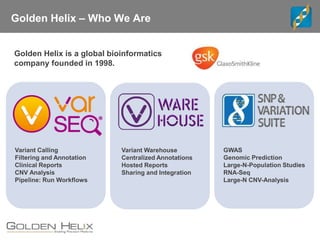
Golden Helix – Who We Are
Golden Helix is a global bioinformatics
company founded in 1998.
GWAS
Genomic Prediction
Large-N-Population Studies
RNA-Seq
Large-N CNV-Analysis
Variant Warehouse
Centralized Annotations
Hosted Reports
Sharing and Integration
Variant Calling
Filtering and Annotation
Clinical Reports
CNV Analysis
Pipeline: Run Workflows
Cited in over 1100 peer-reviewed publications
Over 350 customers globally
Golden Helix – Who We Are
When you choose a Golden Helix solution, you get more than just software
 REPUTATION
 TRUST
 EXPERIENCE
 INDUSTRY FOCUS
 THOUGHT
LEADERSHIP
 COMMUNITY
 TRAINING
 SUPPORT
 RESPONSIVENESS
 INNOVATION and
SPEED
 CUSTOMIZATIONS
Core
Features
Packages
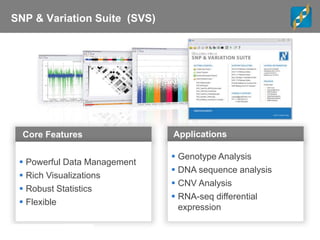
Core Features
 Powerful Data Management
 Rich Visualizations
 Robust Statistics
 Flexible
Applications
 Genotype Analysis
 DNA sequence analysis
 CNV Analysis
 RNA-seq differential
expression
SNP & Variation Suite (SVS)
Approximate Agenda
2
3
K-fold Cross Validation
1 Genomic Prediction
Use Case – Beef palatability
2 Example project in SVS
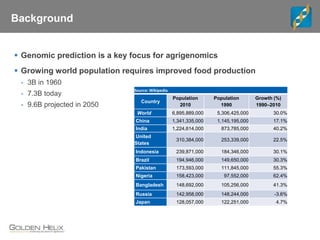
Background
 Genomic prediction is a key focus for agrigenomics
 Growing world population requires improved food production
- 3B in 1960
- 7.3B today
- 9.6B projected in 2050
Source: Wikipedia
Country
Population
2010
Population
1990
Growth (%)
1990–2010
World 6,895,889,000 5,306,425,000 30.0%
China 1,341,335,000 1,145,195,000 17.1%
India 1,224,614,000 873,785,000 40.2%
United
States
310,384,000 253,339,000 22.5%
Indonesia 239,871,000 184,346,000 30.1%
Brazil 194,946,000 149,650,000 30.3%
Pakistan 173,593,000 111,845,000 55.3%
Nigeria 158,423,000 97,552,000 62.4%
Bangladesh 148,692,000 105,256,000 41.3%
Russia 142,958,000 148,244,000 -3.6%
Japan 128,057,000 122,251,000 4.7%
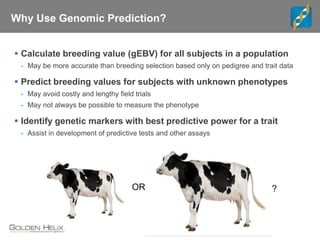
Why Use Genomic Prediction?
 Calculate breeding value (gEBV) for all subjects in a population
- May be more accurate than breeding selection based only on pedigree and trait data
 Predict breeding values for subjects with unknown phenotypes
- May avoid costly and lengthy field trials
- May not always be possible to measure the phenotype
 Identify genetic markers with best predictive power for a trait
- Assist in development of predictive tests and other assays
OR ?
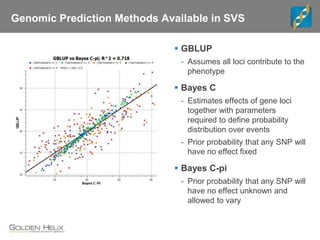
Genomic Prediction Methods Available in SVS
 GBLUP
- Assumes all loci contribute to the
phenotype
 Bayes C
- Estimates effects of gene loci
together with parameters
required to define probability
distribution over events
- Prior probability that any SNP will
have no effect fixed
 Bayes C-pi
- Prior probability that any SNP will
have no effect unknown and
allowed to vary
GBLUP
 Assumes all loci contribute to phenotype
 Incorporates genomic relationship matrix (GRM) in mixed linear model
framework to account for relatedness among samples
 Calculates allele substitution effect (ASE) for each SNP
 Computes estimated breeding values (GEBV) and predicted phenotypes
for all samples
 Also calculates:
- Pseudo-heritability of trait
- Genetic component of trait variance
- Error component of trait variance
Bayes C, C-pi
 Bayesian methods predict effects of loci together with parameters
required to define probability distribution over effects
 Gibbs sampling (MCMC) used to obtain parameter estimates
 The π (pi) parameter is the prior probability that any SNP will have no
effect.
 Pi is fixed in Bayes C, typically at π=0.9
 Pi is considered unknown and allowed to vary by Bayes C-pi
 Both methods return ASE, gEBV, other parameters of final model
 SVS implementation incorporates GRM
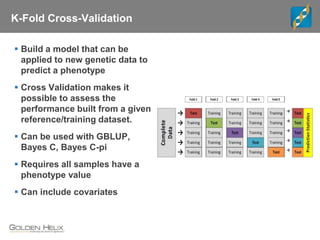
K-Fold Cross-Validation
 Build a model that can be
applied to new genetic data to
predict a phenotype
 Cross Validation makes it
possible to assess the
performance built from a given
reference/training dataset.
 Can be used with GBLUP,
Bayes C, Bayes C-pi
 Requires all samples have a
phenotype value
 Can include covariates
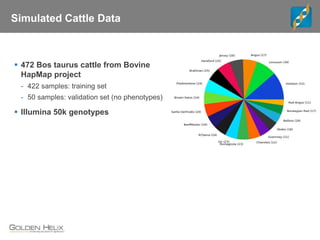
Simulated Cattle Data
 472 Bos taurus cattle from Bovine
HapMap project
- 422 samples: training set
- 50 samples: validation set (no phenotypes)
 Illumina 50k genotypes
Use Case – Improving Beef Quality
 Focus of Research
- Overall: Beef healthfulness
- Phenotypes measured:
- WB-Steak Shear Force
- Tenderness
- Juiciness
- Connective tissue
- Beef Flavor
 Develop tools to select for:
- Nutritious beef
- Tasty beef
- Improved production
 Dr. Raluca Mateescu
- Department of Animal Sciences at University of
Florida
- Journal of Animal Science 90, 4248-4255 (2012)
- Link to slides
http://goldenhelix.com/media/pdfs/webcasts/Golde
nHelix_July2015_Handout.pdf
- Link to webcast
https://www.youtube.com/watch?v=e6Czycr_DnE
Use Case – Improving Beef Quality
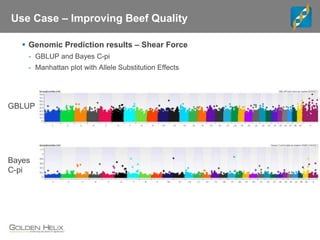
 Genomic Prediction results – Shear Force
- GBLUP and Bayes C-pi
- Manhattan plot with Allele Substitution Effects
GBLUP
Bayes
C-pi
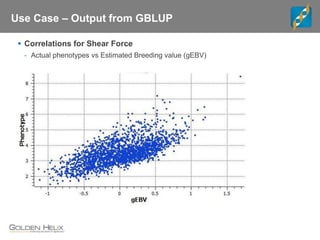
Use Case – Output from GBLUP
 Correlations for Shear Force
- Actual phenotypes vs Estimated Breeding value (gEBV)
Use Case – Success
 Outcome of the study
- Identified markers associated with beef quality
- SAPS3: modulates protein phosphatase catalytic subunits
- CAPN1: modulates proteolysis of cytoskeletal remodeling and
signal transduction
- CHI3L2: involved in cartilage biogenesis
- CA10: catalyzes reversible hydration of carbon dioxide
- GPHN: involved in membrane protein-cytoskeleton interactions
Additional Information
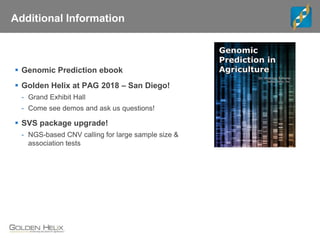
 Genomic Prediction ebook
 Golden Helix at PAG 2018 – San Diego!
- Grand Exhibit Hall
- Come see demos and ask us questions!
 SVS package upgrade!
- NGS-based CNV calling for large sample size &
association tests
Questions or
more info:
 Email
info@goldenhelix.com
 Request an evaluation of
the software at
www.goldenhelix.com
 Check out our abstract
competition!

Genomic Prediction Methods in SVS

  • 1.
    Genomic Prediction Methods DarbyKammeraad - Field Application Scientist 20 most promising Biotech Technology Providers Top 10 Analytics Solution Providers Hype Cycle for Life sciences
  • 2.
    Golden Helix –Who We Are Golden Helix is a global bioinformatics company founded in 1998. GWAS Genomic Prediction Large-N-Population Studies RNA-Seq Large-N CNV-Analysis Variant Warehouse Centralized Annotations Hosted Reports Sharing and Integration Variant Calling Filtering and Annotation Clinical Reports CNV Analysis Pipeline: Run Workflows
  • 3.
    Cited in over1100 peer-reviewed publications
  • 4.
  • 5.
    Golden Helix –Who We Are When you choose a Golden Helix solution, you get more than just software  REPUTATION  TRUST  EXPERIENCE  INDUSTRY FOCUS  THOUGHT LEADERSHIP  COMMUNITY  TRAINING  SUPPORT  RESPONSIVENESS  INNOVATION and SPEED  CUSTOMIZATIONS
  • 6.
    Core Features Packages Core Features  PowerfulData Management  Rich Visualizations  Robust Statistics  Flexible Applications  Genotype Analysis  DNA sequence analysis  CNV Analysis  RNA-seq differential expression SNP & Variation Suite (SVS)
  • 7.
    Approximate Agenda 2 3 K-fold CrossValidation 1 Genomic Prediction Use Case – Beef palatability 2 Example project in SVS
  • 8.
    Background  Genomic predictionis a key focus for agrigenomics  Growing world population requires improved food production - 3B in 1960 - 7.3B today - 9.6B projected in 2050 Source: Wikipedia Country Population 2010 Population 1990 Growth (%) 1990–2010 World 6,895,889,000 5,306,425,000 30.0% China 1,341,335,000 1,145,195,000 17.1% India 1,224,614,000 873,785,000 40.2% United States 310,384,000 253,339,000 22.5% Indonesia 239,871,000 184,346,000 30.1% Brazil 194,946,000 149,650,000 30.3% Pakistan 173,593,000 111,845,000 55.3% Nigeria 158,423,000 97,552,000 62.4% Bangladesh 148,692,000 105,256,000 41.3% Russia 142,958,000 148,244,000 -3.6% Japan 128,057,000 122,251,000 4.7%
  • 9.
    Why Use GenomicPrediction?  Calculate breeding value (gEBV) for all subjects in a population - May be more accurate than breeding selection based only on pedigree and trait data  Predict breeding values for subjects with unknown phenotypes - May avoid costly and lengthy field trials - May not always be possible to measure the phenotype  Identify genetic markers with best predictive power for a trait - Assist in development of predictive tests and other assays OR ?
  • 10.
    Genomic Prediction MethodsAvailable in SVS  GBLUP - Assumes all loci contribute to the phenotype  Bayes C - Estimates effects of gene loci together with parameters required to define probability distribution over events - Prior probability that any SNP will have no effect fixed  Bayes C-pi - Prior probability that any SNP will have no effect unknown and allowed to vary
  • 11.
    GBLUP  Assumes allloci contribute to phenotype  Incorporates genomic relationship matrix (GRM) in mixed linear model framework to account for relatedness among samples  Calculates allele substitution effect (ASE) for each SNP  Computes estimated breeding values (GEBV) and predicted phenotypes for all samples  Also calculates: - Pseudo-heritability of trait - Genetic component of trait variance - Error component of trait variance
  • 12.
    Bayes C, C-pi Bayesian methods predict effects of loci together with parameters required to define probability distribution over effects  Gibbs sampling (MCMC) used to obtain parameter estimates  The π (pi) parameter is the prior probability that any SNP will have no effect.  Pi is fixed in Bayes C, typically at π=0.9  Pi is considered unknown and allowed to vary by Bayes C-pi  Both methods return ASE, gEBV, other parameters of final model  SVS implementation incorporates GRM
  • 13.
    K-Fold Cross-Validation  Builda model that can be applied to new genetic data to predict a phenotype  Cross Validation makes it possible to assess the performance built from a given reference/training dataset.  Can be used with GBLUP, Bayes C, Bayes C-pi  Requires all samples have a phenotype value  Can include covariates
  • 14.
    Simulated Cattle Data 472 Bos taurus cattle from Bovine HapMap project - 422 samples: training set - 50 samples: validation set (no phenotypes)  Illumina 50k genotypes
  • 16.
    Use Case –Improving Beef Quality  Focus of Research - Overall: Beef healthfulness - Phenotypes measured: - WB-Steak Shear Force - Tenderness - Juiciness - Connective tissue - Beef Flavor  Develop tools to select for: - Nutritious beef - Tasty beef - Improved production  Dr. Raluca Mateescu - Department of Animal Sciences at University of Florida - Journal of Animal Science 90, 4248-4255 (2012) - Link to slides http://goldenhelix.com/media/pdfs/webcasts/Golde nHelix_July2015_Handout.pdf - Link to webcast https://www.youtube.com/watch?v=e6Czycr_DnE
  • 17.
    Use Case –Improving Beef Quality  Genomic Prediction results – Shear Force - GBLUP and Bayes C-pi - Manhattan plot with Allele Substitution Effects GBLUP Bayes C-pi
  • 18.
    Use Case –Output from GBLUP  Correlations for Shear Force - Actual phenotypes vs Estimated Breeding value (gEBV)
  • 19.
    Use Case –Success  Outcome of the study - Identified markers associated with beef quality - SAPS3: modulates protein phosphatase catalytic subunits - CAPN1: modulates proteolysis of cytoskeletal remodeling and signal transduction - CHI3L2: involved in cartilage biogenesis - CA10: catalyzes reversible hydration of carbon dioxide - GPHN: involved in membrane protein-cytoskeleton interactions
  • 20.
    Additional Information  GenomicPrediction ebook  Golden Helix at PAG 2018 – San Diego! - Grand Exhibit Hall - Come see demos and ask us questions!  SVS package upgrade! - NGS-based CNV calling for large sample size & association tests
  • 21.
    Questions or more info: Email info@goldenhelix.com  Request an evaluation of the software at www.goldenhelix.com  Check out our abstract competition!