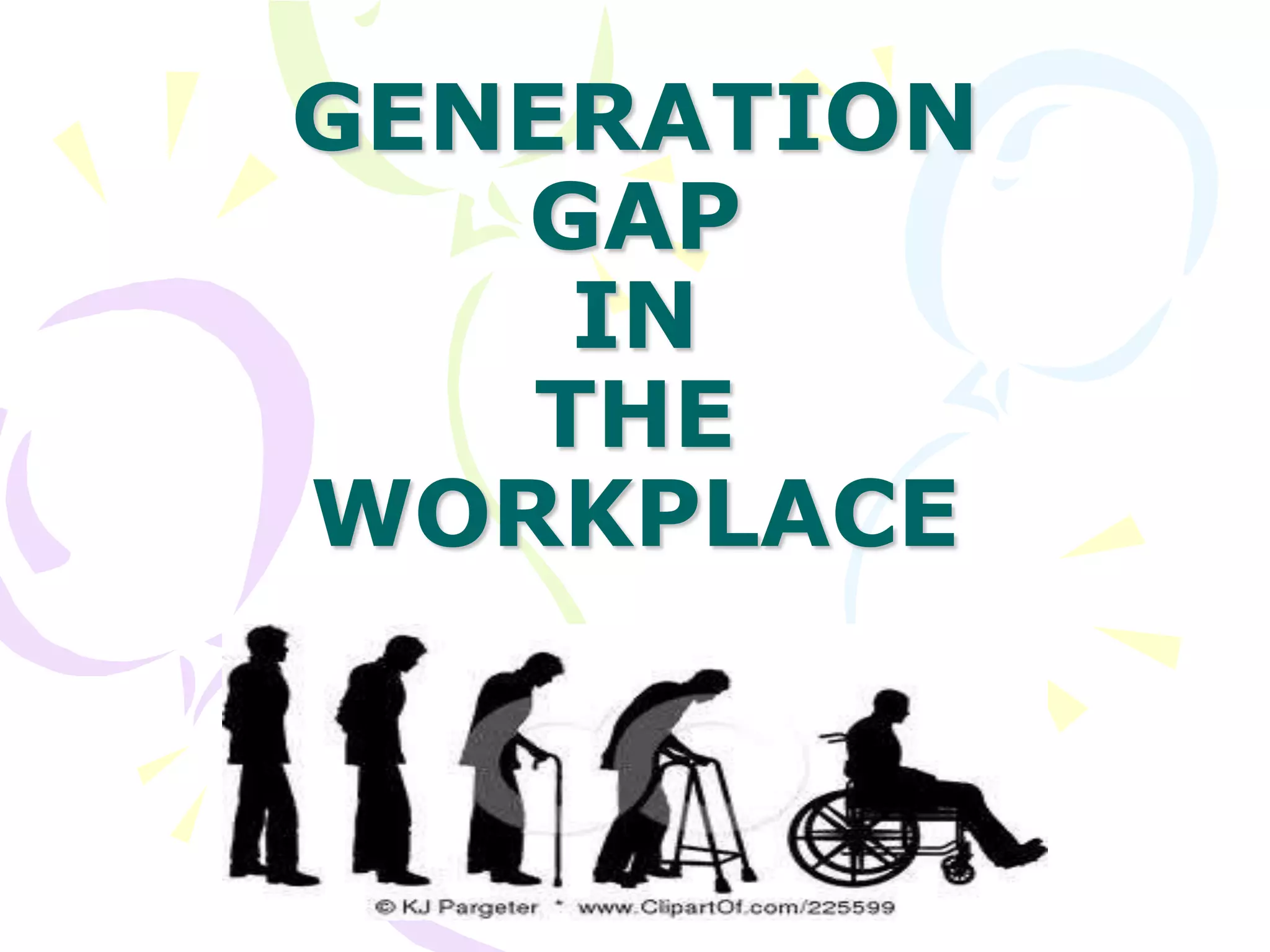
GENERATION
GAP
IN
THE
WORKPLACE
WHAT IS GENERATION GAP ?
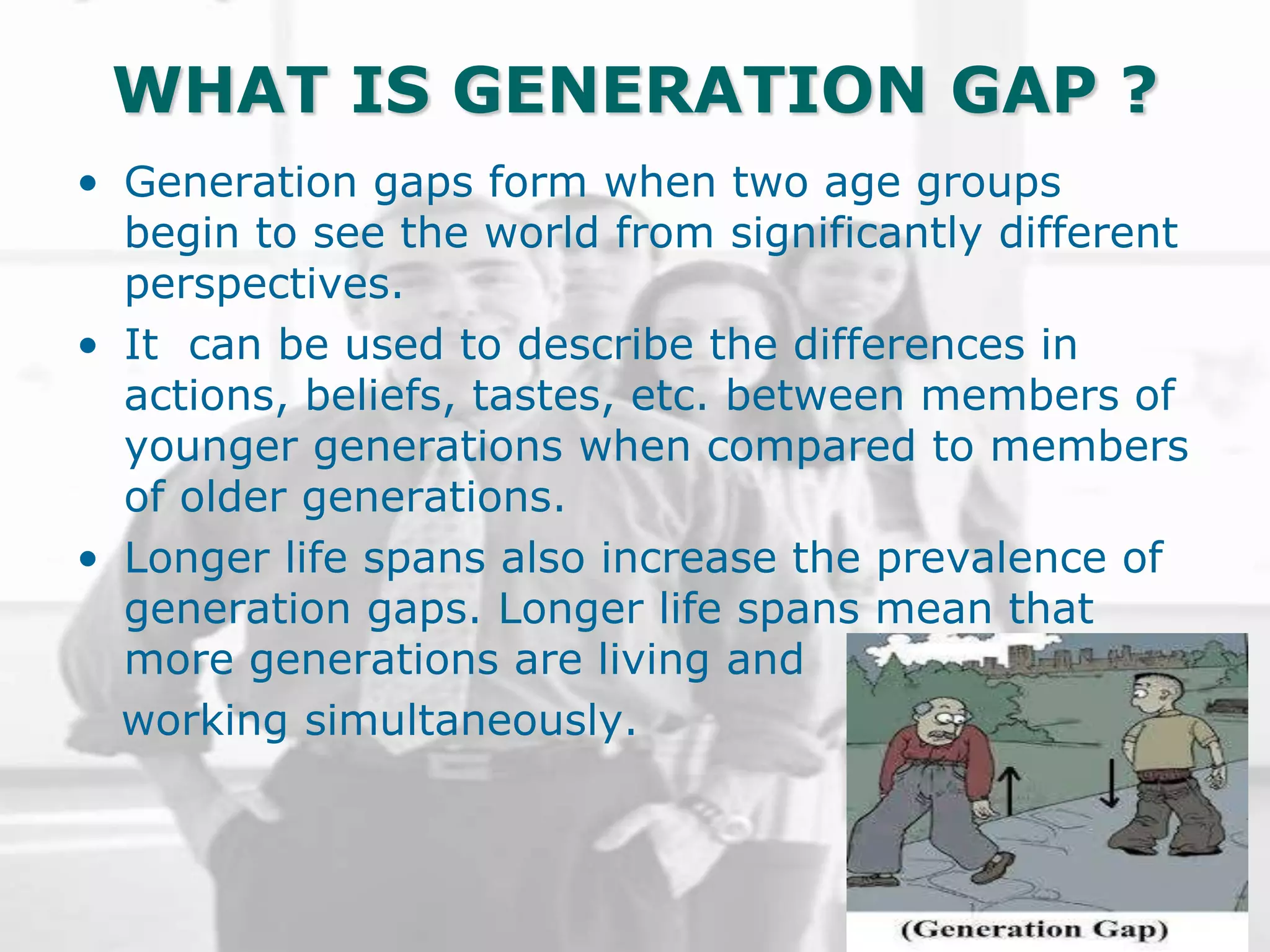
• Generation gaps form when two age groups
begin to see the world from significantly different
perspectives.
• It can be used to describe the differences in
actions, beliefs, tastes, etc. between members of
younger generations when compared to members
of older generations.
• Longer life spans also increase the prevalence of
generation gaps. Longer life spans mean that
more generations are living and
working simultaneously.
Generation gap at the workplace
• Generation gaps play a big role in business, as
companies must find a way to balance the needs
and views of individuals from differing age
groups.
• There are four distinct generations in the
workplace, each with its own worldview and its
own work ethic.
–
–
–
–

Veterans (born 1922-1945)
Baby Boomers (born 1946-1964)
Generation X (born 1965-1980)
Generation Y (born 1981-2000)
Veterans (born 1922-1945)
• When it comes to work, the company comes first.
• They believe in starting at the bottom, paying
dues, and working your way up through
experience and seniority.
• The veteran's management style is firm and
direct.
• They prefer face-to-face or phone communication.
Baby Boomers (born 1946-1964)
• They have a strong work ethic, though they may
not be as loyal to one company.
• When it comes to management, boomers are all
about meetings; employees should feel part of a
team.
• They are available by phone 24/7. They always
check and leave voicemail messages.
Generation X (born 1965-1980)
• They work hard for the company, but wouldn't
hesitate to switch jobs if a better offer comes
along.
• Generation Xers believe that people will produce
the best results if they're given the freedom to be
creative.
• They use email for communication.
Generation Y (born 1981-2000)
• They believe they have some great ideas so they
just want to do their thing and the results will
follow.
• For them working from home is as good as the
office as long as work gets done.
• Management is a snap, everyone simply checks
in with the online project management tool and
updates his or her status.
• Texting is the best way of communication.
Difficulty of the Generation Gap
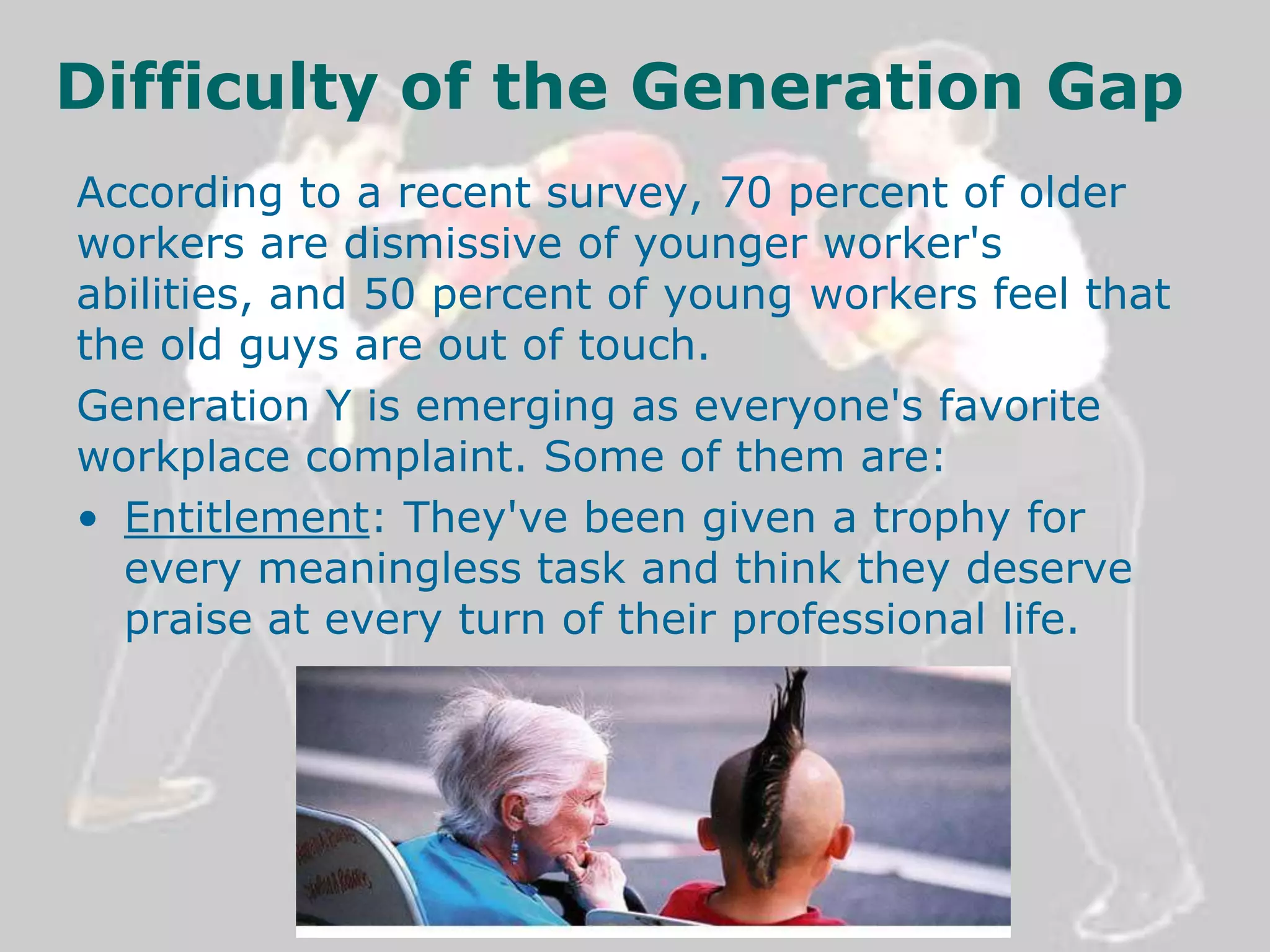
According to a recent survey, 70 percent of older
workers are dismissive of younger worker's
abilities, and 50 percent of young workers feel that
the old guys are out of touch.
Generation Y is emerging as everyone's favorite
workplace complaint. Some of them are:
• Entitlement: They've been given a trophy for
every meaningless task and think they deserve
praise at every turn of their professional life.
• Too much flexibility: They want to be able to
work from home, take days off, and come in at
odd hours, as long as they get the work done.
• Relationships over loyalty: They couldn't care less
about the company, but will work hard for people
who they consider "friends." Managers must walk
the fine line between friend and boss.
• Oversharing: In the social networking age, the
line between personal and professional life is
non-existent, and some members of Generation Y
have no qualms about posting work-related
information on social networking sites.
Bridging Generation Gaps
In the ideal intergenerational workplace, every
team member brings the best qualities of his or her
generation to increase overall productivity, improve
creativity and boost morale.
• Introducing Mentoring programs: Both Baby
Boomers and Generation Y put a high value on
relationships. Boomers want the team to feel like
a "family" and Generation Y wants to be
surrounded by "friends." By becoming a
mentor, the Boomer can capitalize on her
experience while the Gen Y’er can get constant
feedback about his ideas from someone he trusts
(something he prizes).
• Independence: when a younger worker has been
given an assignment, that worker should have
the freedom and independence to work on it on
his or her own time. Since younger workers crave
feedback, older managers can be confident that
they'll get updates from the workers soon
enough.
• Trust: - In order to overcome the generation
gap, trust is important. This means that the
person should trust another person to give
positive feedback. The feedback, in turn, can help
a person learn.
Conclusion
In the end, building a solid bridge requires that
both sides meet each other halfway. If the older
worker prefers phone calls and the younger workers
texts, then compromise over e-mail. If the Boomer
loves daily meetings and the Gen Yer likes to work
from home three days a week, then they should
sign up for Web conferencing. When everybody
gets something he or she wants, everybody wins.
Generation gap at workplace in todays world

Generation gap at workplace in todays world

  • 1.
  • 2.
    WHAT IS GENERATIONGAP ? • Generation gaps form when two age groups begin to see the world from significantly different perspectives. • It can be used to describe the differences in actions, beliefs, tastes, etc. between members of younger generations when compared to members of older generations. • Longer life spans also increase the prevalence of generation gaps. Longer life spans mean that more generations are living and working simultaneously.
  • 3.
    Generation gap atthe workplace • Generation gaps play a big role in business, as companies must find a way to balance the needs and views of individuals from differing age groups. • There are four distinct generations in the workplace, each with its own worldview and its own work ethic. – – – – Veterans (born 1922-1945) Baby Boomers (born 1946-1964) Generation X (born 1965-1980) Generation Y (born 1981-2000)
  • 4.
    Veterans (born 1922-1945) •When it comes to work, the company comes first. • They believe in starting at the bottom, paying dues, and working your way up through experience and seniority. • The veteran's management style is firm and direct. • They prefer face-to-face or phone communication.
  • 5.
    Baby Boomers (born1946-1964) • They have a strong work ethic, though they may not be as loyal to one company. • When it comes to management, boomers are all about meetings; employees should feel part of a team. • They are available by phone 24/7. They always check and leave voicemail messages.
  • 6.
    Generation X (born1965-1980) • They work hard for the company, but wouldn't hesitate to switch jobs if a better offer comes along. • Generation Xers believe that people will produce the best results if they're given the freedom to be creative. • They use email for communication.
  • 7.
    Generation Y (born1981-2000) • They believe they have some great ideas so they just want to do their thing and the results will follow. • For them working from home is as good as the office as long as work gets done. • Management is a snap, everyone simply checks in with the online project management tool and updates his or her status. • Texting is the best way of communication.
  • 8.
    Difficulty of theGeneration Gap According to a recent survey, 70 percent of older workers are dismissive of younger worker's abilities, and 50 percent of young workers feel that the old guys are out of touch. Generation Y is emerging as everyone's favorite workplace complaint. Some of them are: • Entitlement: They've been given a trophy for every meaningless task and think they deserve praise at every turn of their professional life.
  • 9.
    • Too muchflexibility: They want to be able to work from home, take days off, and come in at odd hours, as long as they get the work done. • Relationships over loyalty: They couldn't care less about the company, but will work hard for people who they consider "friends." Managers must walk the fine line between friend and boss. • Oversharing: In the social networking age, the line between personal and professional life is non-existent, and some members of Generation Y have no qualms about posting work-related information on social networking sites.
  • 10.
    Bridging Generation Gaps Inthe ideal intergenerational workplace, every team member brings the best qualities of his or her generation to increase overall productivity, improve creativity and boost morale. • Introducing Mentoring programs: Both Baby Boomers and Generation Y put a high value on relationships. Boomers want the team to feel like a "family" and Generation Y wants to be surrounded by "friends." By becoming a mentor, the Boomer can capitalize on her experience while the Gen Y’er can get constant feedback about his ideas from someone he trusts (something he prizes).
  • 11.
    • Independence: whena younger worker has been given an assignment, that worker should have the freedom and independence to work on it on his or her own time. Since younger workers crave feedback, older managers can be confident that they'll get updates from the workers soon enough. • Trust: - In order to overcome the generation gap, trust is important. This means that the person should trust another person to give positive feedback. The feedback, in turn, can help a person learn.
  • 12.
    Conclusion In the end,building a solid bridge requires that both sides meet each other halfway. If the older worker prefers phone calls and the younger workers texts, then compromise over e-mail. If the Boomer loves daily meetings and the Gen Yer likes to work from home three days a week, then they should sign up for Web conferencing. When everybody gets something he or she wants, everybody wins.