L I G H T A S A N
E L E C T RO M AG N E T I C WAV E
T E A C H E R : E L A I S A B A S S I G
LESSON OBJECTIVES
 define electromagnetic waves and spectrum,
 differentiate the three phenomena that describe
electromagnetic energy; and
 appreciate Maxwell’s synthesis of Electricity,
magnetism and optics by knowing the history and
influential people that contributed to the formulated
ideas.
the number of occurrences of a
repeating event per unit of time.
HINT:
N C Y E Q U E F R
ANSWER: FREQUENCY
Next Jumble
distance between corresponding
points of two consecutive waves
HINT:
N G T H V E L E W A
ANSWER:WAVELENGTH
Next Jumble
a class of physical phenomena that
are mediated by magnetic field
HINT:
I S M M T N G E A
ANSWER: MAGNETISM
Next Jumble
a branch of physics which involves
the study of electromagnetic force
HINT:
E T I S M E L E C M A G N T R O
ANSWER: ELECTROMAGNETISM
Next Jumble
the range of all types of EM radiation
HINT:
N E T C E L E R M O A T G I C
T R U M E C S P
ANSWER: ELECTROMAGNETIC
SPECTRUM
Next Jumble
ELECTROMAGNETIC WAVES
All electromagnetic waves:
transfer energy from the source of the waves to an absorber.
can travel through a vacuum such as in space.
all travel at the same velocity through a vacuum.
Electromagnetic waves or EM waves are waves that are
created as a result of vibrations between an electric field
and a magnetic field.
ELECTROMAGNETIC SPECTRUM
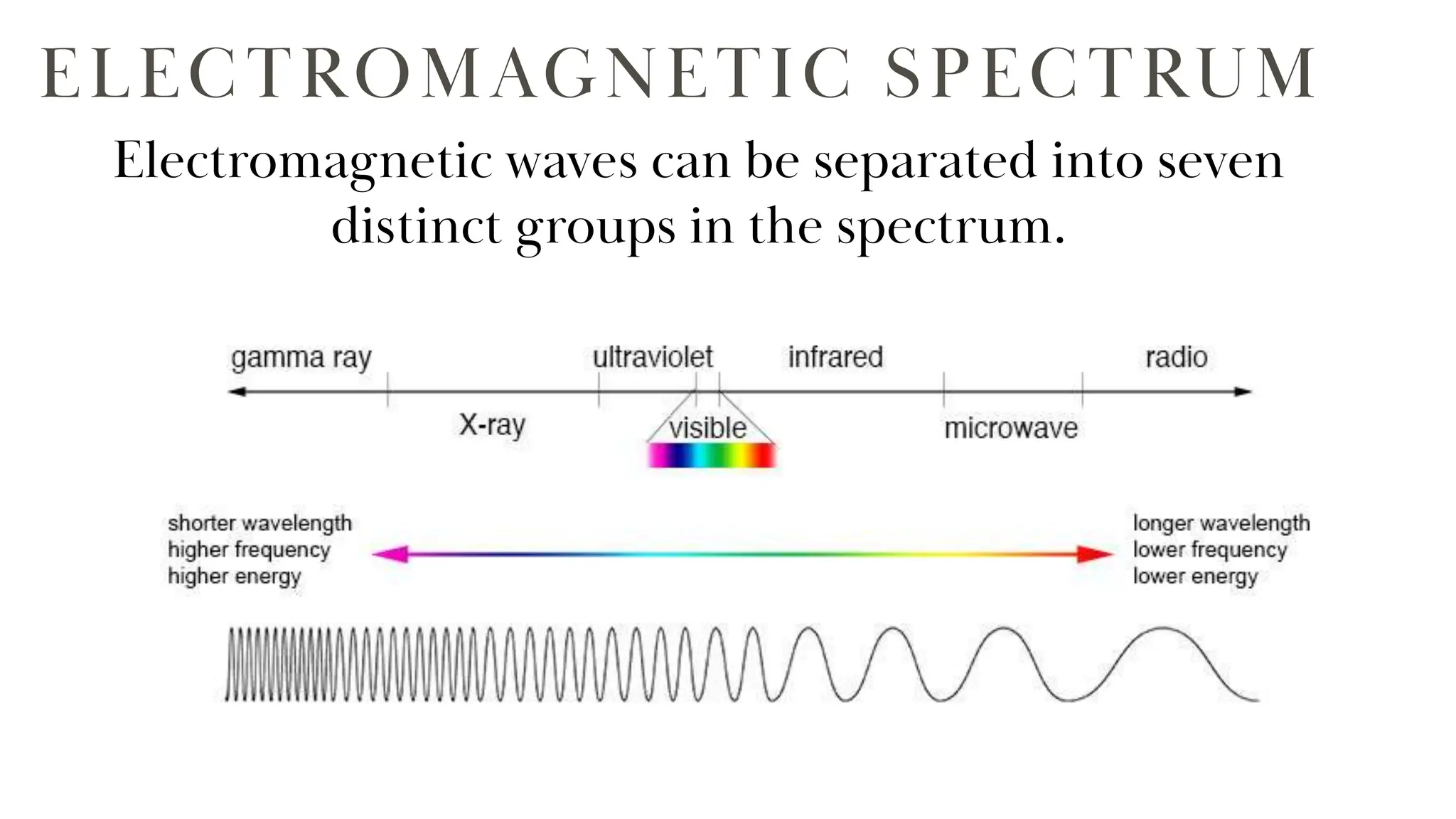
Electromagnetic waves form a continuous spectrum of
waves. This includes:
waves with a very short wavelength, high frequency and
high energy.
waves with a very long wavelength, low frequency and low
energy.
ELECTROMAGNETIC SPECTRUM
Electromagnetic waves can be separated into seven
distinct groups in the spectrum.
ELECTROMAGNETIC SPECTRUM
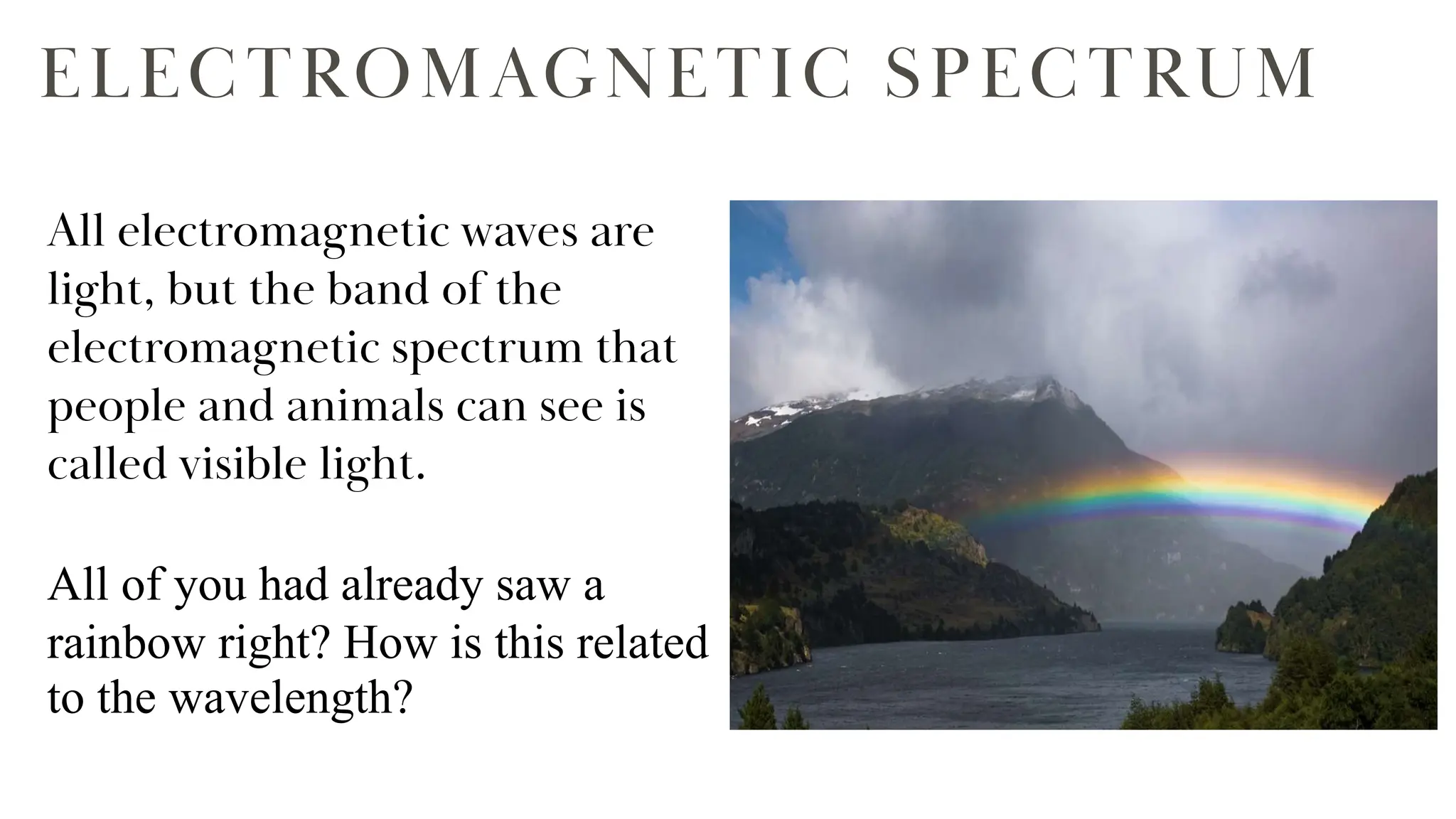
All electromagnetic waves are
light, but the band of the
electromagnetic spectrum that
people and animals can see is
called visible light.
All of you had already saw a
rainbow right? How is this related
to the wavelength?
ELECTROMAGNETIC ENERGY
The terms of light, electromagnetic waves, and
radiation all refer to the same physical
phenomenon which is called the electromagnetic
energy.
This energy can be described by frequency,
wavelength, or energy. All three are related
FREQUENCY
 the number of crests that pass a given point within one
second is described as the frequency of the Wave.
 One wave – one cycle – per second is called a Hertz.
 Radio and microwaves in EM spectrum are usually described
in Frequency.
WAVELENGTH
 Electromagnetic waves have crests and troughs, The
distance between crests is the wavelength.
Infrared and visible light in terms of wavelength are
usually described in meters.
ENERGY
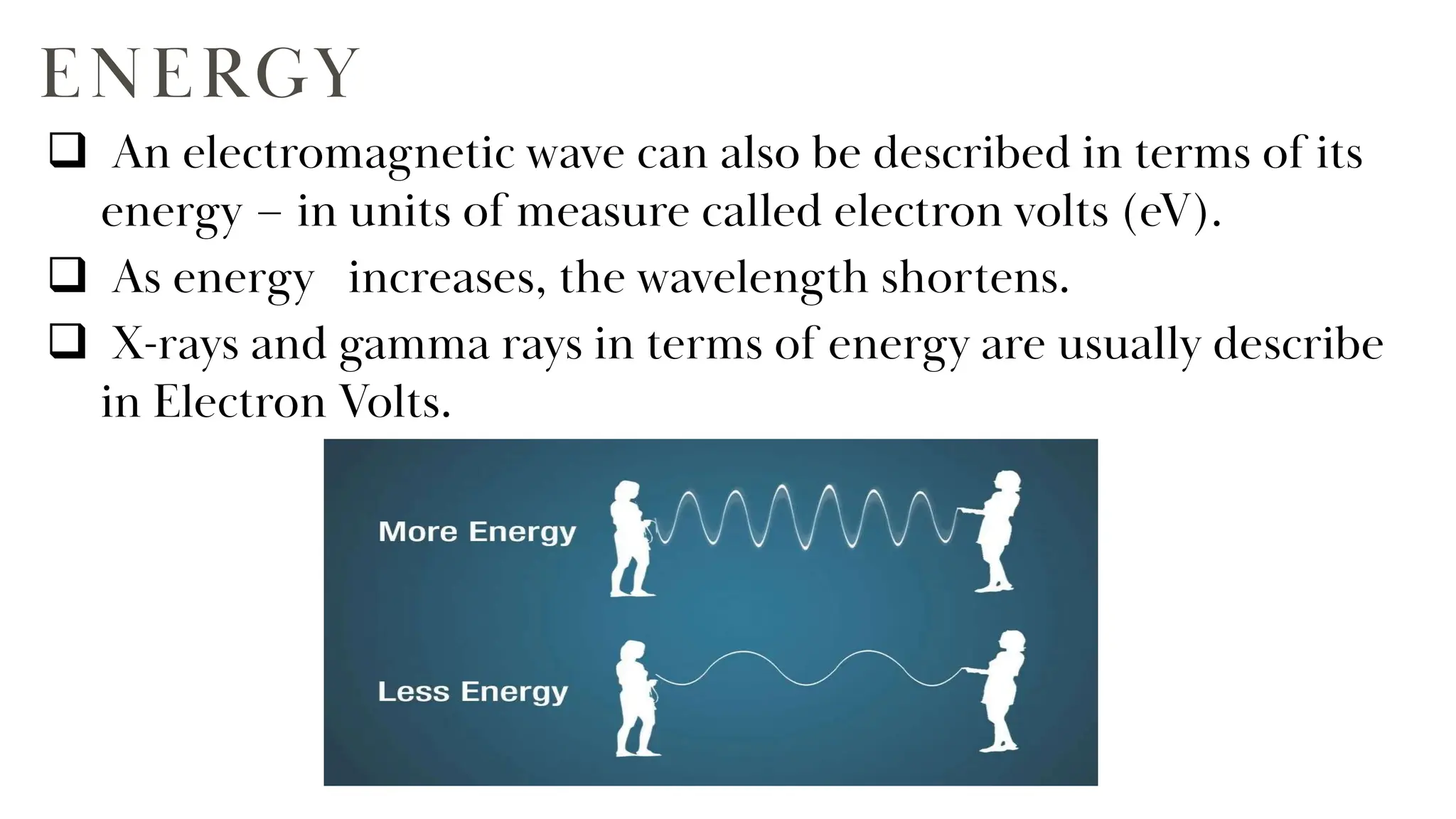
 An electromagnetic wave can also be described in terms of its
energy – in units of measure called electron volts (eV).
 As energy increases, the wavelength shortens.
 X-rays and gamma rays in terms of energy are usually describe
in Electron Volts.
In 1873, a Scottish physicist named
James Clerk Maxwell published a theory
that accounted for the physical origins
of light.
In 1803, Thomas Young presented his
experimental results on the nature of light
MAXWELL’S SYNTHESIS
 Maxwell's work synthesized the two ideas ELECTRICITY and
MAGNETISM which had previously been considered separate
phenomena. His new theory was aptly named a theory of
“electromagnetism”.
Maxwell and other physicists began exploring their
implications and testing their predictions. One
prediction that came from Maxwell's equations was that a
charge moving back and forth in a periodic fashion
would create an oscillating electric field.
MAXWELL’S SYNTHESIS
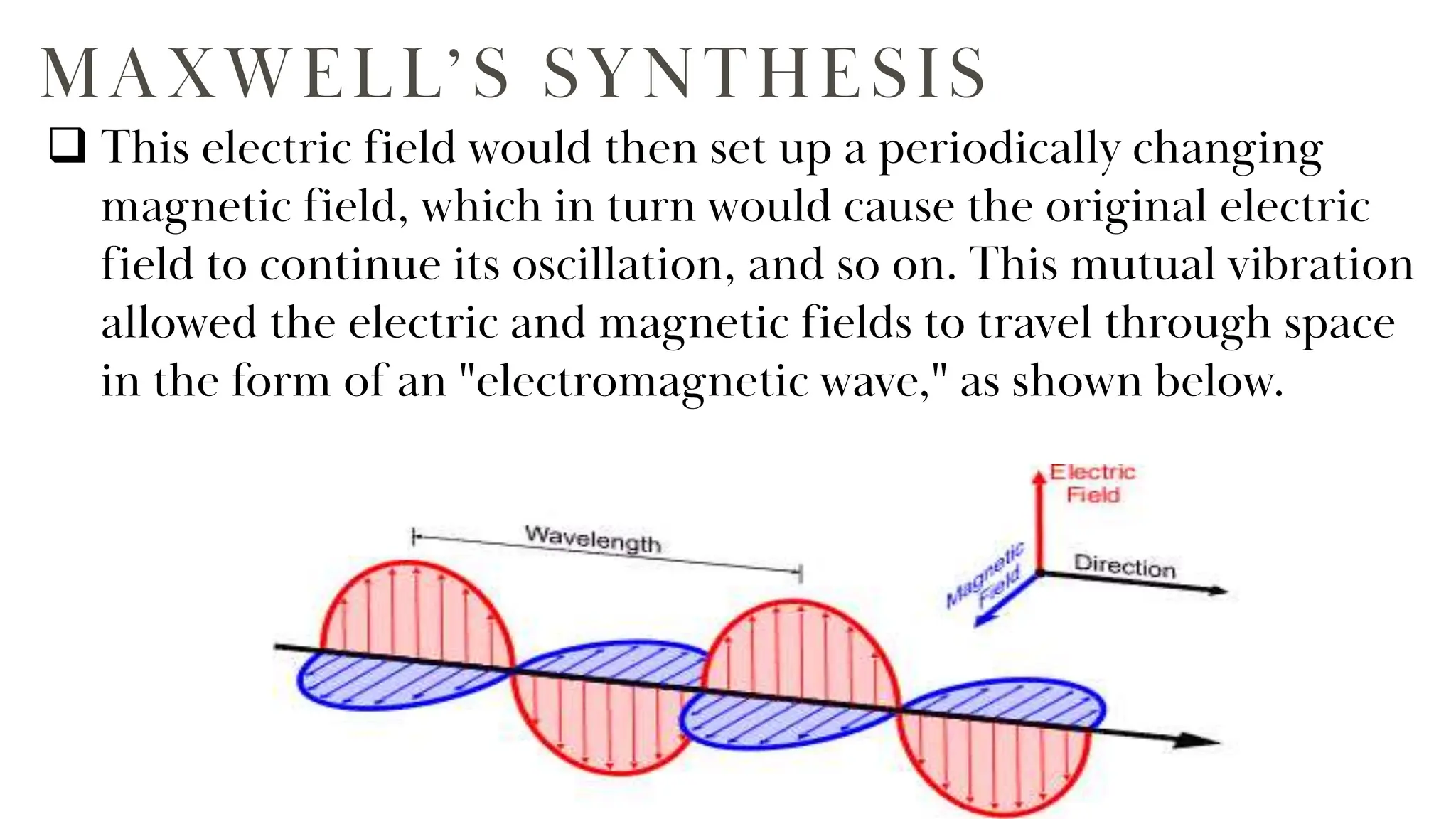
 This electric field would then set up a periodically changing
magnetic field, which in turn would cause the original electric
field to continue its oscillation, and so on. This mutual vibration
allowed the electric and magnetic fields to travel through space
in the form of an "electromagnetic wave," as shown below.
MAXWELL’S SYNTHESIS
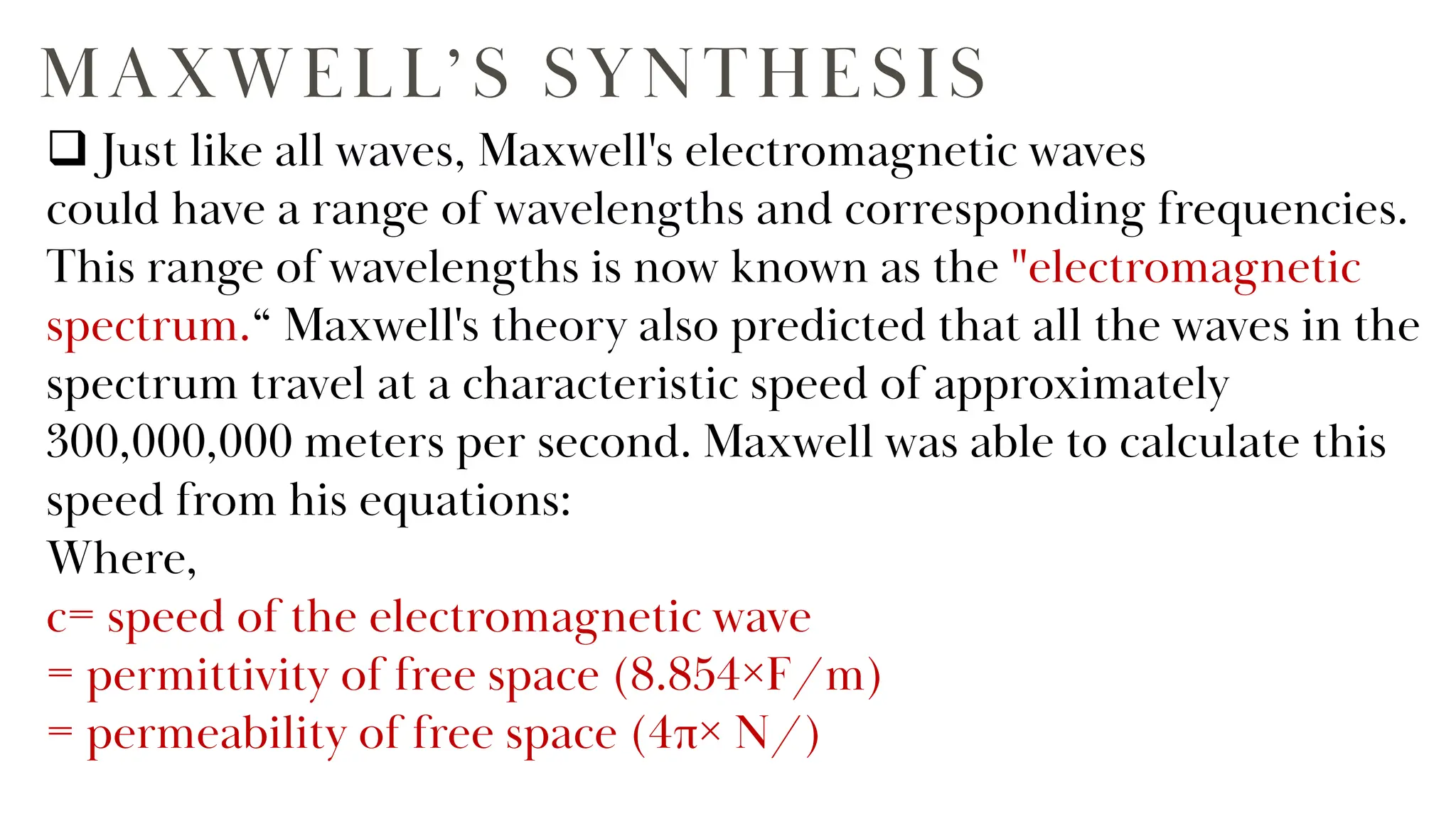
 Just like all waves, Maxwell's electromagnetic waves
could have a range of wavelengths and corresponding frequencies.
This range of wavelengths is now known as the "electromagnetic
spectrum.“ Maxwell's theory also predicted that all the waves in the
spectrum travel at a characteristic speed of approximately
300,000,000 meters per second. Maxwell was able to calculate this
speed from his equations:
Where,
c= speed of the electromagnetic wave
= permittivity of free space (8.854×F/m)
= permeability of free space (4π× N/)
MAXWELL’S SYNTHESIS
electromagnetic wave included two important constants:
the permittivity and permeability of free space.
The permittivity of free space is also known as the
"electric constant" and describes the strength of the
electrical force between two charged particles in a
vacuum. The permeability of free space is the magnetic
analogue of the electric constant. It describes the
strength of the magnetic force on an object in a
magnetic field.

General.physics 2-quarter 4-WEEK-EM WAVES

  • 1.
    L I GH T A S A N E L E C T RO M AG N E T I C WAV E T E A C H E R : E L A I S A B A S S I G
  • 2.
    LESSON OBJECTIVES  defineelectromagnetic waves and spectrum,  differentiate the three phenomena that describe electromagnetic energy; and  appreciate Maxwell’s synthesis of Electricity, magnetism and optics by knowing the history and influential people that contributed to the formulated ideas.
  • 3.
    the number ofoccurrences of a repeating event per unit of time. HINT: N C Y E Q U E F R ANSWER: FREQUENCY Next Jumble
  • 4.
    distance between corresponding pointsof two consecutive waves HINT: N G T H V E L E W A ANSWER:WAVELENGTH Next Jumble
  • 5.
    a class ofphysical phenomena that are mediated by magnetic field HINT: I S M M T N G E A ANSWER: MAGNETISM Next Jumble
  • 6.
    a branch ofphysics which involves the study of electromagnetic force HINT: E T I S M E L E C M A G N T R O ANSWER: ELECTROMAGNETISM Next Jumble
  • 7.
    the range ofall types of EM radiation HINT: N E T C E L E R M O A T G I C T R U M E C S P ANSWER: ELECTROMAGNETIC SPECTRUM Next Jumble
  • 8.
    ELECTROMAGNETIC WAVES All electromagneticwaves: transfer energy from the source of the waves to an absorber. can travel through a vacuum such as in space. all travel at the same velocity through a vacuum. Electromagnetic waves or EM waves are waves that are created as a result of vibrations between an electric field and a magnetic field.
  • 9.
    ELECTROMAGNETIC SPECTRUM Electromagnetic wavesform a continuous spectrum of waves. This includes: waves with a very short wavelength, high frequency and high energy. waves with a very long wavelength, low frequency and low energy.
  • 10.
    ELECTROMAGNETIC SPECTRUM Electromagnetic wavescan be separated into seven distinct groups in the spectrum.
  • 11.
    ELECTROMAGNETIC SPECTRUM All electromagneticwaves are light, but the band of the electromagnetic spectrum that people and animals can see is called visible light. All of you had already saw a rainbow right? How is this related to the wavelength?
  • 12.
    ELECTROMAGNETIC ENERGY The termsof light, electromagnetic waves, and radiation all refer to the same physical phenomenon which is called the electromagnetic energy. This energy can be described by frequency, wavelength, or energy. All three are related
  • 13.
    FREQUENCY  the numberof crests that pass a given point within one second is described as the frequency of the Wave.  One wave – one cycle – per second is called a Hertz.  Radio and microwaves in EM spectrum are usually described in Frequency.
  • 14.
    WAVELENGTH  Electromagnetic waveshave crests and troughs, The distance between crests is the wavelength. Infrared and visible light in terms of wavelength are usually described in meters.
  • 15.
    ENERGY  An electromagneticwave can also be described in terms of its energy – in units of measure called electron volts (eV).  As energy increases, the wavelength shortens.  X-rays and gamma rays in terms of energy are usually describe in Electron Volts.
  • 16.
    In 1873, aScottish physicist named James Clerk Maxwell published a theory that accounted for the physical origins of light. In 1803, Thomas Young presented his experimental results on the nature of light
  • 17.
    MAXWELL’S SYNTHESIS  Maxwell'swork synthesized the two ideas ELECTRICITY and MAGNETISM which had previously been considered separate phenomena. His new theory was aptly named a theory of “electromagnetism”. Maxwell and other physicists began exploring their implications and testing their predictions. One prediction that came from Maxwell's equations was that a charge moving back and forth in a periodic fashion would create an oscillating electric field.
  • 18.
    MAXWELL’S SYNTHESIS  Thiselectric field would then set up a periodically changing magnetic field, which in turn would cause the original electric field to continue its oscillation, and so on. This mutual vibration allowed the electric and magnetic fields to travel through space in the form of an "electromagnetic wave," as shown below.
  • 19.
    MAXWELL’S SYNTHESIS  Justlike all waves, Maxwell's electromagnetic waves could have a range of wavelengths and corresponding frequencies. This range of wavelengths is now known as the "electromagnetic spectrum.“ Maxwell's theory also predicted that all the waves in the spectrum travel at a characteristic speed of approximately 300,000,000 meters per second. Maxwell was able to calculate this speed from his equations: Where, c= speed of the electromagnetic wave = permittivity of free space (8.854×F/m) = permeability of free space (4π× N/)
  • 20.
    MAXWELL’S SYNTHESIS electromagnetic waveincluded two important constants: the permittivity and permeability of free space. The permittivity of free space is also known as the "electric constant" and describes the strength of the electrical force between two charged particles in a vacuum. The permeability of free space is the magnetic analogue of the electric constant. It describes the strength of the magnetic force on an object in a magnetic field.