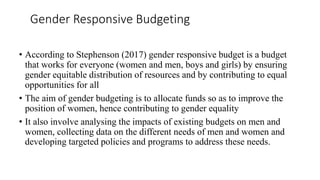
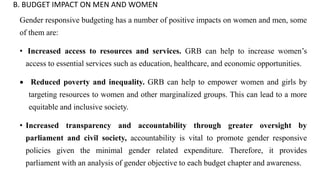
Gender responsive budgeting aims to allocate funds equitably between men and women by accounting for their different needs and positions in society. It can increase access to resources and services for women, reduce poverty and inequality, and increase transparency and accountability. However, it may face resistance due to requiring changes in societal behaviors and norms. It also risks marginalizing other vulnerable groups by focusing primarily on gender. Overall, gender responsive budgeting promotes important aspects of gender equality and equity while also raising women's status.