Chapter 11:
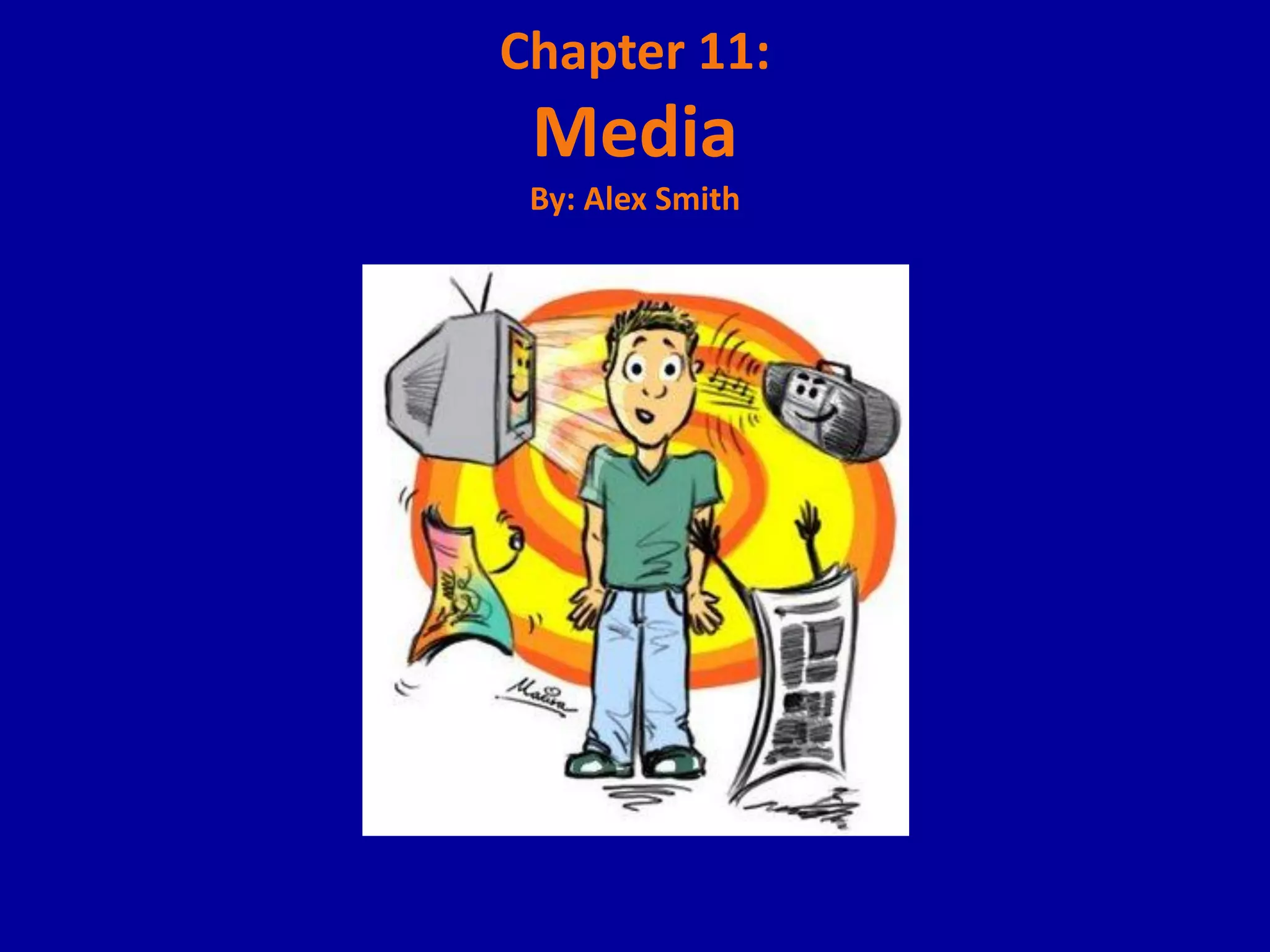
Media
By: Alex Smith
Table of Contents
• 1. Introduction
• 2. Media as a Social Institution
• 3. Media Economics
• 4. Media Economics cont.
• 5. Media Economics cont.
• 6. Media and Power
• 7. Media and Power cont.
• 8. Media, Power, and Hegemony
• 9. Interlocking Institutions
• 10. Media Content and Breaking Barriers
• 11. Media Content and Breaking Barriers cont.
• 12. Media Content and Breaking Barriers cont.
• 13. Conclusion
Introduction
• Media is the mass form of communication and understanding
• Types of media: television, movies, newspapers, radio,
magazines, etc.
• Talking about media not the media; media is too complex to
be portrayed as a singular term
• “We mention all forms of media because all media
communicated understandings of gender, and gender
influences all forms of mediated communication.”(235)
Media as a Social Institution
• Mass media as an institution is a recent conception
• Because of media’s youth it is not always easy to see it as an
institution
• Media are concerned with the construction of both content
and the audience viewing the content
Media Economics
• The economics when dealing with media are constantly
portrayed throughout the media programs
• A perfect example of a way to think about the portrayal and
explanation for economics in media are when you think of
and watch television
• With the viewing of television comes the inescapable viewing
of commercials and ads
Media Economics continued…
• Commercials are strategically placed in between the breaks of
programs that will appeal to the general audience viewing the
program
• Another role of economics is that it is crafted within the show
to appeal to the audience
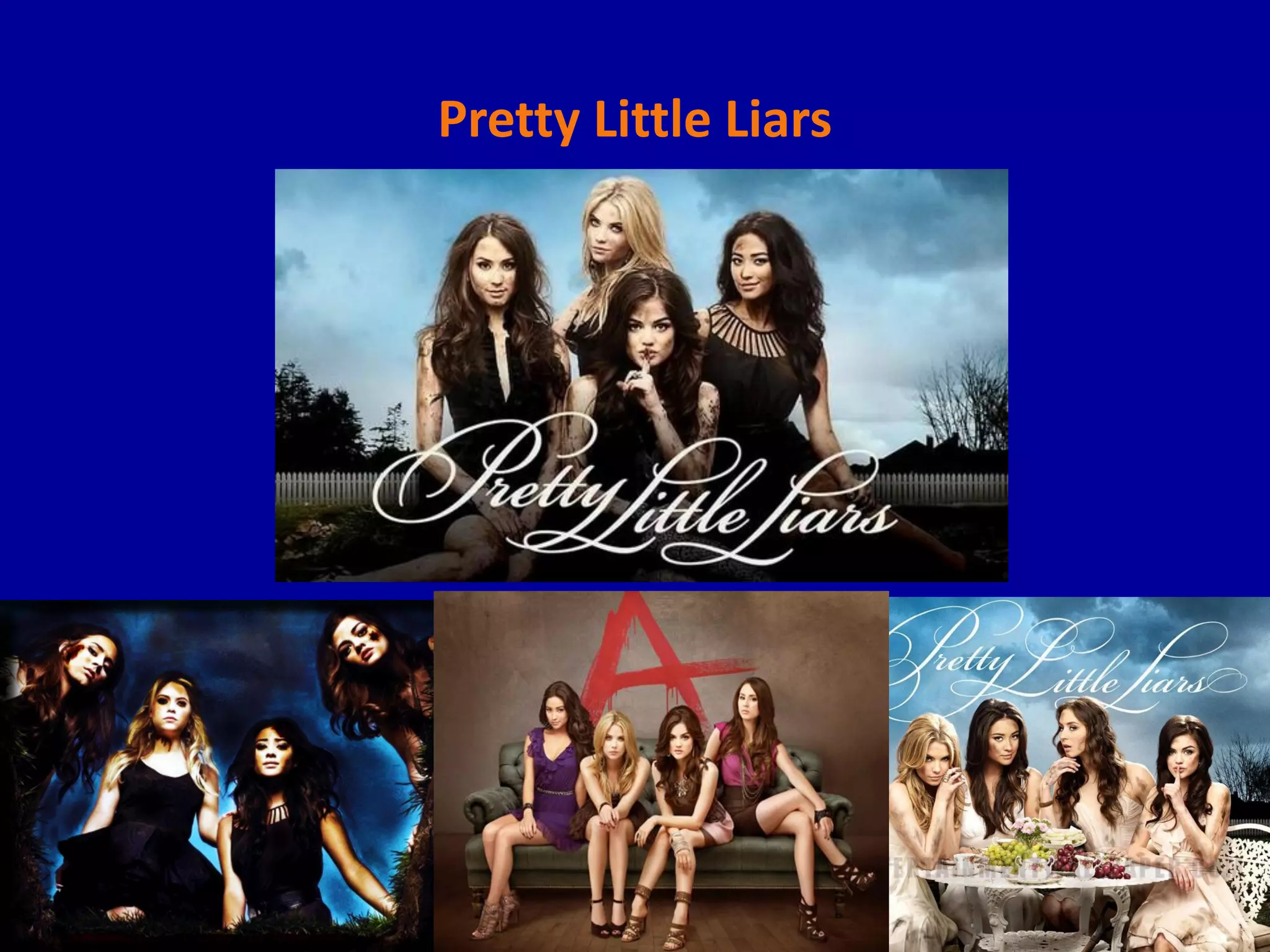
• Example: Pretty Little Liars
Media Economics continued…
• Pretty Little Liars: show on ABC Family
• Appealing primarily to the teen and young adult audience
• Plot: Four friends battle together against an anonymous foe who
threatens to reveal their darkest secrets while uncovering the
mystery of the murder of their best friend
• The show has economic value based upon its success as it enters its
4th season but also in dealing with advertisements, commercials,
and in show content
• Economic possibilities: DVD sales, advertisements of other ABC
Family shows and movies, fashion, etc.
Pretty Little Liars
Media and Power
• We live in a consumer culture
• Power as an element of media is one that describes media as
an institution really well
• “Media exert power over how people do gender.” (238)
• Media forms such as magazines influence social norms
concerning gender, beauty, race, etc.
Media and Power continued…
• Media has the power to give people certain views on their
own identities
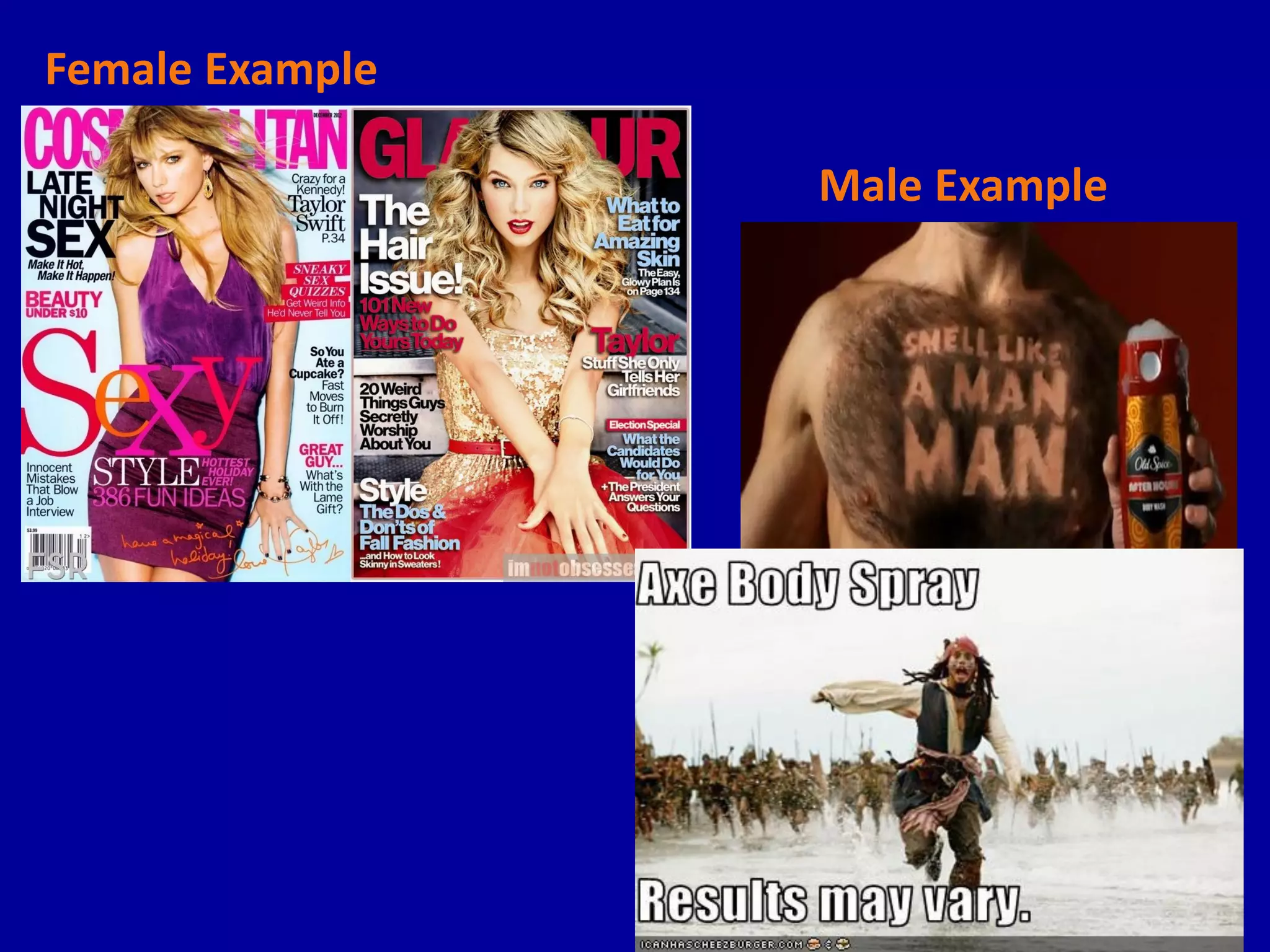
• Female example: magazines such as Cosmopolitan or Glamour
have the power to influence women to dress the way they
dress, style their hair accordingly, try celebrity diets, etc. to be
more feminine
• Male example: commercials such as Axe body spray or Old
Spice have the power to influence men to use their products
so they can be viewed and perceived as a masculine man
Female Example
Male Example
Media, Power, and Hegemony
• Media has the power to be extremely persuasive
• When dealing with media hegemony several types of media try and break
the barrier for the social norm
• For example: the show, Lost Girl, depicts the life and adventures of a crime
fighting, supernatural woman named Bo
• Bo is a tough, strong-willed, and ambitious character who although
appears to be masculine in her lifestyle, meets the feminine standards of
attractiveness
• “Media, as a central institution of civil society, maintain hegemonic
understandings of gender even as they create gaps and fissures in
representations of gender.” (239)
Interlocking Institutions
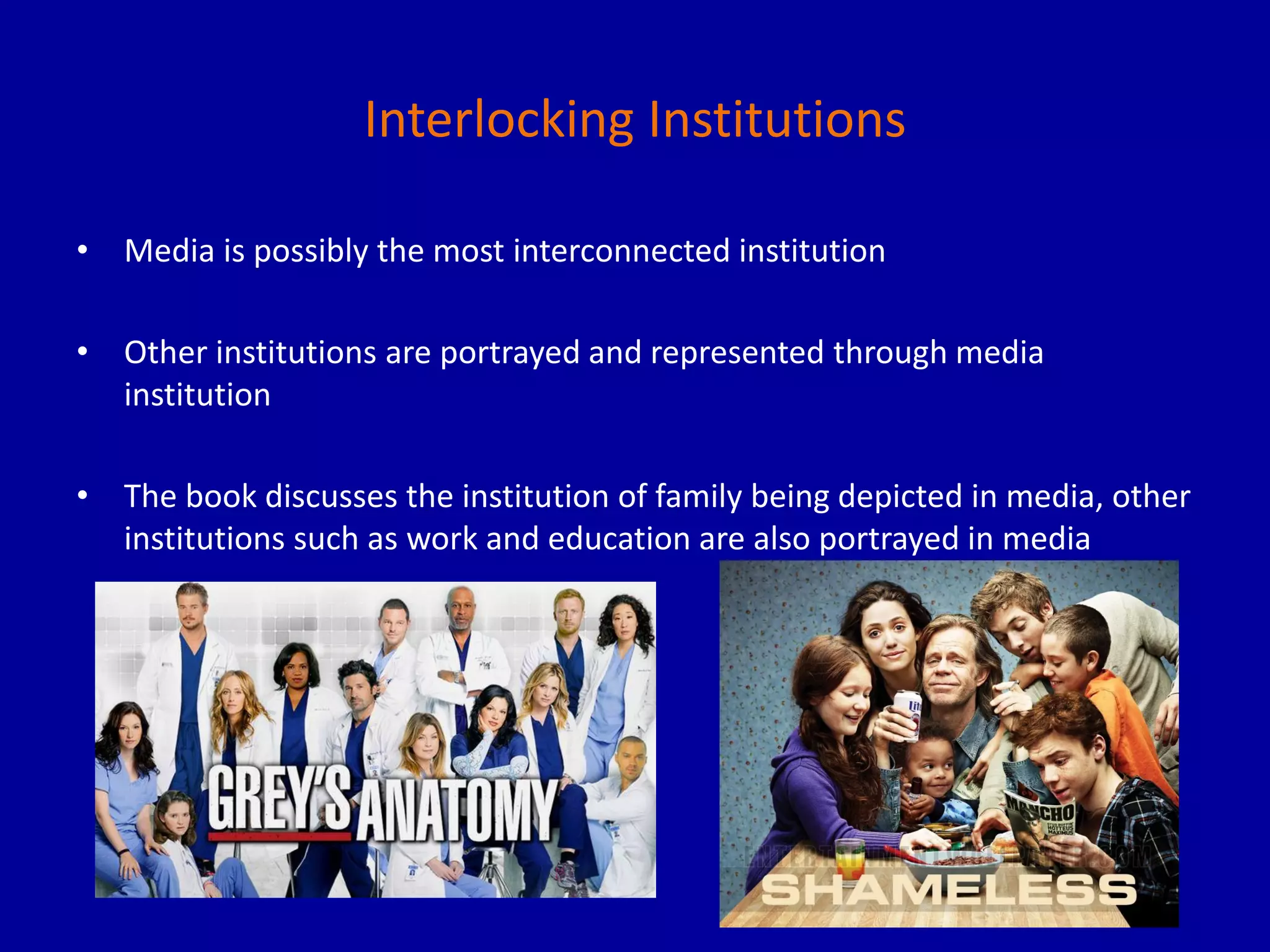
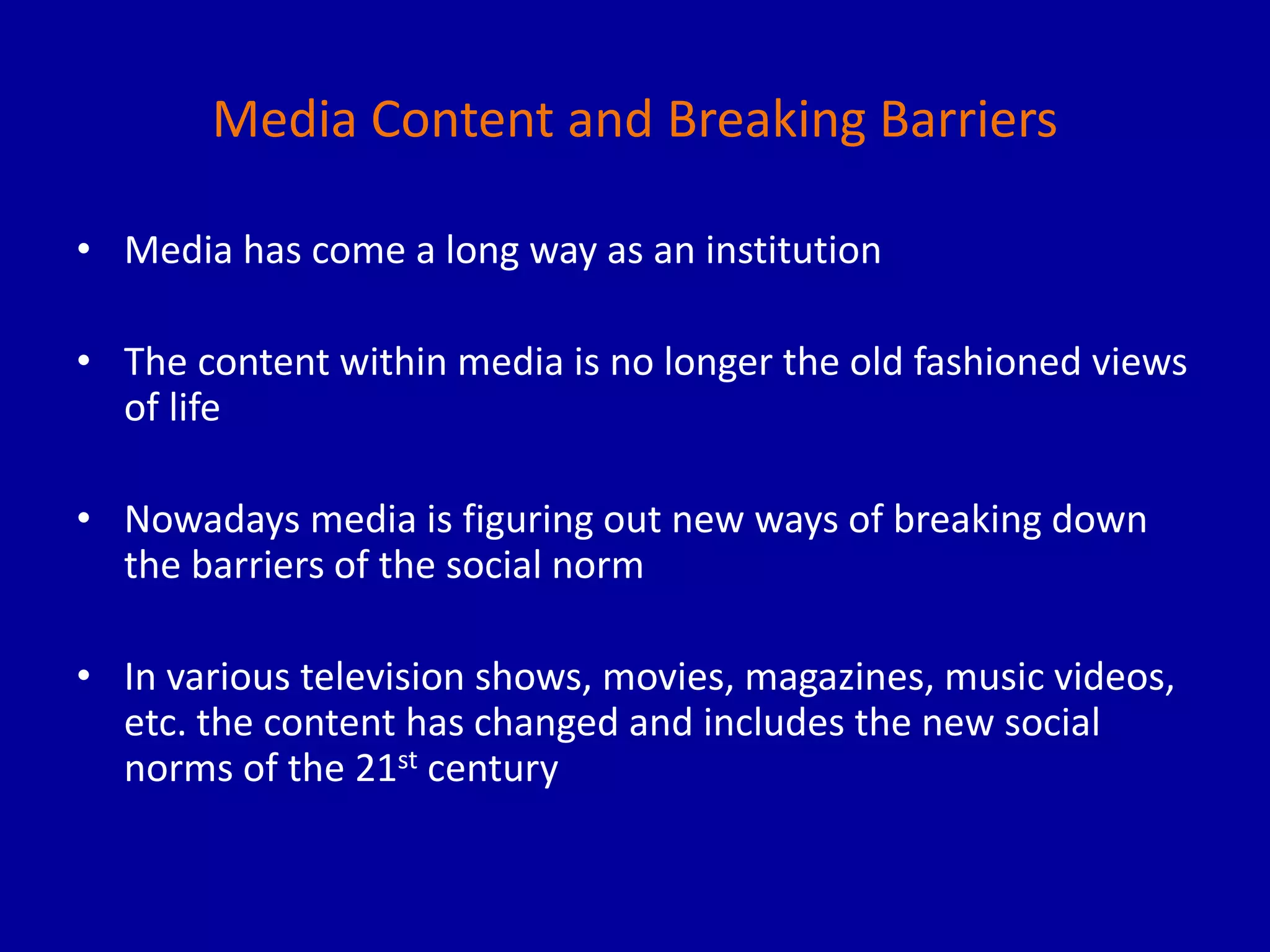
• Media is possibly the most interconnected institution
• Other institutions are portrayed and represented through media
institution
• The book discusses the institution of family being depicted in media, other
institutions such as work and education are also portrayed in media
Media Content and Breaking Barriers
• Media has come a long way as an institution
• The content within media is no longer the old fashioned views
of life
• Nowadays media is figuring out new ways of breaking down
the barriers of the social norm
• In various television shows, movies, magazines, music videos,
etc. the content has changed and includes the new social
norms of the 21st century
Media Content and Breaking Barriers
continued…
• In the various platforms of media different situations, problems,
romances, etc. are created to reflect the real world
• The way in which media is doing so can be a great influence to the
audience
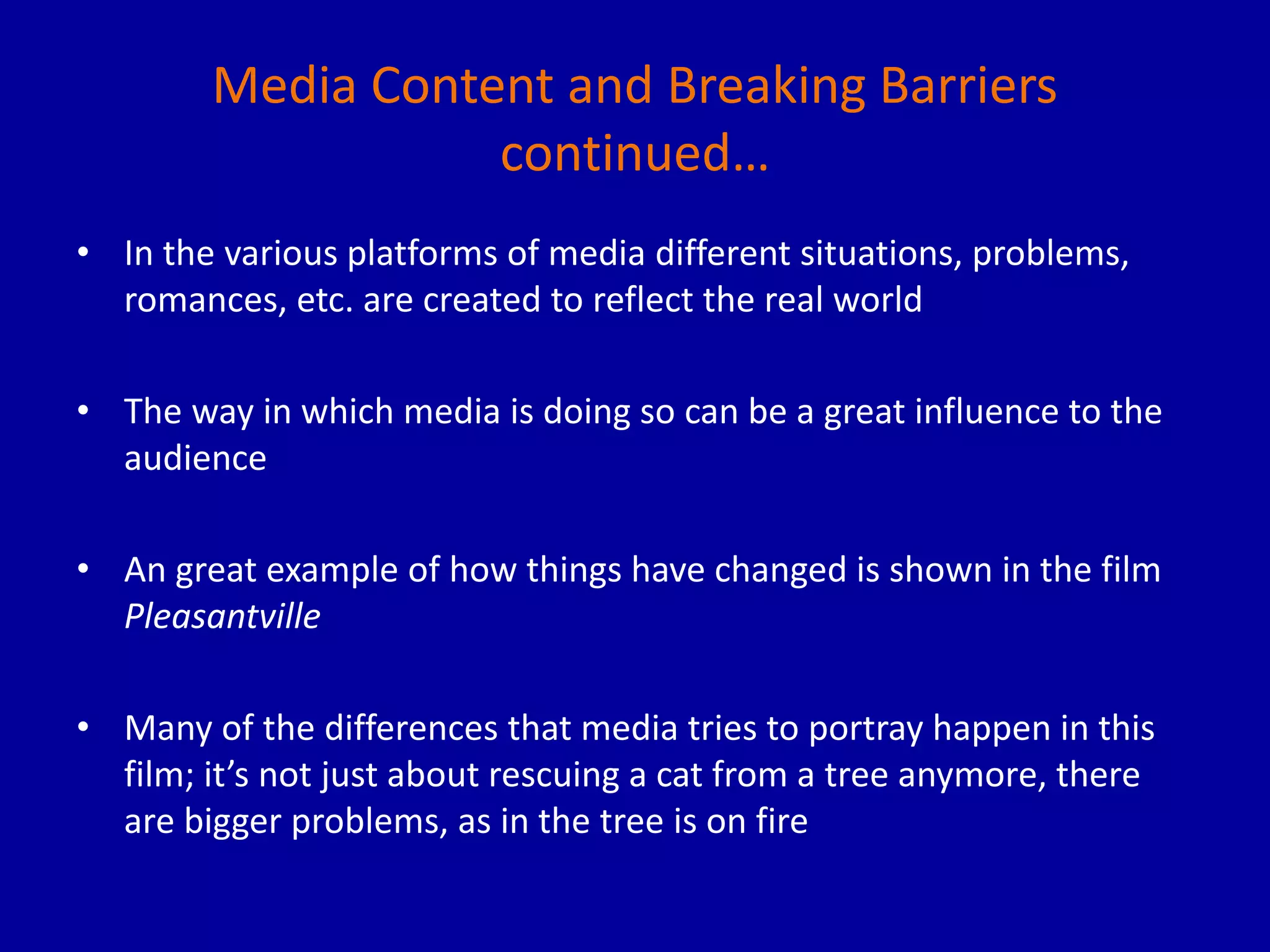
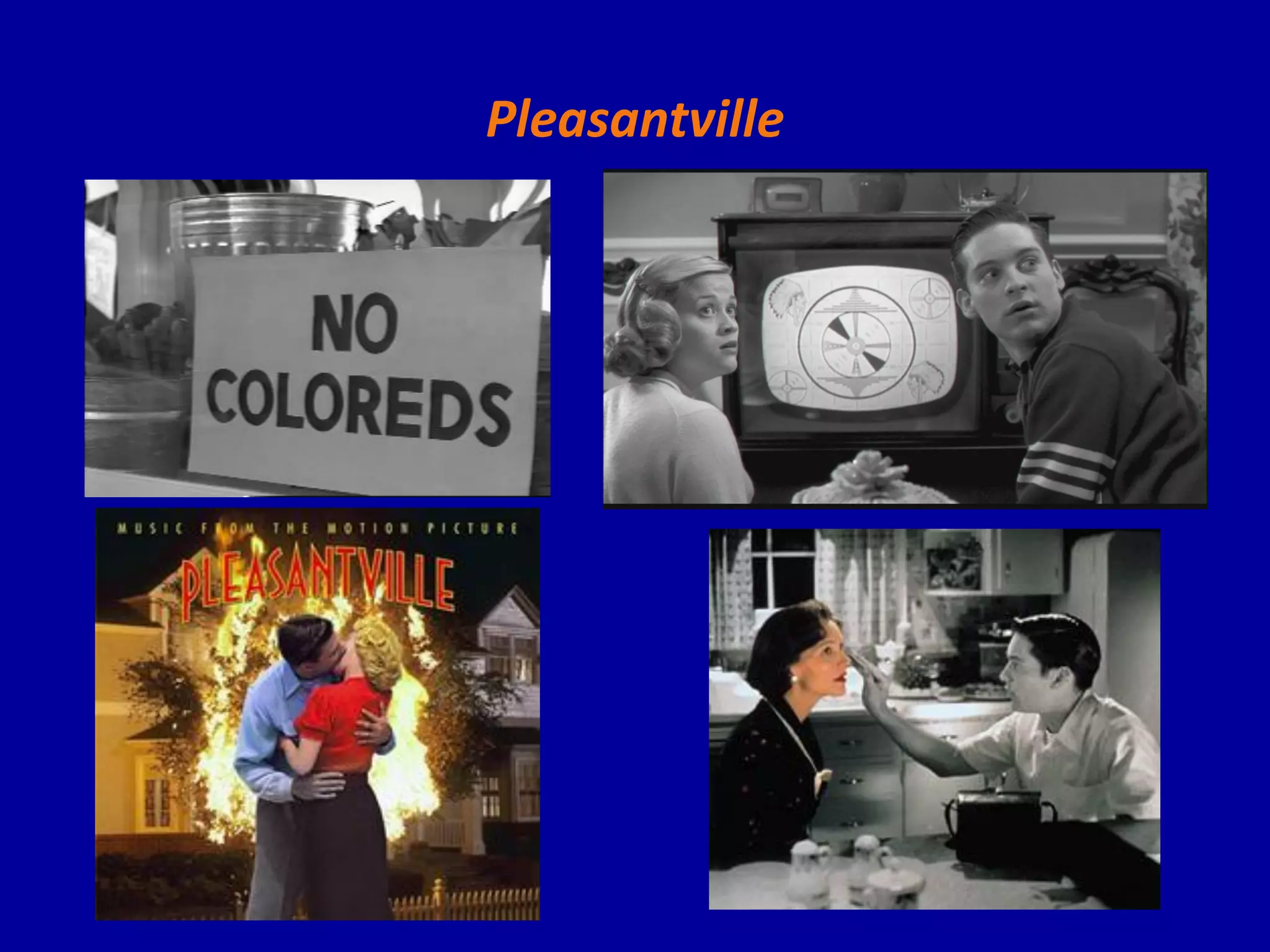
• An great example of how things have changed is shown in the film
Pleasantville
• Many of the differences that media tries to portray happen in this
film; it’s not just about rescuing a cat from a tree anymore, there
are bigger problems, as in the tree is on fire
Pleasantville
Media Content and Breaking Barriers
continued…
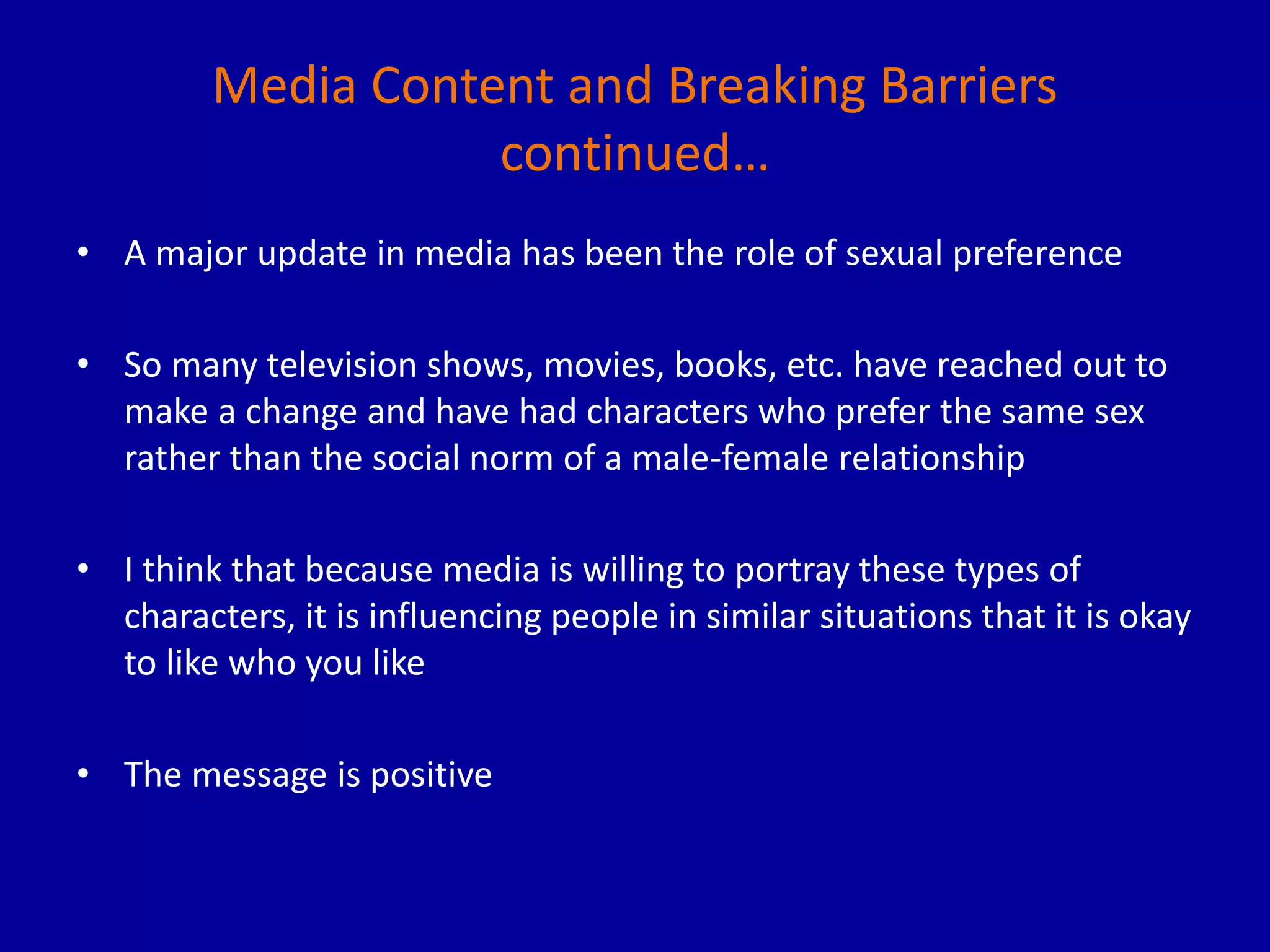
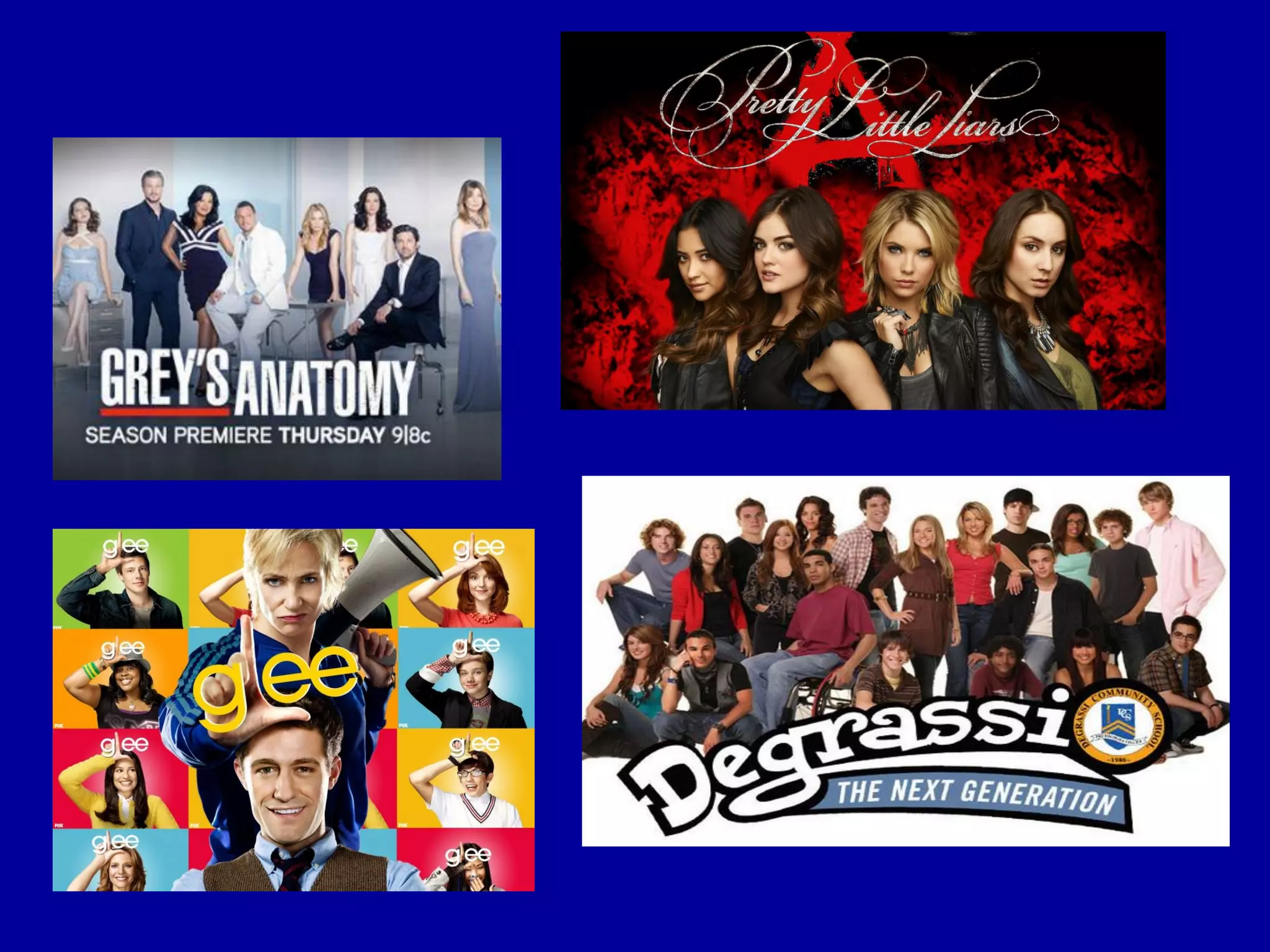
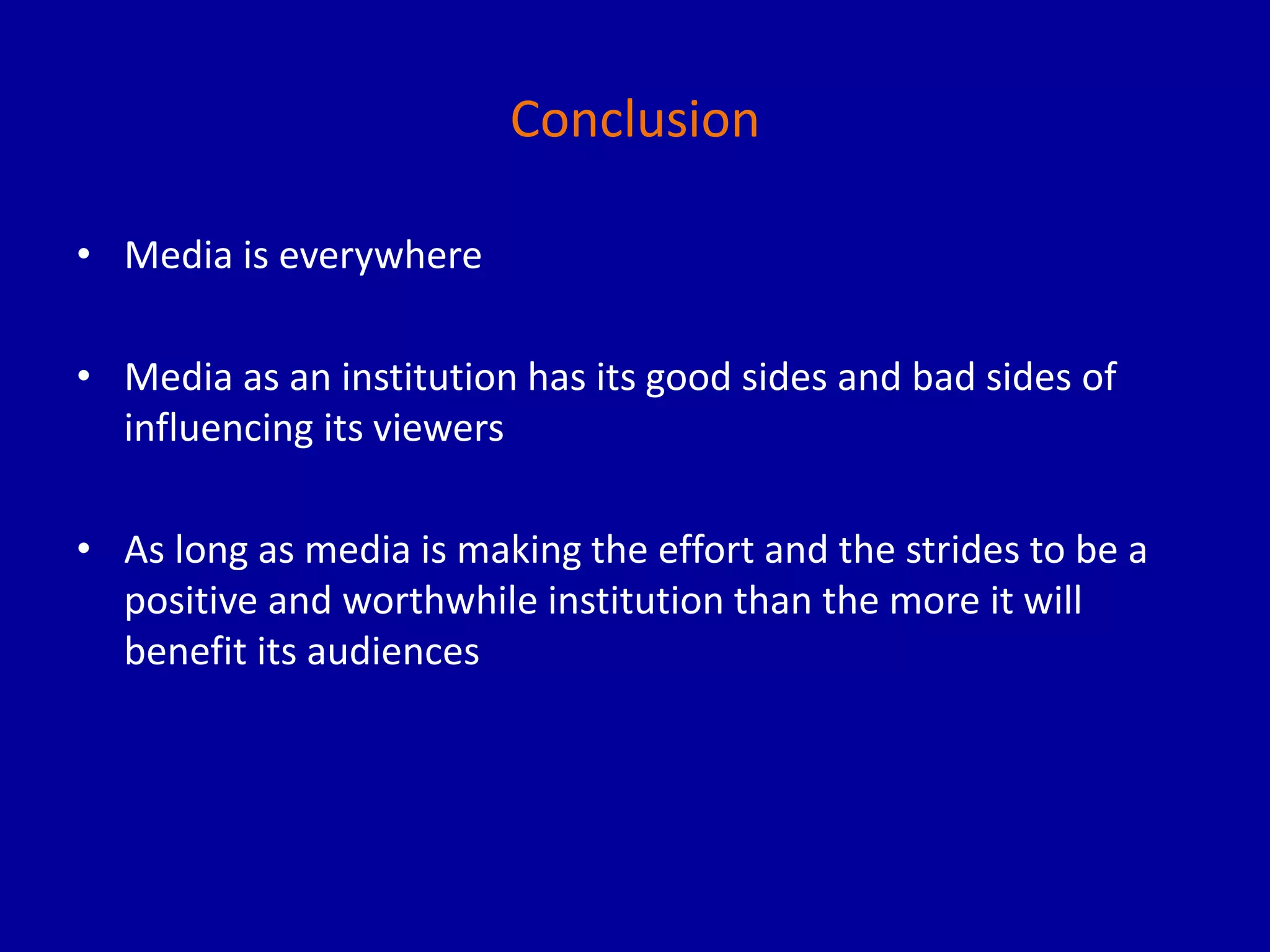
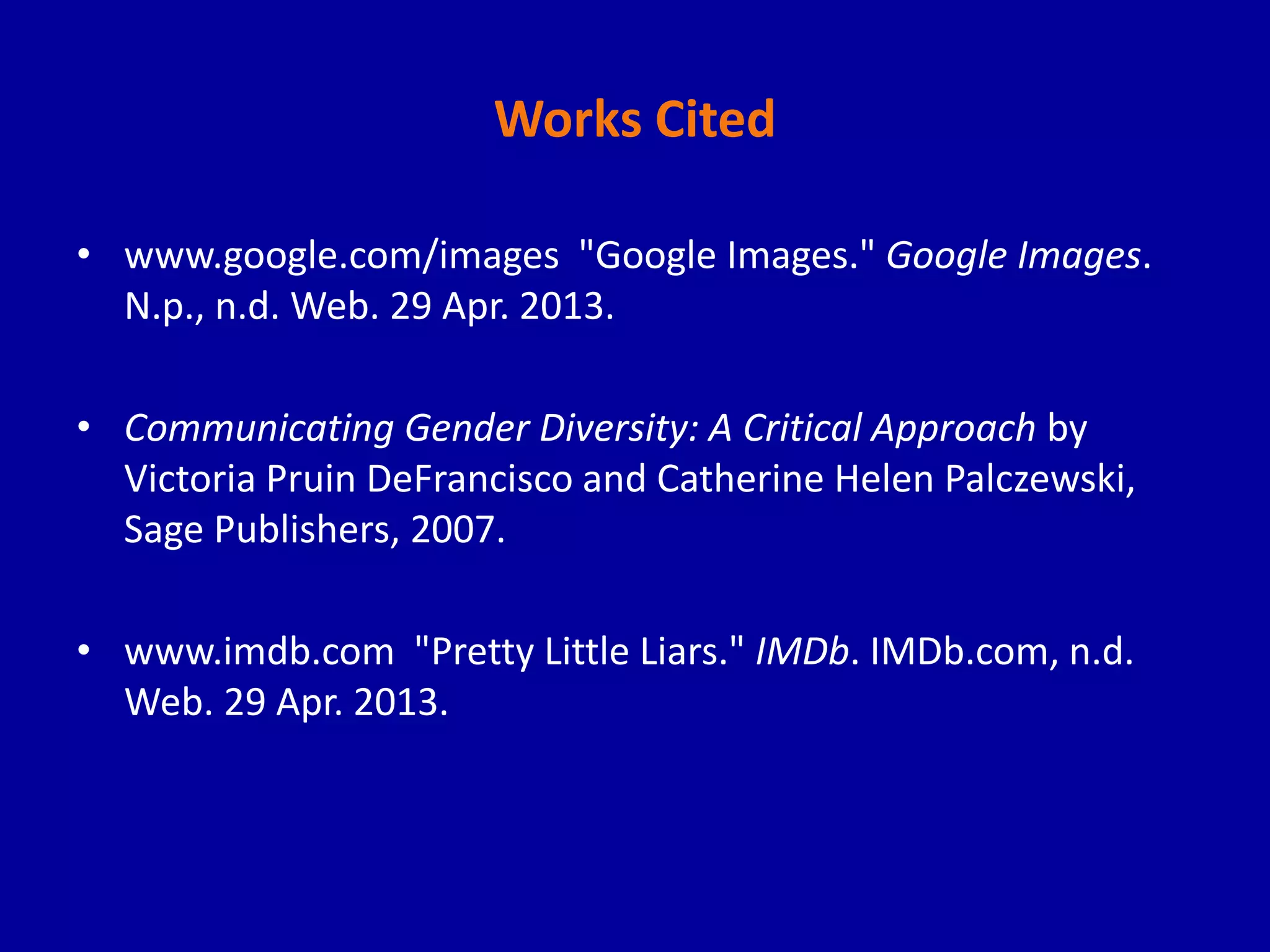
• A major update in media has been the role of sexual preference
• So many television shows, movies, books, etc. have reached out to
make a change and have had characters who prefer the same sex
rather than the social norm of a male-female relationship
• I think that because media is willing to portray these types of
characters, it is influencing people in similar situations that it is okay
to like who you like
• The message is positive
Conclusion
• Media is everywhere
• Media as an institution has its good sides and bad sides of
influencing its viewers
• As long as media is making the effort and the strides to be a
positive and worthwhile institution than the more it will
benefit its audiences
Works Cited
• www.google.com/images "Google Images." Google Images.
N.p., n.d. Web. 29 Apr. 2013.
• Communicating Gender Diversity: A Critical Approach by
Victoria Pruin DeFrancisco and Catherine Helen Palczewski,
Sage Publishers, 2007.
• www.imdb.com "Pretty Little Liars." IMDb. IMDb.com, n.d.
Web. 29 Apr. 2013.

Gender in communication presentation

  • 1.
  • 2.
    Table of Contents •1. Introduction • 2. Media as a Social Institution • 3. Media Economics • 4. Media Economics cont. • 5. Media Economics cont. • 6. Media and Power • 7. Media and Power cont. • 8. Media, Power, and Hegemony • 9. Interlocking Institutions • 10. Media Content and Breaking Barriers • 11. Media Content and Breaking Barriers cont. • 12. Media Content and Breaking Barriers cont. • 13. Conclusion
  • 3.
    Introduction • Media isthe mass form of communication and understanding • Types of media: television, movies, newspapers, radio, magazines, etc. • Talking about media not the media; media is too complex to be portrayed as a singular term • “We mention all forms of media because all media communicated understandings of gender, and gender influences all forms of mediated communication.”(235)
  • 4.
    Media as aSocial Institution • Mass media as an institution is a recent conception • Because of media’s youth it is not always easy to see it as an institution • Media are concerned with the construction of both content and the audience viewing the content
  • 5.
    Media Economics • Theeconomics when dealing with media are constantly portrayed throughout the media programs • A perfect example of a way to think about the portrayal and explanation for economics in media are when you think of and watch television • With the viewing of television comes the inescapable viewing of commercials and ads
  • 6.
    Media Economics continued… •Commercials are strategically placed in between the breaks of programs that will appeal to the general audience viewing the program • Another role of economics is that it is crafted within the show to appeal to the audience • Example: Pretty Little Liars
  • 7.
    Media Economics continued… •Pretty Little Liars: show on ABC Family • Appealing primarily to the teen and young adult audience • Plot: Four friends battle together against an anonymous foe who threatens to reveal their darkest secrets while uncovering the mystery of the murder of their best friend • The show has economic value based upon its success as it enters its 4th season but also in dealing with advertisements, commercials, and in show content • Economic possibilities: DVD sales, advertisements of other ABC Family shows and movies, fashion, etc.
  • 8.
  • 9.
    Media and Power •We live in a consumer culture • Power as an element of media is one that describes media as an institution really well • “Media exert power over how people do gender.” (238) • Media forms such as magazines influence social norms concerning gender, beauty, race, etc.
  • 10.
    Media and Powercontinued… • Media has the power to give people certain views on their own identities • Female example: magazines such as Cosmopolitan or Glamour have the power to influence women to dress the way they dress, style their hair accordingly, try celebrity diets, etc. to be more feminine • Male example: commercials such as Axe body spray or Old Spice have the power to influence men to use their products so they can be viewed and perceived as a masculine man
  • 11.
  • 12.
    Media, Power, andHegemony • Media has the power to be extremely persuasive • When dealing with media hegemony several types of media try and break the barrier for the social norm • For example: the show, Lost Girl, depicts the life and adventures of a crime fighting, supernatural woman named Bo • Bo is a tough, strong-willed, and ambitious character who although appears to be masculine in her lifestyle, meets the feminine standards of attractiveness • “Media, as a central institution of civil society, maintain hegemonic understandings of gender even as they create gaps and fissures in representations of gender.” (239)
  • 13.
    Interlocking Institutions • Mediais possibly the most interconnected institution • Other institutions are portrayed and represented through media institution • The book discusses the institution of family being depicted in media, other institutions such as work and education are also portrayed in media
  • 14.
    Media Content andBreaking Barriers • Media has come a long way as an institution • The content within media is no longer the old fashioned views of life • Nowadays media is figuring out new ways of breaking down the barriers of the social norm • In various television shows, movies, magazines, music videos, etc. the content has changed and includes the new social norms of the 21st century
  • 15.
    Media Content andBreaking Barriers continued… • In the various platforms of media different situations, problems, romances, etc. are created to reflect the real world • The way in which media is doing so can be a great influence to the audience • An great example of how things have changed is shown in the film Pleasantville • Many of the differences that media tries to portray happen in this film; it’s not just about rescuing a cat from a tree anymore, there are bigger problems, as in the tree is on fire
  • 16.
  • 17.
    Media Content andBreaking Barriers continued… • A major update in media has been the role of sexual preference • So many television shows, movies, books, etc. have reached out to make a change and have had characters who prefer the same sex rather than the social norm of a male-female relationship • I think that because media is willing to portray these types of characters, it is influencing people in similar situations that it is okay to like who you like • The message is positive
  • 19.
    Conclusion • Media iseverywhere • Media as an institution has its good sides and bad sides of influencing its viewers • As long as media is making the effort and the strides to be a positive and worthwhile institution than the more it will benefit its audiences
  • 20.
    Works Cited • www.google.com/images"Google Images." Google Images. N.p., n.d. Web. 29 Apr. 2013. • Communicating Gender Diversity: A Critical Approach by Victoria Pruin DeFrancisco and Catherine Helen Palczewski, Sage Publishers, 2007. • www.imdb.com "Pretty Little Liars." IMDb. IMDb.com, n.d. Web. 29 Apr. 2013.