GENDER AND DEVELOPMENT
101
DepEd Order No. 32, s. 2017 and DepEd Order No. 63, s. 2012
OBJECTIVES:
- Identify the basic concepts of in GENDER and DEVELOPMENT
- Differentiate SEX and GENDER
- Appreciate the importance of Gender Sensitivity, Gender Awareness, Gender
Empowerment
- Provide a clear understanding on the existing DO No. 32, s. 2017 and DO
No. 63, s. 2012
- Promote gender equality in curricula and textbooks
- Identify gender biases and imbalances found in textbooks
GAD ISSUES AND CONCERNS
There are four critical entry points to GAD mainstreaming, namely: policies, programs and
projects, people, and enabling mechanisms. These are not in any order of importance. A
government agency has the option on what entry point to use first.
INSTRUCTIONS: Write all the things that ONLY MEN and WOMEN
can do.
WHO IS BETTER:
ABA, LALAKI KASI EH, KASI BABAE
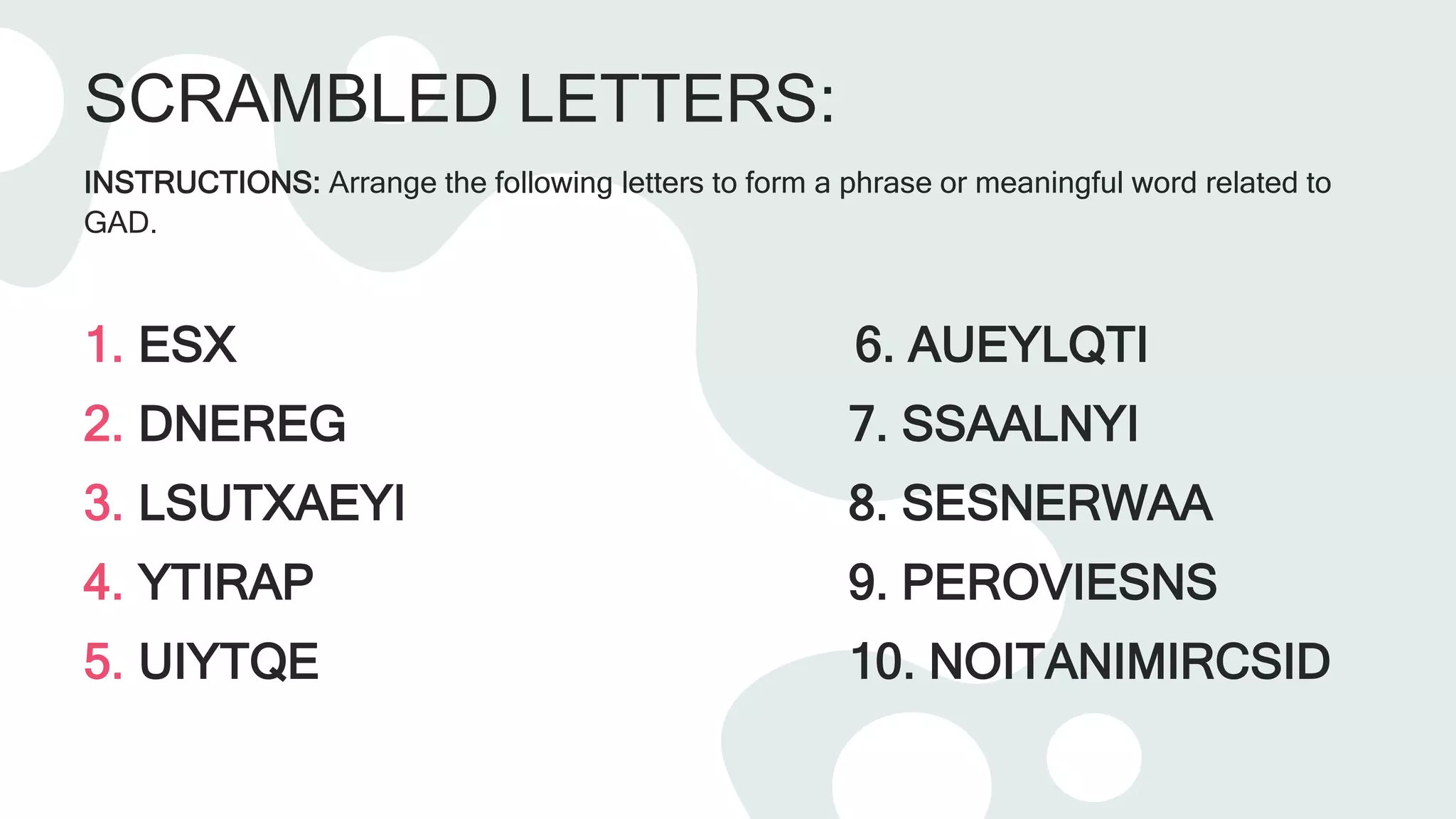
SCRAMBLED LETTERS:
INSTRUCTIONS: Arrange the following letters to form a phrase or meaningful word related to
GAD.
1. ESX 6. AUEYLQTI
2. DNEREG 7. SSAALNYI
3. LSUTXAEYI 8. SESNERWAA
4. YTIRAP 9. PEROVIESNS
5. UIYTQE 10. NOITANIMIRCSID
PICTURE ANALYSIS
PICTURE ANALYSIS
PICTURE ANALYSIS
GENDER SENSITIVTY – ability to acknowledge and
highlight existing gender differences
GENDER AWARENESS – understanding the social and
cultural differences between men and women
GENDER EMPOWERMENT – taking control, developing
skills, building confidence, solving problems, and self-
reliance.
SEX – refers to the biological differences between men and
women.
GENDER – is a social and cultural construct, which
distinguishes differences in the attitudes of men and
women. (femininity and masculinity)
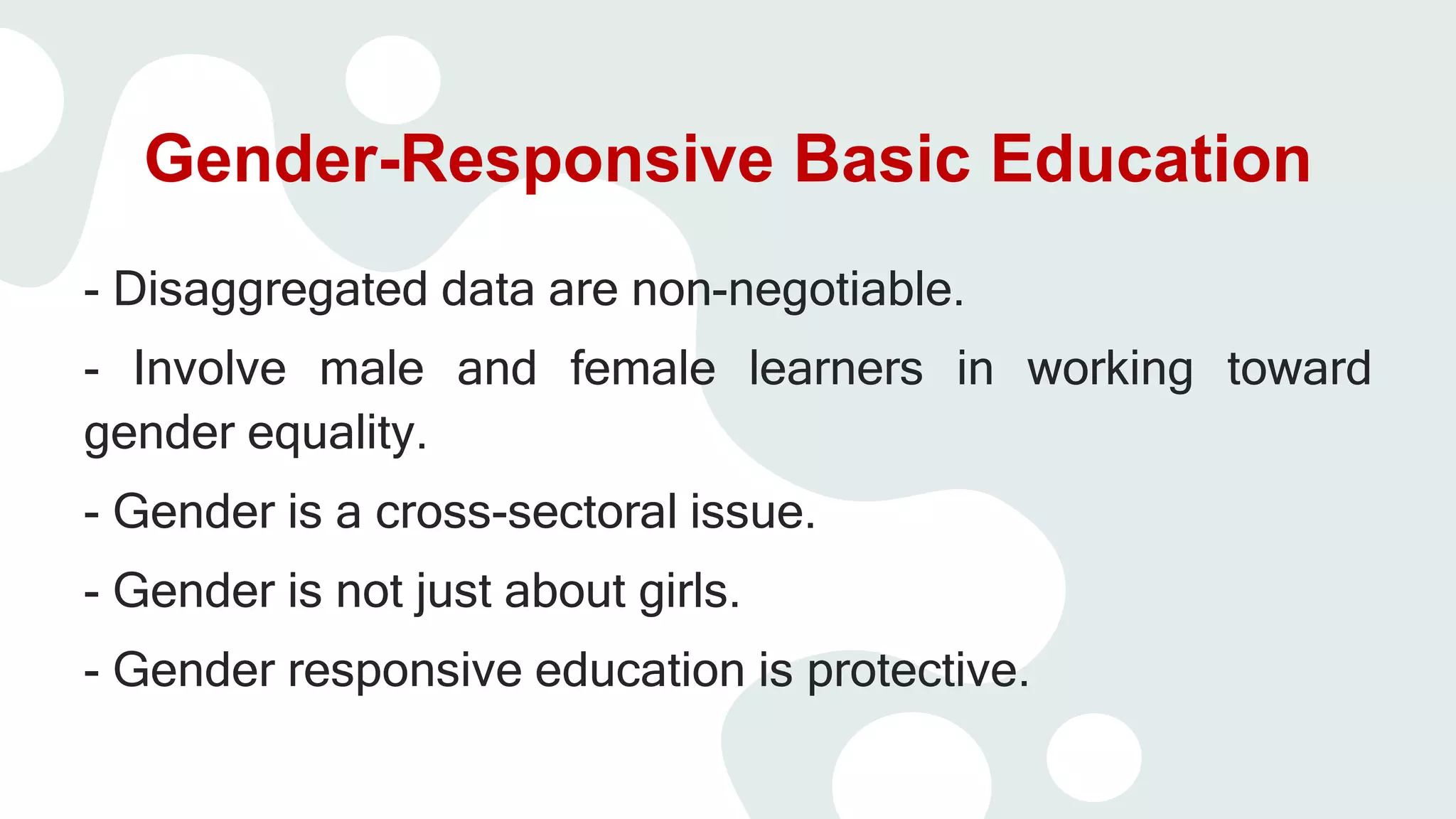
- Disaggregated data are non-negotiable.
- Involve male and female learners in working toward
gender equality.
- Gender is a cross-sectoral issue.
- Gender is not just about girls.
- Gender responsive education is protective.
Gender-Responsive Basic Education
Mainstream gender in all policies and
programs, projects and activities
CURRICULUM, INSTRUCTION AND ASSESSMENT
1. Advocate gender equality in all aspects of development and
ensure that PPAs are made congruent with this policy and are
included in the SIP and AIP.
2. Include in the school calendar the observance and celebrations
related to GAD (Women’s Month, LGBT Pride Month, Breastfeeding
Month, Children’s Month, Human Rights Month)
3. Enhance and promote a K+12 curriculum that integrate
equality, human rights, sexuality and reproductive health
education, peace education, environmental studies and child
protection.
4. Formulate enabling policies and guidelines for the
implementation of gender-responsive innovative teaching and
learning approaches and assessment models for basic education
aligned with curriculum standards.
LEARNING ENVIRONMENT
1. Ensure a gender responsive physical and social learning
environment that promote respect for all people and has zero
tolerance for all forms of discrimination, violence and abuse.
2. Ensure that all DepEd personnel are properly oriented on gender
equality, sexuality, and reproductive health education, human rights,
peace education and child protection.
3. Promote the institutionalization of gender responsive teaching
learning plans, guides, processes, activities, and mechanisms, and all
measures
4. Provide adequate and responsive capacity building activities
for teachers in dealing with children in conflict with law and
children at risk.
LEARNING RESOURCES
1. Develop and provide gender responsive learning resources
based on the review and revision programs, curriculum, social
content, guidelines and other references to ensure that LRs are
free from gender biases and stereotypes, and use gender-fair
and inclusive language, positive image, and messages.
ASSESSMENT
1. Ensure that formative and summative assessments at the
school level and any competitions at any level are gender
responsive and culture sensitive for all learners teachers, and
other concerned personnel.
2. Include GAD core messages and key concepts in the test
development process specifically in the TOS as integrated in the
LC using gender fair language
Key Takeaways
1. Human resource development
2. Learning and development.
3. Employee welfare.
- Institutional recognition rewards system are gender
responsive
- Grant of special leaves as provided by law ( maternity ,
paternity , solo parent , gynecological, and VAWC)
- RA 9710 Section 13.c. Non-firing of employees on
account of pregnancies outside marriage
Strengthen Gender and Development institutional mechanisms
(GFPS)

GENDER AND DEVELOPMENT 101.pptx

  • 1.
    GENDER AND DEVELOPMENT 101 DepEdOrder No. 32, s. 2017 and DepEd Order No. 63, s. 2012
  • 2.
    OBJECTIVES: - Identify thebasic concepts of in GENDER and DEVELOPMENT - Differentiate SEX and GENDER - Appreciate the importance of Gender Sensitivity, Gender Awareness, Gender Empowerment - Provide a clear understanding on the existing DO No. 32, s. 2017 and DO No. 63, s. 2012 - Promote gender equality in curricula and textbooks - Identify gender biases and imbalances found in textbooks
  • 3.
    GAD ISSUES ANDCONCERNS There are four critical entry points to GAD mainstreaming, namely: policies, programs and projects, people, and enabling mechanisms. These are not in any order of importance. A government agency has the option on what entry point to use first.
  • 4.
    INSTRUCTIONS: Write allthe things that ONLY MEN and WOMEN can do. WHO IS BETTER: ABA, LALAKI KASI EH, KASI BABAE
  • 5.
    SCRAMBLED LETTERS: INSTRUCTIONS: Arrangethe following letters to form a phrase or meaningful word related to GAD. 1. ESX 6. AUEYLQTI 2. DNEREG 7. SSAALNYI 3. LSUTXAEYI 8. SESNERWAA 4. YTIRAP 9. PEROVIESNS 5. UIYTQE 10. NOITANIMIRCSID
  • 6.
  • 7.
  • 8.
  • 9.
    GENDER SENSITIVTY –ability to acknowledge and highlight existing gender differences GENDER AWARENESS – understanding the social and cultural differences between men and women GENDER EMPOWERMENT – taking control, developing skills, building confidence, solving problems, and self- reliance.
  • 10.
    SEX – refersto the biological differences between men and women. GENDER – is a social and cultural construct, which distinguishes differences in the attitudes of men and women. (femininity and masculinity)
  • 11.
    - Disaggregated dataare non-negotiable. - Involve male and female learners in working toward gender equality. - Gender is a cross-sectoral issue. - Gender is not just about girls. - Gender responsive education is protective. Gender-Responsive Basic Education
  • 12.
    Mainstream gender inall policies and programs, projects and activities CURRICULUM, INSTRUCTION AND ASSESSMENT 1. Advocate gender equality in all aspects of development and ensure that PPAs are made congruent with this policy and are included in the SIP and AIP. 2. Include in the school calendar the observance and celebrations related to GAD (Women’s Month, LGBT Pride Month, Breastfeeding Month, Children’s Month, Human Rights Month)
  • 13.
    3. Enhance andpromote a K+12 curriculum that integrate equality, human rights, sexuality and reproductive health education, peace education, environmental studies and child protection. 4. Formulate enabling policies and guidelines for the implementation of gender-responsive innovative teaching and learning approaches and assessment models for basic education aligned with curriculum standards.
  • 14.
    LEARNING ENVIRONMENT 1. Ensurea gender responsive physical and social learning environment that promote respect for all people and has zero tolerance for all forms of discrimination, violence and abuse. 2. Ensure that all DepEd personnel are properly oriented on gender equality, sexuality, and reproductive health education, human rights, peace education and child protection. 3. Promote the institutionalization of gender responsive teaching learning plans, guides, processes, activities, and mechanisms, and all measures
  • 15.
    4. Provide adequateand responsive capacity building activities for teachers in dealing with children in conflict with law and children at risk. LEARNING RESOURCES 1. Develop and provide gender responsive learning resources based on the review and revision programs, curriculum, social content, guidelines and other references to ensure that LRs are free from gender biases and stereotypes, and use gender-fair and inclusive language, positive image, and messages.
  • 16.
    ASSESSMENT 1. Ensure thatformative and summative assessments at the school level and any competitions at any level are gender responsive and culture sensitive for all learners teachers, and other concerned personnel. 2. Include GAD core messages and key concepts in the test development process specifically in the TOS as integrated in the LC using gender fair language
  • 17.
    Key Takeaways 1. Humanresource development 2. Learning and development. 3. Employee welfare. - Institutional recognition rewards system are gender responsive - Grant of special leaves as provided by law ( maternity , paternity , solo parent , gynecological, and VAWC) - RA 9710 Section 13.c. Non-firing of employees on account of pregnancies outside marriage Strengthen Gender and Development institutional mechanisms (GFPS)