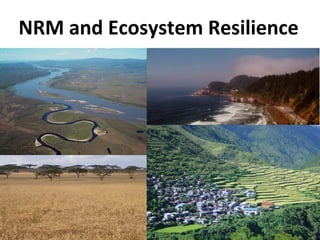
NRM and Ecosystem Resilience
GEF Natural Resources 
Biodiversity 
Land 
Degradation 
International 
Waters 
Sustainable 
Forest Management 
Climate Change Adaptation
Resilience 
• The ability of a social or 
ecological system to 
absorb disturbances while 
retaining the same basic 
structure and ways of 
functioning, the capacity 
for self-organization, and 
the capacity to adapt to 
stress and change.
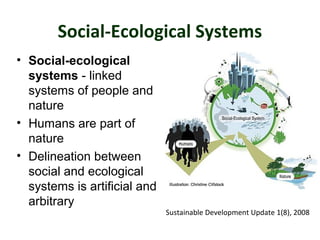
Social-Ecological Systems 
• Social-ecological 
systems - linked 
systems of people and 
nature 
• Humans are part of 
nature 
• Delineation between 
social and ecological 
systems is artificial and 
arbitrary 
Sustainable Development Update 1(8), 2008
What Disturbances (i.e. Threats)? 
• Biological – Pollinator declines, biomass 
depletion 
• Climatic – Drought or Flooding in drylands 
• Physical – Erosion on steep slopes or 
sedimentation in lakes, streams, river 
• Chemical – Nutrient pollution in water bodies, 
Ocean Acidification 
• Anthropogenic – Timber extraction and hunting 
in forests, Overexploitation of fish stocks 
• Economic – Market failures…. 
• Institutional – Governance breakdown….
Generic Principles for NR Projects 
(based on Walker and Salt, 2008) 
• Promote diversity 
• Embrace variability 
• Acknowledge slow 
variables 
• Harness social capital 
• Enable innovation 
• Value “unpriced” 
ecosystem services 
• Enhance governance 
overlaps
BBiiooddiivveerrssiittyy FFooccaall AArreeaa
BD and Resilience 
Focus on resilience of PAs and PA Systems 
1. maintain coverage of representative ecosystems and 
species in light of anticipated climate change 
2. adjust PA boundaries given anticipated effects of 
climate change on species and habitats - a kind of flex 
approach to PA demarcation; 
3. management of PAs in landscapes that are governed 
by land-use regulations to accommodate 1 and 2
LLaanndd DDeeggrraaddaattiioonn FFooccaall AArreeaa
Hyper-arid  People Sub-humid
SLM and Resilience 
• “Integrated” NRM for Livelihoods 
– sustain ecosystem service flows -> healthy 
soils, vegetative cover 
–diversify land use - > create options at 
multiple scales 
– safeguard high value species -> genetic 
resources for food, fuel, fiber 
– protect ground and surface water 
resources – efficiency in use, re-charge 
– traditional/indigenous practices 
(nomadic/pastoralist) -> innovations
International Waters Focal Area
IW and Resilience 
• Science-based adaptive management institutions at 
transboundary scale, many with cooperative, legal 
agreements 
• ICM institutions at local scale consider storms / floods / 
risk 
• Drought management planning; Floodplain 
management / restoration 
• Aquifer protection/management; reuse of sewage; 
water use efficiency 
• Marine projects use early warning instrumentation for 
forecasting
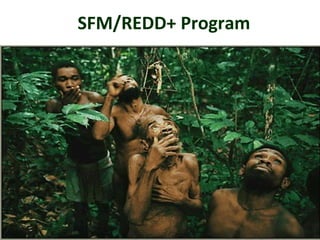
SFM/REDD+ Program
SFM/REDD+ Priorities 
1. Reduce pressures on forest resources and generate 
sustainable flows of forest ecosystem services. 
2. Strengthen the enabling environment to reduce 
GHG emissions from deforestation and forest 
degradation and enhance carbon sinks from 
LULUCF activities. 
Focus on multiple benefits from forest ecosystems, 
including options to mitigate climate change – 
implications for resilience of functions and sustainable 
flow of services
Moving Forward 
• Resilience taking center-stage in Conventions 
and MEA fora 
• Resilience needs to be fully considered in 
design and implementation of GEF project 
• STAP taking a lead role in establishing 
– the scientific bases for resilience in GEF 
investments 
– Developing a framework for resilience monitoring 
and assessment

GEF - Natural Resources Management and Ecosystem Resilience

  • 1.
  • 2.
    GEF Natural Resources Biodiversity Land Degradation International Waters Sustainable Forest Management Climate Change Adaptation
  • 3.
    Resilience • Theability of a social or ecological system to absorb disturbances while retaining the same basic structure and ways of functioning, the capacity for self-organization, and the capacity to adapt to stress and change.
  • 4.
    Social-Ecological Systems •Social-ecological systems - linked systems of people and nature • Humans are part of nature • Delineation between social and ecological systems is artificial and arbitrary Sustainable Development Update 1(8), 2008
  • 5.
    What Disturbances (i.e.Threats)? • Biological – Pollinator declines, biomass depletion • Climatic – Drought or Flooding in drylands • Physical – Erosion on steep slopes or sedimentation in lakes, streams, river • Chemical – Nutrient pollution in water bodies, Ocean Acidification • Anthropogenic – Timber extraction and hunting in forests, Overexploitation of fish stocks • Economic – Market failures…. • Institutional – Governance breakdown….
  • 6.
    Generic Principles forNR Projects (based on Walker and Salt, 2008) • Promote diversity • Embrace variability • Acknowledge slow variables • Harness social capital • Enable innovation • Value “unpriced” ecosystem services • Enhance governance overlaps
  • 7.
  • 8.
    BD and Resilience Focus on resilience of PAs and PA Systems 1. maintain coverage of representative ecosystems and species in light of anticipated climate change 2. adjust PA boundaries given anticipated effects of climate change on species and habitats - a kind of flex approach to PA demarcation; 3. management of PAs in landscapes that are governed by land-use regulations to accommodate 1 and 2
  • 9.
  • 10.
  • 11.
    SLM and Resilience • “Integrated” NRM for Livelihoods – sustain ecosystem service flows -> healthy soils, vegetative cover –diversify land use - > create options at multiple scales – safeguard high value species -> genetic resources for food, fuel, fiber – protect ground and surface water resources – efficiency in use, re-charge – traditional/indigenous practices (nomadic/pastoralist) -> innovations
  • 12.
  • 13.
    IW and Resilience • Science-based adaptive management institutions at transboundary scale, many with cooperative, legal agreements • ICM institutions at local scale consider storms / floods / risk • Drought management planning; Floodplain management / restoration • Aquifer protection/management; reuse of sewage; water use efficiency • Marine projects use early warning instrumentation for forecasting
  • 14.
  • 15.
    SFM/REDD+ Priorities 1.Reduce pressures on forest resources and generate sustainable flows of forest ecosystem services. 2. Strengthen the enabling environment to reduce GHG emissions from deforestation and forest degradation and enhance carbon sinks from LULUCF activities. Focus on multiple benefits from forest ecosystems, including options to mitigate climate change – implications for resilience of functions and sustainable flow of services
  • 16.
    Moving Forward •Resilience taking center-stage in Conventions and MEA fora • Resilience needs to be fully considered in design and implementation of GEF project • STAP taking a lead role in establishing – the scientific bases for resilience in GEF investments – Developing a framework for resilience monitoring and assessment