Can evidence-based education do more
harm than good?
How to deal with myths in education
OVERVIEW ON NEUROMYTHS
REASONS
INTEREST
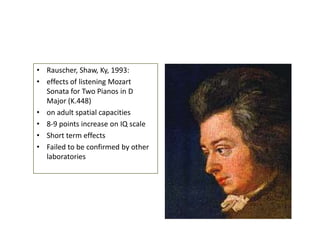
• Rauscher, Shaw, Ky, 1993:
• effects of listening Mozart
Sonata for Two Pianos in D
Major (K.448)
• on adult spatial capacities
• 8-9 points increase on IQ scale
• Short term effects
• Failed to be confirmed by other
laboratories
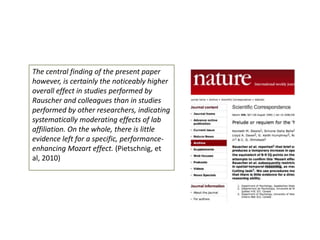
The central finding of the present paper
however, is certainly the noticeably higher
overall effect in studies performed by
Rauscher and colleagues than in studies
performed by other researchers, indicating
systematically moderating effects of lab
affiliation. On the whole, there is little
evidence left for a specific, performanceenhancing Mozart effect. (Pietschnig, et
al, 2010)
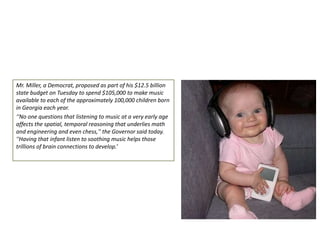
Mr. Miller, a Democrat, proposed as part of his $12.5 billion
state budget on Tuesday to spend $105,000 to make music
available to each of the approximately 100,000 children born
in Georgia each year.
‘‘No one questions that listening to music at a very early age
affects the spatial, temporal reasoning that underlies math
and engineering and even chess,'' the Governor said today.
''Having that infant listen to soothing music helps those
trillions of brain connections to develop.’
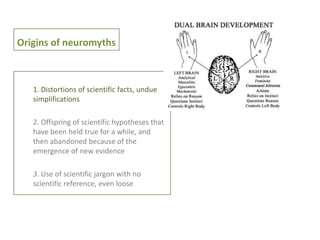
Origins of neuromyths

1. Distortions of scientific facts, undue
simplifications
2. Offspring of scientific hypotheses that
have been held true for a while, and
then abandoned because of the
emergence of new evidence
3. Use of scientific jargon with no
scientific reference, even loose
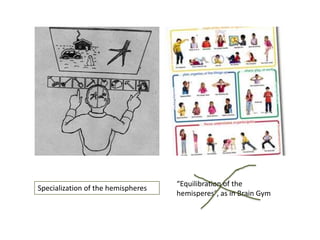
Specialization of the hemispheres

“Equilibration of the
hemisperes”, as in Brain Gym
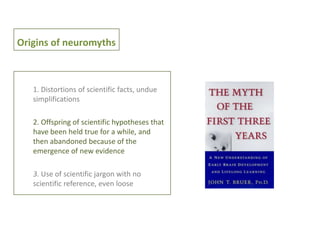
Origins of neuromyths

1. Distortions of scientific facts, undue
simplifications
2. Offspring of scientific hypotheses that
have been held true for a while, and
then abandoned because of the
emergence of new evidence
3. Use of scientific jargon with no
scientific reference, even loose
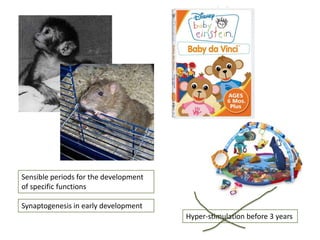
Sensible periods for the development
of specific functions
Synaptogenesis in early development
Hyper-stimulation before 3 years
Origins of neuromyths

1. Distortions of scientific facts, undue
simplifications
2. Offspring of scientific hypotheses that
have been held true for a while, and
then abandoned because of the
emergence of new evidence
3. Use of scientific jargon with no
scientific reference, even loose
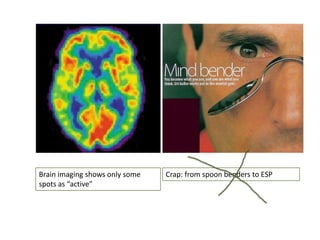
Brain imaging shows only some
spots as “active”

Crap: from spoon benders to ESP
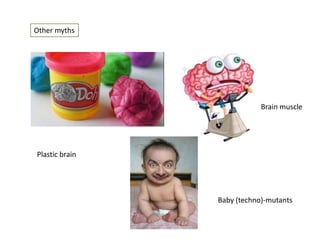
Other myths

Brain muscle

Plastic brain

Baby (techno)-mutants
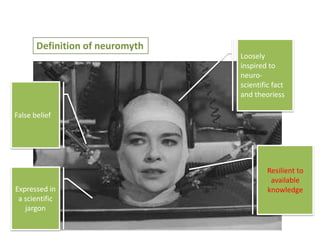
Definition of neuromyth
Loosely
inspired to
neuroscientific fact
and theoriess
False belief

Expressed in
a scientific
jargon

Resilient to
available
knowledge
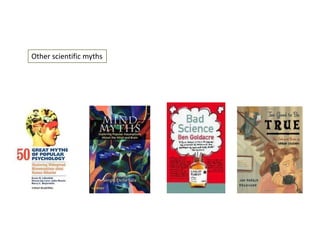
Other scientific myths
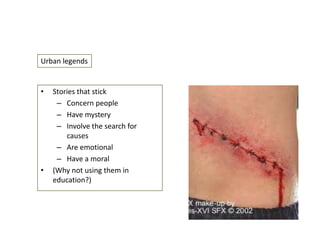
Urban legends

•

•

Stories that stick
– Concern people
– Have mystery
– Involve the search for
causes
– Are emotional
– Have a moral
(Why not using them in
education?)
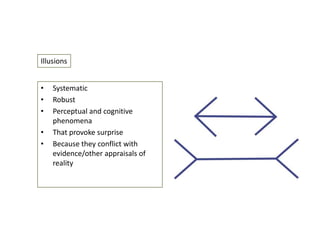
Illusions
•
•
•

•
•

Systematic
Robust
Perceptual and cognitive
phenomena
That provoke surprise
Because they conflict with
evidence/other appraisals of
reality
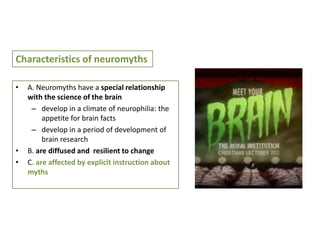
Characteristics of neuromyths
•

•
•

A. Neuromyths have a special relationship
with the science of the brain
– develop in a climate of neurophilia: the
appetite for brain facts
– develop in a period of development of
brain research
B. are diffused and resilient to change
C. are affected by explicit instruction about
myths
The risk of Neuromyths

OVERVIEW ON NEUROMYTHS
REASONS
INTEREST
Reasons
1. Communication shortcomings
a. Placebic information
b. Sensationalism
c. Missing information

Longer explanations
Langer et al 1978
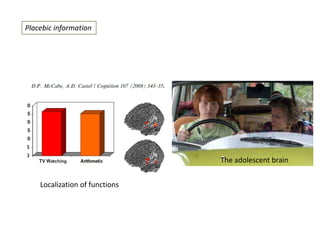
Placebic information

The adolescent brain
Localization of functions
1. Communication
shortcomings
a. Placebic information
b. Sensationalism
c. Missing information
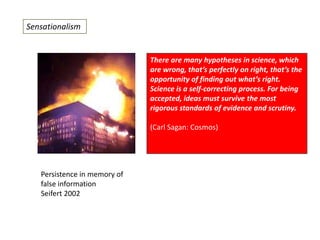
Sensationalism

There are many hypotheses in science, which
are wrong, that’s perfectly on right, that’s the
opportunity of finding out what’s right.
Science is a self-correcting process. For being
accepted, ideas must survive the most
rigorous standards of evidence and scrutiny.
(Carl Sagan: Cosmos)

Persistence in memory of
false information
Seifert 2002
1. Communication
shortcomings
a. Placebic information
b. Sensationalism
c. Missing information
Missing information

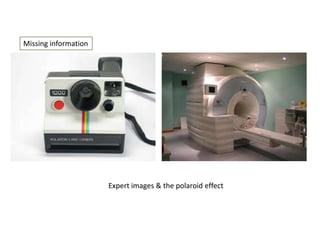
Expert images & the polaroid effect
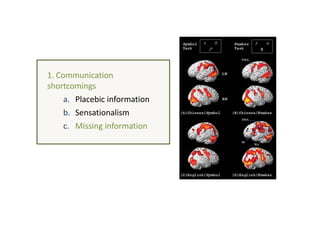
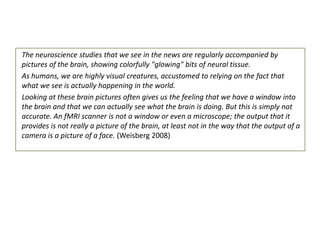
The neuroscience studies that we see in the news are regularly accompanied by
pictures of the brain, showing colorfully "glowing" bits of neural tissue.
As humans, we are highly visual creatures, accustomed to relying on the fact that
what we see is actually happening in the world.
Looking at these brain pictures often gives us the feeling that we have a window into
the brain and that we can actually see what the brain is doing. But this is simply not
accurate. An fMRI scanner is not a window or even a microscope; the output that it
provides is not really a picture of the brain, at least not in the way that the output of a
camera is a picture of a face. (Weisberg 2008)
Reasons
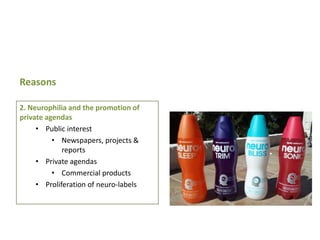
2. Neurophilia and the promotion of
private agendas
• Public interest
• Newspapers, projects &
reports
• Private agendas
• Commercial products
• Proliferation of neuro-labels
Reasons
3. Cognitive illusions and biases
• Soothing function
• Optimistic cognitive illusions
• Confirmation bias
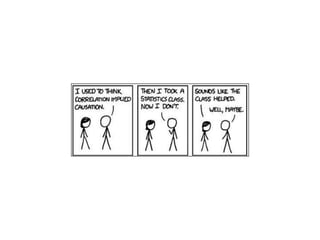
• Correlation/causation illusions
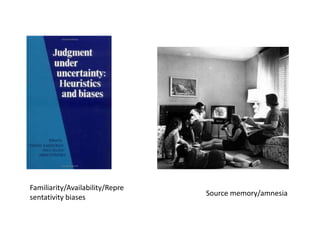
• Familiarity/Availability bias
• Source amnesia
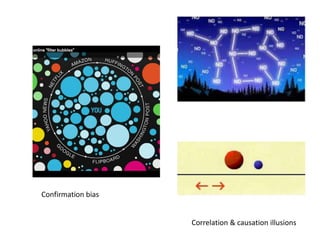
Confirmation bias

Correlation & causation illusions
Familiarity/Availability/Repre
sentativity biases

Source memory/amnesia
The risk of Neuromyths

OVERVIEW ON NEUROMYTHS
REASONS
INTEREST
Diffusion
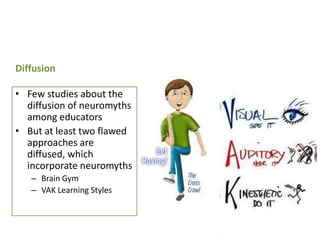
• Few studies about the
diffusion of neuromyths
among educators
• But at least two flawed
approaches are
diffused, which
incorporate neuromyths
– Brain Gym
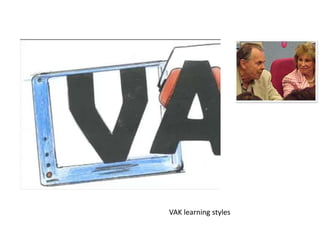
– VAK Learning Styles
Brain gym
VAK learning styles
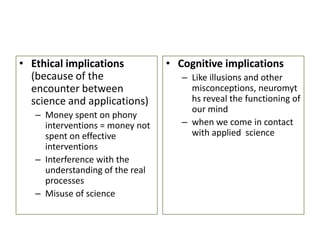
• Ethical implications
(because of the
encounter between
science and applications)
– Money spent on phony
interventions = money not
spent on effective
interventions
– Interference with the
understanding of the real
processes
– Misuse of science

• Cognitive implications
– Like illusions and other
misconceptions, neuromyt
hs reveal the functioning of
our mind
– when we come in contact
with applied science

Gdp2 2013 14-13

  • 1.
    Can evidence-based educationdo more harm than good? How to deal with myths in education OVERVIEW ON NEUROMYTHS REASONS INTEREST
  • 2.
    • Rauscher, Shaw,Ky, 1993: • effects of listening Mozart Sonata for Two Pianos in D Major (K.448) • on adult spatial capacities • 8-9 points increase on IQ scale • Short term effects • Failed to be confirmed by other laboratories
  • 3.
    The central findingof the present paper however, is certainly the noticeably higher overall effect in studies performed by Rauscher and colleagues than in studies performed by other researchers, indicating systematically moderating effects of lab affiliation. On the whole, there is little evidence left for a specific, performanceenhancing Mozart effect. (Pietschnig, et al, 2010)
  • 4.
    Mr. Miller, aDemocrat, proposed as part of his $12.5 billion state budget on Tuesday to spend $105,000 to make music available to each of the approximately 100,000 children born in Georgia each year. ‘‘No one questions that listening to music at a very early age affects the spatial, temporal reasoning that underlies math and engineering and even chess,'' the Governor said today. ''Having that infant listen to soothing music helps those trillions of brain connections to develop.’
  • 6.
    Origins of neuromyths 1.Distortions of scientific facts, undue simplifications 2. Offspring of scientific hypotheses that have been held true for a while, and then abandoned because of the emergence of new evidence 3. Use of scientific jargon with no scientific reference, even loose
  • 7.
    Specialization of thehemispheres “Equilibration of the hemisperes”, as in Brain Gym
  • 8.
    Origins of neuromyths 1.Distortions of scientific facts, undue simplifications 2. Offspring of scientific hypotheses that have been held true for a while, and then abandoned because of the emergence of new evidence 3. Use of scientific jargon with no scientific reference, even loose
  • 9.
    Sensible periods forthe development of specific functions Synaptogenesis in early development Hyper-stimulation before 3 years
  • 10.
    Origins of neuromyths 1.Distortions of scientific facts, undue simplifications 2. Offspring of scientific hypotheses that have been held true for a while, and then abandoned because of the emergence of new evidence 3. Use of scientific jargon with no scientific reference, even loose
  • 11.
    Brain imaging showsonly some spots as “active” Crap: from spoon benders to ESP
  • 12.
    Other myths Brain muscle Plasticbrain Baby (techno)-mutants
  • 13.
    Definition of neuromyth Loosely inspiredto neuroscientific fact and theoriess False belief Expressed in a scientific jargon Resilient to available knowledge
  • 14.
  • 15.
    Urban legends • • Stories thatstick – Concern people – Have mystery – Involve the search for causes – Are emotional – Have a moral (Why not using them in education?)
  • 16.
    Illusions • • • • • Systematic Robust Perceptual and cognitive phenomena Thatprovoke surprise Because they conflict with evidence/other appraisals of reality
  • 17.
    Characteristics of neuromyths • • • A.Neuromyths have a special relationship with the science of the brain – develop in a climate of neurophilia: the appetite for brain facts – develop in a period of development of brain research B. are diffused and resilient to change C. are affected by explicit instruction about myths
  • 18.
    The risk ofNeuromyths OVERVIEW ON NEUROMYTHS REASONS INTEREST
  • 19.
    Reasons 1. Communication shortcomings a.Placebic information b. Sensationalism c. Missing information Longer explanations Langer et al 1978
  • 20.
    Placebic information The adolescentbrain Localization of functions
  • 21.
    1. Communication shortcomings a. Placebicinformation b. Sensationalism c. Missing information
  • 22.
    Sensationalism There are manyhypotheses in science, which are wrong, that’s perfectly on right, that’s the opportunity of finding out what’s right. Science is a self-correcting process. For being accepted, ideas must survive the most rigorous standards of evidence and scrutiny. (Carl Sagan: Cosmos) Persistence in memory of false information Seifert 2002
  • 23.
    1. Communication shortcomings a. Placebicinformation b. Sensationalism c. Missing information
  • 24.
    Missing information Expert images& the polaroid effect
  • 25.
    The neuroscience studiesthat we see in the news are regularly accompanied by pictures of the brain, showing colorfully "glowing" bits of neural tissue. As humans, we are highly visual creatures, accustomed to relying on the fact that what we see is actually happening in the world. Looking at these brain pictures often gives us the feeling that we have a window into the brain and that we can actually see what the brain is doing. But this is simply not accurate. An fMRI scanner is not a window or even a microscope; the output that it provides is not really a picture of the brain, at least not in the way that the output of a camera is a picture of a face. (Weisberg 2008)
  • 26.
    Reasons 2. Neurophilia andthe promotion of private agendas • Public interest • Newspapers, projects & reports • Private agendas • Commercial products • Proliferation of neuro-labels
  • 27.
    Reasons 3. Cognitive illusionsand biases • Soothing function • Optimistic cognitive illusions • Confirmation bias • Correlation/causation illusions • Familiarity/Availability bias • Source amnesia
  • 28.
  • 30.
  • 31.
    The risk ofNeuromyths OVERVIEW ON NEUROMYTHS REASONS INTEREST
  • 32.
    Diffusion • Few studiesabout the diffusion of neuromyths among educators • But at least two flawed approaches are diffused, which incorporate neuromyths – Brain Gym – VAK Learning Styles
  • 34.
  • 35.
  • 37.
    • Ethical implications (becauseof the encounter between science and applications) – Money spent on phony interventions = money not spent on effective interventions – Interference with the understanding of the real processes – Misuse of science • Cognitive implications – Like illusions and other misconceptions, neuromyt hs reveal the functioning of our mind – when we come in contact with applied science

Editor's Notes

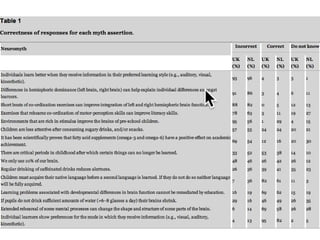
  • #34 Neuromyths in Education: Prevalence and Predictors of Misconceptions among TeachersSanne Dekker,1,* Nikki C. Lee,1 Paul Howard-Jones,2 and Jelle Jolles1 2012http://www.ncbi.nlm.nih.gov/pmc/articles/PMC3475349/