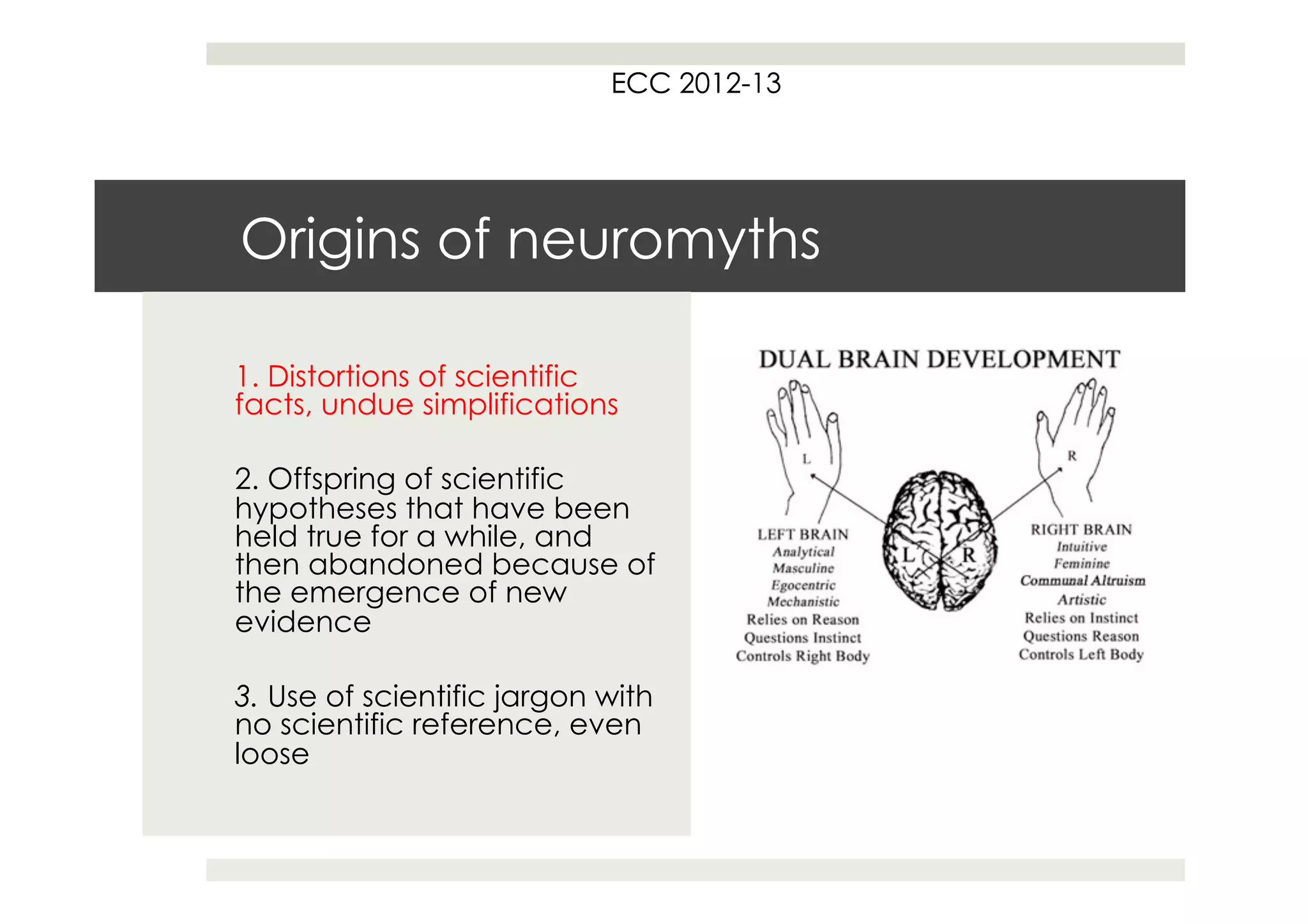
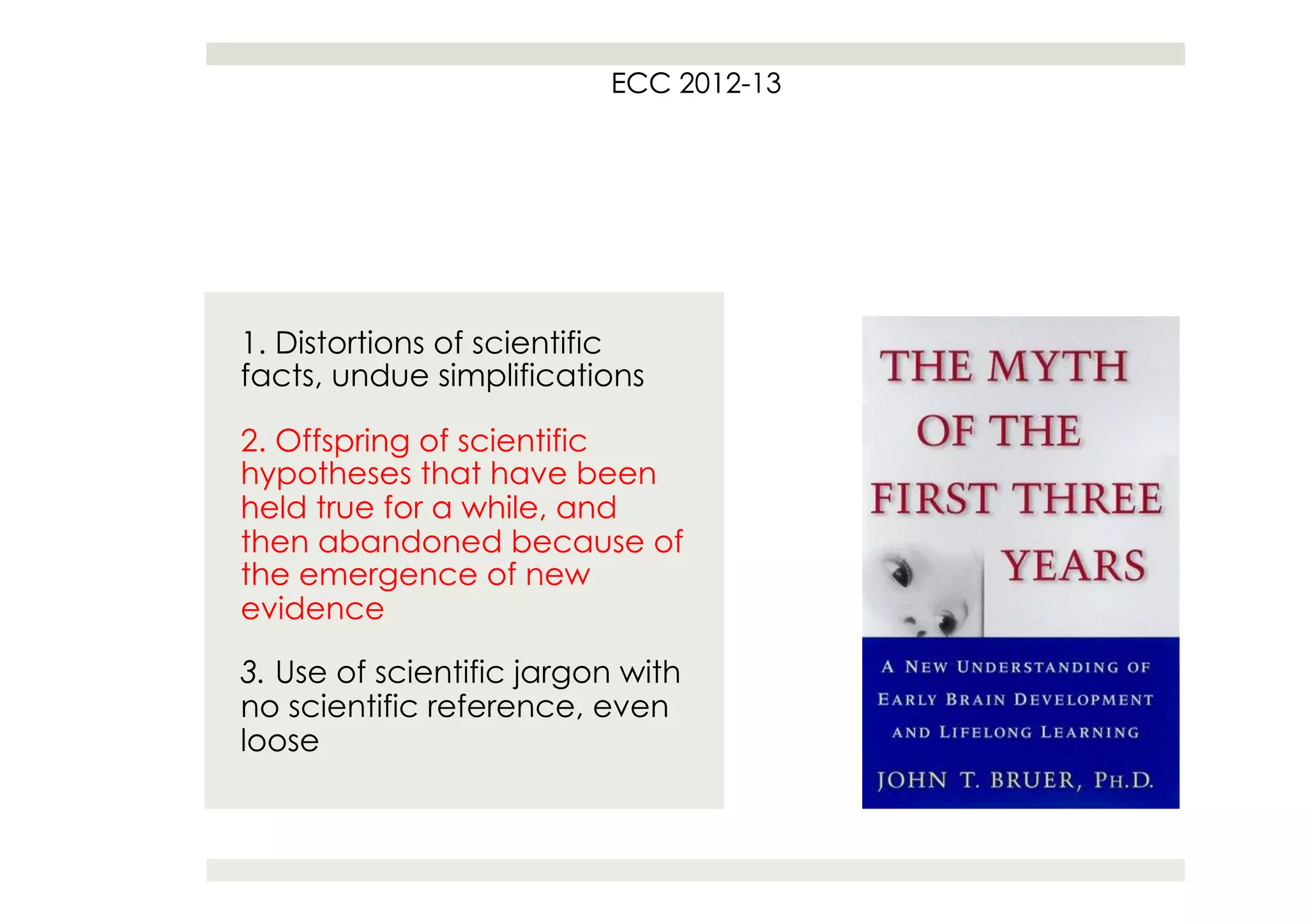
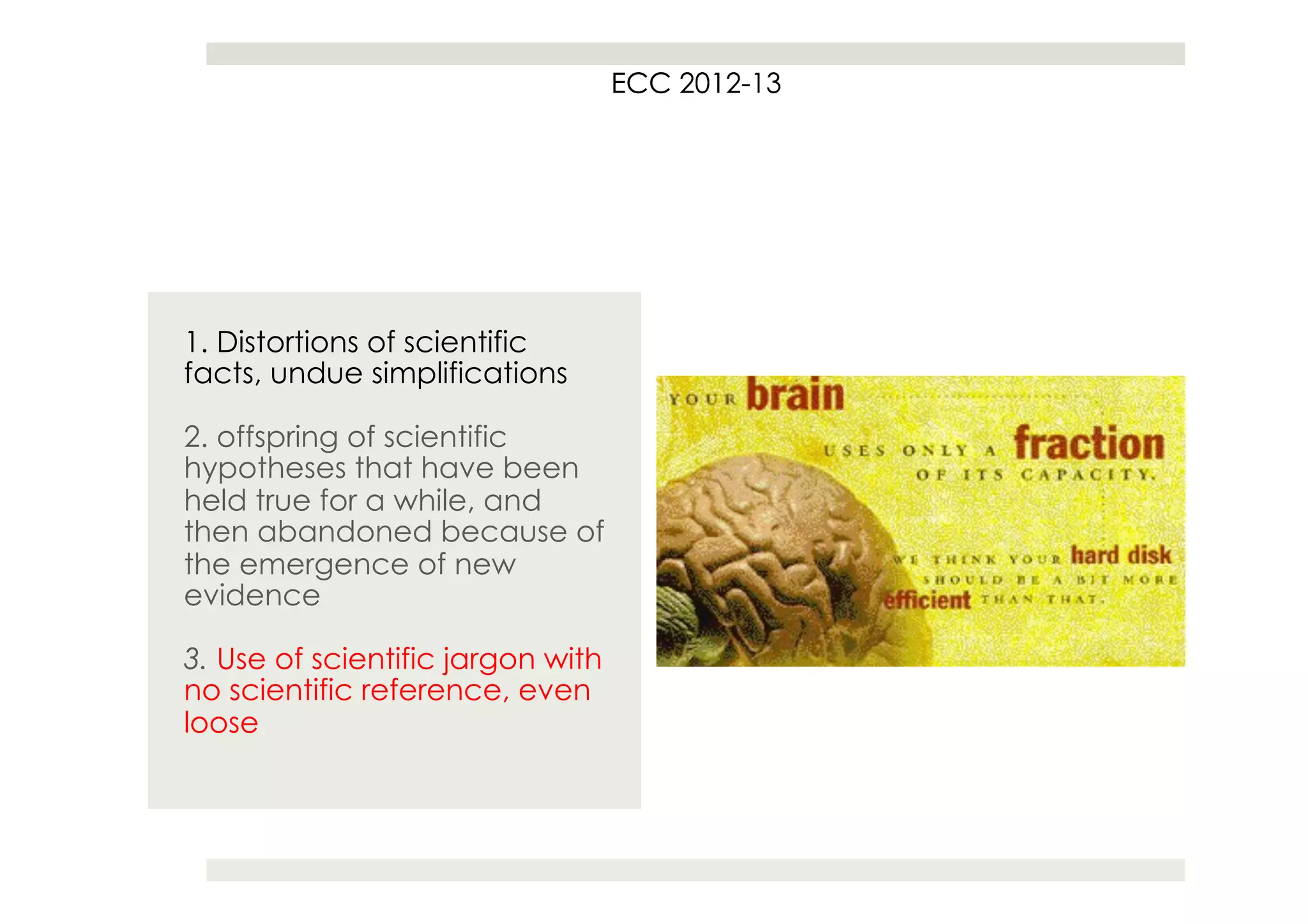
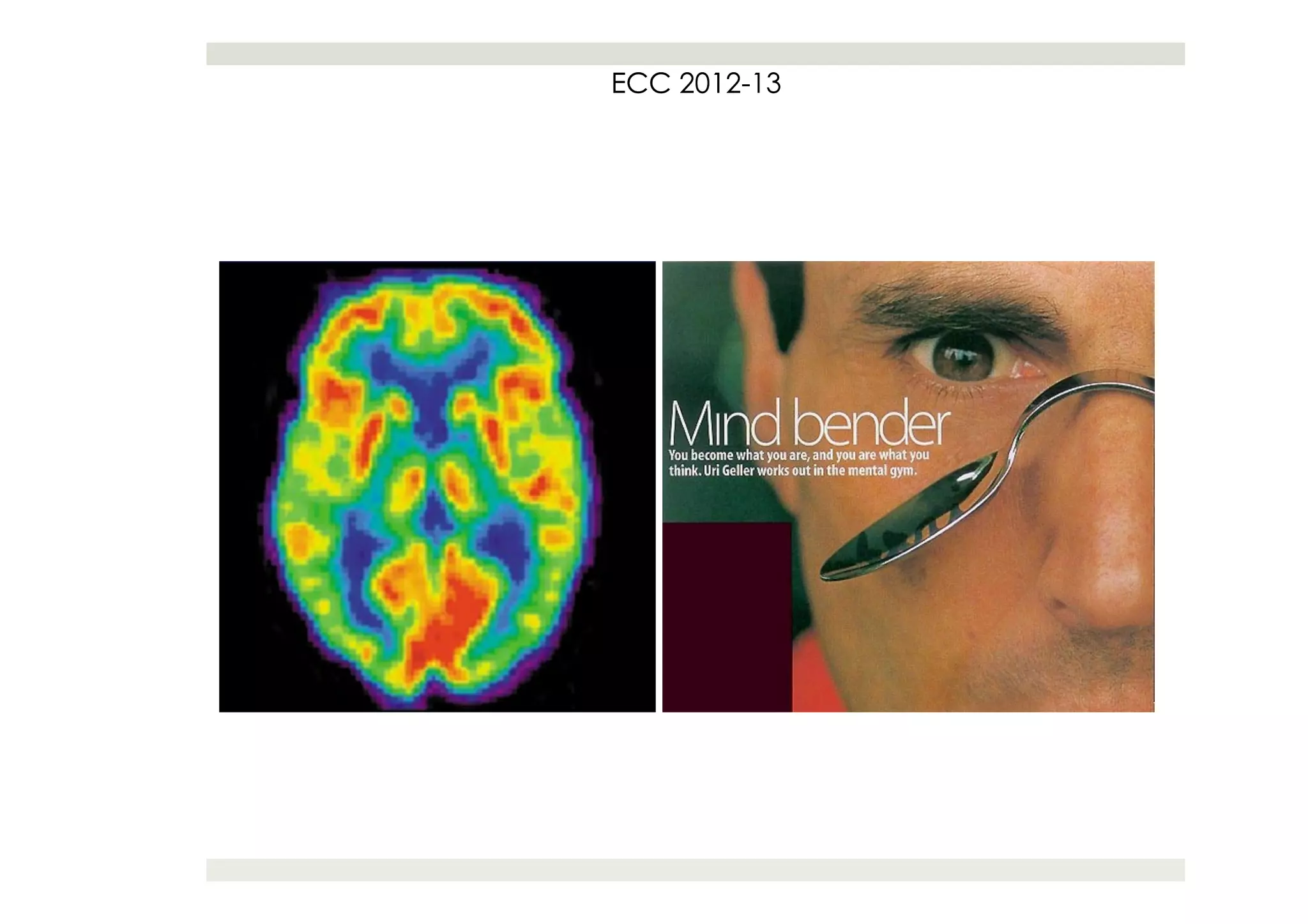
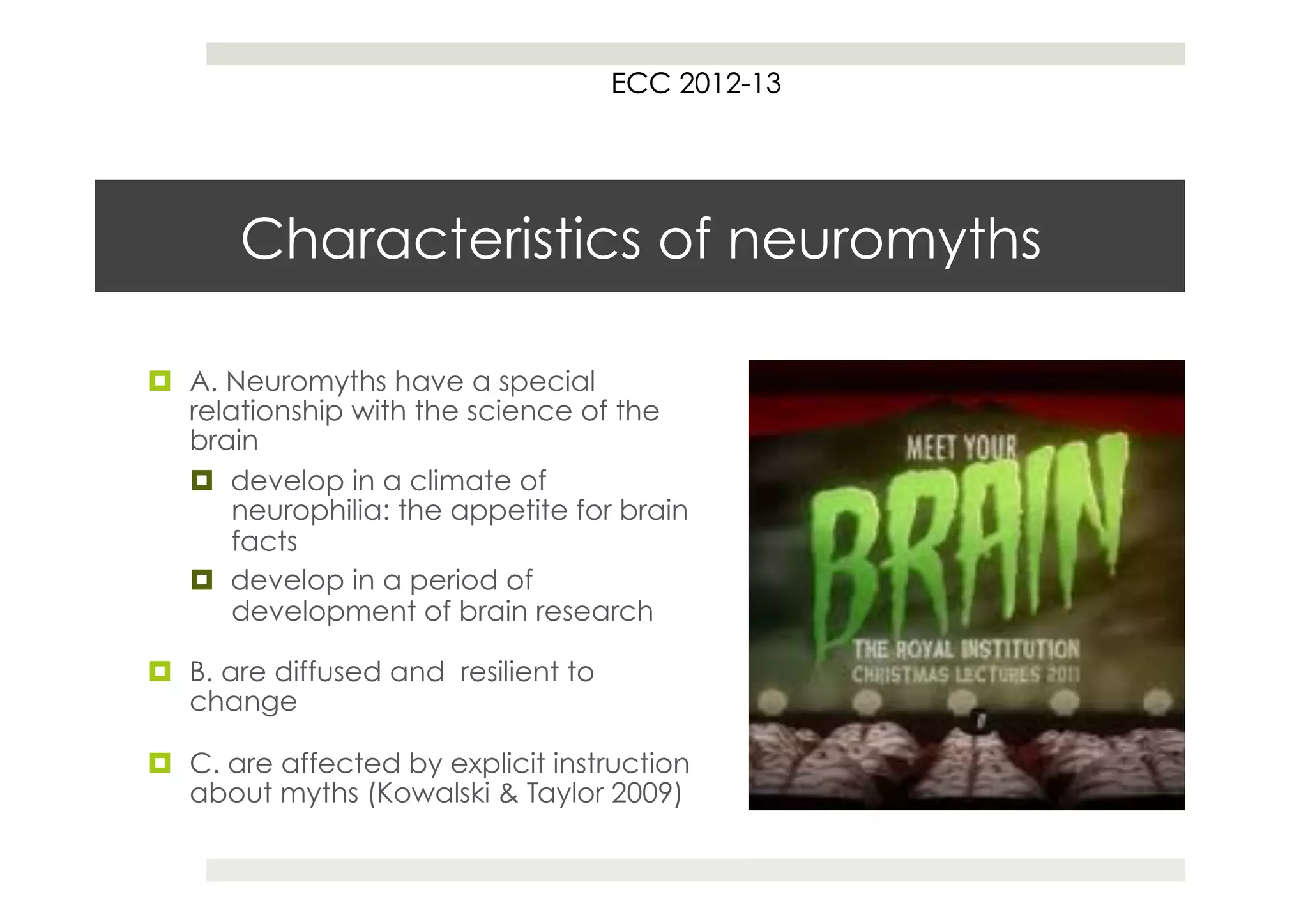
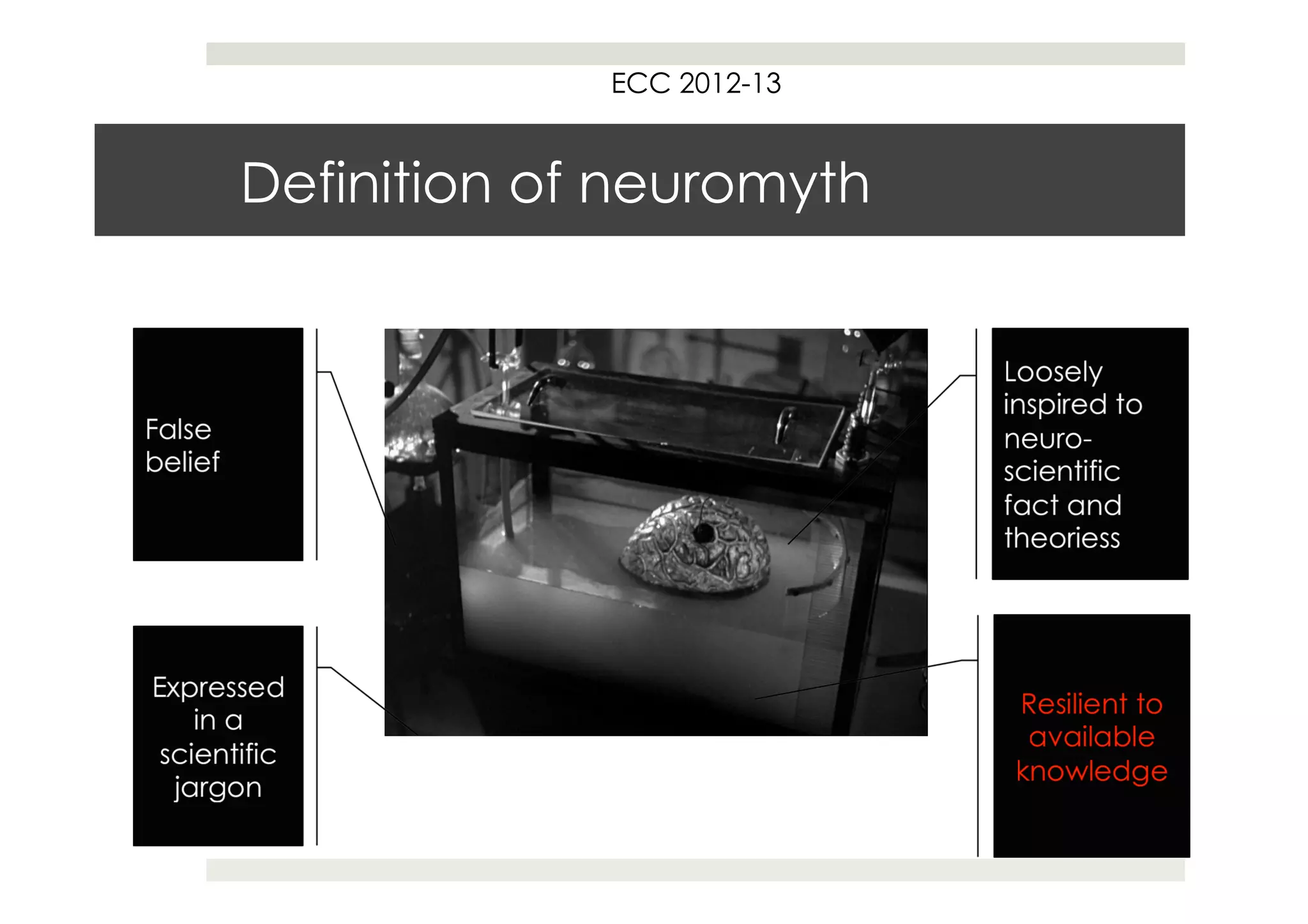
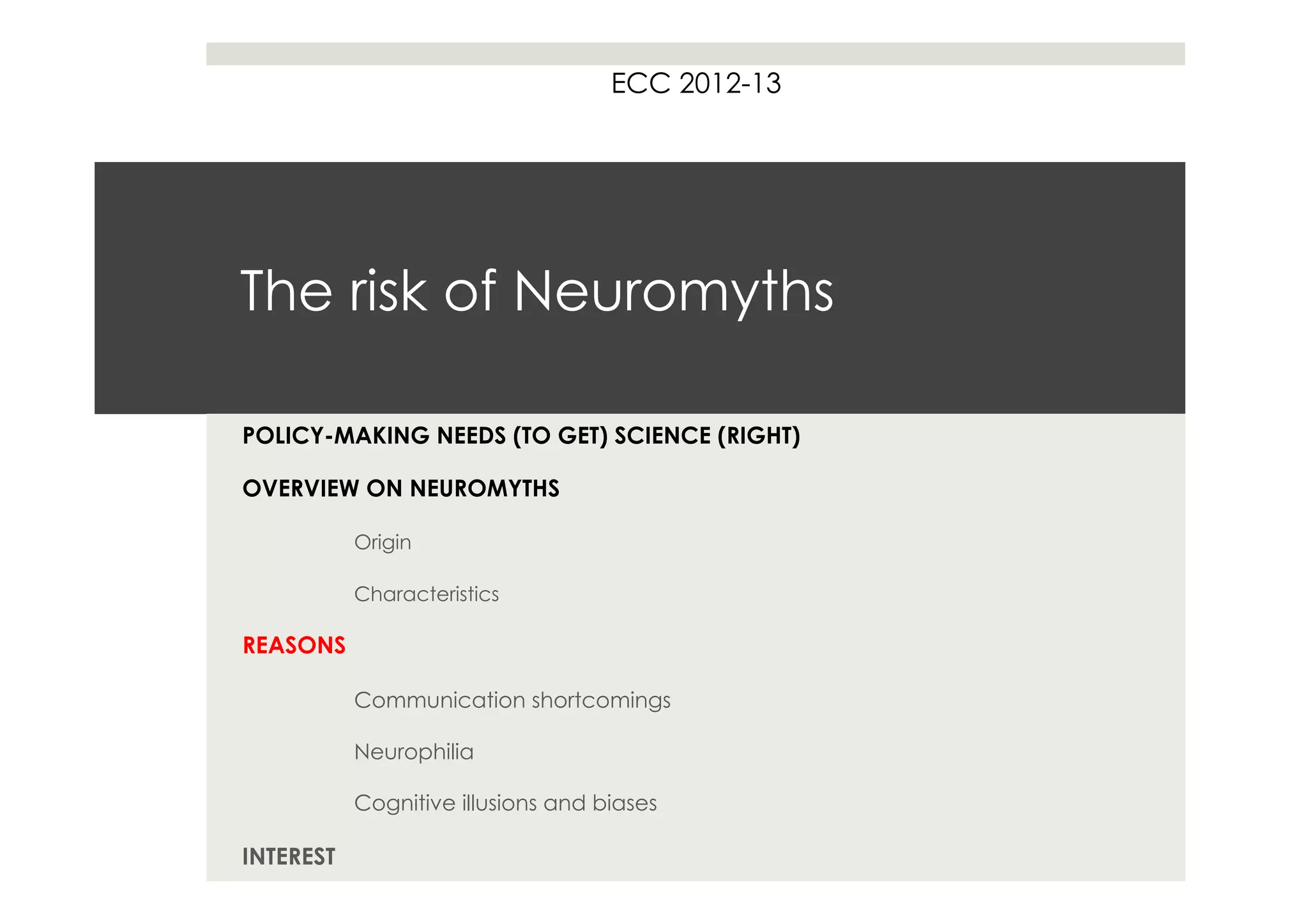
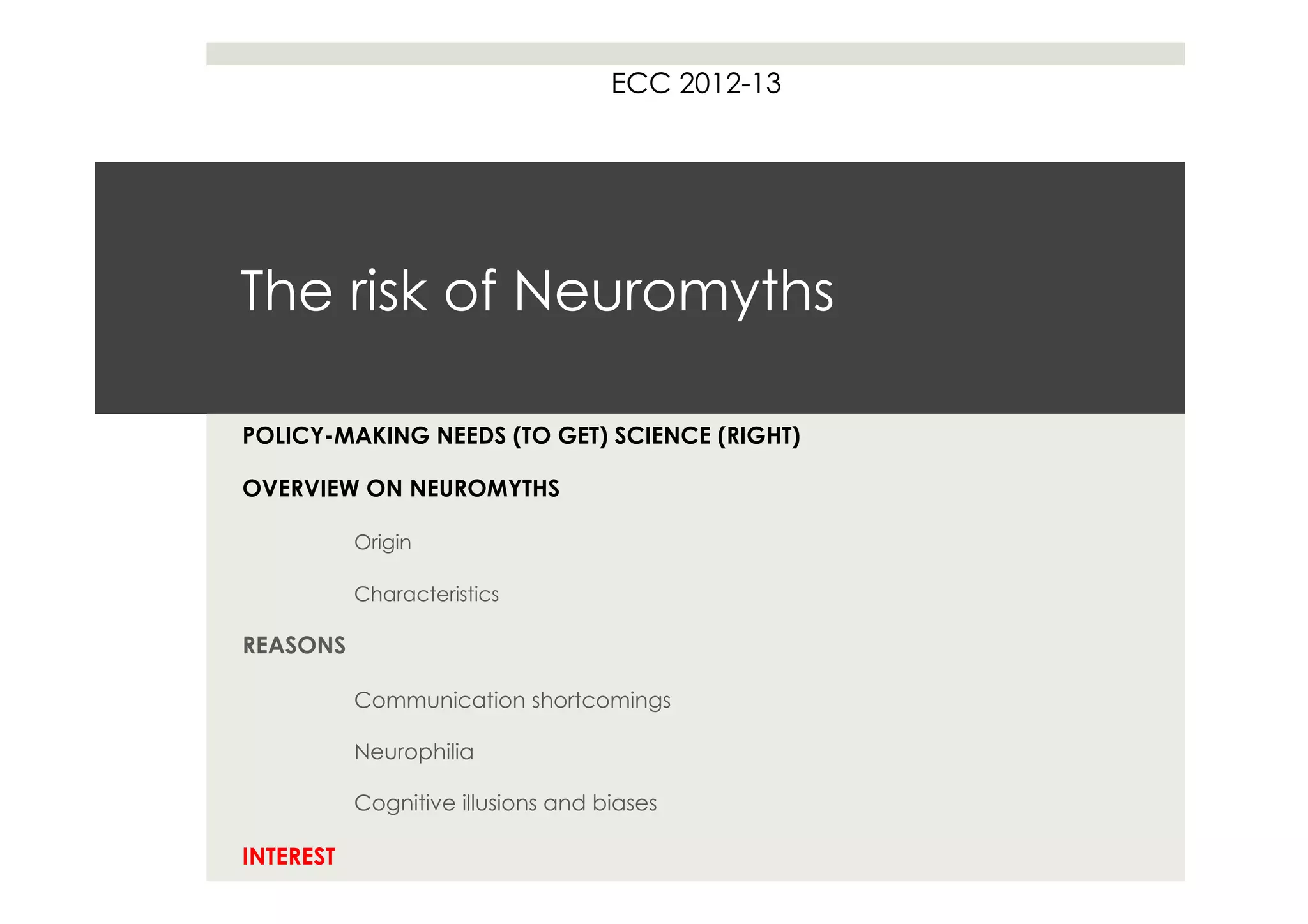
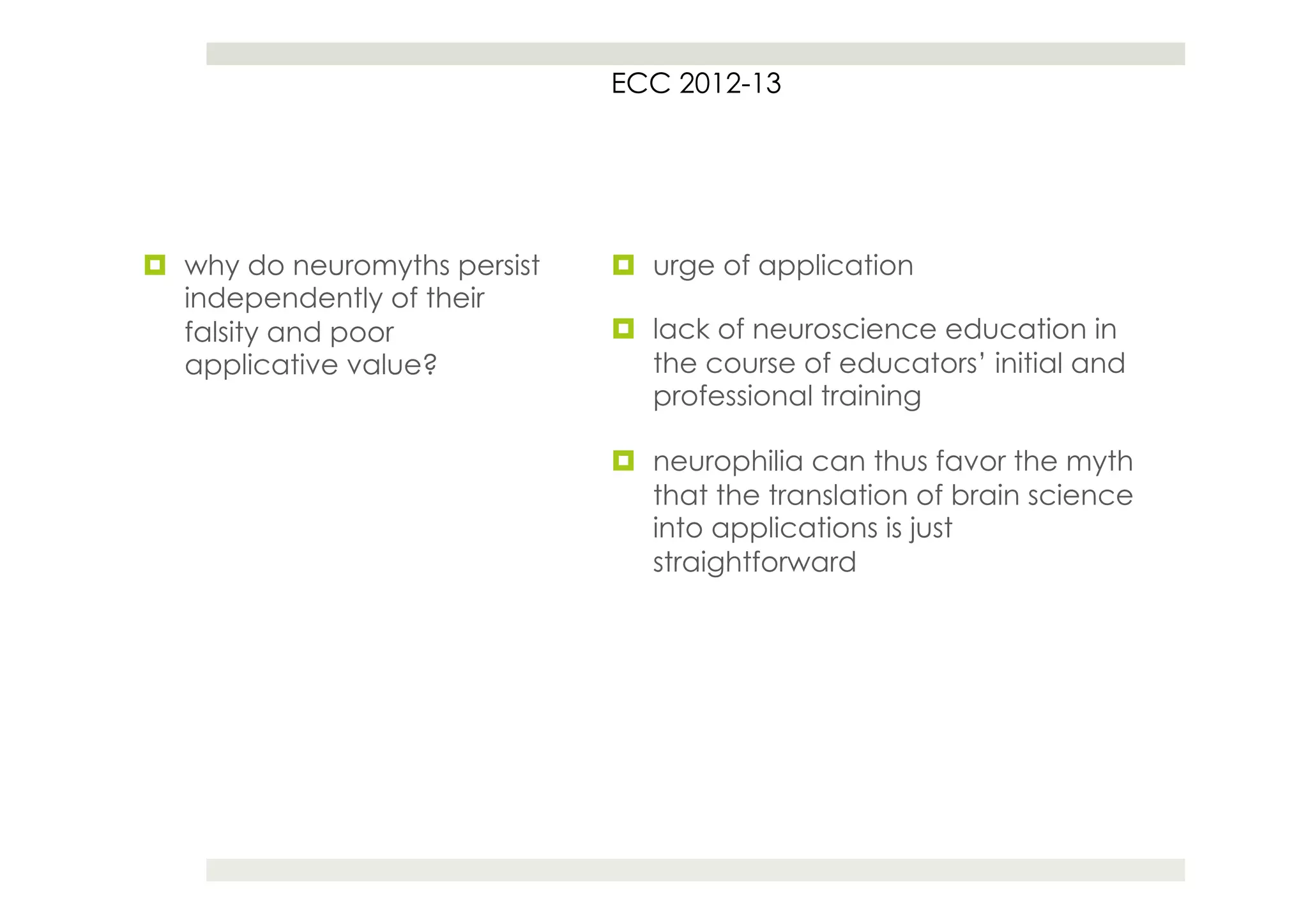
1. The document discusses the origins and characteristics of neuromyths, which are false ideas about how the brain works that persist despite being scientifically refuted.
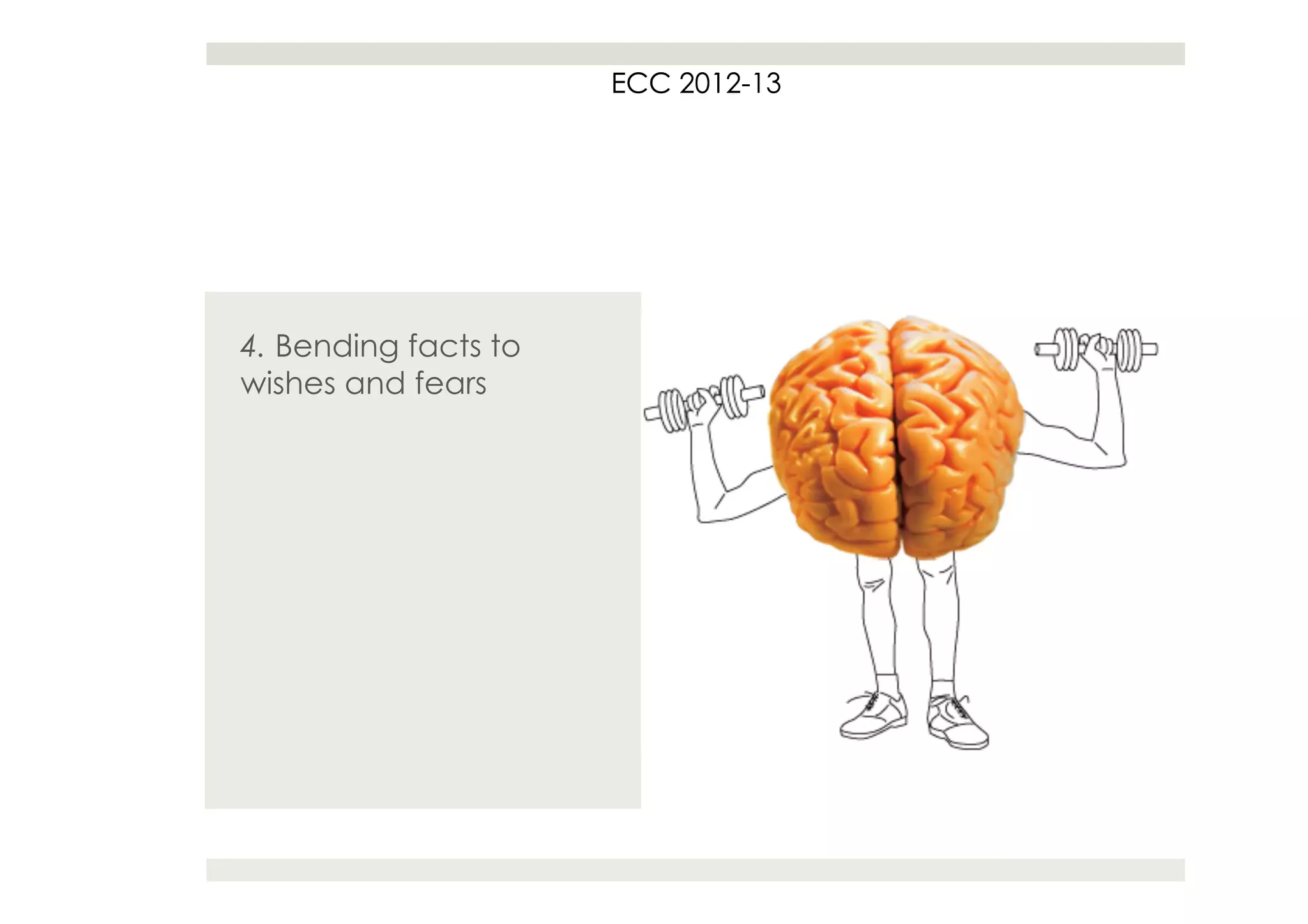
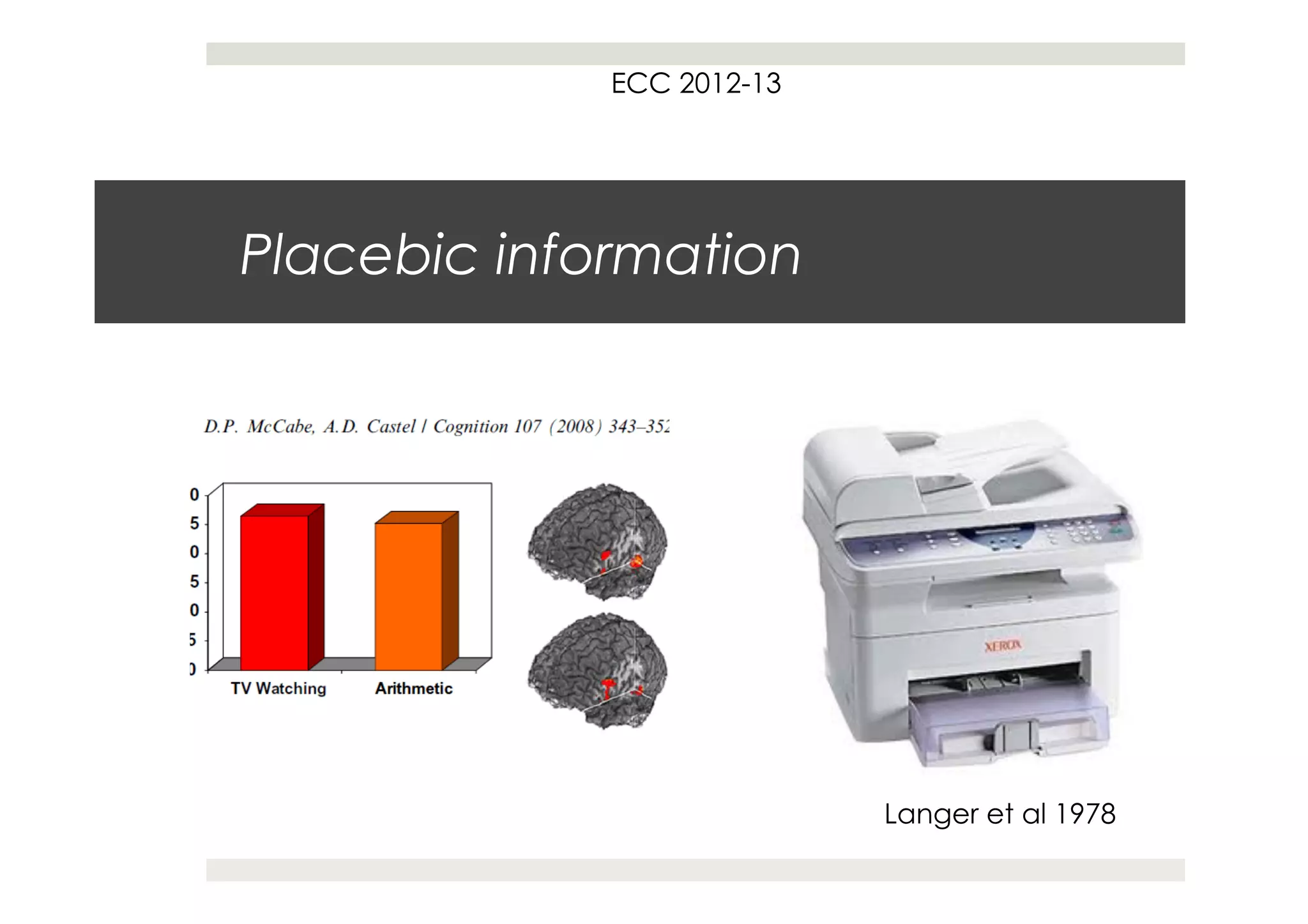
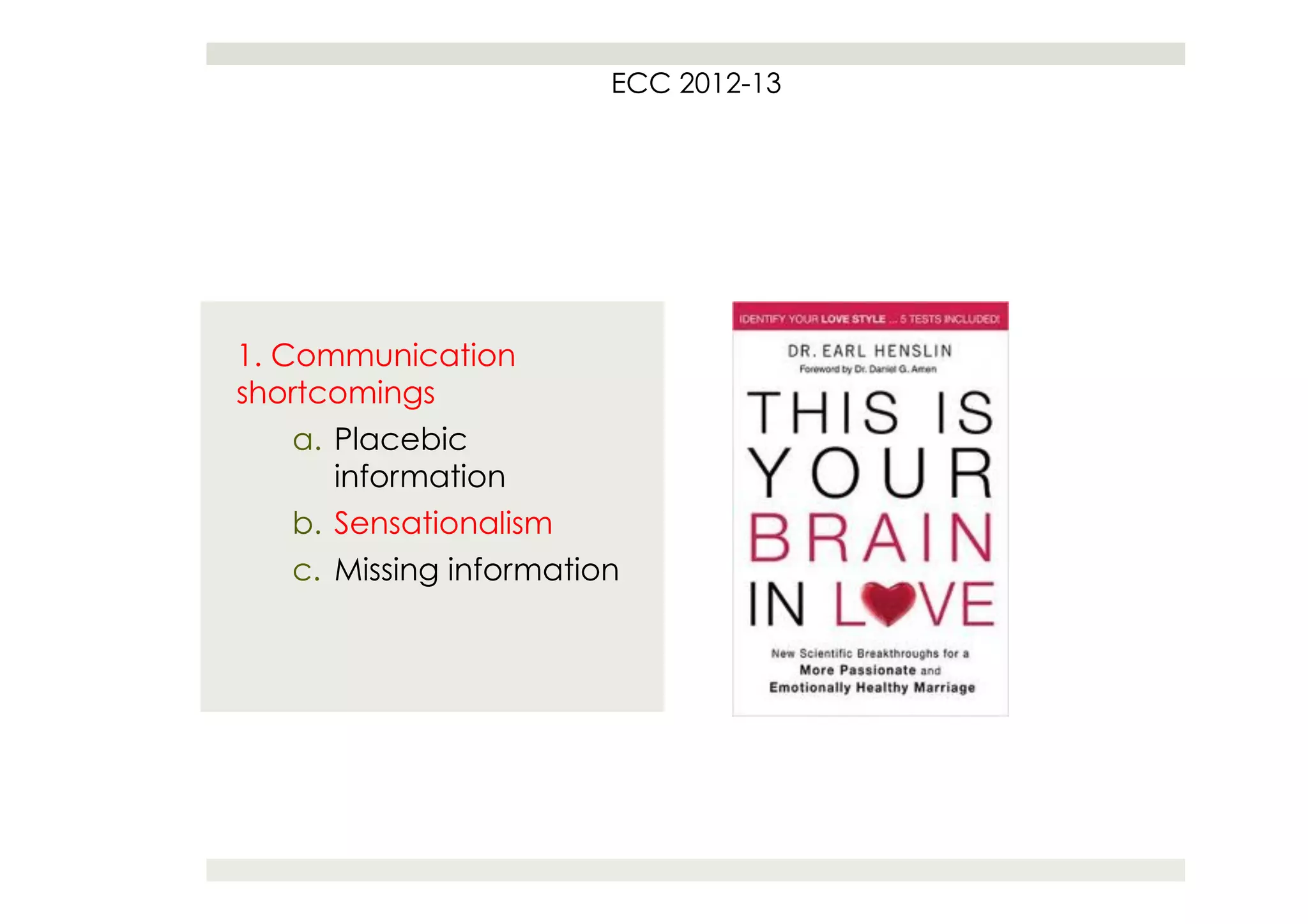
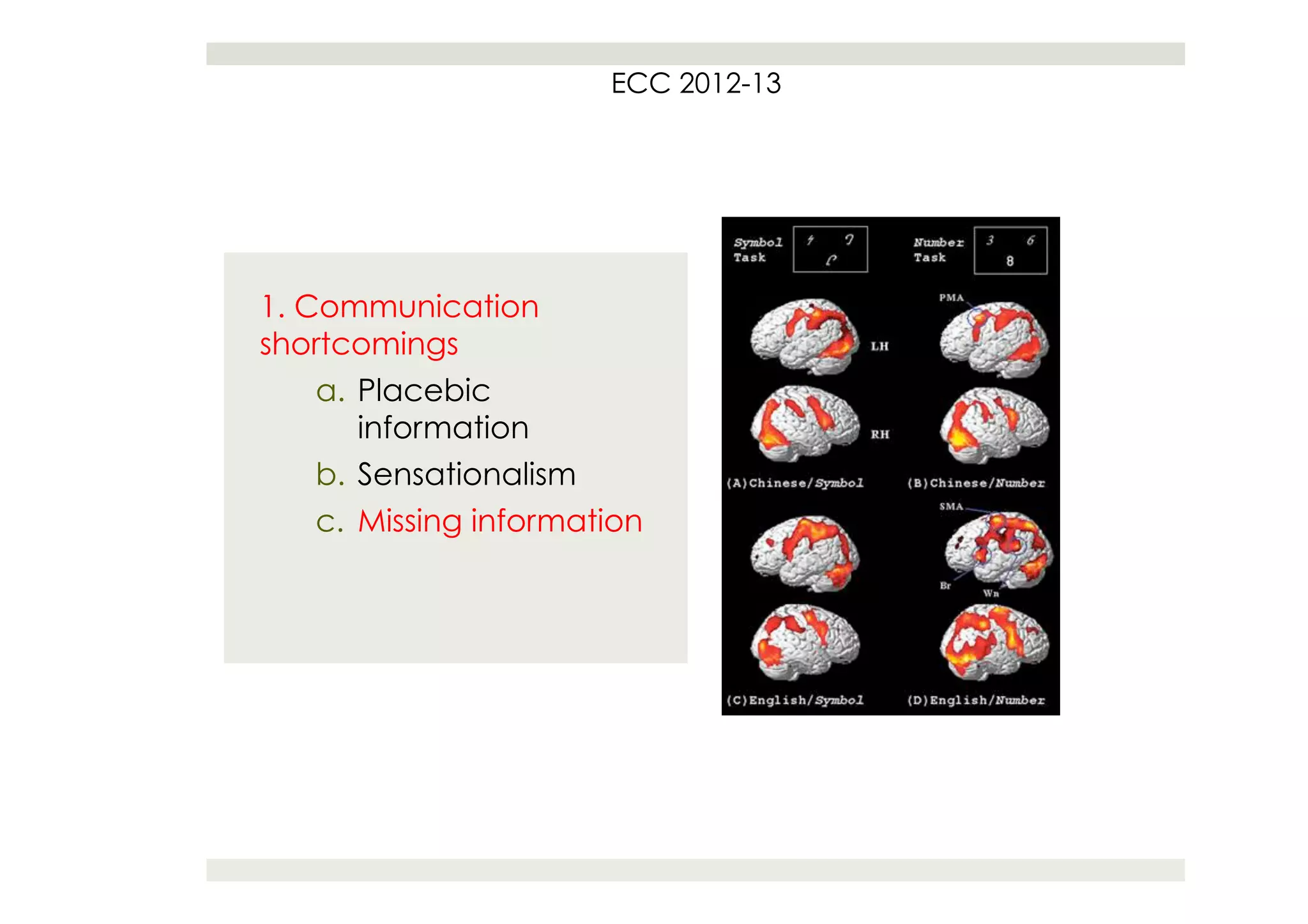
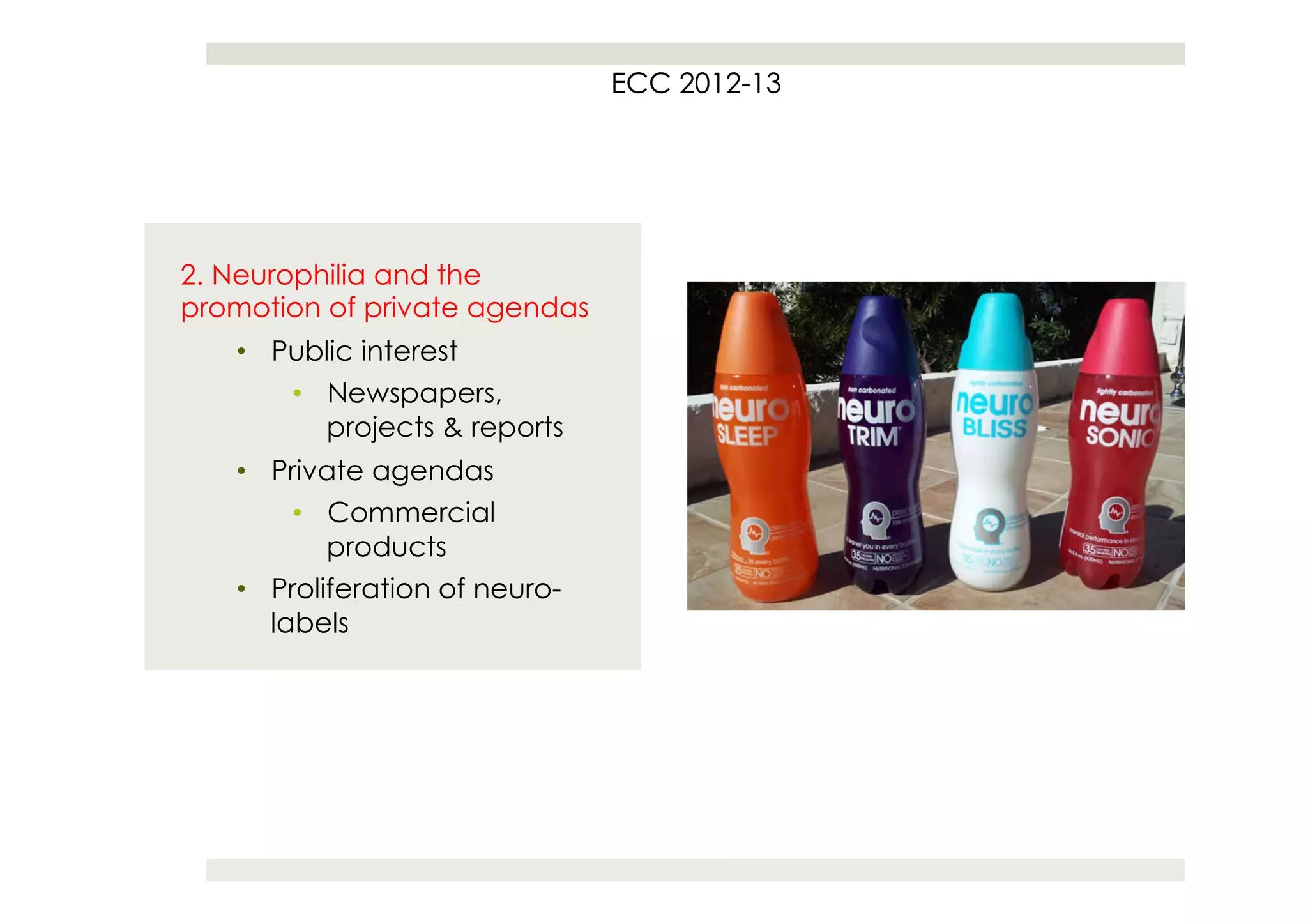
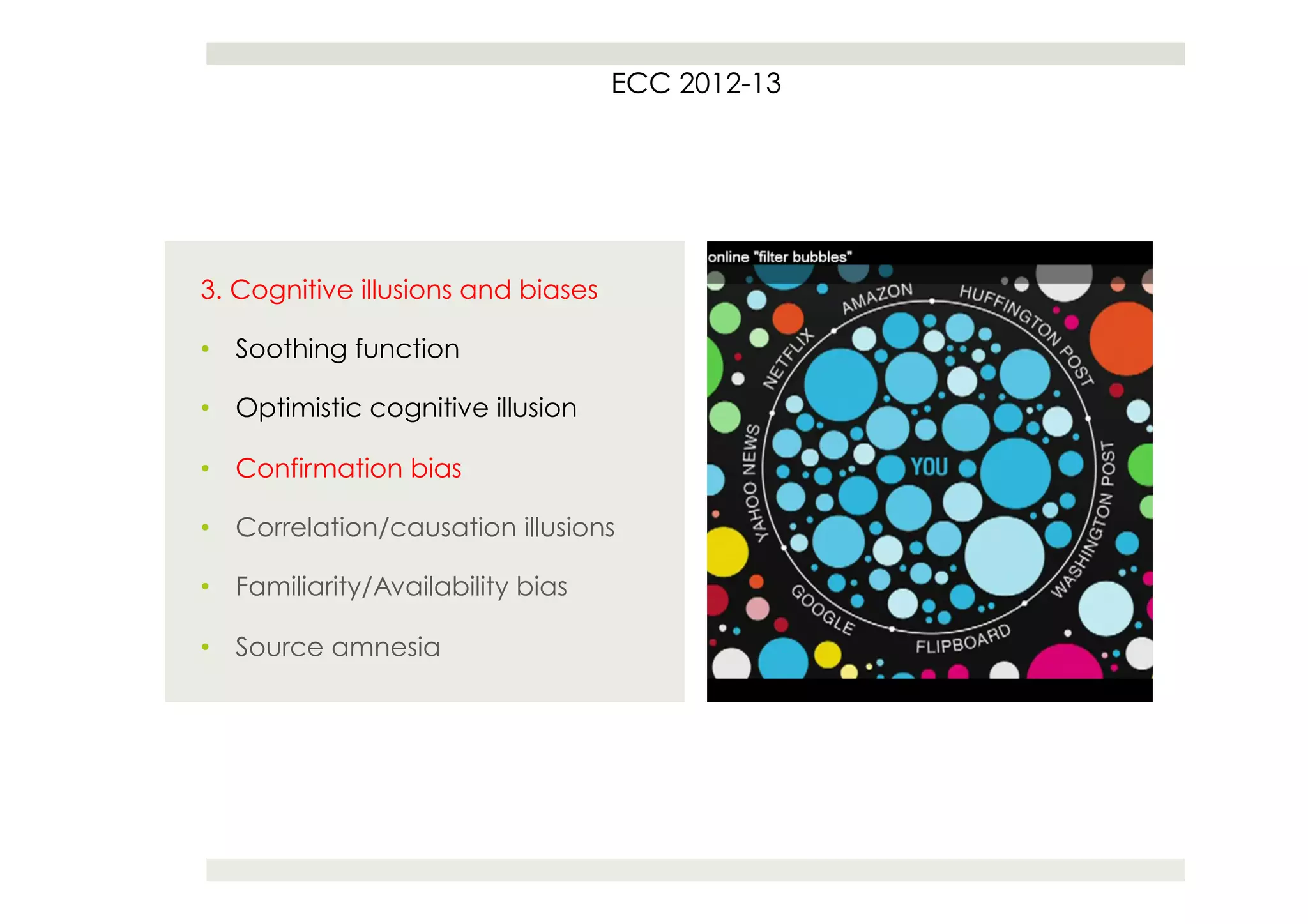
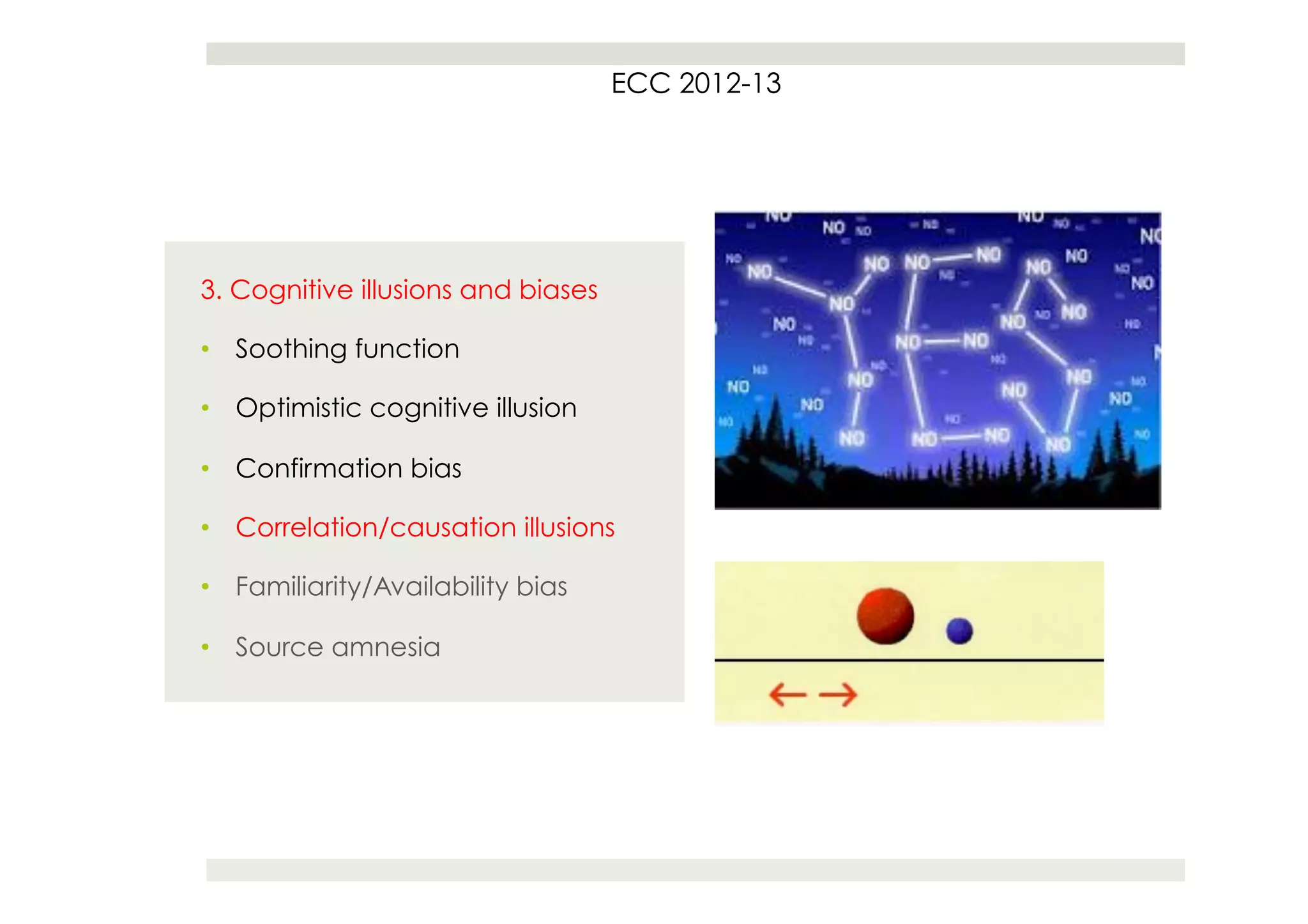
2. Common reasons for the proliferation of neuromyths include communication shortcomings in the dissemination of neuroscience, public interest in neuroscience leading to the promotion of private agendas, and cognitive biases that cause people to misinterpret information.
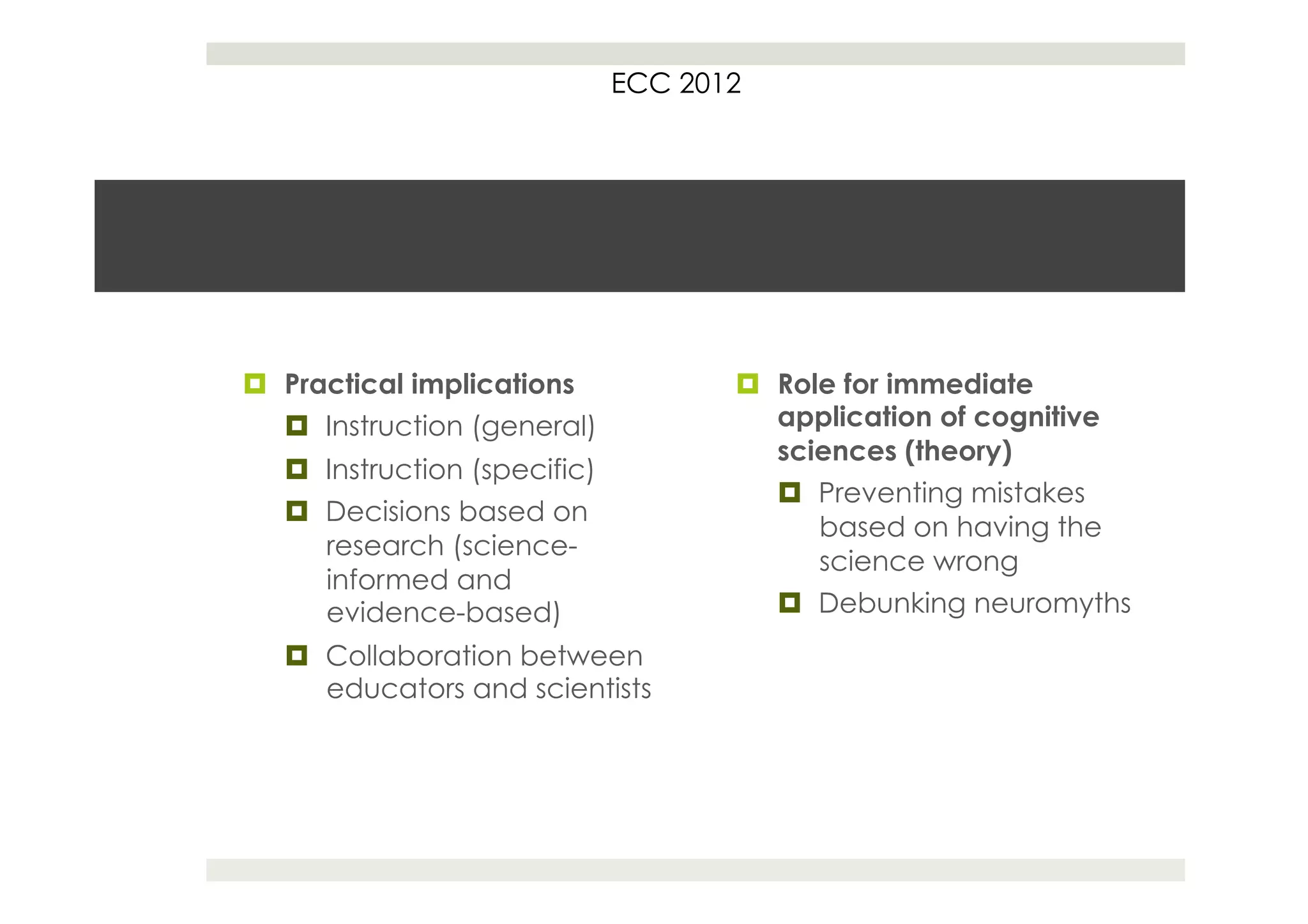
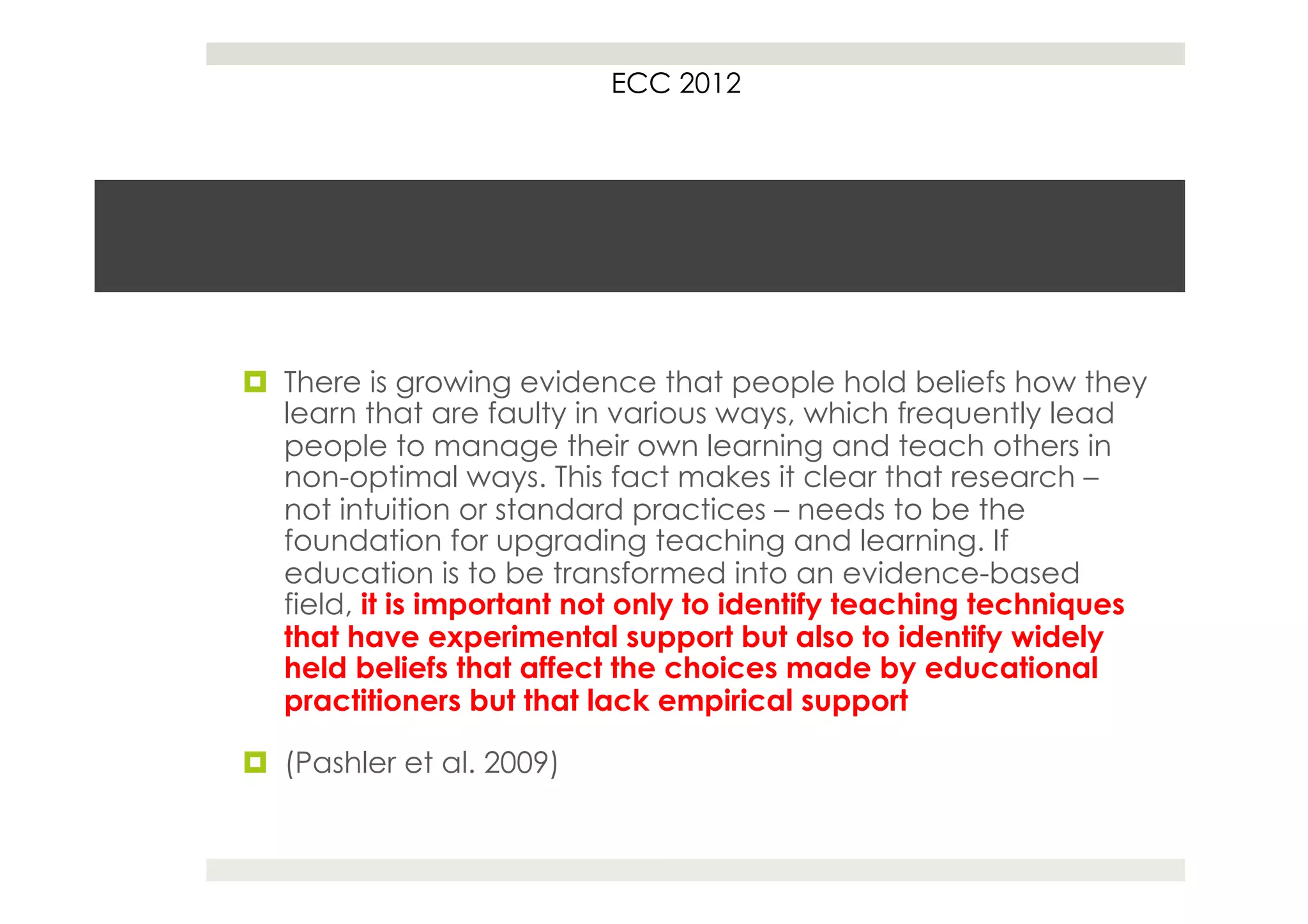
3. Addressing neuromyths is important for policymaking to be properly informed by scientific evidence rather than myth.







![Coded Agents – with UiPath SDK + LangGraph [Virtual Hands-on Workshop]](https://cdn.slidesharecdn.com/ss_thumbnails/codedagentsdeck-251215155422-5497c599-thumbnail.jpg?width=640&height=640&fit=bounds)


![Vibe Coding vs. Spec-Driven Development [Free Meetup]](https://cdn.slidesharecdn.com/ss_thumbnails/vibecodingvsspecdrivendevelopment-251209105622-43f455e7-thumbnail.jpg?width=640&height=640&fit=bounds)
