
GBV IN
ELECTORAL PROCESSES
JACK ABEBE
12TH JAN 2013
PRESENTED TO IMPROVE LIFE
INTERNATIONAL
OVERVIEW
•
•
•
•
•

Defining Electoral Violence
Defining GBV
Reasons for Electoral GBV
Types of GBV in Electoral process
Understanding GBV in relation to
the Electoral cycle
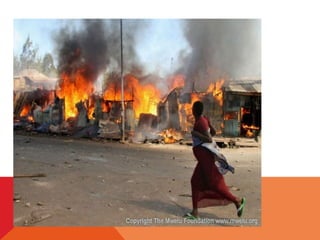
ELECTORAL VIOLENCE
Defining electoral violence:
“… Acts

or threats of coercion, intimidation or
physical harm perpetrated to affect an
electoral process or that arises in the
context of electoral competition. When
perpetrated to affect an electoral process,
violence may be employed to influence the
process of elections – such as efforts to
delay, disrupt, or derail a poll – and to
influence the outcomes: the determining of
winners in competitive races for political
office or to secure approval or disapproval of
referendum questions.”
GENDER-BASED VIOLENCE (GBV)

• Violence is the use of force or coercion
to injure another person or property.
• Gender-Based Violence (GBV) is any act
of violence or threat to a person, which
includes intimidation, oppression or
other forms of denial of liberty directed
at a particular individual or group of
people because of his or her gender.
• Women and children are the main
victims of GBV .
What are the reasons behind GBV during
electoral Processes?
What are the types of GBV during electoral
processes?
reform
audits &
evaluations

constitution

electoral
bodies

development
tabulation of
results

Postelection

complaints &
appeals

Verification
of Results

official results
pre-voting & outof-country voting

Voting
Operations &
Election Day

vote-counting
voting

Legal
Framework

The
Electoral
Cycle

Electoral
Campaign

media
party liaison
complaints

legislation

electoral
system

financing

security
budgeting

resource planning &
implementation
Electoral
Planning &
Implementation

funding &
financing
calendar/
timeline
election
officials

Training &
Education

civic & voter
education

Voter
Registration

voters
parties &
candidates

observers
REASONS FOR ELECTORAL GBV
• To intimidate and scare them from
voting and even vying for political
positions
• Force women to vote for a particular
person
• Punishing a group/community for
voting in a certain way
• For revenge.
• Cultural, social and political
intolerance
TYPES OF GBV

•
•
•
•
•

Physical
Sexual
Emotional & psychological
Economic
Harmful Cultural practices(FGM,
Early and forced marriage, widow
cleansing, wife inheritance etc)
GBV AND ELECTORAL VIOLENCE
Aggression
most commonly takes the form of verbal
harassment during campaign meetings.
It is aimed at
embarrassing women by questioning
their competency or insulting them
with accusations of being prostitutes.
intimidation is more severe and sometimes involves threats of violence.
Women
candidates are warned that their husbands or supporters will be beaten
or even killed if they do
not withdraw from the race. One woman during the 2008 local election
was threatened with
rape unless she abandoned her campaign.
Case study
In rural areas where traditional practices are strong,
especially in the North, men belonging to the secret “poro” society
threaten to bring out the
“poro devil” mask – which women are forbidden from seeing – to scare
off female candidates
and their supporters. More extreme forms of traditional intimidation
involve threats that women
will be taken to the bush, beaten and left there. Some women have also
reported physical violence
being used to intimidate, most commonly stones being thrown, but in
one instance a female
candidate was locked in her house on the day of the election.
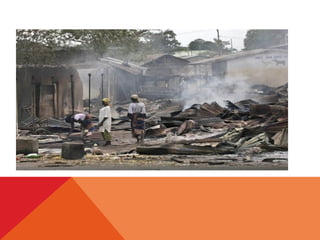
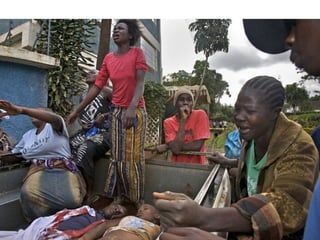
• Women and girls have been victims of
Gender Based Violence throughout
electoral processes taking into
consideration the fact that the rate of
rape always increase in conflict time
• Women remain with permanent scars,
some have died, and others have been
injured, whilst most of them remain
traumatized by past and continued
incidents of violation of their
fundamental right of enjoying peace,
against violence.
• Gender-based violence against
women and girls has been a feature
of virtually all recent violent
conflicts, including the PEV in
2007/08
• Women and girls face a greatly
increased risk of physical and sexual
violence; rape and other types of
gender based violence seem to be a
"rule of war".
• GBV is increasingly becoming a
challenge for women that want to
participate in the electoral process and
presents a major obstacle in advancing
women’s position in society.
 Women who want their voices to be
heard when critical political decisions
are being made risk losing their lives or
being violently attacked by those
people opposed to their participation
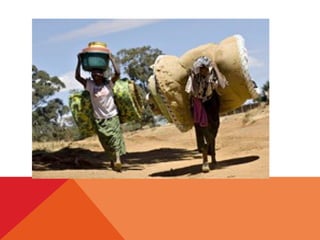
• Some women and children are
tortured, killed and abducted. Their
homes and property destroyed. Their
cattle, grain and property looted.
• Some of these women are forced to
leave their homes. Their husbands
and sons killed before their eyes.
This means that women’s livelihoods
are disturbed and lives disrupted.
• Despite the numerous legal provisions
that support women’s participation in
politics and decision-making positions
and processes, women still face
enormous barriers in doing so.
• Some of the challenges are
entrenched in society’s conception of
the roles women should play and
others are seen in more formal
structures within the political arena
• GBV discourages women from running
for positions since they fear for their
personal security and losing their
families.
• It prevents women from voting or
openly supporting the candidates of
their choice
• Acts and threats of GBV have
contributed to keeping women out of
politics and men have continued to
be dominant.
• Women just like the men, have the
right to vote and to have their opinion
reflected in politics. The electoral
process therefore offers women
several opportunities to take part, for
example by being:
 Political party supporters and activists
 Voters
 Members of political parties
 Candidates
 Electoral officials
• Gender based violence is a big issue
during electoral processes because
women are afraid to go and report their
cases to the police who often said that
such violence did not fall under their
jurisdiction but it’s political issues which
should be resolved at political levels.
• Police on the other hand are said to be
abusing women during the crisis. Hence
whilst women are protected by law, this
becomes ineffective when the protection
cannot be implemented
Gender based violence during the elections have
silenced women. They do not want to talk about it;
they do not want their cases recorded because they
feel insecure about their future

Survivors of sexual violence during the conflict period
prefer not to talk about their experiences because
they are afraid of being disowned by their husbands
and communities.
• Women contracted HIV/AIDS from rape
cases during election violence.
• Accessing PEP and anti-retrovirals has
never been easy for women during these
times and it is also very risky to move out of
the home in search of these services due to
insecurity.
• No evidence collected and no witnesses for
the cases.
• The risk of politically instigated
gender based violence is increased
with the reduced risk of perpetrators
being identified and reported.
• There is poor enforcement of law
during election times.
• The already available legal
frameworks should be implemented
during these times is the SOA, the
penal code, the elections Act etc.
CONCLUSION
• There is therefore the need to restore
confidence that the security forces can
protect civilians and their dignity
during an electoral process
• Citizens should remain vigilant in
preventing and responding to GBV in
their respective communities in times
of peace and conflict.
Thank you

Gbv and electoral processes peace bearers

  • 1.
    GBV IN ELECTORAL PROCESSES JACKABEBE 12TH JAN 2013 PRESENTED TO IMPROVE LIFE INTERNATIONAL
  • 2.
    OVERVIEW • • • • • Defining Electoral Violence DefiningGBV Reasons for Electoral GBV Types of GBV in Electoral process Understanding GBV in relation to the Electoral cycle
  • 4.
    ELECTORAL VIOLENCE Defining electoralviolence: “… Acts or threats of coercion, intimidation or physical harm perpetrated to affect an electoral process or that arises in the context of electoral competition. When perpetrated to affect an electoral process, violence may be employed to influence the process of elections – such as efforts to delay, disrupt, or derail a poll – and to influence the outcomes: the determining of winners in competitive races for political office or to secure approval or disapproval of referendum questions.”
  • 5.
    GENDER-BASED VIOLENCE (GBV) •Violence is the use of force or coercion to injure another person or property. • Gender-Based Violence (GBV) is any act of violence or threat to a person, which includes intimidation, oppression or other forms of denial of liberty directed at a particular individual or group of people because of his or her gender. • Women and children are the main victims of GBV .
  • 6.
    What are thereasons behind GBV during electoral Processes? What are the types of GBV during electoral processes?
  • 7.
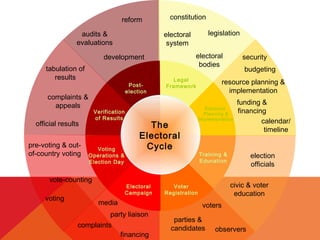
    reform audits & evaluations constitution electoral bodies development tabulation of results Postelection complaints& appeals Verification of Results official results pre-voting & outof-country voting Voting Operations & Election Day vote-counting voting Legal Framework The Electoral Cycle Electoral Campaign media party liaison complaints legislation electoral system financing security budgeting resource planning & implementation Electoral Planning & Implementation funding & financing calendar/ timeline election officials Training & Education civic & voter education Voter Registration voters parties & candidates observers
  • 9.
    REASONS FOR ELECTORALGBV • To intimidate and scare them from voting and even vying for political positions • Force women to vote for a particular person • Punishing a group/community for voting in a certain way • For revenge. • Cultural, social and political intolerance
  • 10.
    TYPES OF GBV • • • • • Physical Sexual Emotional& psychological Economic Harmful Cultural practices(FGM, Early and forced marriage, widow cleansing, wife inheritance etc)
  • 11.
    GBV AND ELECTORALVIOLENCE Aggression most commonly takes the form of verbal harassment during campaign meetings. It is aimed at embarrassing women by questioning their competency or insulting them with accusations of being prostitutes.
  • 12.
    intimidation is moresevere and sometimes involves threats of violence. Women candidates are warned that their husbands or supporters will be beaten or even killed if they do not withdraw from the race. One woman during the 2008 local election was threatened with rape unless she abandoned her campaign. Case study
  • 13.
    In rural areaswhere traditional practices are strong, especially in the North, men belonging to the secret “poro” society threaten to bring out the “poro devil” mask – which women are forbidden from seeing – to scare off female candidates and their supporters. More extreme forms of traditional intimidation involve threats that women will be taken to the bush, beaten and left there. Some women have also reported physical violence being used to intimidate, most commonly stones being thrown, but in one instance a female candidate was locked in her house on the day of the election.
  • 15.
    • Women andgirls have been victims of Gender Based Violence throughout electoral processes taking into consideration the fact that the rate of rape always increase in conflict time • Women remain with permanent scars, some have died, and others have been injured, whilst most of them remain traumatized by past and continued incidents of violation of their fundamental right of enjoying peace, against violence.
  • 16.
    • Gender-based violenceagainst women and girls has been a feature of virtually all recent violent conflicts, including the PEV in 2007/08 • Women and girls face a greatly increased risk of physical and sexual violence; rape and other types of gender based violence seem to be a "rule of war".
  • 17.
    • GBV isincreasingly becoming a challenge for women that want to participate in the electoral process and presents a major obstacle in advancing women’s position in society.  Women who want their voices to be heard when critical political decisions are being made risk losing their lives or being violently attacked by those people opposed to their participation
  • 18.
    • Some womenand children are tortured, killed and abducted. Their homes and property destroyed. Their cattle, grain and property looted. • Some of these women are forced to leave their homes. Their husbands and sons killed before their eyes. This means that women’s livelihoods are disturbed and lives disrupted.
  • 19.
    • Despite thenumerous legal provisions that support women’s participation in politics and decision-making positions and processes, women still face enormous barriers in doing so. • Some of the challenges are entrenched in society’s conception of the roles women should play and others are seen in more formal structures within the political arena
  • 20.
    • GBV discourageswomen from running for positions since they fear for their personal security and losing their families. • It prevents women from voting or openly supporting the candidates of their choice • Acts and threats of GBV have contributed to keeping women out of politics and men have continued to be dominant.
  • 21.
    • Women justlike the men, have the right to vote and to have their opinion reflected in politics. The electoral process therefore offers women several opportunities to take part, for example by being:  Political party supporters and activists  Voters  Members of political parties  Candidates  Electoral officials
  • 22.
    • Gender basedviolence is a big issue during electoral processes because women are afraid to go and report their cases to the police who often said that such violence did not fall under their jurisdiction but it’s political issues which should be resolved at political levels. • Police on the other hand are said to be abusing women during the crisis. Hence whilst women are protected by law, this becomes ineffective when the protection cannot be implemented
  • 23.
    Gender based violenceduring the elections have silenced women. They do not want to talk about it; they do not want their cases recorded because they feel insecure about their future Survivors of sexual violence during the conflict period prefer not to talk about their experiences because they are afraid of being disowned by their husbands and communities.
  • 24.
    • Women contractedHIV/AIDS from rape cases during election violence. • Accessing PEP and anti-retrovirals has never been easy for women during these times and it is also very risky to move out of the home in search of these services due to insecurity. • No evidence collected and no witnesses for the cases.
  • 26.
    • The riskof politically instigated gender based violence is increased with the reduced risk of perpetrators being identified and reported. • There is poor enforcement of law during election times. • The already available legal frameworks should be implemented during these times is the SOA, the penal code, the elections Act etc.
  • 27.
    CONCLUSION • There istherefore the need to restore confidence that the security forces can protect civilians and their dignity during an electoral process • Citizens should remain vigilant in preventing and responding to GBV in their respective communities in times of peace and conflict.
  • 29.