Historical Perspective of
Disasters in Kenya
Lessons Learned
Jack Abebe
PhD Candidate
Masinde Muliro University
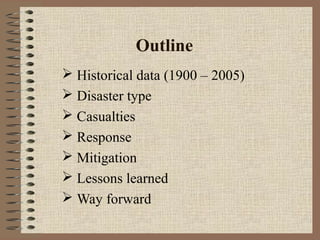
Outline
 Historical data (1900 – 2005)
 Disaster type
 Casualties
 Response
 Mitigation
 Lessons learned
 Way forward
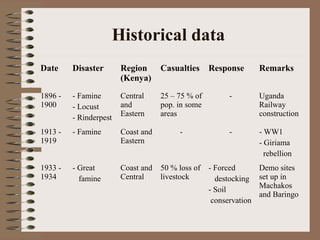
Historical data
Date

Disaster

Region
(Kenya)

Casualties

Response

Remarks

1896 1900

- Famine
- Locust
- Rinderpest

Central
and
Eastern

25 – 75 % of
pop. in some
areas

-

Uganda
Railway
construction

1913 1919

- Famine

Coast and
Eastern

-

-

- WW1
- Giriama
rebellion

1933 1934

- Great
famine

Coast and
Central

50 % loss of
livestock

- Forced
destocking
- Soil
conservation

Demo sites
set up in
Machakos
and Baringo
Date

Disaster Region
(Kenya)

Casualties

Response

Remarks

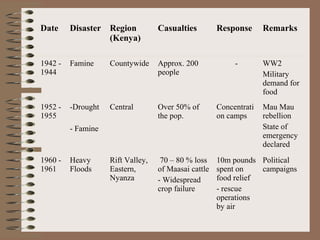
1942 1944

Famine

Countywide

Approx. 200
people

-

WW2
Military
demand for
food

1952 1955

-Drought

Central

Over 50% of
the pop.

Concentrati
on camps

Mau Mau
rebellion
State of
emergency
declared

Rift Valley,
Eastern,
Nyanza

70 – 80 % loss
of Maasai cattle
- Widespread
crop failure

10m pounds Political
spent on
campaigns
food relief
- rescue
operations
by air

- Famine

1960 1961

Heavy
Floods
Date Disaster

Region
(Kenya)

Casualties

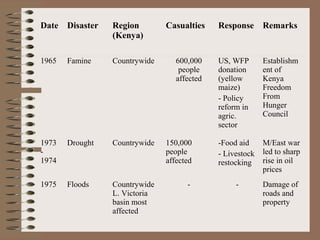
1965

Famine

Countrywide

1973
1974

Drought

Countrywide

150,000
people
affected

1975

Floods

Countrywide
L. Victoria
basin most
affected

-

600,000
people
affected

Response Remarks

US, WFP
donation
(yellow
maize)
- Policy
reform in
agric.
sector

Establishm
ent of
Kenya
Freedom
From
Hunger
Council

-Food aid
- Livestock
restocking

M/East war
led to sharp
rise in oil
prices

-

Damage of
roads and
property
Date Disaster

Region
(Kenya)

Casualties

Response

Remarks

1975

Terrorism bomb blast

Nairobi OTC bus

27

Government
investigation

Political
instability

1977

Floods
Landslides

Rift Valley

Damage to
Maize and
wheat crop

-

-

1981

Terrorism – Nairobi
5
bomb blast -Norfolk hotel

International
investigation

Linked to
M/East
crisis

1983
1984

Drought

-International
appeal for
food relief
- setting up
of strategic
food reserve

President
promotes
Soil conservation
and tree
planting

Countrywide

Over 600,000
people
affected
Over 50%
loss of
livestock
Date Disaster Region
(Kenya)

Casualties

Response

Remarks

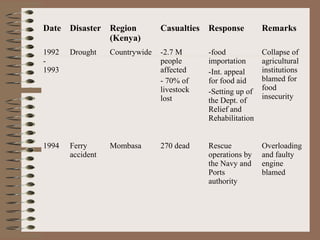
1992
1993

Drought

Countrywide

-2.7 M
people
affected
- 70% of
livestock
lost

-food
importation
-Int. appeal
for food aid
-Setting up of
the Dept. of
Relief and
Rehabilitation

Collapse of
agricultural
institutions
blamed for
food
insecurity

1994

Ferry
accident

Mombasa

270 dead

Rescue
operations by
the Navy and
Ports
authority

Overloading
and faulty
engine
blamed
Date

Disaster Region
(Kenya)

Casualties

Response

Remarks

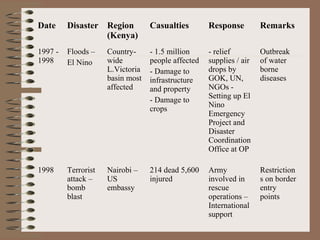
1997 1998

Floods –
El Nino

Countrywide
L.Victoria
basin most
affected

- 1.5 million
people affected
- Damage to
infrastructure
and property
- Damage to
crops

- relief
supplies / air
drops by
GOK, UN,
NGOs Setting up El
Nino
Emergency
Project and
Disaster
Coordination
Office at OP

Outbreak
of water
borne
diseases

1998

Terrorist
attack –
bomb
blast

Nairobi –
US
embassy

214 dead 5,600
injured

Army
involved in
rescue
operations –
International
support

Restriction
s on border
entry
points
Date

Disaster Region Casualties
(Kenya)

Response

Remarks

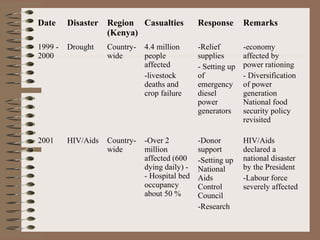
1999 2000

Drought

Countrywide

4.4 million
people
affected
-livestock
deaths and
crop failure

-Relief
supplies
- Setting up
of
emergency
diesel
power
generators

-economy
affected by
power rationing
- Diversification
of power
generation
National food
security policy
revisited

2001

HIV/Aids

Countrywide

-Over 2
million
affected (600
dying daily) - Hospital bed
occupancy
about 50 %

-Donor
support
-Setting up
National
Aids
Control
Council
-Research

HIV/Aids
declared a
national disaster
by the President
-Labour force
severely affected
Date

Disaster

Region
(Kenya)

Casualties

Response

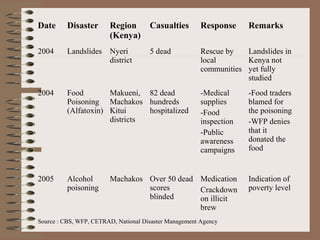
2004

Landslides

Nyeri
district

5 dead

Rescue by
Landslides in
local
Kenya not
communities yet fully
studied

2004

Food
Makueni, 82 dead
Poisoning Machakos hundreds
(Alfatoxin) Kitui
hospitalized
districts

2005

Alcohol
poisoning

-Medical
supplies
-Food
inspection
-Public
awareness
campaigns

Machakos Over 50 dead Medication
scores
Crackdown
blinded
on illicit
brew

Source : CBS, WFP, CETRAD, National Disaster Management Agency

Remarks

-Food traders
blamed for
the poisoning
-WFP denies
that it
donated the
food

Indication of
poverty level
Lessons Learned
• Major disasters ?
• Emerging disasters ?
• Contributing factors ?
• Compounding factors ?
• Trends / Patterns ?
• Management capacity ?
Lessons Learned….
Major disasters
•
•
•
•

Famine
Floods
Disease epidemics
Traffic accidents

Emerging disaster
•
•
•
•
•
•

Fires
Landslides
Invasive species
Terrorism
Food poisoning
Tsunami?
Contributing factors:
 Climatic variability
 Population increase
 Land degradation
 Global warming?

Compounding factors:
 Political instability / Insecurity
 Poverty
 Communication network
Trends / Pattern
• Increase in frequency
• Increase in magnitude and severity
- increase in loss of life and vulnerable
population
- increase in loss of property and damage
to infrastructure
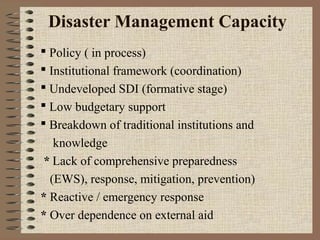
Disaster Management Capacity
 Policy ( in process)
 Institutional framework (coordination)
 Undeveloped SDI (formative stage)
 Low budgetary support
 Breakdown of traditional institutions and
knowledge
* Lack of comprehensive preparedness
(EWS), response, mitigation, prevention)
* Reactive / emergency response
* Over dependence on external aid
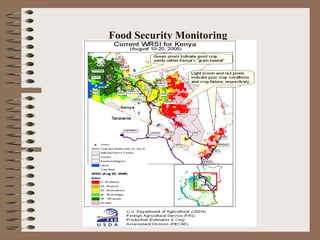
Food Security Monitoring
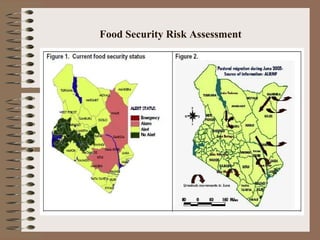
Food Security Risk Assessment
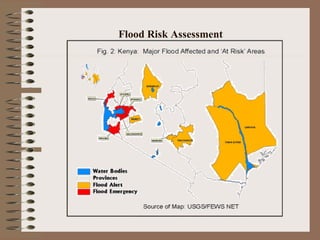
Flood Risk Assessment
Challenges
 Policy formulation
 Institutional framework
 Development of SDI (R&D)
 Mainstreaming of Geo-info in DSS
 Capacity building
 Budgetary support
 Regional collaboration
 Conflict resolution
Opportunities
 Existing institutions / Universities
Trained manpower
Availability of free data sources
 Public awareness
 Improved communication network (ICT)
 Regional organizations (EAC, IGAD,
SADC, AU, UN system etc)
 Relative political stability in the region
 Networking and linkages
Way Forward
Building on the existing capacity and
opportunities
End
Questions are Welcome
Thank You!

Natural disasters in_kenya_ppt_jack abebe

  • 1.
    Historical Perspective of Disastersin Kenya Lessons Learned Jack Abebe PhD Candidate Masinde Muliro University
  • 2.
    Outline  Historical data(1900 – 2005)  Disaster type  Casualties  Response  Mitigation  Lessons learned  Way forward
  • 3.
    Historical data Date Disaster Region (Kenya) Casualties Response Remarks 1896 1900 -Famine - Locust - Rinderpest Central and Eastern 25 – 75 % of pop. in some areas - Uganda Railway construction 1913 1919 - Famine Coast and Eastern - - - WW1 - Giriama rebellion 1933 1934 - Great famine Coast and Central 50 % loss of livestock - Forced destocking - Soil conservation Demo sites set up in Machakos and Baringo
  • 4.
    Date Disaster Region (Kenya) Casualties Response Remarks 1942 1944 Famine Countywide Approx.200 people - WW2 Military demand for food 1952 1955 -Drought Central Over 50% of the pop. Concentrati on camps Mau Mau rebellion State of emergency declared Rift Valley, Eastern, Nyanza 70 – 80 % loss of Maasai cattle - Widespread crop failure 10m pounds Political spent on campaigns food relief - rescue operations by air - Famine 1960 1961 Heavy Floods
  • 5.
    Date Disaster Region (Kenya) Casualties 1965 Famine Countrywide 1973 1974 Drought Countrywide 150,000 people affected 1975 Floods Countrywide L. Victoria basinmost affected - 600,000 people affected Response Remarks US, WFP donation (yellow maize) - Policy reform in agric. sector Establishm ent of Kenya Freedom From Hunger Council -Food aid - Livestock restocking M/East war led to sharp rise in oil prices - Damage of roads and property
  • 6.
    Date Disaster Region (Kenya) Casualties Response Remarks 1975 Terrorism bombblast Nairobi OTC bus 27 Government investigation Political instability 1977 Floods Landslides Rift Valley Damage to Maize and wheat crop - - 1981 Terrorism – Nairobi 5 bomb blast -Norfolk hotel International investigation Linked to M/East crisis 1983 1984 Drought -International appeal for food relief - setting up of strategic food reserve President promotes Soil conservation and tree planting Countrywide Over 600,000 people affected Over 50% loss of livestock
  • 7.
    Date Disaster Region (Kenya) Casualties Response Remarks 1992 1993 Drought Countrywide -2.7M people affected - 70% of livestock lost -food importation -Int. appeal for food aid -Setting up of the Dept. of Relief and Rehabilitation Collapse of agricultural institutions blamed for food insecurity 1994 Ferry accident Mombasa 270 dead Rescue operations by the Navy and Ports authority Overloading and faulty engine blamed
  • 8.
    Date Disaster Region (Kenya) Casualties Response Remarks 1997 1998 Floods– El Nino Countrywide L.Victoria basin most affected - 1.5 million people affected - Damage to infrastructure and property - Damage to crops - relief supplies / air drops by GOK, UN, NGOs Setting up El Nino Emergency Project and Disaster Coordination Office at OP Outbreak of water borne diseases 1998 Terrorist attack – bomb blast Nairobi – US embassy 214 dead 5,600 injured Army involved in rescue operations – International support Restriction s on border entry points
  • 9.
    Date Disaster Region Casualties (Kenya) Response Remarks 19992000 Drought Countrywide 4.4 million people affected -livestock deaths and crop failure -Relief supplies - Setting up of emergency diesel power generators -economy affected by power rationing - Diversification of power generation National food security policy revisited 2001 HIV/Aids Countrywide -Over 2 million affected (600 dying daily) - Hospital bed occupancy about 50 % -Donor support -Setting up National Aids Control Council -Research HIV/Aids declared a national disaster by the President -Labour force severely affected
  • 10.
    Date Disaster Region (Kenya) Casualties Response 2004 Landslides Nyeri district 5 dead Rescue by Landslidesin local Kenya not communities yet fully studied 2004 Food Makueni, 82 dead Poisoning Machakos hundreds (Alfatoxin) Kitui hospitalized districts 2005 Alcohol poisoning -Medical supplies -Food inspection -Public awareness campaigns Machakos Over 50 dead Medication scores Crackdown blinded on illicit brew Source : CBS, WFP, CETRAD, National Disaster Management Agency Remarks -Food traders blamed for the poisoning -WFP denies that it donated the food Indication of poverty level
  • 11.
    Lessons Learned • Majordisasters ? • Emerging disasters ? • Contributing factors ? • Compounding factors ? • Trends / Patterns ? • Management capacity ?
  • 12.
    Lessons Learned…. Major disasters • • • • Famine Floods Diseaseepidemics Traffic accidents Emerging disaster • • • • • • Fires Landslides Invasive species Terrorism Food poisoning Tsunami?
  • 13.
    Contributing factors:  Climaticvariability  Population increase  Land degradation  Global warming? Compounding factors:  Political instability / Insecurity  Poverty  Communication network
  • 14.
    Trends / Pattern •Increase in frequency • Increase in magnitude and severity - increase in loss of life and vulnerable population - increase in loss of property and damage to infrastructure
  • 15.
    Disaster Management Capacity Policy ( in process)  Institutional framework (coordination)  Undeveloped SDI (formative stage)  Low budgetary support  Breakdown of traditional institutions and knowledge * Lack of comprehensive preparedness (EWS), response, mitigation, prevention) * Reactive / emergency response * Over dependence on external aid
  • 16.
  • 17.
  • 18.
  • 19.
    Challenges  Policy formulation Institutional framework  Development of SDI (R&D)  Mainstreaming of Geo-info in DSS  Capacity building  Budgetary support  Regional collaboration  Conflict resolution
  • 20.
    Opportunities  Existing institutions/ Universities Trained manpower Availability of free data sources  Public awareness  Improved communication network (ICT)  Regional organizations (EAC, IGAD, SADC, AU, UN system etc)  Relative political stability in the region  Networking and linkages
  • 21.
    Way Forward Building onthe existing capacity and opportunities
  • 22.