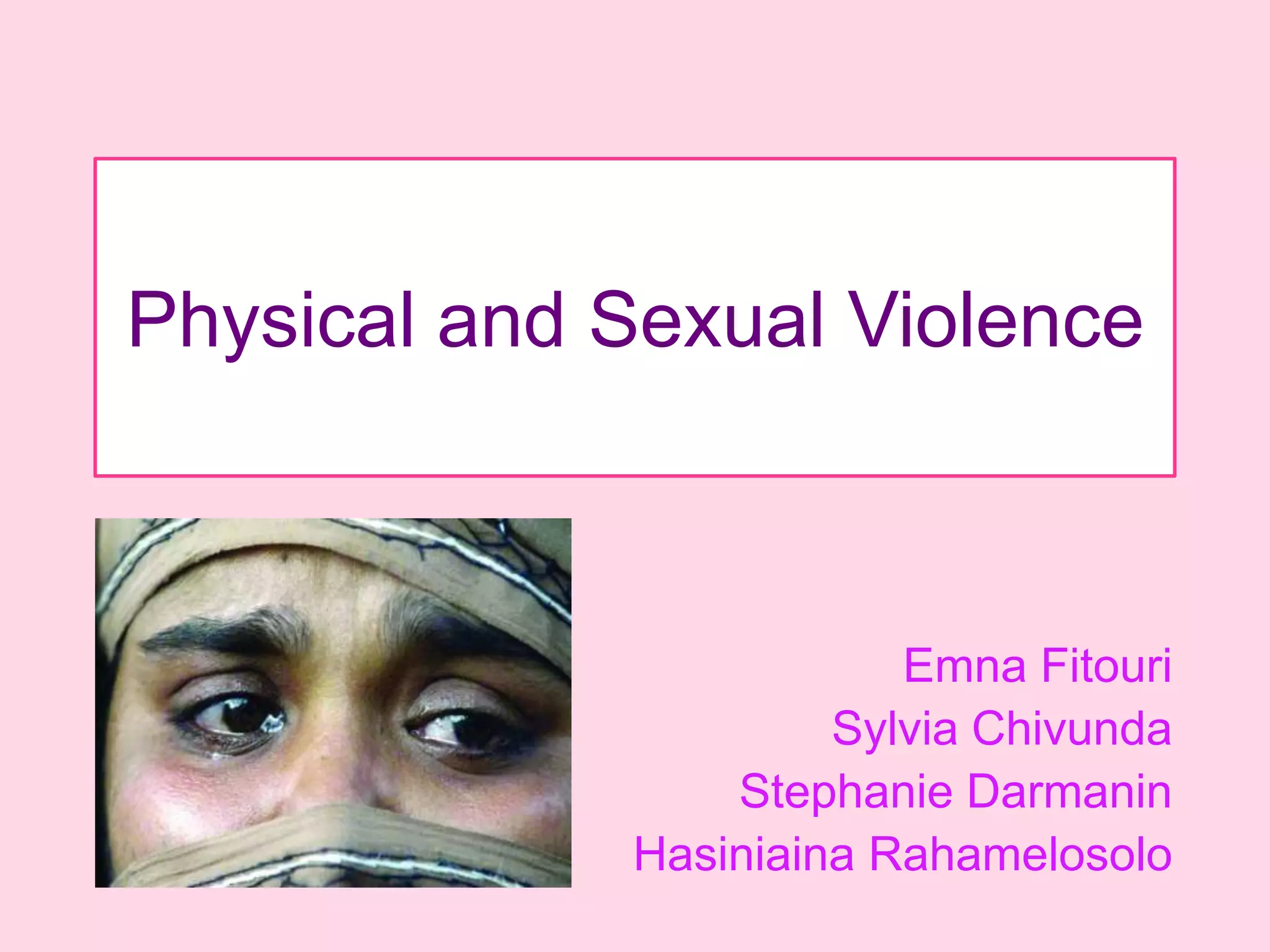
Physical and Sexual Violence


                         Emna Fitouri
                      Sylvia Chivunda
                 Stephanie Darmanin
             Hasiniaina Rahamelosolo
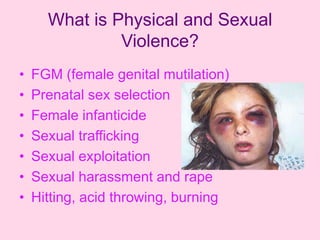
What is Physical and Sexual
               Violence?
•   FGM (female genital mutilation)
•   Prenatal sex selection
•   Female infanticide
•   Sexual trafficking
•   Sexual exploitation
•   Sexual harassment and rape
•   Hitting, acid throwing, burning
Health Impact
• Mental disorder (greater risk of depression and post-
  traumatic stress)
• STDs (Sexual transmitted diseases) – mostly HIV and
  AIDS
• Decreased sexual desire and pain during sexual
  intercourse
• Urinary tract infections and chronic pelvic pain
• Infertility
• Extreme pain from FGM
• Fibroids and genital irritation
• Unwanted pregnancies
• Lifelong disabilities
Who is mostly at risk?
•   Girls and young women
•   Young age
•   With physical disability
•   Mental vulnerable
•   With low level of education
•   Living in poverty
•   Living in dysfunctional homes
•   People with different sexual orientation
•   Coming from rural areas
•   Refugees and immigrants
•   Those not financially independent
•   Coming from culture of honour killings / where dowry is given a lot of importance
•   Coming from countries with political tensions or during wartimes
•   Abused during childhood
•   Women subordinate to their employers especially in countries where gender
    equality is still sensitive
What causes the perpetrators to be
            violent?
•   Bad parental examples
•   Sexual pleasures
•   Alcohol and drug abuse
•   Boredom and anger due to peer pressure (to be part of a gang)
•   Jobless men who need to demonstrate their superiority because
    they can no longer have patriarchal control or give economic support
•   Xenophobia and racism
•   Provoking attitudes from girls or women (eg wearing sexy clothes)
•   Coercive sexual fantasies, generally encouraged by access to
    pornography
•   Lack of education and lack of awareness of the impacts of
    physical violence on women
•   They know that their partners won’t talk about this because they fear
    divorce, lack of trust in authorities, shame and family reputation
Cultural Realities
• Rape may occur in public, with passerby refuse to intervene
• Victims may be treated leniently by the police, particularly if the
  assault is committed during a date or by the victim’s husband
• Extremely lax or else corrupt investigations eg. legal papers being
  ‘‘lost’’ in return for a bribe
• The idea that if men are HIV positive and they have sexual
  relationships with girls who are clean they cure themselves
• Dishonour killings in certain countries
• Gender inequality where men feel dominant and the women is
  subordinate
• Cultures in which guns are heavily used leads to more killings
• Countries which still do not punish marital rapes
• The idea that women are not supposed to speak their minds nor to
  complain therefore they tend to endure silently instead of speaking
  out against any form of violence
What needs to be done
•   Toll free numbers should be made available to victims of violence for
    them to get legal and psychological support (point 1 of Written
    Statement)
•   Local governments have to make sure that perpetrators are severely
    punished by the law
•   Staff training to officials dealing with victims and perpetrators
•   Zero tolerance awareness campaigns to make men aware of the
    negative impact of violence and on the corresponding punishment
    perpetrators
•   Girl campaigns to make them aware of their rights and the different
    forms of violence and to be encouraged to speak out against violence
•   Women should be empowered in order to be financially independent
    from men so that they have control other their own lives
•   Girls should be given full and free access to education so that they
    grow up to be fulfilled and independent citizens who can stand up for
    their rights
•   Psychological and legal assistance to all victims no matter what
Conclusions
•   Every woman has the right to physical and mental integrity.
•   Women and girls have the right to control their bodies and have sex when they
    want
•   Every woman has the right to a safe living without physical and sexual violence
•   Power and tradition should never come before the woman's well-being (point 7
    of Written Statement)
•   Women must have the right to access services and such services must be
    available.
•   Research on all aspects of violence must be stressed (point 9 of Written
    Statement)
•   Justice with victims must be done and seen to be done (point 8 of Written
    Statement)
•   Governments must be committed to end physical and sexual violence (para
    283)
•   NGOs and governments should invest more in non-formal education and call to
    action (point 5 of Written Statement)
•   Networks of public and private organizations should be formed to carry out
    programmes to prevent violence against women and girls should be
    strengthened. (point 2 of Written Statement)

Physical and sexual violence

  • 1.
    Physical and SexualViolence Emna Fitouri Sylvia Chivunda Stephanie Darmanin Hasiniaina Rahamelosolo
  • 2.
    What is Physicaland Sexual Violence? • FGM (female genital mutilation) • Prenatal sex selection • Female infanticide • Sexual trafficking • Sexual exploitation • Sexual harassment and rape • Hitting, acid throwing, burning
  • 3.
    Health Impact • Mentaldisorder (greater risk of depression and post- traumatic stress) • STDs (Sexual transmitted diseases) – mostly HIV and AIDS • Decreased sexual desire and pain during sexual intercourse • Urinary tract infections and chronic pelvic pain • Infertility • Extreme pain from FGM • Fibroids and genital irritation • Unwanted pregnancies • Lifelong disabilities
  • 4.
    Who is mostlyat risk? • Girls and young women • Young age • With physical disability • Mental vulnerable • With low level of education • Living in poverty • Living in dysfunctional homes • People with different sexual orientation • Coming from rural areas • Refugees and immigrants • Those not financially independent • Coming from culture of honour killings / where dowry is given a lot of importance • Coming from countries with political tensions or during wartimes • Abused during childhood • Women subordinate to their employers especially in countries where gender equality is still sensitive
  • 5.
    What causes theperpetrators to be violent? • Bad parental examples • Sexual pleasures • Alcohol and drug abuse • Boredom and anger due to peer pressure (to be part of a gang) • Jobless men who need to demonstrate their superiority because they can no longer have patriarchal control or give economic support • Xenophobia and racism • Provoking attitudes from girls or women (eg wearing sexy clothes) • Coercive sexual fantasies, generally encouraged by access to pornography • Lack of education and lack of awareness of the impacts of physical violence on women • They know that their partners won’t talk about this because they fear divorce, lack of trust in authorities, shame and family reputation
  • 6.
    Cultural Realities • Rapemay occur in public, with passerby refuse to intervene • Victims may be treated leniently by the police, particularly if the assault is committed during a date or by the victim’s husband • Extremely lax or else corrupt investigations eg. legal papers being ‘‘lost’’ in return for a bribe • The idea that if men are HIV positive and they have sexual relationships with girls who are clean they cure themselves • Dishonour killings in certain countries • Gender inequality where men feel dominant and the women is subordinate • Cultures in which guns are heavily used leads to more killings • Countries which still do not punish marital rapes • The idea that women are not supposed to speak their minds nor to complain therefore they tend to endure silently instead of speaking out against any form of violence
  • 7.
    What needs tobe done • Toll free numbers should be made available to victims of violence for them to get legal and psychological support (point 1 of Written Statement) • Local governments have to make sure that perpetrators are severely punished by the law • Staff training to officials dealing with victims and perpetrators • Zero tolerance awareness campaigns to make men aware of the negative impact of violence and on the corresponding punishment perpetrators • Girl campaigns to make them aware of their rights and the different forms of violence and to be encouraged to speak out against violence • Women should be empowered in order to be financially independent from men so that they have control other their own lives • Girls should be given full and free access to education so that they grow up to be fulfilled and independent citizens who can stand up for their rights • Psychological and legal assistance to all victims no matter what
  • 8.
    Conclusions • Every woman has the right to physical and mental integrity. • Women and girls have the right to control their bodies and have sex when they want • Every woman has the right to a safe living without physical and sexual violence • Power and tradition should never come before the woman's well-being (point 7 of Written Statement) • Women must have the right to access services and such services must be available. • Research on all aspects of violence must be stressed (point 9 of Written Statement) • Justice with victims must be done and seen to be done (point 8 of Written Statement) • Governments must be committed to end physical and sexual violence (para 283) • NGOs and governments should invest more in non-formal education and call to action (point 5 of Written Statement) • Networks of public and private organizations should be formed to carry out programmes to prevent violence against women and girls should be strengthened. (point 2 of Written Statement)