GATT…
GENERAL AGREEMENT ON TARIFF AND TRADE
BACKGROUND
• During great depression of 1930’s theinternational trade was badly
affected and various countries imposed import restrictions for safeguarding
their economies.
• Itresulted in sharp decline in world trade.
• 1n 1945, USA put forward many proposals for extending international trade
and employment.
• On October 30th, 1947; 23 countries atGeneva signed an agreement
related to tariffs imposed on trade.
Headquarter…
WTO Headquarters in Geneva UN body set up in 1948.
GATT had 110 members when it was renamed the World Trade
Organisation (WTO) in 1995
Members..
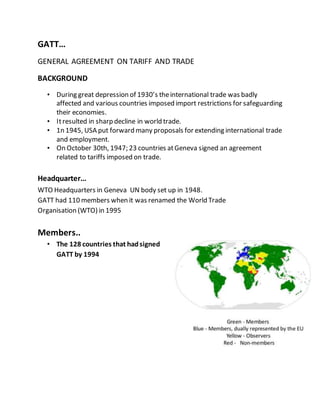
• The 128 countries that hadsigned
GATT by 1994
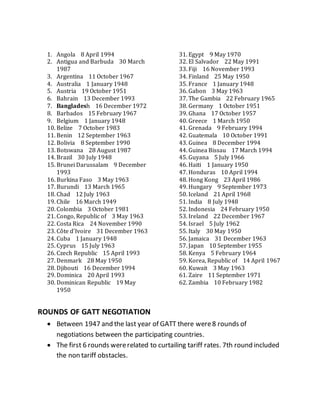
1. Angola 8 April 1994
2. Antigua and Barbuda 30 March
1987
3. Argentina 11 October 1967
4. Australia 1 January 1948
5. Austria 19 October 1951
6. Bahrain 13 December 1993
7. Bangladesh 16 December 1972
8. Barbados 15 February 1967
9. Belgium 1 January 1948
10. Belize 7 October 1983
11. Benin 12 September 1963
12. Bolivia 8 September 1990
13. Botswana 28 August 1987
14. Brazil 30 July 1948
15. Brunei Darussalam 9 December
1993
16. Burkina Faso 3 May 1963
17. Burundi 13 March 1965
18. Chad 12 July 1963
19. Chile 16 March 1949
20. Colombia 3 October 1981
21. Congo, Republic of 3 May 1963
22. Costa Rica 24 November 1990
23. Côte d'Ivoire 31 December 1963
24. Cuba 1 January 1948
25. Cyprus 15 July 1963
26. Czech Republic 15 April 1993
27. Denmark 28 May 1950
28. Djibouti 16 December 1994
29. Dominica 20 April 1993
30. Dominican Republic 19 May
1950
31. Egypt 9 May 1970
32. El Salvador 22 May 1991
33. Fiji 16 November 1993
34. Finland 25 May 1950
35. France 1 January 1948
36. Gabon 3 May 1963
37. The Gambia 22 February 1965
38. Germany 1 October 1951
39. Ghana 17 October 1957
40. Greece 1 March 1950
41. Grenada 9 February 1994
42. Guatemala 10 October 1991
43. Guinea 8 December 1994
44. Guinea Bissau 17 March 1994
45. Guyana 5 July 1966
46. Haiti 1 January 1950
47. Honduras 10 April 1994
48. Hong Kong 23 April 1986
49. Hungary 9 September 1973
50. Iceland 21 April 1968
51. India 8 July 1948
52. Indonesia 24 February 1950
53. Ireland 22 December 1967
54. Israel 5 July 1962
55. Italy 30 May 1950
56. Jamaica 31 December 1963
57. Japan 10 September 1955
58. Kenya 5 February 1964
59. Korea, Republic of 14 April 1967
60. Kuwait 3 May 1963
61. Zaire 11 September 1971
62. Zambia 10 February 1982
ROUNDS OF GATT NEGOTIATION
 Between 1947 and the last year of GATT there were8 rounds of
negotiations between the participating countries.
 The first 6 rounds wererelated to curtailing tariff rates. 7th round included
the non tariff obstacles.
 The 8th round was entirely different from the previous rounds becauseit
included a number of new subjects for consideration. This 8th round was
known as “URUGUAY ROUND”.
FROM GATT TO WTO
Following the UR agreement, GATT was converted from a provisionalagreement
into a formalinternational organization called World TradeOrganization (WTO),
with effect fromJanuary 1, 1995
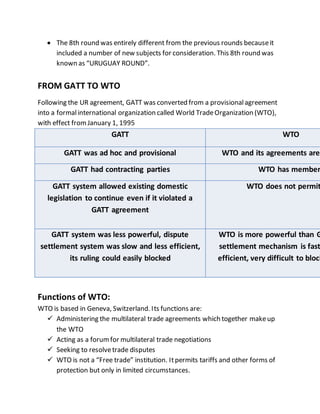
GATT WTO
GATT was ad hoc and provisional WTO and its agreements are
GATT had contracting parties WTO has member
GATT system allowed existing domestic
legislation to continue even if it violated a
GATT agreement
WTO does not permit
GATT system was less powerful, dispute
settlement system was slow and less efficient,
its ruling could easily blocked
WTO is more powerful than G
settlement mechanism is fast
efficient, very difficult to block
Functions of WTO:
WTO is based in Geneva, Switzerland. Its functions are:
 Administering the multilateral trade agreements which together makeup
the WTO
 Acting as a forumfor multilateral trade negotiations
 Seeking to resolvetrade disputes
 WTO is not a “Free trade” institution. Itpermits tariffs and other forms of
protection but only in limited circumstances.
Objective of GATT / WTO
• 1. Expansion of international trade,
• 2. Increaseof world production by ensuring full employment in the
participating nations,
• 3. Development and full utilisation of world resources, and
• 4. Raising standard of living of the world community as a whole.
Conclusion
The creation of GATT-Negotiations in 1947 wasbuta big step towardstrade
liberalization. Between 1947 and 1993Eight-GATTroundshavetaken place
for regulating trade amongst nationsand solving varioustradedisputes.

Gatt....niloy

  • 1.
    GATT… GENERAL AGREEMENT ONTARIFF AND TRADE BACKGROUND • During great depression of 1930’s theinternational trade was badly affected and various countries imposed import restrictions for safeguarding their economies. • Itresulted in sharp decline in world trade. • 1n 1945, USA put forward many proposals for extending international trade and employment. • On October 30th, 1947; 23 countries atGeneva signed an agreement related to tariffs imposed on trade. Headquarter… WTO Headquarters in Geneva UN body set up in 1948. GATT had 110 members when it was renamed the World Trade Organisation (WTO) in 1995 Members.. • The 128 countries that hadsigned GATT by 1994
  • 2.
    1. Angola 8April 1994 2. Antigua and Barbuda 30 March 1987 3. Argentina 11 October 1967 4. Australia 1 January 1948 5. Austria 19 October 1951 6. Bahrain 13 December 1993 7. Bangladesh 16 December 1972 8. Barbados 15 February 1967 9. Belgium 1 January 1948 10. Belize 7 October 1983 11. Benin 12 September 1963 12. Bolivia 8 September 1990 13. Botswana 28 August 1987 14. Brazil 30 July 1948 15. Brunei Darussalam 9 December 1993 16. Burkina Faso 3 May 1963 17. Burundi 13 March 1965 18. Chad 12 July 1963 19. Chile 16 March 1949 20. Colombia 3 October 1981 21. Congo, Republic of 3 May 1963 22. Costa Rica 24 November 1990 23. Côte d'Ivoire 31 December 1963 24. Cuba 1 January 1948 25. Cyprus 15 July 1963 26. Czech Republic 15 April 1993 27. Denmark 28 May 1950 28. Djibouti 16 December 1994 29. Dominica 20 April 1993 30. Dominican Republic 19 May 1950 31. Egypt 9 May 1970 32. El Salvador 22 May 1991 33. Fiji 16 November 1993 34. Finland 25 May 1950 35. France 1 January 1948 36. Gabon 3 May 1963 37. The Gambia 22 February 1965 38. Germany 1 October 1951 39. Ghana 17 October 1957 40. Greece 1 March 1950 41. Grenada 9 February 1994 42. Guatemala 10 October 1991 43. Guinea 8 December 1994 44. Guinea Bissau 17 March 1994 45. Guyana 5 July 1966 46. Haiti 1 January 1950 47. Honduras 10 April 1994 48. Hong Kong 23 April 1986 49. Hungary 9 September 1973 50. Iceland 21 April 1968 51. India 8 July 1948 52. Indonesia 24 February 1950 53. Ireland 22 December 1967 54. Israel 5 July 1962 55. Italy 30 May 1950 56. Jamaica 31 December 1963 57. Japan 10 September 1955 58. Kenya 5 February 1964 59. Korea, Republic of 14 April 1967 60. Kuwait 3 May 1963 61. Zaire 11 September 1971 62. Zambia 10 February 1982 ROUNDS OF GATT NEGOTIATION  Between 1947 and the last year of GATT there were8 rounds of negotiations between the participating countries.  The first 6 rounds wererelated to curtailing tariff rates. 7th round included the non tariff obstacles.
  • 3.
     The 8thround was entirely different from the previous rounds becauseit included a number of new subjects for consideration. This 8th round was known as “URUGUAY ROUND”. FROM GATT TO WTO Following the UR agreement, GATT was converted from a provisionalagreement into a formalinternational organization called World TradeOrganization (WTO), with effect fromJanuary 1, 1995 GATT WTO GATT was ad hoc and provisional WTO and its agreements are GATT had contracting parties WTO has member GATT system allowed existing domestic legislation to continue even if it violated a GATT agreement WTO does not permit GATT system was less powerful, dispute settlement system was slow and less efficient, its ruling could easily blocked WTO is more powerful than G settlement mechanism is fast efficient, very difficult to block Functions of WTO: WTO is based in Geneva, Switzerland. Its functions are:  Administering the multilateral trade agreements which together makeup the WTO  Acting as a forumfor multilateral trade negotiations  Seeking to resolvetrade disputes  WTO is not a “Free trade” institution. Itpermits tariffs and other forms of protection but only in limited circumstances.
  • 4.
    Objective of GATT/ WTO • 1. Expansion of international trade, • 2. Increaseof world production by ensuring full employment in the participating nations, • 3. Development and full utilisation of world resources, and • 4. Raising standard of living of the world community as a whole. Conclusion The creation of GATT-Negotiations in 1947 wasbuta big step towardstrade liberalization. Between 1947 and 1993Eight-GATTroundshavetaken place for regulating trade amongst nationsand solving varioustradedisputes.