Business Environment
Assignment work
Short notes:
1. GATT (General Agreement on
Tariffs and Trade )
2.WTO (World Trade Organisation)
GATT (General Agreement on Tariffs and Trade )
The General Agreement on Tariffs and Trade (GATT),
signed on October 30, 1947, by 23 countries, was a legal agreement
minimizing barriers to international trade by eliminating or reducing
quotas, tariffs, and subsidies while preserving significant regulations.
1
The GATT was intended to boost economic recovery after World War II
through reconstructing and liberalizing global trade.
The GATT went into effect on January 1, 1948.2 Since that beginning
it has been refined, eventually leading to the creation of the
World Trade Organization (WTO)
on January 1, 1995, which absorbed and extended it.3
By this time 125 nations were signatories to its agreements,
which covered about 90% of global trade.
GATT
• General Agreement on Tarrifs
and Trade
The Council for Trade in Goods (Goods Council) is responsible for
the GATT and consists of representatives from all WTO member
countries.As of September 2020, the chair of the Goods Council is
Swedish Ambassador Mikael Anzén.
The council has 10 committees that address subjects including
market access, agriculture, subsidies, and anti-dumping measures.
The GATT was created to form rules to end or restrict the most costly
and undesirable features of the prewar protectionist period, namely
quantitative trade barriers such as trade controls and quotas.
The agreement also provided a system to arbitrate commercial disputes
among nations, and the framework enabled a number of multilateral
negotiations for the reduction of tariff barriers.The GATT was regarded
as a significant success in the postwar years.
The GATT was created to form rules to end or restrict the most costly
and undesirable features of the prewar protectionist period, namely
quantitative trade barriers such as trade controls and quotas.
The agreement also provided a system to arbitrate commercial
disputes among nations, and the framework enabled a number of
multilateral negotiations for the reduction of tariff barriers.
The GATT was regarded as a significant success in the postwar years.
History of the General Agreement on Tariffs and Trade (GATT)
The GATT held eight rounds of meetings between April 1947 and
December 1993. Each of the conferences had significant achievements
and outcomes.
The first meeting was in Geneva, Switzerland, and included 23 countries.
The focus in this opening conference was on tariffs.The members
established tax concessions touching over US$10 billion of trade
around the globe.
The second series of meetings began in April 1949 and were held in Annecy, France.
Again, tariffs were the primary topic.Thirteen countries were at the second meeting,
and they accomplished an additional 5,000 tax concessions reducing tariffs.711
Starting in September 1950 the third series of GATT meetings occurred in Torquay,
England.This time 38 countries were involved, and almost 9,000 tariff concessions
passed, reducing tax levels by as much as 25%.11 Japan became involved in the
GATT for the first time in 1956 at the fourth meeting along with 25 other countries.12
The meeting was in Geneva, Switzerland, and again the committee reduced
worldwide tariffs, this time by US$2.5 billion.7 This series of meetings and reduced
tariffs would continue, adding new GATT provisions in the process.The average
tariff rate fell from around 22%, when the GATT was first signed in Geneva in 1947,
to around 5% by the end of the Uruguay Round, concluded in 1993, which also
negotiated the creation of the WTO.13 In 1964 the GATT began to work toward
curbing predatory pricing policies.These policies are known as dumping.As the
years have passed, the countries have continued to attack global issues, including
addressing agriculture disputes and working to protect intellectual property.
WTO (World Trade Organisation)
The WTO is essentially an alternative dispute or mediation entity that
upholds the international rules of trade among nations.
The organization provides a platform that allows member governments
to negotiate and resolve trade issues with other members.
The WTO’s main focus is to provide open lines of communication
concerning trade among its members.
For example, the WTO has lowered trade barriers and increased trade
among member countries.
On the other hand, it has also maintained trade barriers when it
makes sense to do so in the global context.
Therefore, the WTO attempts to provide negotiation mediation
that benefits the global economy.
Once negotiations are complete and an agreement is in place, the WTO
then offers to interpret that agreement in case of a future dispute.
All WTO agreements include a settlement process, whereby the
organization legally conducts neutral conflict resolution.
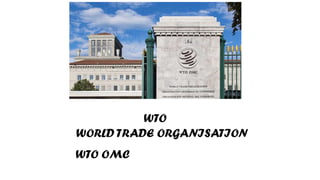
WTO
WORLD TRADE ORGANISATION
WTO OMC
On Feb. 15, 2021, the WTO’s General Council selected two-time Nigerian
finance minister Ngozi Okonjo-Iweala as its director-general.
She is the first woman and the first African to be selected for the position.
She took office on March 1, 2021, and her term will end in August 2025.
No negotiation, mediation, or resolution would be possible without
the foundational WTO agreements.
These agreements set the legal ground rules for international commerce
that the WTO oversees.
They bind a country’s government to a set of constraints that must be
observed when setting future trade policies.
These agreements protect producers, importers, and exporters while
encouraging
world governments to meet specific social and environmental standards.
Advantages and Disadvantages of the World Trade Organization (WTO)
The history of international trade has been a battle between protectionism
and free trade, and the WTO has fueled globalization, with both positive
and adverse effects.
The organization’s efforts have increased global trade expansion, but
a side effect has been a negative impact on local communities and human
rights.
Proponents of the WTO, particularly multinational corporations (MNCs),
believe that the organization is beneficial to business, seeing the
stimulation of free trade and a decline in trade disputes as beneficial to
the global economy. Skeptics believe that the WTO undermines the principles
of organic democracy and widens the international wealth gap.
They point to the decline in domestic industries and increasing foreign
influence as negative impacts on the world economy.
As part of his broader attempts to renegotiate U.S. internationa
l trade deals, when he was in office, then-President Donald Trump
threatened to withdraw from the WTO, calling it a“disaster.”A U.S.
withdrawal from the WTO could have disrupted trillions of dollars in
global trade. However, he didn’t withdraw the U.S. from the WTO during
his time in office.

BUSINESS ENVIRONMENT ASSIGNMENT.pptx

  • 1.
  • 2.
    Short notes: 1. GATT(General Agreement on Tariffs and Trade ) 2.WTO (World Trade Organisation)
  • 3.
    GATT (General Agreementon Tariffs and Trade ) The General Agreement on Tariffs and Trade (GATT), signed on October 30, 1947, by 23 countries, was a legal agreement minimizing barriers to international trade by eliminating or reducing quotas, tariffs, and subsidies while preserving significant regulations. 1 The GATT was intended to boost economic recovery after World War II through reconstructing and liberalizing global trade. The GATT went into effect on January 1, 1948.2 Since that beginning it has been refined, eventually leading to the creation of the World Trade Organization (WTO) on January 1, 1995, which absorbed and extended it.3 By this time 125 nations were signatories to its agreements, which covered about 90% of global trade.
  • 4.
    GATT • General Agreementon Tarrifs and Trade
  • 5.
    The Council forTrade in Goods (Goods Council) is responsible for the GATT and consists of representatives from all WTO member countries.As of September 2020, the chair of the Goods Council is Swedish Ambassador Mikael Anzén. The council has 10 committees that address subjects including market access, agriculture, subsidies, and anti-dumping measures. The GATT was created to form rules to end or restrict the most costly and undesirable features of the prewar protectionist period, namely quantitative trade barriers such as trade controls and quotas. The agreement also provided a system to arbitrate commercial disputes among nations, and the framework enabled a number of multilateral negotiations for the reduction of tariff barriers.The GATT was regarded as a significant success in the postwar years.
  • 6.
    The GATT wascreated to form rules to end or restrict the most costly and undesirable features of the prewar protectionist period, namely quantitative trade barriers such as trade controls and quotas. The agreement also provided a system to arbitrate commercial disputes among nations, and the framework enabled a number of multilateral negotiations for the reduction of tariff barriers. The GATT was regarded as a significant success in the postwar years. History of the General Agreement on Tariffs and Trade (GATT) The GATT held eight rounds of meetings between April 1947 and December 1993. Each of the conferences had significant achievements and outcomes. The first meeting was in Geneva, Switzerland, and included 23 countries. The focus in this opening conference was on tariffs.The members established tax concessions touching over US$10 billion of trade around the globe.
  • 7.
    The second seriesof meetings began in April 1949 and were held in Annecy, France. Again, tariffs were the primary topic.Thirteen countries were at the second meeting, and they accomplished an additional 5,000 tax concessions reducing tariffs.711 Starting in September 1950 the third series of GATT meetings occurred in Torquay, England.This time 38 countries were involved, and almost 9,000 tariff concessions passed, reducing tax levels by as much as 25%.11 Japan became involved in the GATT for the first time in 1956 at the fourth meeting along with 25 other countries.12 The meeting was in Geneva, Switzerland, and again the committee reduced worldwide tariffs, this time by US$2.5 billion.7 This series of meetings and reduced tariffs would continue, adding new GATT provisions in the process.The average tariff rate fell from around 22%, when the GATT was first signed in Geneva in 1947, to around 5% by the end of the Uruguay Round, concluded in 1993, which also negotiated the creation of the WTO.13 In 1964 the GATT began to work toward curbing predatory pricing policies.These policies are known as dumping.As the years have passed, the countries have continued to attack global issues, including addressing agriculture disputes and working to protect intellectual property.
  • 8.
    WTO (World TradeOrganisation) The WTO is essentially an alternative dispute or mediation entity that upholds the international rules of trade among nations. The organization provides a platform that allows member governments to negotiate and resolve trade issues with other members. The WTO’s main focus is to provide open lines of communication concerning trade among its members. For example, the WTO has lowered trade barriers and increased trade among member countries. On the other hand, it has also maintained trade barriers when it makes sense to do so in the global context. Therefore, the WTO attempts to provide negotiation mediation that benefits the global economy. Once negotiations are complete and an agreement is in place, the WTO then offers to interpret that agreement in case of a future dispute. All WTO agreements include a settlement process, whereby the organization legally conducts neutral conflict resolution.
  • 9.
  • 10.
    On Feb. 15,2021, the WTO’s General Council selected two-time Nigerian finance minister Ngozi Okonjo-Iweala as its director-general. She is the first woman and the first African to be selected for the position. She took office on March 1, 2021, and her term will end in August 2025. No negotiation, mediation, or resolution would be possible without the foundational WTO agreements. These agreements set the legal ground rules for international commerce that the WTO oversees. They bind a country’s government to a set of constraints that must be observed when setting future trade policies. These agreements protect producers, importers, and exporters while encouraging world governments to meet specific social and environmental standards.
  • 11.
    Advantages and Disadvantagesof the World Trade Organization (WTO) The history of international trade has been a battle between protectionism and free trade, and the WTO has fueled globalization, with both positive and adverse effects. The organization’s efforts have increased global trade expansion, but a side effect has been a negative impact on local communities and human rights. Proponents of the WTO, particularly multinational corporations (MNCs), believe that the organization is beneficial to business, seeing the stimulation of free trade and a decline in trade disputes as beneficial to the global economy. Skeptics believe that the WTO undermines the principles of organic democracy and widens the international wealth gap. They point to the decline in domestic industries and increasing foreign influence as negative impacts on the world economy.
  • 12.
    As part ofhis broader attempts to renegotiate U.S. internationa l trade deals, when he was in office, then-President Donald Trump threatened to withdraw from the WTO, calling it a“disaster.”A U.S. withdrawal from the WTO could have disrupted trillions of dollars in global trade. However, he didn’t withdraw the U.S. from the WTO during his time in office.