Gathering Business Requirements
       Nikita Atkins (nikita.atkins@au1.ibm.com)
Why?
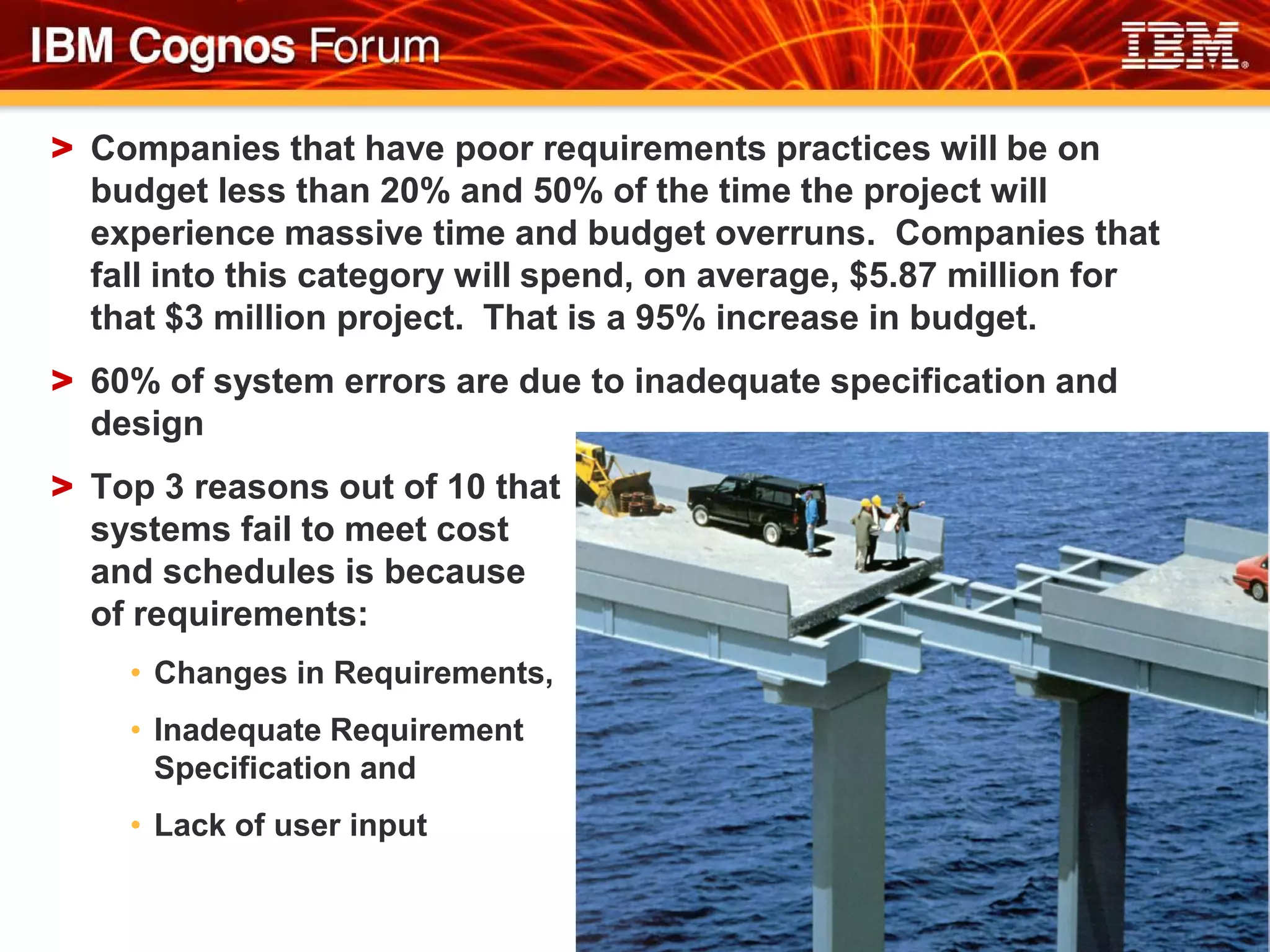
> Companies that have poor requirements practices will be on
  budget less than 20% and 50% of the time the project will
  experience massive time and budget overruns. Companies that
  fall into this category will spend, on average, $5.87 million for
  that $3 million project. That is a 95% increase in budget.
> 60% of system errors are due to inadequate specification and
  design
> Top 3 reasons out of 10 that
  systems fail to meet cost
  and schedules is because
  of requirements:
    • Changes in Requirements,
    • Inadequate Requirement
      Specification and
    • Lack of user input
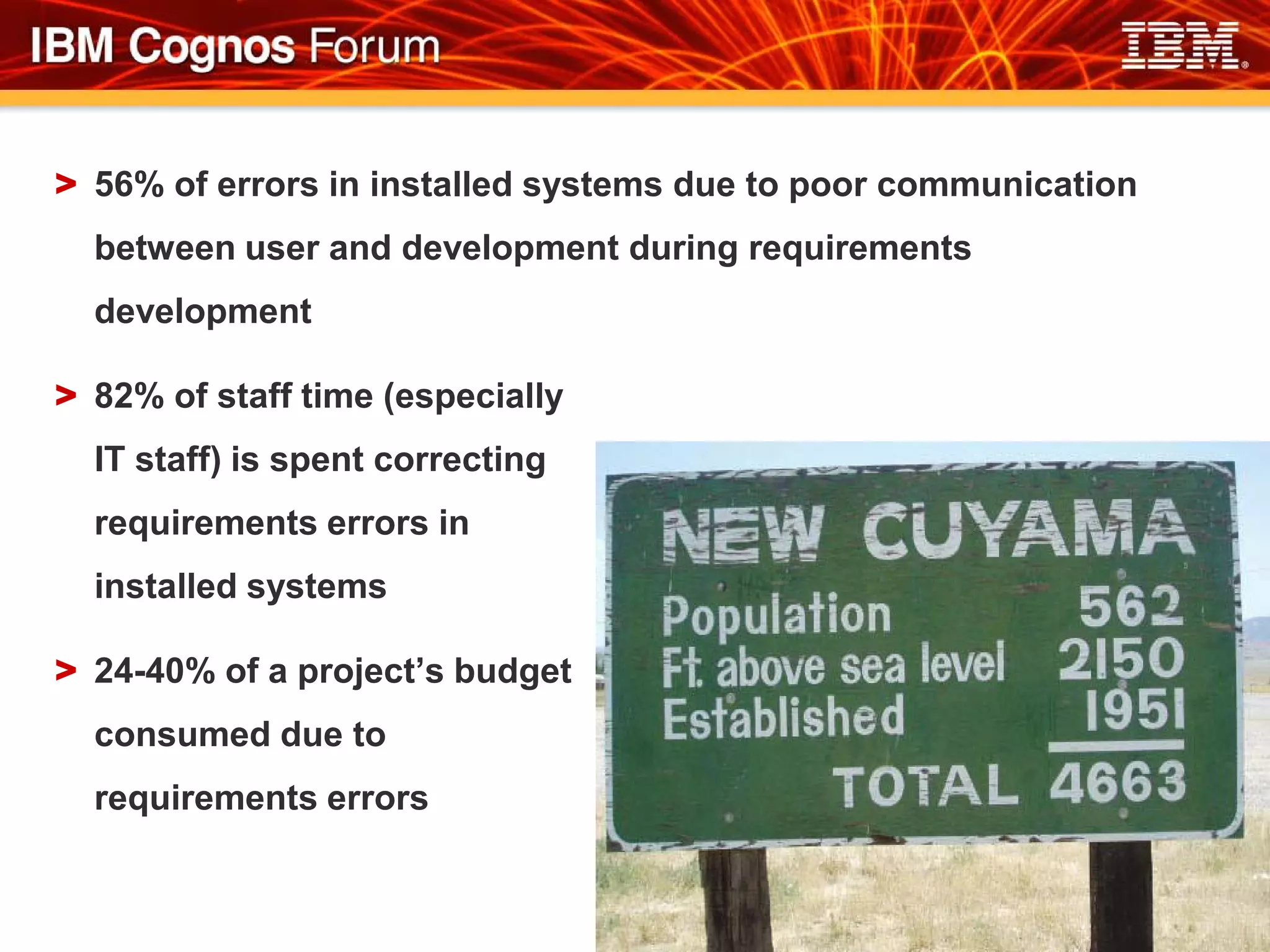
> 56% of errors in installed systems due to poor communication
  between user and development during requirements
  development

> 82% of staff time (especially
  IT staff) is spent correcting
  requirements errors in
  installed systems

> 24-40% of a project’s budget
  consumed due to
  requirements errors
Cost to Repair a Defect or Error
> Requirements   = $500 - $1000


> Design         = $2,500


> Build          = $5,000


> Unit Test      = $10,000


> UAT            = $25,000


> Maintenance    = $100,000
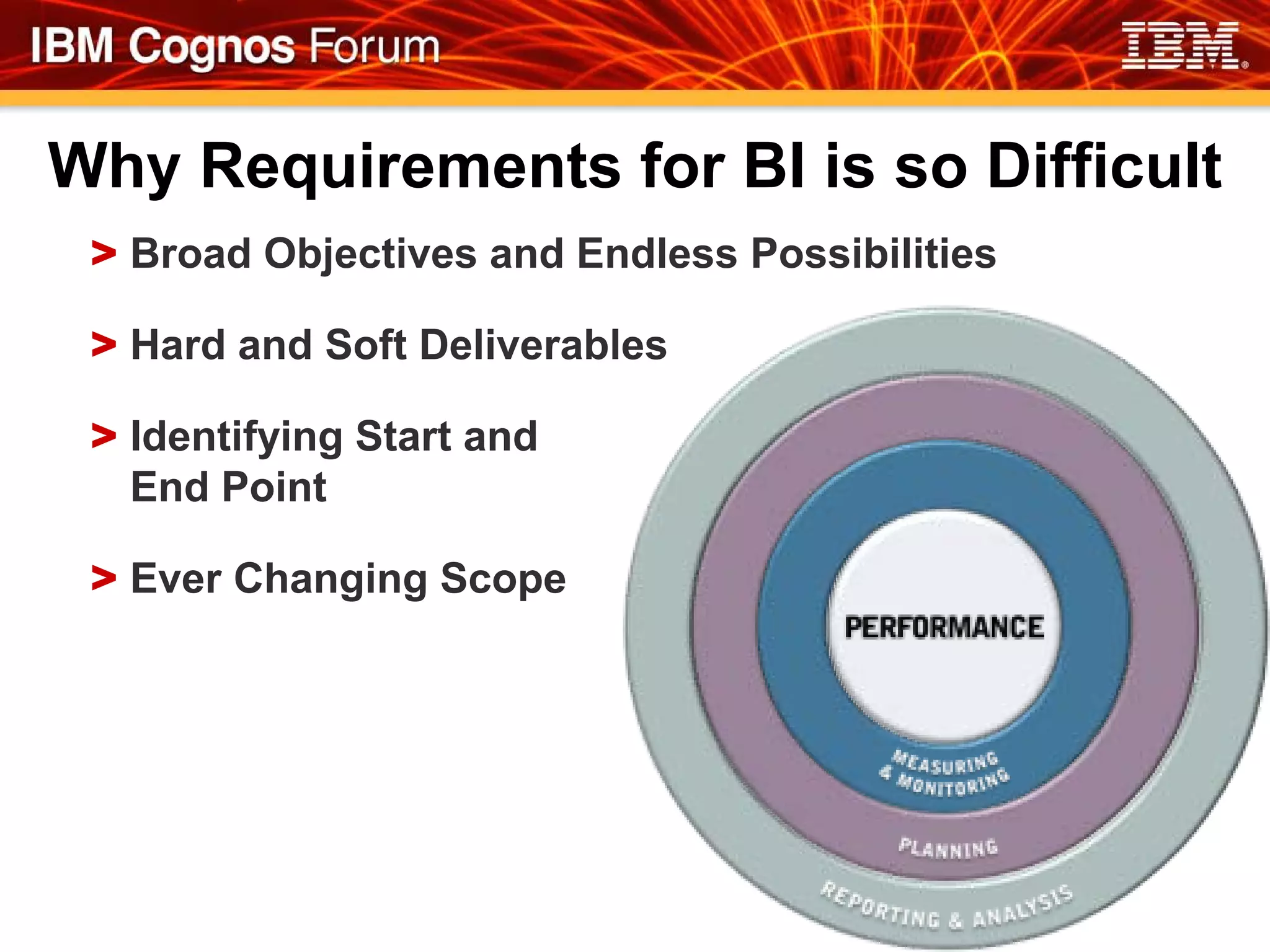
Why Requirements for BI is so Difficult
 > Broad Objectives and Endless Possibilities

 > Hard and Soft Deliverables

 > Identifying Start and
   End Point

 > Ever Changing Scope
Mistake 1: Just Another IS/IT Project
> Common but dangerous mistake
   • IS/IT start with Technical Requirements
       • Information
       • Tools and Software

   • BI start with Business Requirements
       • Alignment and Governance
       • People, Processes
         and Culture
       • Support, SLAs
         and Capabilities

   • Fully engage business stakeholders
   • Large amount of “unknowns”
Mistake 2: Traditional Requirements
Give employees what they
 need not what they want
   • Strategic Goals & Objectives
   • Role and Responsibilities
   • Key Performance Indicators
   • Tools and Enablers
   • Industry Best Practices
   • Decisions and Questions
   • Rewards and Incentives
Mistake 3: Using Wrong Jargon
 > Using unnecessary, vague or
   complex jargon when
   communicating & gathering
   requirements
    • Employees instead of Users

    • Software purpose instead of name

    • Process instead of department name

 > Business Metadata
Mistake 4: Don’t Manage Project Scope
> What is in and out of scope
> Scope too large
> No defined
  end point
> Don’t forget the
  3 legged stool:
    • Scope (Quality)
    • Time
    • Resources
Mistake 5: Making
Documents too Complex
  Complex Requirements
   Documents =
   Complex Project = Too Hard
   Basket?
     • Simple template
     • Line items and cross references
     • Visualisation tools
     • Requirements traceability matrix
     • Drill-through matrix
Mistake 6: Not Understanding
Prerequisites
Mixing up Program and
 Project Requirements
   • Finite beginning and end
   • Build and implement something
   • Support business processes
   • Scope
   • Standards
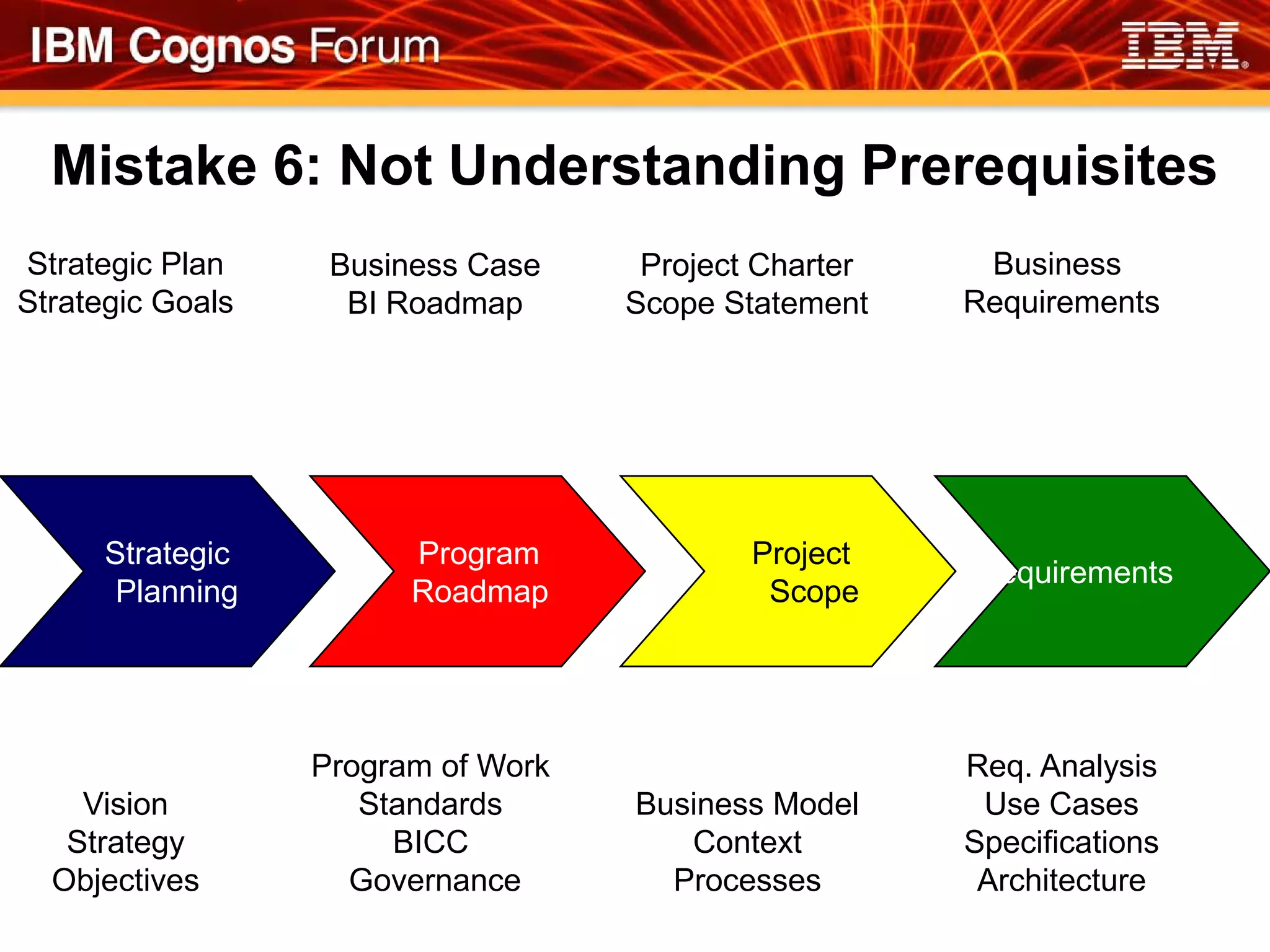
Mistake 6: Not Understanding Prerequisites
Strategic Plan     Business Case     Project Charter    Business
Strategic Goals     BI Roadmap      Scope Statement    Requirements


      Strategic         Program             Project
                                                       Requirements
       Planning         Roadmap              Scope


                  Program of Work                      Req. Analysis
    Vision           Standards      Business Model      Use Cases
   Strategy            BICC            Context         Specifications
  Objectives        Governance        Processes         Architecture
Mistake 7 – Not Having A Clear Methodology
 > Elicitation - Gather, Draw Out, Extract
 > Analysis - Refining, Understanding, Decomposing
 > Specification - Consistent, Accessible and Reviewable
   Documentation
 > Validation - Correct, Quality, Test Cases, Correct
   Ambiguities and Vagueness
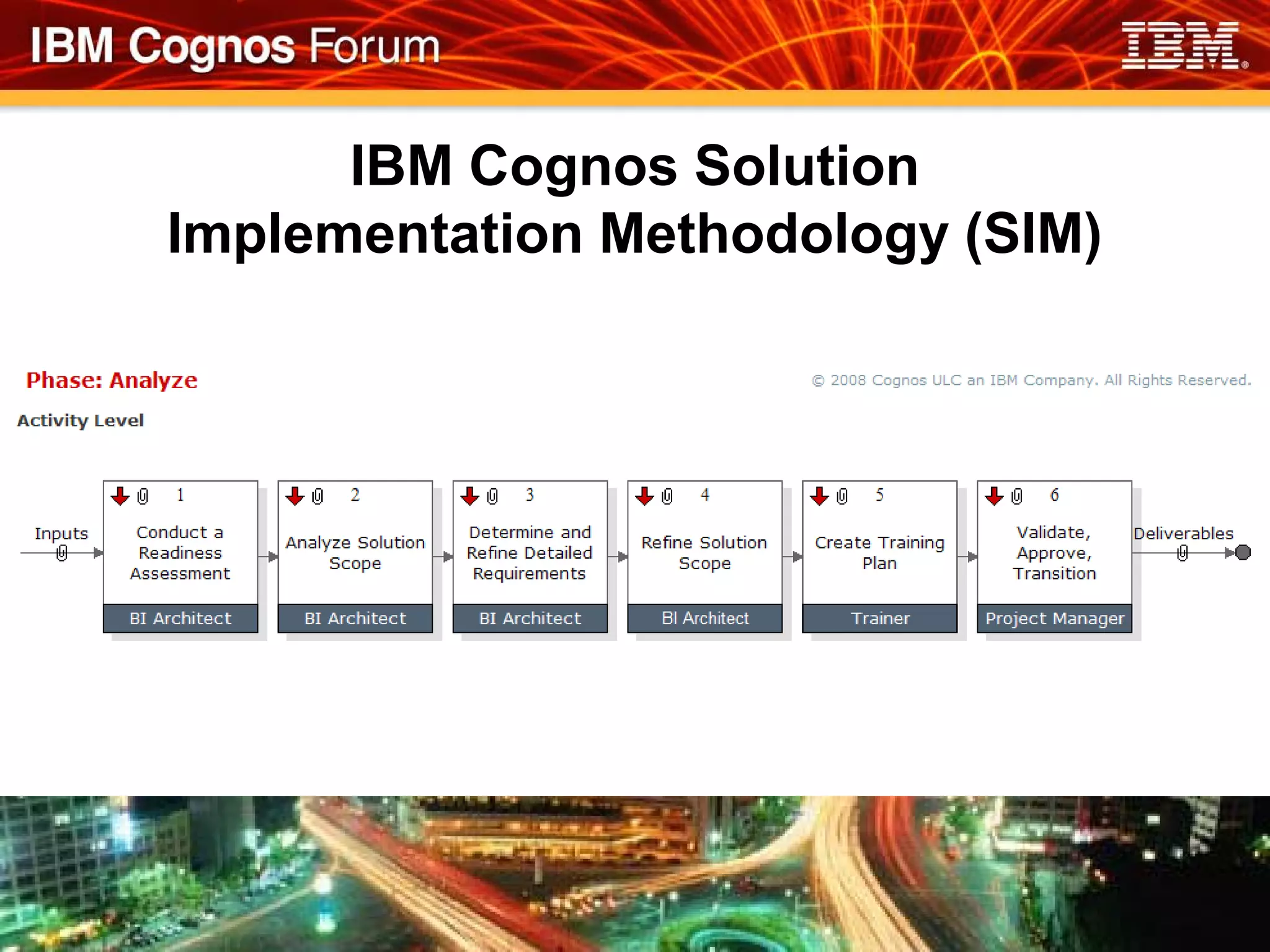
IBM Cognos Solution
Implementation Methodology (SIM)
Mistake 8 – Not Having Traceability
> Source Systems

> Metrics and KPIs

> Dimensions

> BI and Reporting Objects

> Training

> Documentation

> Any Deliverables
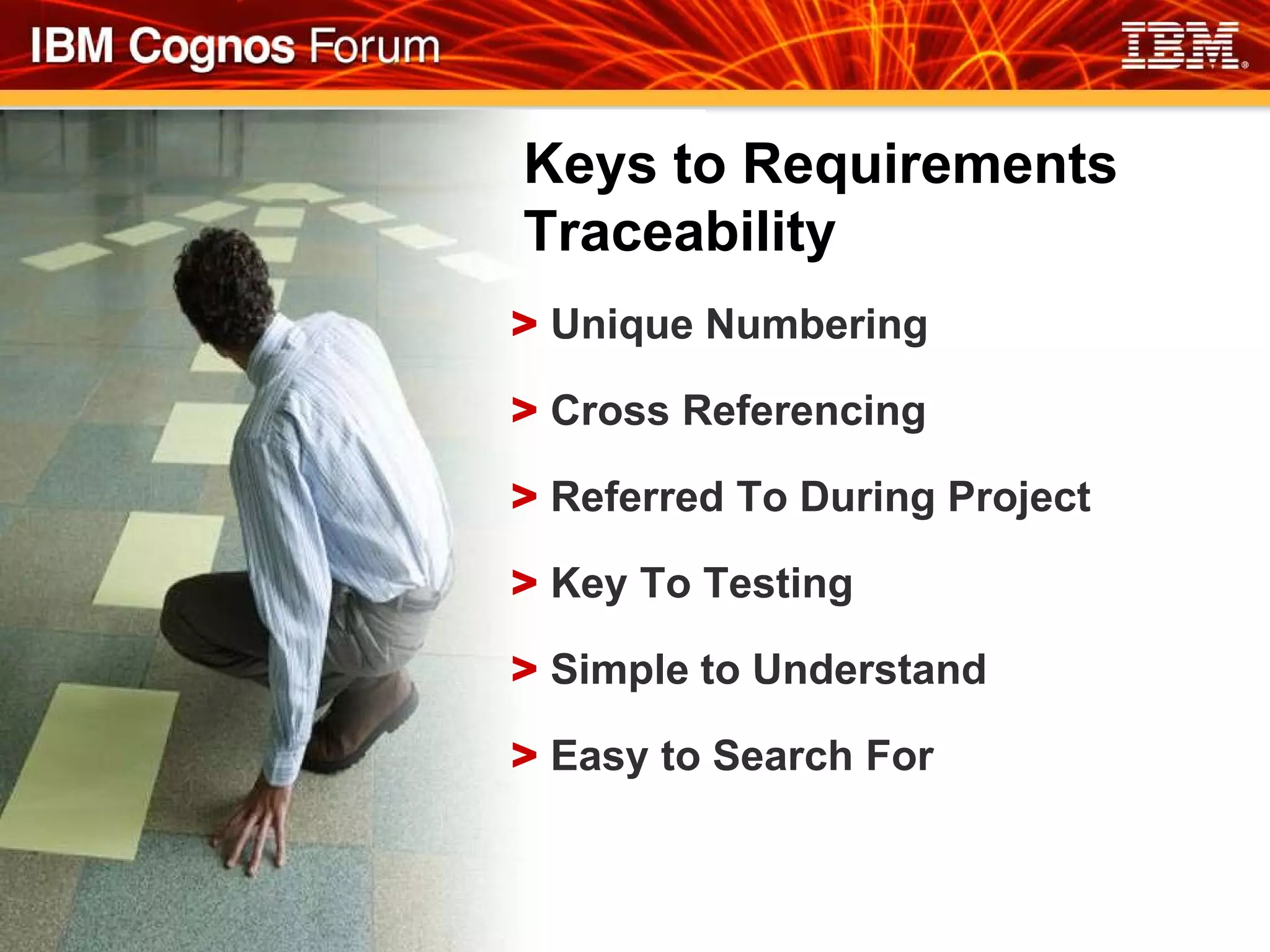
Keys to Requirements
Traceability
> Unique Numbering

> Cross Referencing

> Referred To During Project

> Key To Testing

> Simple to Understand

> Easy to Search For
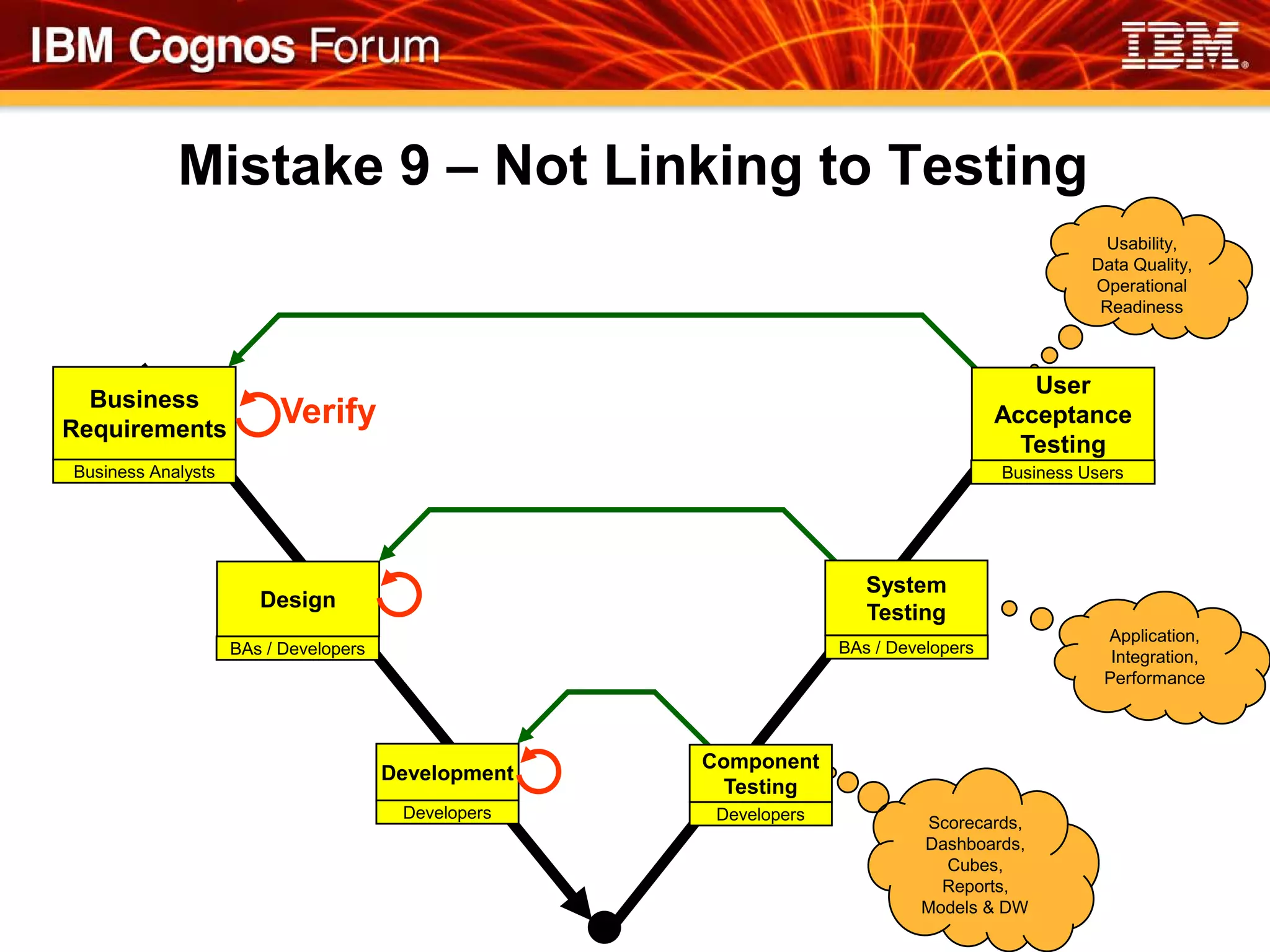
Mistake 9 – Not Linking to Testing
                                                                                                 Usability,
                                                                                                Data Quality,
                                                                                                Operational
                                                                                                 Readiness


                                                                                         User
  Business
Requirements
                         Verify                                                       Acceptance
                                                                                        Testing
Business Analysts                                                                     Business Users


                                                                      System
                       Design
                                                                      Testing
                                                                                                 Application,
                    BAs / Developers                               BAs / Developers
                                                                                                  Integration,
                                                                                                 Performance


                                                     Component
                                       Development
                                                       Testing
                                        Developers    Developers            Scorecards,
                                                                            Dashboards,
                                                                              Cubes,
                                                                              Reports,
                                                                            Models & DW
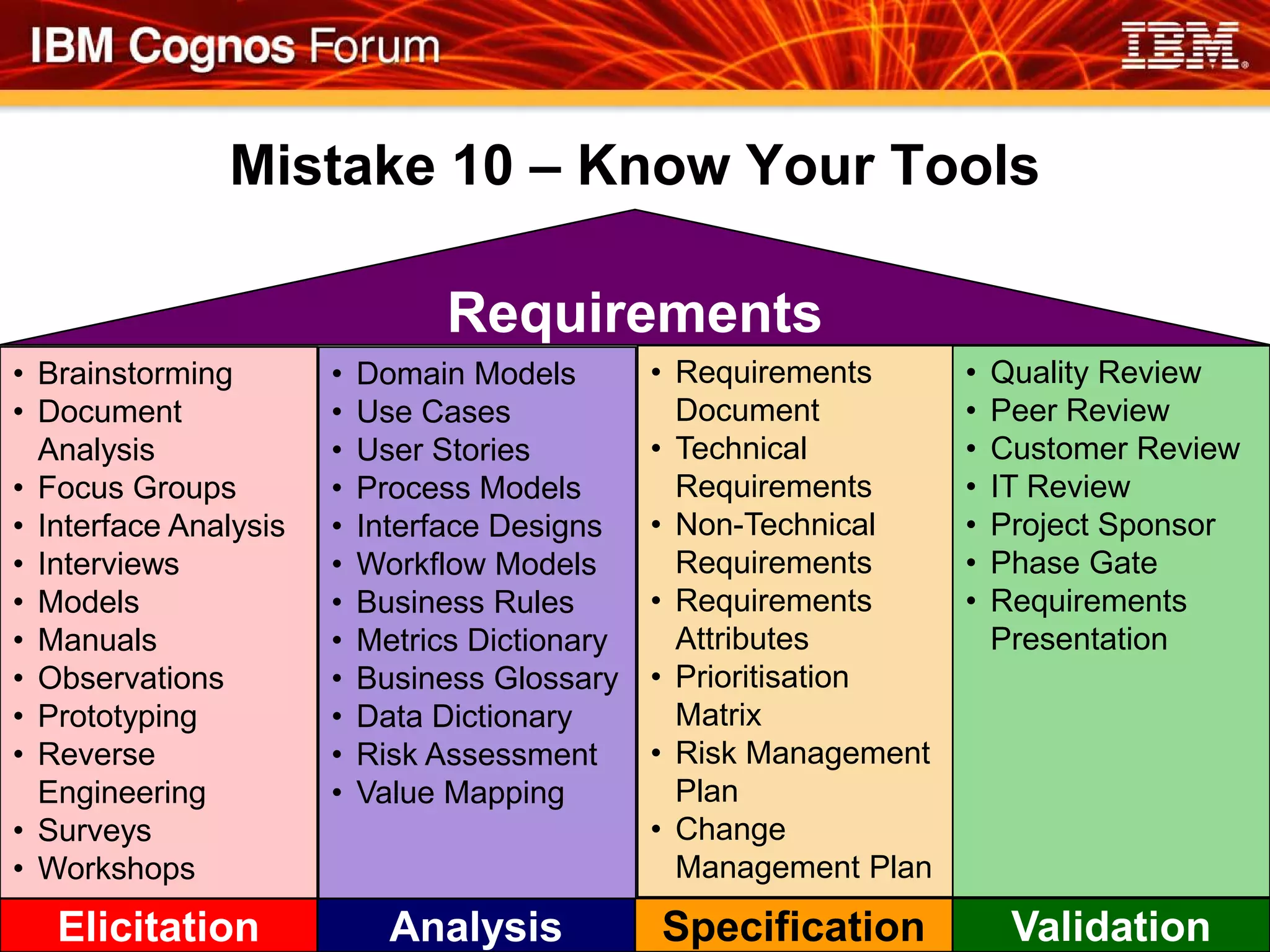
Mistake 10 – Know Your Tools

                                 Requirements
• Brainstorming        •   Domain Models        • Requirements      •   Quality Review
• Document             •   Use Cases              Document          •   Peer Review
  Analysis             •   User Stories         • Technical         •   Customer Review
• Focus Groups         •   Process Models         Requirements      •   IT Review
• Interface Analysis   •   Interface Designs    • Non-Technical     •   Project Sponsor
• Interviews           •   Workflow Models        Requirements      •   Phase Gate
• Models               •   Business Rules       • Requirements      •   Requirements
• Manuals              •   Metrics Dictionary     Attributes            Presentation
• Observations         •   Business Glossary    • Prioritisation
• Prototyping          •   Data Dictionary        Matrix
• Reverse              •   Risk Assessment      • Risk Management
  Engineering          •   Value Mapping          Plan
• Surveys                                       • Change
• Workshops                                       Management Plan
   Elicitation               Analysis           Specification            Validation
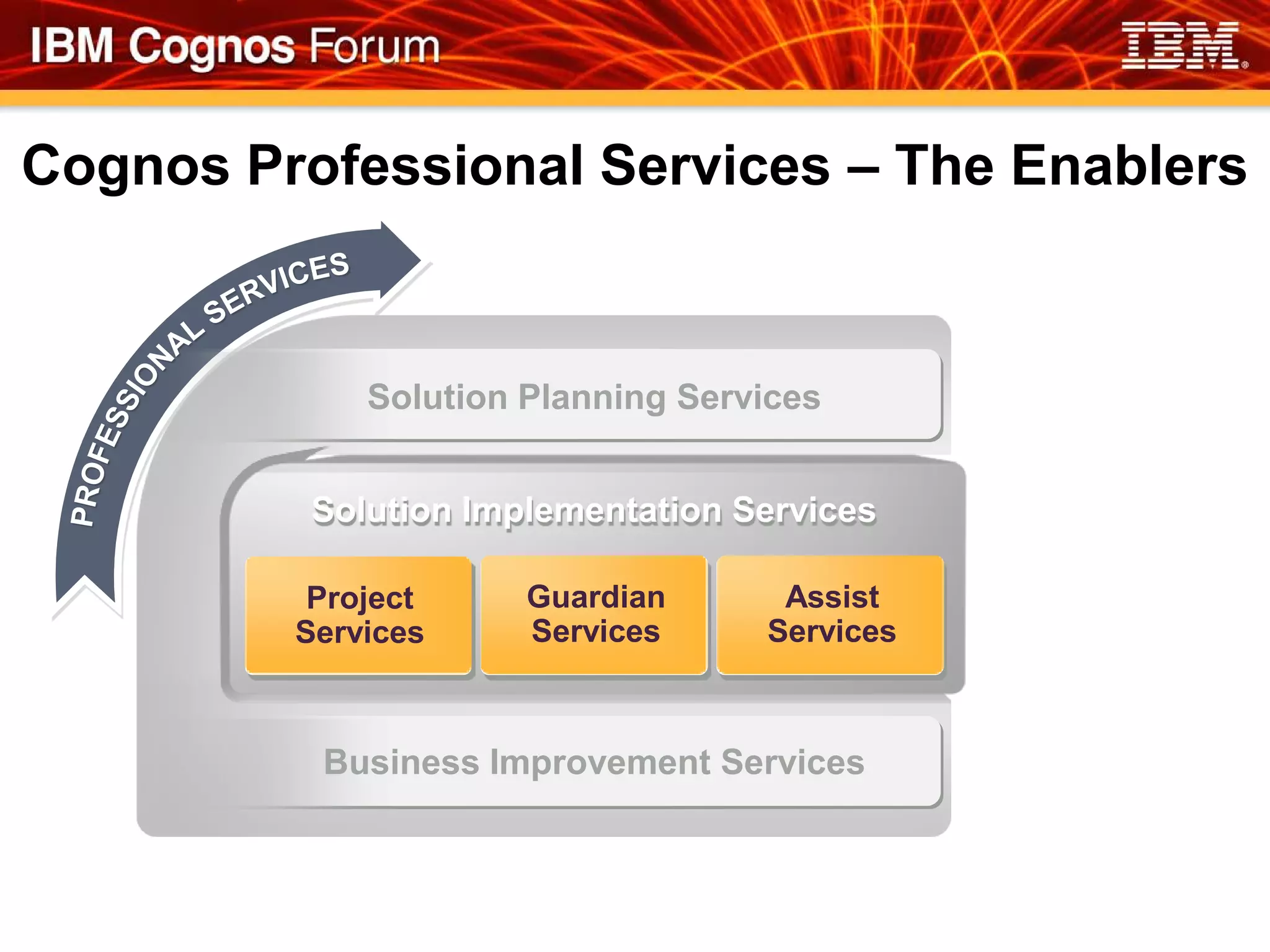
Cognos Professional Services – The Enablers


             Solution Planning Services


          Solution Implementation Services

          Project     Guardian      Assist
         Services     Services     Services


          Business Improvement Services
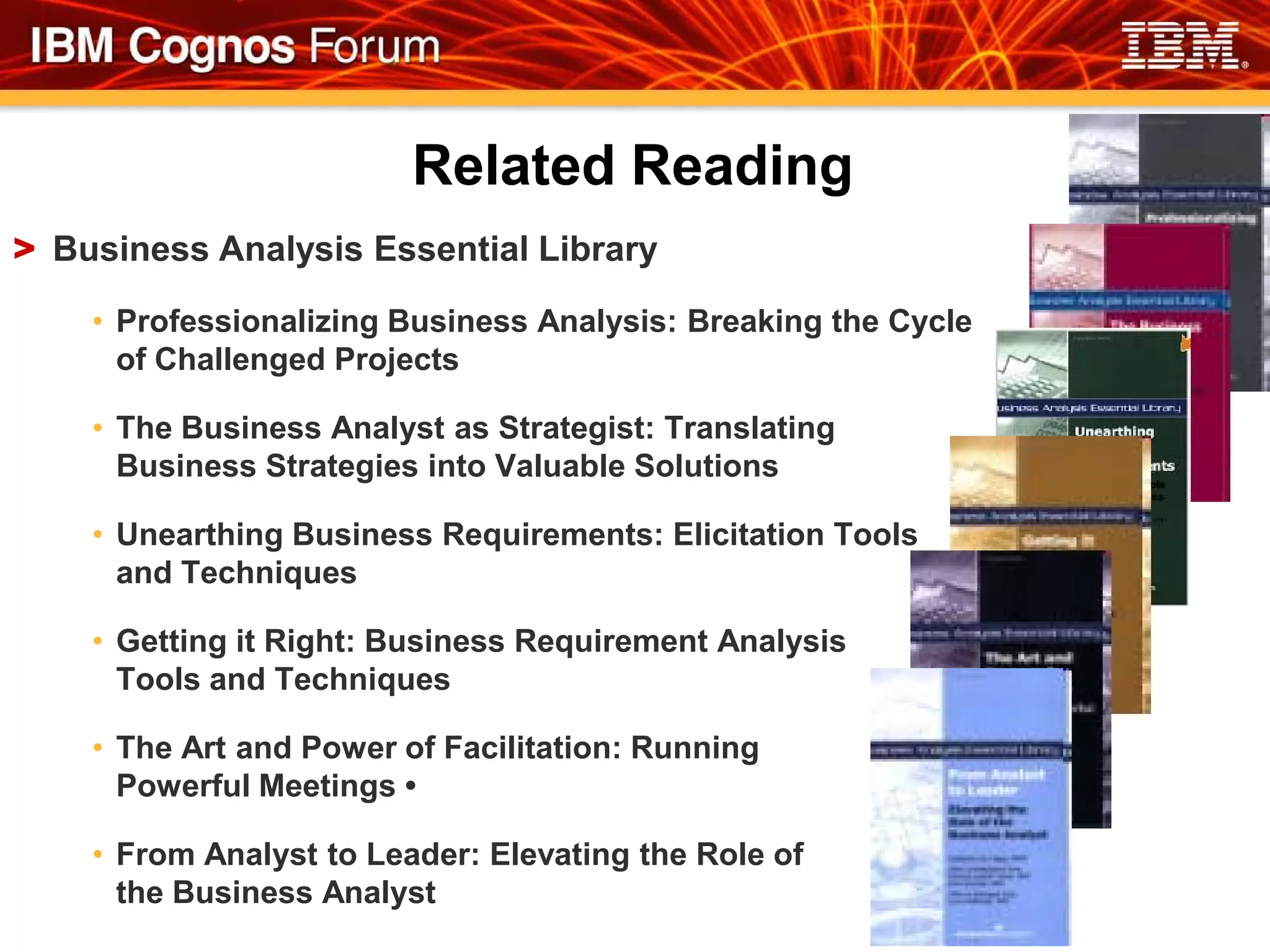
Related Reading
> Business Analysis Essential Library

    • Professionalizing Business Analysis: Breaking the Cycle
      of Challenged Projects

    • The Business Analyst as Strategist: Translating
      Business Strategies into Valuable Solutions

    • Unearthing Business Requirements: Elicitation Tools
      and Techniques

    • Getting it Right: Business Requirement Analysis
      Tools and Techniques

    • The Art and Power of Facilitation: Running
      Powerful Meetings •

    • From Analyst to Leader: Elevating the Role of
      the Business Analyst

Gathering And Documenting Your Bi Business Requirements

  • 1.
    Gathering Business Requirements Nikita Atkins (nikita.atkins@au1.ibm.com)
  • 2.
  • 3.
    > Companies thathave poor requirements practices will be on budget less than 20% and 50% of the time the project will experience massive time and budget overruns. Companies that fall into this category will spend, on average, $5.87 million for that $3 million project. That is a 95% increase in budget. > 60% of system errors are due to inadequate specification and design > Top 3 reasons out of 10 that systems fail to meet cost and schedules is because of requirements: • Changes in Requirements, • Inadequate Requirement Specification and • Lack of user input
  • 4.
    > 56% oferrors in installed systems due to poor communication between user and development during requirements development > 82% of staff time (especially IT staff) is spent correcting requirements errors in installed systems > 24-40% of a project’s budget consumed due to requirements errors
  • 5.
    Cost to Repaira Defect or Error > Requirements = $500 - $1000 > Design = $2,500 > Build = $5,000 > Unit Test = $10,000 > UAT = $25,000 > Maintenance = $100,000
  • 6.
    Why Requirements forBI is so Difficult > Broad Objectives and Endless Possibilities > Hard and Soft Deliverables > Identifying Start and End Point > Ever Changing Scope
  • 7.
    Mistake 1: JustAnother IS/IT Project > Common but dangerous mistake • IS/IT start with Technical Requirements • Information • Tools and Software • BI start with Business Requirements • Alignment and Governance • People, Processes and Culture • Support, SLAs and Capabilities • Fully engage business stakeholders • Large amount of “unknowns”
  • 8.
    Mistake 2: TraditionalRequirements Give employees what they need not what they want • Strategic Goals & Objectives • Role and Responsibilities • Key Performance Indicators • Tools and Enablers • Industry Best Practices • Decisions and Questions • Rewards and Incentives
  • 9.
    Mistake 3: UsingWrong Jargon > Using unnecessary, vague or complex jargon when communicating & gathering requirements • Employees instead of Users • Software purpose instead of name • Process instead of department name > Business Metadata
  • 10.
    Mistake 4: Don’tManage Project Scope > What is in and out of scope > Scope too large > No defined end point > Don’t forget the 3 legged stool: • Scope (Quality) • Time • Resources
  • 11.
    Mistake 5: Making Documentstoo Complex Complex Requirements Documents = Complex Project = Too Hard Basket? • Simple template • Line items and cross references • Visualisation tools • Requirements traceability matrix • Drill-through matrix
  • 12.
    Mistake 6: NotUnderstanding Prerequisites Mixing up Program and Project Requirements • Finite beginning and end • Build and implement something • Support business processes • Scope • Standards
  • 13.
    Mistake 6: NotUnderstanding Prerequisites Strategic Plan Business Case Project Charter Business Strategic Goals BI Roadmap Scope Statement Requirements Strategic Program Project Requirements Planning Roadmap Scope Program of Work Req. Analysis Vision Standards Business Model Use Cases Strategy BICC Context Specifications Objectives Governance Processes Architecture
  • 14.
    Mistake 7 –Not Having A Clear Methodology > Elicitation - Gather, Draw Out, Extract > Analysis - Refining, Understanding, Decomposing > Specification - Consistent, Accessible and Reviewable Documentation > Validation - Correct, Quality, Test Cases, Correct Ambiguities and Vagueness
  • 15.
  • 16.
    Mistake 8 –Not Having Traceability > Source Systems > Metrics and KPIs > Dimensions > BI and Reporting Objects > Training > Documentation > Any Deliverables
  • 17.
    Keys to Requirements Traceability >Unique Numbering > Cross Referencing > Referred To During Project > Key To Testing > Simple to Understand > Easy to Search For
  • 18.
    Mistake 9 –Not Linking to Testing Usability, Data Quality, Operational Readiness User Business Requirements Verify Acceptance Testing Business Analysts Business Users System Design Testing Application, BAs / Developers BAs / Developers Integration, Performance Component Development Testing Developers Developers Scorecards, Dashboards, Cubes, Reports, Models & DW
  • 19.
    Mistake 10 –Know Your Tools Requirements • Brainstorming • Domain Models • Requirements • Quality Review • Document • Use Cases Document • Peer Review Analysis • User Stories • Technical • Customer Review • Focus Groups • Process Models Requirements • IT Review • Interface Analysis • Interface Designs • Non-Technical • Project Sponsor • Interviews • Workflow Models Requirements • Phase Gate • Models • Business Rules • Requirements • Requirements • Manuals • Metrics Dictionary Attributes Presentation • Observations • Business Glossary • Prioritisation • Prototyping • Data Dictionary Matrix • Reverse • Risk Assessment • Risk Management Engineering • Value Mapping Plan • Surveys • Change • Workshops Management Plan Elicitation Analysis Specification Validation
  • 20.
    Cognos Professional Services– The Enablers Solution Planning Services Solution Implementation Services Project Guardian Assist Services Services Services Business Improvement Services
  • 21.
    Related Reading > BusinessAnalysis Essential Library • Professionalizing Business Analysis: Breaking the Cycle of Challenged Projects • The Business Analyst as Strategist: Translating Business Strategies into Valuable Solutions • Unearthing Business Requirements: Elicitation Tools and Techniques • Getting it Right: Business Requirement Analysis Tools and Techniques • The Art and Power of Facilitation: Running Powerful Meetings • • From Analyst to Leader: Elevating the Role of the Business Analyst