Role of Libraries in emergency context: The case of the 2010
Earthquake and Tsunami in Chile

The Urgency of Reading
October 11th, 2013
Paris, France
Maria Garrido & Beth Patin
In collaboration with Angelica Celedón y Andrea Pequeño (ATACH)
GO WITH THE FLOW

Motivation
2010 Chilean Earthquake
& Tsunami Case Study
Themes and Trends
Directions for the Future
2
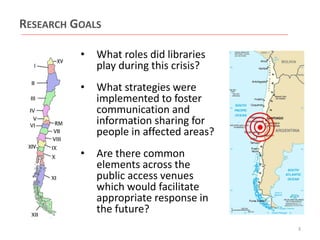
RESEARCH GOALS
•

What roles did libraries
play during this crisis?

•

What strategies were
implemented to foster
communication and
information sharing for
people in affected areas?

•

Are there common
elements across the
public access venues
which would facilitate
appropriate response in
the future?
3
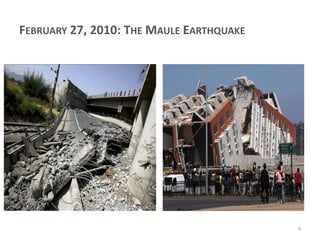
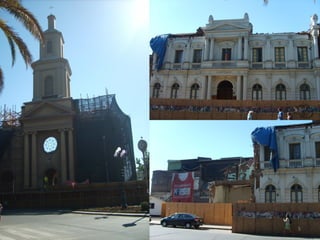
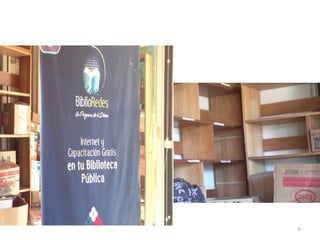
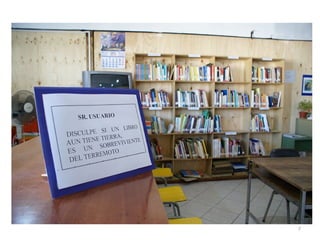
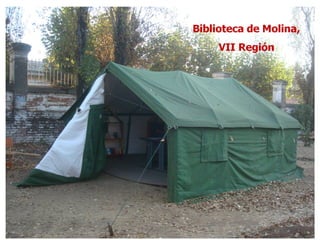
FEBRUARY 27, 2010: THE MAULE EARTHQUAKE

4
5
6
7
DIFFERENT ROLES LIBRARIES PLAY
1. Changing information and communication
needs
2. Shifting services/shifting roles
3. Transformation of Community Space

9
CHANGING INFORMATION NEEDS | SHIFTING LIBRARY SERVICES
THE TECHNOLOGY COMPONENT
• Locating & interacting with
family and friends
• Downloading/Filling
government forms
• Checking updates about
conditions of the affected
region.
• Locating information on the
status of their homes and
work places

THE SOCIAL COMPONENT
• Creating & distributing
preparedness information
• Establishing emergency
operations centers
• Providing physical aid (food,
water, tarps, shelter)
• Assisting with completion of
government forms
• Cleaning up the damage
after the disaster.
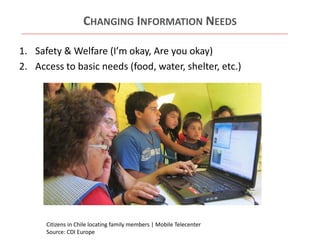
CHANGING INFORMATION NEEDS
1. Safety & Welfare (I’m okay, Are you okay)
2. Access to basic needs (food, water, shelter, etc.)

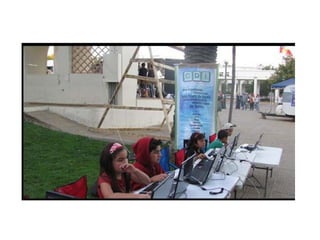
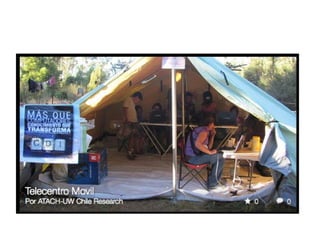
Citizens in Chile locating family members | Mobile Telecenter
Source: CDI Europe
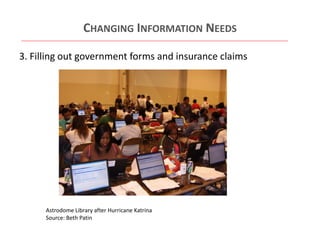
CHANGING INFORMATION NEEDS
3. Filling out government forms and insurance claims

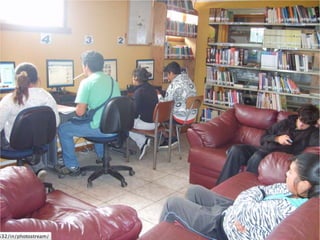
Astrodome Library after Hurricane Katrina
Source: Beth Patin
This research was made possible by Microsoft and the Global Impact Study, a
project co-funded by Canada’s International Development Research Centre
(IDRC) and the Bill & Melinda Gates Foundation

Maria Garrido
Research Assistant Professor
migarrid@uw.edu
@mariaigarrido

Asociación de Telecentros Activos de Chile (ATACH)
www.atach.cl
(56 2) 89 15 261
Twitter: @atach_chile

Beth Patin
PhD Student
bethp@uw.edu

Technology & Social Change Group
University of Washington Information School
tascha.uw.edu
+1.206.616.9101
Twitter: @taschagroup

Role of libraries in disasters and emergencies

  • 1.
    Role of Librariesin emergency context: The case of the 2010 Earthquake and Tsunami in Chile The Urgency of Reading October 11th, 2013 Paris, France Maria Garrido & Beth Patin In collaboration with Angelica Celedón y Andrea Pequeño (ATACH)
  • 2.
    GO WITH THEFLOW Motivation 2010 Chilean Earthquake & Tsunami Case Study Themes and Trends Directions for the Future 2
  • 3.
    RESEARCH GOALS • What rolesdid libraries play during this crisis? • What strategies were implemented to foster communication and information sharing for people in affected areas? • Are there common elements across the public access venues which would facilitate appropriate response in the future? 3
  • 4.
    FEBRUARY 27, 2010:THE MAULE EARTHQUAKE 4
  • 5.
  • 6.
  • 7.
  • 9.
    DIFFERENT ROLES LIBRARIESPLAY 1. Changing information and communication needs 2. Shifting services/shifting roles 3. Transformation of Community Space 9
  • 10.
    CHANGING INFORMATION NEEDS| SHIFTING LIBRARY SERVICES THE TECHNOLOGY COMPONENT • Locating & interacting with family and friends • Downloading/Filling government forms • Checking updates about conditions of the affected region. • Locating information on the status of their homes and work places THE SOCIAL COMPONENT • Creating & distributing preparedness information • Establishing emergency operations centers • Providing physical aid (food, water, tarps, shelter) • Assisting with completion of government forms • Cleaning up the damage after the disaster.
  • 11.
    CHANGING INFORMATION NEEDS 1.Safety & Welfare (I’m okay, Are you okay) 2. Access to basic needs (food, water, shelter, etc.) Citizens in Chile locating family members | Mobile Telecenter Source: CDI Europe
  • 12.
    CHANGING INFORMATION NEEDS 3.Filling out government forms and insurance claims Astrodome Library after Hurricane Katrina Source: Beth Patin
  • 16.
    This research wasmade possible by Microsoft and the Global Impact Study, a project co-funded by Canada’s International Development Research Centre (IDRC) and the Bill & Melinda Gates Foundation Maria Garrido Research Assistant Professor migarrid@uw.edu @mariaigarrido Asociación de Telecentros Activos de Chile (ATACH) www.atach.cl (56 2) 89 15 261 Twitter: @atach_chile Beth Patin PhD Student bethp@uw.edu Technology & Social Change Group University of Washington Information School tascha.uw.edu +1.206.616.9101 Twitter: @taschagroup