Ron insulated between the rafters
 and installed a workshop/garage
   heater in his workshop, but the
concrete slab still remained really
cold. Ron decided to install a new
   insulated floor system, as well.

The first step is to clear everything
    out and sweep the floor clean.
                                        The sub-flooring material Ron
                                        used is a product called DRIcore.
                                        This is an engineered wood
                                        product made up of wood chips or
                                        flakes that are compressed under
                                        high pressure using waterproof
                                        glue. On the back side of each
                                        panel is a polyethylene moisture
                                        barrier.

When using this product, it is important to bring it inside at least 24
hours before installation. This will allow the material to acclimate to
both the temperature and the humidity in the room.


  The sub floor comes in two-foot
  squares that interlock with each
      other using tongue in groove
   joinery. Glue is not used in this
                      floor system.


                                        This is called a floating floor
                                        system, which means it is not
                                        attached to the concrete
                                        underneath, but instead sits or
                                        floats on top. This entire floor
                                        expands and contract with
                                        changes in humidity and
                                        temperature, which means you
                                        need to use spacers around the
                                        edges of the floor to create a
                                        quarter inch gap. When the floor
                                        installation is complete, the
                                        spacers can be removed so that
                                        the gap enables the floor to move
                                        as it needs to.


After each tile is set in place, set a
  tapping block on the edge of the
      panel and tap it gently with a
 hammer to secure the joint firmly
                             together.
If your existing floor is uneven,
                                      use a straight edge to locate the
                                      low spots, which will create a gap
                                      underneath the straight edge.


       The floor panels are easily
  adaptable to these irregularities
        with simple shims that are
   designed to fit over the molded
 panel bottoms. If necessary, you
  can stack up to four of these on
  top of each other. Masking tape
     helps hold the shims in place
    when you flip the panels over.
                                      When you come to the end of
                                      your first row, you will probably
                                      need a piece smaller than a full
                                      panel to fill the remaining space.
                                      Simply measure the space, set
                                      your table saw fence to the
                                      required dimension, and then
                                      make the cut. A hand held circular
                                      saw or jigsaw can also be used to
                                      make these simple cuts.


     The cut piece drops into place,
    but you will not be able to use a
       hammer and tapping block to
tighten up the joint. Instead, use a
tool called a pinch bar, which slips
   into the gap next to the wall and
 hooks over the edge of the panel.
  The opposite end is bent upward
    to form a striking surface. A few
     hammer blows brings the joints
 tightly together. Begin the second
     row by staggering the joints so
  that they fall directly in the center
        of the boards of the first row.
     Staggering the rows in this way
 creates a much more stable floor.


                                      When working in a doorway, you
                                      will need to notch out a panel to fit
                                      around the corner.
The easiest way to do this is to
   set the panel in place and then
  use a straight edge or square to
    extend the wall lines onto the
                            board.


                                          A jigsaw makes cutting out the
                                          notch quick and simple.


      Not only does this floor go in
      quickly and easily, but it also
 looks good. It is an ideal sub-floor
for wood, carpet, vinyl or laminate.


                                          Because Ron was installing his
                                          floor in a garage and workshop he
                                          decided on something called the
                                          G-floor from Better Life
                                          Technologies for his floor surface.
                                          This garage floor covering comes
                                          in nine-foot widths and simply rolls
                                          out, but it lies perfectly flat and
                                          stays in place without the need for
                                          adhesive.

   In just a couple of minutes, this
  material transforms the look and
              feel of the entire floor.

    To trim the edges, use either a
hook shaped utility knife blade, or
 a pair of scissors. Simply cut the
  floor to fit as you work your way
 around the edge of the room. To
  hold the seams tightly together,
 apply double stick carpet tape to
                the back of the floor.

Carefully remove the protective liner from only one side, because
you want the tape to stick only to the covering and not to the
underlayment. This leaves the floor covering free to expand and
contract with changes in temperature and humidity.
Remove any bubbles or ripples
                                     with a push broom, working from
                                     the center to the edges. This new
                                     flooring is tough, durable and
                                     good looking. If you ever plan to
                                     park a car on this surface, it is
                                     resistant to oil and gasoline.


        The floor is not attached to
        anything, so you can easily
     remove it if you ever need to.
Although this new floor covering is
    only about an inch thick, it still
     offers a pretty good insulation
        value, which can make any
            workspace much more
                       comfortable.

Garage floor insulation

  • 1.
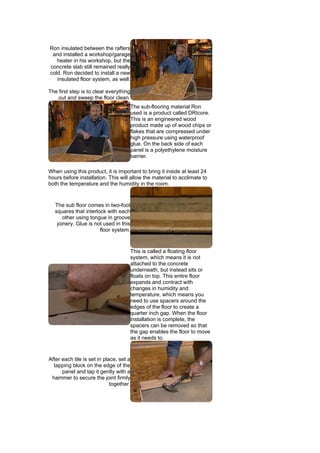
    Ron insulated betweenthe rafters and installed a workshop/garage heater in his workshop, but the concrete slab still remained really cold. Ron decided to install a new insulated floor system, as well. The first step is to clear everything out and sweep the floor clean. The sub-flooring material Ron used is a product called DRIcore. This is an engineered wood product made up of wood chips or flakes that are compressed under high pressure using waterproof glue. On the back side of each panel is a polyethylene moisture barrier. When using this product, it is important to bring it inside at least 24 hours before installation. This will allow the material to acclimate to both the temperature and the humidity in the room. The sub floor comes in two-foot squares that interlock with each other using tongue in groove joinery. Glue is not used in this floor system. This is called a floating floor system, which means it is not attached to the concrete underneath, but instead sits or floats on top. This entire floor expands and contract with changes in humidity and temperature, which means you need to use spacers around the edges of the floor to create a quarter inch gap. When the floor installation is complete, the spacers can be removed so that the gap enables the floor to move as it needs to. After each tile is set in place, set a tapping block on the edge of the panel and tap it gently with a hammer to secure the joint firmly together.
  • 2.
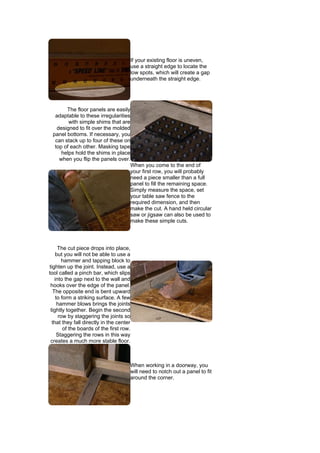
    If your existingfloor is uneven, use a straight edge to locate the low spots, which will create a gap underneath the straight edge. The floor panels are easily adaptable to these irregularities with simple shims that are designed to fit over the molded panel bottoms. If necessary, you can stack up to four of these on top of each other. Masking tape helps hold the shims in place when you flip the panels over. When you come to the end of your first row, you will probably need a piece smaller than a full panel to fill the remaining space. Simply measure the space, set your table saw fence to the required dimension, and then make the cut. A hand held circular saw or jigsaw can also be used to make these simple cuts. The cut piece drops into place, but you will not be able to use a hammer and tapping block to tighten up the joint. Instead, use a tool called a pinch bar, which slips into the gap next to the wall and hooks over the edge of the panel. The opposite end is bent upward to form a striking surface. A few hammer blows brings the joints tightly together. Begin the second row by staggering the joints so that they fall directly in the center of the boards of the first row. Staggering the rows in this way creates a much more stable floor. When working in a doorway, you will need to notch out a panel to fit around the corner.
  • 3.
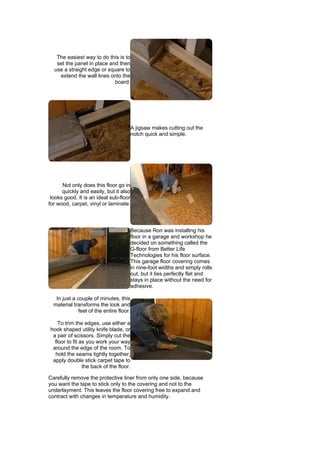
    The easiest wayto do this is to set the panel in place and then use a straight edge or square to extend the wall lines onto the board. A jigsaw makes cutting out the notch quick and simple. Not only does this floor go in quickly and easily, but it also looks good. It is an ideal sub-floor for wood, carpet, vinyl or laminate. Because Ron was installing his floor in a garage and workshop he decided on something called the G-floor from Better Life Technologies for his floor surface. This garage floor covering comes in nine-foot widths and simply rolls out, but it lies perfectly flat and stays in place without the need for adhesive. In just a couple of minutes, this material transforms the look and feel of the entire floor. To trim the edges, use either a hook shaped utility knife blade, or a pair of scissors. Simply cut the floor to fit as you work your way around the edge of the room. To hold the seams tightly together, apply double stick carpet tape to the back of the floor. Carefully remove the protective liner from only one side, because you want the tape to stick only to the covering and not to the underlayment. This leaves the floor covering free to expand and contract with changes in temperature and humidity.
  • 4.
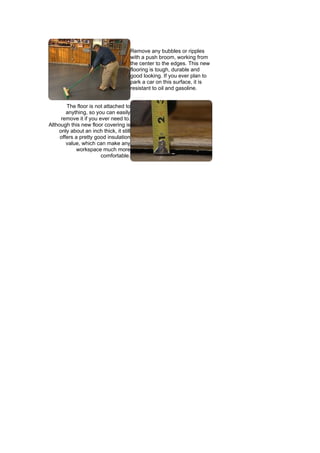
    Remove any bubblesor ripples with a push broom, working from the center to the edges. This new flooring is tough, durable and good looking. If you ever plan to park a car on this surface, it is resistant to oil and gasoline. The floor is not attached to anything, so you can easily remove it if you ever need to. Although this new floor covering is only about an inch thick, it still offers a pretty good insulation value, which can make any workspace much more comfortable.