




GAMIFICATION4BANKING 
How to Use the True Human 
Nature 
to Drive the Next Generation 
Banking 
Consult Blue
PEOPLE LIKE TO PLAY AND 
HAVE FUN 
The True Nature of People
THE TRUE DIMENSION OF THE 
PHENOMENON 
Games industry: $66 billion 
worldwide (DFC 2011) 
Online sales to surpass retail in 
2013 
Virtual goods: $7.3 billion 
globally (In-Stat 2010), 
44% of US/UK adults have played 
a mobile game in the last month 
PopCap/Information Solutions) 
97% of kids 12-17 play 
videogames 
The average game player is 30 
years old 
37% are older than 35 
47% percent of all game players 
are women
PEOPLE ARE 
SUPERHEROES IN THE 
VIRTUAL SPACE 
What if people would 
spend the same energy in 
solving real life 
challenges?
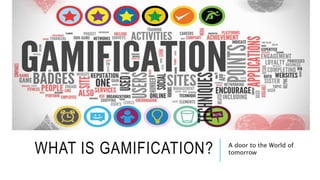
WHAT IS GAMIFICATION? A door to the World of 
tomorrow
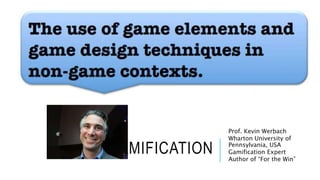
GAMIFICATION 
Prof. Kevin Werbach 
Wharton University of 
Pennsylvania, USA 
Gamification Expert 
Author of “For the Win”
WHAT USE FOR GAMIFICATION? 
• External 
– Marketing 
– Sales 
– Customer engagement 
• Internal 
– HR 
– Productivity enhancement 
– Crowdsourcing 
• Behavior change 
– Health and wellness 
– Sustainability 
– Personal finance
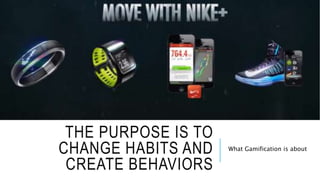
THE PURPOSE IS TO 
CHANGE HABITS AND 
CREATE BEHAVIORS 
What Gamification is about
WHY USE GAMIFICATION? 
Because it works 
Because we need it 
Because fits with human 
behavior
GAMIFICATION TODAY 
Leading banks worldwide 
engage in gamification: 
Bank of America 
City Singapore 
ODBC Bank of Singapore – 
Playmoolah 
CIMB Malaysia Youth Savers 
Absa Bank League of Champions 
Facebook Game 
Commonwealth Bank of Australia 
Investorville 
All major brands invest in 
gamification: Coca Cola, Nike, 
Puma, Microsoft, Google, The 
Economist, etc.
EXAMPLES How Gamification could 
help you achieve your 
business objectives
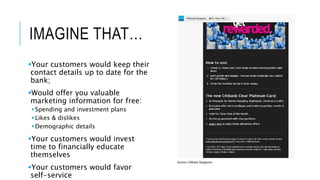
IMAGINE THAT… 
Your customers would keep their 
contact details up to date for the 
bank; 
Would offer you valuable 
marketing information for free: 
 Spending and investment plans 
 Likes & dislikes 
Demographic details 
Your customers would invest 
time to financially educate 
themselves 
Your customers would favor 
self-service
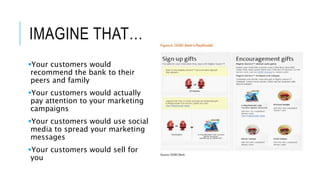
IMAGINE THAT… 
Your customers would 
recommend the bank to their 
peers and family 
Your customers would actually 
pay attention to your marketing 
campaigns 
Your customers would use social 
media to spread your marketing 
messages 
Your customers would sell for 
you
HOW TO GAMIFY? Progression
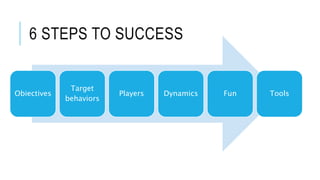
6 STEPS TO SUCCESS 
Obiectives 
Target 
behaviors 
Players Dynamics Fun Tools
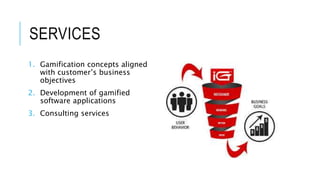
SERVICES 
1. Gamification concepts aligned 
with customer’s business 
objectives 
2. Development of gamified 
software applications 
3. Consulting services
CONSULT BLUE

Gamification in banking

  • 1.
    GAMIFICATION4BANKING How toUse the True Human Nature to Drive the Next Generation Banking Consult Blue
  • 2.
    PEOPLE LIKE TOPLAY AND HAVE FUN The True Nature of People
  • 3.
    THE TRUE DIMENSIONOF THE PHENOMENON Games industry: $66 billion worldwide (DFC 2011) Online sales to surpass retail in 2013 Virtual goods: $7.3 billion globally (In-Stat 2010), 44% of US/UK adults have played a mobile game in the last month PopCap/Information Solutions) 97% of kids 12-17 play videogames The average game player is 30 years old 37% are older than 35 47% percent of all game players are women
  • 4.
    PEOPLE ARE SUPERHEROESIN THE VIRTUAL SPACE What if people would spend the same energy in solving real life challenges?
  • 5.
    WHAT IS GAMIFICATION?A door to the World of tomorrow
  • 6.
    GAMIFICATION Prof. KevinWerbach Wharton University of Pennsylvania, USA Gamification Expert Author of “For the Win”
  • 7.
    WHAT USE FORGAMIFICATION? • External – Marketing – Sales – Customer engagement • Internal – HR – Productivity enhancement – Crowdsourcing • Behavior change – Health and wellness – Sustainability – Personal finance
  • 8.
    THE PURPOSE ISTO CHANGE HABITS AND CREATE BEHAVIORS What Gamification is about
  • 9.
    WHY USE GAMIFICATION? Because it works Because we need it Because fits with human behavior
  • 10.
    GAMIFICATION TODAY Leadingbanks worldwide engage in gamification: Bank of America City Singapore ODBC Bank of Singapore – Playmoolah CIMB Malaysia Youth Savers Absa Bank League of Champions Facebook Game Commonwealth Bank of Australia Investorville All major brands invest in gamification: Coca Cola, Nike, Puma, Microsoft, Google, The Economist, etc.
  • 11.
    EXAMPLES How Gamificationcould help you achieve your business objectives
  • 12.
    IMAGINE THAT… Yourcustomers would keep their contact details up to date for the bank; Would offer you valuable marketing information for free:  Spending and investment plans  Likes & dislikes Demographic details Your customers would invest time to financially educate themselves Your customers would favor self-service
  • 13.
    IMAGINE THAT… Yourcustomers would recommend the bank to their peers and family Your customers would actually pay attention to your marketing campaigns Your customers would use social media to spread your marketing messages Your customers would sell for you
  • 14.
    HOW TO GAMIFY?Progression
  • 15.
    6 STEPS TOSUCCESS Obiectives Target behaviors Players Dynamics Fun Tools
  • 16.
    SERVICES 1. Gamificationconcepts aligned with customer’s business objectives 2. Development of gamified software applications 3. Consulting services
  • 17.

Editor's Notes

  • #11 Citi Singapore has been using a social media game to increase use of its Citibank Clear Platinum Card and build a social media community among its card holders. Customers earn points by checking in to the Facebook game and by using their card. Points earned from check-ins and card usage are posted on the site so players can compete with each other to earn prizes with their points. Playmoolah is an online game designed for children to teach them financial literacy and the value of saving. Another Singapore bank, OCBC Bank, has partnered with Playmoolah to offer those who participate in the bank's Mighty Savers children's program to play the game and donate to charities. Children can earn badges and rewards for how much they save and donate. CIMB Malaysia has also tried to attract younger customers by using games to teach financial literacy to youth. The bank has developed a number of online games to designed to engage children including a fake online stock exchange and CIMB Youth Savers, a financial literacy tool for children. Cohen notes in the Gartner study that children are a particularly important demographic for the Malaysian bank because 28% of the country's population is 15 years old or younger. The game's players earn points for reading articles about financial literacy for youth and can play out different life scenarios on a Facebook app, called Fast Forward, to see how specific life events will impact their finances. Absa Bank, the largest retail bank in South Africa, is one of the many banks around the world that sponsors a sports franchise. In Absa's case that franchise is the popular Springboks rugby team. But while many banks are engaged with sports sponsorships Absa has turned its link to the team to help engage its customers through a gaming initiative on Facebook. Customers can join a Facebook community hosted by the bank and predict the outcomes of Springboks matches to win tickets to matches and other prizes. Commonwealth Bank of Australia's Investorville simulates the ins and outs of owning a property. The game allows the bank's customers to simulate buying and owning a property. "It takes you through the life cycle of an investment property. You have to go through renovations and it can explain to first-time home buyers the consequences of their financial decisions," Gartner's Cohen says of the game. Players have to pay property taxes and go through different simulations on the impact of different types of mortgages and loans for their new hypothetical property.