2nd year of Childhood Education 
Verónica Cañadillas 
Sara de Blas
Total Physical Response 
Is a method of teaching language using 
physical movement to react to verbal 
input in order to reduce student 
inhibitions and lower their affective 
filter.
ACQUISITION VS. 
LEARNING LANGUAGE 
Adult second language learners can develop 
second language learning. One method 
is learning, a conscious study of the forms of 
language. The other method is acquisition, or 
just picking up a language the way children 
do without conscious attention to forms. 
VS.
SILENT PERIOD 
Is the idea that when a language is learned, 
there should be a period in which the learner 
is not expected to actively produce any 
language. This is based on observations of a 
listening period in infants when they learn a 
first language. 
What the 
heck is going 
on?
MOTHER TONGUE 
Refers to the first language learned at 
home in childhood and still understood 
by the person at the time the data 
was collected. 
ABC 
How can you 
learn English 
in 10 lessons 
Mom = Mamá 
Dad = Papá 
…
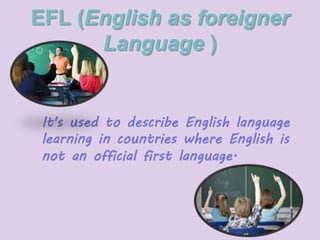
EFL (English as foreigner 
Language ) 
It's used to describe English language 
learning in countries where English is 
not an official first language.
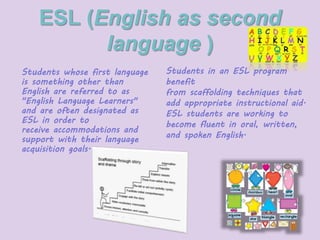
ESL (English as second 
language ) 
Students whose first language 
is something other than 
English are referred to as 
"English Language Learners" 
and are often designated as 
ESL in order to 
receive accommodations and 
support with their language 
acquisition goals. 
Students in an ESL program 
benefit 
from scaffolding techniques that 
add appropriate instructional aid. 
ESL students are working to 
become fluent in oral, written, 
and spoken English.
APPROACH 
It’s a method to teach o learning 
something.
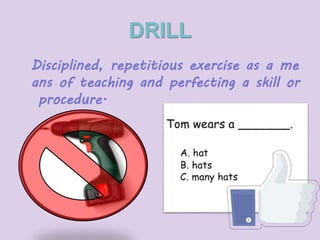
DRILL 
Disciplined, repetitious exercise as a me 
ans of teaching and perfecting a skill or 
procedure.
PHONICS 
A method of 
teaching 
elementary 
reading and 
spelling based 
on the 
phonetic 
interpretation 
of ordinary 
spelling.
DIGITAL LITERACY 
The ability to operate a computer and 
to understand the language used in 
working with a specific system or 
systems.
MULTIPLE 
INTELLIGENCES 
It’s a theory, it’s knowing as model of 
intelligence that differentiates it into specific 
(primary sensory) “modalities”, rather than 
seeing it as dominated by a single general ability.
TARGET LANGUAGES 
A language that a nonnative speaker is in 
the process of learning.

Glossary

  • 1.
    2nd year ofChildhood Education Verónica Cañadillas Sara de Blas
  • 2.
    Total Physical Response Is a method of teaching language using physical movement to react to verbal input in order to reduce student inhibitions and lower their affective filter.
  • 3.
    ACQUISITION VS. LEARNINGLANGUAGE Adult second language learners can develop second language learning. One method is learning, a conscious study of the forms of language. The other method is acquisition, or just picking up a language the way children do without conscious attention to forms. VS.
  • 4.
    SILENT PERIOD Isthe idea that when a language is learned, there should be a period in which the learner is not expected to actively produce any language. This is based on observations of a listening period in infants when they learn a first language. What the heck is going on?
  • 5.
    MOTHER TONGUE Refersto the first language learned at home in childhood and still understood by the person at the time the data was collected. ABC How can you learn English in 10 lessons Mom = Mamá Dad = Papá …
  • 6.
    EFL (English asforeigner Language ) It's used to describe English language learning in countries where English is not an official first language.
  • 7.
    ESL (English assecond language ) Students whose first language is something other than English are referred to as "English Language Learners" and are often designated as ESL in order to receive accommodations and support with their language acquisition goals. Students in an ESL program benefit from scaffolding techniques that add appropriate instructional aid. ESL students are working to become fluent in oral, written, and spoken English.
  • 8.
    APPROACH It’s amethod to teach o learning something.
  • 9.
    DRILL Disciplined, repetitiousexercise as a me ans of teaching and perfecting a skill or procedure.
  • 10.
    PHONICS A methodof teaching elementary reading and spelling based on the phonetic interpretation of ordinary spelling.
  • 11.
    DIGITAL LITERACY Theability to operate a computer and to understand the language used in working with a specific system or systems.
  • 12.
    MULTIPLE INTELLIGENCES It’sa theory, it’s knowing as model of intelligence that differentiates it into specific (primary sensory) “modalities”, rather than seeing it as dominated by a single general ability.
  • 13.
    TARGET LANGUAGES Alanguage that a nonnative speaker is in the process of learning.