Future_Tenses_Presentation.pptx for the English lesson
1.
Review of FutureTenses
• Level: 11th Grade English
• Objective: Understand and use different
future tenses accurately in various contexts.
2.
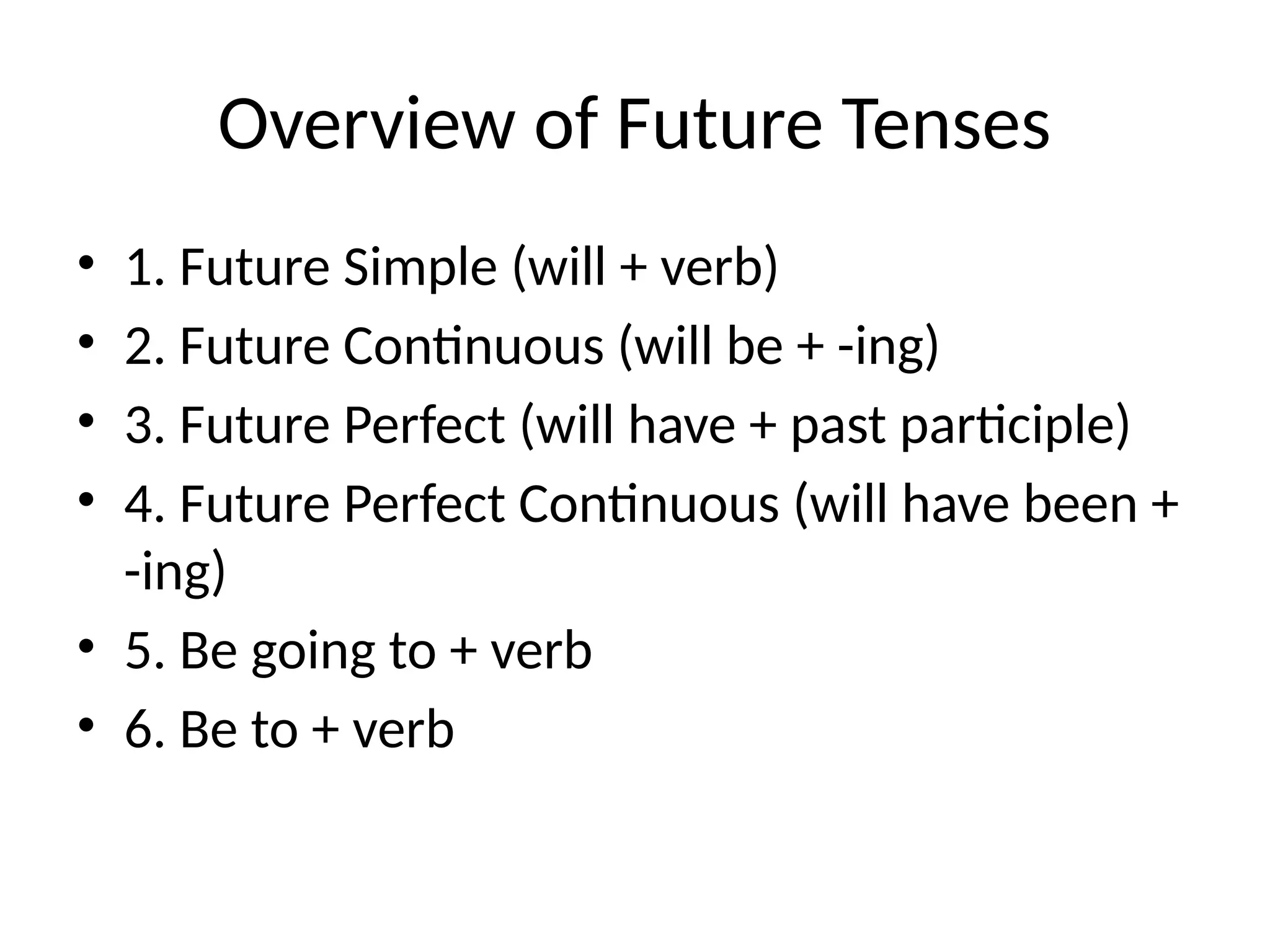
Overview of FutureTenses
• 1. Future Simple (will + verb)
• 2. Future Continuous (will be + -ing)
• 3. Future Perfect (will have + past participle)
• 4. Future Perfect Continuous (will have been +
-ing)
• 5. Be going to + verb
• 6. Be to + verb
3.
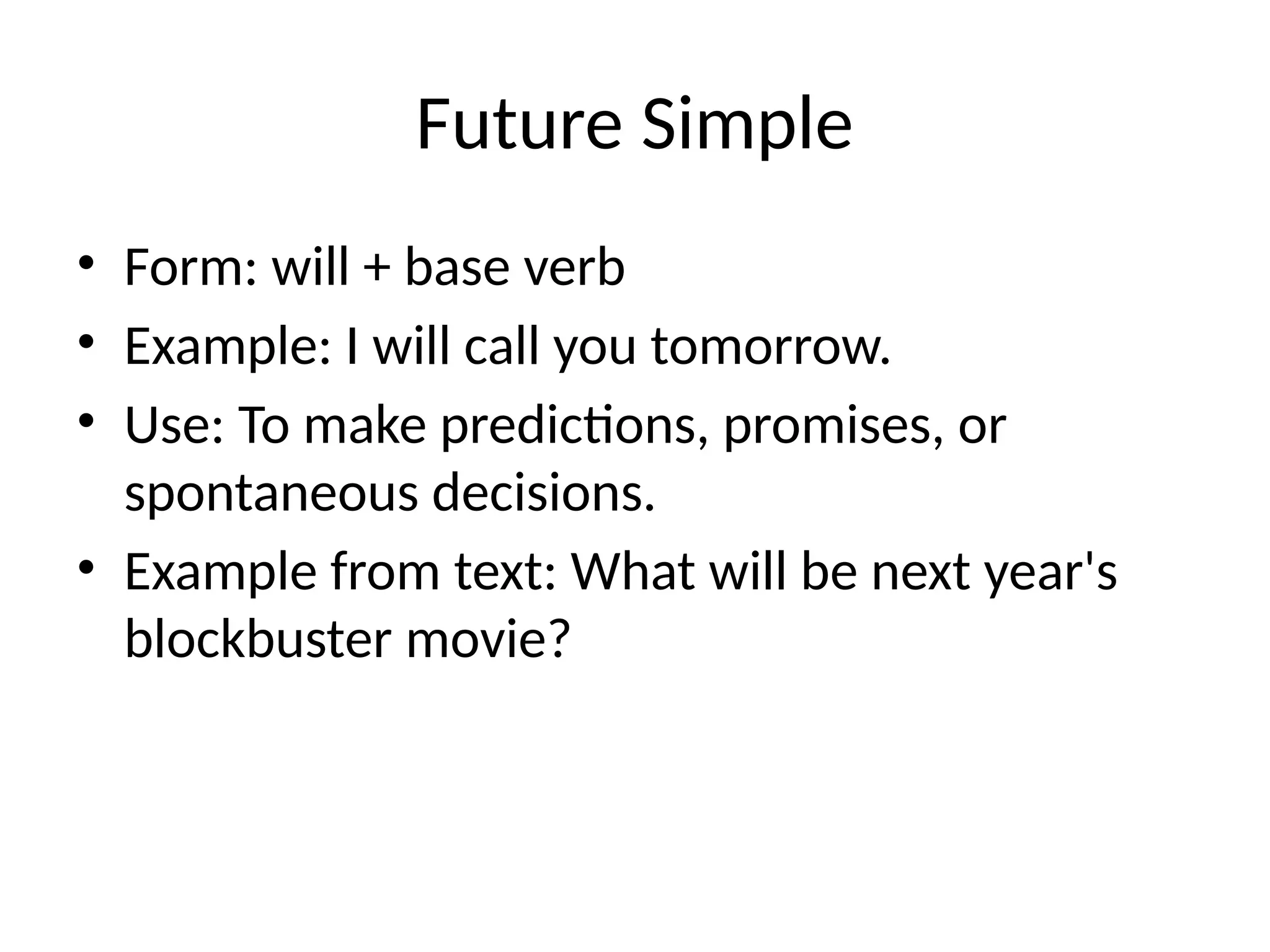
Future Simple
• Form:will + base verb
• Example: I will call you tomorrow.
• Use: To make predictions, promises, or
spontaneous decisions.
• Example from text: What will be next year's
blockbuster movie?
4.
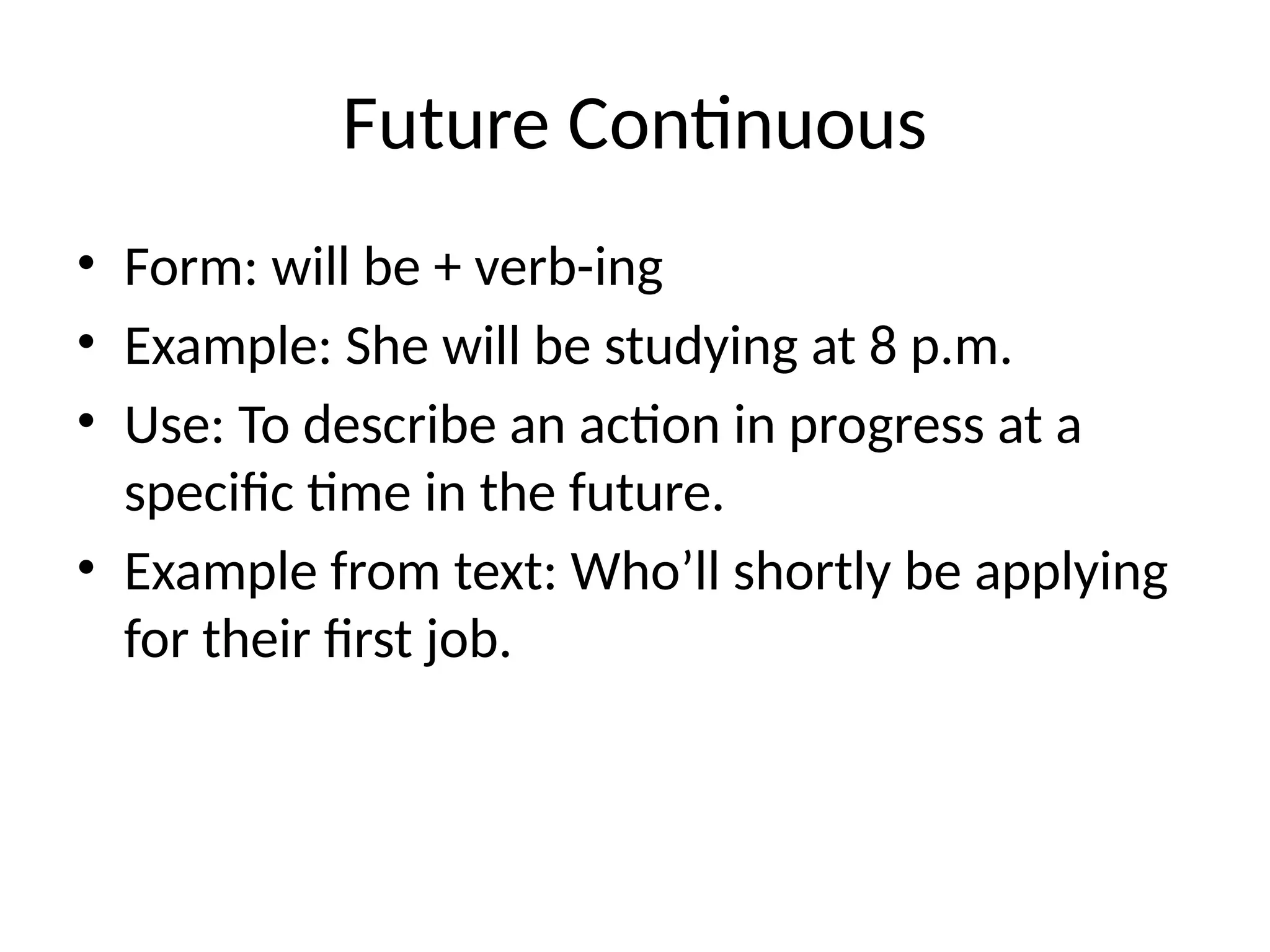
Future Continuous
• Form:will be + verb-ing
• Example: She will be studying at 8 p.m.
• Use: To describe an action in progress at a
specific time in the future.
• Example from text: Who’ll shortly be applying
for their first job.
5.
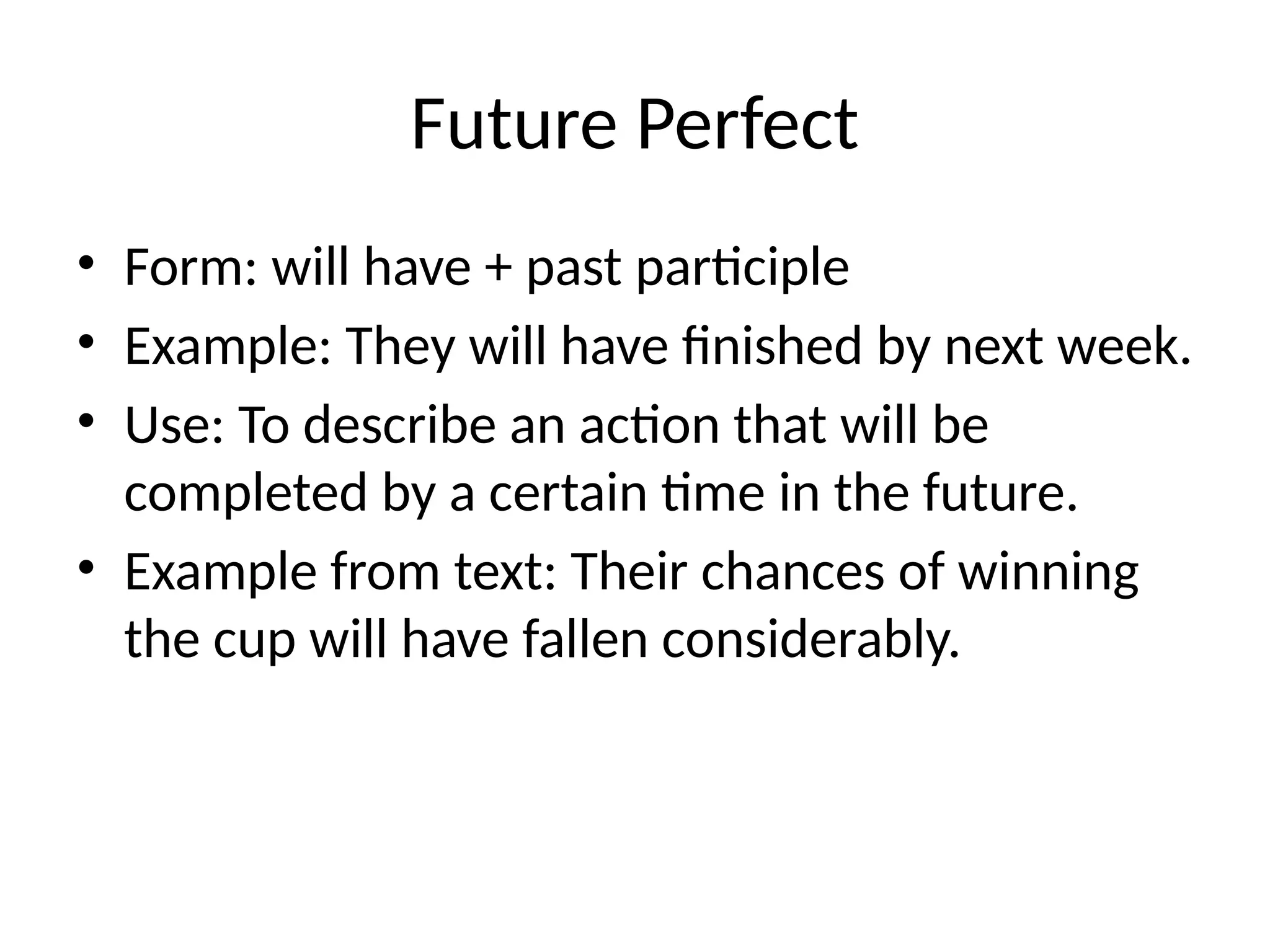
Future Perfect
• Form:will have + past participle
• Example: They will have finished by next week.
• Use: To describe an action that will be
completed by a certain time in the future.
• Example from text: Their chances of winning
the cup will have fallen considerably.
6.
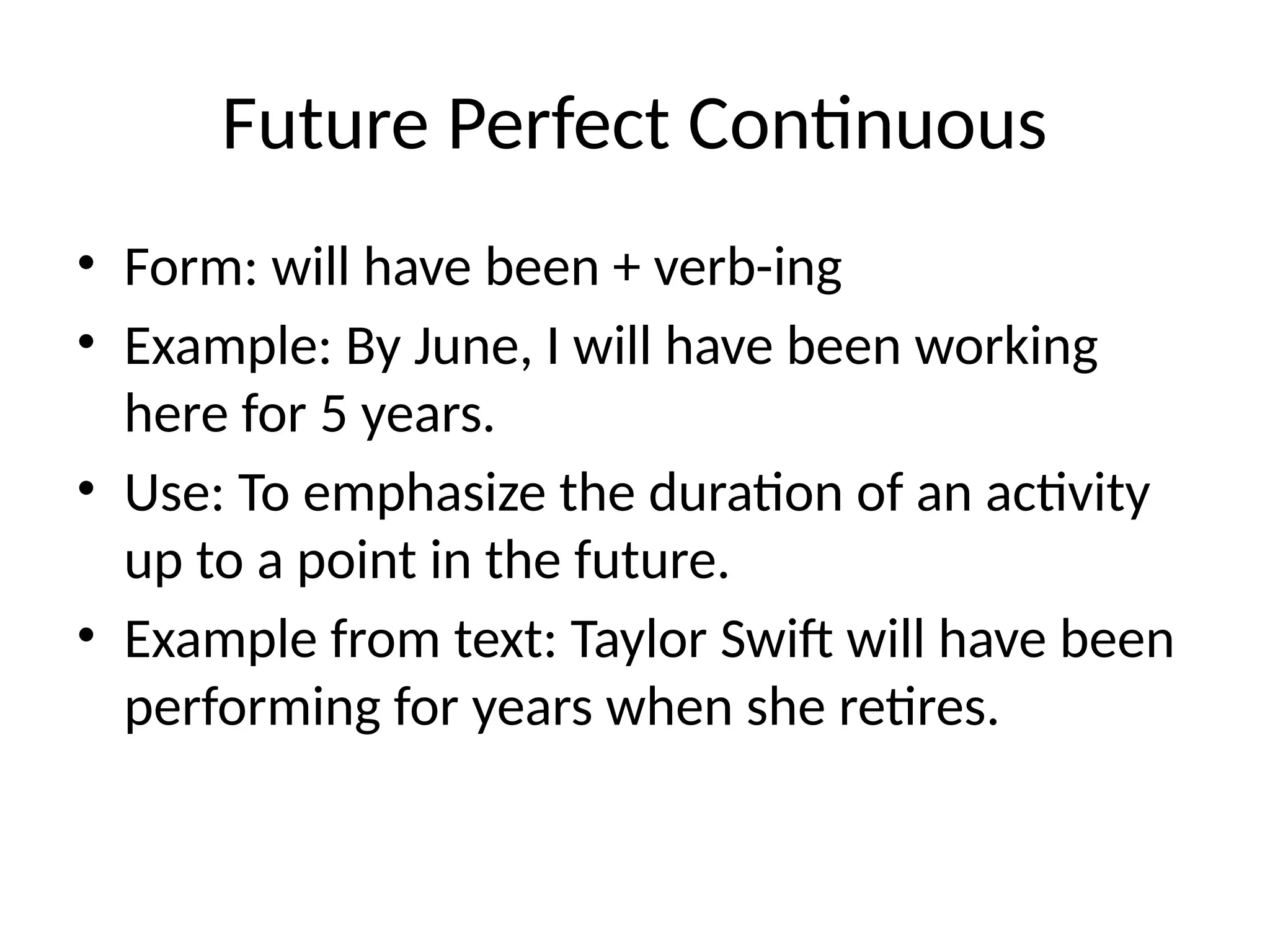
Future Perfect Continuous
•Form: will have been + verb-ing
• Example: By June, I will have been working
here for 5 years.
• Use: To emphasize the duration of an activity
up to a point in the future.
• Example from text: Taylor Swift will have been
performing for years when she retires.
7.
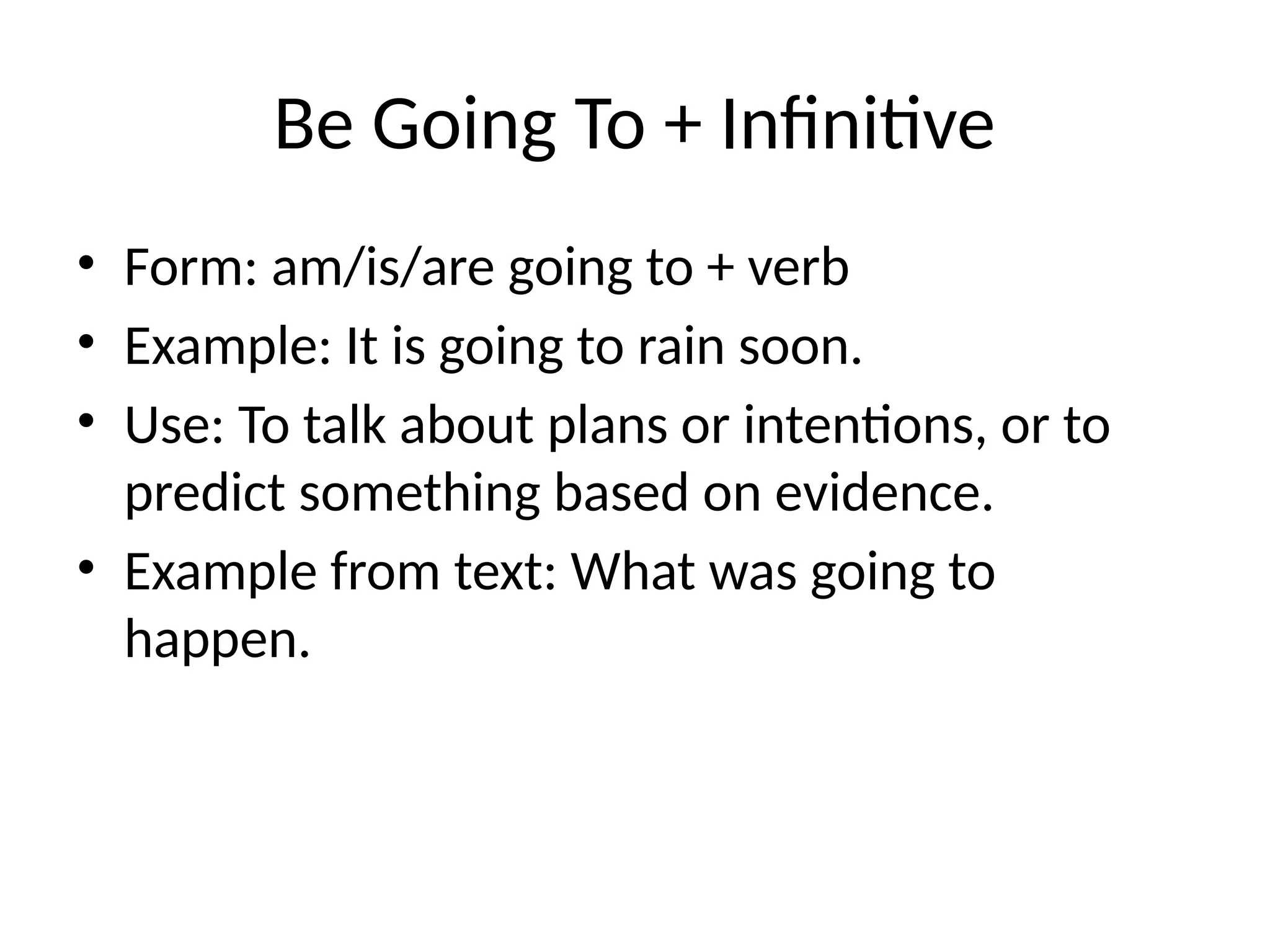
Be Going To+ Infinitive
• Form: am/is/are going to + verb
• Example: It is going to rain soon.
• Use: To talk about plans or intentions, or to
predict something based on evidence.
• Example from text: What was going to
happen.
8.
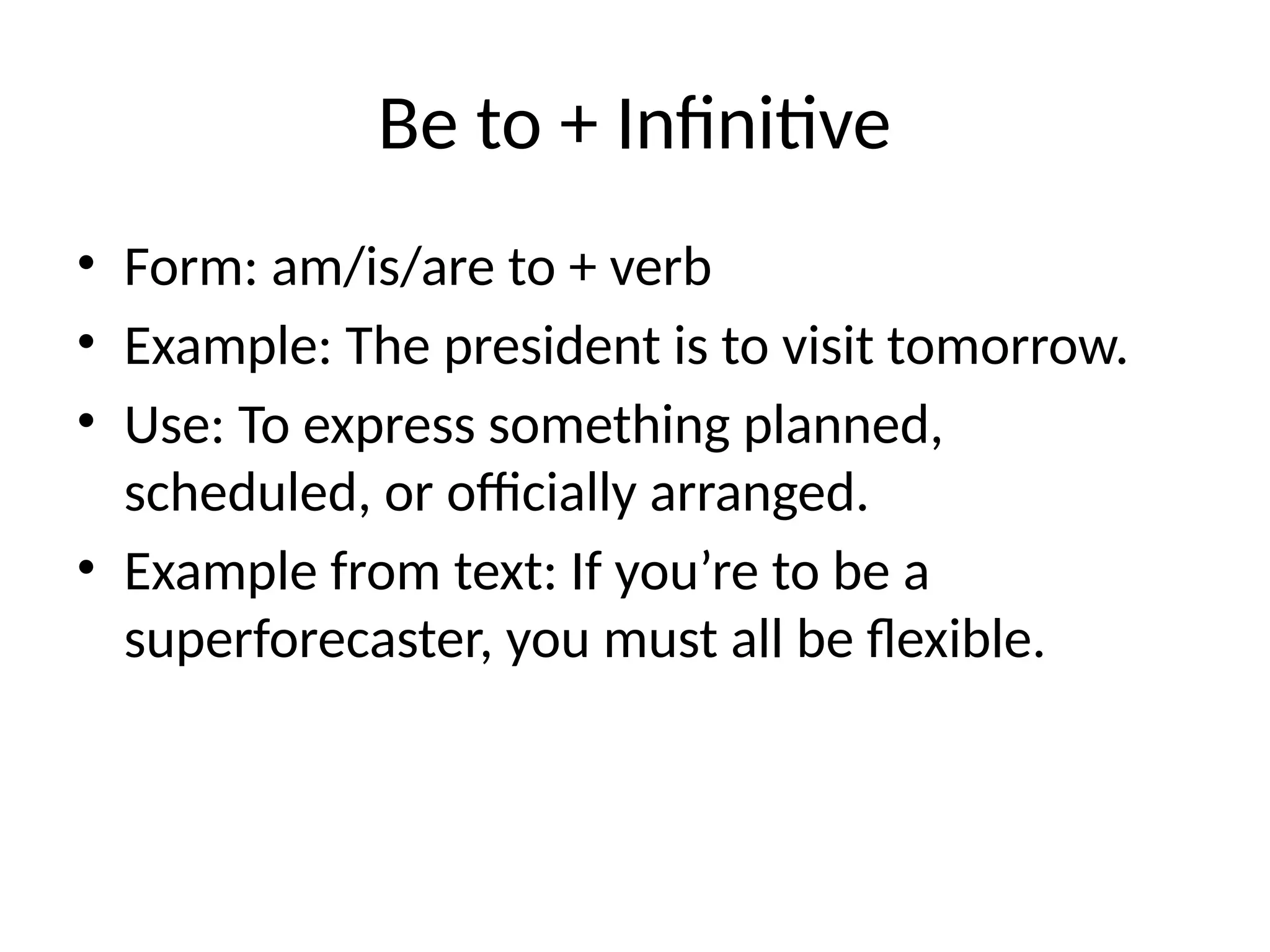
Be to +Infinitive
• Form: am/is/are to + verb
• Example: The president is to visit tomorrow.
• Use: To express something planned,
scheduled, or officially arranged.
• Example from text: If you’re to be a
superforecaster, you must all be flexible.
9.
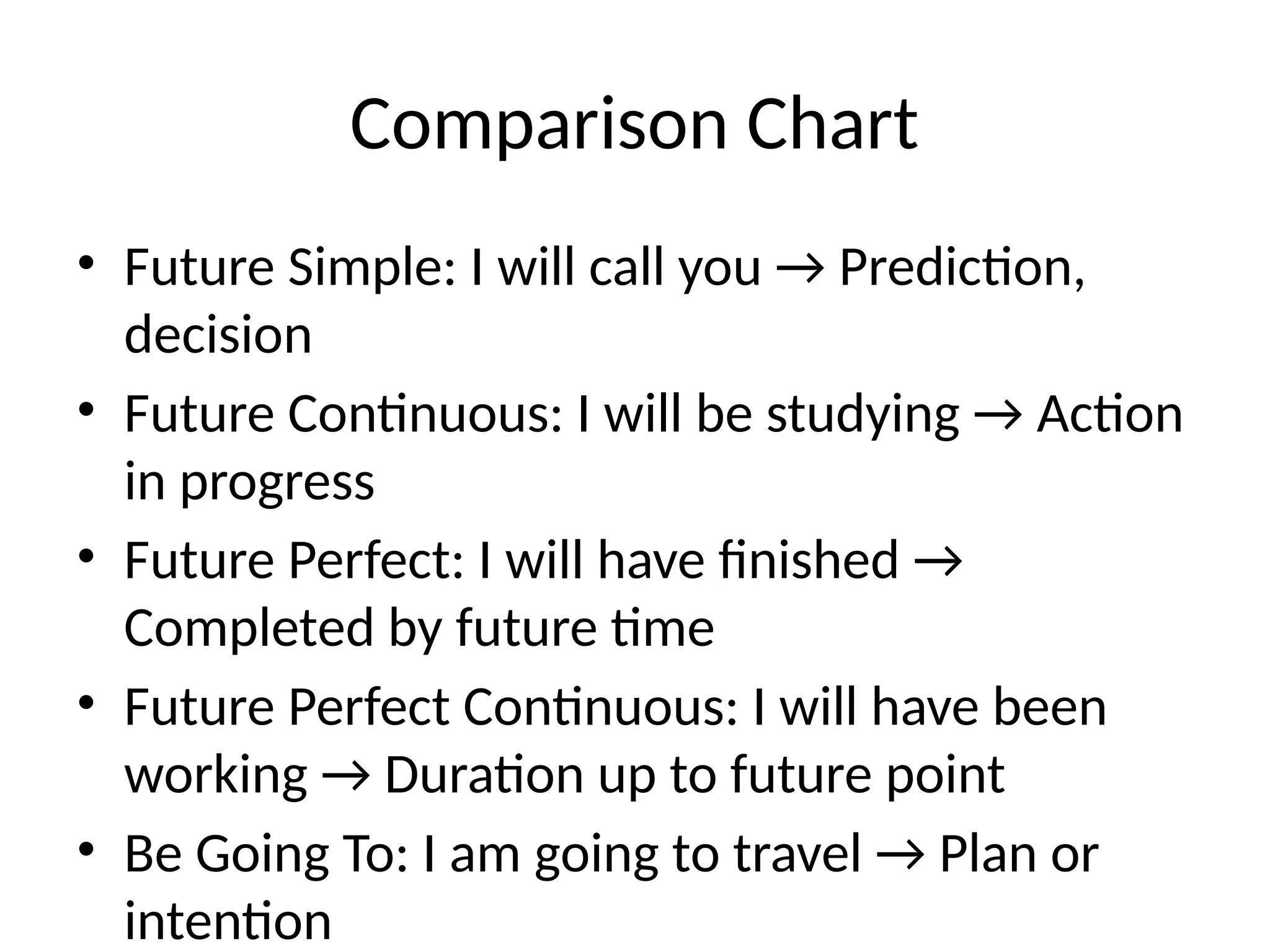
Comparison Chart
• FutureSimple: I will call you → Prediction,
decision
• Future Continuous: I will be studying → Action
in progress
• Future Perfect: I will have finished →
Completed by future time
• Future Perfect Continuous: I will have been
working → Duration up to future point
• Be Going To: I am going to travel → Plan or
intention
10.
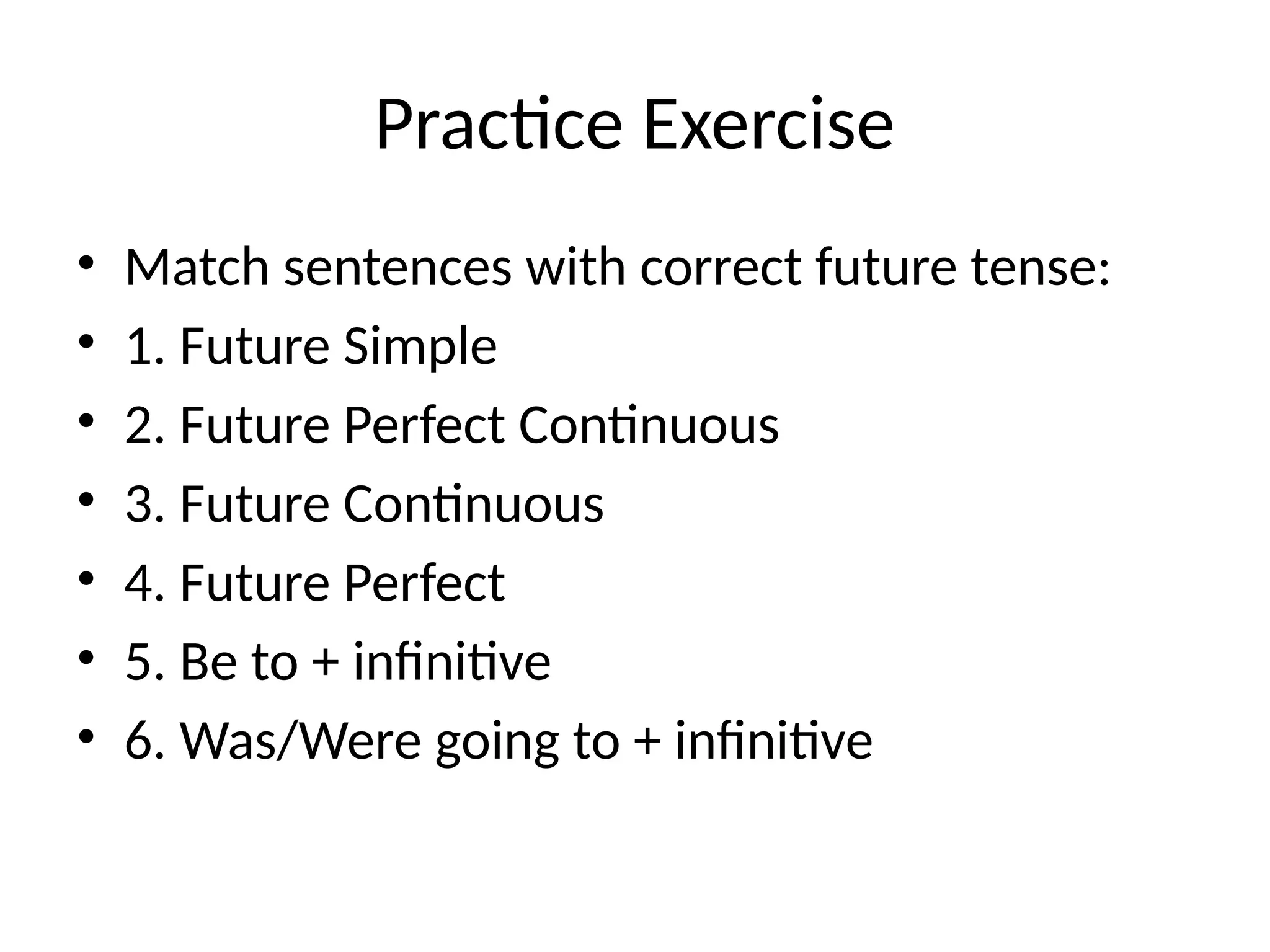
Practice Exercise
• Matchsentences with correct future tense:
• 1. Future Simple
• 2. Future Perfect Continuous
• 3. Future Continuous
• 4. Future Perfect
• 5. Be to + infinitive
• 6. Was/Were going to + infinitive
11.
Discussion & Reflection
•• Which future forms do you use most often?
• • Can you think of examples from your own
life using each tense?
12.
Conclusion
• • Englishoffers many ways to talk about the
future.
• • Each form shows different meanings:
prediction, plan, duration, or completion.
• • Write 5 sentences using different future
tenses.