Patents, IPR, Greed
  & Agriculture


 The Future of
   Hunger
             Hemant Goswami
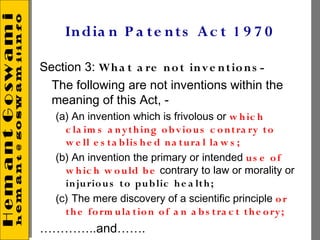
In dia n P a te n t s A c t 1 9 7 0

Section 3: Wh a t a re n o t in v e n tio n s -
  The following are not inventions within the
  meaning of this Act, -
   (a) An invention which is frivolous or w h ic h
     c la im s a n y t h in g o b v io u s c o n t ra ry t o
     w e ll e s t a b lis h e d n a t u ra l la w s ;
   (b) An invention the primary or intended u s e o f
     w h ic h w o u ld b e contrary to law or morality or
     in ju rio u s t o pu b lic h e a lt h ;
   (c) The mere discovery of a scientific principle o r
     th e fo rm u la tio n o f a n a b s t ra c t t h e o ry ;
…………..and…….
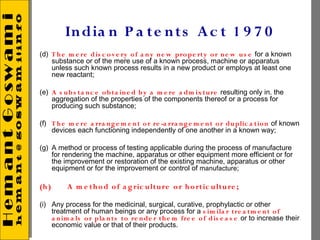
In dia n P a te n t s A c t 1 9 7 0
(d) T h e m e re dis c o v e ry o f a n y n e w pro pe rt y o r n e w u s e for a known
    substance or of the mere use of a known process, machine or apparatus
    unless such known process results in a new product or employs at least one
    new reactant;
 
(e) A s u b s ta n c e o b t a in e d b y a m e re a dm ix t u re resulting only in. the
    aggregation of the properties of the components thereof or a process for
    producing such substance;
 
(f) T h e m e re a rra n g e m e n t o r re -a rra n g e m e n t o r du plic a tio n of known
    devices each functioning independently of one another in a known way;
 
(g) A method or process of testing applicable during the process of manufacture
    for rendering the machine, apparatus or other equipment more efficient or for
    the improvement or restoration of the existing machine, apparatus or other
    equipment or for the improvement or control of manufacture;
 
(h)      A m e t h o d o f a g ric u lt u re o r h o rt ic u lt u re ;

(i) Any process for the medicinal, surgical, curative, prophylactic or other
    treatment of human beings or any process for a s im ila r tre a tm e n t o f
    a n im a ls o r pla n t s to re n de r t h e m fre e o f dis e a s e or to increase their
    economic value or that of their products.
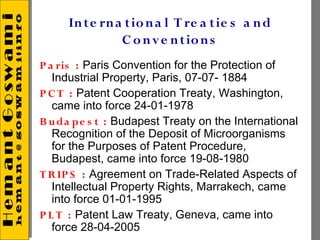
In te rn a t io n a l T re a t ie s a n d
               C o n v e n t io n s
P a ris : Paris Convention for the Protection of
   Industrial Property, Paris, 07-07- 1884
P C T : Patent Cooperation Treaty, Washington,
   came into force 24-01-1978
B u da pe s t : Budapest Treaty on the International
   Recognition of the Deposit of Microorganisms
   for the Purposes of Patent Procedure,
   Budapest, came into force 19-08-1980
T R IP S : Agreement on Trade-Related Aspects of
   Intellectual Property Rights, Marrakech, came
   into force 01-01-1995
P L T : Patent Law Treaty, Geneva, came into
   force 28-04-2005
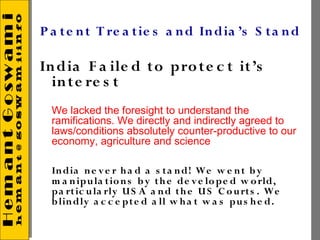
P a t e n t T re a tie s a n d In dia ’s S t a n d

In dia F a ile d t o pro t e c t it’s
  in te re s t
  We lacked the foresight to understand the
  ramifications. We directly and indirectly agreed to
  laws/conditions absolutely counter-productive to our
  economy, agriculture and science

  In dia n e v e r h a d a s t a n d! We w e n t b y
  m a n ipu la t io n s b y t h e de v e lo pe d w o rld,
  pa rt ic u la rly U S A a n d t h e U S C o u rt s . We
  b lin dly a c c e pt e d a ll w h a t w a s pu s h e d.
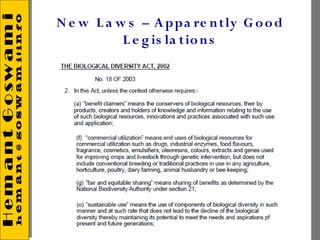
N e w L a w s – A ppa re n t ly G o o d
           L e g is la t io n s
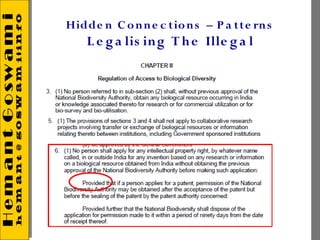
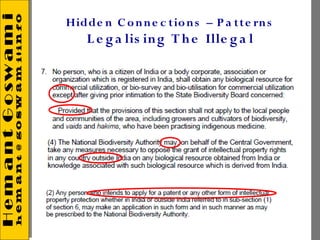
Hidde n C o n n e c tio n s – P a tte rn s
    L e g a lis in g T h e Ille g a l
Hidde n C o n n e c tio n s – P a tte rn s
    L e g a lis in g T h e Ille g a l
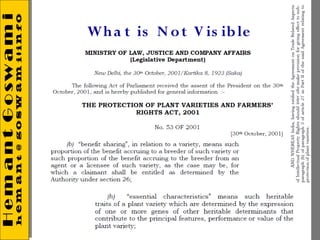
Wh a t is N o t V is ib le
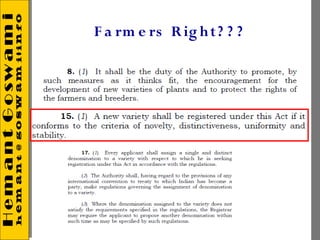
F a rm e rs R ig h t ? ? ?
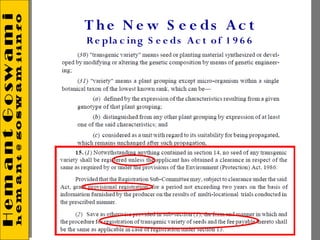
T h e N e w S e e ds A c t
R e pla c in g S e e ds A c t o f 1 9 6 6
A ll n e w le g is la tiv e a c t a re a
pla n to ro b t h e e c o lo g y a n d


Etc…
            t h e fa rm e r
A g ric u lt u re a s in
   A rt ic le 2 4 6 o f
    C o n s tit u t io n

L IS T II o f 7 th
  S c h e du le
  [E x c lu s iv e
  S t a t e L is t]
  It e m 1 4 :
  Agriculture,
  including
  agricultural
  education and
  research,
  protection
  against pests
  and prevention
  of plant diseases
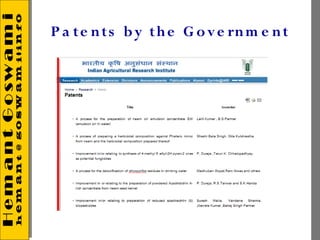
P a te n ts b y t h e G o v e rn m e n t
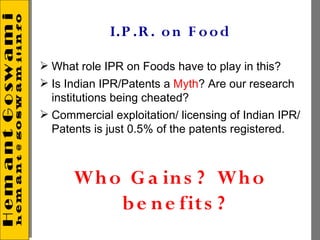
I.P .R . o n F o o d

 What role IPR on Foods have to play in this?
 Is Indian IPR/Patents a Myth? Are our research
  institutions being cheated?
 Commercial exploitation/ licensing of Indian IPR/
  Patents is just 0.5% of the patents registered.


      Wh o G a in s ? Wh o
          b e n e fit s ?
N e w L e g is la t io n in t h e
              P a rlia m e n t
 What is our Parliament trying to do?
 Who will gain out of our new legislation?
 The Seed Act, BRAI, etc.
 Why IP on Seeds, Subsidy on Fertilizers,
  GM Crop, etc. the main focus of the
  Government?
    Is th e re a c o n s pira c y to
          c o n t ro l h u n g e r?
C o n s t itu t io n o f In dia
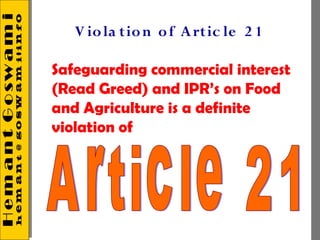
V io la tio n o f A rt ic le 2 1

Safeguarding commercial interest
(Read Greed) and IPR’s on Food
and Agriculture is a definite
violation of
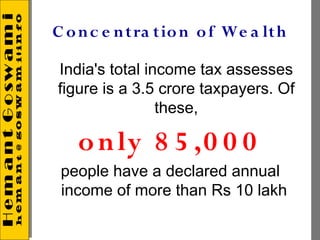
C o n c e n t ra tio n o f We a lt h

India's total income tax assesses
figure is a 3.5 crore taxpayers. Of
                these,

   o n ly 8 5 ,0 0 0
 people have a declared annual
 income of more than Rs 10 lakh
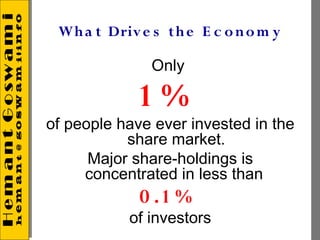
Wh a t Driv e s th e E c o n o m y

               Only

             1%
of people have ever invested in the
           share market.
      Major share-holdings is
     concentrated in less than
             0 .1 %
           of investors
A g ric u lt u re – Ho w V a lu a b le fo r
                     In dia
 India work force consist of 52 crores
 Out of which 60% directly work in agriculture
  [ Industry - 12% : services - 28% : unemployment 6.8%]
 Agriculture still remains the dominant sector
  that employs almost two thirds of people
  unemployed. It has acquired 29.4 percent of
  India's GDP, employs over 67% of people
  and has occupied 43% of India's
  geographical area.
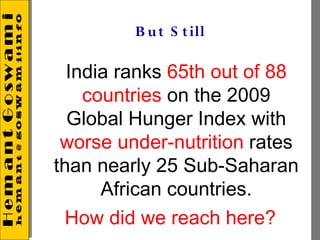
B u t S t ill

  India ranks 65th out of 88
    countries on the 2009
  Global Hunger Index with
 worse under-nutrition rates
than nearly 25 Sub-Saharan
      African countries.
 How did we reach here?
T h e n Wh y ?

     T h e n w h y w e a re
  t re a t in g o u r g re a t e s t
  w o rk fo rc e lik e th is ?
 Is t h e re a n a g e n da ?
Is t h e re a c o n s pira c y ?
Wh a t ’s th e P ro b le m ?

Is State responsible for
 it?
Is this the biggest human
 rights issue of all times?
Who all are behind this?
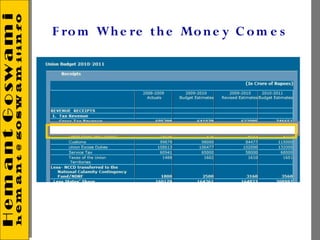
F ro m Wh e re th e Mo n e y C o m e s
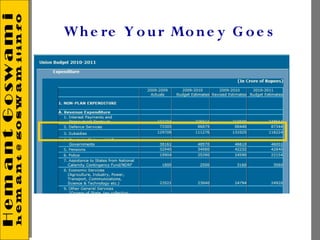
Wh e re Y o u r Mo n e y G o e s
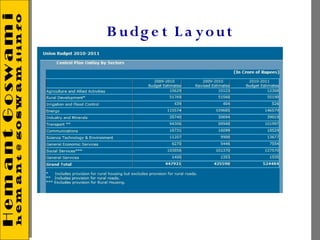
B u dg e t L a y o u t
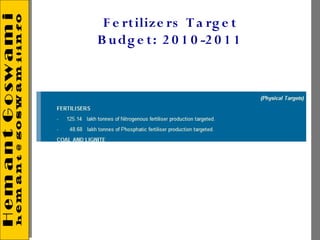
F e rtilize rs T a rg e t
B u dg e t : 2 0 1 0 -2 0 1 1
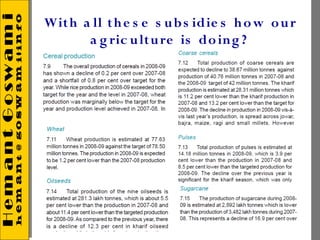
Wit h a ll t h e s e s u b s idie s h o w o u r
       a g ric u lt u re is do in g ?
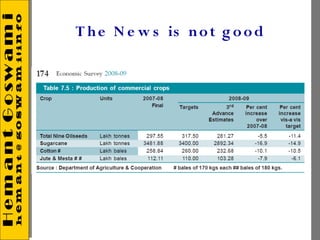
T h e N e w s is n o t g o o d
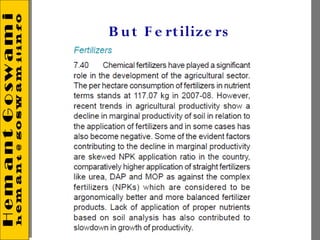
B u t F e rt ilize rs
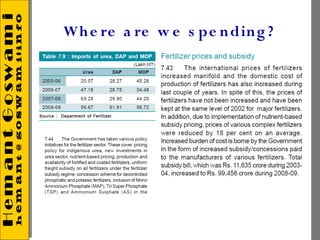
Wh e re a re w e s pe n din g ?
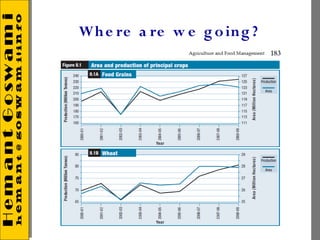
Wh e re a re w e g o in g ?
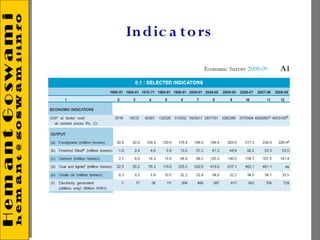
In dic a t o rs
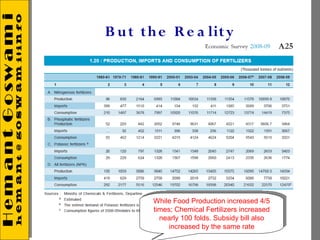
B u t th e R e a lit y


        While Food Production increased 4/5
        times; Chemical Fertilizers increased
          nearly 100 folds. Subsidy bill also
             increased by the same rate
T h is is t h e
B ig g e s t S c a m o f A ll
           T im e s

B ig g e s t V io la t io n o f
Hu m a n R ig h t s o f A ll
           T im e s
T ha nk Y ou


          Questions
             &
          Comments

Future of Hunger

  • 1.
    Patents, IPR, Greed & Agriculture The Future of Hunger Hemant Goswami
  • 2.
    In dia nP a te n t s A c t 1 9 7 0 Section 3: Wh a t a re n o t in v e n tio n s - The following are not inventions within the meaning of this Act, - (a) An invention which is frivolous or w h ic h c la im s a n y t h in g o b v io u s c o n t ra ry t o w e ll e s t a b lis h e d n a t u ra l la w s ; (b) An invention the primary or intended u s e o f w h ic h w o u ld b e contrary to law or morality or in ju rio u s t o pu b lic h e a lt h ; (c) The mere discovery of a scientific principle o r th e fo rm u la tio n o f a n a b s t ra c t t h e o ry ; …………..and…….
  • 3.
    In dia nP a te n t s A c t 1 9 7 0 (d) T h e m e re dis c o v e ry o f a n y n e w pro pe rt y o r n e w u s e for a known substance or of the mere use of a known process, machine or apparatus unless such known process results in a new product or employs at least one new reactant;   (e) A s u b s ta n c e o b t a in e d b y a m e re a dm ix t u re resulting only in. the aggregation of the properties of the components thereof or a process for producing such substance;   (f) T h e m e re a rra n g e m e n t o r re -a rra n g e m e n t o r du plic a tio n of known devices each functioning independently of one another in a known way;   (g) A method or process of testing applicable during the process of manufacture for rendering the machine, apparatus or other equipment more efficient or for the improvement or restoration of the existing machine, apparatus or other equipment or for the improvement or control of manufacture;   (h) A m e t h o d o f a g ric u lt u re o r h o rt ic u lt u re ; (i) Any process for the medicinal, surgical, curative, prophylactic or other treatment of human beings or any process for a s im ila r tre a tm e n t o f a n im a ls o r pla n t s to re n de r t h e m fre e o f dis e a s e or to increase their economic value or that of their products.
  • 4.
    In te rna t io n a l T re a t ie s a n d C o n v e n t io n s P a ris : Paris Convention for the Protection of Industrial Property, Paris, 07-07- 1884 P C T : Patent Cooperation Treaty, Washington, came into force 24-01-1978 B u da pe s t : Budapest Treaty on the International Recognition of the Deposit of Microorganisms for the Purposes of Patent Procedure, Budapest, came into force 19-08-1980 T R IP S : Agreement on Trade-Related Aspects of Intellectual Property Rights, Marrakech, came into force 01-01-1995 P L T : Patent Law Treaty, Geneva, came into force 28-04-2005
  • 5.
    P a te n t T re a tie s a n d In dia ’s S t a n d In dia F a ile d t o pro t e c t it’s in te re s t We lacked the foresight to understand the ramifications. We directly and indirectly agreed to laws/conditions absolutely counter-productive to our economy, agriculture and science In dia n e v e r h a d a s t a n d! We w e n t b y m a n ipu la t io n s b y t h e de v e lo pe d w o rld, pa rt ic u la rly U S A a n d t h e U S C o u rt s . We b lin dly a c c e pt e d a ll w h a t w a s pu s h e d.
  • 6.
    N e wL a w s – A ppa re n t ly G o o d L e g is la t io n s
  • 7.
    Hidde n Co n n e c tio n s – P a tte rn s L e g a lis in g T h e Ille g a l
  • 8.
    Hidde n Co n n e c tio n s – P a tte rn s L e g a lis in g T h e Ille g a l
  • 9.
    Wh a tis N o t V is ib le
  • 10.
    F a rme rs R ig h t ? ? ?
  • 11.
    T h eN e w S e e ds A c t R e pla c in g S e e ds A c t o f 1 9 6 6
  • 12.
    A ll ne w le g is la tiv e a c t a re a pla n to ro b t h e e c o lo g y a n d Etc… t h e fa rm e r
  • 13.
    A g ricu lt u re a s in A rt ic le 2 4 6 o f C o n s tit u t io n L IS T II o f 7 th S c h e du le [E x c lu s iv e S t a t e L is t] It e m 1 4 : Agriculture, including agricultural education and research, protection against pests and prevention of plant diseases
  • 14.
    P a ten ts b y t h e G o v e rn m e n t
  • 15.
    I.P .R .o n F o o d  What role IPR on Foods have to play in this?  Is Indian IPR/Patents a Myth? Are our research institutions being cheated?  Commercial exploitation/ licensing of Indian IPR/ Patents is just 0.5% of the patents registered. Wh o G a in s ? Wh o b e n e fit s ?
  • 16.
    N e wL e g is la t io n in t h e P a rlia m e n t  What is our Parliament trying to do?  Who will gain out of our new legislation?  The Seed Act, BRAI, etc.  Why IP on Seeds, Subsidy on Fertilizers, GM Crop, etc. the main focus of the Government? Is th e re a c o n s pira c y to c o n t ro l h u n g e r?
  • 17.
    C o ns t itu t io n o f In dia
  • 18.
    V io latio n o f A rt ic le 2 1 Safeguarding commercial interest (Read Greed) and IPR’s on Food and Agriculture is a definite violation of
  • 19.
    C o nc e n t ra tio n o f We a lt h India's total income tax assesses figure is a 3.5 crore taxpayers. Of these, o n ly 8 5 ,0 0 0 people have a declared annual income of more than Rs 10 lakh
  • 20.
    Wh a tDriv e s th e E c o n o m y Only 1% of people have ever invested in the share market. Major share-holdings is concentrated in less than 0 .1 % of investors
  • 21.
    A g ricu lt u re – Ho w V a lu a b le fo r In dia  India work force consist of 52 crores  Out of which 60% directly work in agriculture [ Industry - 12% : services - 28% : unemployment 6.8%]  Agriculture still remains the dominant sector that employs almost two thirds of people unemployed. It has acquired 29.4 percent of India's GDP, employs over 67% of people and has occupied 43% of India's geographical area.
  • 22.
    B u tS t ill India ranks 65th out of 88 countries on the 2009 Global Hunger Index with worse under-nutrition rates than nearly 25 Sub-Saharan African countries. How did we reach here?
  • 23.
    T h en Wh y ? T h e n w h y w e a re t re a t in g o u r g re a t e s t w o rk fo rc e lik e th is ? Is t h e re a n a g e n da ? Is t h e re a c o n s pira c y ?
  • 24.
    Wh a t’s th e P ro b le m ? Is State responsible for it? Is this the biggest human rights issue of all times? Who all are behind this?
  • 25.
    F ro mWh e re th e Mo n e y C o m e s
  • 26.
    Wh e reY o u r Mo n e y G o e s
  • 27.
    B u dge t L a y o u t
  • 28.
    F e rtilizers T a rg e t B u dg e t : 2 0 1 0 -2 0 1 1
  • 29.
    Wit h all t h e s e s u b s idie s h o w o u r a g ric u lt u re is do in g ?
  • 30.
    T h eN e w s is n o t g o o d
  • 31.
    B u tF e rt ilize rs
  • 32.
    Wh e rea re w e s pe n din g ?
  • 33.
    Wh e rea re w e g o in g ?
  • 34.
    In dic at o rs
  • 35.
    B u tth e R e a lit y While Food Production increased 4/5 times; Chemical Fertilizers increased nearly 100 folds. Subsidy bill also increased by the same rate
  • 36.
    T h isis t h e B ig g e s t S c a m o f A ll T im e s B ig g e s t V io la t io n o f Hu m a n R ig h t s o f A ll T im e s
  • 37.
    T ha nkY ou Questions & Comments