• going to
• will
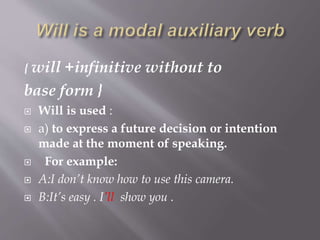
{ will +infinitive without to
base form }
 Will is used :
 a) to express a future decision or intention
made at the moment of speaking.
 For example:
 A:I don’t know how to use this camera.
 B:It’s easy . I’ll show you .
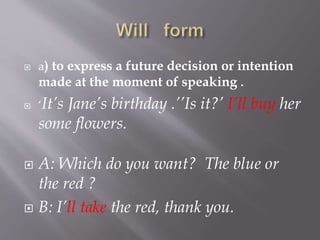
 a) to express a future decision or intention
made at the moment of speaking .
 ‘It’s Jane’s birthday .’’Is it?’ I’ll buy her
some flowers.
 A: Which do you want? The blue or
the red ?
 B: I’ll take the red, thank you.
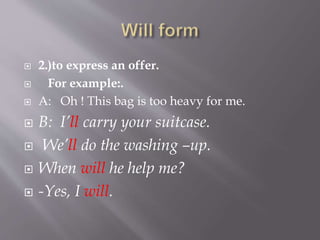
 2.)to express an offer.
 For example:.
 A: Oh ! This bag is too heavy for me.
 B: I’ll carry your suitcase.
 We’ll do the washing –up.
 When will he help me?
 -Yes, I will.
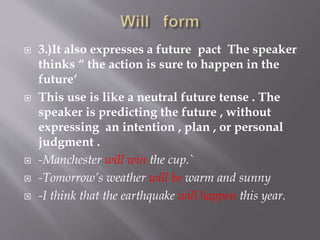
 3.)It also expresses a future pact The speaker
thinks “ the action is sure to happen in the
future‘
 This use is like a neutral future tense . The
speaker is predicting the future , without
expressing an intention , plan , or personal
judgment .
 -Manchester will win the cup.`
 -Tomorrow’s weather will be warm and sunny
 -I think that the earthquake will happen this year.
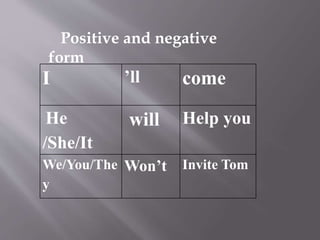
I ’ll come
He
/She/It
will Help you
We/You/The
y
Won’t Invite Tom
Positive and negative
form
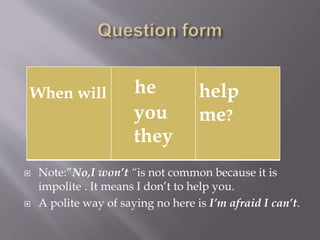
When will he
you
they
help
me?
 Note:”No,I won’t “is not common because it is
impolite . It means I don’t to help you.
 A polite way of saying no here is I’m afraid I can’t.
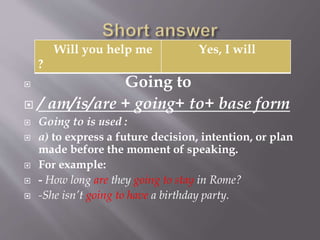
 Going to
 / am/is/are + going+ to+ base form
 Going to is used :
 a) to express a future decision, intention, or plan
made before the moment of speaking.
 For example:
 - How long are they going to stay in Rome?
 -She isn’t going to have a birthday party.
Will you help me
?
Yes, I will
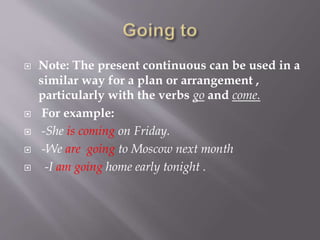
 Note: The present continuous can be used in a
similar way for a plan or arrangement ,
particularly with the verbs go and come.
 For example:
 -She is coming on Friday.
 -We are going to Moscow next month
 -I am going home early tonight .
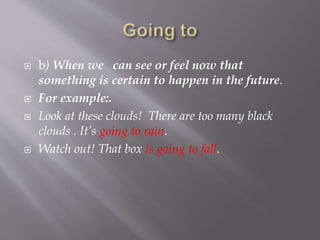
 b) When we can see or feel now that
something is certain to happen in the future.
 For example:.
 Look at these clouds! There are too many black
clouds . It’s going to rain.
 Watch out! That box is going to fall.
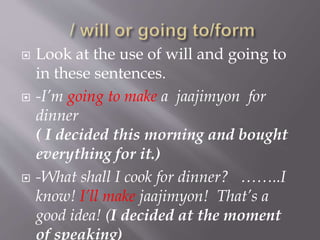
 Look at the use of will and going to
in these sentences.
 -I’m going to make a jaajimyon for
dinner
( I decided this morning and bought
everything for it.)
 -What shall I cook for dinner? ……..I
know! I’ll make jaajimyon! That’s a
good idea! (I decided at the moment
of speaking)
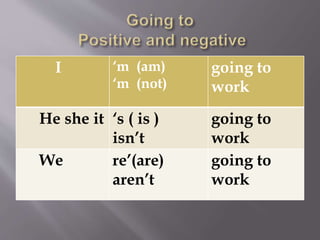
I ‘m (am)
‘m (not)
going to
work
He she it ‘s ( is )
isn’t
going to
work
We re’(are)
aren’t
going to
work
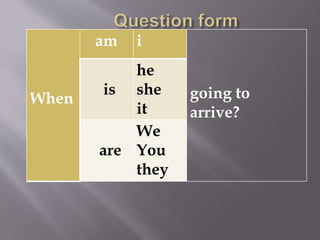
When
am i
is
he
she
it
are
We
You
they
going to
arrive?
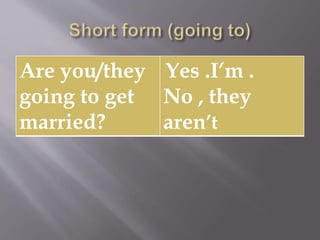
Are you/they
going to get
married?
Yes .I’m .
No , they
aren’t
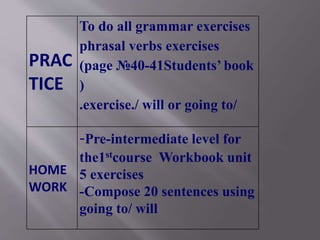
PRAC
TICE
To do all grammar exercises
phrasal verbs exercises
(page №40-41Students’ book
)
.exercise./ will or going to/
HOME
WORK
-Pre-intermediate level for
the1stcourse Workbook unit
5 exercises
-Compose 20 sentences using
going to/ will

Future forms

  • 1.
  • 2.
    { will +infinitivewithout to base form }  Will is used :  a) to express a future decision or intention made at the moment of speaking.  For example:  A:I don’t know how to use this camera.  B:It’s easy . I’ll show you .
  • 3.
     a) toexpress a future decision or intention made at the moment of speaking .  ‘It’s Jane’s birthday .’’Is it?’ I’ll buy her some flowers.  A: Which do you want? The blue or the red ?  B: I’ll take the red, thank you.
  • 4.
     2.)to expressan offer.  For example:.  A: Oh ! This bag is too heavy for me.  B: I’ll carry your suitcase.  We’ll do the washing –up.  When will he help me?  -Yes, I will.
  • 5.
     3.)It alsoexpresses a future pact The speaker thinks “ the action is sure to happen in the future‘  This use is like a neutral future tense . The speaker is predicting the future , without expressing an intention , plan , or personal judgment .  -Manchester will win the cup.`  -Tomorrow’s weather will be warm and sunny  -I think that the earthquake will happen this year.
  • 6.
    I ’ll come He /She/It willHelp you We/You/The y Won’t Invite Tom Positive and negative form
  • 7.
    When will he you they help me? Note:”No,I won’t “is not common because it is impolite . It means I don’t to help you.  A polite way of saying no here is I’m afraid I can’t.
  • 8.
     Going to / am/is/are + going+ to+ base form  Going to is used :  a) to express a future decision, intention, or plan made before the moment of speaking.  For example:  - How long are they going to stay in Rome?  -She isn’t going to have a birthday party. Will you help me ? Yes, I will
  • 9.
     Note: Thepresent continuous can be used in a similar way for a plan or arrangement , particularly with the verbs go and come.  For example:  -She is coming on Friday.  -We are going to Moscow next month  -I am going home early tonight .
  • 10.
     b) Whenwe can see or feel now that something is certain to happen in the future.  For example:.  Look at these clouds! There are too many black clouds . It’s going to rain.  Watch out! That box is going to fall.
  • 11.
     Look atthe use of will and going to in these sentences.  -I’m going to make a jaajimyon for dinner ( I decided this morning and bought everything for it.)  -What shall I cook for dinner? ……..I know! I’ll make jaajimyon! That’s a good idea! (I decided at the moment of speaking)
  • 12.
    I ‘m (am) ‘m(not) going to work He she it ‘s ( is ) isn’t going to work We re’(are) aren’t going to work
  • 13.
  • 14.
    Are you/they going toget married? Yes .I’m . No , they aren’t
  • 15.
    PRAC TICE To do allgrammar exercises phrasal verbs exercises (page №40-41Students’ book ) .exercise./ will or going to/ HOME WORK -Pre-intermediate level for the1stcourse Workbook unit 5 exercises -Compose 20 sentences using going to/ will