Fundamentals of Electronic
Spectroscopy/UV Spectroscopy
By
Dr.Y.Aparna
Assistant Professor in Chemistry
Department of Sciences and Humanities
Saidabad,Hyderabad
Spectroscopy
It is one of the most powerful tool available for the study of atomic and
molecular structure of chemical compounds. Spectroscopy is physical
method of determining and confirming the structure of compounds.
The study of spectra include the excitation of the spectrum, it’s visual
observation and the precise determination of wavelengths.
It is defined as the study of interaction of electromagnetic radiations
with molecules.
Spectroscopy is broadly classified into two types
1.Atomic Spectroscopy
2.Molecular Spectroscopy
Atomic Spectroscopy:
It deals with interaction of electromagnetic radiation with atoms in their ground
state.The applications of this type of spectroscopy are rare.
Molecular spectroscopy:
It deals with interaction of electromagnetic radiation with molecules.This type of
spectra can be categorized as follows:
1.UV-Visible spectroscopy
2.IR-spectroscopy
3.Raman spectroscopy
4.Microwave spectroscopy
5.HNMR spectroscopy
6.Mass spectroscopy
7.ESR spectroscopy
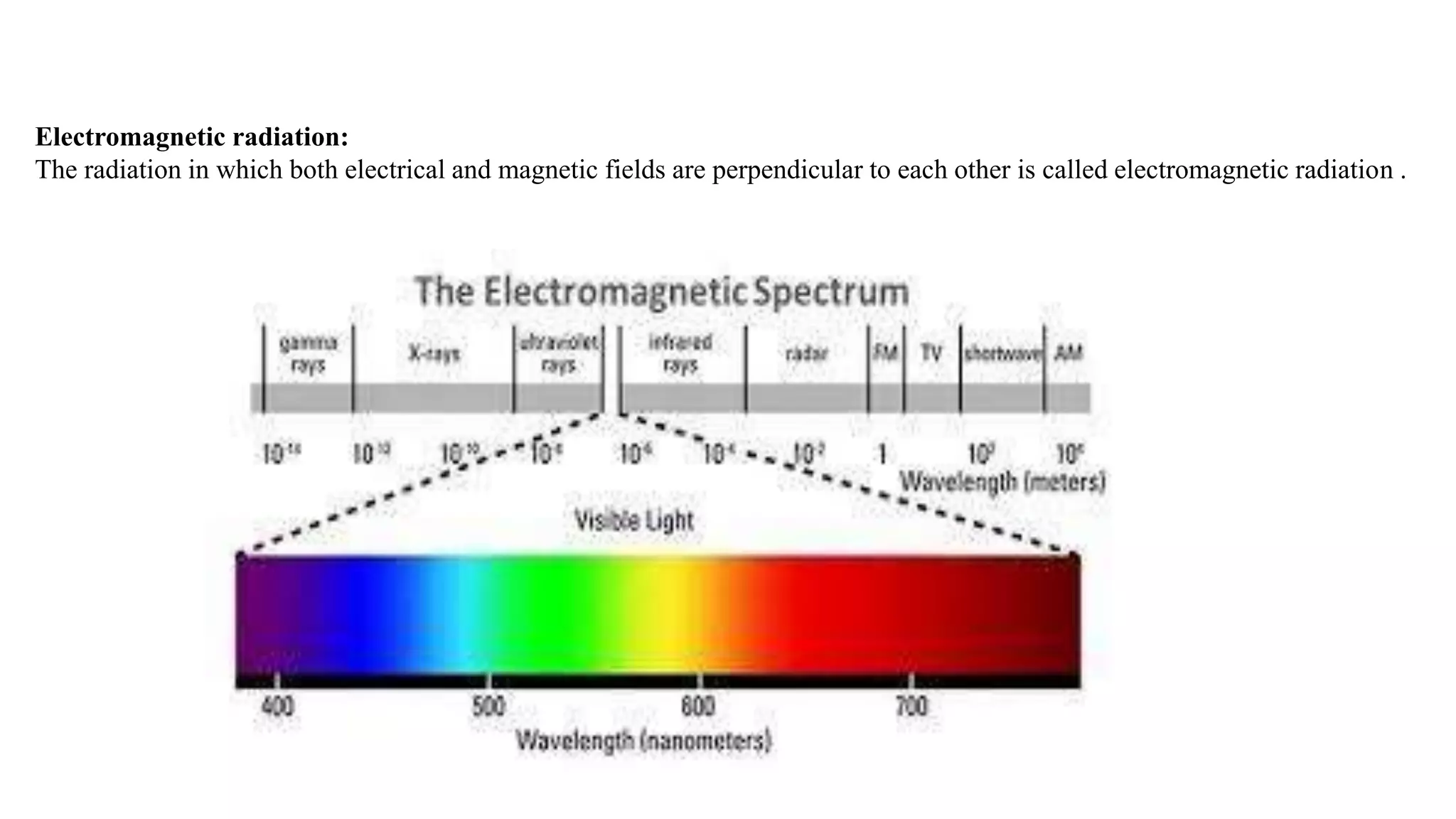
Electromagnetic radiation:
The radiation in which both electrical and magnetic fields are perpendicular to each other is called electromagnetic radiation .
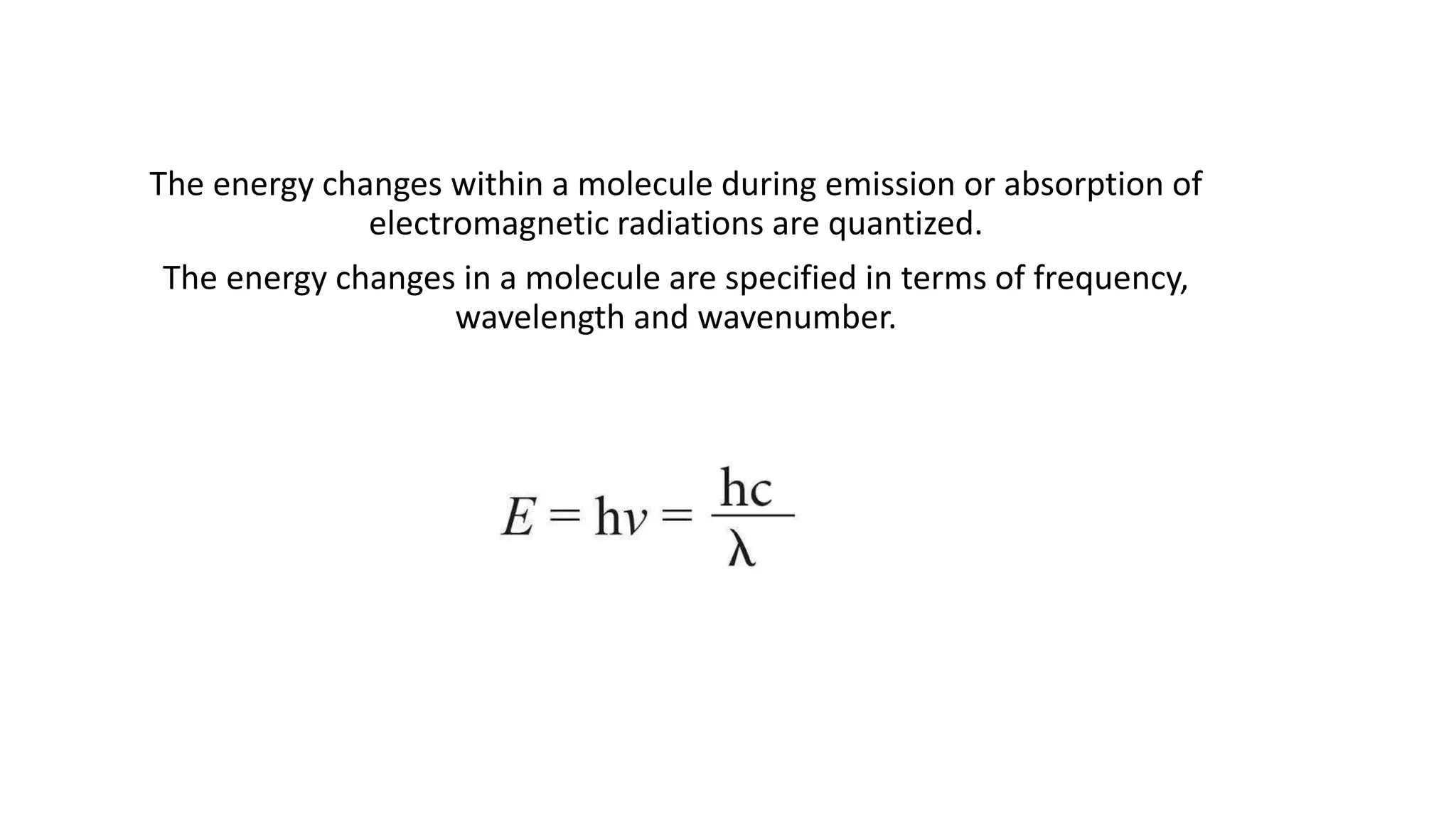
The energy changes within a molecule during emission or absorption of
electromagnetic radiations are quantized.
The energy changes in a molecule are specified in terms of frequency,
wavelength and wavenumber.
Types of Spectra
1.Emission Spectra
2.Absorption spectra
Emission Spectra:
Molecules give emission spectra when subjected to intense heat or electric discharge.It is the result of a
transition of a molecule from an excited state to one of lower energy state,usually ground state.This excess
energy is emitted as a photon and the corresponding frequency is recorded as the emission spectrum.
Ex:Hydrogen emission,carbon emission,oxygen emission
Absorption Spectra:
When a substance is irradiated with EMR,the energy of the incident photons may be
transferred to the molecules raising them from ground state to excited state.This
results in absorption spectrum.
Absorption spectra are studied extensively in order to elucidate the structure of
molecules.It is divided into three different types on the basis of radiation absorbed.
i)Microwave
ii)Infrared
iii)UV and Visible
Microwave
i.Frequency of absorption is around 3 x10¹⁰ - 3 x10¹²Hz
ii.Effect on the molecule-change in rotational energy levels of molecules
iii.Inference-calculation of force constant,bond length,bond angle etc.,
Infrared
i.Frequency of absorption is around 3 x10¹² - 3 x10¹⁴Hz
ii.Effect on the molecule-change in rotational and vibrational energy levels of
molecules
iii.Inference-calculation of force constant,bond length,bond angle etc.,
Ultraviolet and Visible
i.Frequency of absorption is around 3 x10¹⁴- 3 x10¹⁶Hz
ii.Change in electronic levels within the molecule
iii.Inference-In qualitative and quantitative analysis
Electronic Transitions
There are three types of electronic transition
which can be considered:-
• Transitions involving σ, π and non
bonding electrons
• Transitions involving charge-
transfer electrons
• Transitions involving d and f electrons
σ-electrons:
These electrons are involved in saturated bonds, such as those
between C & H in paraffins.
Amount of energy required to excite electrons in σ-bonds is much
more than that produced by UV light.
Compounds containing σ- bonds do not absorb UV radiation so,
paraffin compounds are used as a solvents.
π -electrons :
These electrons are involved in unsaturated hydrocarbons. Typical
compounds with π-bonds are trienes and aromatic compounds.
n-electrons :
These are the electrons which are not involved in the bonding between
atoms in molecules. Ex: organic compounds containing nitrogen,
oxygen or halogens.
Types of electronic transitions
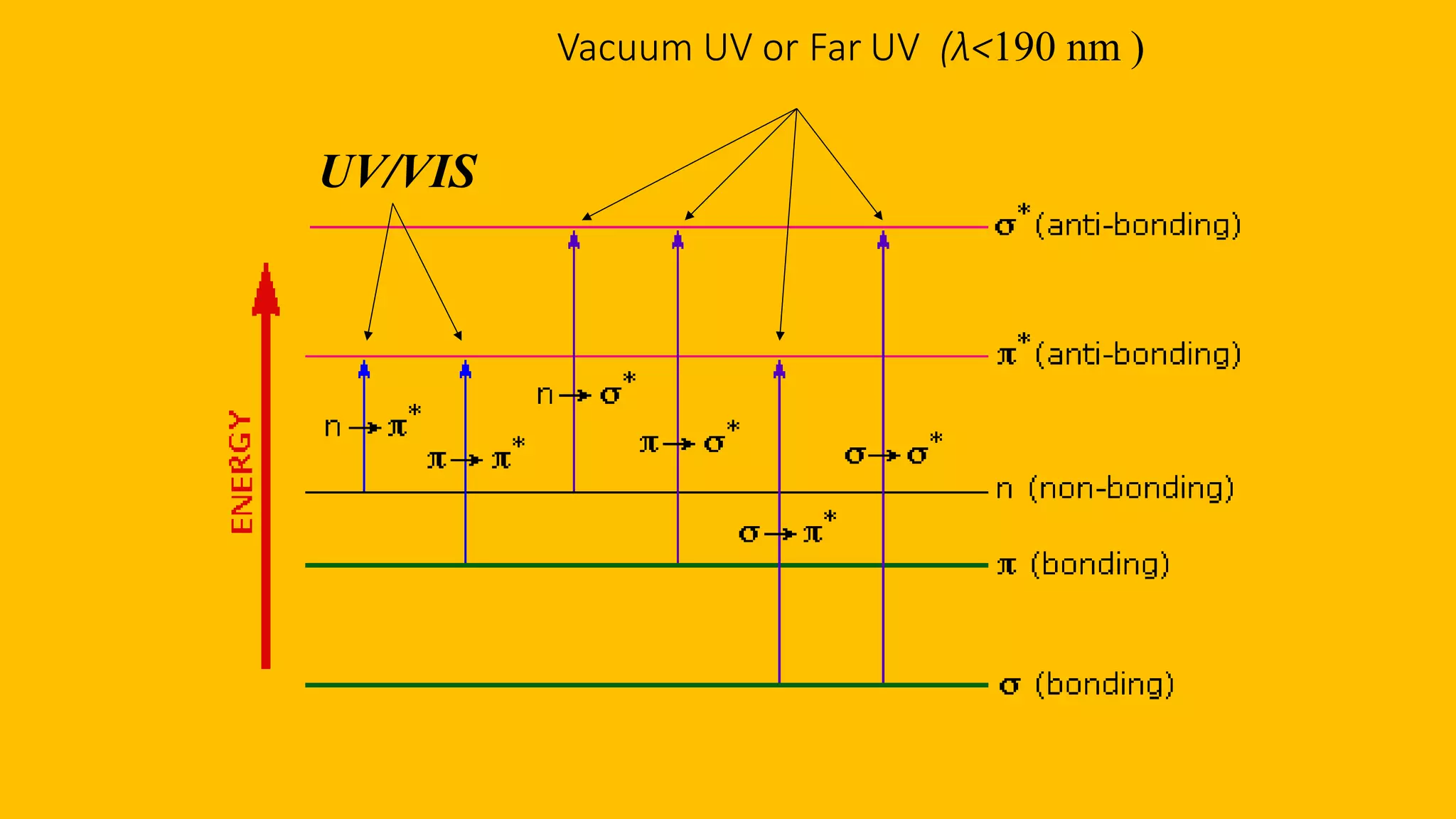
According to MOT when a molecule is excited by the absorption of
energy (UV or visible) it`s electrons are promoted from a bonding to
an anti bonding orbital.
As n and π electrons can be excited by UV radiation any compound
that contains atoms like nitrogen, oxygen, Sulphur, halogen
compounds or unsaturated hydrocarbons may absorb UV-radiation.
Six types of electronic transitions are possible
UV/VIS
Vacuum UV or Far UV (λ<190 nm )
n   and    Transitions
 Most absorption spectroscopy of organic compounds is
based on transitions of n or  electrons to the  excited
state.
 These transitions fall in an experimentally convenient region
of the spectrum (200 - 700 nm). These transitions need an
unsaturated group in the molecule to provide the 
electrons.
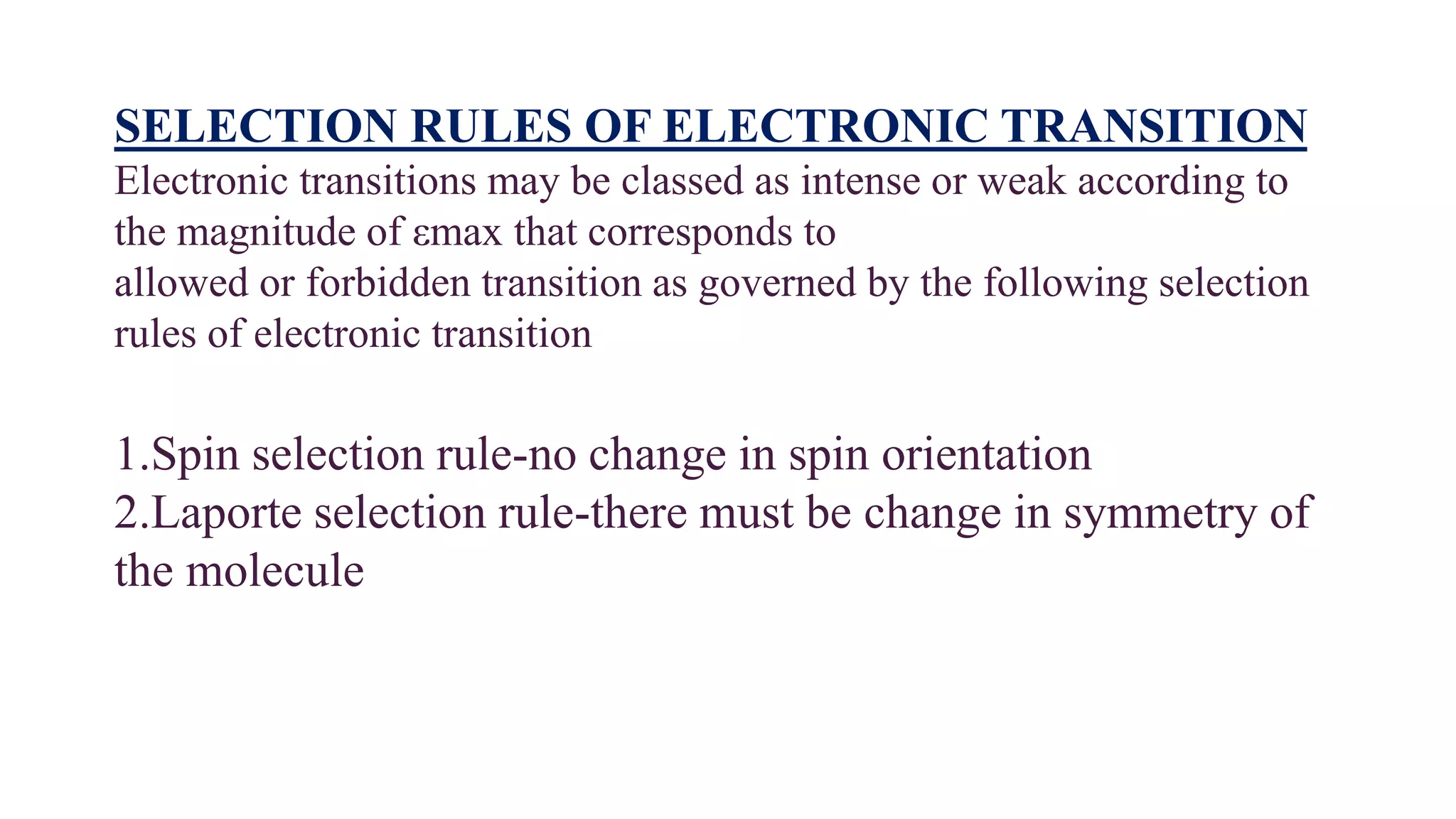
SELECTION RULES OF ELECTRONIC TRANSITION
Electronic transitions may be classed as intense or weak according to
the magnitude of εmax that corresponds to
allowed or forbidden transition as governed by the following selection
rules of electronic transition
1.Spin selection rule-no change in spin orientation
2.Laporte selection rule-there must be change in symmetry of
the molecule
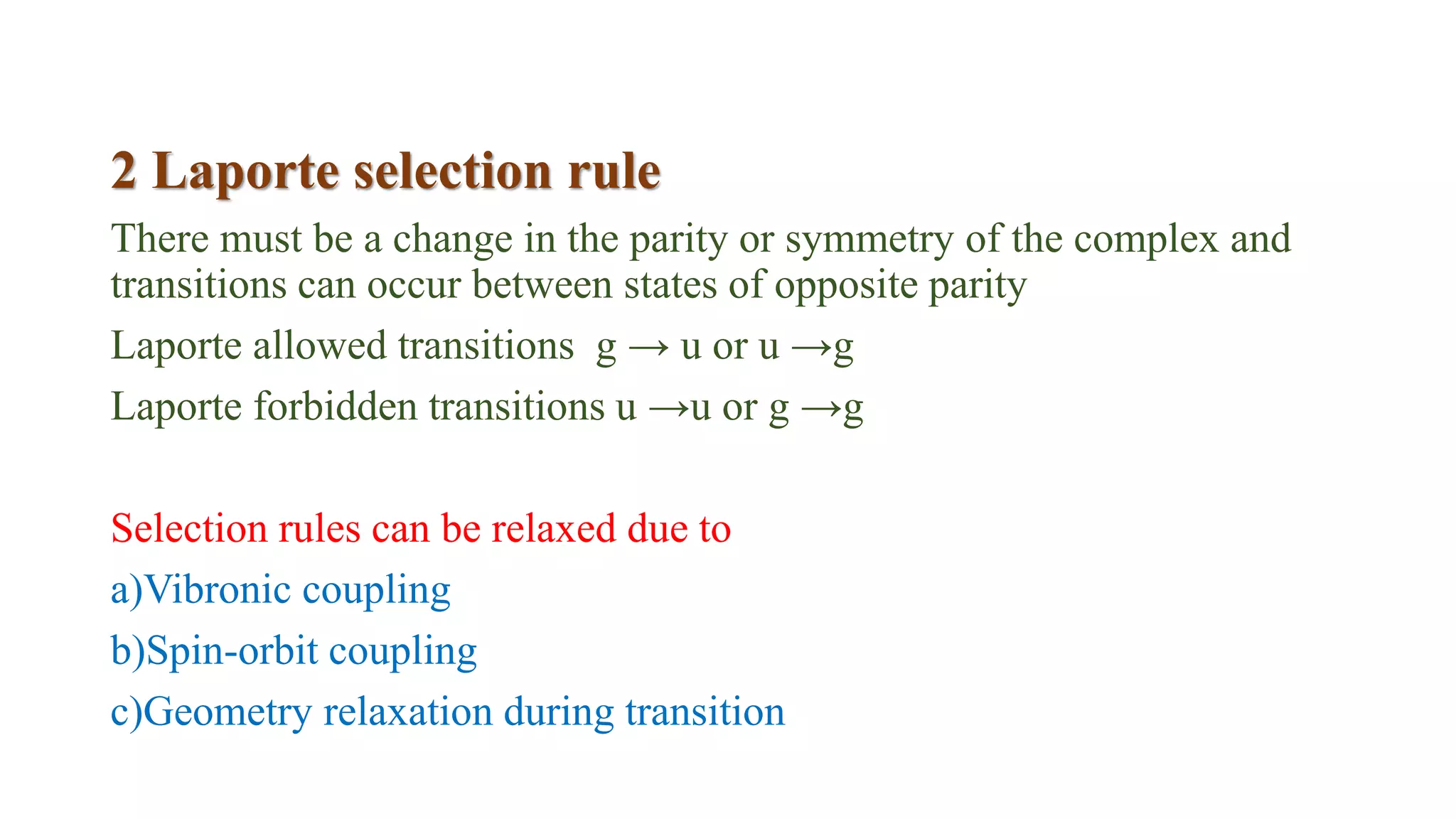
2 Laporte selection rule
There must be a change in the parity or symmetry of the complex and
transitions can occur between states of opposite parity
Laporte allowed transitions g → u or u →g
Laporte forbidden transitions u →u or g →g
Selection rules can be relaxed due to
a)Vibronic coupling
b)Spin-orbit coupling
c)Geometry relaxation during transition
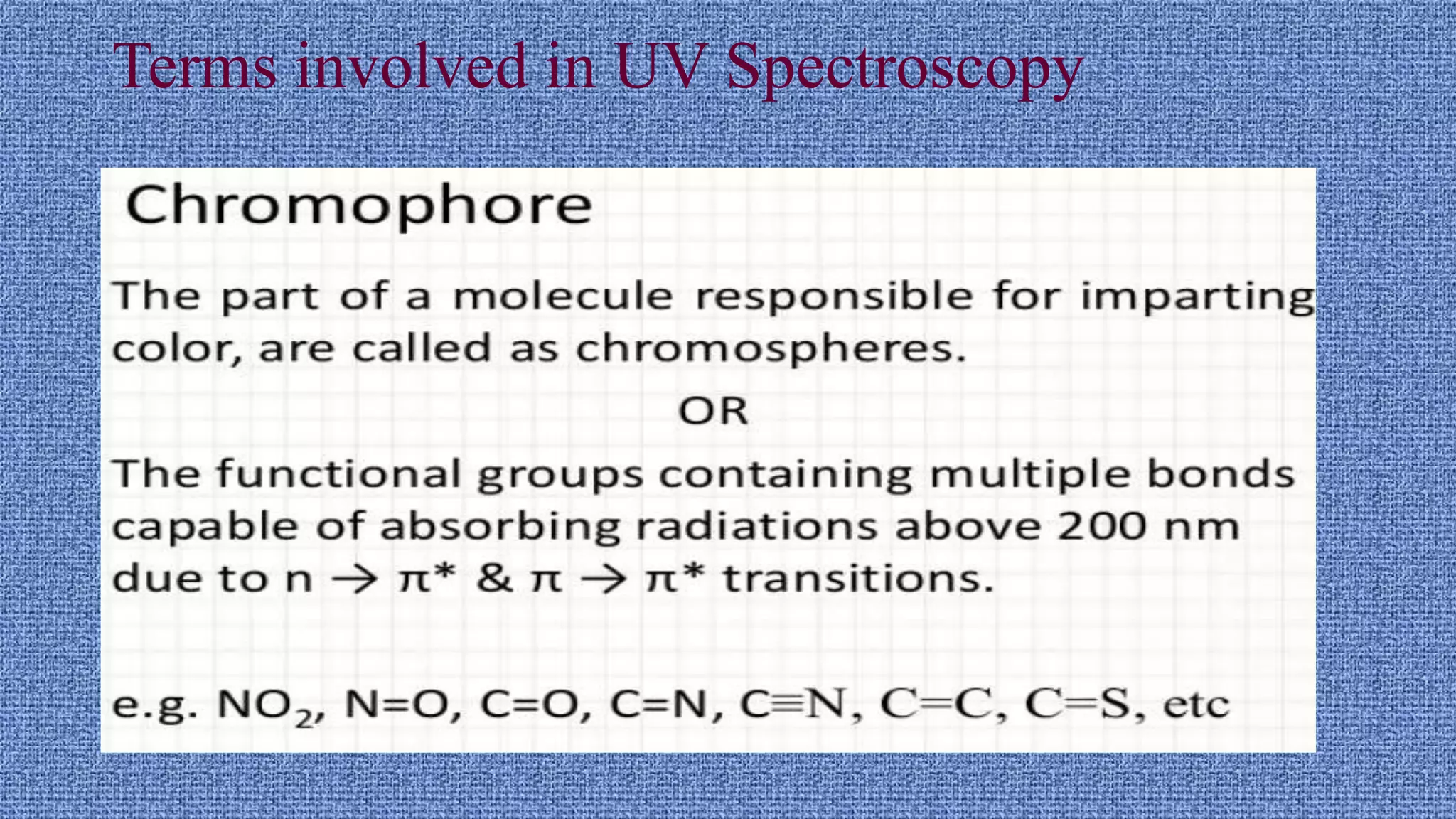
Terms involved in UV Spectroscopy
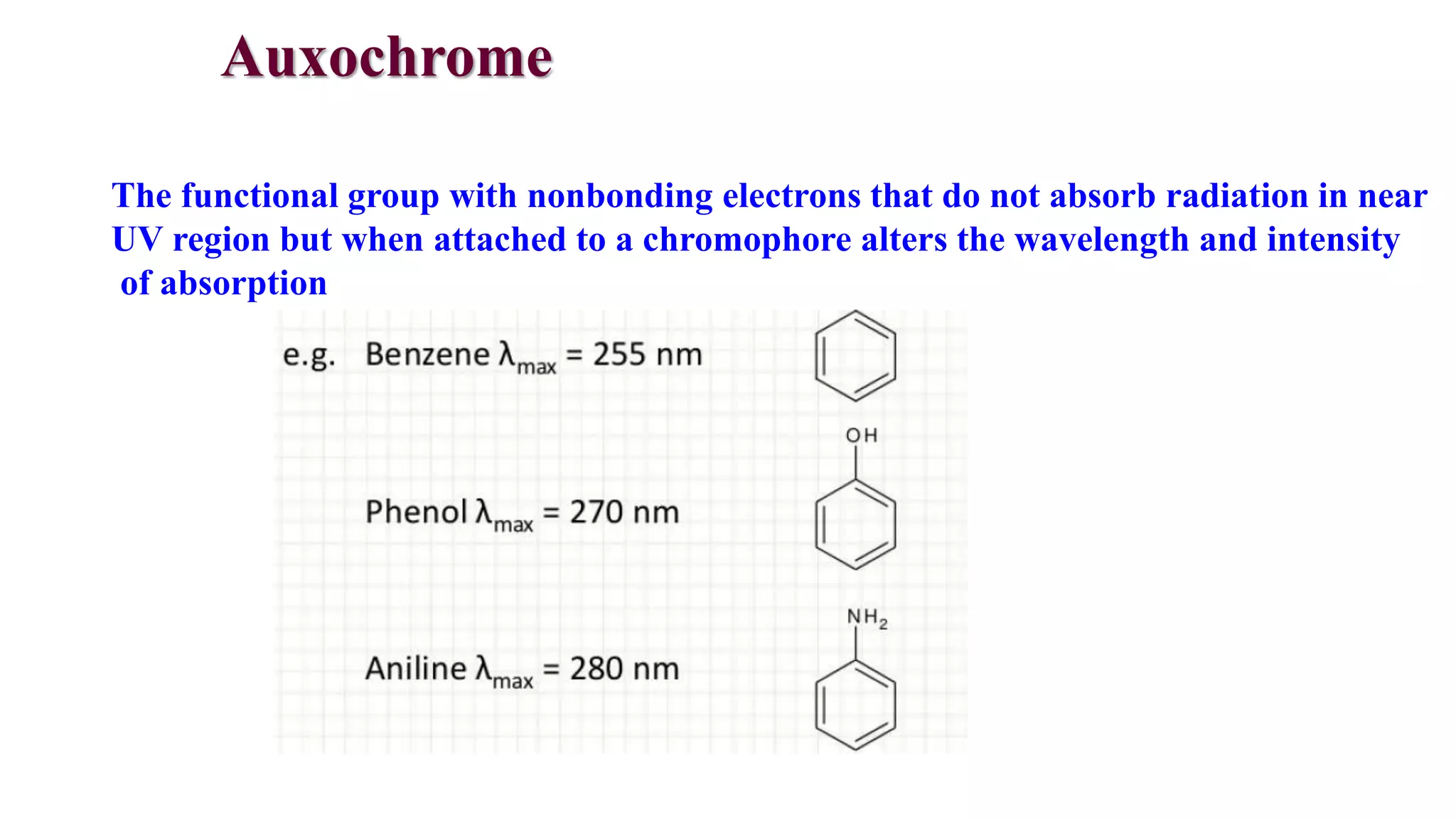
Auxochrome
The functional group with nonbonding electrons that do not absorb radiation in near
UV region but when attached to a chromophore alters the wavelength and intensity
of absorption
TYPES OF SHIFTS
1.Bathochromic Shift
2.Hypsochromic Shift
3.Hyperchromic Shift
4.Hypochromic Shift
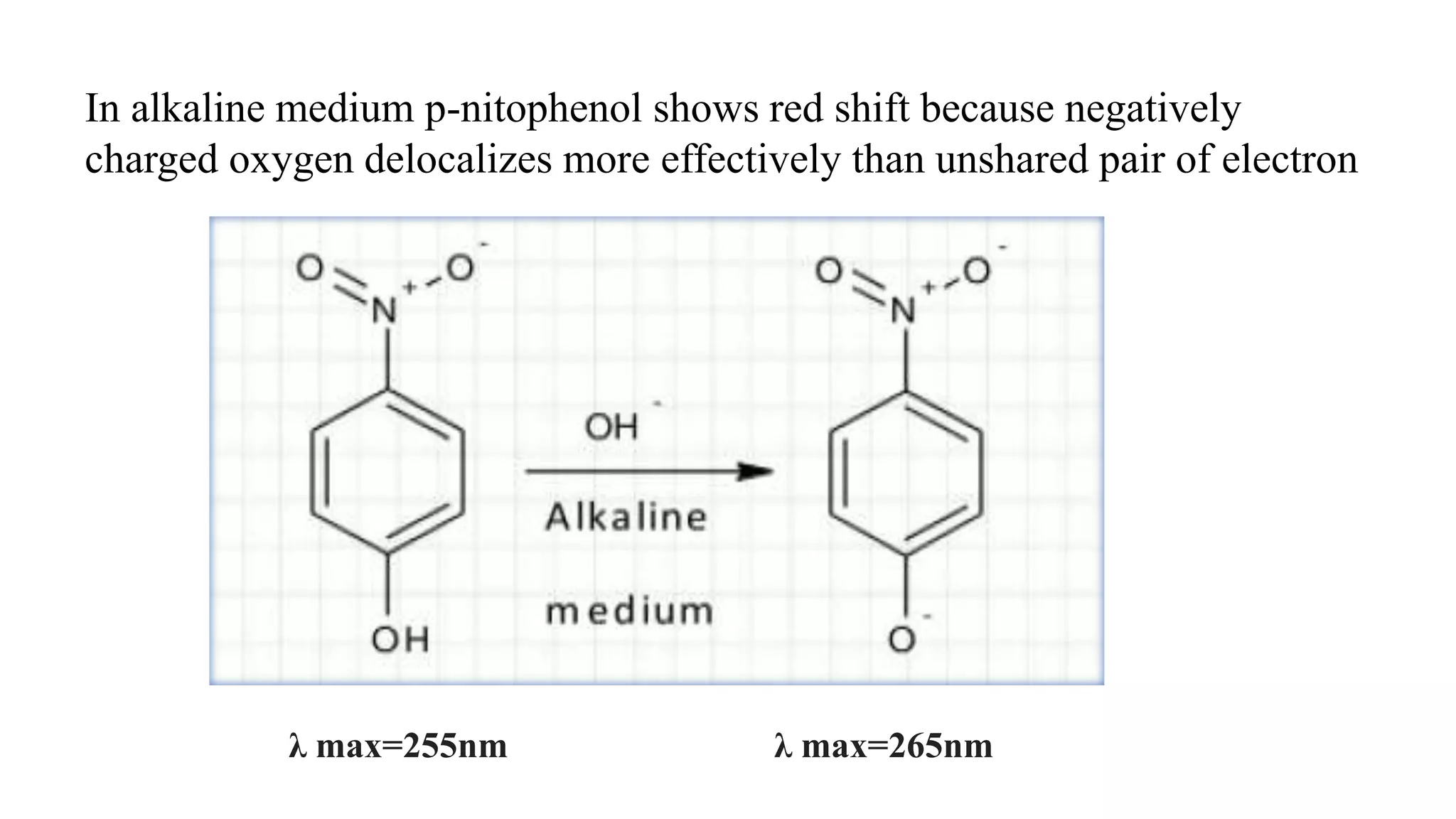
Bathochromic shift or red shift
In alkaline medium p-nitophenol shows red shift because negatively
charged oxygen delocalizes more effectively than unshared pair of electron
λ max=255nm λ max=265nm
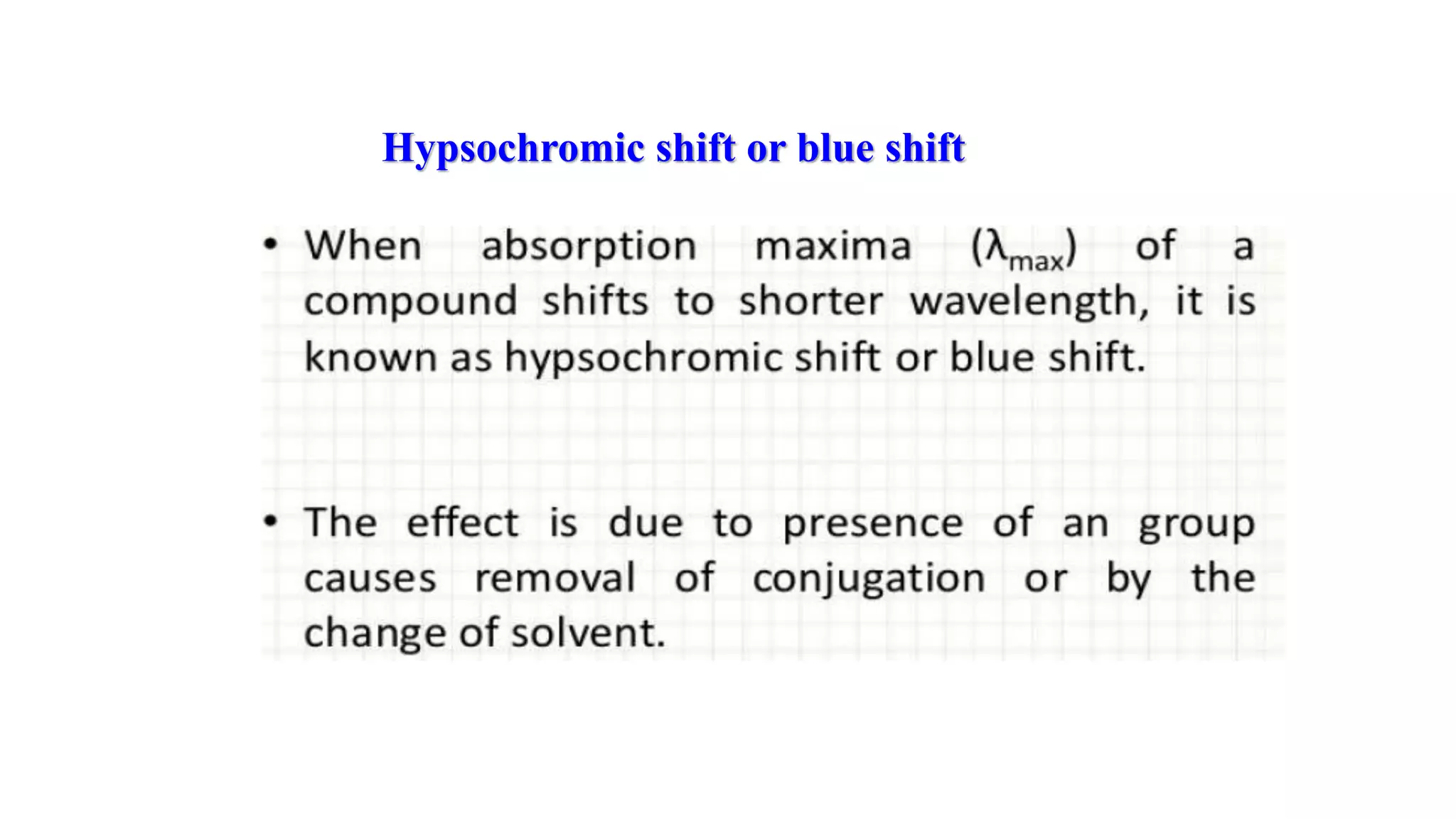
Hypsochromic shift or blue shift
Appearance of broad bands and not sharp peaks in the spectrum.
1) Due to the mixing of vibrational and rotational changes with electronic changes in the
molecules,there will be a large no. of possible transitions requiring only slightly
different energies.
2) As a result the absorption spectrum contains a large no. of lines which are too close
together to be distinguished separately and are recorded in the form of broad bands in
the spectrum obtained.
Ex: absorption spectrum of phenol
Fundamentals  of uv spectroscopy

Fundamentals of uv spectroscopy

  • 1.
    Fundamentals of Electronic Spectroscopy/UVSpectroscopy By Dr.Y.Aparna Assistant Professor in Chemistry Department of Sciences and Humanities Saidabad,Hyderabad
  • 2.
    Spectroscopy It is oneof the most powerful tool available for the study of atomic and molecular structure of chemical compounds. Spectroscopy is physical method of determining and confirming the structure of compounds. The study of spectra include the excitation of the spectrum, it’s visual observation and the precise determination of wavelengths. It is defined as the study of interaction of electromagnetic radiations with molecules.
  • 3.
    Spectroscopy is broadlyclassified into two types 1.Atomic Spectroscopy 2.Molecular Spectroscopy Atomic Spectroscopy: It deals with interaction of electromagnetic radiation with atoms in their ground state.The applications of this type of spectroscopy are rare. Molecular spectroscopy: It deals with interaction of electromagnetic radiation with molecules.This type of spectra can be categorized as follows: 1.UV-Visible spectroscopy 2.IR-spectroscopy 3.Raman spectroscopy 4.Microwave spectroscopy 5.HNMR spectroscopy 6.Mass spectroscopy 7.ESR spectroscopy
  • 4.
    Electromagnetic radiation: The radiationin which both electrical and magnetic fields are perpendicular to each other is called electromagnetic radiation .
  • 6.
    The energy changeswithin a molecule during emission or absorption of electromagnetic radiations are quantized. The energy changes in a molecule are specified in terms of frequency, wavelength and wavenumber.
  • 7.
    Types of Spectra 1.EmissionSpectra 2.Absorption spectra Emission Spectra: Molecules give emission spectra when subjected to intense heat or electric discharge.It is the result of a transition of a molecule from an excited state to one of lower energy state,usually ground state.This excess energy is emitted as a photon and the corresponding frequency is recorded as the emission spectrum. Ex:Hydrogen emission,carbon emission,oxygen emission
  • 8.
    Absorption Spectra: When asubstance is irradiated with EMR,the energy of the incident photons may be transferred to the molecules raising them from ground state to excited state.This results in absorption spectrum. Absorption spectra are studied extensively in order to elucidate the structure of molecules.It is divided into three different types on the basis of radiation absorbed. i)Microwave ii)Infrared iii)UV and Visible

  • 9.
    Microwave i.Frequency of absorptionis around 3 x10¹⁰ - 3 x10¹²Hz ii.Effect on the molecule-change in rotational energy levels of molecules iii.Inference-calculation of force constant,bond length,bond angle etc., Infrared i.Frequency of absorption is around 3 x10¹² - 3 x10¹⁴Hz ii.Effect on the molecule-change in rotational and vibrational energy levels of molecules iii.Inference-calculation of force constant,bond length,bond angle etc., Ultraviolet and Visible i.Frequency of absorption is around 3 x10¹⁴- 3 x10¹⁶Hz ii.Change in electronic levels within the molecule iii.Inference-In qualitative and quantitative analysis
  • 10.
    Electronic Transitions There arethree types of electronic transition which can be considered:- • Transitions involving σ, π and non bonding electrons • Transitions involving charge- transfer electrons • Transitions involving d and f electrons
  • 11.
    σ-electrons: These electrons areinvolved in saturated bonds, such as those between C & H in paraffins. Amount of energy required to excite electrons in σ-bonds is much more than that produced by UV light. Compounds containing σ- bonds do not absorb UV radiation so, paraffin compounds are used as a solvents.
  • 12.
    π -electrons : Theseelectrons are involved in unsaturated hydrocarbons. Typical compounds with π-bonds are trienes and aromatic compounds. n-electrons : These are the electrons which are not involved in the bonding between atoms in molecules. Ex: organic compounds containing nitrogen, oxygen or halogens.
  • 13.
    Types of electronictransitions According to MOT when a molecule is excited by the absorption of energy (UV or visible) it`s electrons are promoted from a bonding to an anti bonding orbital. As n and π electrons can be excited by UV radiation any compound that contains atoms like nitrogen, oxygen, Sulphur, halogen compounds or unsaturated hydrocarbons may absorb UV-radiation. Six types of electronic transitions are possible
  • 14.
    UV/VIS Vacuum UV orFar UV (λ<190 nm )
  • 15.
    n  and    Transitions  Most absorption spectroscopy of organic compounds is based on transitions of n or  electrons to the  excited state.  These transitions fall in an experimentally convenient region of the spectrum (200 - 700 nm). These transitions need an unsaturated group in the molecule to provide the  electrons.
  • 16.
    SELECTION RULES OFELECTRONIC TRANSITION Electronic transitions may be classed as intense or weak according to the magnitude of εmax that corresponds to allowed or forbidden transition as governed by the following selection rules of electronic transition 1.Spin selection rule-no change in spin orientation 2.Laporte selection rule-there must be change in symmetry of the molecule
  • 18.
    2 Laporte selectionrule There must be a change in the parity or symmetry of the complex and transitions can occur between states of opposite parity Laporte allowed transitions g → u or u →g Laporte forbidden transitions u →u or g →g Selection rules can be relaxed due to a)Vibronic coupling b)Spin-orbit coupling c)Geometry relaxation during transition
  • 19.
    Terms involved inUV Spectroscopy
  • 23.
    Auxochrome The functional groupwith nonbonding electrons that do not absorb radiation in near UV region but when attached to a chromophore alters the wavelength and intensity of absorption
  • 24.
    TYPES OF SHIFTS 1.BathochromicShift 2.Hypsochromic Shift 3.Hyperchromic Shift 4.Hypochromic Shift
  • 25.
  • 26.
    In alkaline mediump-nitophenol shows red shift because negatively charged oxygen delocalizes more effectively than unshared pair of electron λ max=255nm λ max=265nm
  • 27.
  • 30.
    Appearance of broadbands and not sharp peaks in the spectrum. 1) Due to the mixing of vibrational and rotational changes with electronic changes in the molecules,there will be a large no. of possible transitions requiring only slightly different energies. 2) As a result the absorption spectrum contains a large no. of lines which are too close together to be distinguished separately and are recorded in the form of broad bands in the spectrum obtained. Ex: absorption spectrum of phenol