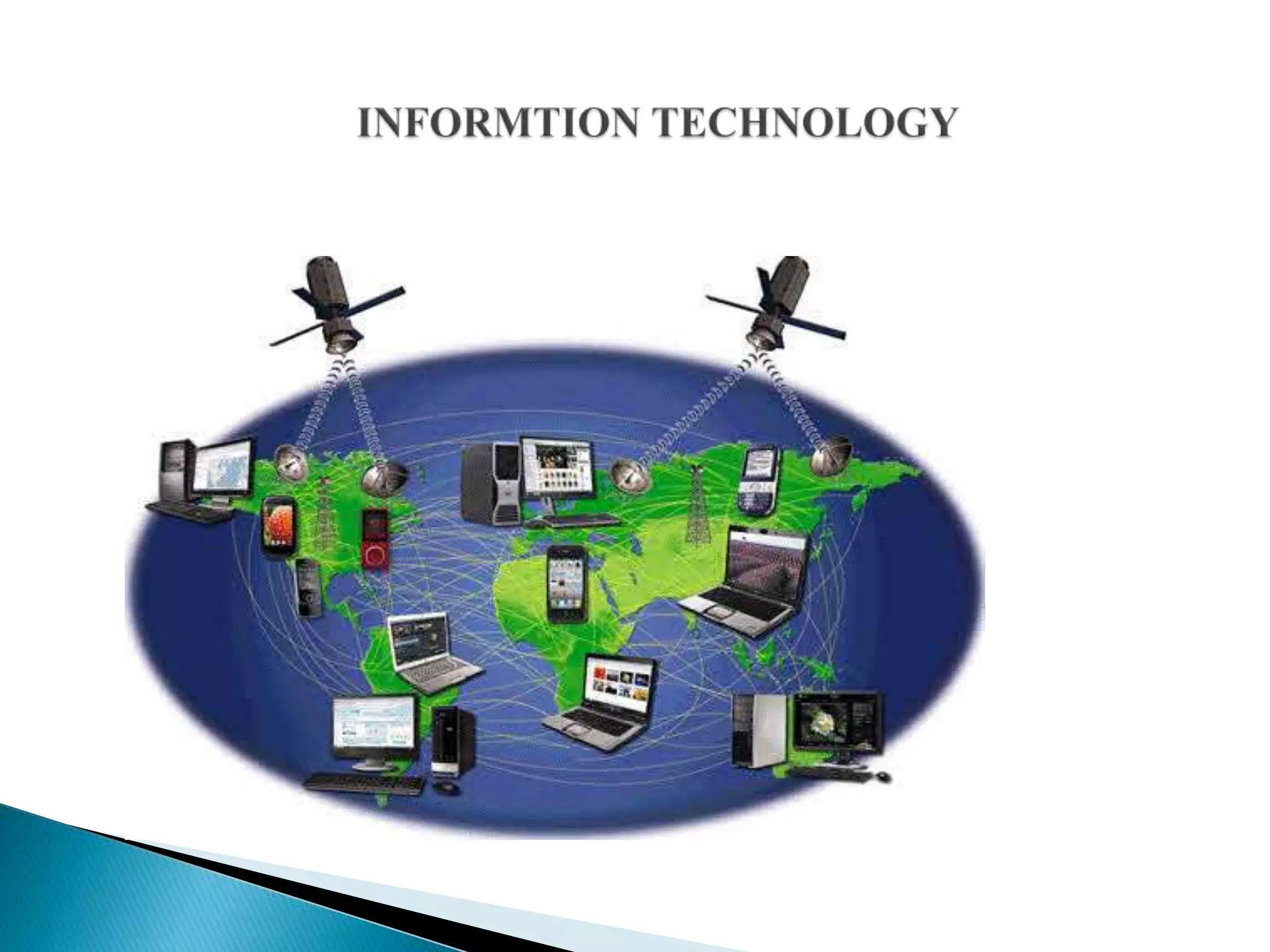
INFORMATION TECHNOLOGY(IT) IS AN AREA OF BUSINESS THAT
EMPHASIZES ON THE AREA LIKE COMPUTER TECHNOLOGY SUPPORT ,
• COMPUTER NETWORK
• DATABASE MANAGEMENT ,
• BUSINESS SOFTWARE OPERATION
• INFORMATION SECURITY
• computers can be classified based upon their
mode of use asComputer for simple use
Computers for Organizational Use
• Simple computers are also called Micro
Computers and include
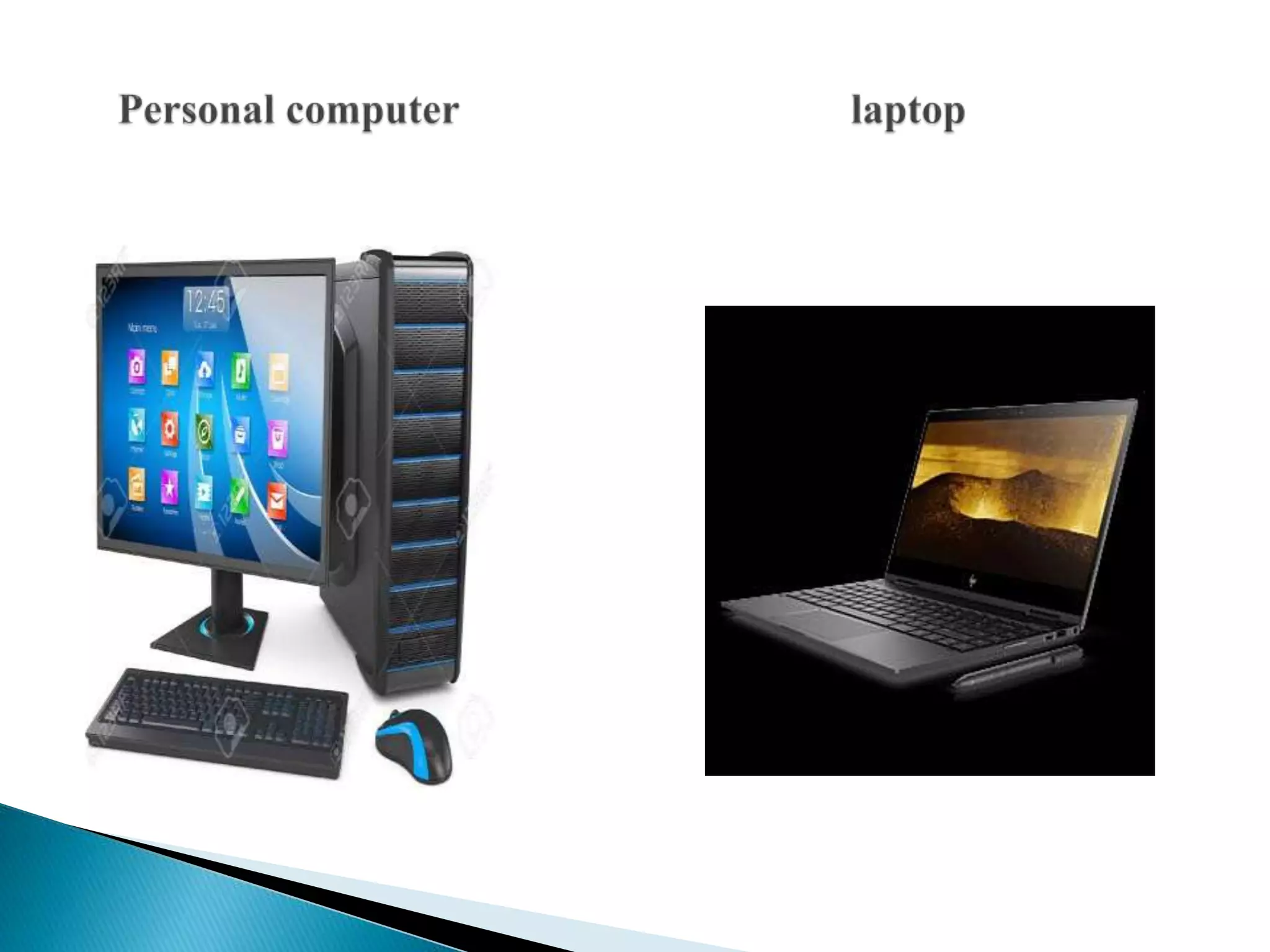
• Personal Computers ,
• Laptops,
• PDA (Personal Digital Assistant),
• Workstations etc.
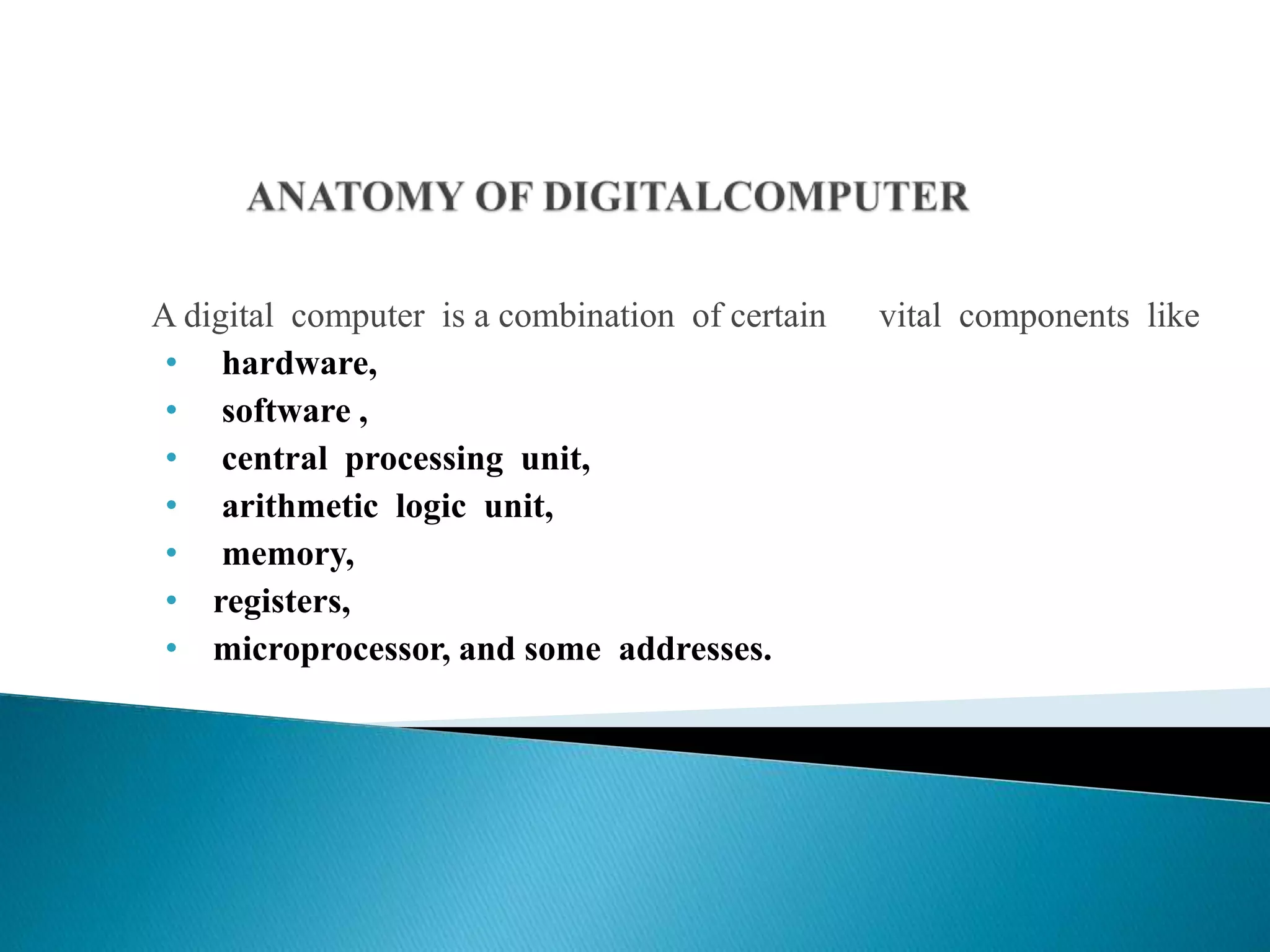
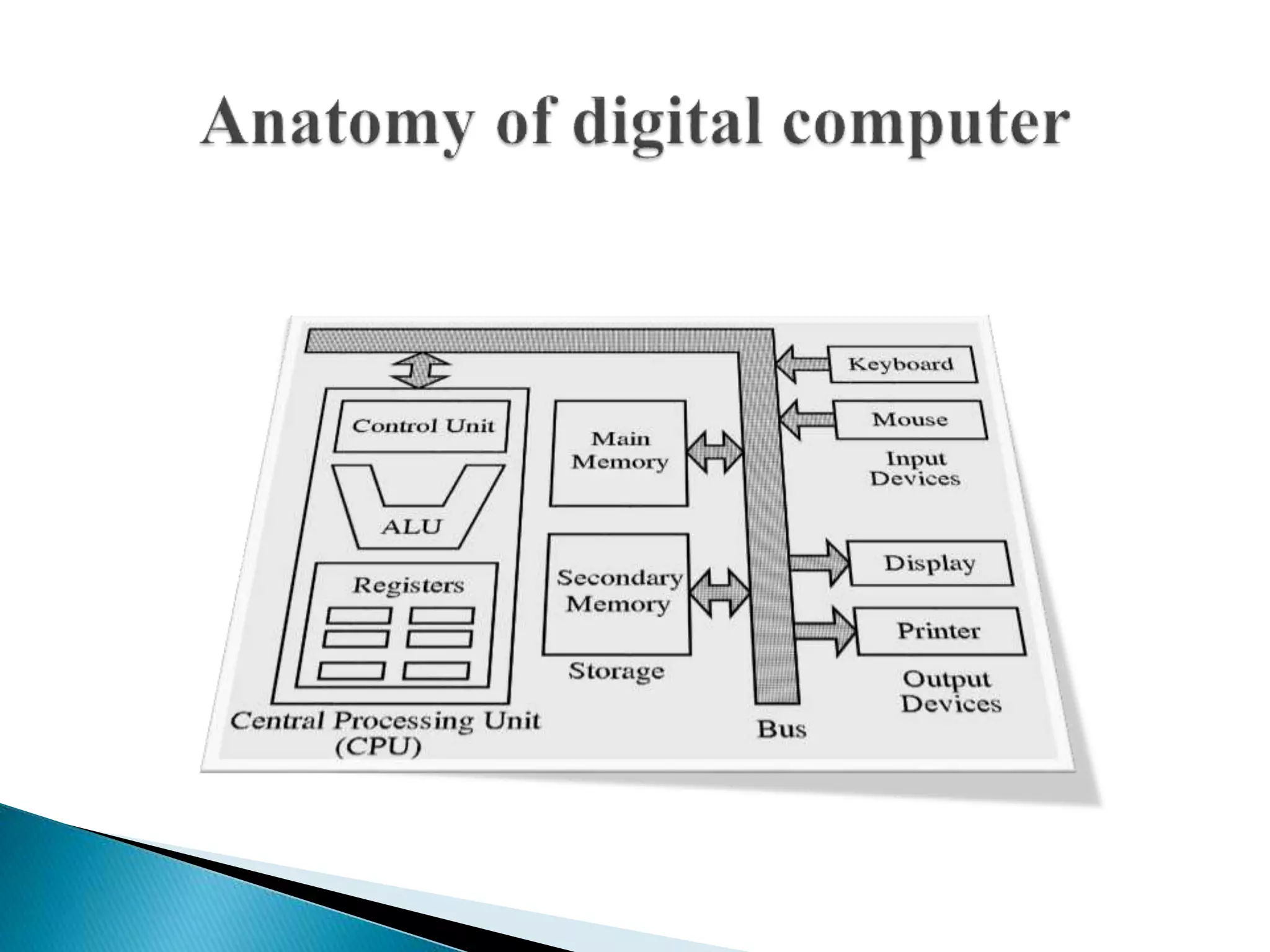
A digital computer is a combination of certain vital components like
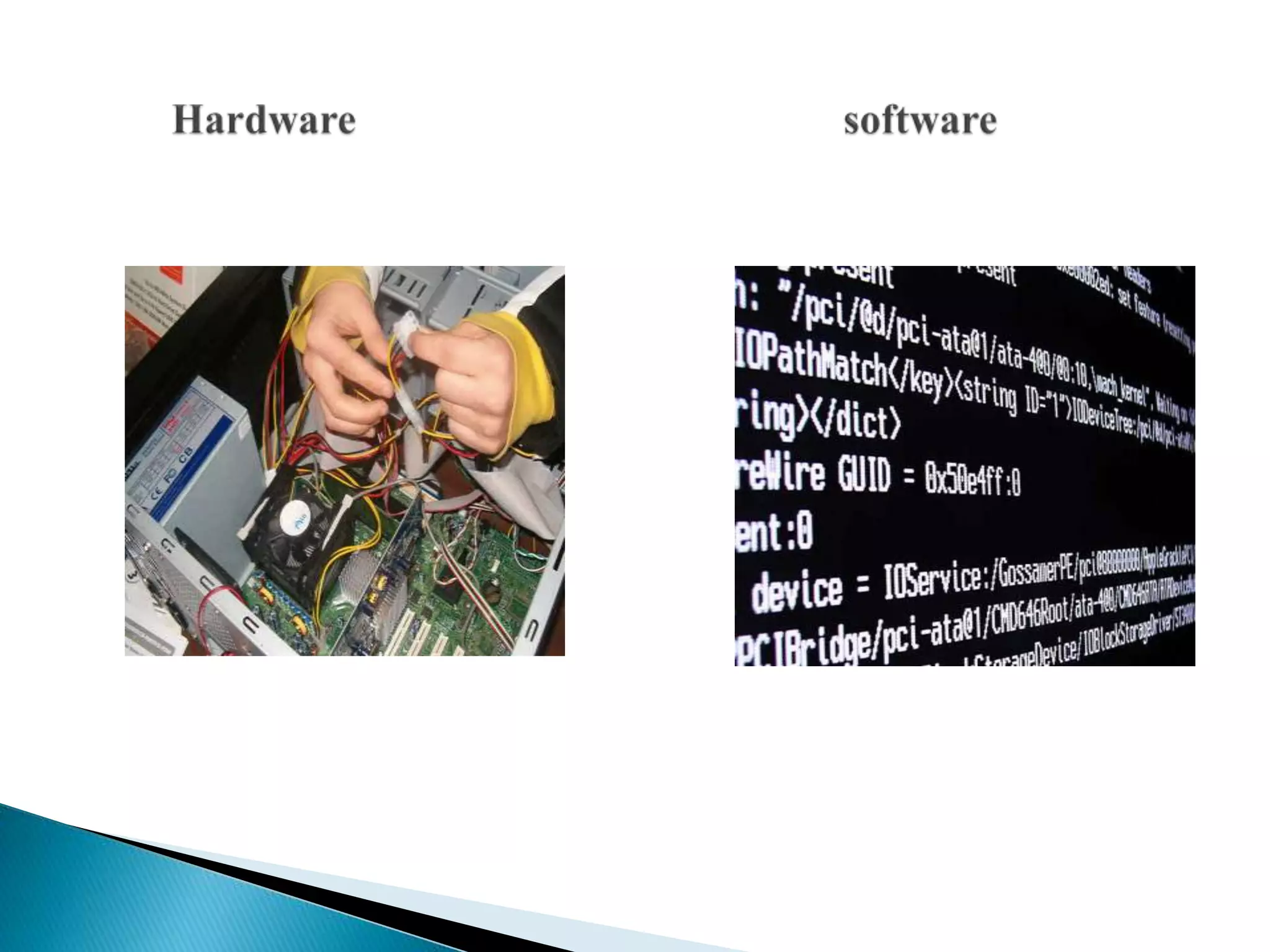
• hardware,
• software ,
• central processing unit,
• arithmetic logic unit,
• memory,
• registers,
• microprocessor, and some addresses.
• Receive input —Accept data/information from outside.
• Process information—Perform arithmetic or logical
operations on data/information.
• Produce output—Communicate information to the outside
world.
• Store information—Store the information in storage devices.
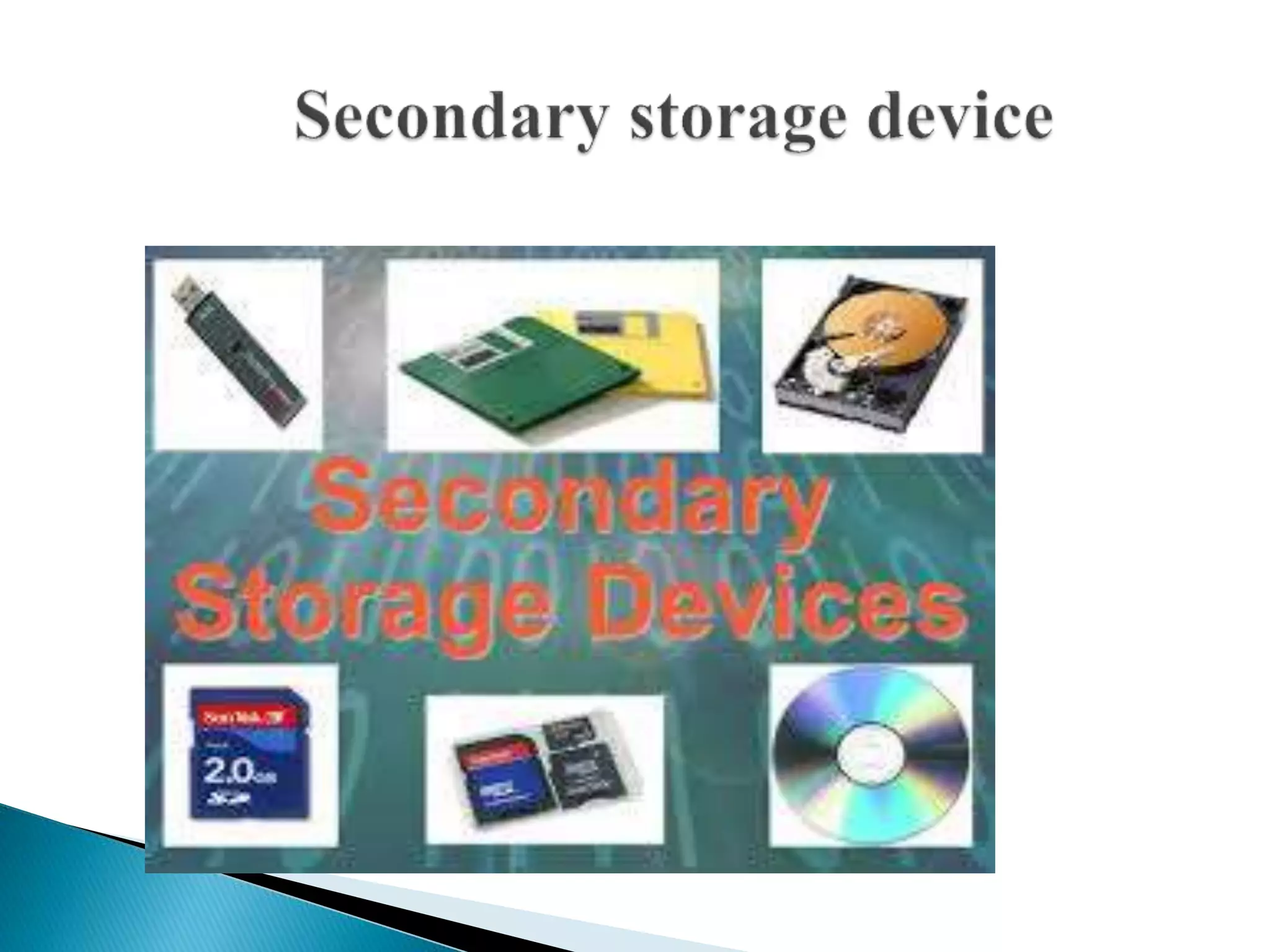
• The operating speed of primary memory or main memory should be as fast
as possible to cope up with the CPU speed.
• These high-speed storage devices are very expensive.
• Magnetic Tape
• Magnetic Disk
• Floppy Disk
• Optical Disk
• Magnetic tapes are used for large computers like mainframe computers
where large volume of data is stored for a longer time.
• In PCs also you can use tapes in the form of cassettes. The cost of
storing data in tapes is inexpensive. Tapes consist of magnetic materials
that store data permanently .
• Data are stored on both the surface of the disk. Magnetic disks are
most popular for direct access storage.
• he presence of a magnetic sport represents one bit (1) and its
absence represents zero bit (0).
• The floppy is a low cost device particularly suitable for personal
computer system.
• It is cheaper than any other storage devices and is portable.
• The capacity of a 3.5 inch floppy is 1.44 mega bytes.
• Optical disks can be divided into the following categories.
• Compact Disk/Read Only Memory (CD-ROM)
• Write Once Read Many (WORM)
• Erasable Optical Disk
An input device presents data to the processing unit in a machine-
readable form. a system may also support various other input devices
• Optical Character Recognition
• Magnetic Ink Character Recognition (MICR)
• Optical Mark Recognition (OMR)
• Mouse
• Light Pen
• Speech input devices
• Bar Code Reader
• Output devices receive information from the CPU and present it to the
user in the desired form. Output devices include
• Display Screen
• Printer
• Plotter
• Sound Cards & Speakers
• 3D-Audio
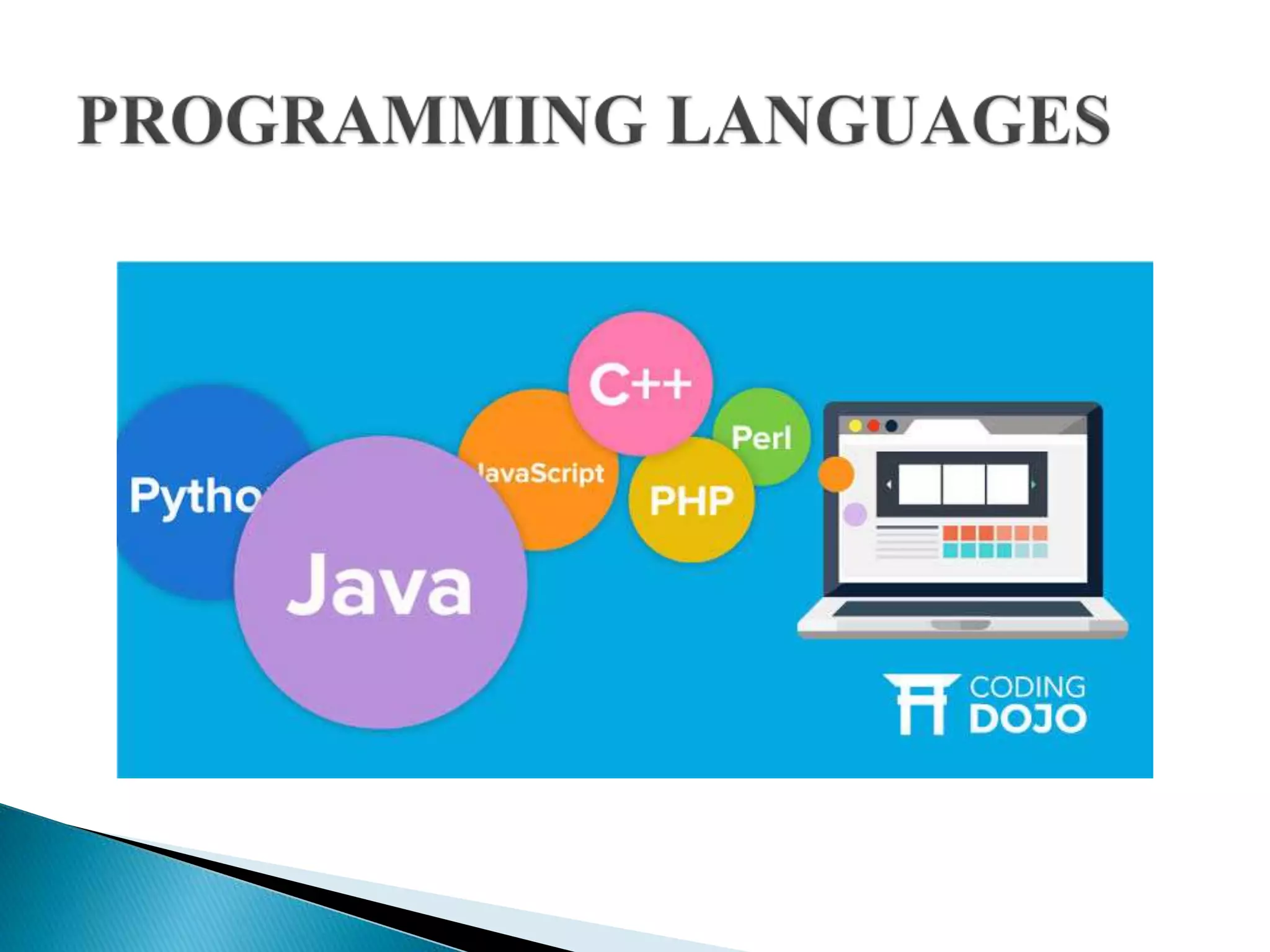
• A programming language is a vocabulary and set of grammatical
rules for instructing a computer.
• programming language refers to high level languages
• Basic
• C & c++
• Cobol
• Java
• Fortran
• Ada
• pascal
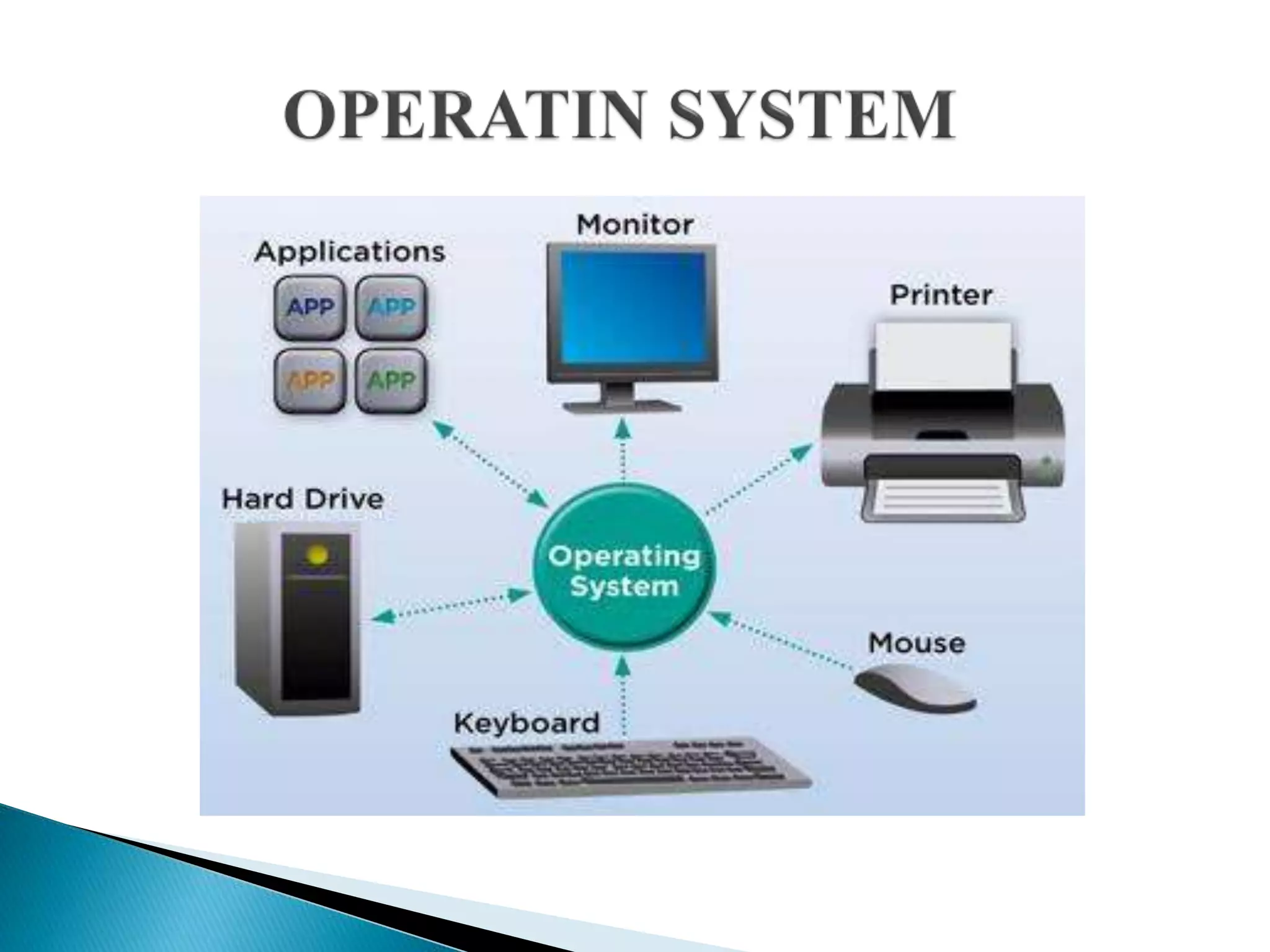
• The operating system(os) is the most important
program that runs on a computer.
• Every general purpose computer must have an
operating system to run other programs. Most
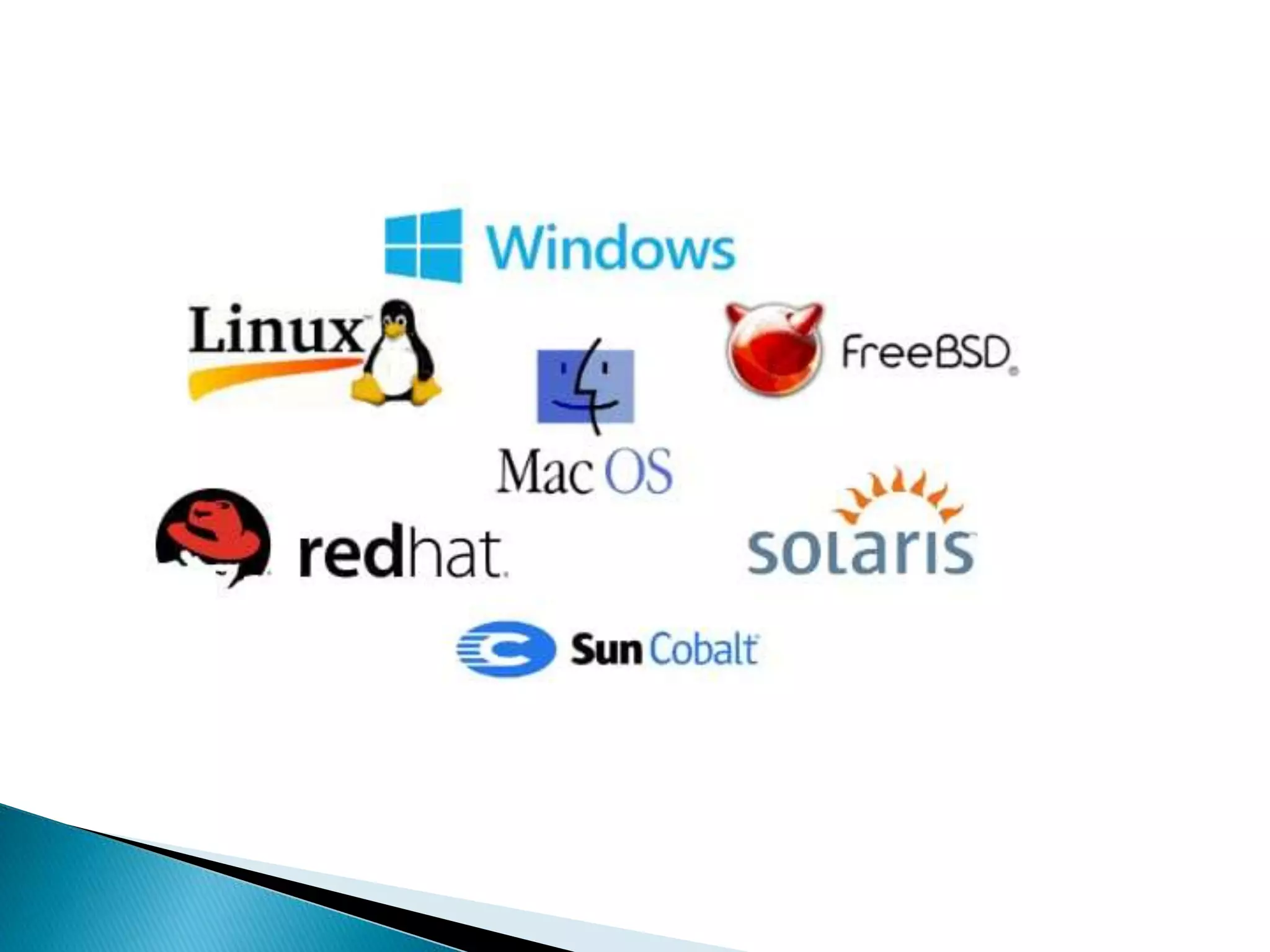
common operating systems are
• Microsoft windows
• Apple macos
• Linux
• Android
• Apple’s ios
Electronic mail(email or e-mail) is a method of exchanging messages
between people using electronic devices. Invented by ray tomlinson
Email operates across computer networks which today is the
primarily the internet. Types email
• Web based email
• Pop3 email servers
• Imap email servers
• Mapi email servers
• Computers are used everywhere.
• They found their application starting with playing games till
processing satellite images to give weather information.
• Home
• Education
• Industries
• Business
• Entertainment
• Government
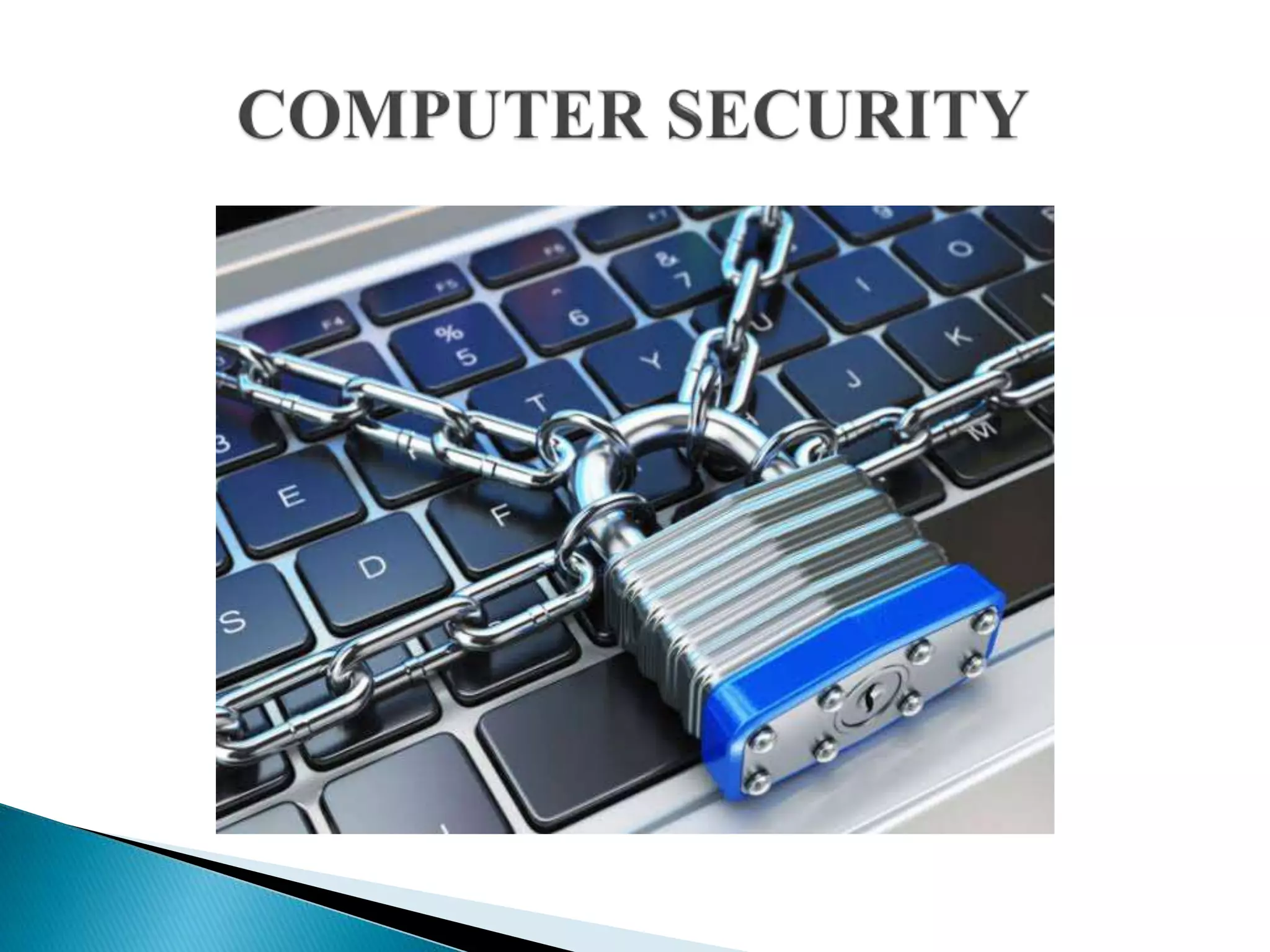
• Computer security also known as cybersecurity or it security is
the protection of information systems from theft or damage to
the hardware the software and to the information on them as
well as from disruption or misdirection of the services they
provide.
• concerned with Four main areas
• Confidentiality
• integrity
• availability
• authentication
fundamentals of information technology

fundamentals of information technology

  • 2.
    INFORMATION TECHNOLOGY(IT) ISAN AREA OF BUSINESS THAT EMPHASIZES ON THE AREA LIKE COMPUTER TECHNOLOGY SUPPORT , • COMPUTER NETWORK • DATABASE MANAGEMENT , • BUSINESS SOFTWARE OPERATION • INFORMATION SECURITY
  • 4.
    • computers canbe classified based upon their mode of use asComputer for simple use Computers for Organizational Use • Simple computers are also called Micro Computers and include • Personal Computers , • Laptops, • PDA (Personal Digital Assistant), • Workstations etc.
  • 6.
    A digital computeris a combination of certain vital components like • hardware, • software , • central processing unit, • arithmetic logic unit, • memory, • registers, • microprocessor, and some addresses.
  • 9.
    • Receive input—Accept data/information from outside. • Process information—Perform arithmetic or logical operations on data/information. • Produce output—Communicate information to the outside world. • Store information—Store the information in storage devices.
  • 10.
    • The operatingspeed of primary memory or main memory should be as fast as possible to cope up with the CPU speed. • These high-speed storage devices are very expensive. • Magnetic Tape • Magnetic Disk • Floppy Disk • Optical Disk
  • 12.
    • Magnetic tapesare used for large computers like mainframe computers where large volume of data is stored for a longer time. • In PCs also you can use tapes in the form of cassettes. The cost of storing data in tapes is inexpensive. Tapes consist of magnetic materials that store data permanently .
  • 13.
    • Data arestored on both the surface of the disk. Magnetic disks are most popular for direct access storage. • he presence of a magnetic sport represents one bit (1) and its absence represents zero bit (0).
  • 14.
    • The floppyis a low cost device particularly suitable for personal computer system. • It is cheaper than any other storage devices and is portable. • The capacity of a 3.5 inch floppy is 1.44 mega bytes.
  • 15.
    • Optical diskscan be divided into the following categories. • Compact Disk/Read Only Memory (CD-ROM) • Write Once Read Many (WORM) • Erasable Optical Disk
  • 16.
    An input devicepresents data to the processing unit in a machine- readable form. a system may also support various other input devices • Optical Character Recognition • Magnetic Ink Character Recognition (MICR) • Optical Mark Recognition (OMR) • Mouse • Light Pen • Speech input devices • Bar Code Reader
  • 17.
    • Output devicesreceive information from the CPU and present it to the user in the desired form. Output devices include • Display Screen • Printer • Plotter • Sound Cards & Speakers • 3D-Audio
  • 19.
    • A programminglanguage is a vocabulary and set of grammatical rules for instructing a computer. • programming language refers to high level languages • Basic • C & c++ • Cobol • Java • Fortran • Ada • pascal
  • 21.
    • The operatingsystem(os) is the most important program that runs on a computer. • Every general purpose computer must have an operating system to run other programs. Most common operating systems are • Microsoft windows • Apple macos • Linux • Android • Apple’s ios
  • 24.
    Electronic mail(email ore-mail) is a method of exchanging messages between people using electronic devices. Invented by ray tomlinson Email operates across computer networks which today is the primarily the internet. Types email • Web based email • Pop3 email servers • Imap email servers • Mapi email servers
  • 27.
    • Computers areused everywhere. • They found their application starting with playing games till processing satellite images to give weather information. • Home • Education • Industries • Business • Entertainment • Government
  • 35.
    • Computer securityalso known as cybersecurity or it security is the protection of information systems from theft or damage to the hardware the software and to the information on them as well as from disruption or misdirection of the services they provide. • concerned with Four main areas • Confidentiality • integrity • availability • authentication