FST-306 GENERAL MICROBIOLOGY
Lecture No. 1
Microbiology- Introduction
Miss. Palwasha Afzal
Department: Food Science and Technology
1
CONTENTS
 Microbiology Introduction
 Disciplines of Microbiology
 Characteristics of Microorganisms
 Scope of Microbiology
 Classes of Microbiology
 Bacteria
 Viruses
 Reference
2
MICROBIOLOGY
 Microbiology is the branch of biological sciences
 This is the biological study of organisms on the
microscopic level
 These organisms cannot be detected with the naked
eye
 Can be seen with the aid of microscope
 It covers several disciplines
3
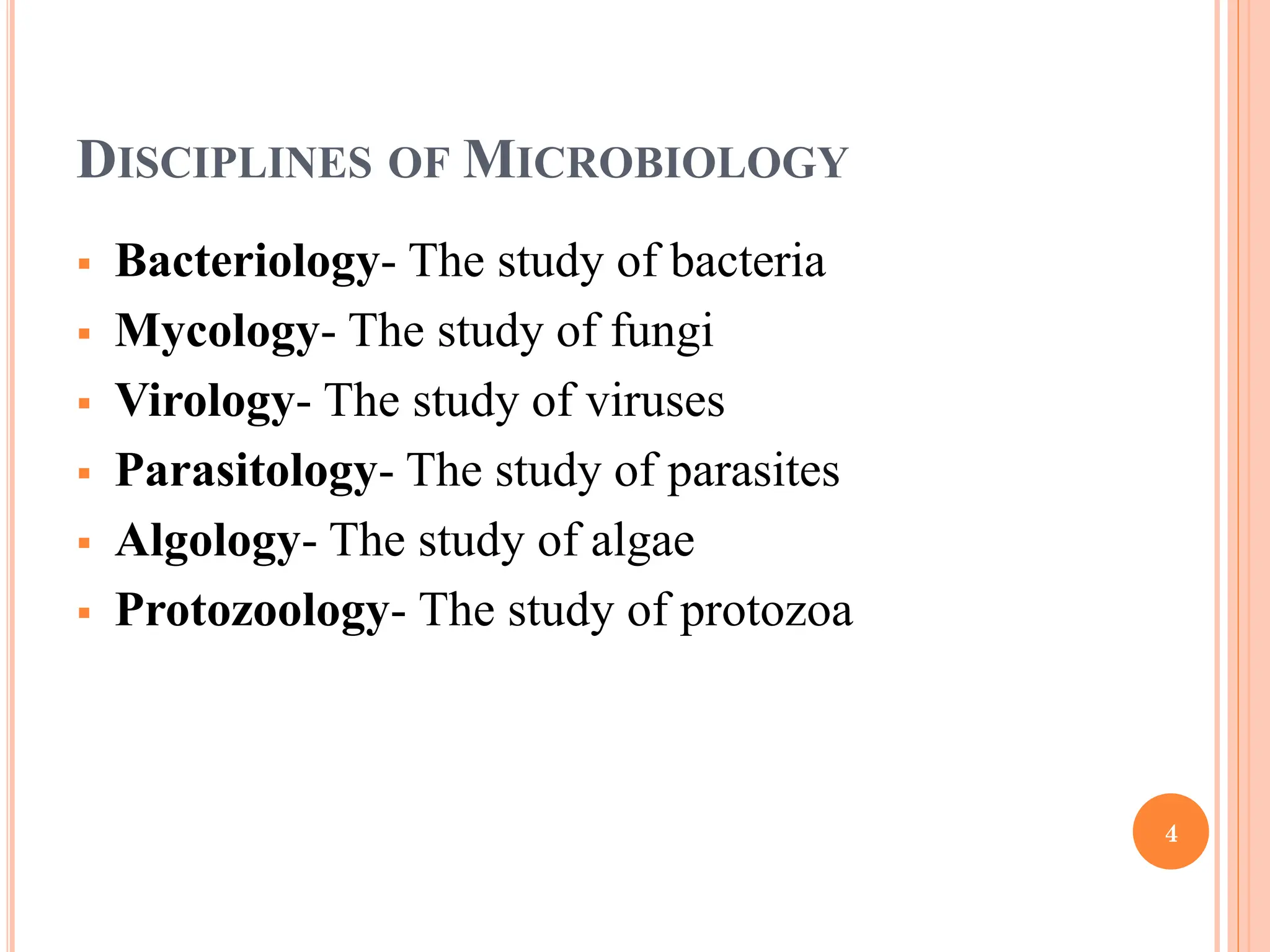
DISCIPLINES OF MICROBIOLOGY
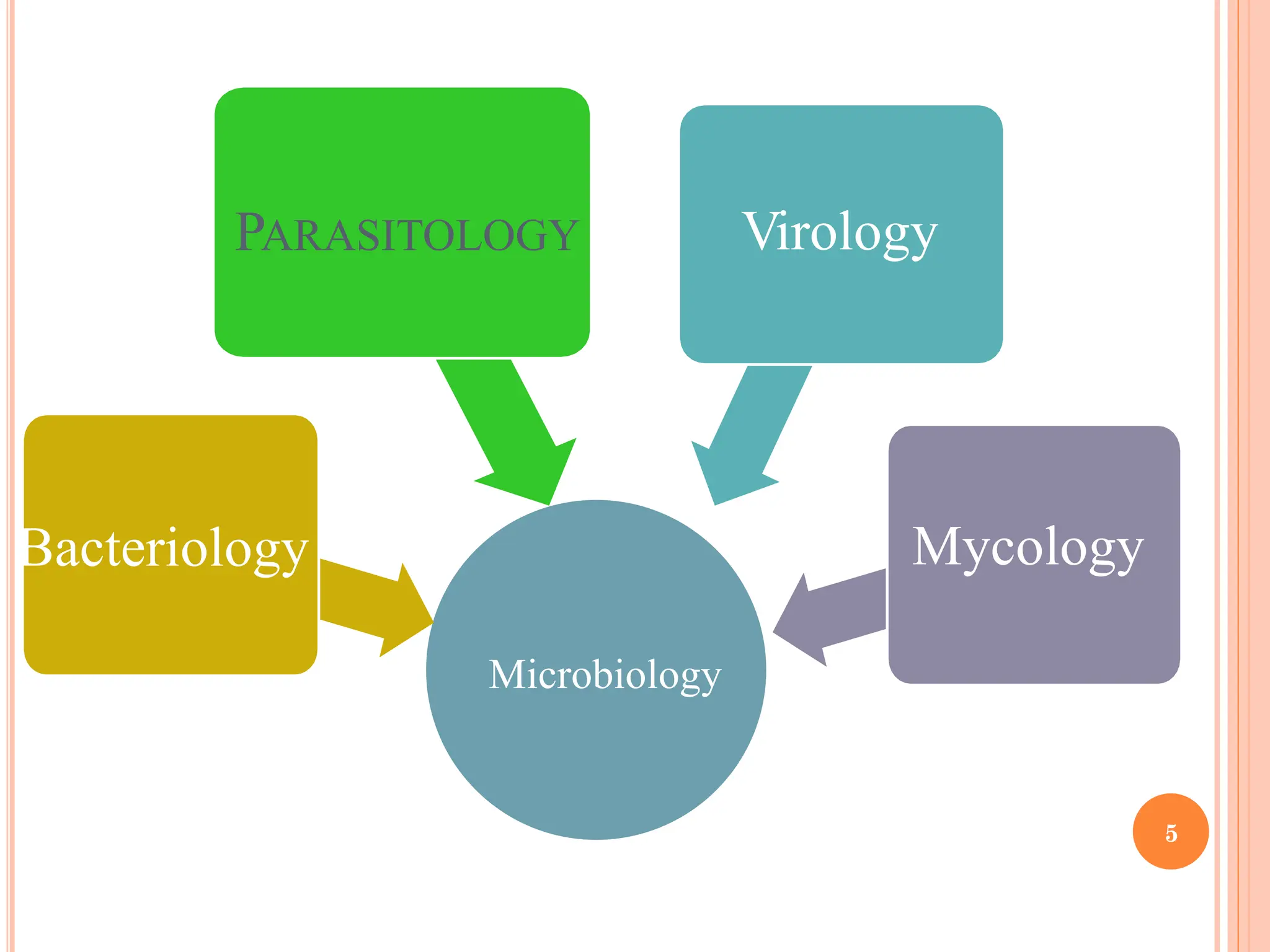
 Bacteriology- The study of bacteria
 Mycology- The study of fungi
 Virology- The study of viruses
 Parasitology- The study of parasites
 Algology- The study of algae
 Protozoology- The study of protozoa
4
Microbiology
Bacteriology
PARASITOLOGY Virology
Mycology
5
CONTI…
 Micro-organisms can also be studied from the applied
viewpoint
 The relationship between micro-organisms, the
environment and human activity
 This again gives rise to a number of areas of specialist
study:
1) Medical Microbiology
2) Agricultural Microbiology
3) Biotechnology/Industrial Microbiology
4) Food Microbiology 6
CONTI…
1. Medical Microbiology:
 Includes some aspects of pathology, immunology and
epidemiology.
2. Agricultural Microbiology:
 The study of micro-organisms for crop/ plant health
and related areas.
3. Industrial Microbiology / Biotechnology:
 The study of the use of Microorganisms in large scale
industrial processes.
7
CONTI…
4. Food Microbiology:
 The study of the role that micro-organisms play in
food spoilage, food production, food preservation and
food-borne disease.
8
CHARACTERISTICS OF MICROORGANISMS
1. They are generally too small to be seen with the
unaided human eye, and some form of microscopy is
required for the study of their structure
2. Cells or other structures are relatively simple and
less specialized than those of higher plants and
animals
3. They are handled and cultured in the laboratory in
ways that are generally quite similar
9
SCOPE OF MICROBIOLOGY
 Production of antibiotics
 Production of enzymes, vaccines, biosurfactants,
alcoholic and other pharmaceutical products
 Diagnosis of disease and treatment
 Treatment of industrial waste and material
 Plant growth promotion
 Sterile product preparation
10
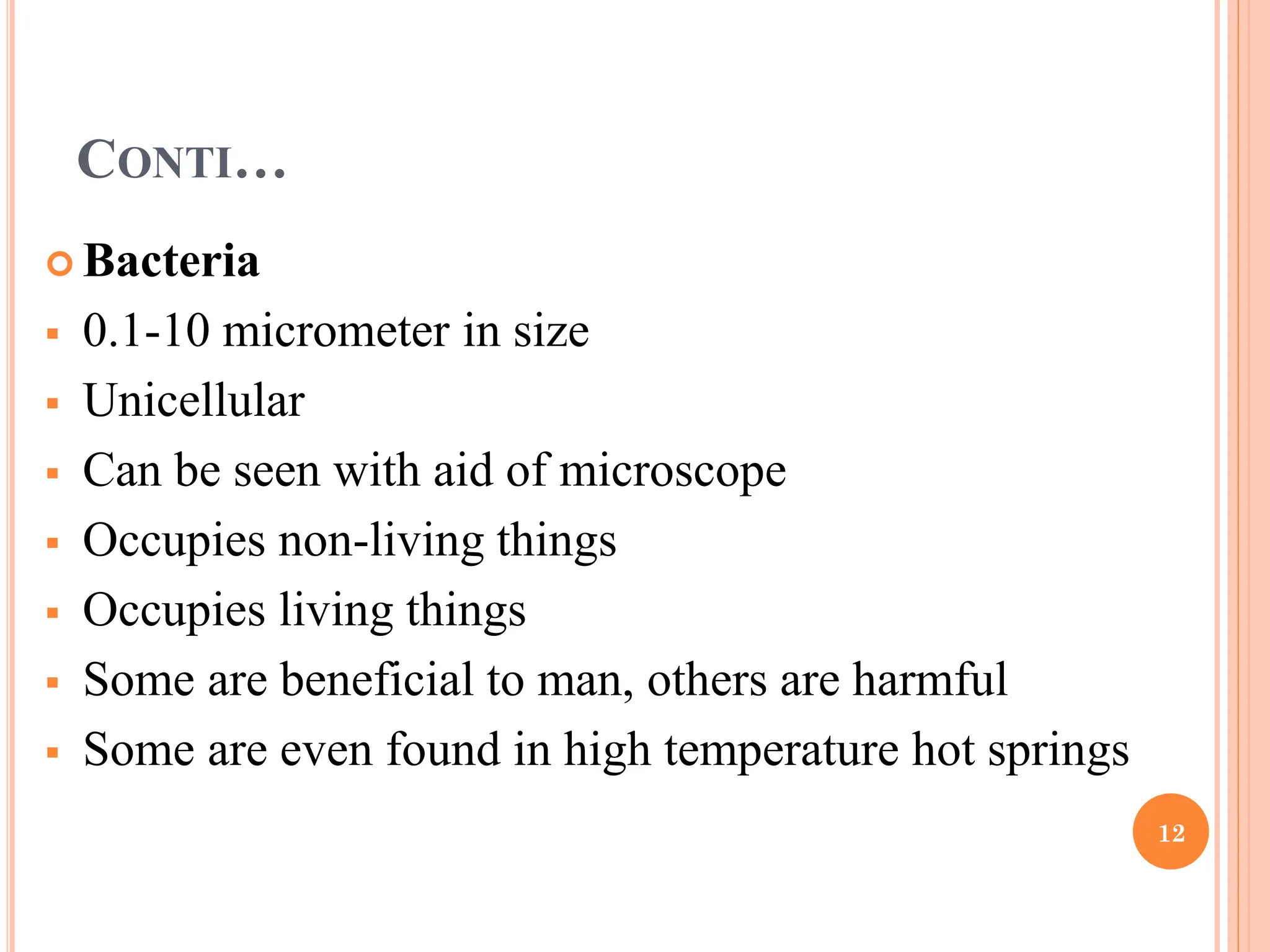
CLASSES OF MICROORGANISMS
 Bacteria
 Virus
 Nematodes
 Fungi
 Protozoa
 Algae
 Archae
11
CONTI…
 Bacteria
 0.1-10 micrometer in size
 Unicellular
 Can be seen with aid of microscope
 Occupies non-living things
 Occupies living things
 Some are beneficial to man, others are harmful
 Some are even found in high temperature hot springs
12
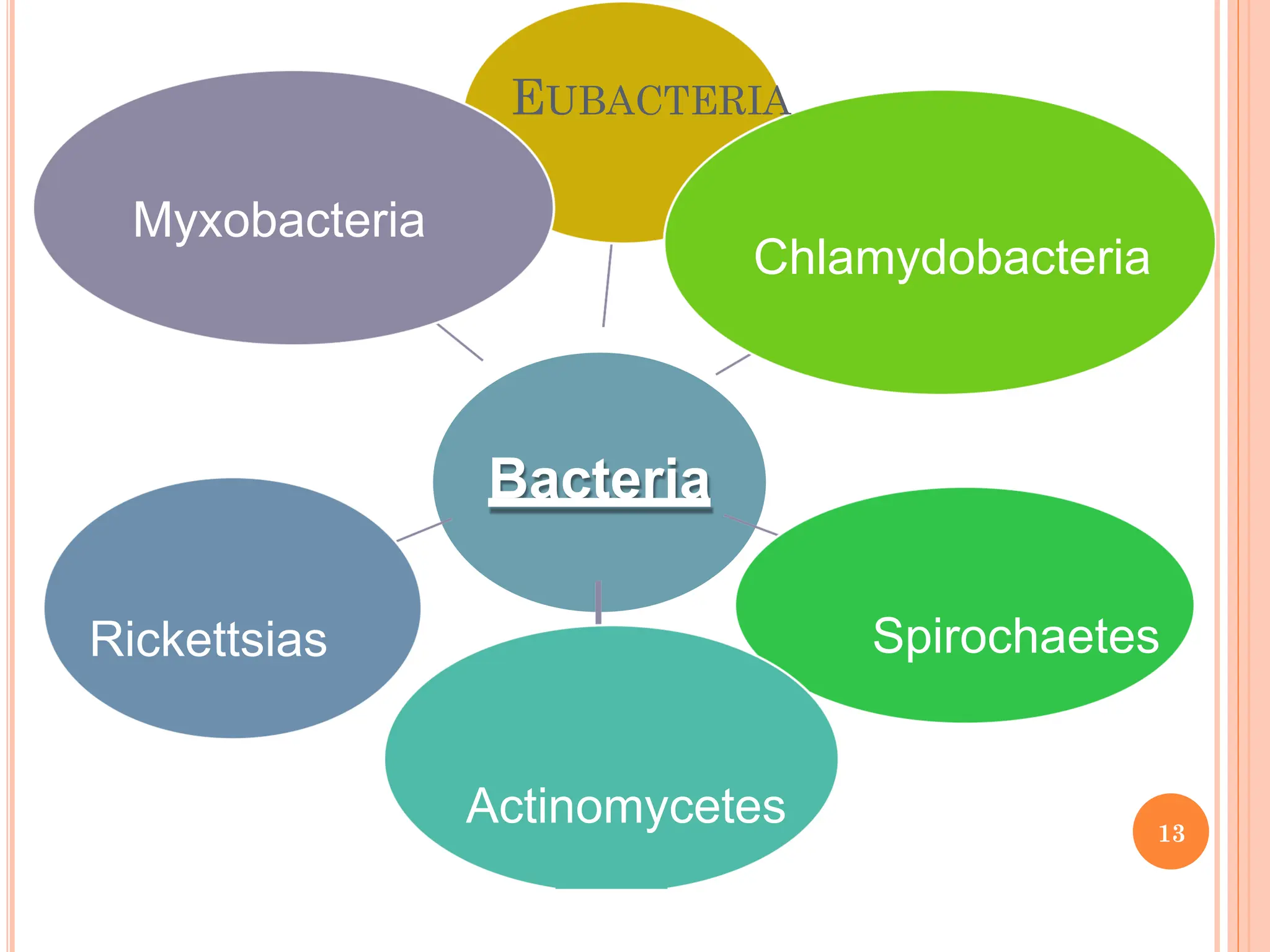
Bacteria
EUBACTERIA
Chlamydobacteria
Spirochaetes
Actinomycetes
Rickettsias
Myxobacteria
13
CONTI…
 Viruses
 Smallest living organisms
 Simple structure consisting of a length of genetic
material (either DNA or RNA)
 Can not be detected with a light microscope
 Detected with electron microscope
 Not capable of reproducing outside its host cell
14
CONTI…
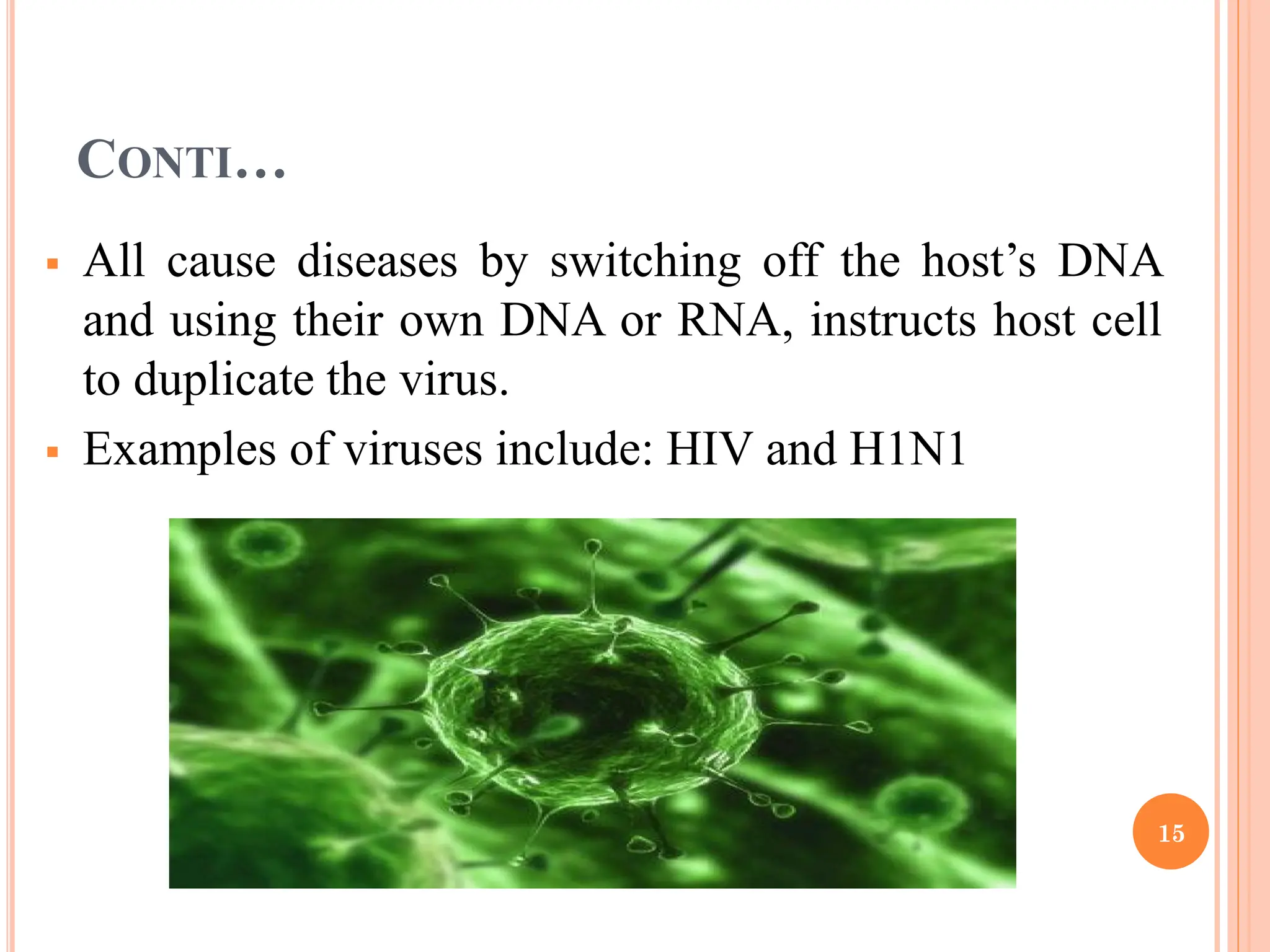
 All cause diseases by switching off the host’s DNA
and using their own DNA or RNA, instructs host cell
to duplicate the virus.
 Examples of viruses include: HIV and H1N1
15
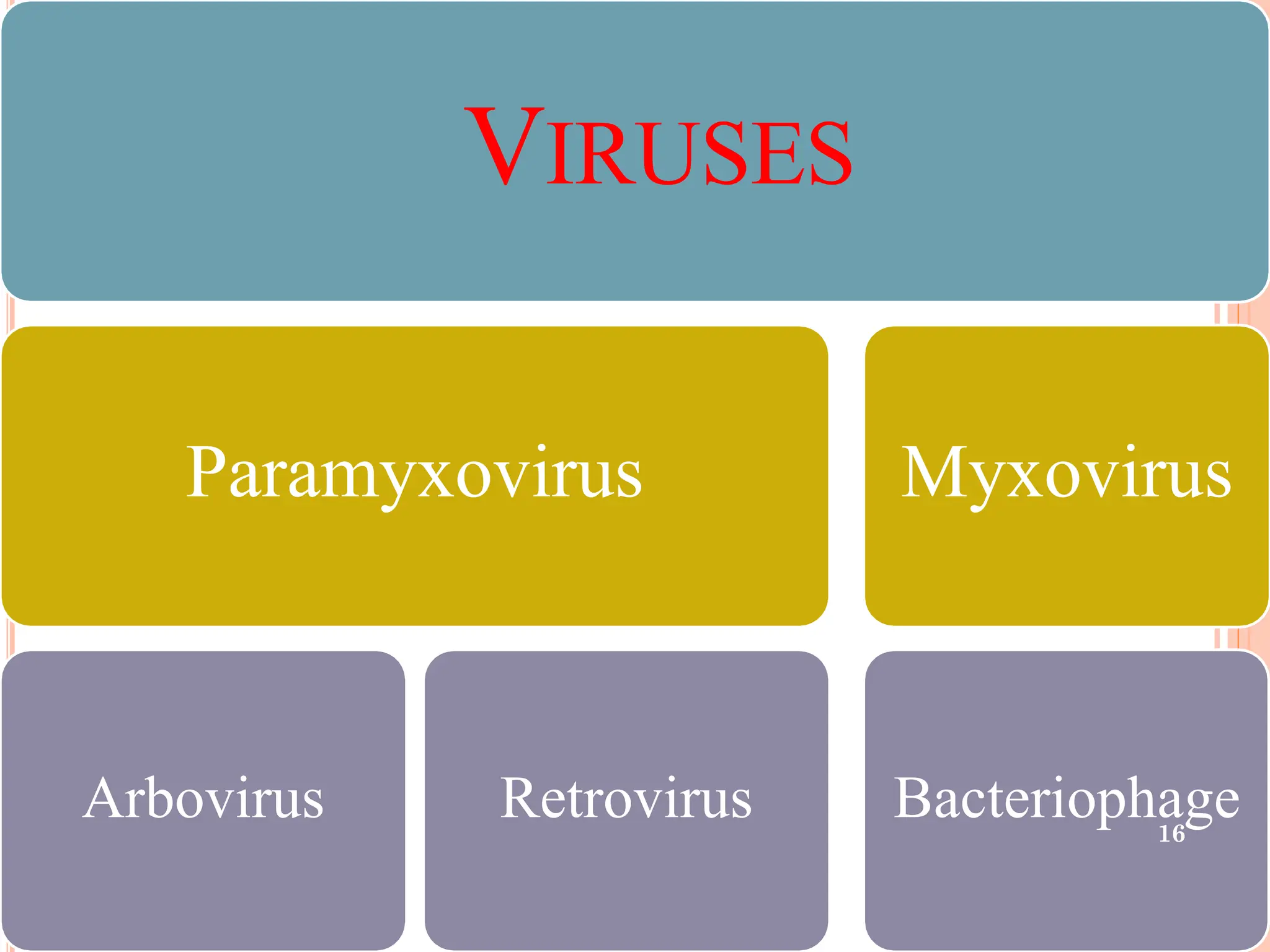
VIRUSES
Paramyxovirus
Arbovirus Retrovirus
Myxovirus
Bacteriophage
16
REFERENCE
 Tortora, G.J., Funke, B.R. and Case, C.L. 2009.
Microbiology: an introduction. The
Benjamine/Cummings Pub. Co, Redwood City,
California, USA.
17

FST-216 Lec 1 Introduction of microbiology.pdf

  • 1.
    FST-306 GENERAL MICROBIOLOGY LectureNo. 1 Microbiology- Introduction Miss. Palwasha Afzal Department: Food Science and Technology 1
  • 2.
    CONTENTS  Microbiology Introduction Disciplines of Microbiology  Characteristics of Microorganisms  Scope of Microbiology  Classes of Microbiology  Bacteria  Viruses  Reference 2
  • 3.
    MICROBIOLOGY  Microbiology isthe branch of biological sciences  This is the biological study of organisms on the microscopic level  These organisms cannot be detected with the naked eye  Can be seen with the aid of microscope  It covers several disciplines 3
  • 4.
    DISCIPLINES OF MICROBIOLOGY Bacteriology- The study of bacteria  Mycology- The study of fungi  Virology- The study of viruses  Parasitology- The study of parasites  Algology- The study of algae  Protozoology- The study of protozoa 4
  • 5.
  • 6.
    CONTI…  Micro-organisms canalso be studied from the applied viewpoint  The relationship between micro-organisms, the environment and human activity  This again gives rise to a number of areas of specialist study: 1) Medical Microbiology 2) Agricultural Microbiology 3) Biotechnology/Industrial Microbiology 4) Food Microbiology 6
  • 7.
    CONTI… 1. Medical Microbiology: Includes some aspects of pathology, immunology and epidemiology. 2. Agricultural Microbiology:  The study of micro-organisms for crop/ plant health and related areas. 3. Industrial Microbiology / Biotechnology:  The study of the use of Microorganisms in large scale industrial processes. 7
  • 8.
    CONTI… 4. Food Microbiology: The study of the role that micro-organisms play in food spoilage, food production, food preservation and food-borne disease. 8
  • 9.
    CHARACTERISTICS OF MICROORGANISMS 1.They are generally too small to be seen with the unaided human eye, and some form of microscopy is required for the study of their structure 2. Cells or other structures are relatively simple and less specialized than those of higher plants and animals 3. They are handled and cultured in the laboratory in ways that are generally quite similar 9
  • 10.
    SCOPE OF MICROBIOLOGY Production of antibiotics  Production of enzymes, vaccines, biosurfactants, alcoholic and other pharmaceutical products  Diagnosis of disease and treatment  Treatment of industrial waste and material  Plant growth promotion  Sterile product preparation 10
  • 11.
    CLASSES OF MICROORGANISMS Bacteria  Virus  Nematodes  Fungi  Protozoa  Algae  Archae 11
  • 12.
    CONTI…  Bacteria  0.1-10micrometer in size  Unicellular  Can be seen with aid of microscope  Occupies non-living things  Occupies living things  Some are beneficial to man, others are harmful  Some are even found in high temperature hot springs 12
  • 13.
  • 14.
    CONTI…  Viruses  Smallestliving organisms  Simple structure consisting of a length of genetic material (either DNA or RNA)  Can not be detected with a light microscope  Detected with electron microscope  Not capable of reproducing outside its host cell 14
  • 15.
    CONTI…  All causediseases by switching off the host’s DNA and using their own DNA or RNA, instructs host cell to duplicate the virus.  Examples of viruses include: HIV and H1N1 15
  • 16.
  • 17.
    REFERENCE  Tortora, G.J.,Funke, B.R. and Case, C.L. 2009. Microbiology: an introduction. The Benjamine/Cummings Pub. Co, Redwood City, California, USA. 17