FROM THEORY TO PRACTICE
OPERATIONALIZATION OF THE GTEC FRAMEWORK
Nicolas Robinson-Garcia, Eric van Holm, Julia Melkers and Eric Welch
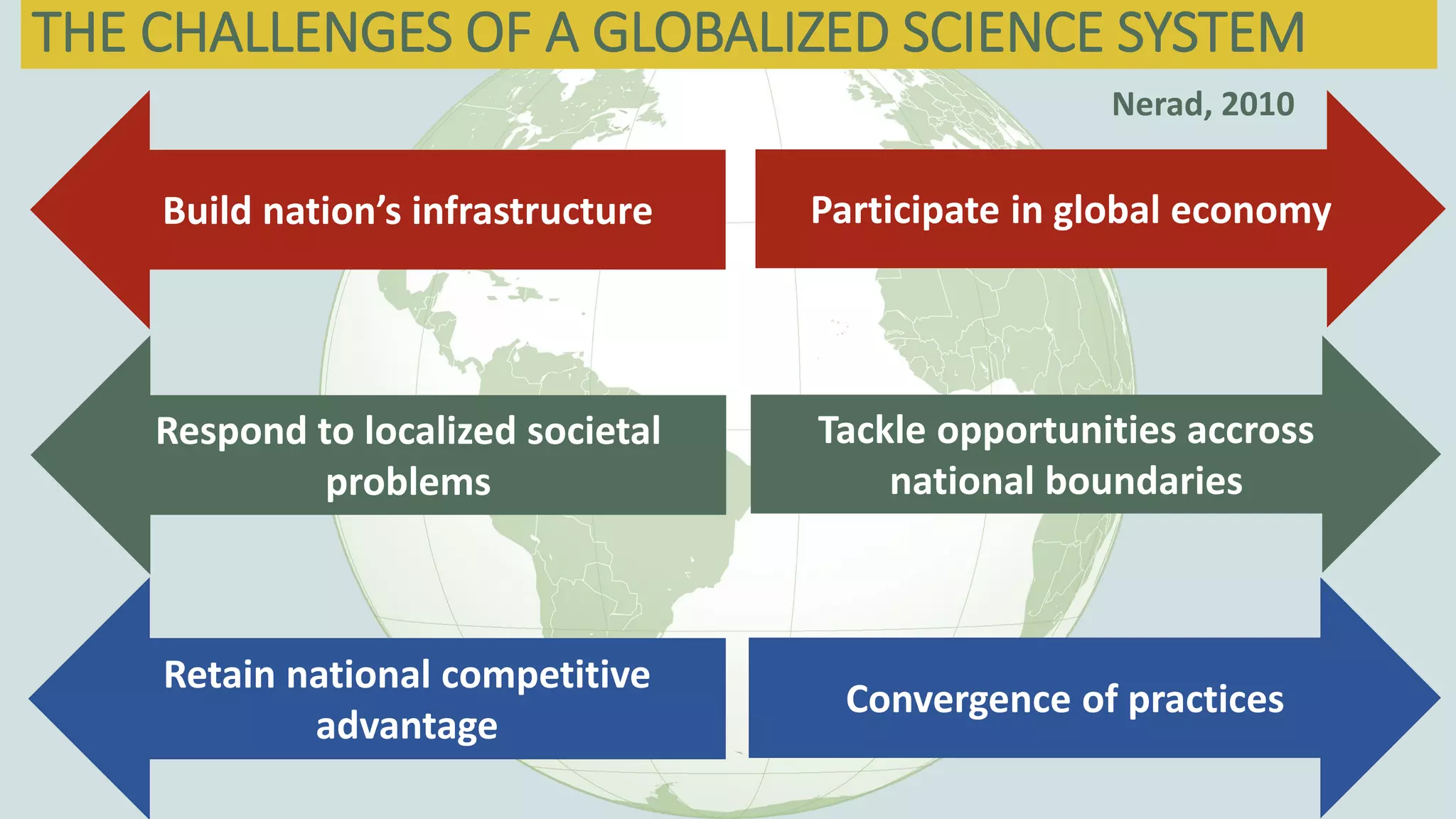
THE CHALLENGES OF A GLOBALIZED SCIENCE SYSTEM
2
Participate in global economyBuild nation’s infrastructure
Tackle opportunities accross
national boundaries
Respond to localized societal
problems
Convergence of practices
Retain national competitive
advantage
Nerad, 2010
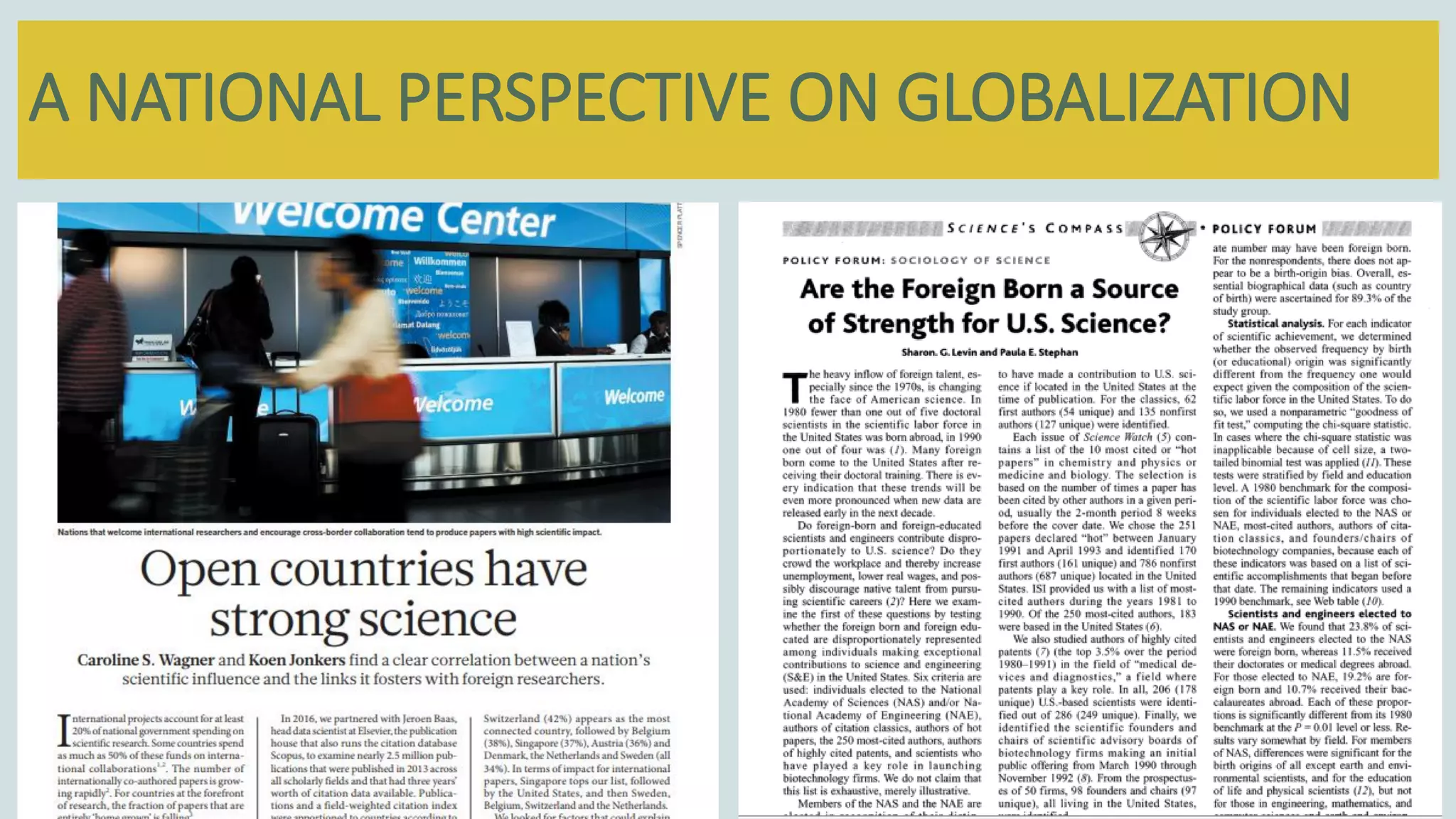
A NATIONAL PERSPECTIVE ON GLOBALIZATION
3
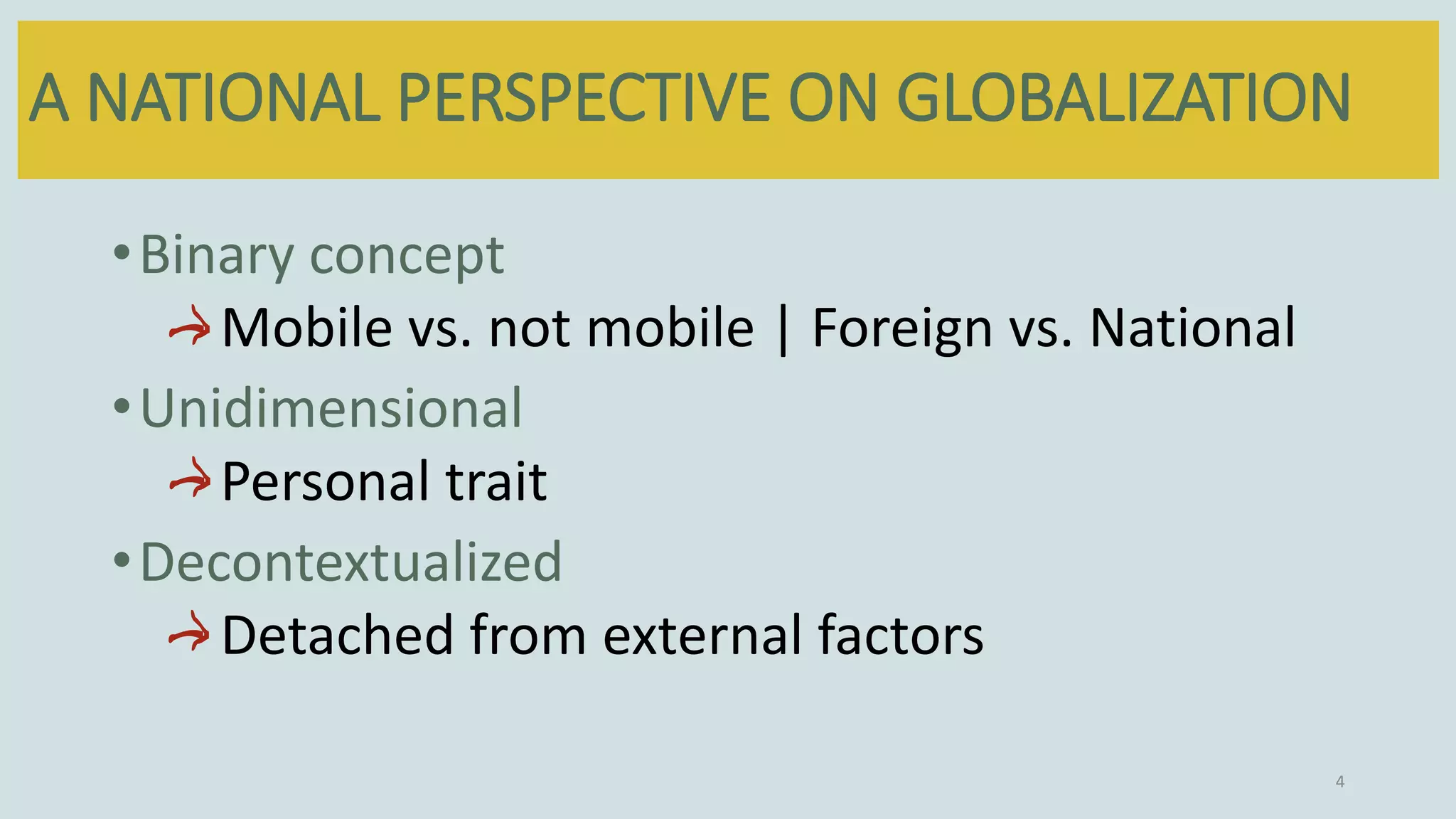
A NATIONAL PERSPECTIVE ON GLOBALIZATION
4
•Binary concept
Mobile vs. not mobile | Foreign vs. National
•Unidimensional
Personal trait
•Decontextualized
Detached from external factors
5
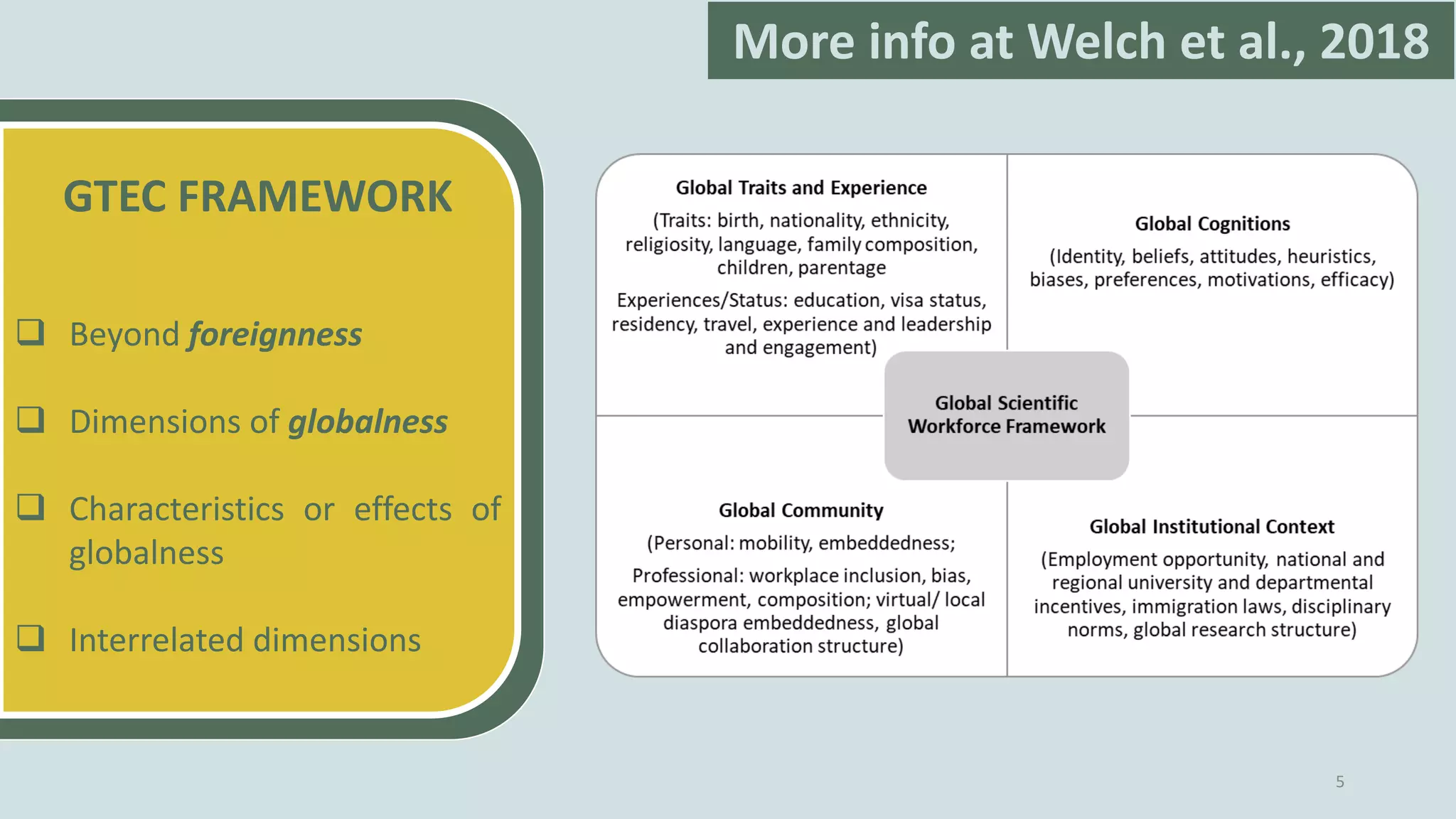
GTEC FRAMEWORK
 Beyond foreignness
 Dimensions of globalness
 Characteristics or effects of
globalness
 Interrelated dimensions
More info at Welch et al., 2018
6
DATA CHALLENGES
National surveys
Bibliometric sources
Institutional sources
• Purpose-oriented
• Outdated
• Partial and incomplete
• Decontextualized
• Geographically constrained
• …
Does an expanded view of globalness produce
dissimilar results than traditional approaches on
mobility or foreigness?
• Data-driven definition?
• Ignored factors affecting interpretation?
• …
7
BUT…
8
Layers of globalness - DIVERSITY
• Globalness as a trait/experience variable
• Alternative variables and heterogeneity
• Combining different definitions
Consequences for studies on foreign-born faculty
• Foreign-born faculty are more productive than US born
(Corley & Sabharwal, 2007)
• Foreign-born faculty are less satisfied with their salary than
US born (Sabharwal, 2011)
9
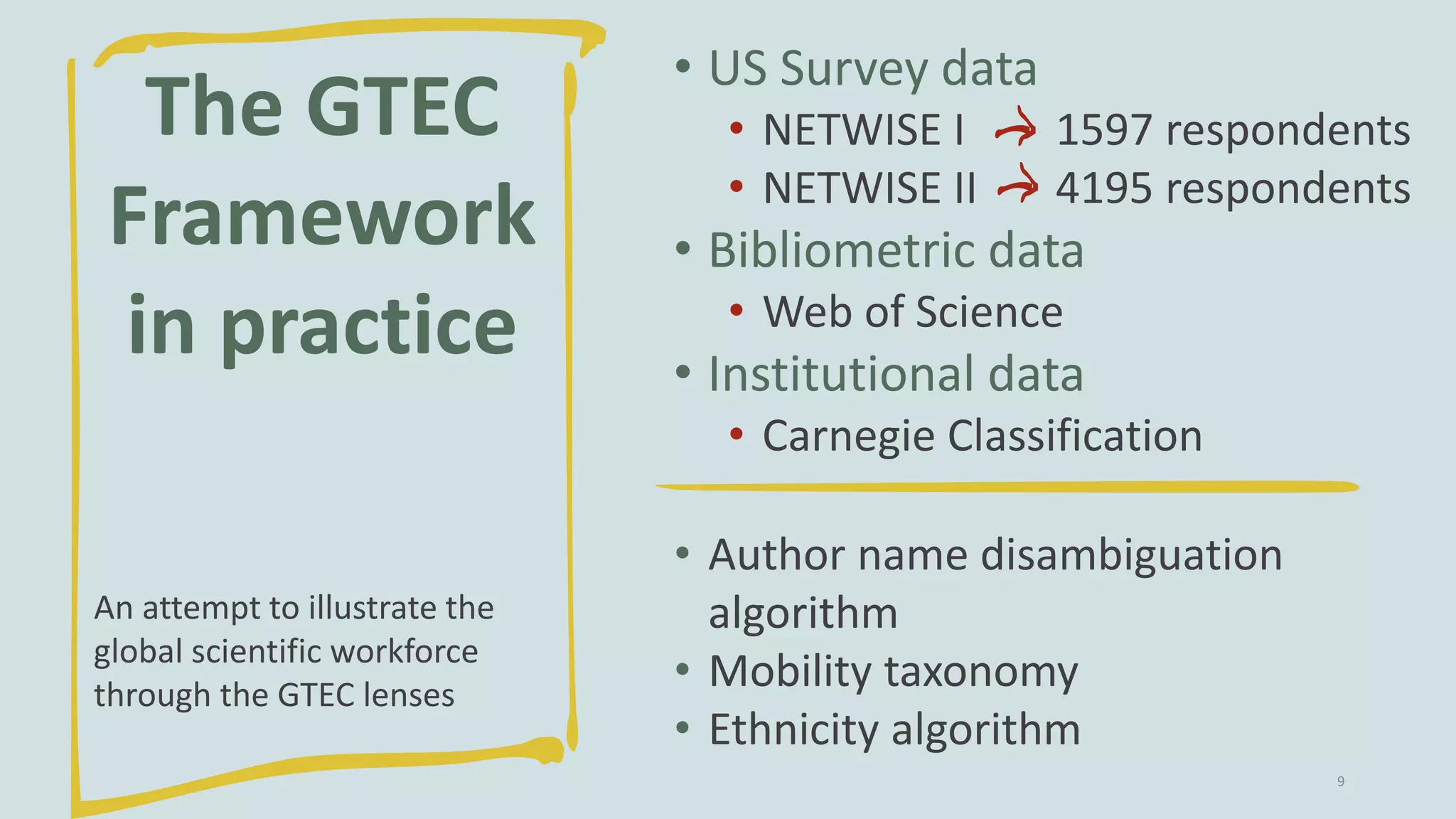
The GTEC
Framework
in practice
An attempt to illustrate the
global scientific workforce
through the GTEC lenses
• US Survey data
• NETWISE I 1597 respondents
• NETWISE II 4195 respondents
• Bibliometric data
• Web of Science
• Institutional data
• Carnegie Classification
• Author name disambiguation
algorithm
• Mobility taxonomy
• Ethnicity algorithm
10
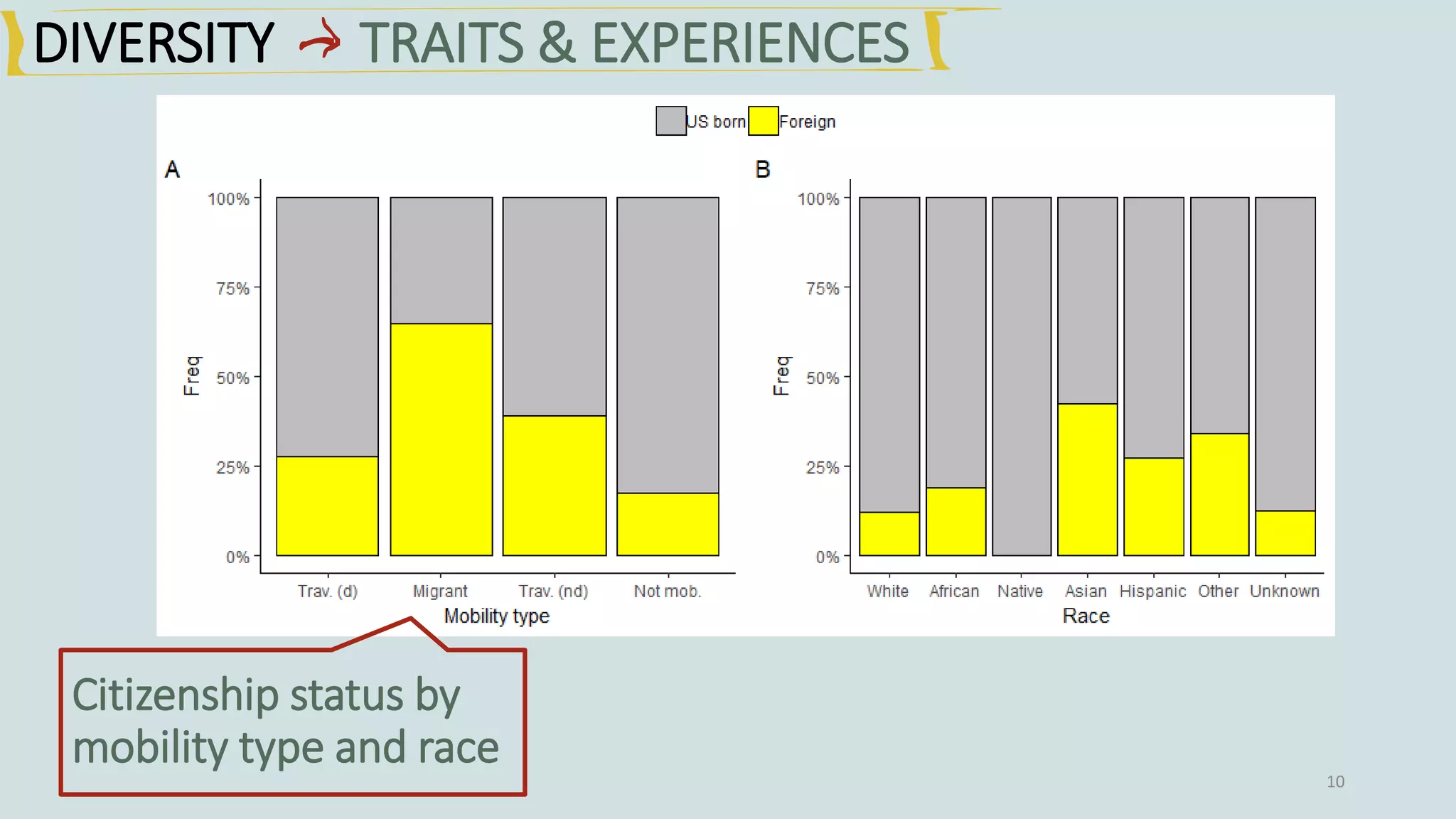
Citizenship status by
mobility type and race
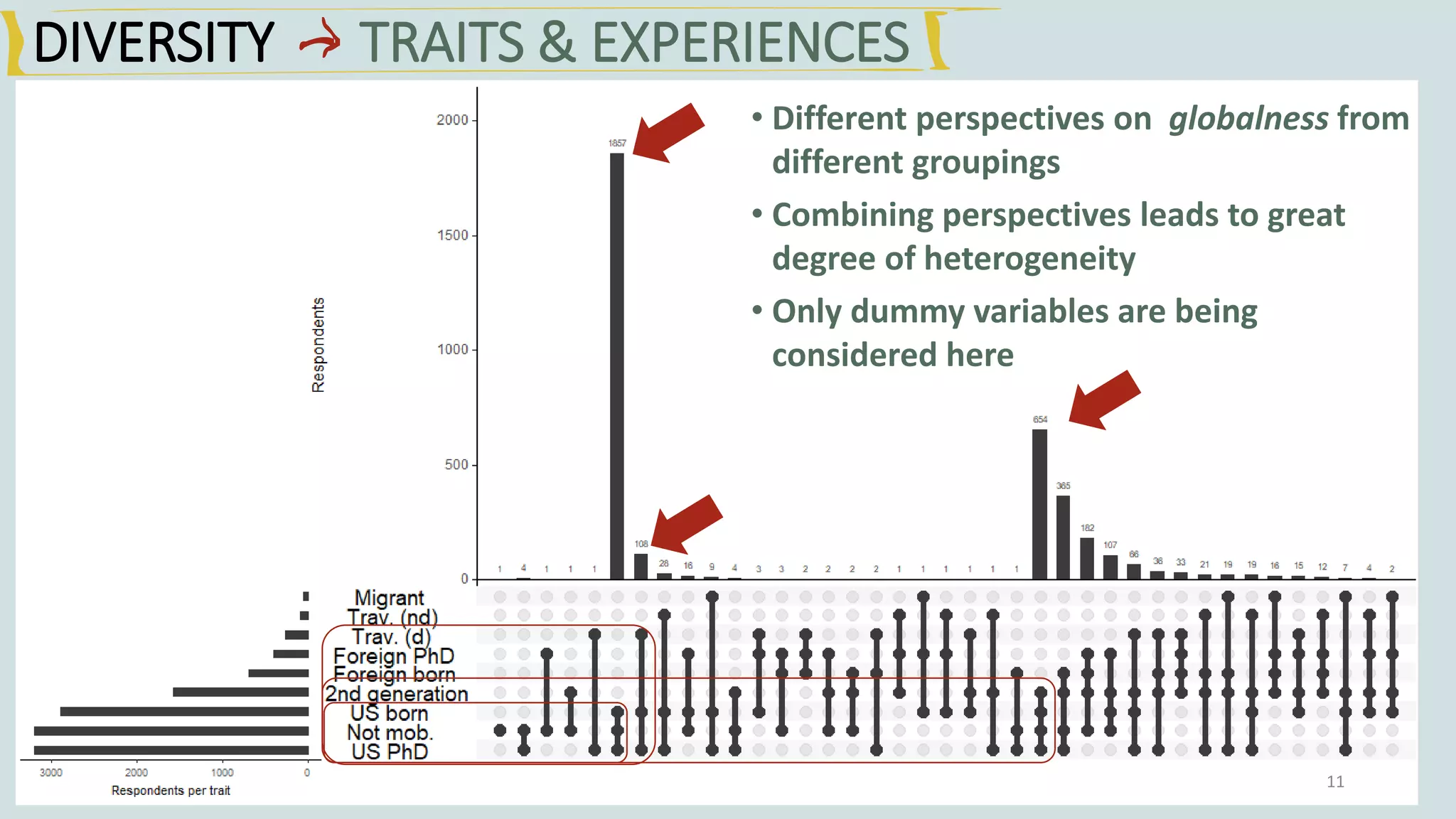
DIVERSITY TRAITS & EXPERIENCES
11
• Different perspectives on globalness from
different groupings
• Combining perspectives leads to great
degree of heterogeneity
• Only dummy variables are being
considered here
DIVERSITY TRAITS & EXPERIENCES
12
Consequences for studies on foreign-born faculty:
An experiment
1. Foreign-born faculty are less satisfied with their
salary than US born (Sabharwal, 2011)
▪ Comparison of means
▪ Explanatory variables: citizenship, PhD training, mobility
and US parents
2. Foreign-born faculty are more productive than US
born (Corley & Sabharwal, 2007)
▪ Negative Binomial Regression Analysis
▪ NET II only (N = 2,713)
▪ Explanatory variables: citizenship, PhD training mobility
13
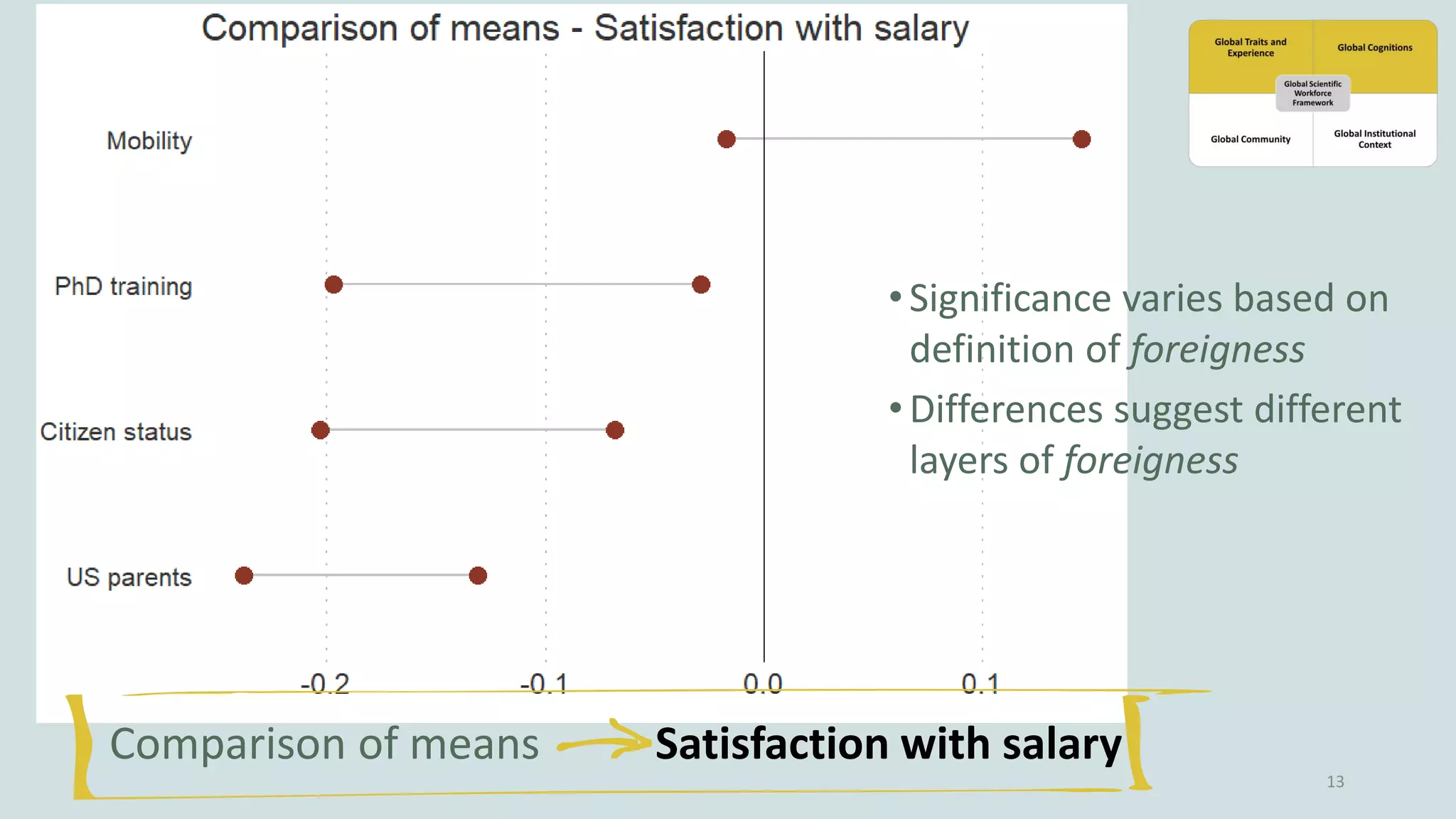
Comparison of means Satisfaction with salary
•Significance varies based on
definition of foreigness
•Differences suggest different
layers of foreigness
14
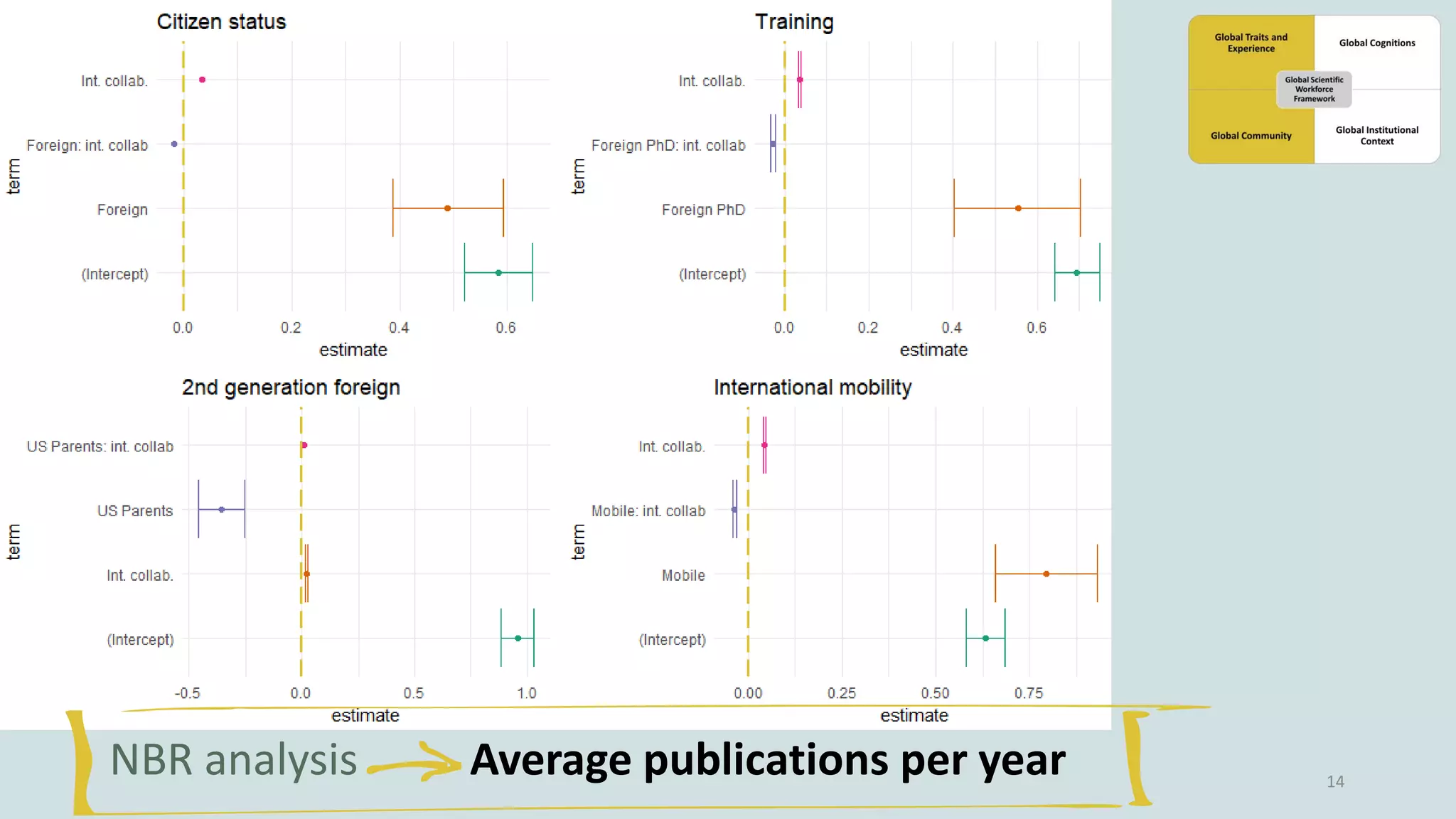
NBR analysis Average publications per year
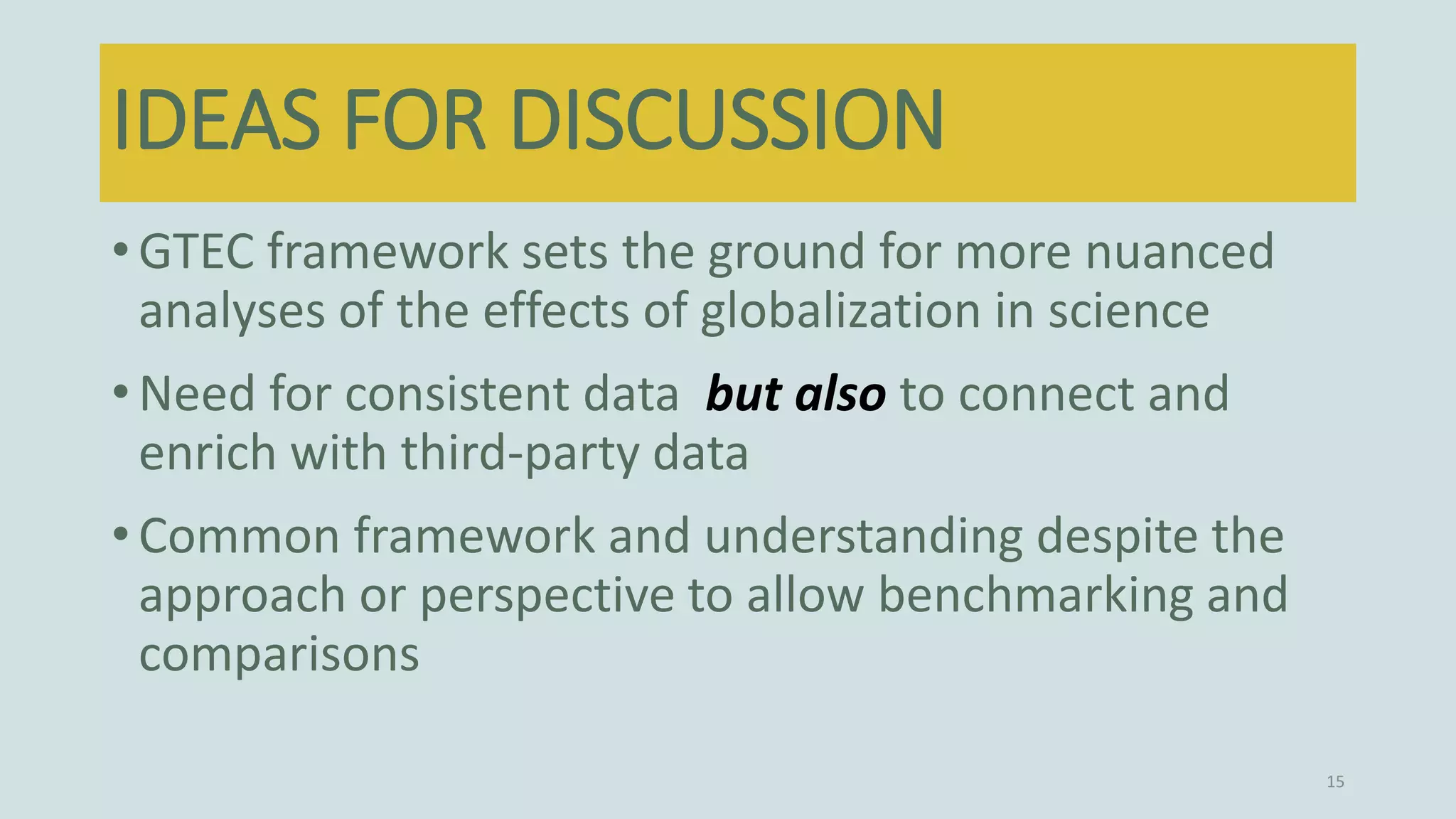
•GTEC framework sets the ground for more nuanced
analyses of the effects of globalization in science
•Need for consistent data but also to connect and
enrich with third-party data
•Common framework and understanding despite the
approach or perspective to allow benchmarking and
comparisons
15
IDEAS FOR DISCUSSION
THANK YOU!
From theory to practice:
Operationalization of the GTEC framework
Nicolas Robinson-Garcia, Eric van Holm, Julia Melkers and Eric Welch
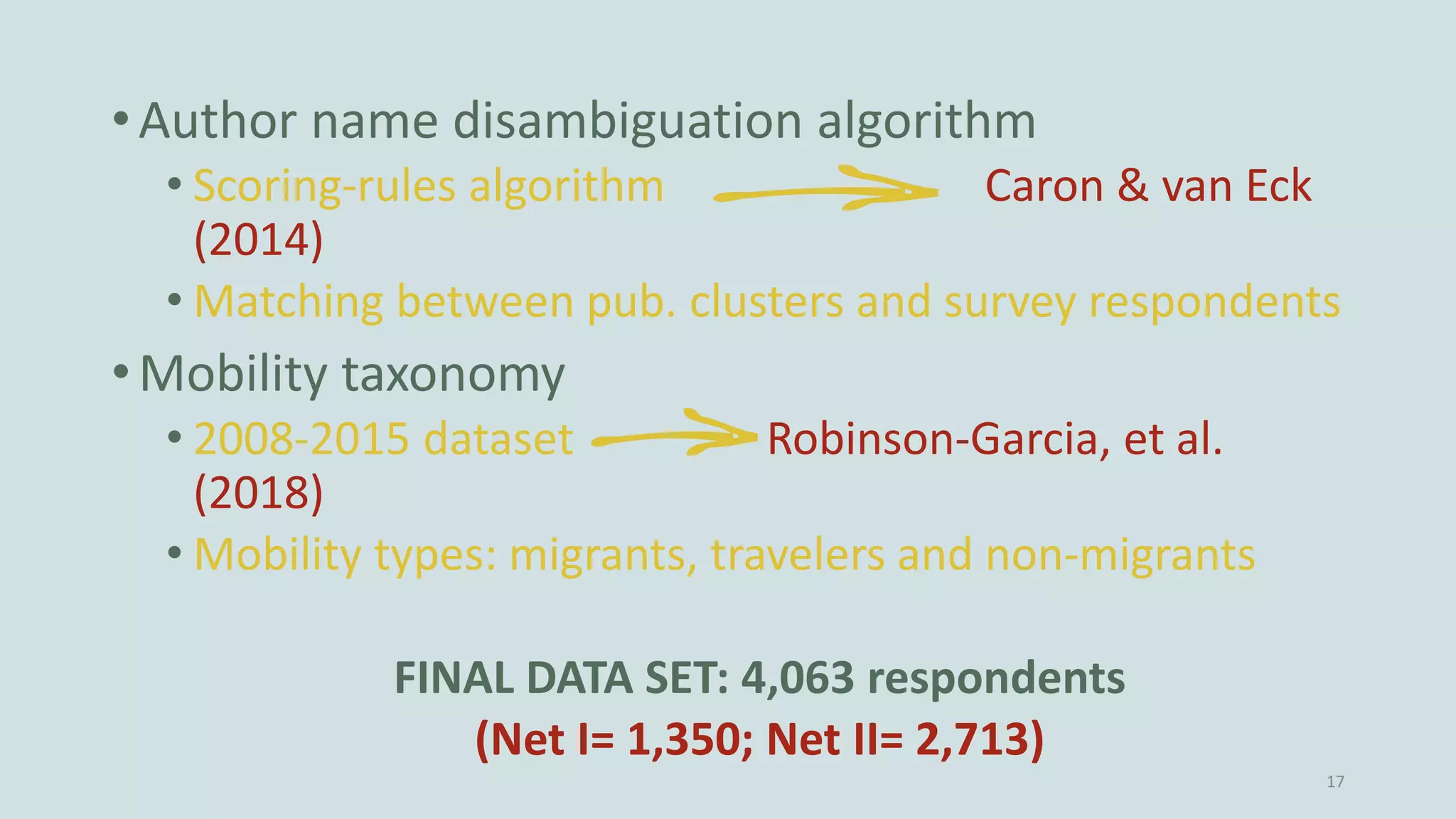
•Author name disambiguation algorithm
• Scoring-rules algorithm Caron & van Eck
(2014)
• Matching between pub. clusters and survey respondents
•Mobility taxonomy
• 2008-2015 dataset Robinson-Garcia, et al.
(2018)
• Mobility types: migrants, travelers and non-migrants
FINAL DATA SET: 4,063 respondents
(Net I= 1,350; Net II= 2,713)
17

From theory to practice: Operationalization of the GTEC framework

  • 1.
    FROM THEORY TOPRACTICE OPERATIONALIZATION OF THE GTEC FRAMEWORK Nicolas Robinson-Garcia, Eric van Holm, Julia Melkers and Eric Welch
  • 2.
    THE CHALLENGES OFA GLOBALIZED SCIENCE SYSTEM 2 Participate in global economyBuild nation’s infrastructure Tackle opportunities accross national boundaries Respond to localized societal problems Convergence of practices Retain national competitive advantage Nerad, 2010
  • 3.
    A NATIONAL PERSPECTIVEON GLOBALIZATION 3
  • 4.
    A NATIONAL PERSPECTIVEON GLOBALIZATION 4 •Binary concept Mobile vs. not mobile | Foreign vs. National •Unidimensional Personal trait •Decontextualized Detached from external factors
  • 5.
    5 GTEC FRAMEWORK  Beyondforeignness  Dimensions of globalness  Characteristics or effects of globalness  Interrelated dimensions More info at Welch et al., 2018
  • 6.
    6 DATA CHALLENGES National surveys Bibliometricsources Institutional sources • Purpose-oriented • Outdated • Partial and incomplete • Decontextualized • Geographically constrained • …
  • 7.
    Does an expandedview of globalness produce dissimilar results than traditional approaches on mobility or foreigness? • Data-driven definition? • Ignored factors affecting interpretation? • … 7 BUT…
  • 8.
    8 Layers of globalness- DIVERSITY • Globalness as a trait/experience variable • Alternative variables and heterogeneity • Combining different definitions Consequences for studies on foreign-born faculty • Foreign-born faculty are more productive than US born (Corley & Sabharwal, 2007) • Foreign-born faculty are less satisfied with their salary than US born (Sabharwal, 2011)
  • 9.
    9 The GTEC Framework in practice Anattempt to illustrate the global scientific workforce through the GTEC lenses • US Survey data • NETWISE I 1597 respondents • NETWISE II 4195 respondents • Bibliometric data • Web of Science • Institutional data • Carnegie Classification • Author name disambiguation algorithm • Mobility taxonomy • Ethnicity algorithm
  • 10.
    10 Citizenship status by mobilitytype and race DIVERSITY TRAITS & EXPERIENCES
  • 11.
    11 • Different perspectiveson globalness from different groupings • Combining perspectives leads to great degree of heterogeneity • Only dummy variables are being considered here DIVERSITY TRAITS & EXPERIENCES
  • 12.
    12 Consequences for studieson foreign-born faculty: An experiment 1. Foreign-born faculty are less satisfied with their salary than US born (Sabharwal, 2011) ▪ Comparison of means ▪ Explanatory variables: citizenship, PhD training, mobility and US parents 2. Foreign-born faculty are more productive than US born (Corley & Sabharwal, 2007) ▪ Negative Binomial Regression Analysis ▪ NET II only (N = 2,713) ▪ Explanatory variables: citizenship, PhD training mobility
  • 13.
    13 Comparison of meansSatisfaction with salary •Significance varies based on definition of foreigness •Differences suggest different layers of foreigness
  • 14.
    14 NBR analysis Averagepublications per year
  • 15.
    •GTEC framework setsthe ground for more nuanced analyses of the effects of globalization in science •Need for consistent data but also to connect and enrich with third-party data •Common framework and understanding despite the approach or perspective to allow benchmarking and comparisons 15 IDEAS FOR DISCUSSION
  • 16.
    THANK YOU! From theoryto practice: Operationalization of the GTEC framework Nicolas Robinson-Garcia, Eric van Holm, Julia Melkers and Eric Welch
  • 17.
    •Author name disambiguationalgorithm • Scoring-rules algorithm Caron & van Eck (2014) • Matching between pub. clusters and survey respondents •Mobility taxonomy • 2008-2015 dataset Robinson-Garcia, et al. (2018) • Mobility types: migrants, travelers and non-migrants FINAL DATA SET: 4,063 respondents (Net I= 1,350; Net II= 2,713) 17