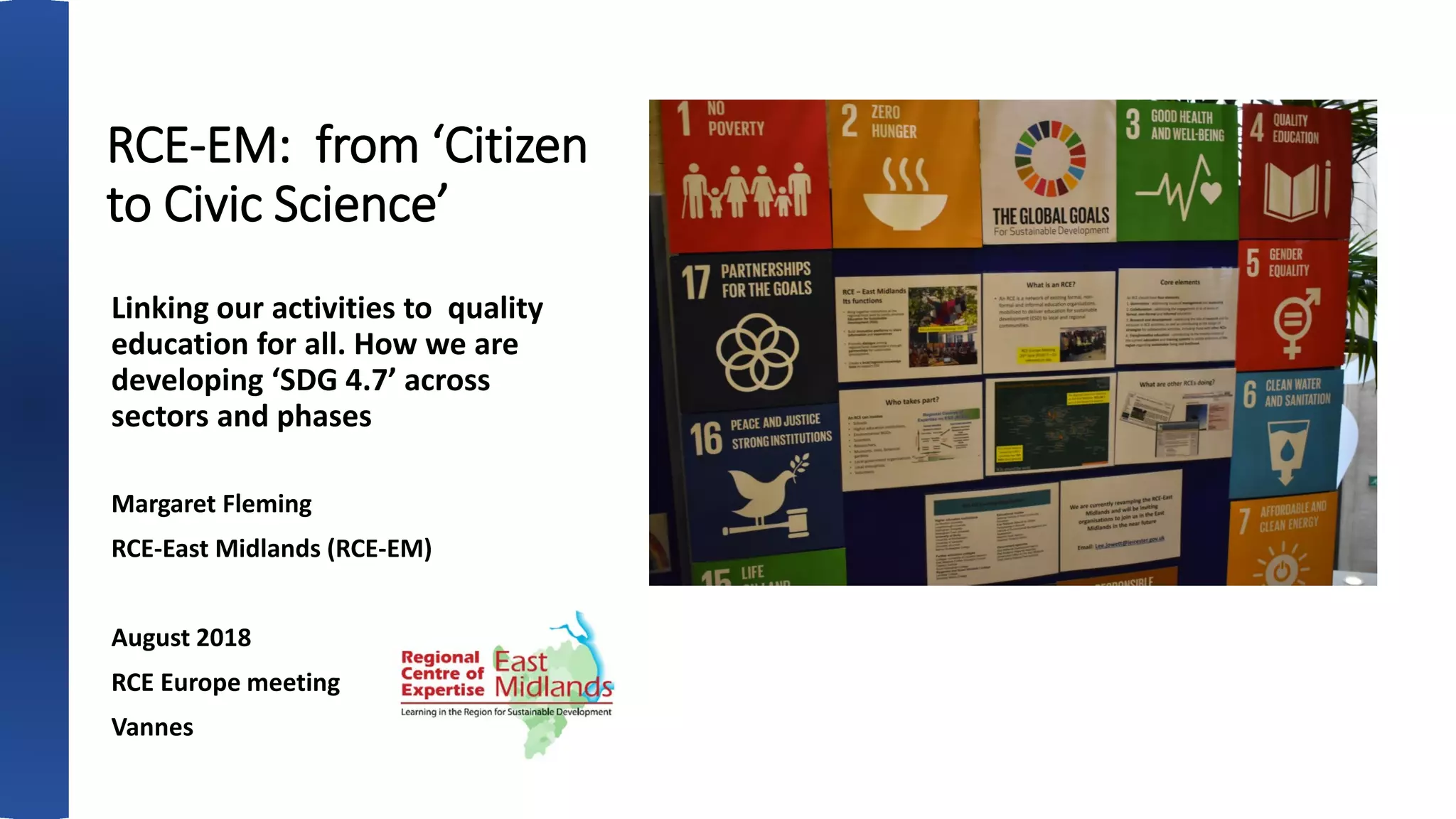
RCE-EM: from ‘Citizen
to Civic Science’
Linking our activities to quality
education for all. How we are
developing ‘SDG 4.7’ across
sectors and phases
Margaret Fleming
RCE-East Midlands (RCE-EM)
August 2018
RCE Europe meeting
Vannes
RCE-EM - Recent Activity
• Re-launched March 2017
• Lots of support from the UK RCE community – particular thanks go to RCE
London
• Our aim was to
• Link our activities to ’quality education for all’
• To develop ‘SDG 4.7’ across sectors and phases
• Steering group planned and organised a conference for March
2018
‘RCE Young Leaders in Sustainable Development’ Led by Lee Jowett,
Environmental Education Coordinator, Leicester City Council
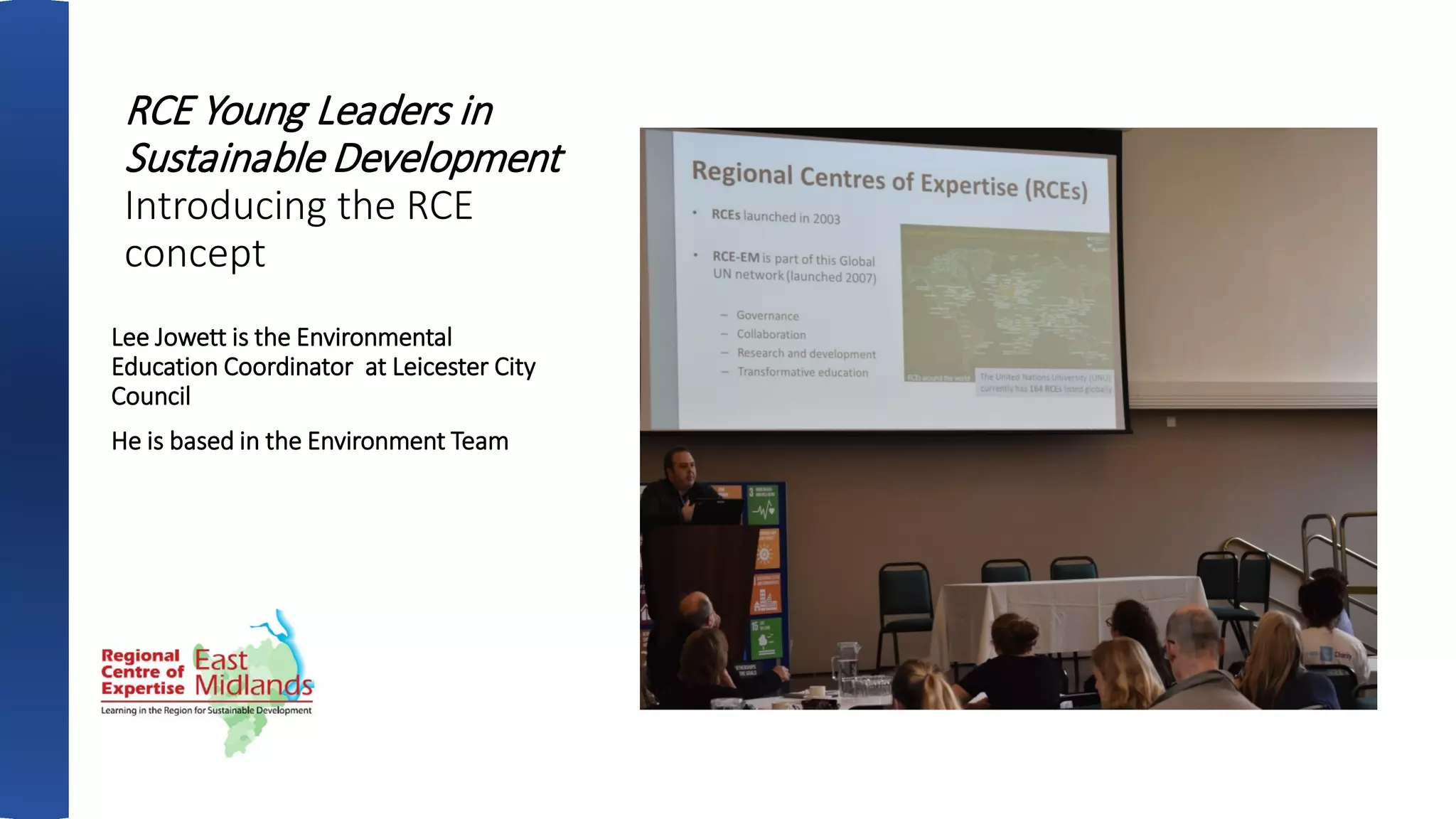
RCE Young Leaders in
Sustainable Development
Introducing the RCE
concept
Lee Jowett is the Environmental
Education Coordinator at Leicester City
Council
He is based in the Environment Team
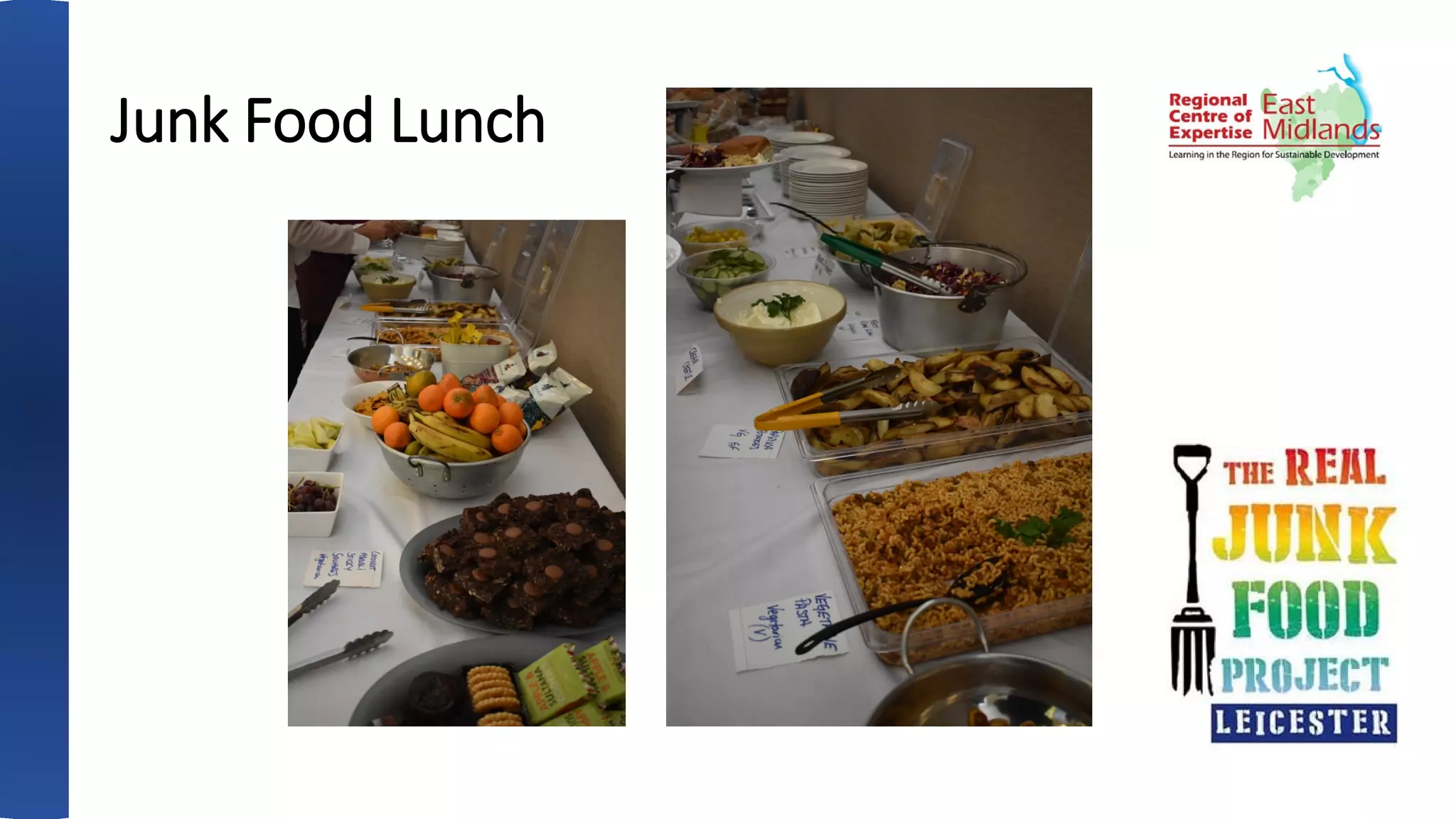
Junk Food Lunch
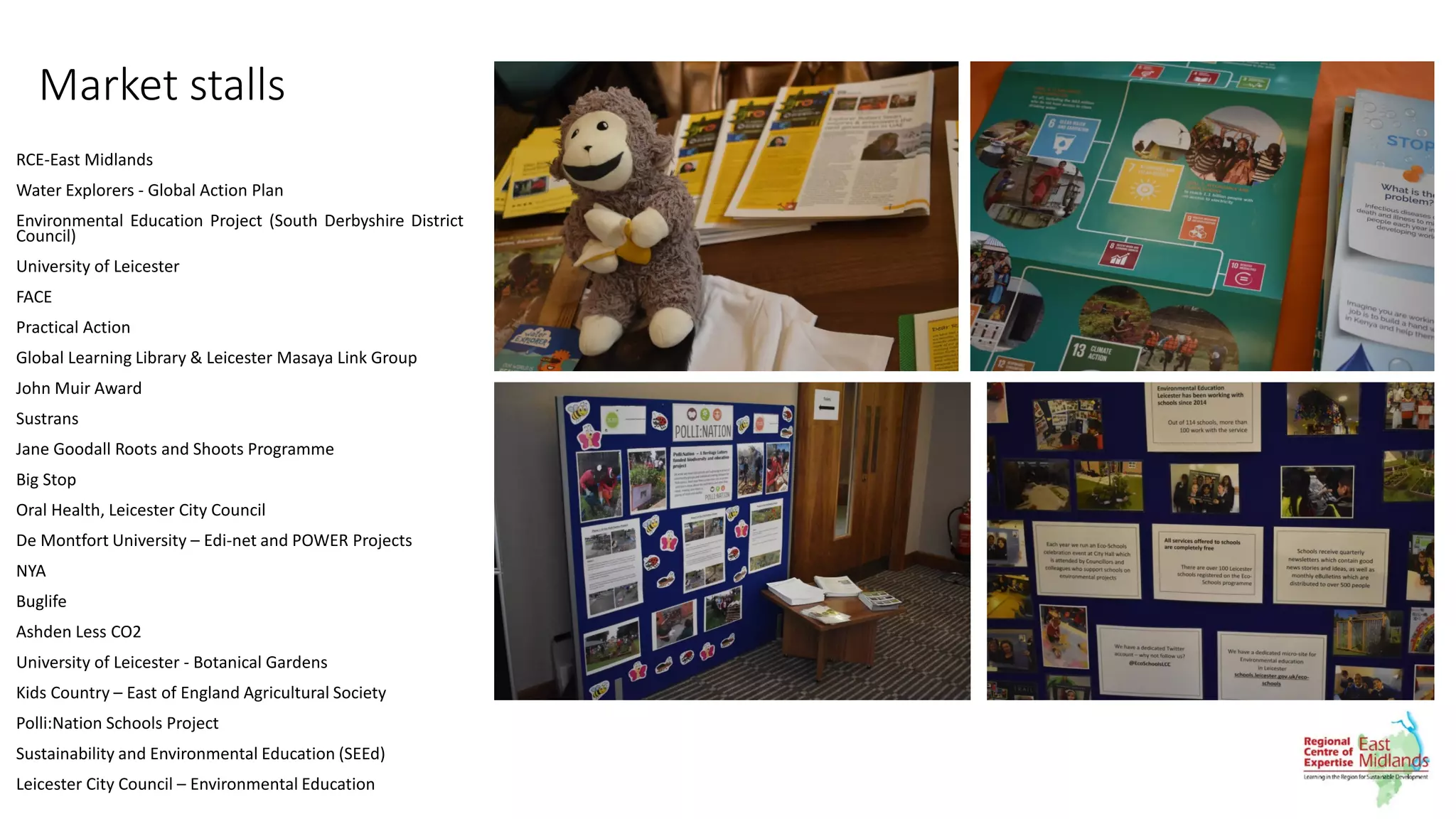
Market stalls
RCE-East Midlands
Water Explorers - Global Action Plan
Environmental Education Project (South Derbyshire District
Council)
University of Leicester
FACE
Practical Action
Global Learning Library & Leicester Masaya Link Group
John Muir Award
Sustrans
Jane Goodall Roots and Shoots Programme
Big Stop
Oral Health, Leicester City Council
De Montfort University – Edi-net and POWER Projects
NYA
Buglife
Ashden Less CO2
University of Leicester - Botanical Gardens
Kids Country – East of England Agricultural Society
Polli:Nation Schools Project
Sustainability and Environmental Education (SEEd)
Leicester City Council – Environmental Education
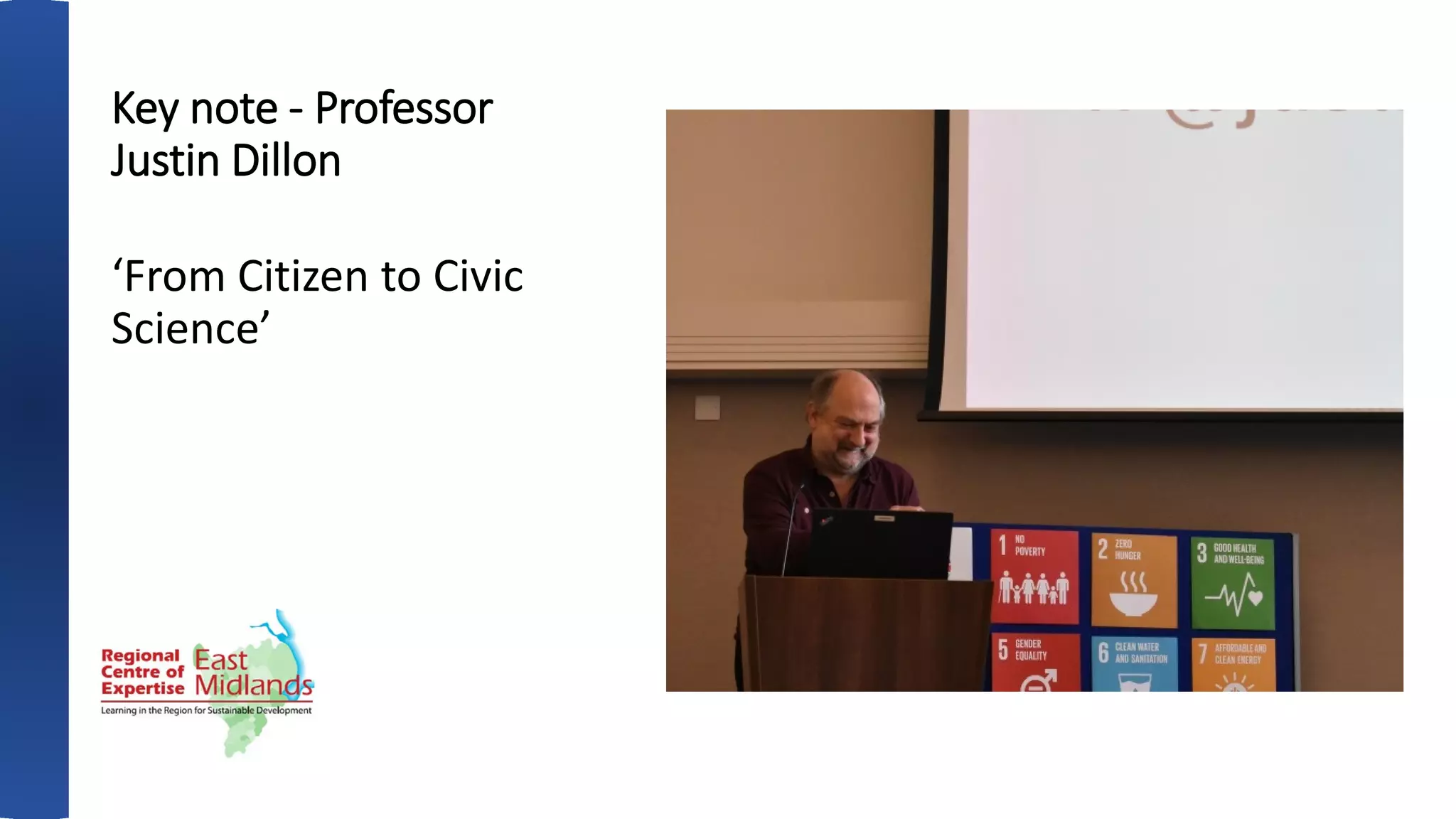
Key note - Professor
Justin Dillon
‘From Citizen to Civic
Science’
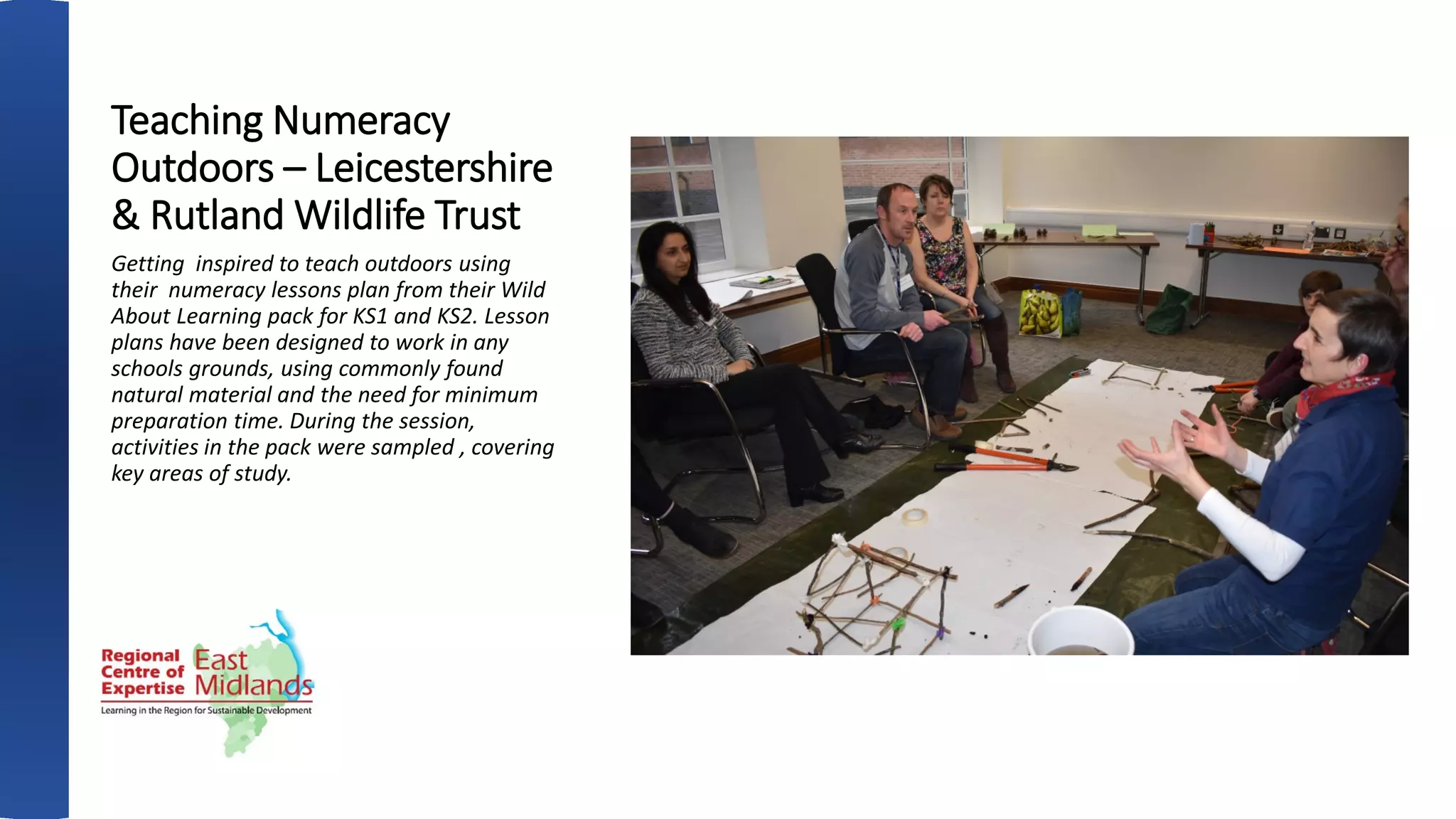
Teaching Numeracy
Outdoors – Leicestershire
& Rutland Wildlife Trust
Getting inspired to teach outdoors using
their numeracy lessons plan from their Wild
About Learning pack for KS1 and KS2. Lesson
plans have been designed to work in any
schools grounds, using commonly found
natural material and the need for minimum
preparation time. During the session,
activities in the pack were sampled , covering
key areas of study.
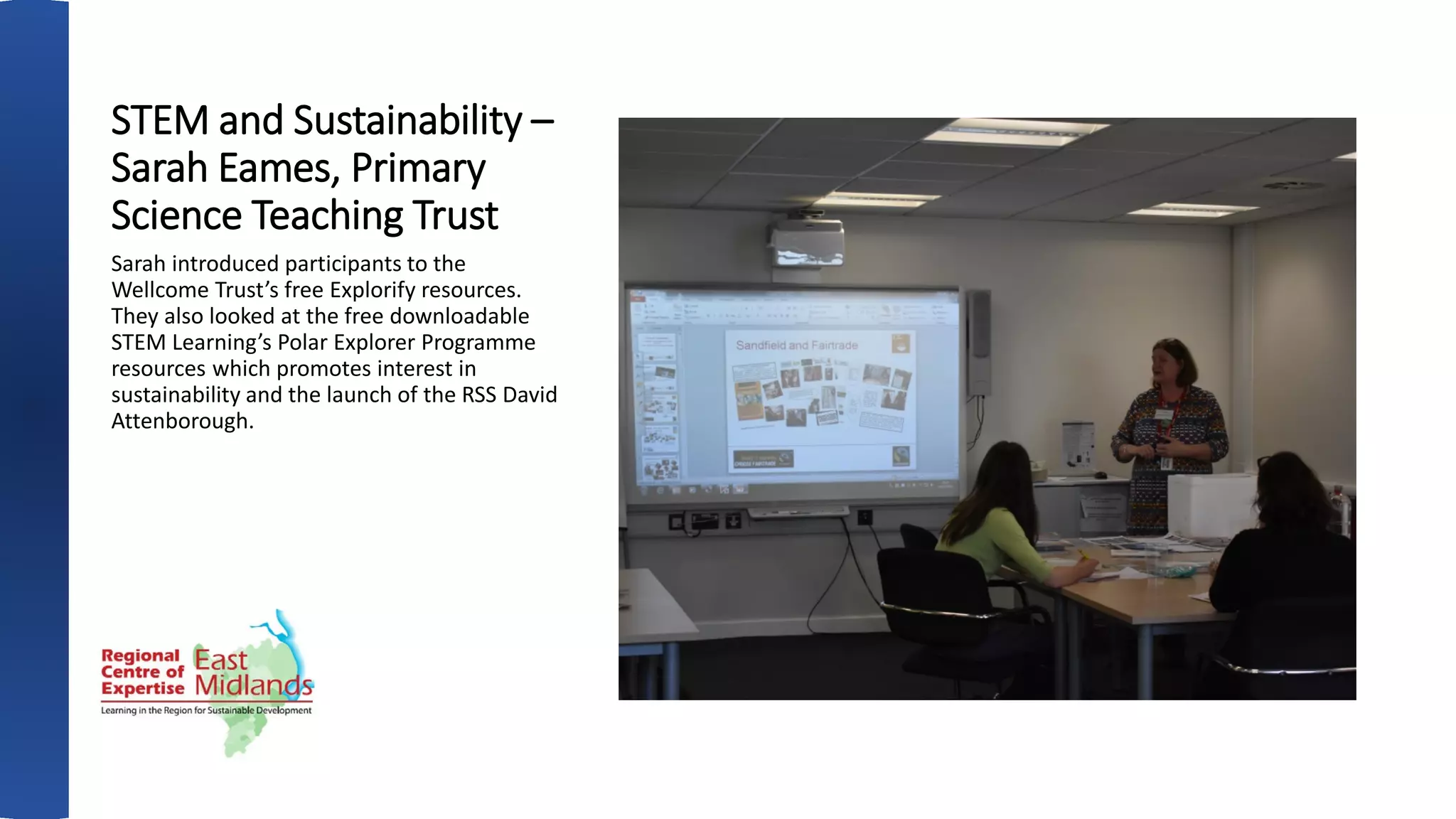
STEM and Sustainability –
Sarah Eames, Primary
Science Teaching Trust
Sarah introduced participants to the
Wellcome Trust’s free Explorify resources.
They also looked at the free downloadable
STEM Learning’s Polar Explorer Programme
resources which promotes interest in
sustainability and the launch of the RSS David
Attenborough.
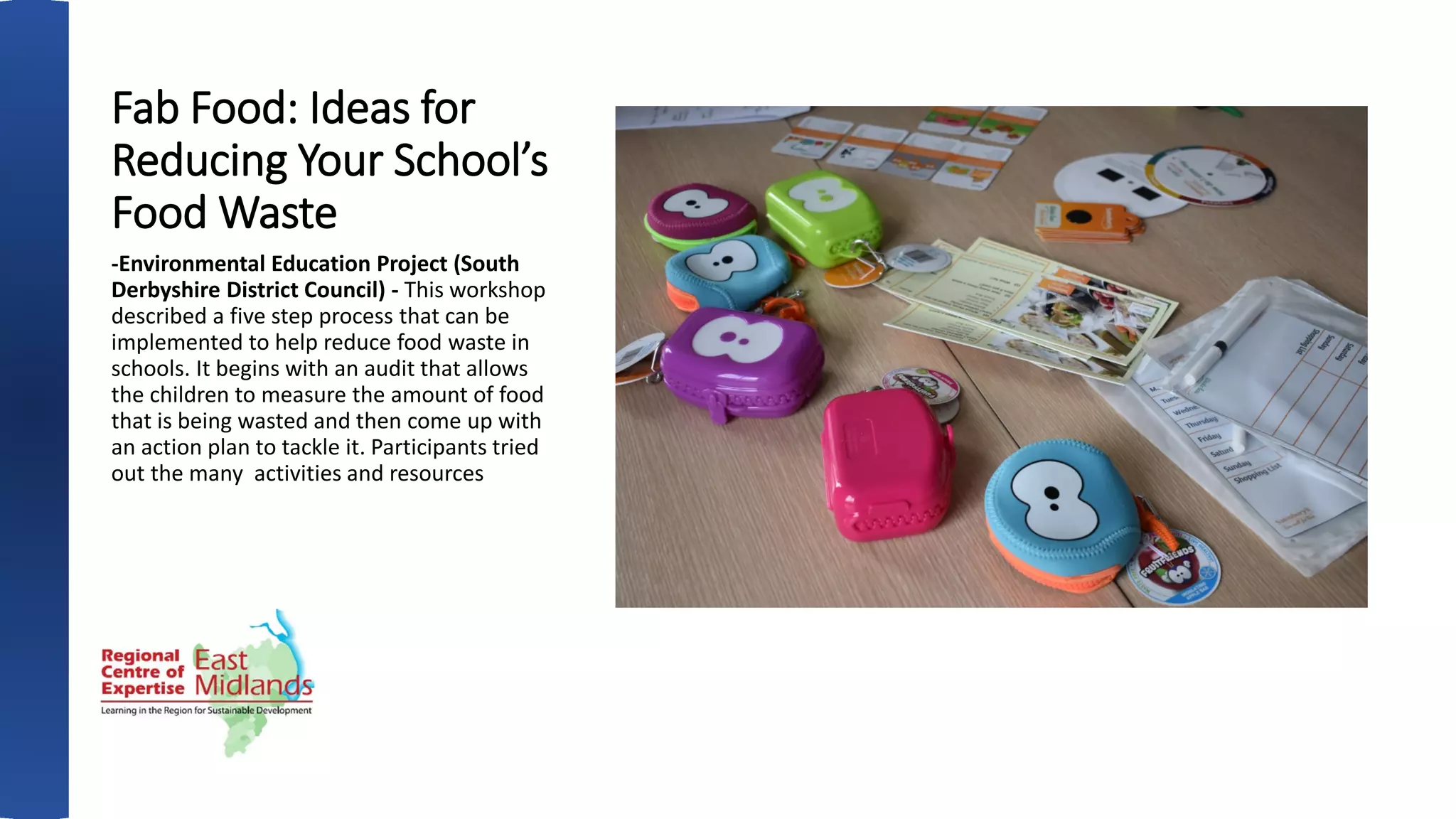
Fab Food: Ideas for
Reducing Your School’s
Food Waste
-Environmental Education Project (South
Derbyshire District Council) - This workshop
described a five step process that can be
implemented to help reduce food waste in
schools. It begins with an audit that allows
the children to measure the amount of food
that is being wasted and then come up with
an action plan to tackle it. Participants tried
out the many activities and resources
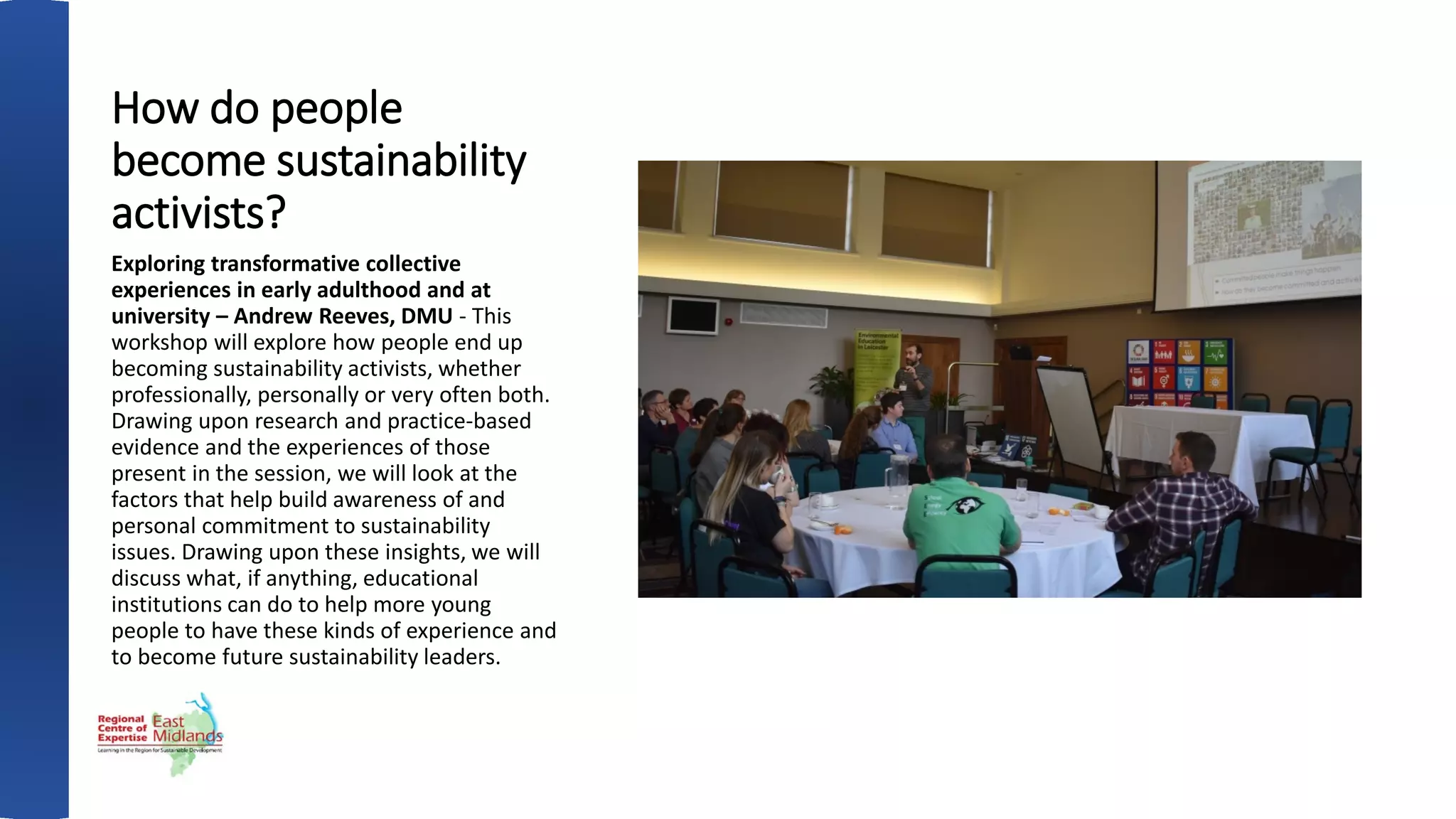
How do people
become sustainability
activists?
Exploring transformative collective
experiences in early adulthood and at
university – Andrew Reeves, DMU - This
workshop will explore how people end up
becoming sustainability activists, whether
professionally, personally or very often both.
Drawing upon research and practice-based
evidence and the experiences of those
present in the session, we will look at the
factors that help build awareness of and
personal commitment to sustainability
issues. Drawing upon these insights, we will
discuss what, if anything, educational
institutions can do to help more young
people to have these kinds of experience and
to become future sustainability leaders.
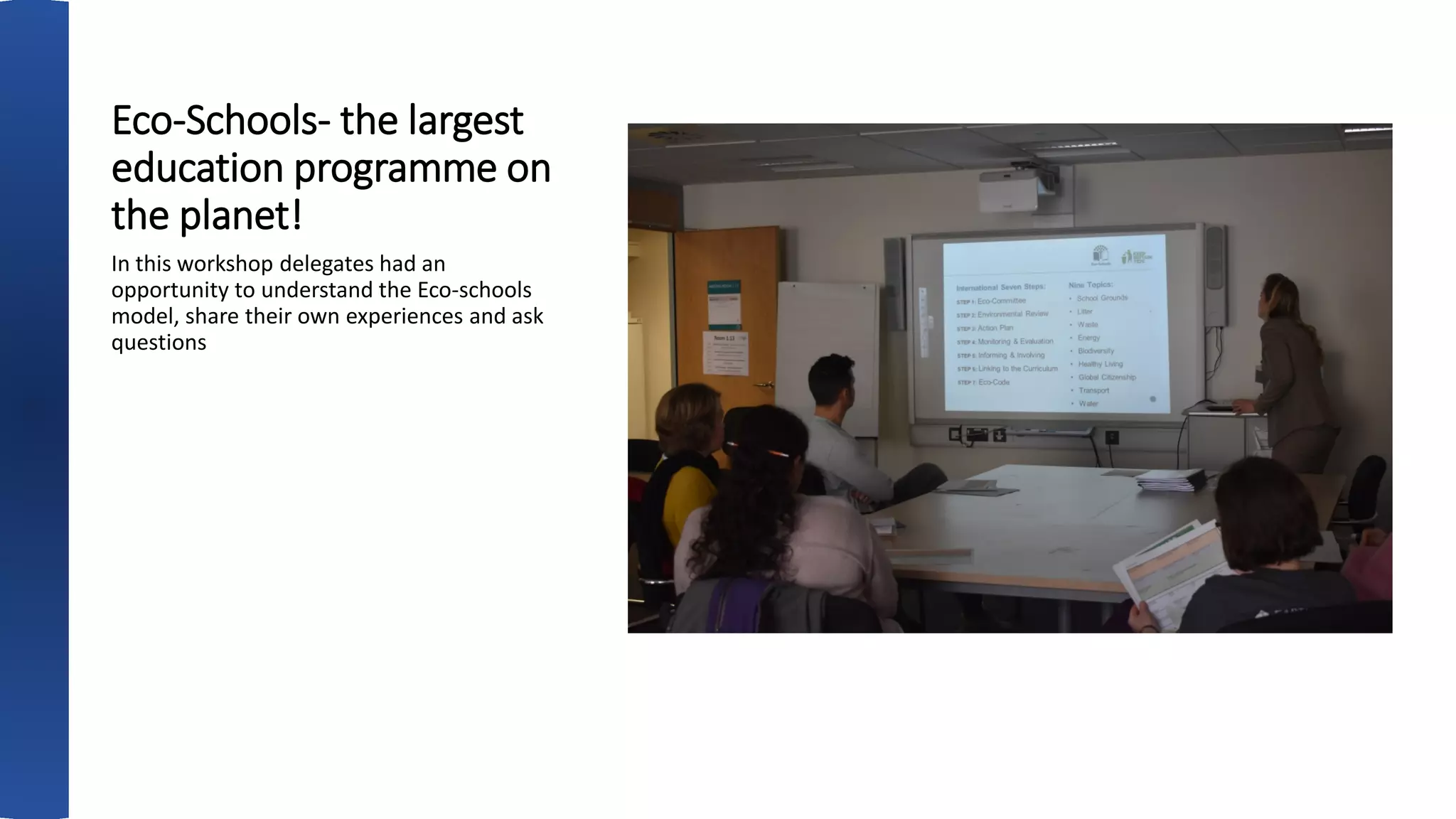
Eco-Schools- the largest
education programme on
the planet!
In this workshop delegates had an
opportunity to understand the Eco-schools
model, share their own experiences and ask
questions
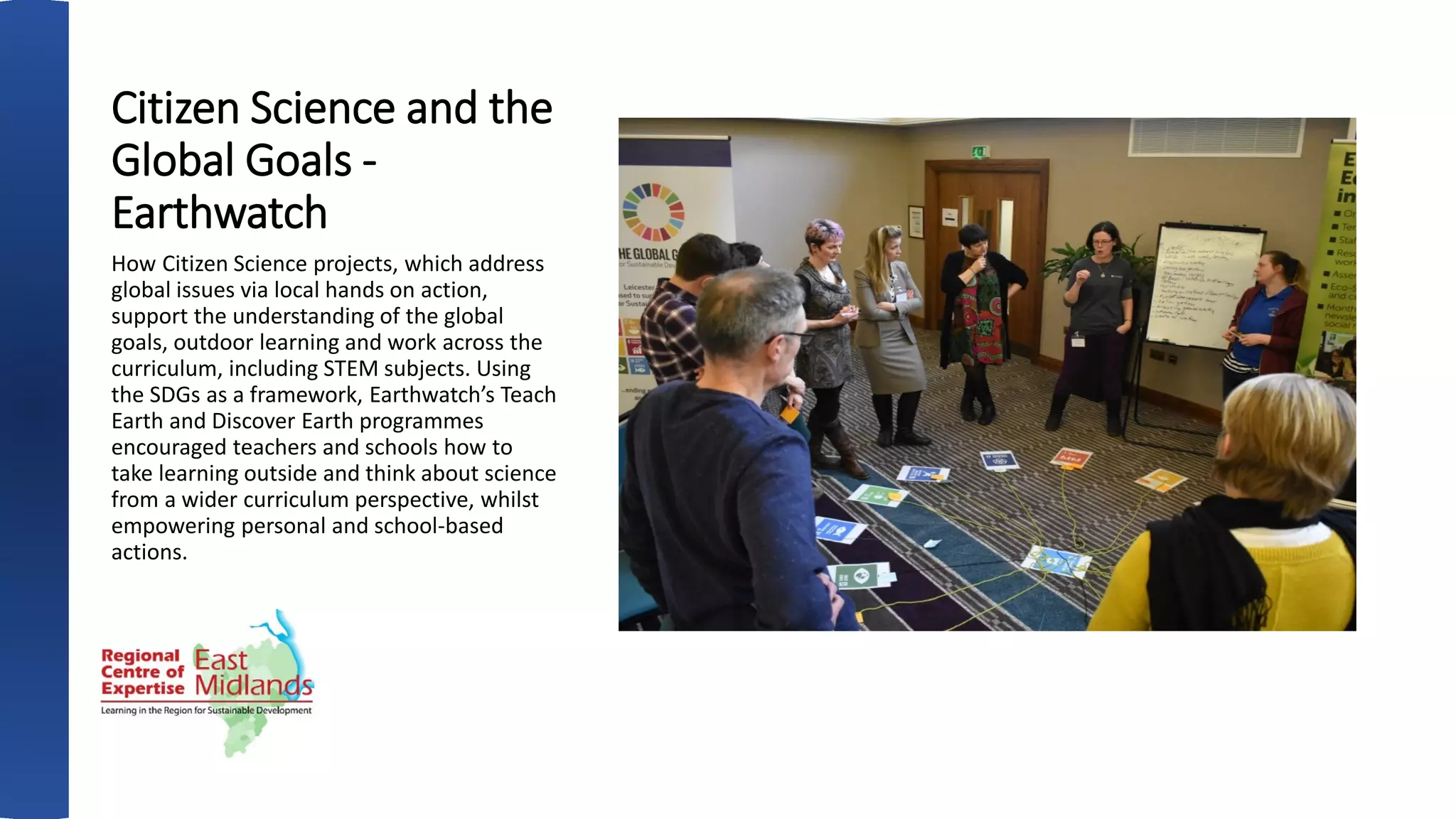
Citizen Science and the
Global Goals -
Earthwatch
How Citizen Science projects, which address
global issues via local hands on action,
support the understanding of the global
goals, outdoor learning and work across the
curriculum, including STEM subjects. Using
the SDGs as a framework, Earthwatch’s Teach
Earth and Discover Earth programmes
encouraged teachers and schools how to
take learning outside and think about science
from a wider curriculum perspective, whilst
empowering personal and school-based
actions.
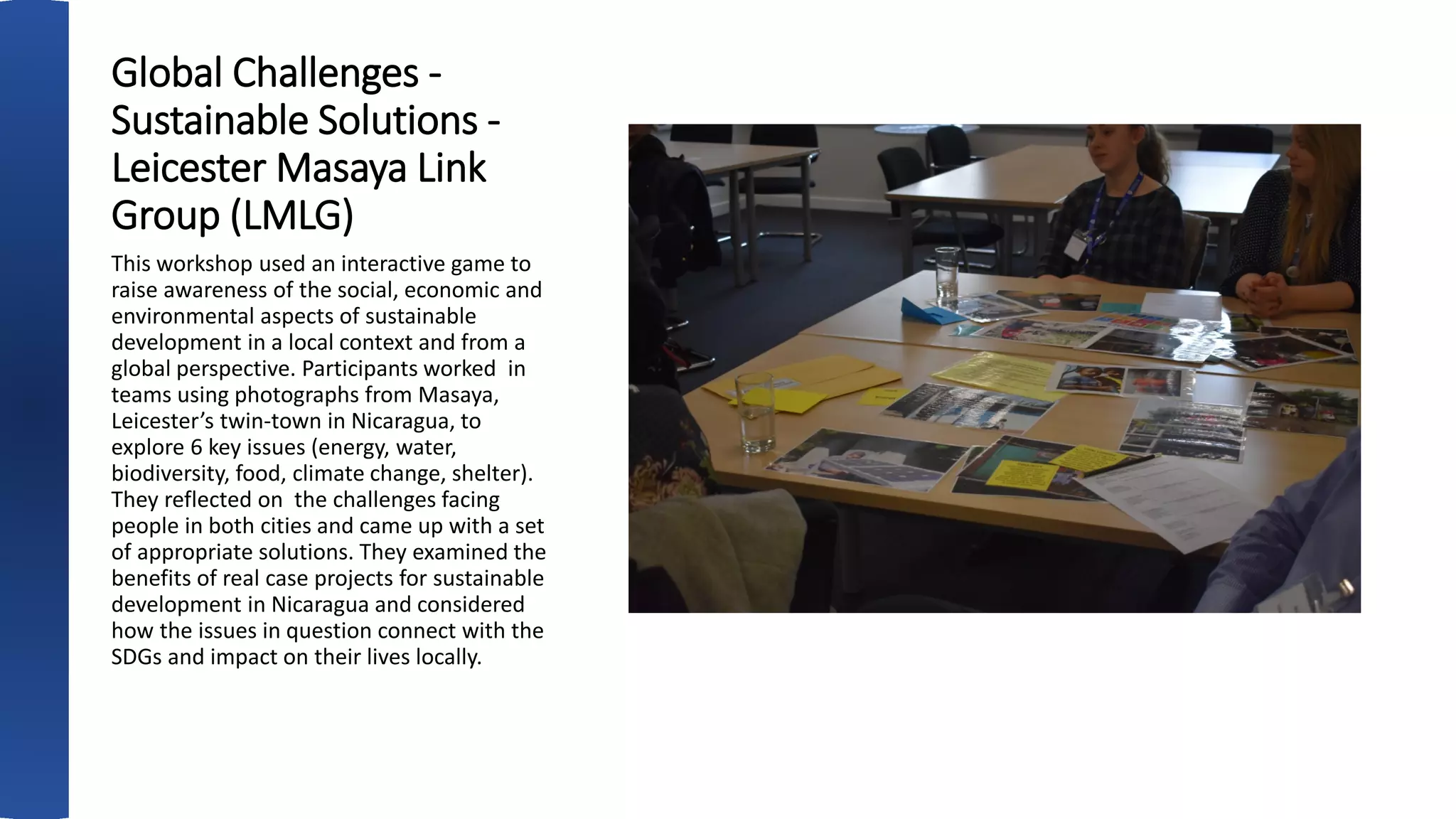
Global Challenges -
Sustainable Solutions -
Leicester Masaya Link
Group (LMLG)
This workshop used an interactive game to
raise awareness of the social, economic and
environmental aspects of sustainable
development in a local context and from a
global perspective. Participants worked in
teams using photographs from Masaya,
Leicester’s twin-town in Nicaragua, to
explore 6 key issues (energy, water,
biodiversity, food, climate change, shelter).
They reflected on the challenges facing
people in both cities and came up with a set
of appropriate solutions. They examined the
benefits of real case projects for sustainable
development in Nicaragua and considered
how the issues in question connect with the
SDGs and impact on their lives locally.
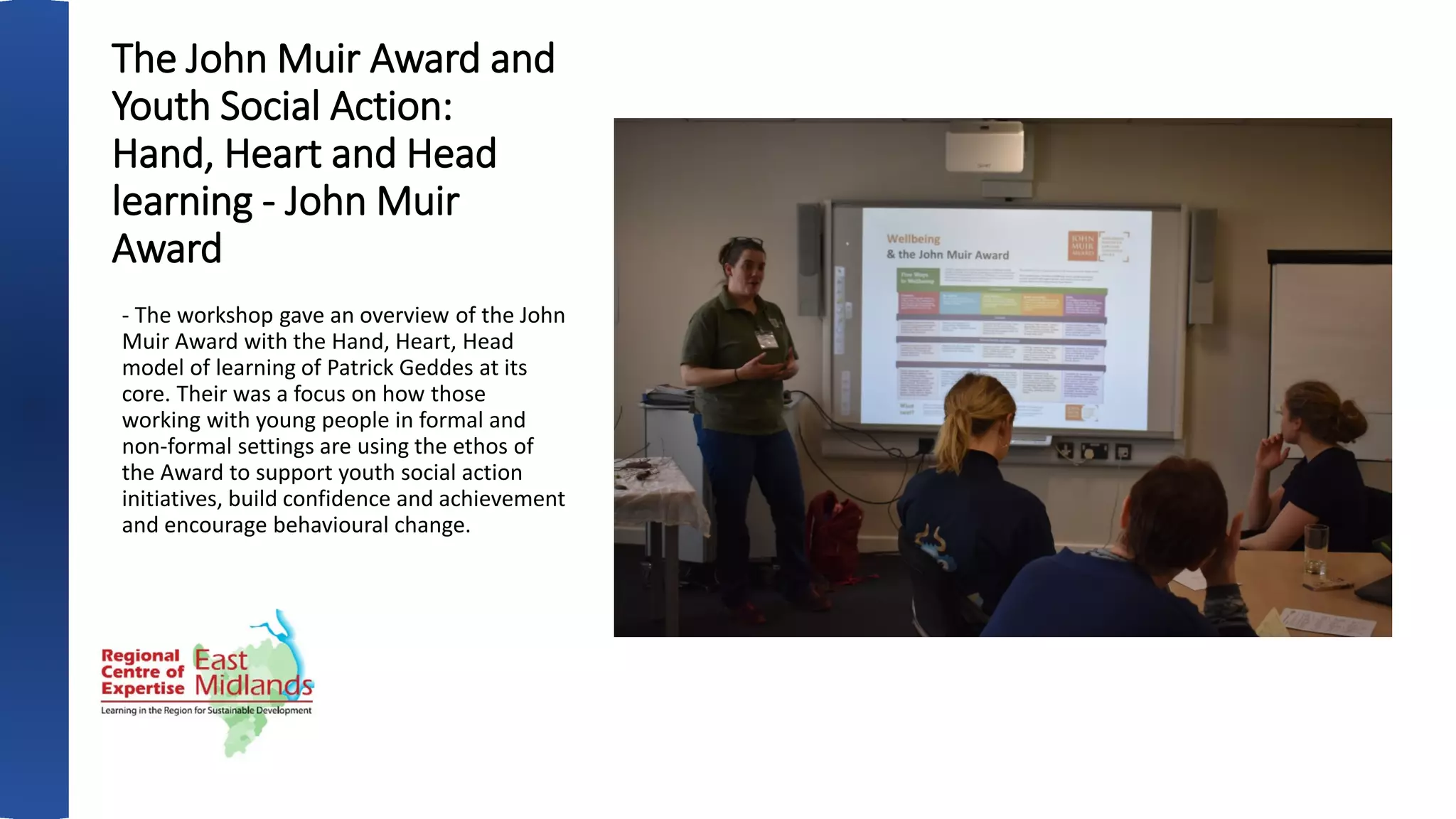
The John Muir Award and
Youth Social Action:
Hand, Heart and Head
learning - John Muir
Award
- The workshop gave an overview of the John
Muir Award with the Hand, Heart, Head
model of learning of Patrick Geddes at its
core. Their was a focus on how those
working with young people in formal and
non-formal settings are using the ethos of
the Award to support youth social action
initiatives, build confidence and achievement
and encourage behavioural change.
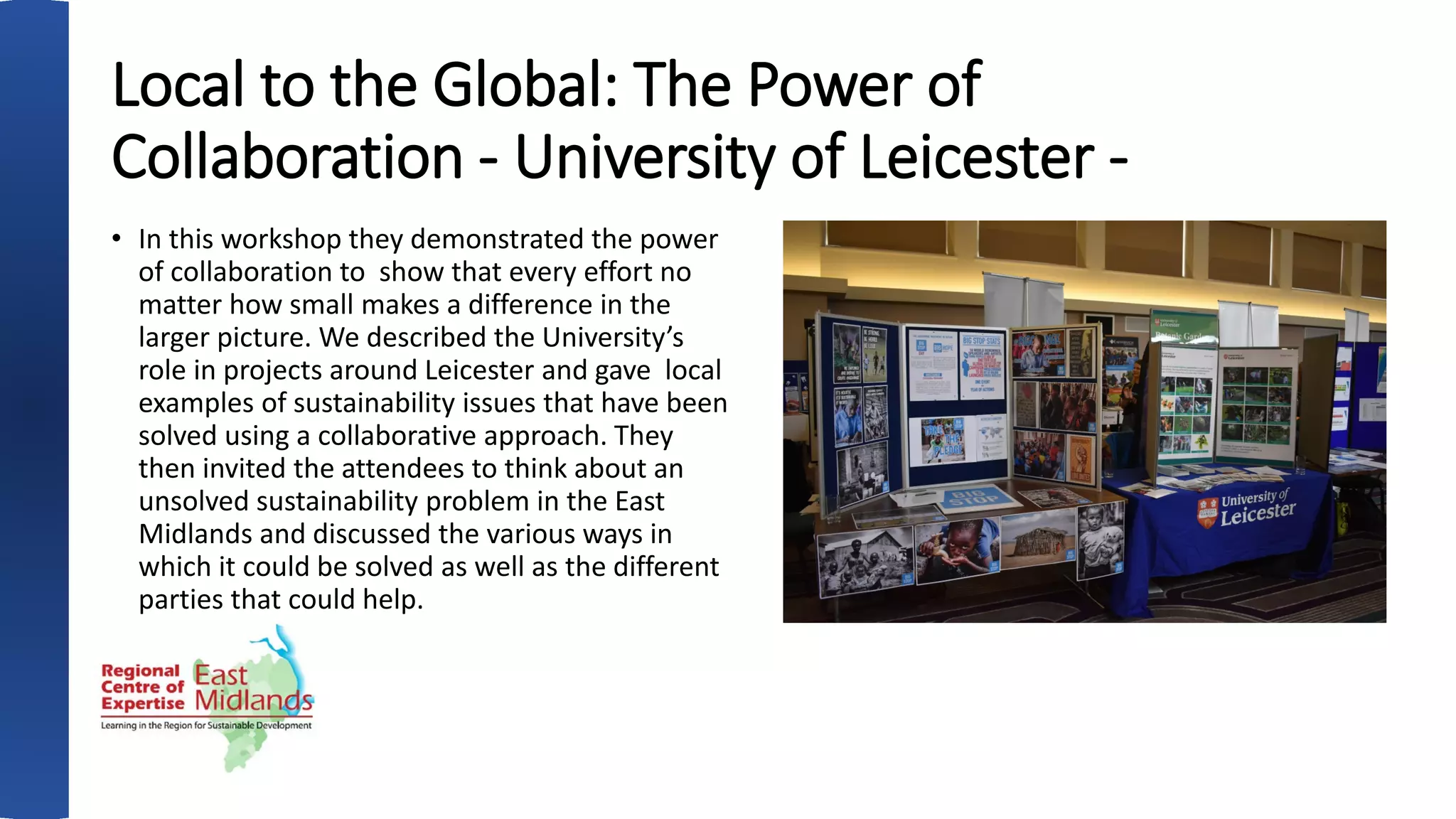
Local to the Global: The Power of
Collaboration - University of Leicester -
• In this workshop they demonstrated the power
of collaboration to show that every effort no
matter how small makes a difference in the
larger picture. We described the University’s
role in projects around Leicester and gave local
examples of sustainability issues that have been
solved using a collaborative approach. They
then invited the attendees to think about an
unsolved sustainability problem in the East
Midlands and discussed the various ways in
which it could be solved as well as the different
parties that could help.
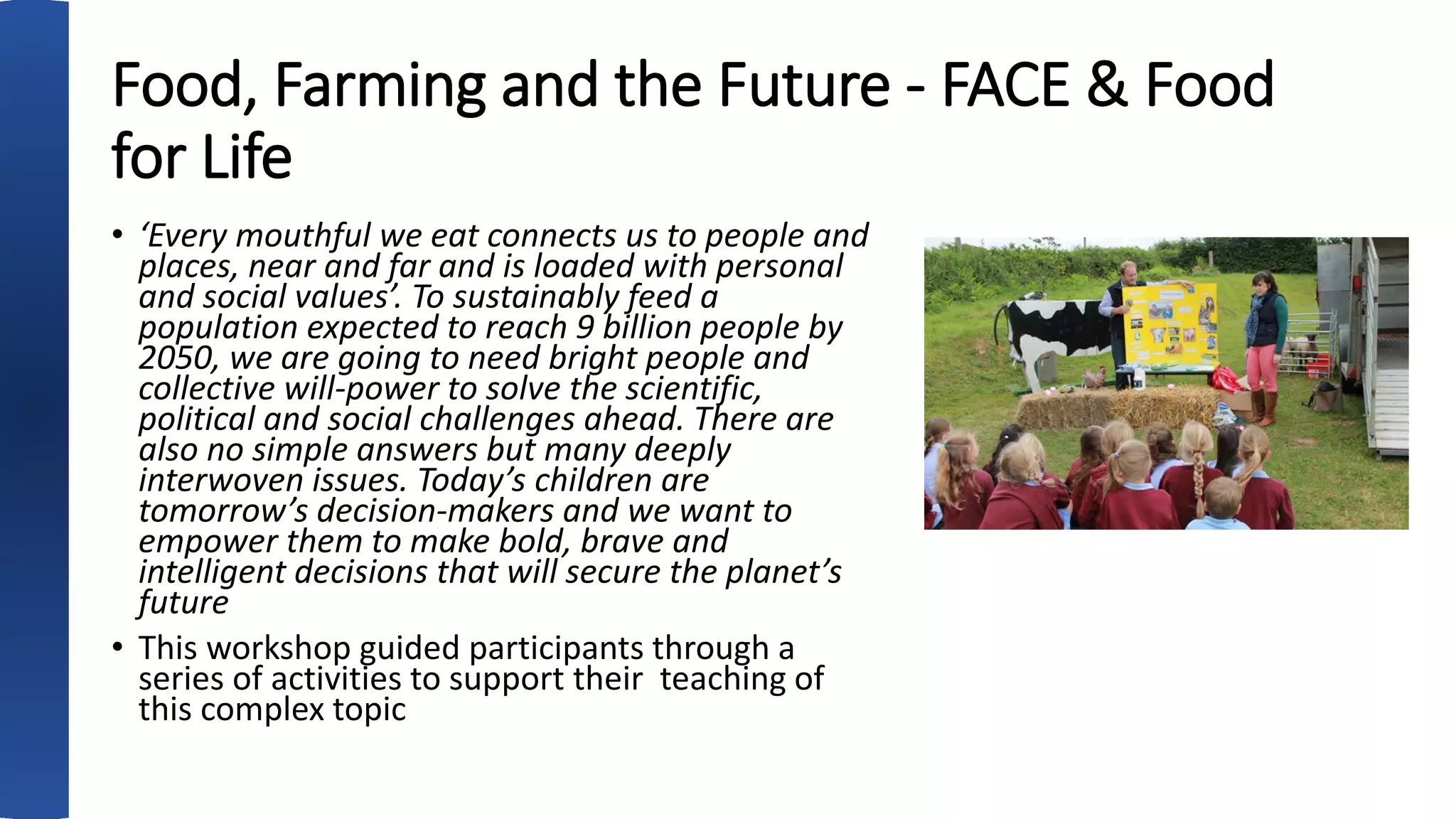
Food, Farming and the Future - FACE & Food
for Life
• ‘Every mouthful we eat connects us to people and
places, near and far and is loaded with personal
and social values’. To sustainably feed a
population expected to reach 9 billion people by
2050, we are going to need bright people and
collective will-power to solve the scientific,
political and social challenges ahead. There are
also no simple answers but many deeply
interwoven issues. Today’s children are
tomorrow’s decision-makers and we want to
empower them to make bold, brave and
intelligent decisions that will secure the planet’s
future
• This workshop guided participants through a
series of activities to support their teaching of
this complex topic
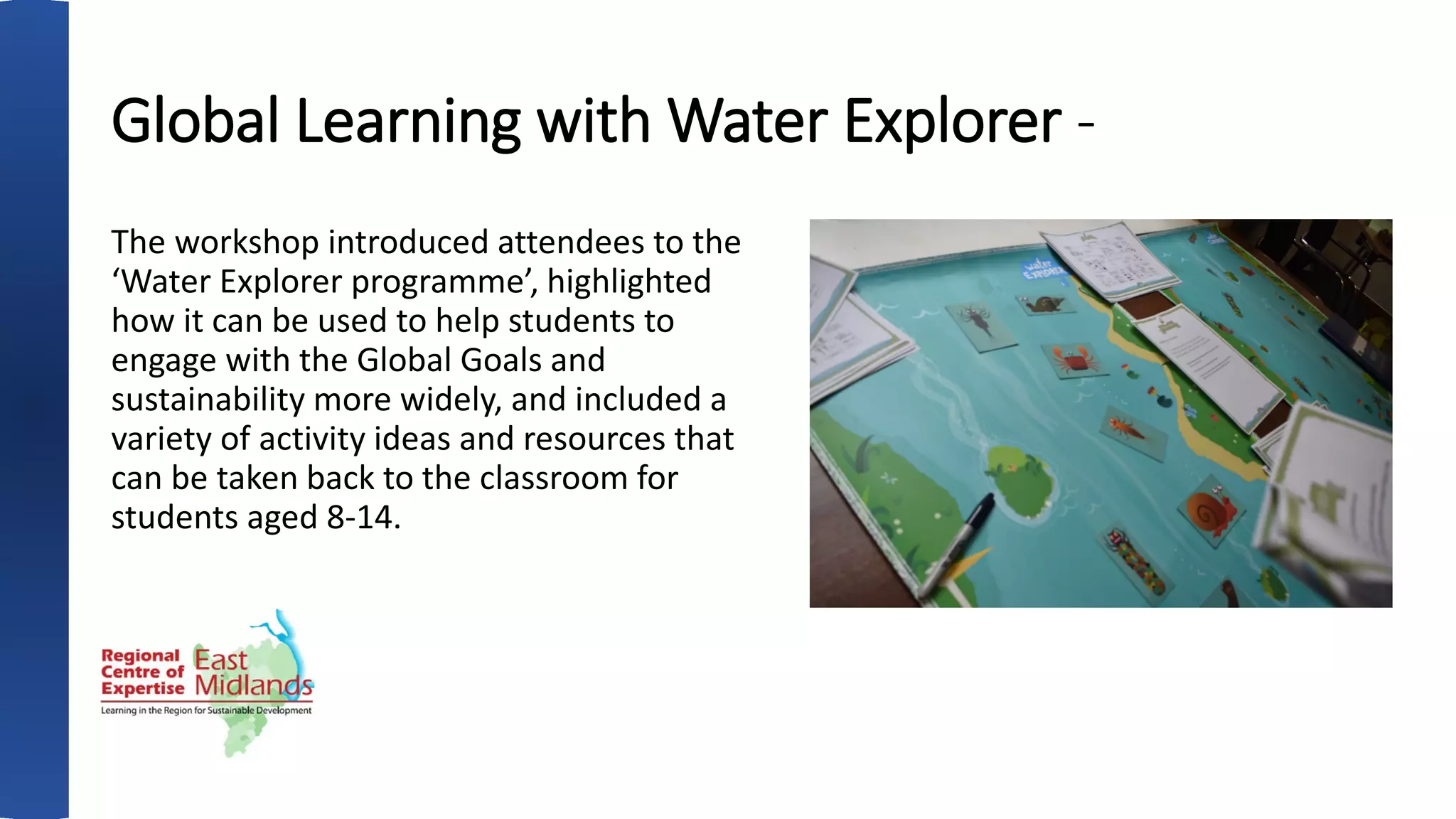
Global Learning with Water Explorer -
The workshop introduced attendees to the
‘Water Explorer programme’, highlighted
how it can be used to help students to
engage with the Global Goals and
sustainability more widely, and included a
variety of activity ideas and resources that
can be taken back to the classroom for
students aged 8-14.
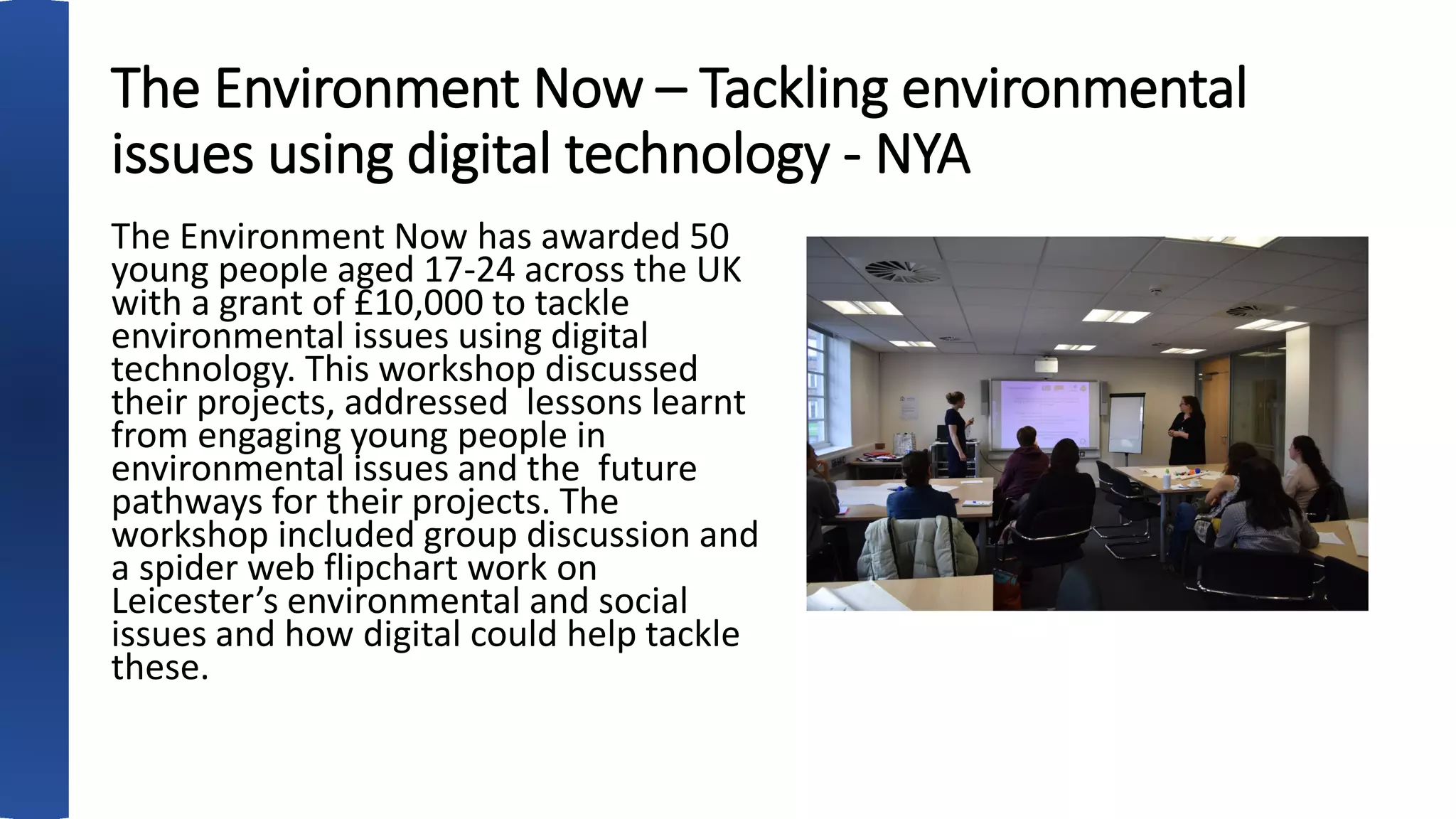
The Environment Now – Tackling environmental
issues using digital technology - NYA
The Environment Now has awarded 50
young people aged 17-24 across the UK
with a grant of £10,000 to tackle
environmental issues using digital
technology. This workshop discussed
their projects, addressed lessons learnt
from engaging young people in
environmental issues and the future
pathways for their projects. The
workshop included group discussion and
a spider web flipchart work on
Leicester’s environmental and social
issues and how digital could help tackle
these.
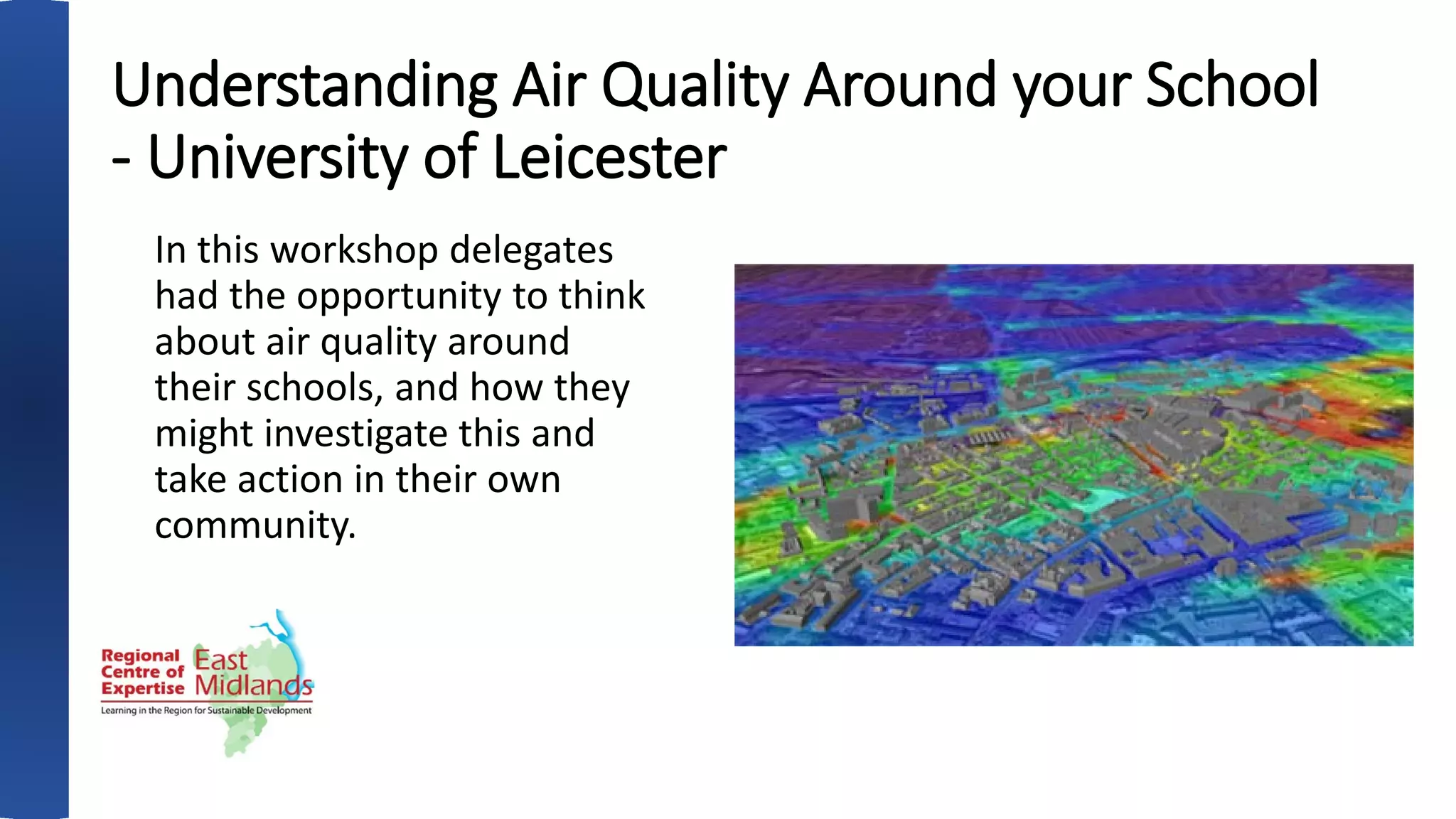
Understanding Air Quality Around your School
- University of Leicester
In this workshop delegates
had the opportunity to think
about air quality around
their schools, and how they
might investigate this and
take action in their own
community.
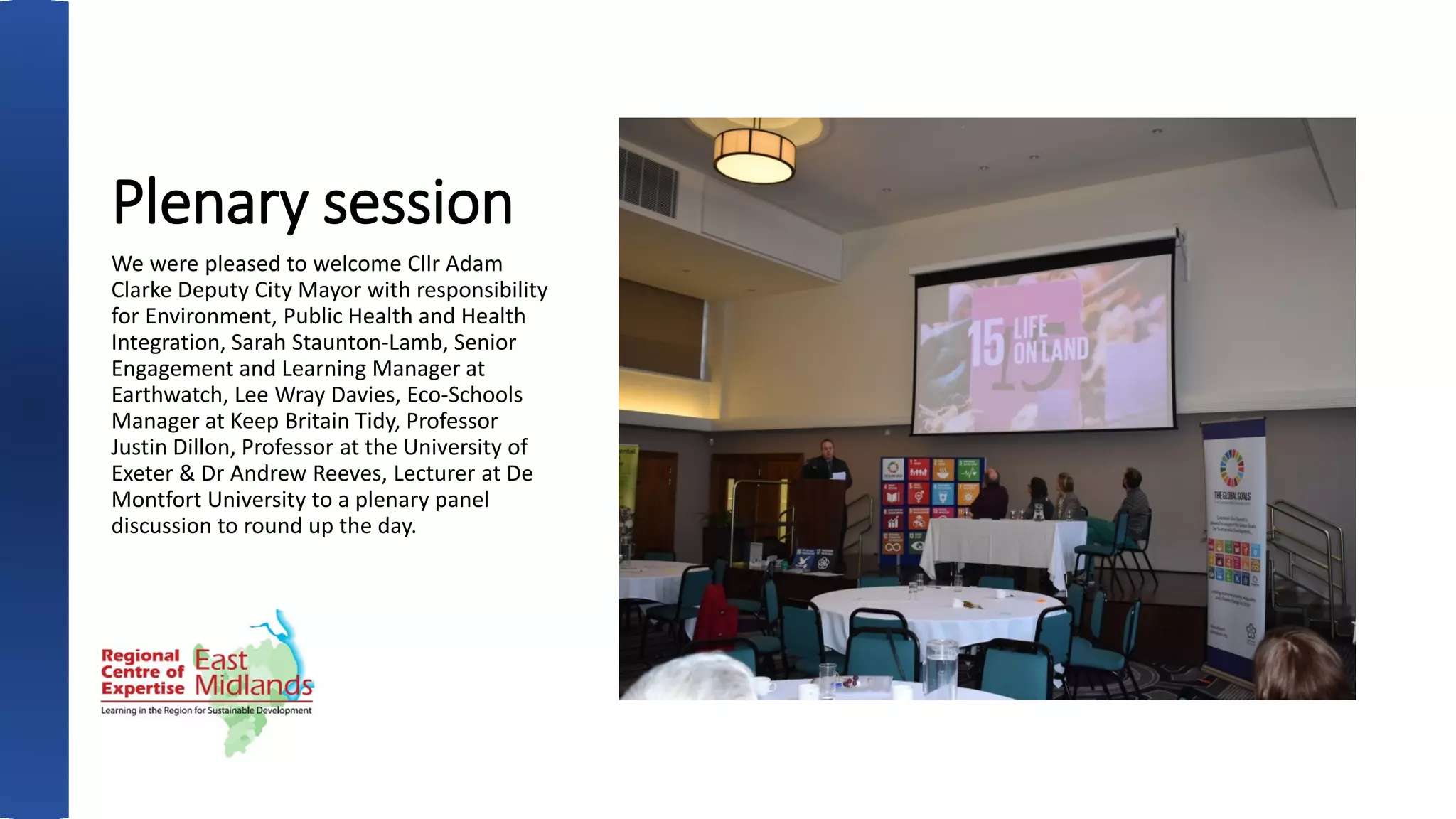
Plenary session
We were pleased to welcome Cllr Adam
Clarke Deputy City Mayor with responsibility
for Environment, Public Health and Health
Integration, Sarah Staunton-Lamb, Senior
Engagement and Learning Manager at
Earthwatch, Lee Wray Davies, Eco-Schools
Manager at Keep Britain Tidy, Professor
Justin Dillon, Professor at the University of
Exeter & Dr Andrew Reeves, Lecturer at De
Montfort University to a plenary panel
discussion to round up the day.

From ‘Citizen to Civic Science’ – Linking Our Activities to Quality Education for All. How We Are Developing ‘SDG 4.7’ Across Sectors and Phases

  • 1.
    RCE-EM: from ‘Citizen toCivic Science’ Linking our activities to quality education for all. How we are developing ‘SDG 4.7’ across sectors and phases Margaret Fleming RCE-East Midlands (RCE-EM) August 2018 RCE Europe meeting Vannes
  • 2.
    RCE-EM - RecentActivity • Re-launched March 2017 • Lots of support from the UK RCE community – particular thanks go to RCE London • Our aim was to • Link our activities to ’quality education for all’ • To develop ‘SDG 4.7’ across sectors and phases • Steering group planned and organised a conference for March 2018 ‘RCE Young Leaders in Sustainable Development’ Led by Lee Jowett, Environmental Education Coordinator, Leicester City Council
  • 3.
    RCE Young Leadersin Sustainable Development Introducing the RCE concept Lee Jowett is the Environmental Education Coordinator at Leicester City Council He is based in the Environment Team
  • 4.
  • 5.
    Market stalls RCE-East Midlands WaterExplorers - Global Action Plan Environmental Education Project (South Derbyshire District Council) University of Leicester FACE Practical Action Global Learning Library & Leicester Masaya Link Group John Muir Award Sustrans Jane Goodall Roots and Shoots Programme Big Stop Oral Health, Leicester City Council De Montfort University – Edi-net and POWER Projects NYA Buglife Ashden Less CO2 University of Leicester - Botanical Gardens Kids Country – East of England Agricultural Society Polli:Nation Schools Project Sustainability and Environmental Education (SEEd) Leicester City Council – Environmental Education
  • 6.
    Key note -Professor Justin Dillon ‘From Citizen to Civic Science’
  • 7.
    Teaching Numeracy Outdoors –Leicestershire & Rutland Wildlife Trust Getting inspired to teach outdoors using their numeracy lessons plan from their Wild About Learning pack for KS1 and KS2. Lesson plans have been designed to work in any schools grounds, using commonly found natural material and the need for minimum preparation time. During the session, activities in the pack were sampled , covering key areas of study.
  • 8.
    STEM and Sustainability– Sarah Eames, Primary Science Teaching Trust Sarah introduced participants to the Wellcome Trust’s free Explorify resources. They also looked at the free downloadable STEM Learning’s Polar Explorer Programme resources which promotes interest in sustainability and the launch of the RSS David Attenborough.
  • 9.
    Fab Food: Ideasfor Reducing Your School’s Food Waste -Environmental Education Project (South Derbyshire District Council) - This workshop described a five step process that can be implemented to help reduce food waste in schools. It begins with an audit that allows the children to measure the amount of food that is being wasted and then come up with an action plan to tackle it. Participants tried out the many activities and resources
  • 10.
    How do people becomesustainability activists? Exploring transformative collective experiences in early adulthood and at university – Andrew Reeves, DMU - This workshop will explore how people end up becoming sustainability activists, whether professionally, personally or very often both. Drawing upon research and practice-based evidence and the experiences of those present in the session, we will look at the factors that help build awareness of and personal commitment to sustainability issues. Drawing upon these insights, we will discuss what, if anything, educational institutions can do to help more young people to have these kinds of experience and to become future sustainability leaders.
  • 11.
    Eco-Schools- the largest educationprogramme on the planet! In this workshop delegates had an opportunity to understand the Eco-schools model, share their own experiences and ask questions
  • 12.
    Citizen Science andthe Global Goals - Earthwatch How Citizen Science projects, which address global issues via local hands on action, support the understanding of the global goals, outdoor learning and work across the curriculum, including STEM subjects. Using the SDGs as a framework, Earthwatch’s Teach Earth and Discover Earth programmes encouraged teachers and schools how to take learning outside and think about science from a wider curriculum perspective, whilst empowering personal and school-based actions.
  • 13.
    Global Challenges - SustainableSolutions - Leicester Masaya Link Group (LMLG) This workshop used an interactive game to raise awareness of the social, economic and environmental aspects of sustainable development in a local context and from a global perspective. Participants worked in teams using photographs from Masaya, Leicester’s twin-town in Nicaragua, to explore 6 key issues (energy, water, biodiversity, food, climate change, shelter). They reflected on the challenges facing people in both cities and came up with a set of appropriate solutions. They examined the benefits of real case projects for sustainable development in Nicaragua and considered how the issues in question connect with the SDGs and impact on their lives locally.
  • 14.
    The John MuirAward and Youth Social Action: Hand, Heart and Head learning - John Muir Award - The workshop gave an overview of the John Muir Award with the Hand, Heart, Head model of learning of Patrick Geddes at its core. Their was a focus on how those working with young people in formal and non-formal settings are using the ethos of the Award to support youth social action initiatives, build confidence and achievement and encourage behavioural change.
  • 15.
    Local to theGlobal: The Power of Collaboration - University of Leicester - • In this workshop they demonstrated the power of collaboration to show that every effort no matter how small makes a difference in the larger picture. We described the University’s role in projects around Leicester and gave local examples of sustainability issues that have been solved using a collaborative approach. They then invited the attendees to think about an unsolved sustainability problem in the East Midlands and discussed the various ways in which it could be solved as well as the different parties that could help.
  • 16.
    Food, Farming andthe Future - FACE & Food for Life • ‘Every mouthful we eat connects us to people and places, near and far and is loaded with personal and social values’. To sustainably feed a population expected to reach 9 billion people by 2050, we are going to need bright people and collective will-power to solve the scientific, political and social challenges ahead. There are also no simple answers but many deeply interwoven issues. Today’s children are tomorrow’s decision-makers and we want to empower them to make bold, brave and intelligent decisions that will secure the planet’s future • This workshop guided participants through a series of activities to support their teaching of this complex topic
  • 17.
    Global Learning withWater Explorer - The workshop introduced attendees to the ‘Water Explorer programme’, highlighted how it can be used to help students to engage with the Global Goals and sustainability more widely, and included a variety of activity ideas and resources that can be taken back to the classroom for students aged 8-14.
  • 18.
    The Environment Now– Tackling environmental issues using digital technology - NYA The Environment Now has awarded 50 young people aged 17-24 across the UK with a grant of £10,000 to tackle environmental issues using digital technology. This workshop discussed their projects, addressed lessons learnt from engaging young people in environmental issues and the future pathways for their projects. The workshop included group discussion and a spider web flipchart work on Leicester’s environmental and social issues and how digital could help tackle these.
  • 19.
    Understanding Air QualityAround your School - University of Leicester In this workshop delegates had the opportunity to think about air quality around their schools, and how they might investigate this and take action in their own community.
  • 20.
    Plenary session We werepleased to welcome Cllr Adam Clarke Deputy City Mayor with responsibility for Environment, Public Health and Health Integration, Sarah Staunton-Lamb, Senior Engagement and Learning Manager at Earthwatch, Lee Wray Davies, Eco-Schools Manager at Keep Britain Tidy, Professor Justin Dillon, Professor at the University of Exeter & Dr Andrew Reeves, Lecturer at De Montfort University to a plenary panel discussion to round up the day.