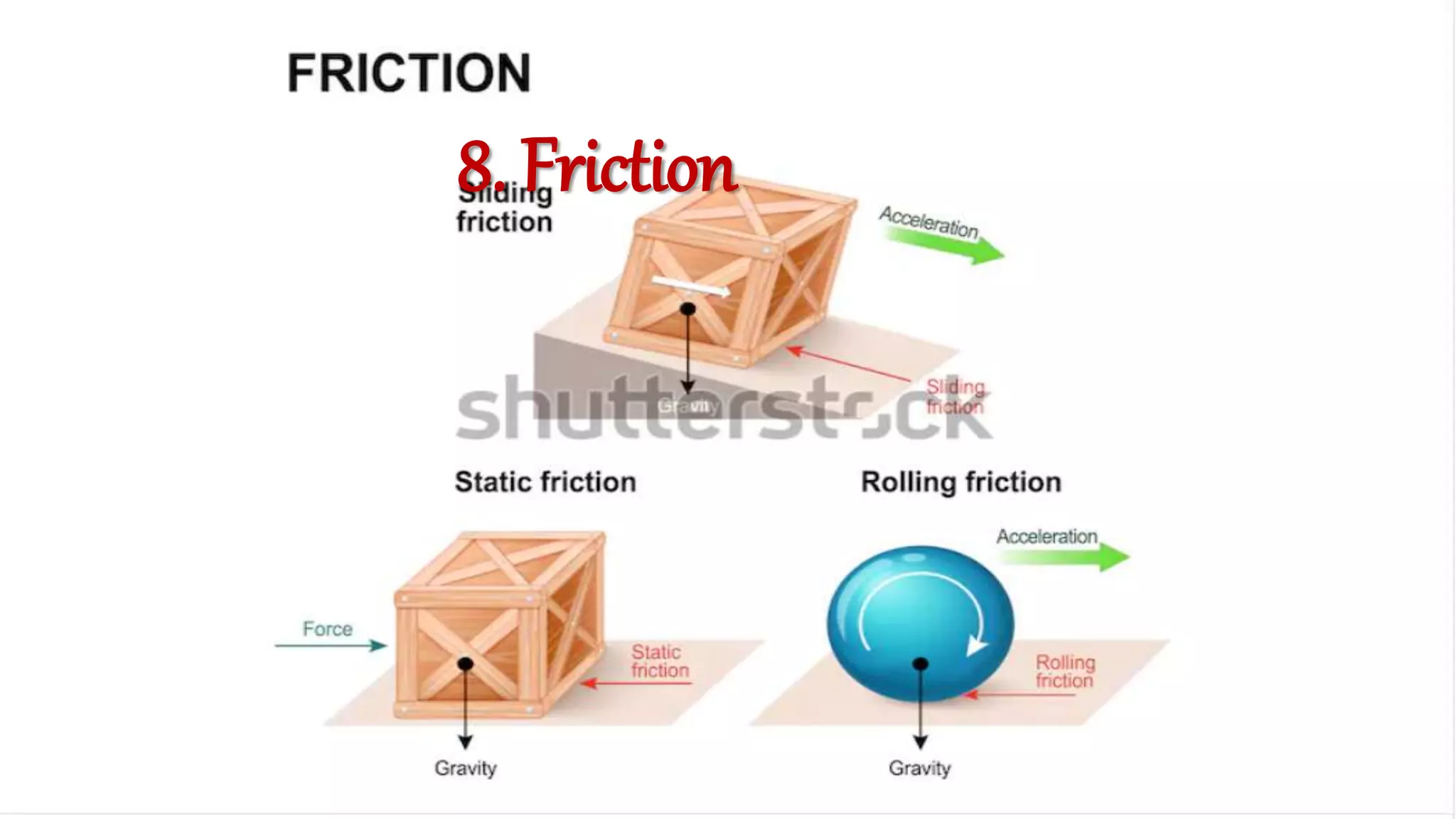
8. Friction
 1. FORCE OF FRICTION
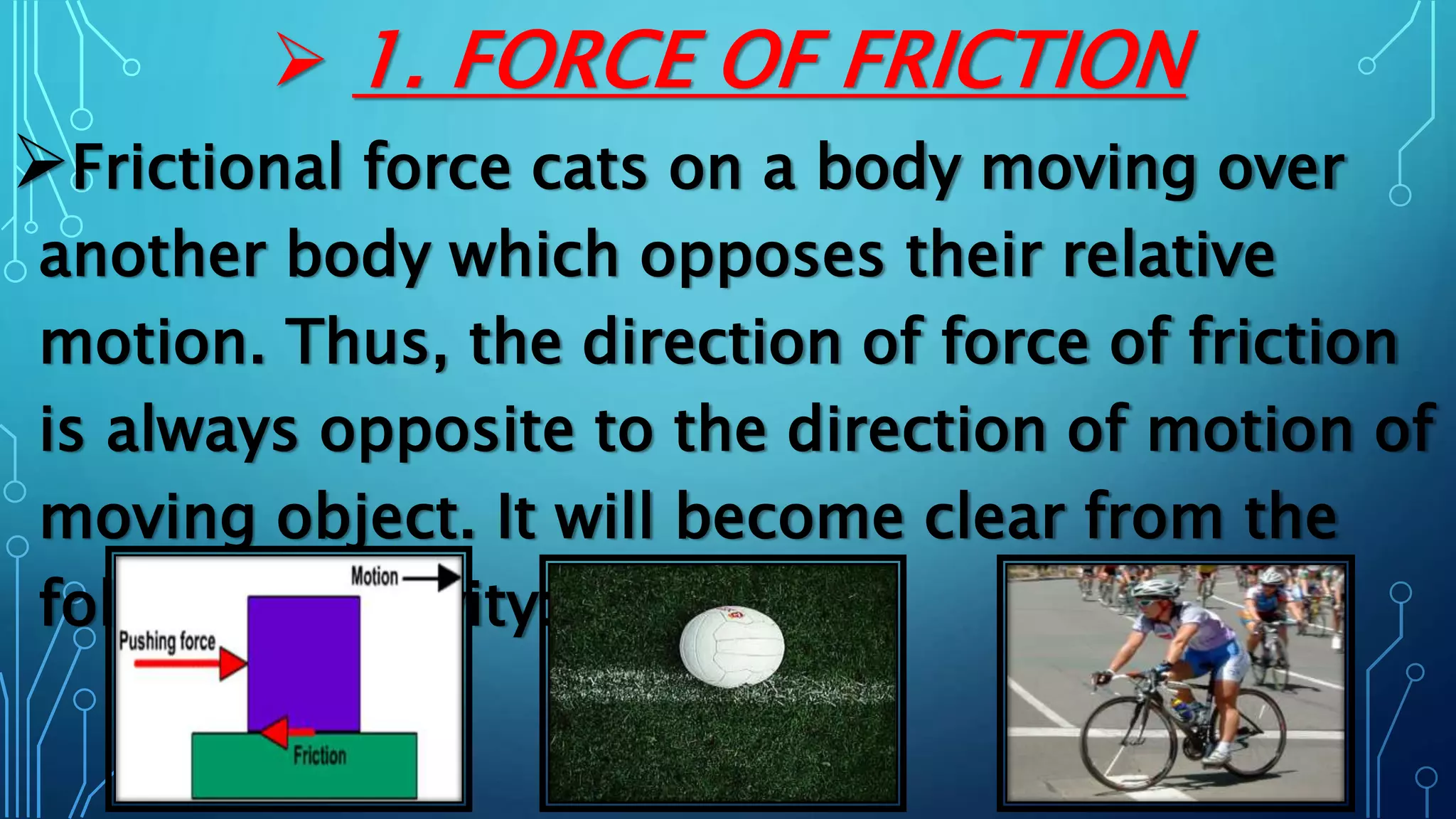
Frictional force cats on a body moving over
another body which opposes their relative
motion. Thus, the direction of force of friction
is always opposite to the direction of motion of
moving object. It will become clear from the
following activity:
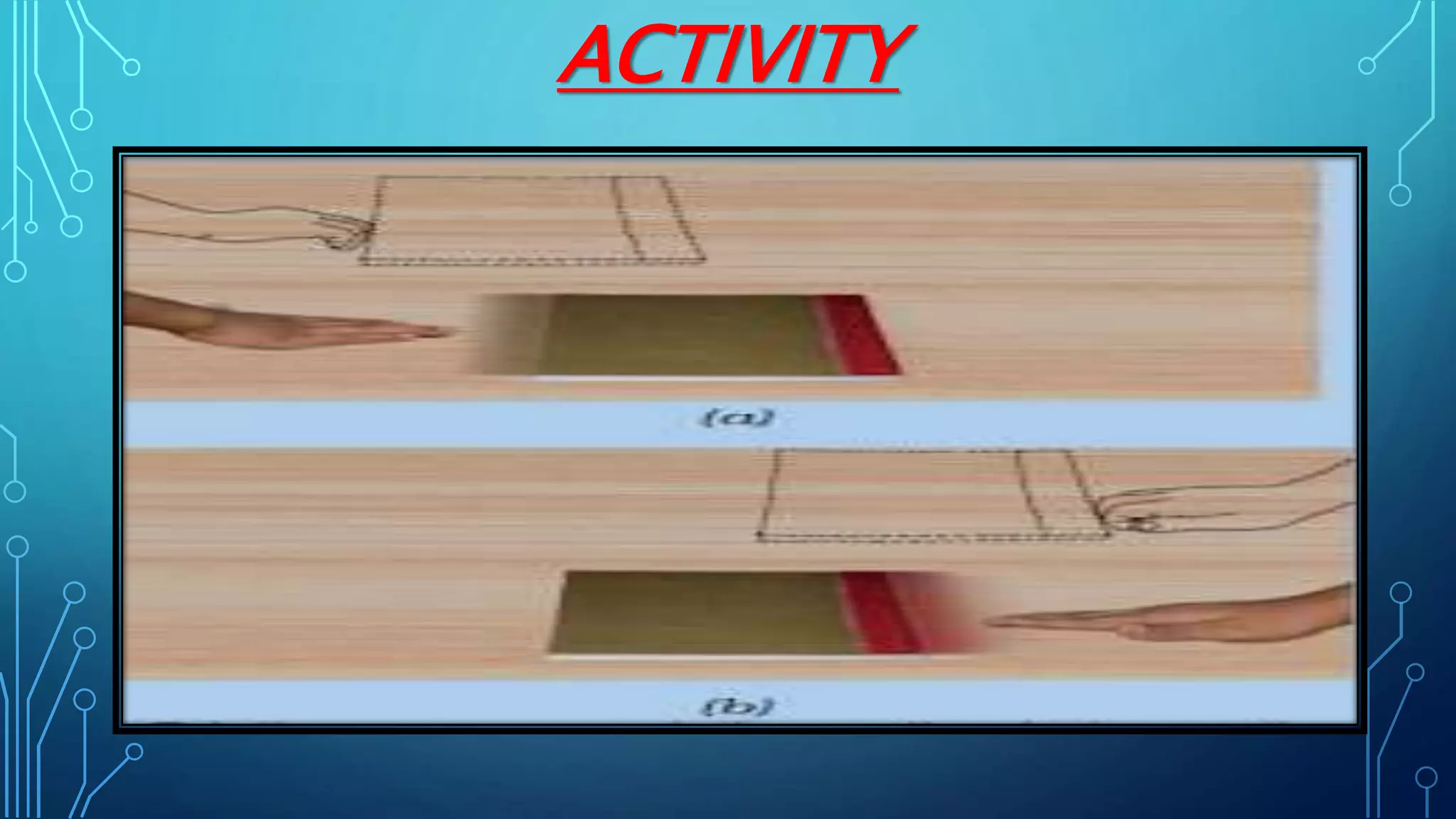
ACTIVITY:
Take a book and place it on table. Gently push
the book on the table. You observe that it
stops after moving for some distance. Repeat
this activity pushing the book from the
opposite side. In this case also book will stop
after moving for some distance, hence we can
conclude that the force which always opposes
the motion of an object is called friction.
ACTIVITY
SPRING BALANCE
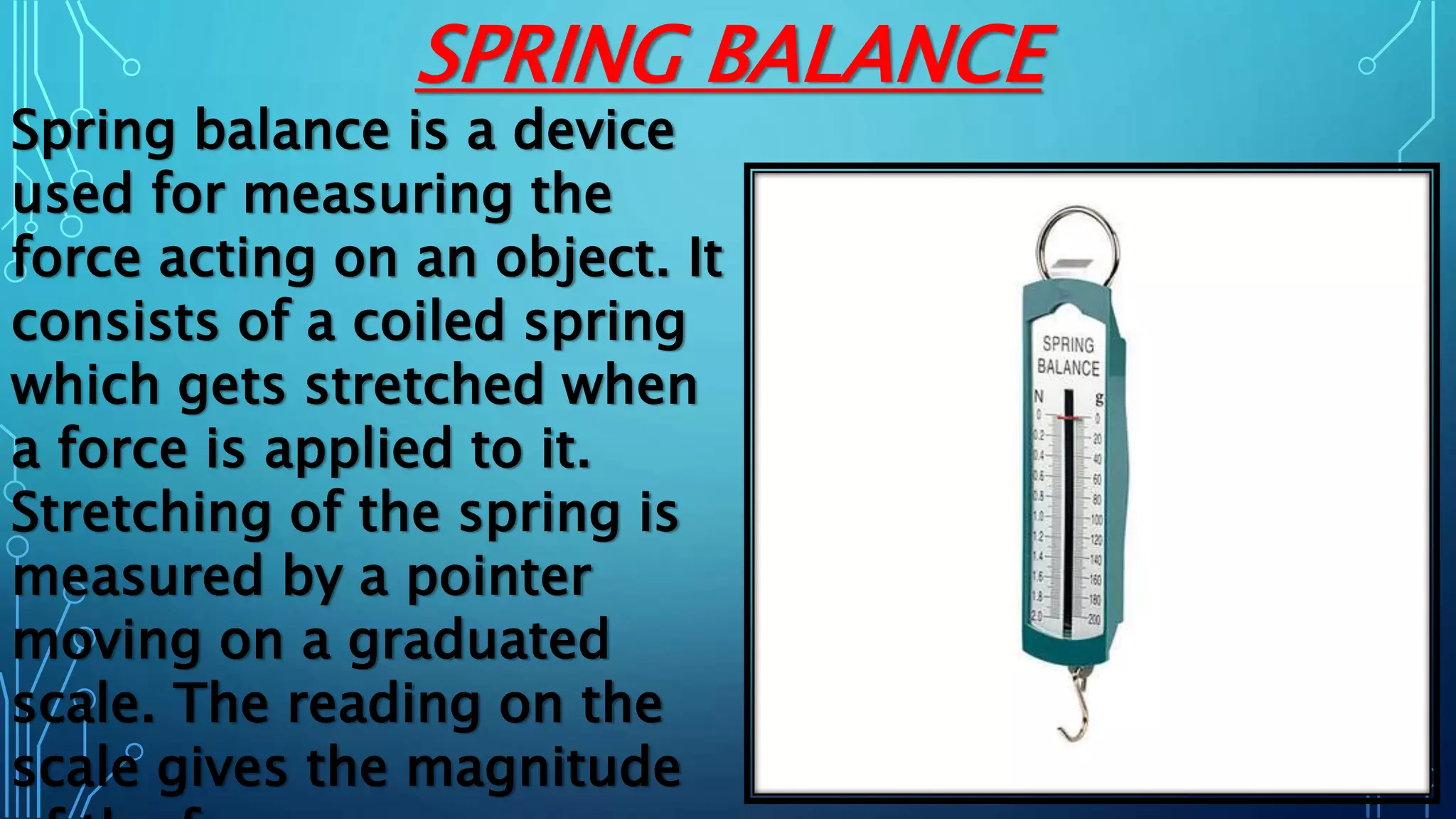
Spring balance is a device
used for measuring the
force acting on an object. It
consists of a coiled spring
which gets stretched when
a force is applied to it.
Stretching of the spring is
measured by a pointer
moving on a graduated
scale. The reading on the
scale gives the magnitude
2. CAUSES & FACTORS AFFECTING
FRICTION
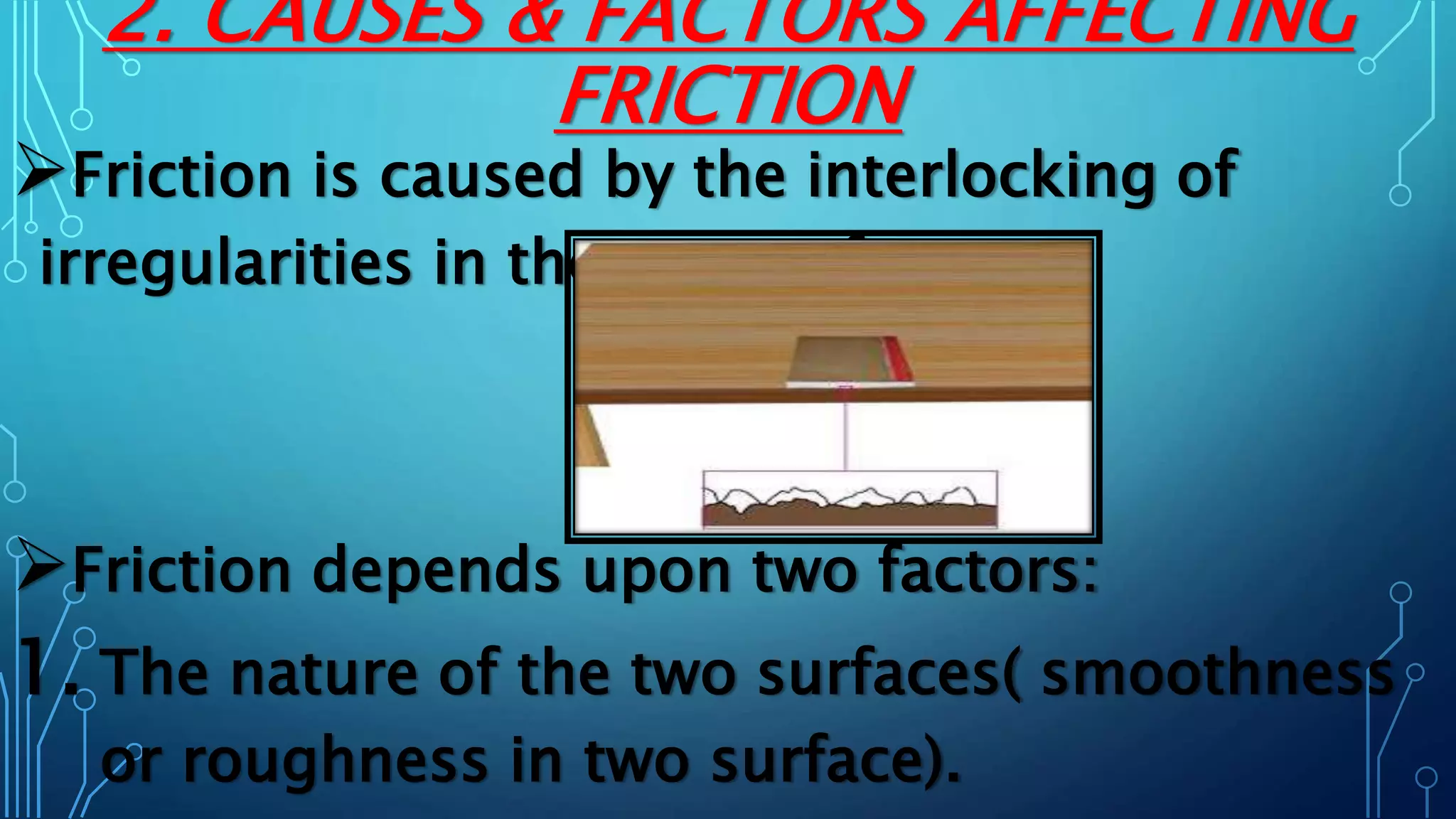
Friction is caused by the interlocking of
irregularities in the two surfaces.
Friction depends upon two factors:
1. The nature of the two surfaces( smoothness
or roughness in two surface).
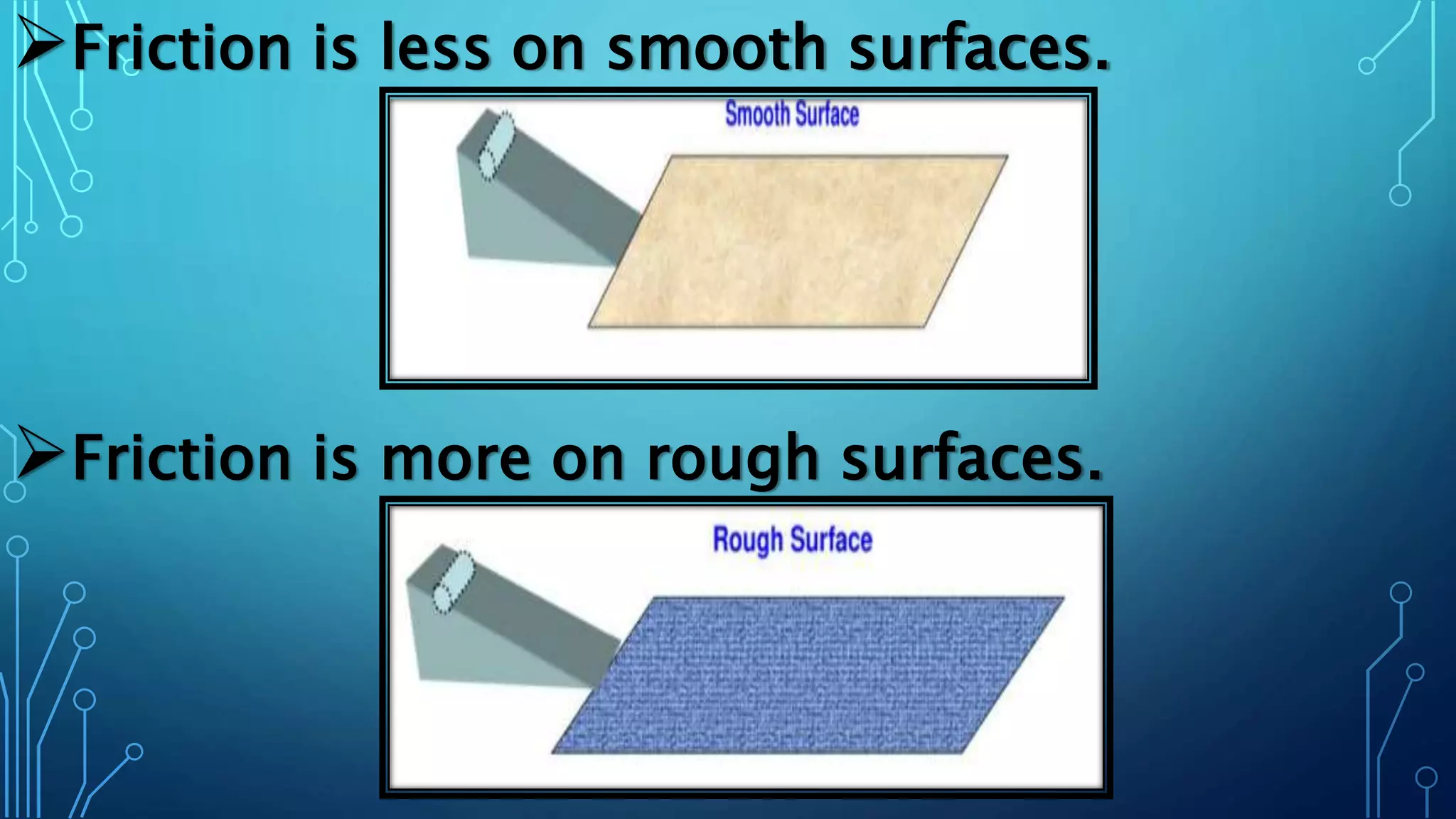
Friction is less on smooth surfaces.
Friction is more on rough surfaces.
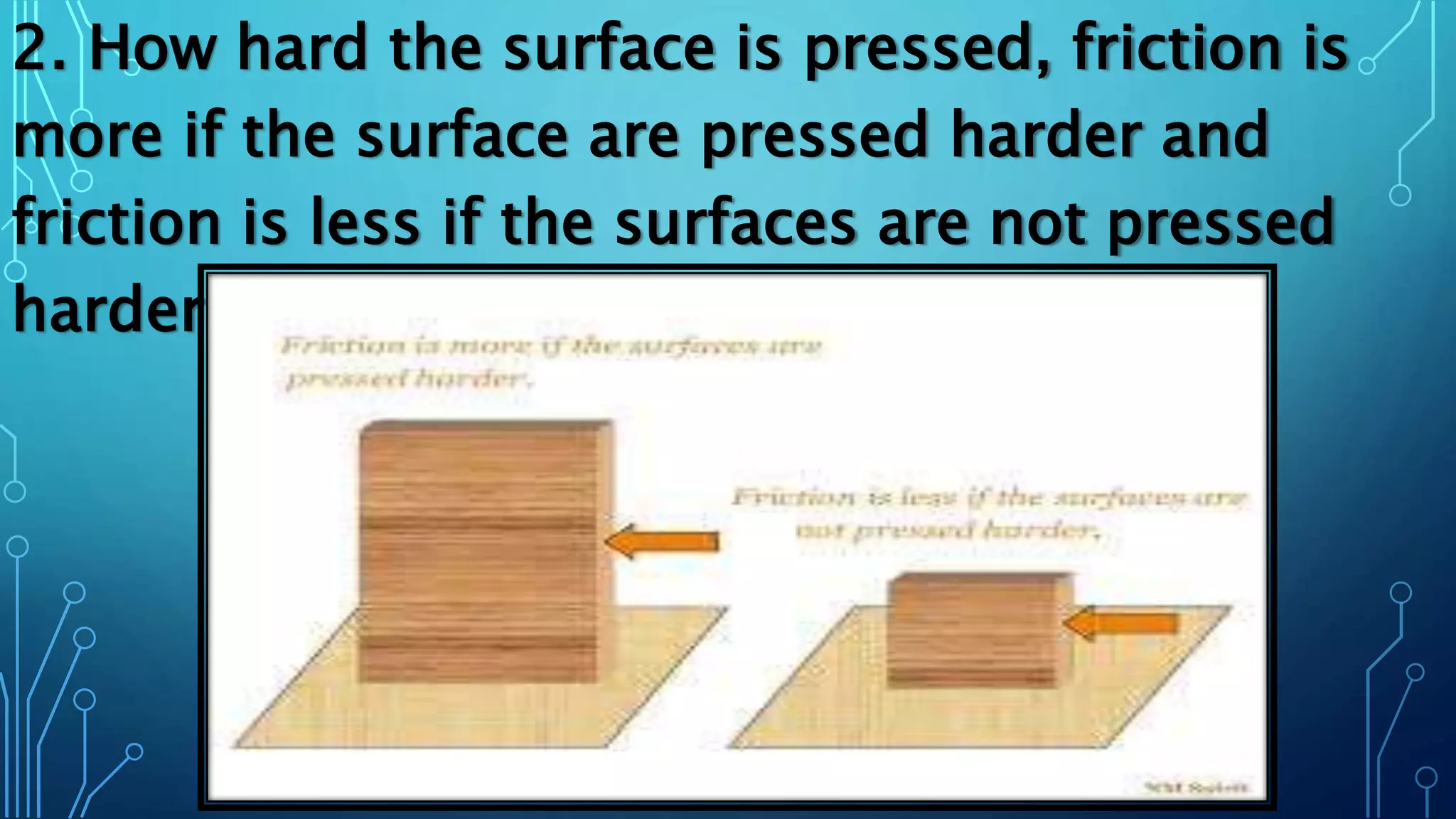
2. How hard the surface is pressed, friction is
more if the surface are pressed harder and
friction is less if the surfaces are not pressed
harder.
3. FRICTION IS NECESSARY SOMETIMES
Suppose the outer surface of a tumbler is greasy,
or has a film of cooking oil on it, then it is very
hard to hold it.
If there were no friction we can not walk easily.
If there were no friction we can not hold a pen or
pencil.
If an object starts moving it cannot stop if there
were no friction.
4. FRICTION IS UNNECESSARY
SOMETIMES
On the other hand, friction is an evil, too.
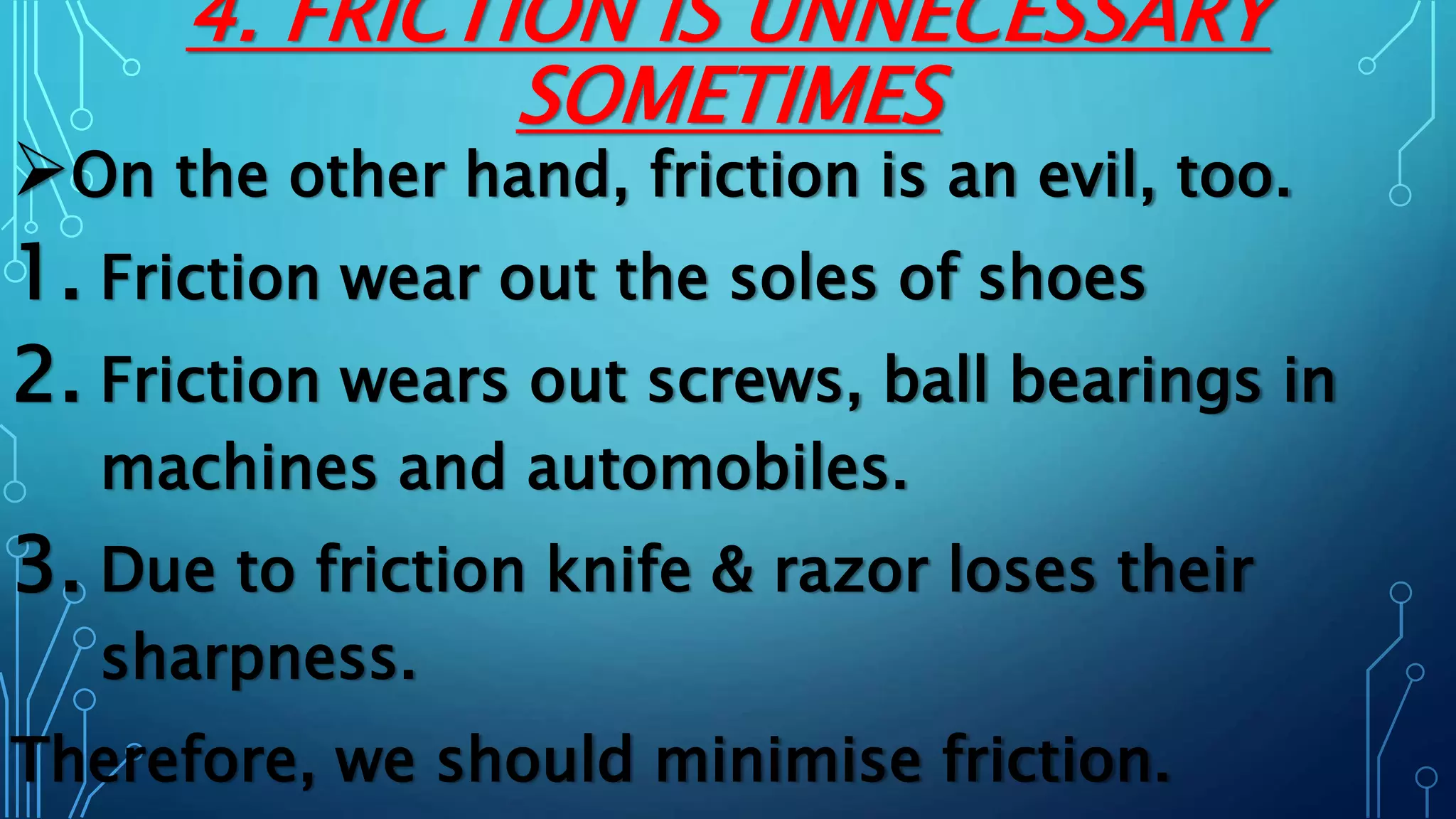
1. Friction wear out the soles of shoes
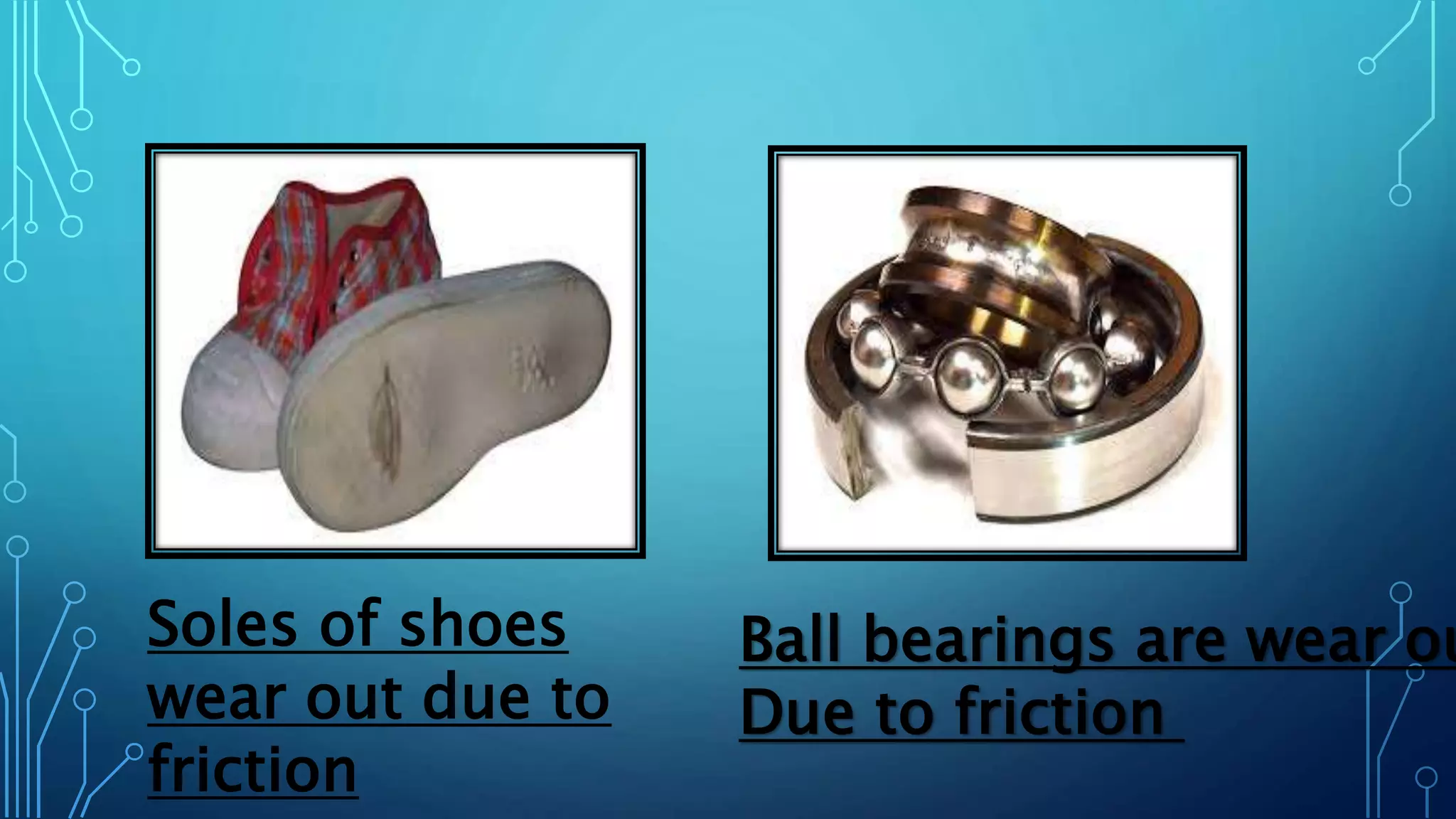
2. Friction wears out screws, ball bearings in
machines and automobiles.
3. Due to friction knife & razor loses their
sharpness.
Therefore, we should minimise friction.
Soles of shoes
wear out due to
friction
Ball bearings are wear ou
Due to friction
5. INCREASING FRICTION
Friction can be increased by increasing the
roughness of the surfaces in contact, e.g.
1. The soles of shoes are made up of grooves to
increase friction.
2. We increase friction by using break pads in
bicycles and automobiles.
3. The tyres of vehicles are made up of treads to
increase friction.
6. REDUCING FRICTION
A bicycle and a motor mechanic uses grease
between the moving parts of these machines to
reduce friction.
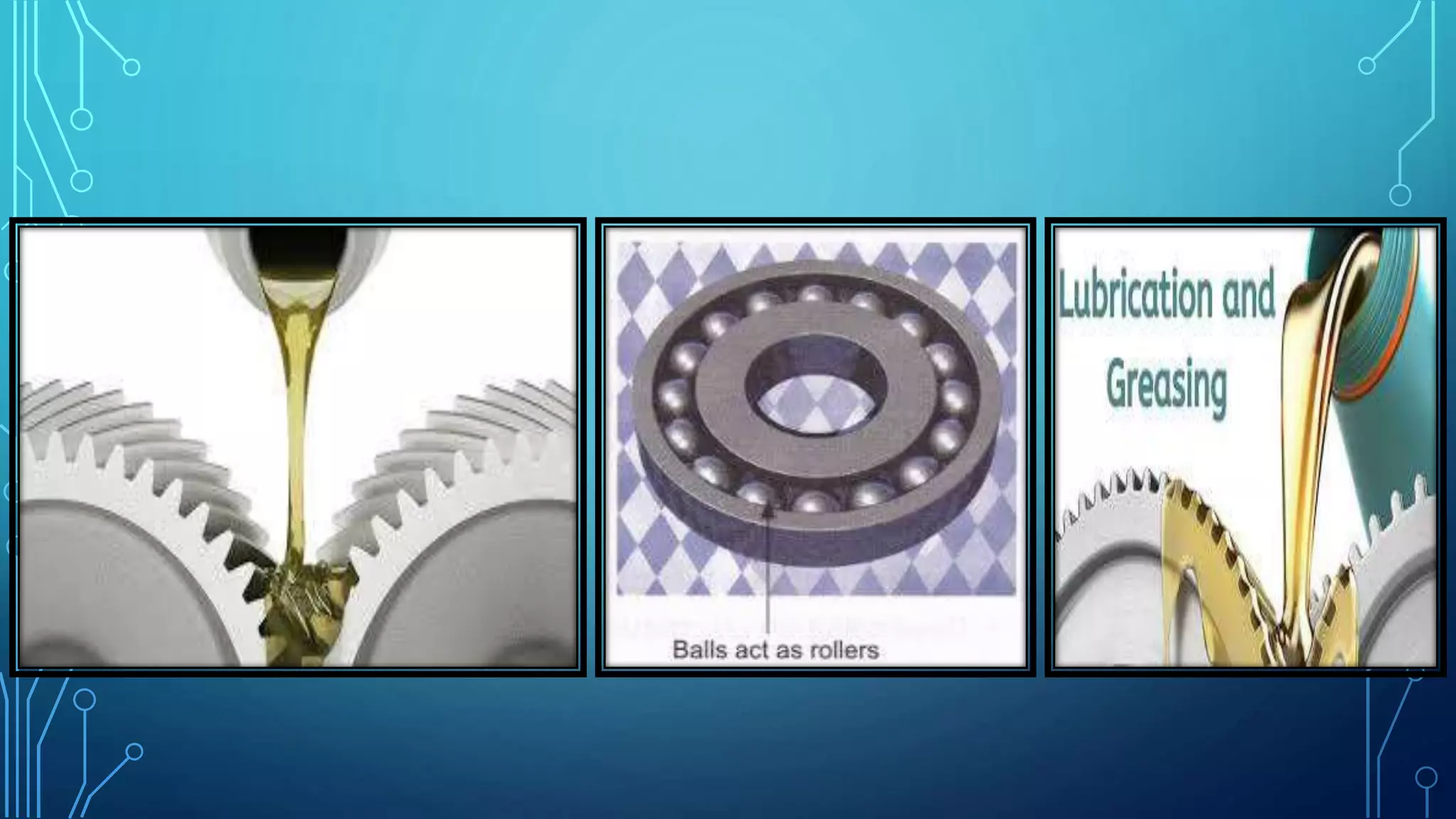
When oil, grease or graphite is applied
between the moving part of a machine, a thin
layer is formed there and moving surfaces do
not directly rub against each other.
6. REDUCING FRICTION
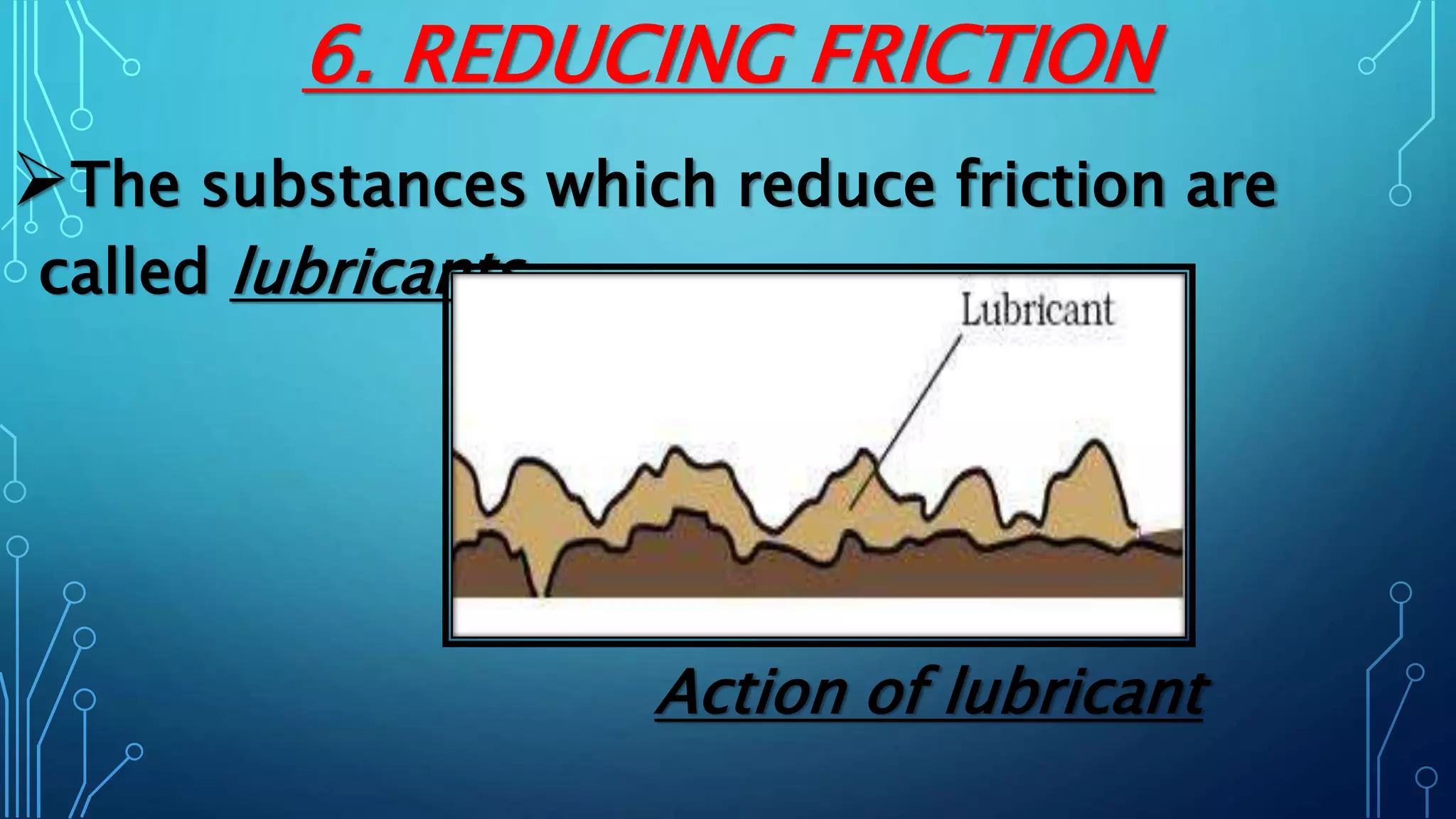
The substances which reduce friction are
called lubricants.
Action of lubricant
7. BALL BEARINGS
These are designed to make moving parts of
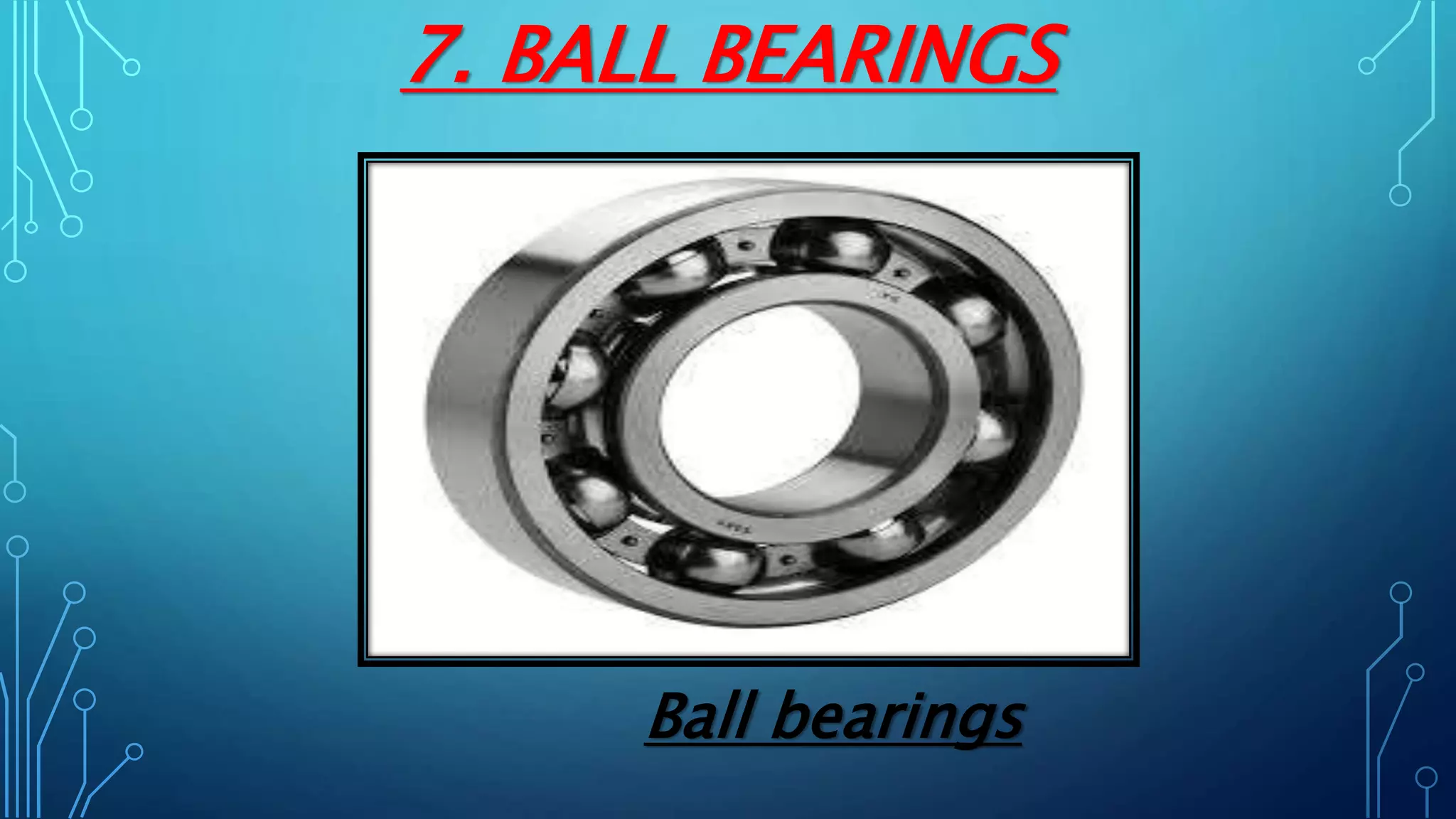
machines to roll over each other. It consists of
metal balls fitted in between metal rings. In
bicycles, motorbike, etc. the ball bearing is
inserted between the hub of wheel and axle.
When the wheel revolves, the balls of ball
bearing roll and reduce friction. Hence, the
wheel rolls smoothly over the axle.
7. BALL BEARINGS
Ball bearings
8. TYPES OF FRICTION
There are three main types of friction:
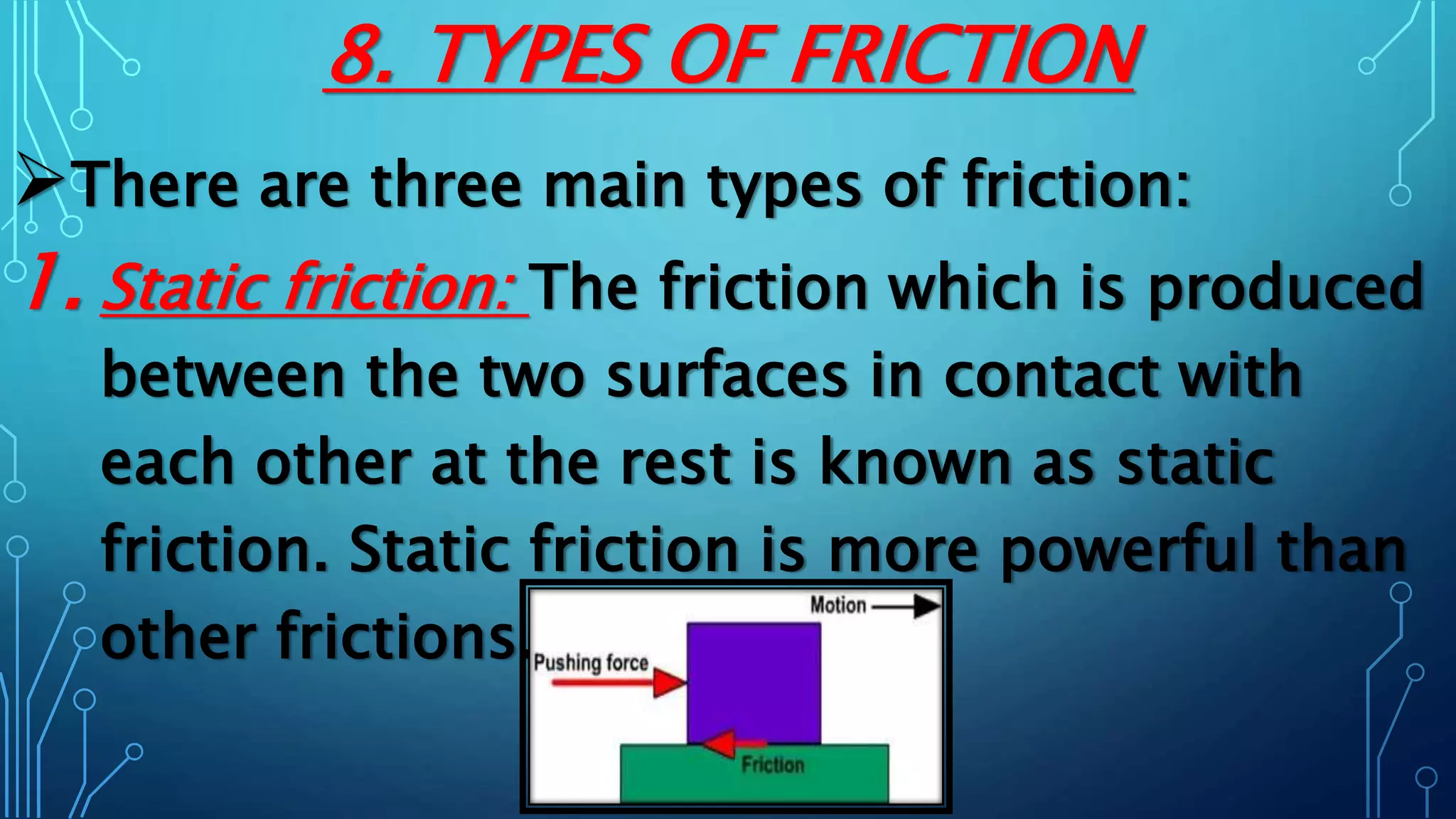
1. Static friction: The friction which is produced
between the two surfaces in contact with
each other at the rest is known as static
friction. Static friction is more powerful than
other frictions.
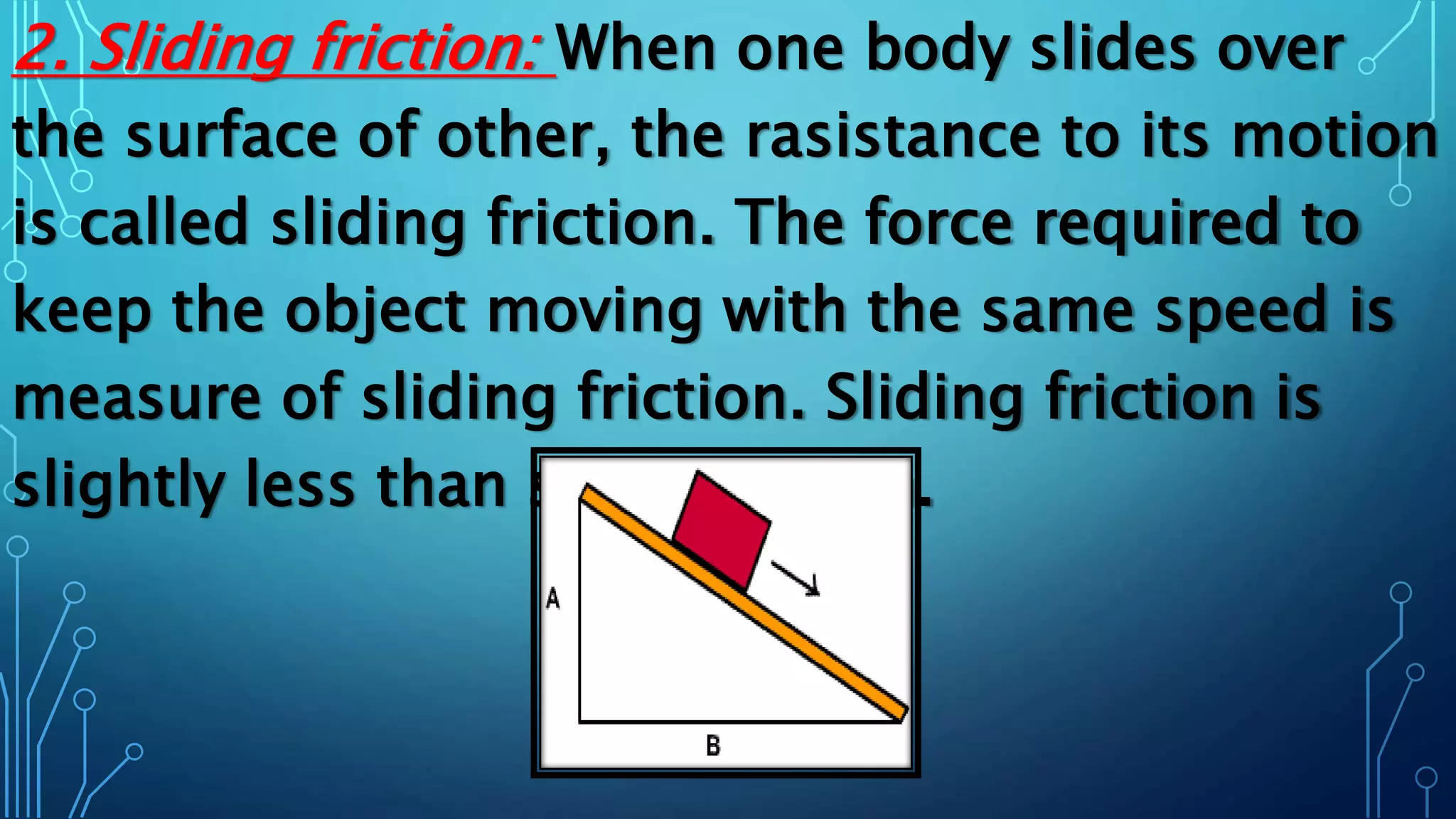
2. Sliding friction: When one body slides over
the surface of other, the rasistance to its motion
is called sliding friction. The force required to
keep the object moving with the same speed is
measure of sliding friction. Sliding friction is
slightly less than static friction.
3. Rolling friction: When on body rolls over the
surface of another body, the resistance to its
motion is called rolling friction. Rolling reduces
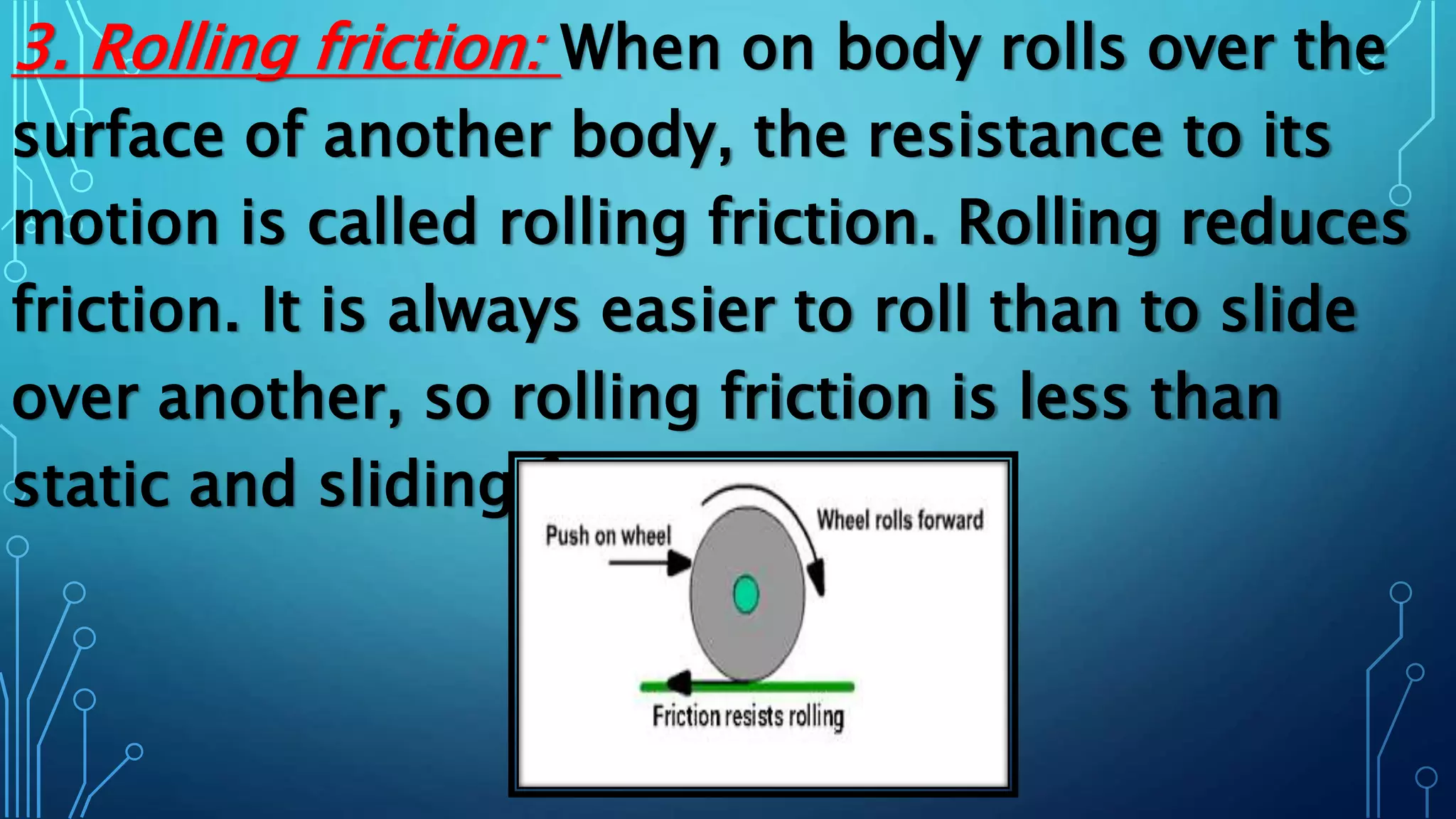
friction. It is always easier to roll than to slide
over another, so rolling friction is less than
static and sliding friction.
FLUID FRICTION
Those substances which can flow easily are
called fluids. liquids and gases can flow easily
so they are fluids. Fluids are not having
definite shapes. There is a friction whenever
object moves through a fluid. It is called fluid
friction. The frictional force exerted by fluids is
also called drag. Fluid friction depends upon:
1. Speed of object 2. size of object
1. If speed of object moving through is higher,
drag is more and if lower drag is less.
2. If size of object moving through fluid is
larger, drag is more and if smaller drag is
less.
3. The streamlined shape of an object face less
drag or fluid friction while moving through
fluid.
4. If thickness of fluid is more then drag is also
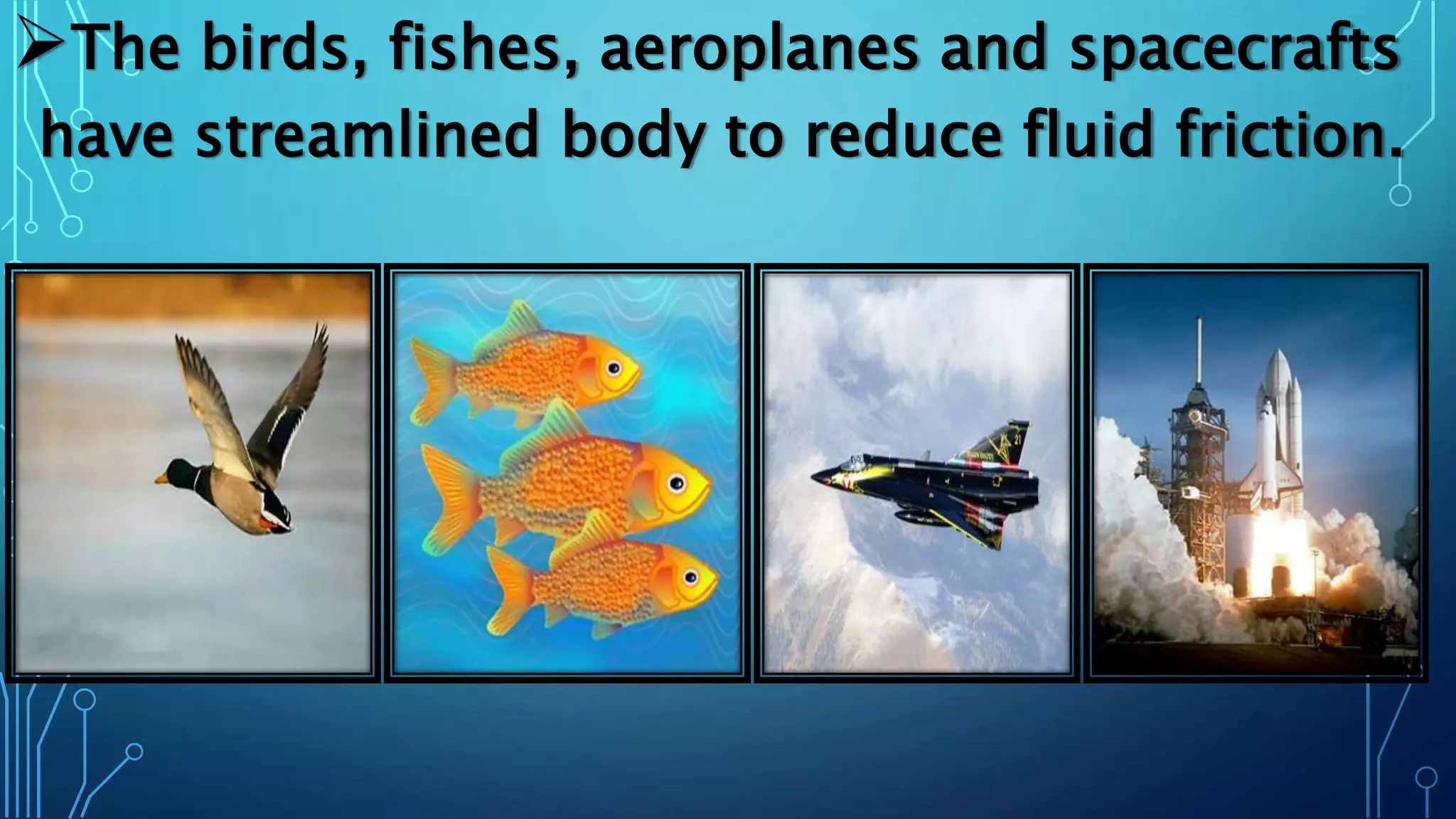
The birds, fishes, aeroplanes and spacecrafts
have streamlined body to reduce fluid friction.

Friction ppt by gaurav ghankhede

  • 2.
  • 3.
     1. FORCEOF FRICTION Frictional force cats on a body moving over another body which opposes their relative motion. Thus, the direction of force of friction is always opposite to the direction of motion of moving object. It will become clear from the following activity:
  • 4.
    ACTIVITY: Take a bookand place it on table. Gently push the book on the table. You observe that it stops after moving for some distance. Repeat this activity pushing the book from the opposite side. In this case also book will stop after moving for some distance, hence we can conclude that the force which always opposes the motion of an object is called friction.
  • 5.
  • 6.
    SPRING BALANCE Spring balanceis a device used for measuring the force acting on an object. It consists of a coiled spring which gets stretched when a force is applied to it. Stretching of the spring is measured by a pointer moving on a graduated scale. The reading on the scale gives the magnitude
  • 7.
    2. CAUSES &FACTORS AFFECTING FRICTION Friction is caused by the interlocking of irregularities in the two surfaces. Friction depends upon two factors: 1. The nature of the two surfaces( smoothness or roughness in two surface).
  • 8.
    Friction is lesson smooth surfaces. Friction is more on rough surfaces.
  • 9.
    2. How hardthe surface is pressed, friction is more if the surface are pressed harder and friction is less if the surfaces are not pressed harder.
  • 10.
    3. FRICTION ISNECESSARY SOMETIMES Suppose the outer surface of a tumbler is greasy, or has a film of cooking oil on it, then it is very hard to hold it. If there were no friction we can not walk easily. If there were no friction we can not hold a pen or pencil. If an object starts moving it cannot stop if there were no friction.
  • 11.
    4. FRICTION ISUNNECESSARY SOMETIMES On the other hand, friction is an evil, too. 1. Friction wear out the soles of shoes 2. Friction wears out screws, ball bearings in machines and automobiles. 3. Due to friction knife & razor loses their sharpness. Therefore, we should minimise friction.
  • 12.
    Soles of shoes wearout due to friction Ball bearings are wear ou Due to friction
  • 13.
    5. INCREASING FRICTION Frictioncan be increased by increasing the roughness of the surfaces in contact, e.g. 1. The soles of shoes are made up of grooves to increase friction. 2. We increase friction by using break pads in bicycles and automobiles. 3. The tyres of vehicles are made up of treads to increase friction.
  • 14.
    6. REDUCING FRICTION Abicycle and a motor mechanic uses grease between the moving parts of these machines to reduce friction. When oil, grease or graphite is applied between the moving part of a machine, a thin layer is formed there and moving surfaces do not directly rub against each other.
  • 16.
    6. REDUCING FRICTION Thesubstances which reduce friction are called lubricants. Action of lubricant
  • 17.
    7. BALL BEARINGS Theseare designed to make moving parts of machines to roll over each other. It consists of metal balls fitted in between metal rings. In bicycles, motorbike, etc. the ball bearing is inserted between the hub of wheel and axle. When the wheel revolves, the balls of ball bearing roll and reduce friction. Hence, the wheel rolls smoothly over the axle.
  • 18.
  • 19.
    8. TYPES OFFRICTION There are three main types of friction: 1. Static friction: The friction which is produced between the two surfaces in contact with each other at the rest is known as static friction. Static friction is more powerful than other frictions.
  • 20.
    2. Sliding friction:When one body slides over the surface of other, the rasistance to its motion is called sliding friction. The force required to keep the object moving with the same speed is measure of sliding friction. Sliding friction is slightly less than static friction.
  • 21.
    3. Rolling friction:When on body rolls over the surface of another body, the resistance to its motion is called rolling friction. Rolling reduces friction. It is always easier to roll than to slide over another, so rolling friction is less than static and sliding friction.
  • 22.
    FLUID FRICTION Those substanceswhich can flow easily are called fluids. liquids and gases can flow easily so they are fluids. Fluids are not having definite shapes. There is a friction whenever object moves through a fluid. It is called fluid friction. The frictional force exerted by fluids is also called drag. Fluid friction depends upon: 1. Speed of object 2. size of object
  • 23.
    1. If speedof object moving through is higher, drag is more and if lower drag is less. 2. If size of object moving through fluid is larger, drag is more and if smaller drag is less. 3. The streamlined shape of an object face less drag or fluid friction while moving through fluid. 4. If thickness of fluid is more then drag is also
  • 24.
    The birds, fishes,aeroplanes and spacecrafts have streamlined body to reduce fluid friction.