The impact of obesity on the maternal metabolic
adaptation to pregnancy
Dilys J Freeman
Institute for Cardiovascular and Medical Sciences
University of Glasgow
Dilys J Freeman
Disclosed no conflict of interest
Presenter Disclosure Information
• Healthy pregnancy
• Obese pregancy
• Complicated pregnancy (preeclampsia)
HealthyH
Healthy Pregnancy
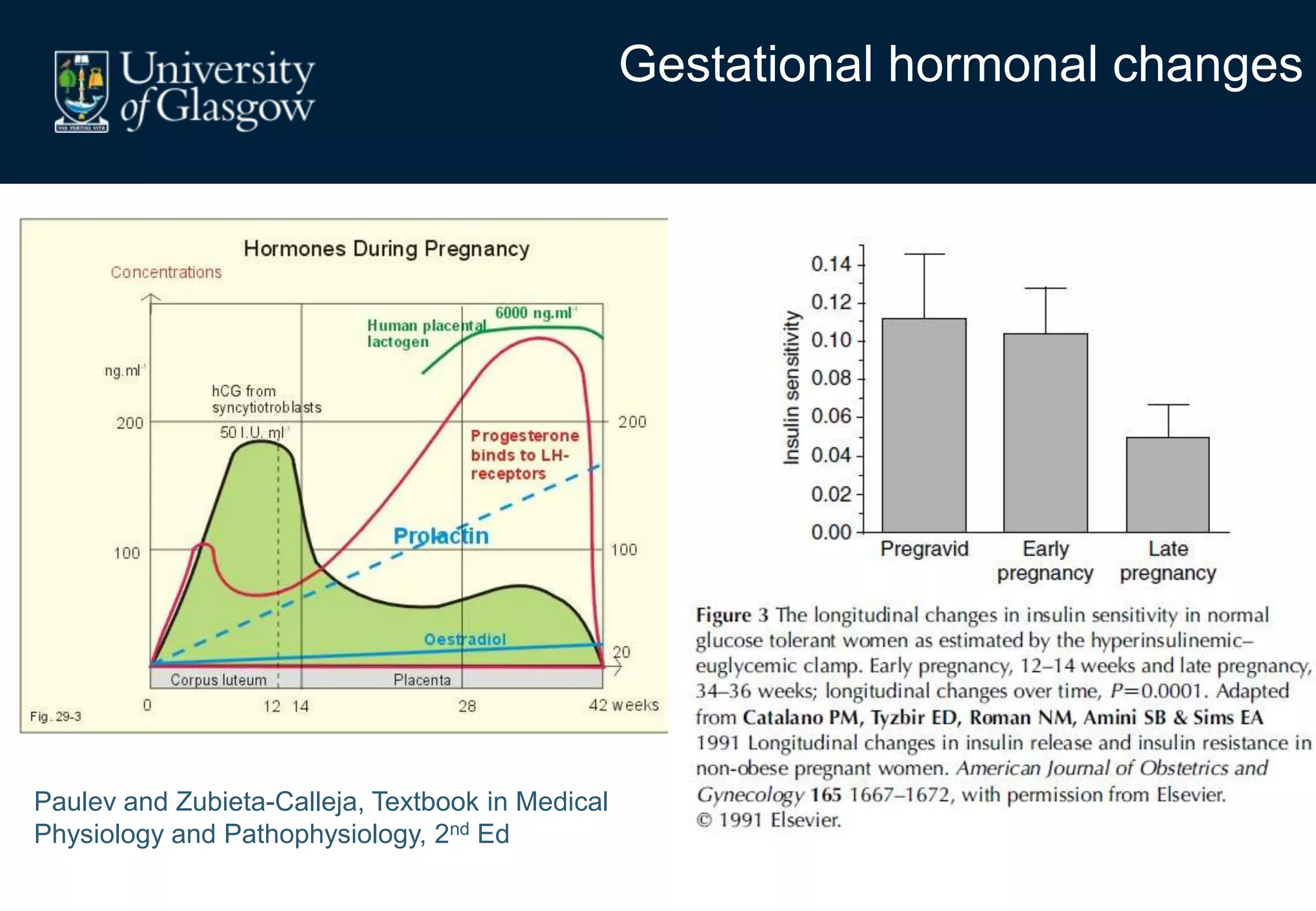
Gestational hormonal changes
Paulev and Zubieta-Calleja, Textbook in Medical
Physiology and Pathophysiology, 2nd Ed
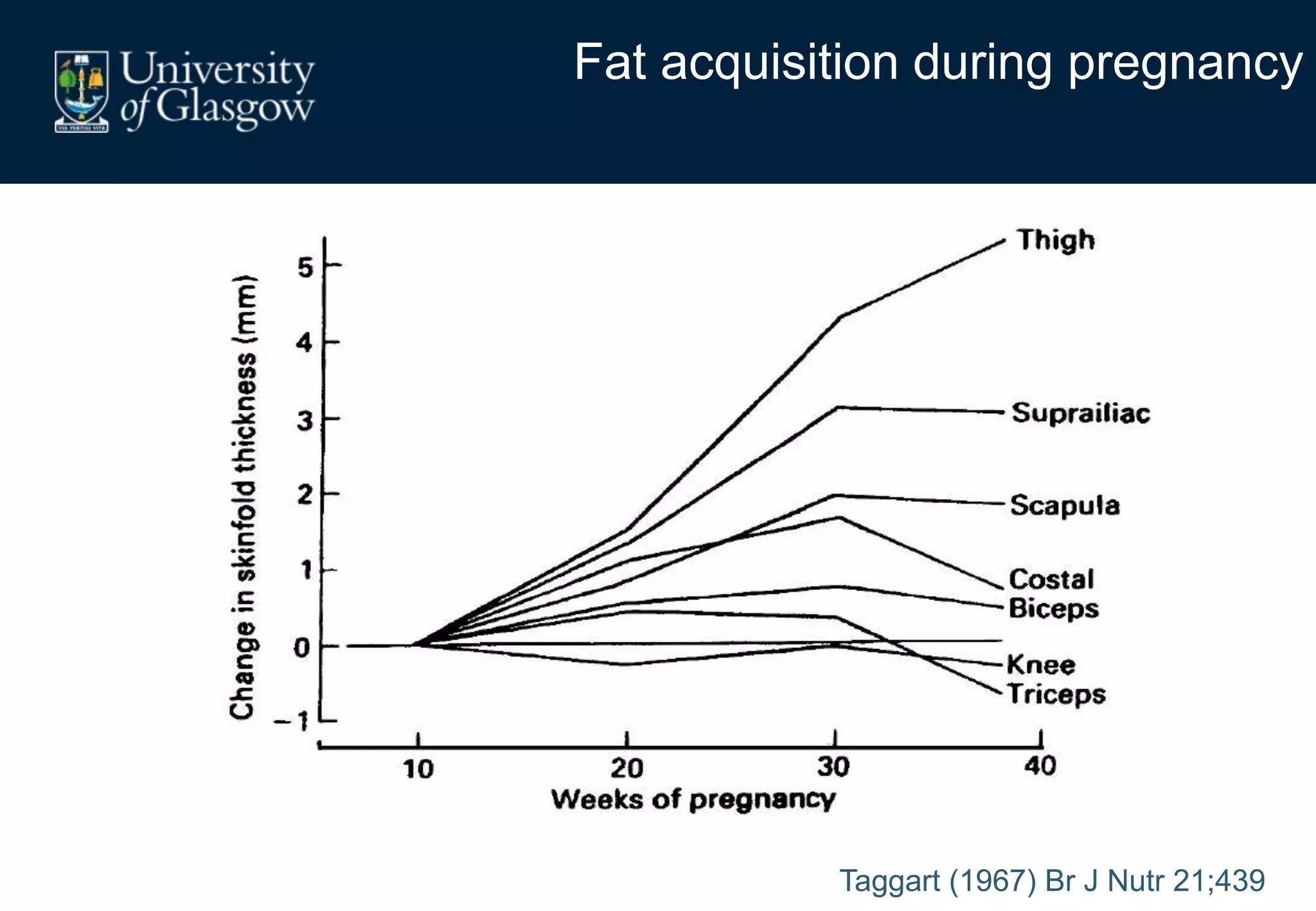
Taggart (1967) Br J Nutr 21;439
Fat acquisition during pregnancy
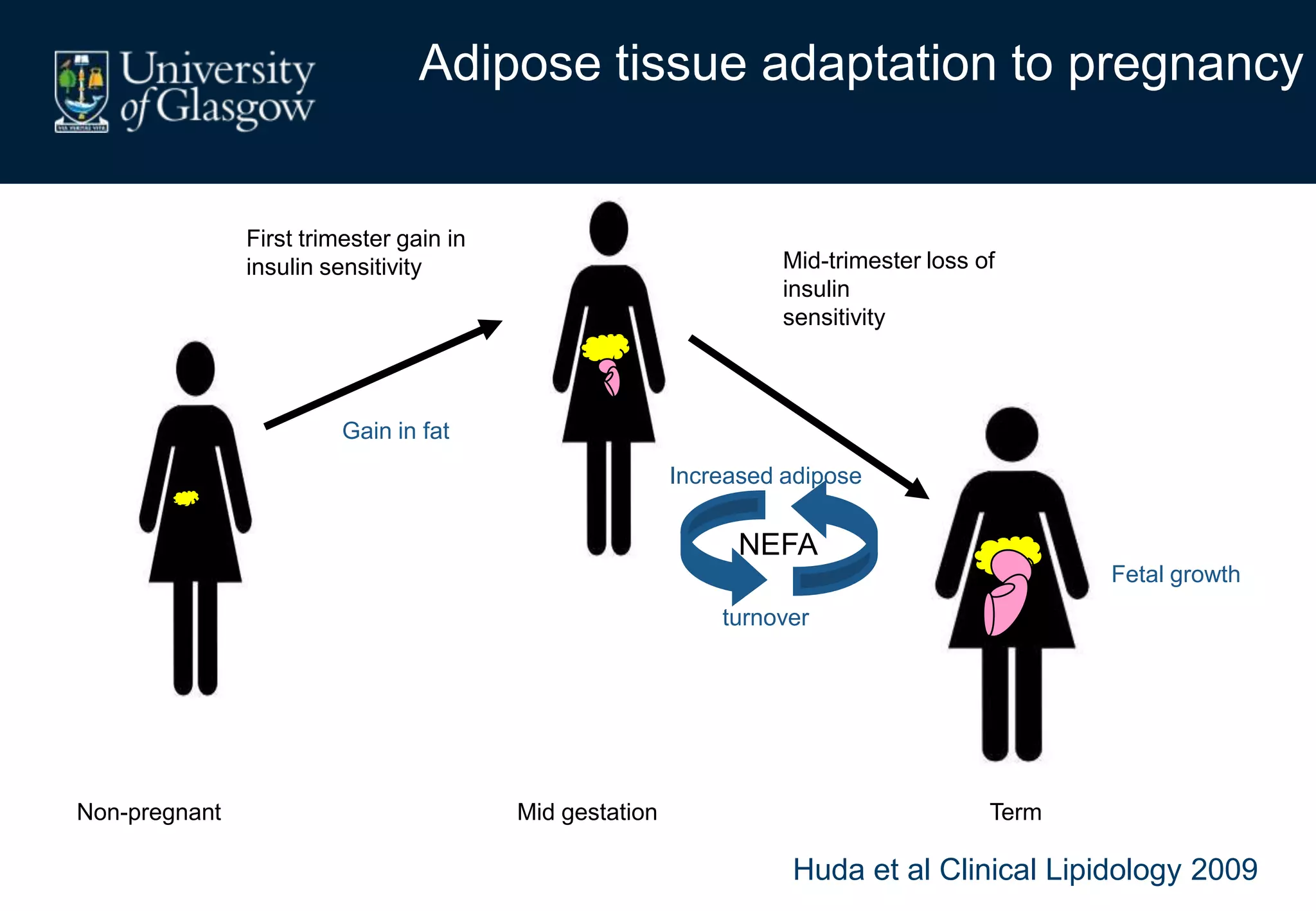
Adipose tissue adaptation to pregnancy
First trimester gain in
insulin sensitivity
Gain in fat
Mid-trimester loss of
insulin
sensitivity
Increased adipose
turnover
Fetal growth
Non-pregnant Mid gestation Term
Huda et al Clinical Lipidology 2009
NEFA
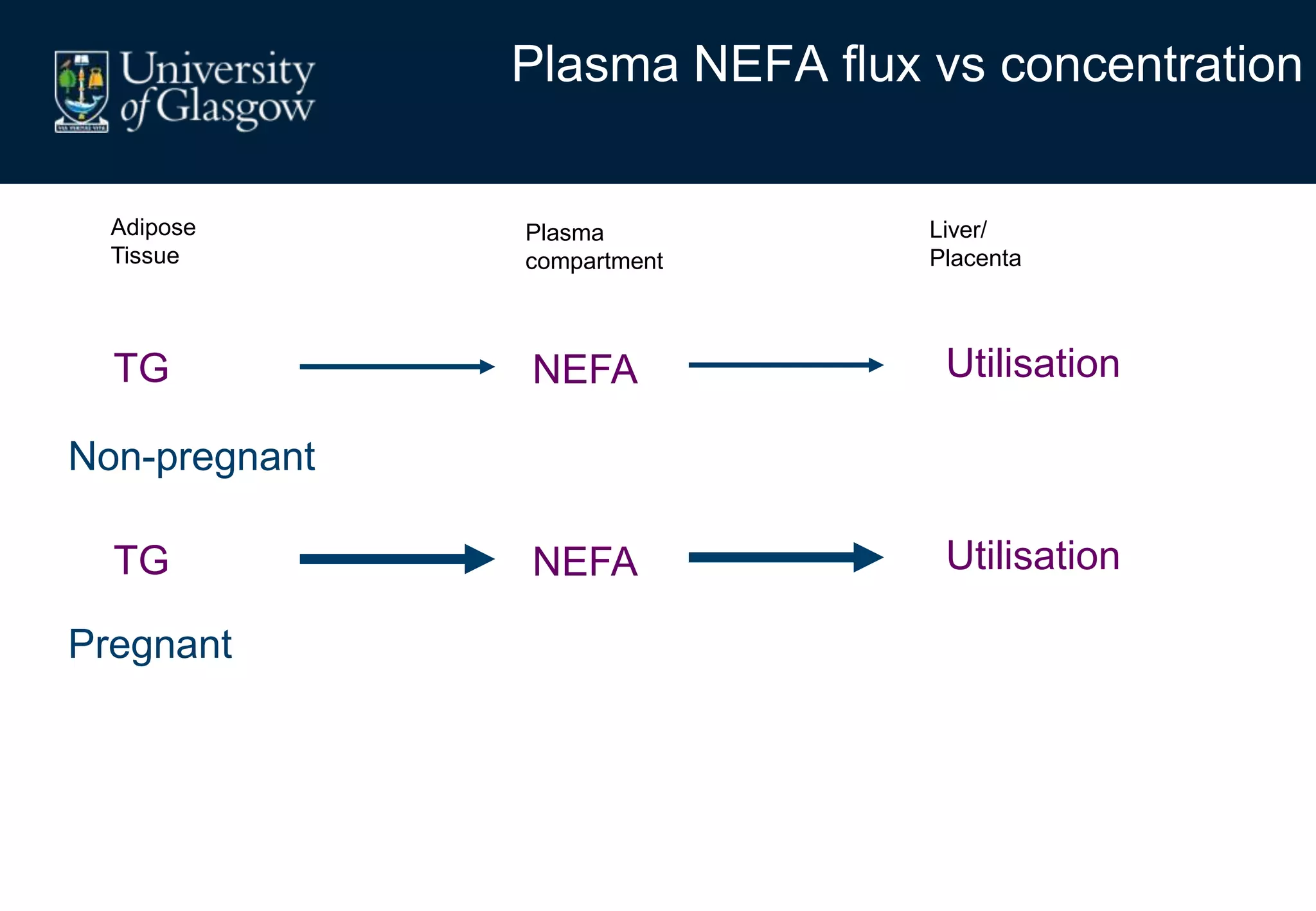
Plasma NEFA flux vs concentration
TG NEFA
Adipose
Tissue
Plasma
compartment
Liver/
Placenta
Utilisation
TG NEFA Utilisation
Non-pregnant
Pregnant
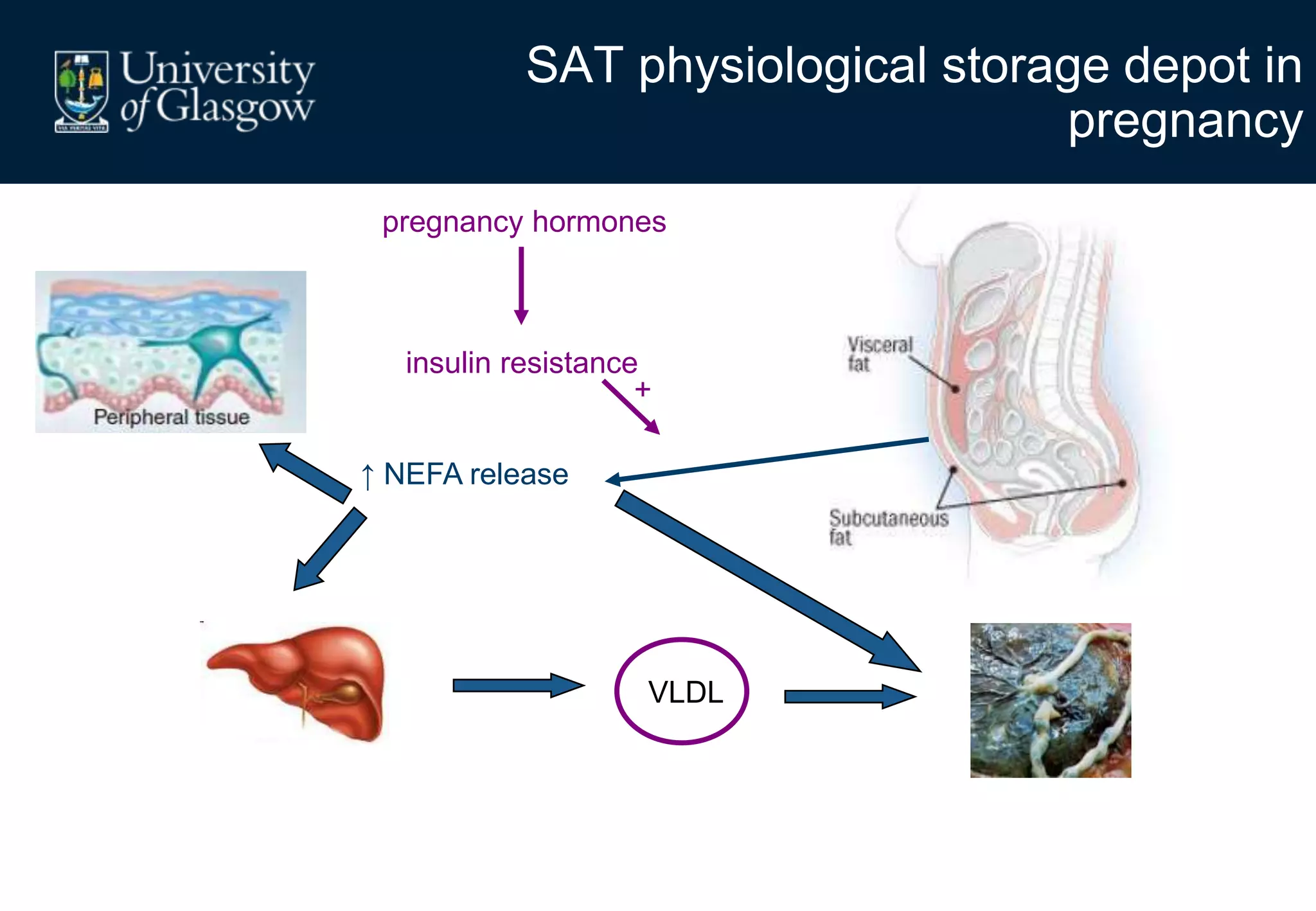
SAT physiological storage depot in
pregnancy
↑ NEFA release
pregnancy hormones
insulin resistance
+
VLDL
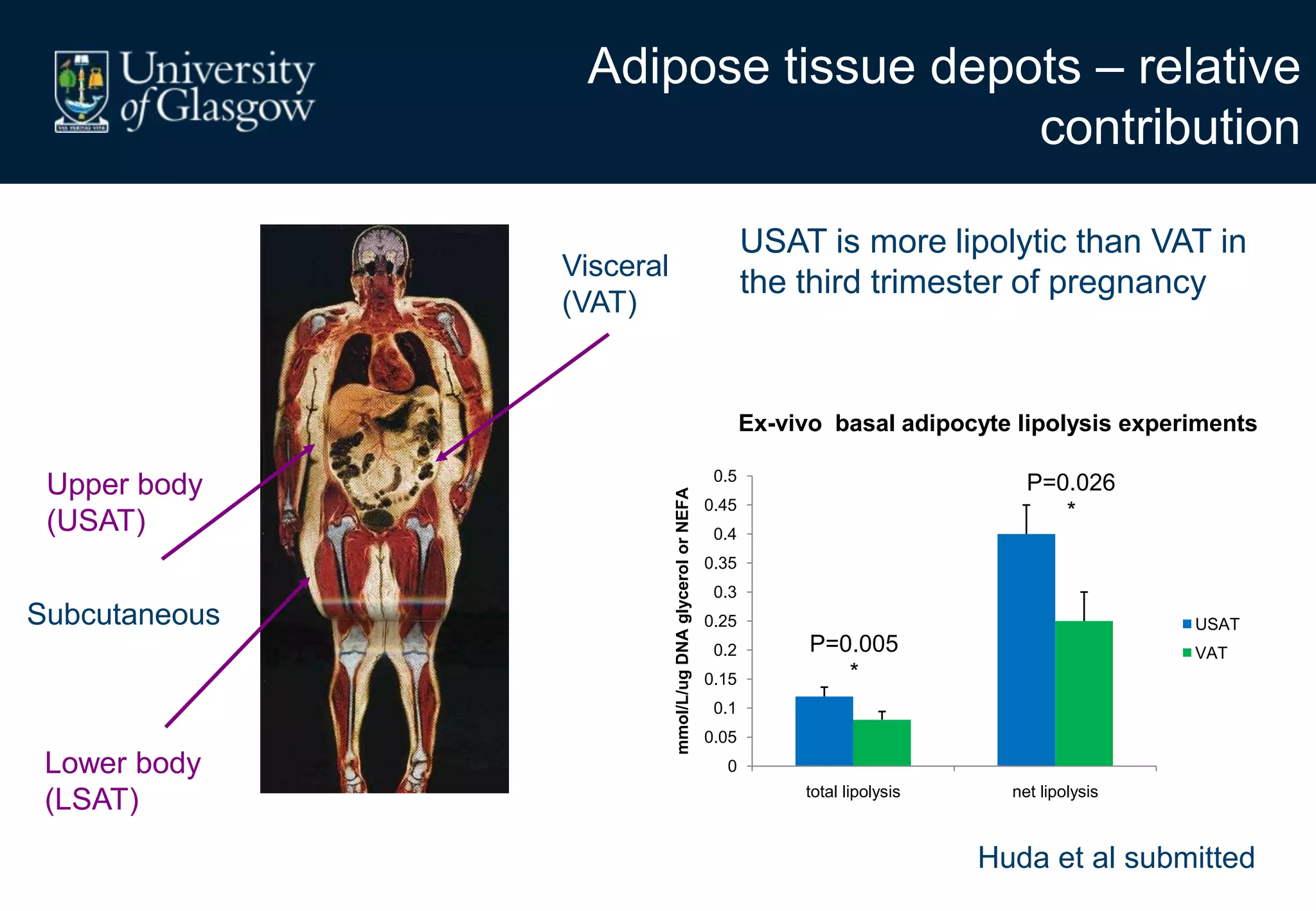
Adipose tissue depots – relative
contribution
Visceral
(VAT)
Subcutaneous
Upper body
(USAT)
Lower body
(LSAT)
0
0.05
0.1
0.15
0.2
0.25
0.3
0.35
0.4
0.45
0.5
total lipolysis net lipolysis
mmol/L/ugDNAglycerolorNEFA
USAT
VAT
Huda et al submitted
P=0.005
*
P=0.026
*
USAT is more lipolytic than VAT in
the third trimester of pregnancy
Ex-vivo basal adipocyte lipolysis experiments
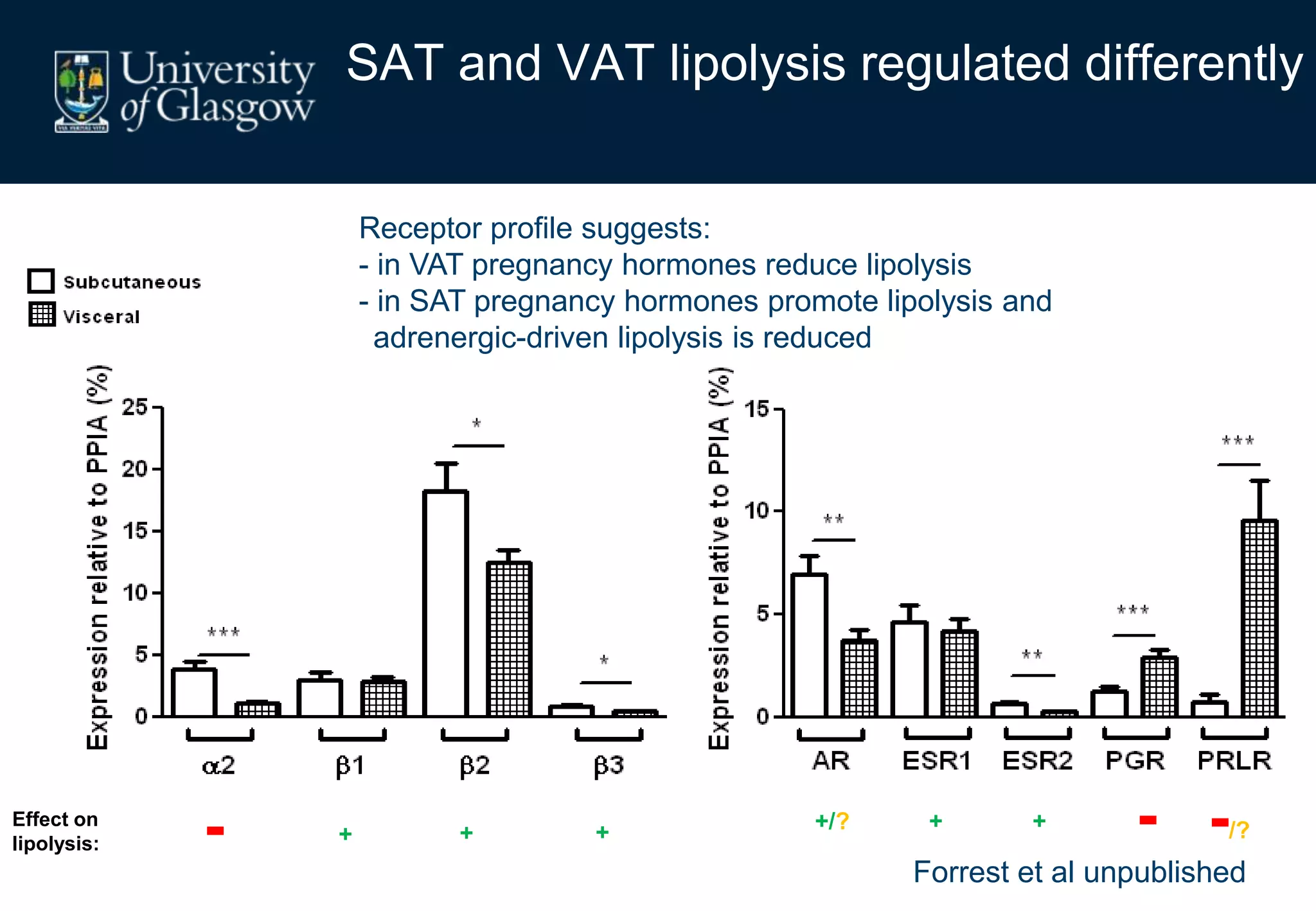
Effect on
lipolysis: + +- + + + -/?-+/?
Forrest et al unpublished
SAT and VAT lipolysis regulated differently
Receptor profile suggests:
- in VAT pregnancy hormones reduce lipolysis
- in SAT pregnancy hormones promote lipolysis and
adrenergic-driven lipolysis is reduced
SAT as a reservoir of fatty acids in health
• Based on the functionality and size of the SAT depot, we
would suggest that in healthy pregnancy plasma NEFA are
derived from this depot
• In the non-pregnant (Jensen et al JCEM 2008), USAT is
estimated to be the source of 60% of circulating NEFA, LSAT
15-20% and VAT 6-17%
• SAT provides a “safer” depot for gestationally-acquired fat as
VAT releases NEFA into the portal circulation and hence
directly to the liver
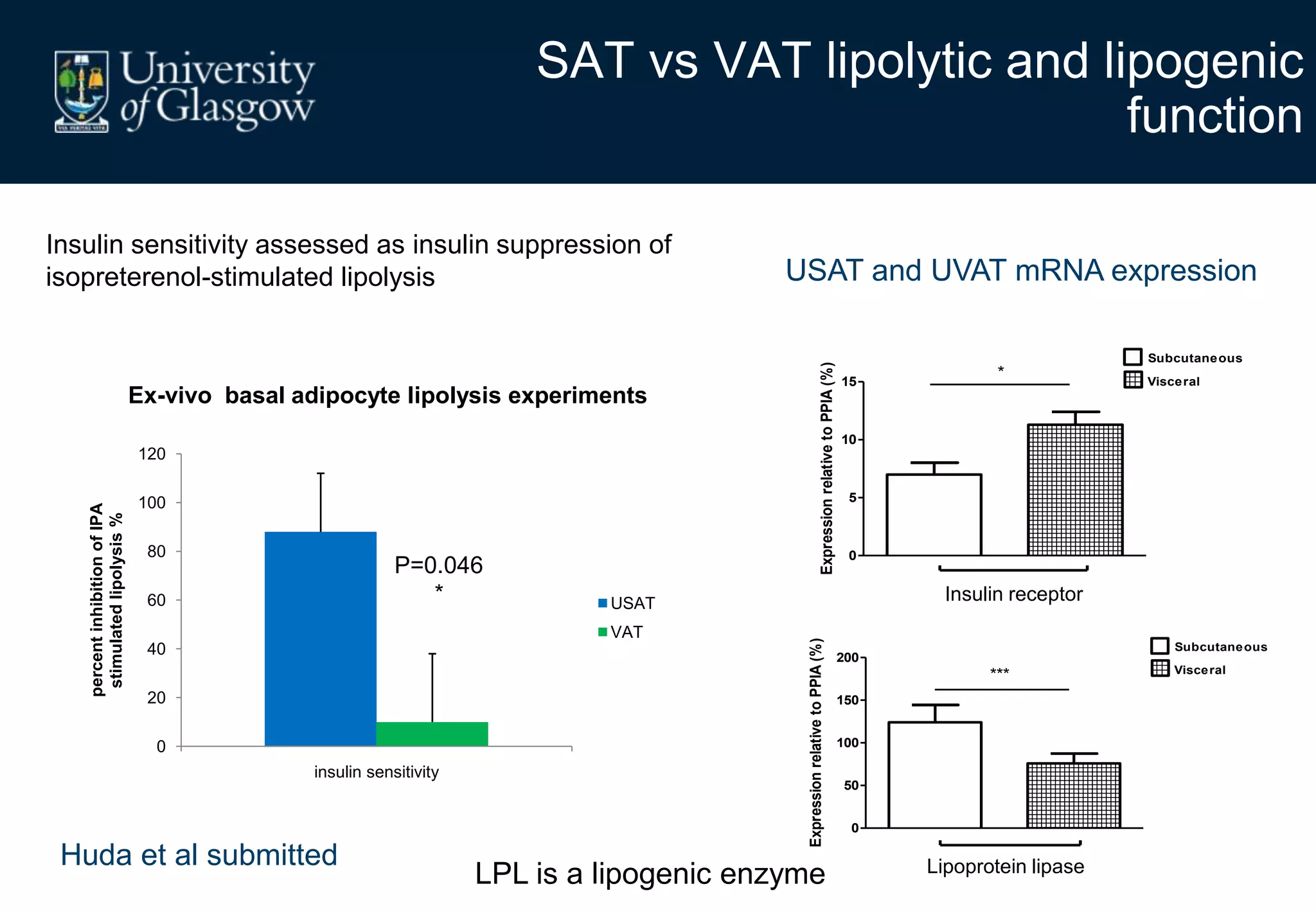
SAT vs VAT lipolytic and lipogenic
function
0
20
40
60
80
100
120
insulin sensitivity
percentinhibitionofIPA
stimulatedlipolysis%
USAT
VAT
P=0.046
*
Ex-vivo basal adipocyte lipolysis experiments
Huda et al submitted
USAT and UVAT mRNA expression
Insulin sensitivity assessed as insulin suppression of
isopreterenol-stimulated lipolysis
ExpressionrelativetoPPIA(%)
0
5
10
15
Subcutaneous
Visceral
*
INSR
ExpressionrelativetoPPIA(%)
0
50
100
150
200
***
LPL
Subcutaneous
Visceral
LPL is a lipogenic enzyme
Insulin receptor
Lipoprotein lipase
Improved vascular function is a key
adaptation to pregnancy
Endothelium-dependent microvascular function
Stewart et al JCEM 2007
P<0.001
Required for placental
formation and perfusion
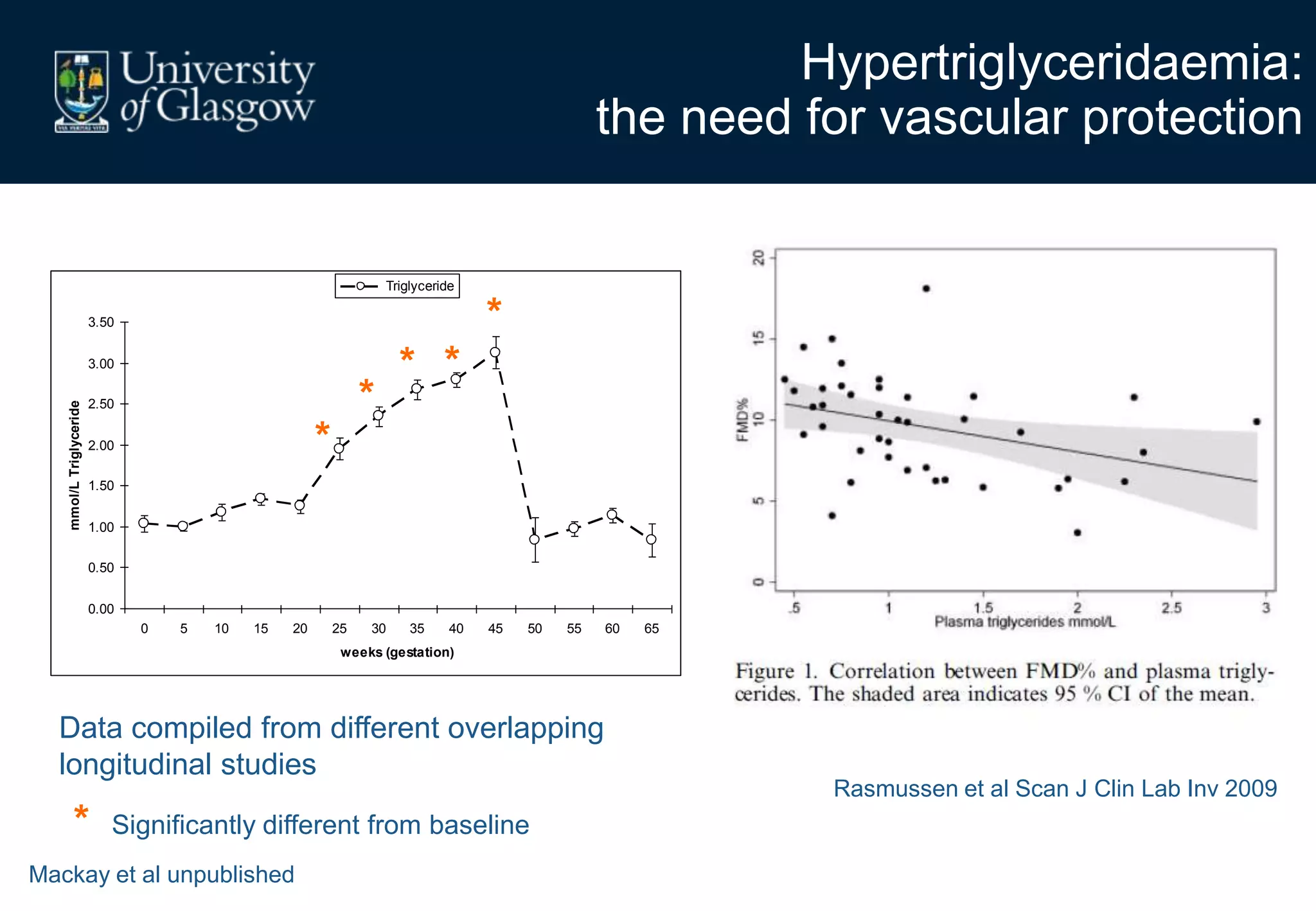
Hypertriglyceridaemia:
the need for vascular protection
Rasmussen et al Scan J Clin Lab Inv 2009
Data compiled from different overlapping
longitudinal studies
* Significantly different from baseline
0.00
0.50
1.00
1.50
2.00
2.50
3.00
3.50
0 5 10 15 20 25 30 35 40 45 50 55 60 65
weeks (gestation)
mmol/LTriglyceride
Triglyceride
*
* *
*
*
Mackay et al unpublished
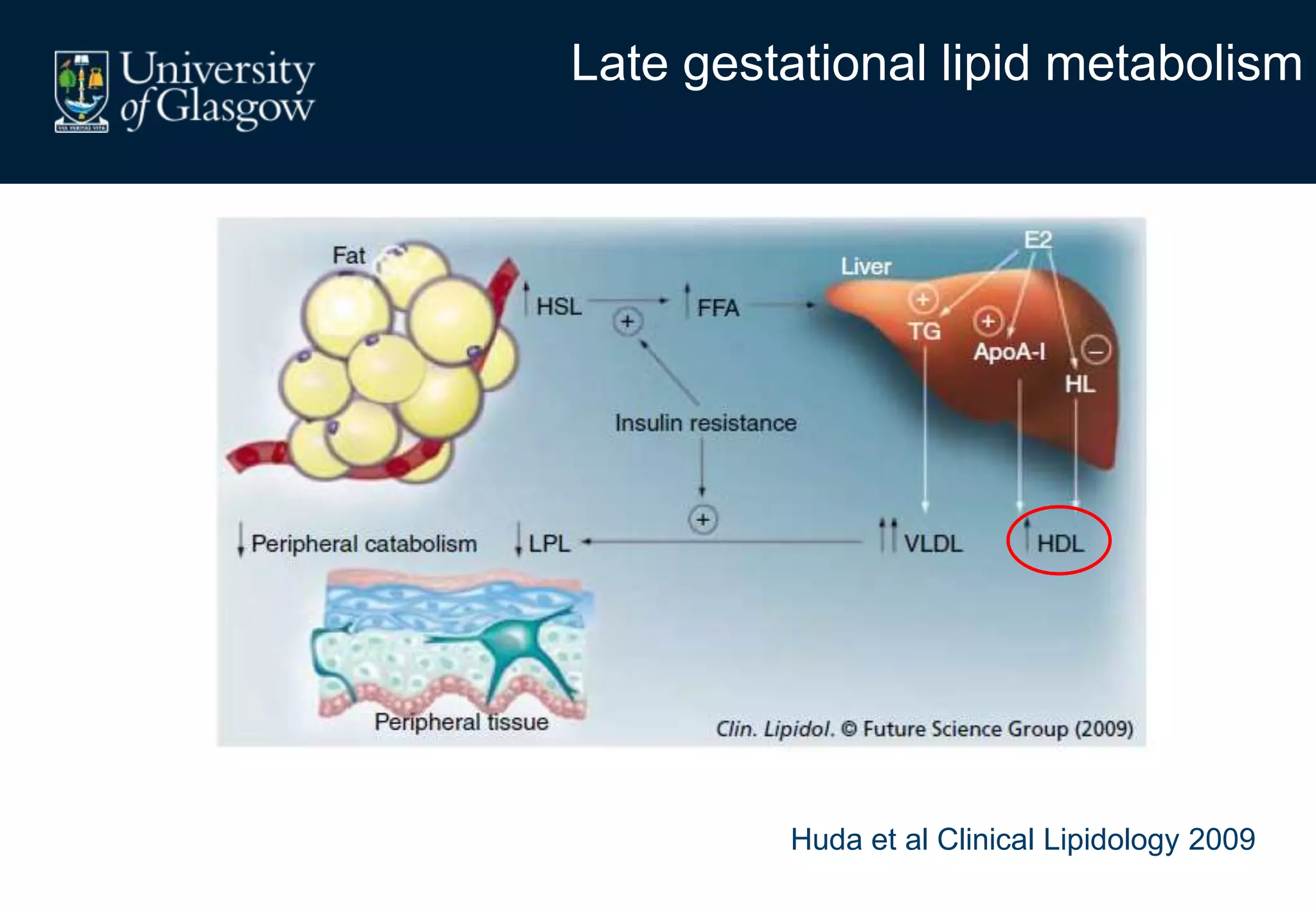
Late gestational lipid metabolism
Huda et al Clinical Lipidology 2009
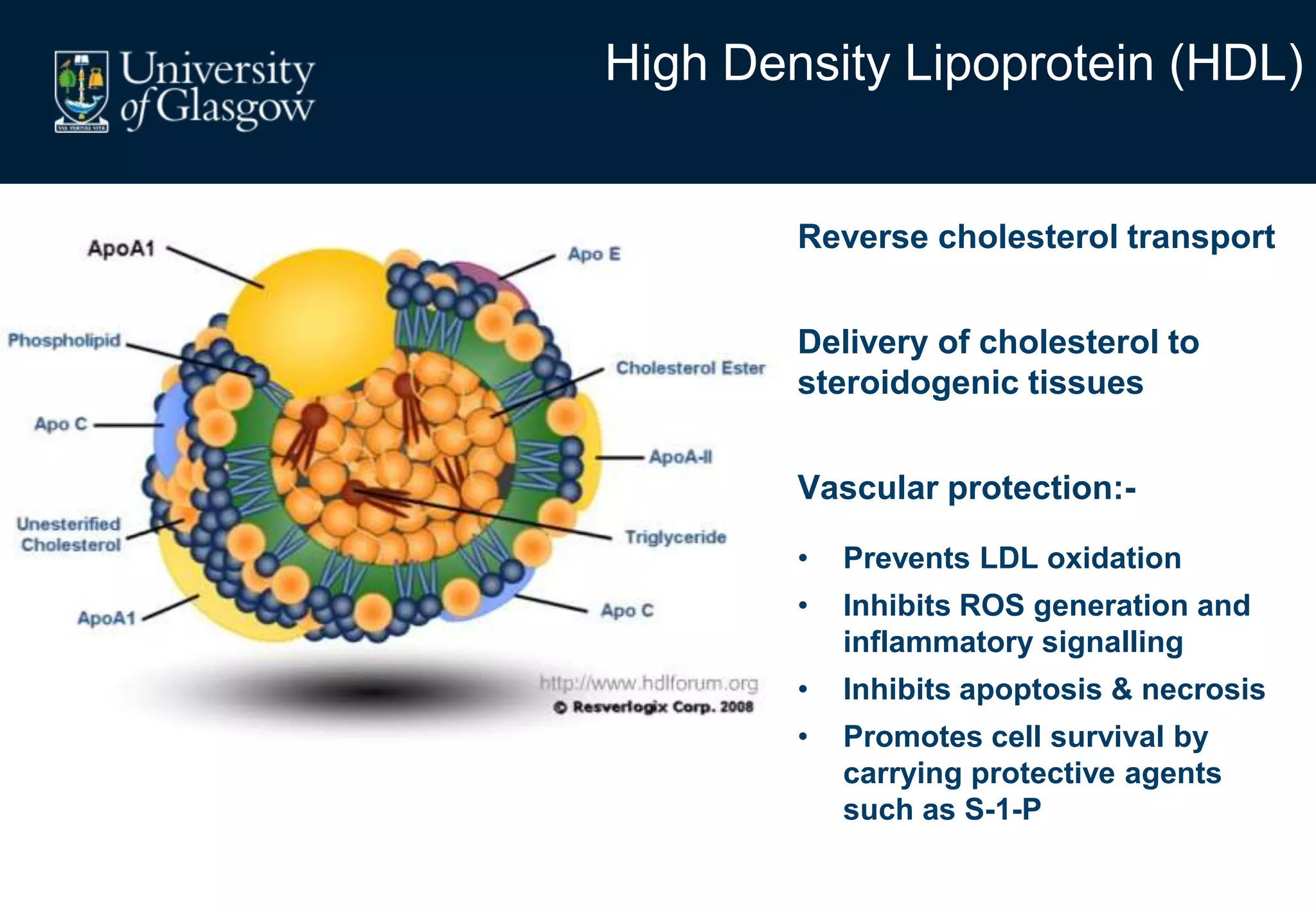
High Density Lipoprotein (HDL)
Reverse cholesterol transport
Delivery of cholesterol to
steroidogenic tissues
Vascular protection:-
• Prevents LDL oxidation
• Inhibits ROS generation and
inflammatory signalling
• Inhibits apoptosis & necrosis
• Promotes cell survival by
carrying protective agents
such as S-1-P
1.00
1.20
1.40
1.60
1.80
2.00
2.20
0 5 10 15 20 25 30 35 40 45 50 55 60 65
weeks (gestation)
mmol/LHDL
0.00
0.50
1.00
1.50
2.00
2.50
3.00
3.50
mmol/Ltriglyceride
HDL Triglyceride
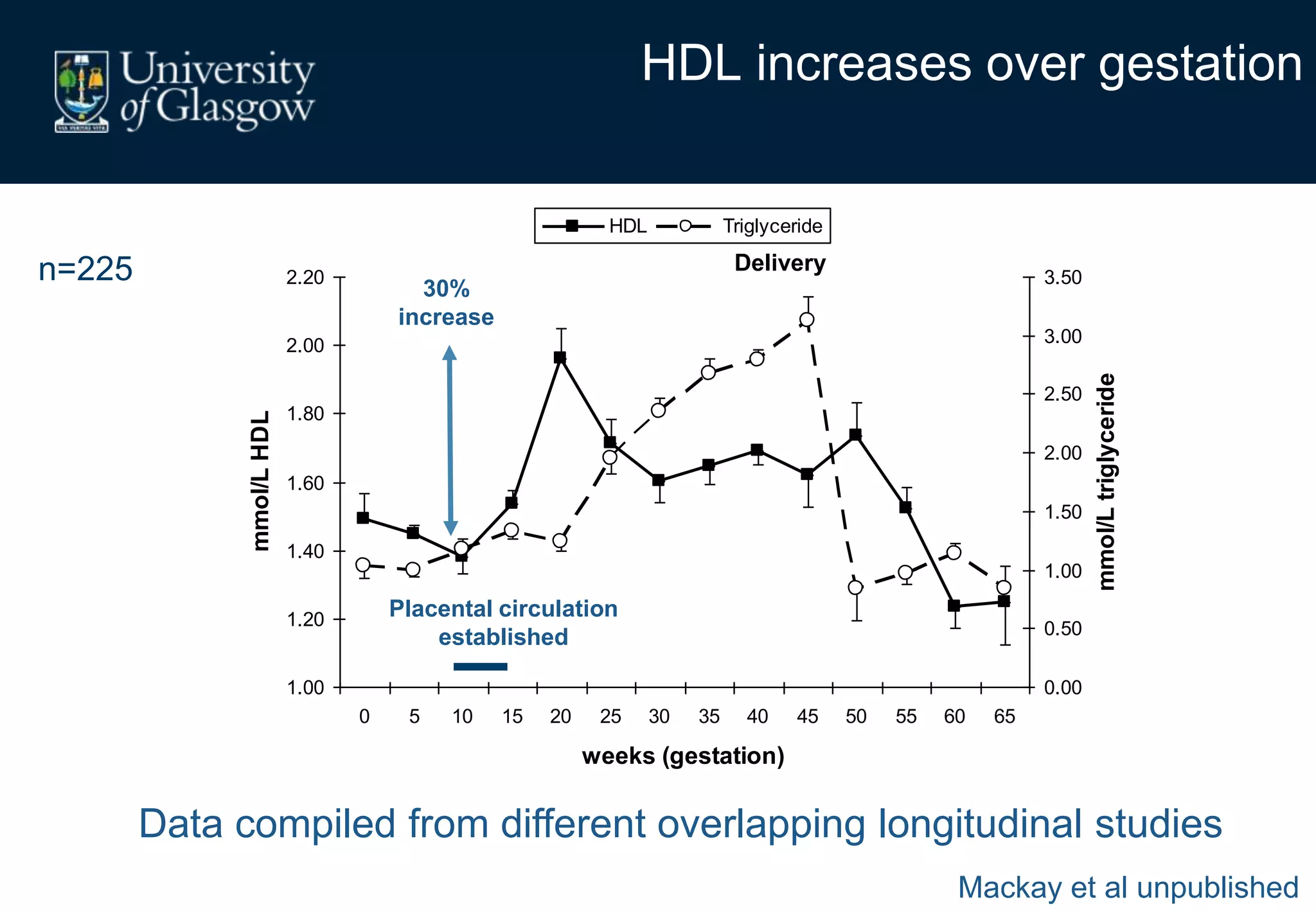
HDL increases over gestation
Delivery
30%
increase
Placental circulation
established
Data compiled from different overlapping longitudinal studies
n=225
Mackay et al unpublished
HDL and endothelium-dependent vascular
function in pregnancy
1.000.750.500.250.00-0.25-0.50
10000
5000
0
-5000
-10000
-15000
-20000
Gestational change in HDL (mmol/L)
GestationalchangeinEDMVF(PUMOhm.min)
r=0.42, p=0.013,
r2=18% independent of maternal age, parity and smoking status
Gestational change =
Post natal HDL - T3 HDL
No significant association
with endothelium-
independent
microvascular function
n=34 Mackay et al unpublished
Concentration vs function
But.............
HDL concentration tells us nothing about HDL function
10.07.55.02.50.0-2.5-5.0
2500
2000
1500
1000
500
0
-500
-1000
incremental AUC HDL (mmol/L*weeks)
incrementalAUCparaoxonase(ug/mL*weeks)
r=0.47, p=0.043, r2=17%
Paraoxonase – PON-1
• Responsible for most of the anti-
oxidative effects of HDL
• Protects against atherogenesis
• Synthesised in the liver, carried by
HDL
• Hydrolytic activity decreases lipid
peroxides
• Mixed data on the effect of gestation
on PON-1 activity
n=19
Mackay et al unpublished
Maternal Obesity
Maternal obesity and hormones
Meyer et al JCEM 2013
Huda et al unpublished
P=0.038
0
2
4
6
8
10
12
14
16
Progesterone Placental lactogen
Progesteroneorplacental
lactogen(ug/mL)
healthy overweight obese
Jarvie et al unpublished
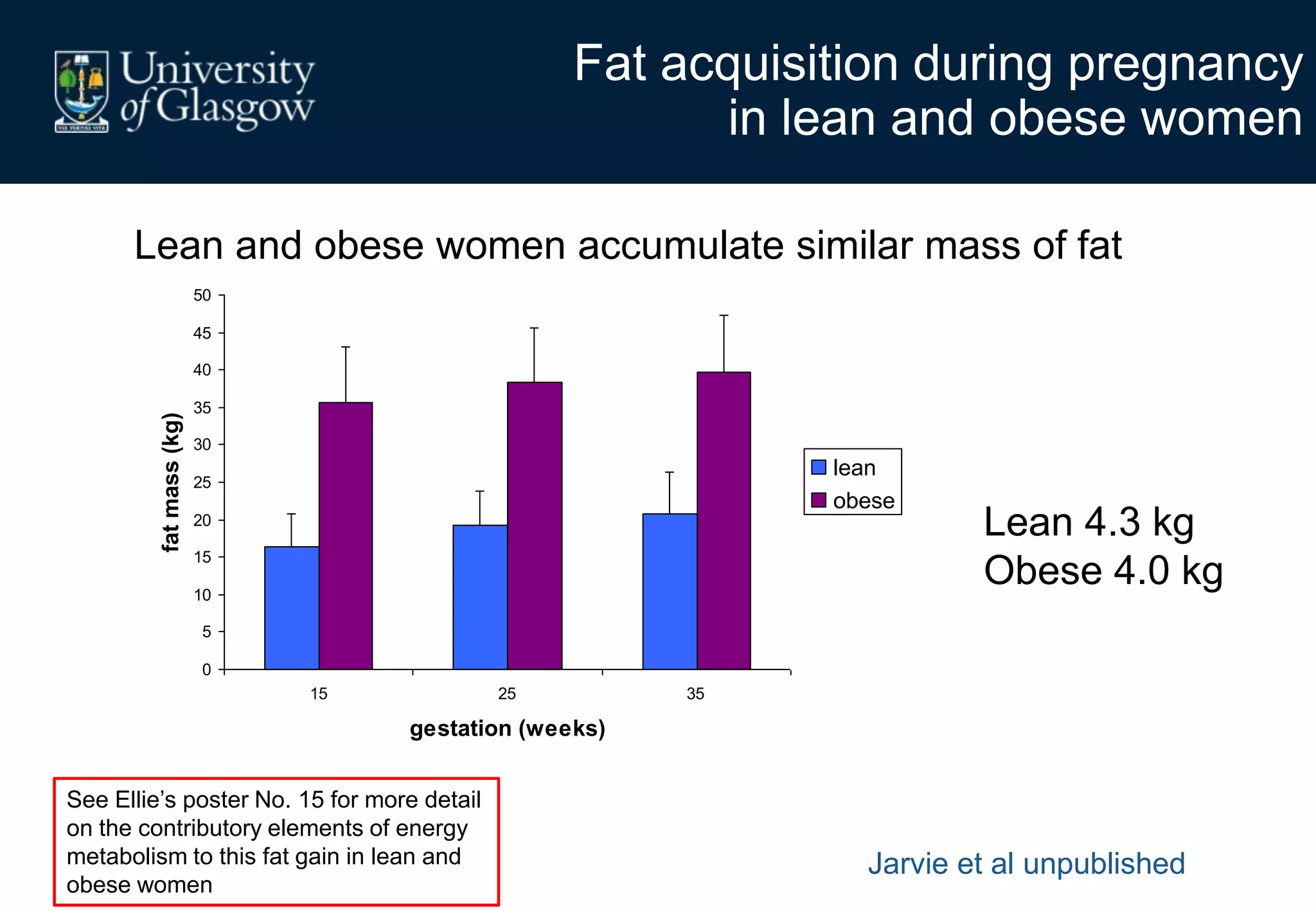
Fat acquisition during pregnancy
in lean and obese women
0
5
10
15
20
25
30
35
40
45
50
15 25 35
gestation (weeks)
fatmass(kg)
lean
obese
Lean 4.3 kg
Obese 4.0 kg
Lean and obese women accumulate similar mass of fat
See Ellie’s poster No. 15 for more detail
on the contributory elements of energy
metabolism to this fat gain in lean and
obese women
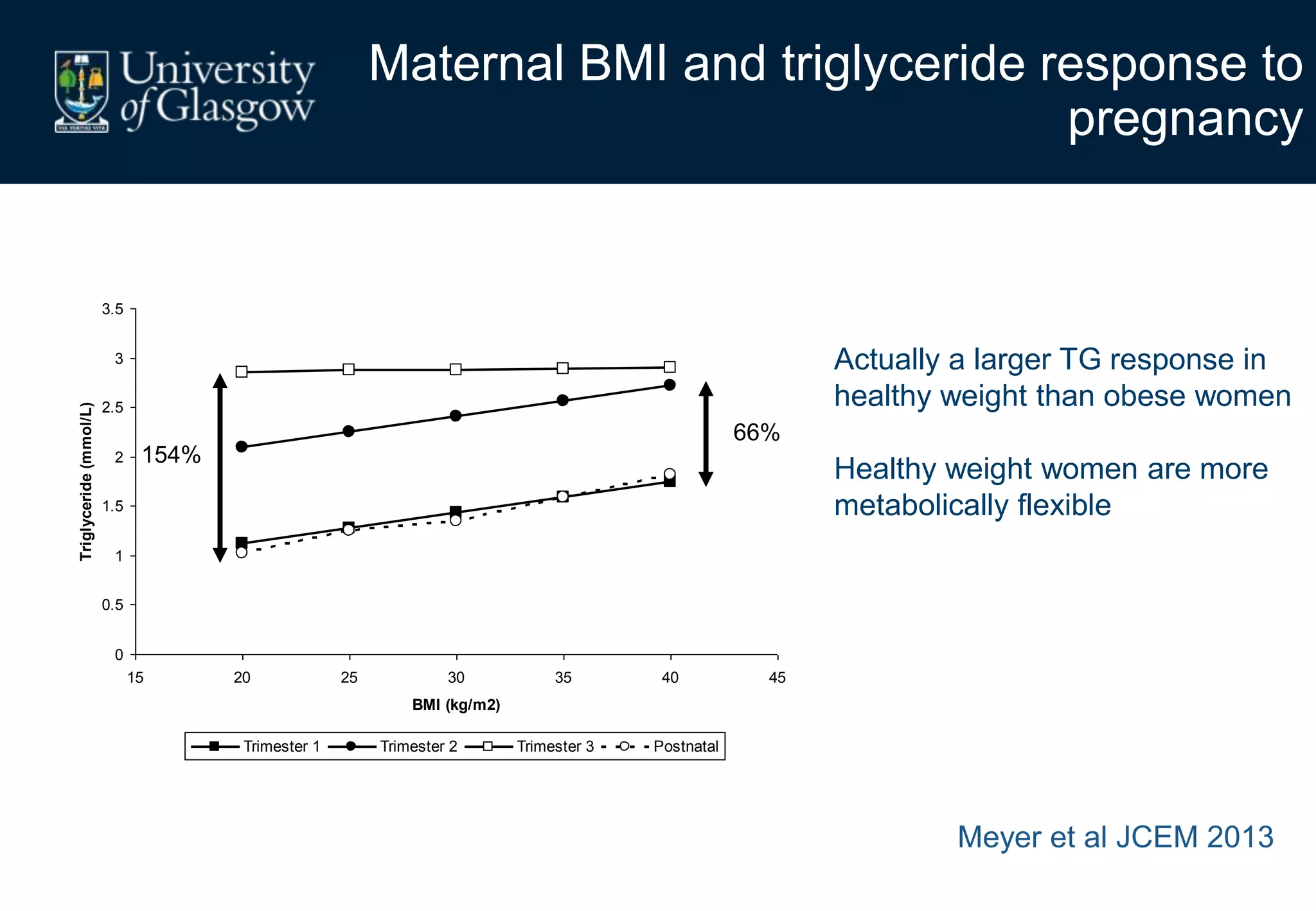
Maternal BMI and triglyceride response to
pregnancy
0
0.5
1
1.5
2
2.5
3
3.5
15 20 25 30 35 40 45
BMI (kg/m2)
Triglyceride(mmol/L)
Trimester 1 Trimester 2 Trimester 3 Postnatal
154%
66%
Meyer et al JCEM 2013
Actually a larger TG response in
healthy weight than obese women
Healthy weight women are more
metabolically flexible
baseline
gestation
(weeks)
metabolic marker
(concentration)
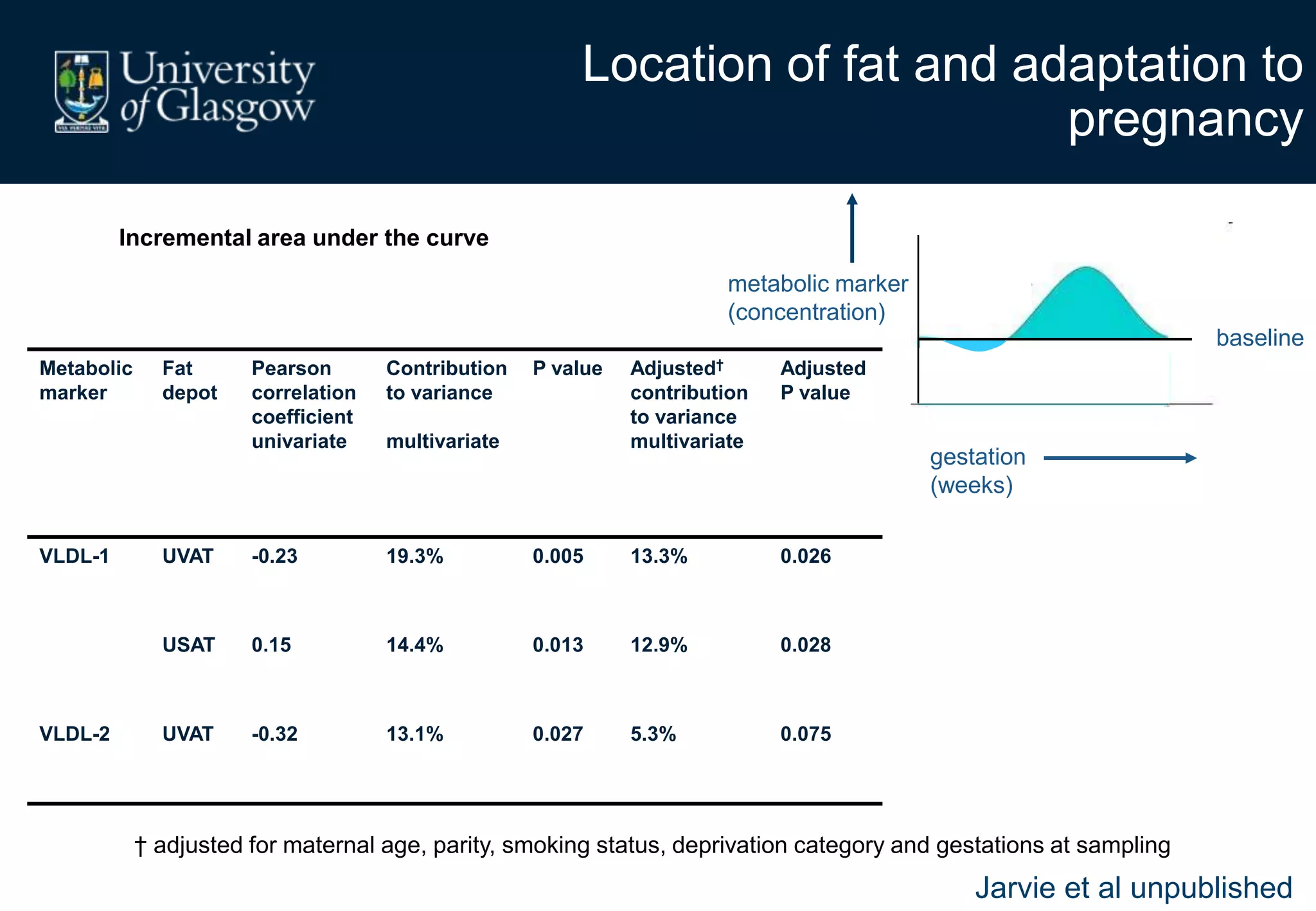
Location of fat and adaptation to
pregnancy
Metabolic
marker
Fat
depot
Pearson
correlation
coefficient
univariate
Contribution
to variance
multivariate
P value Adjusted†
contribution
to variance
multivariate
Adjusted
P value
VLDL-1 UVAT -0.23 19.3% 0.005 13.3% 0.026
USAT 0.15 14.4% 0.013 12.9% 0.028
VLDL-2 UVAT -0.32 13.1% 0.027 5.3% 0.075
Incremental area under the curve
† adjusted for maternal age, parity, smoking status, deprivation category and gestations at sampling
Jarvie et al unpublished
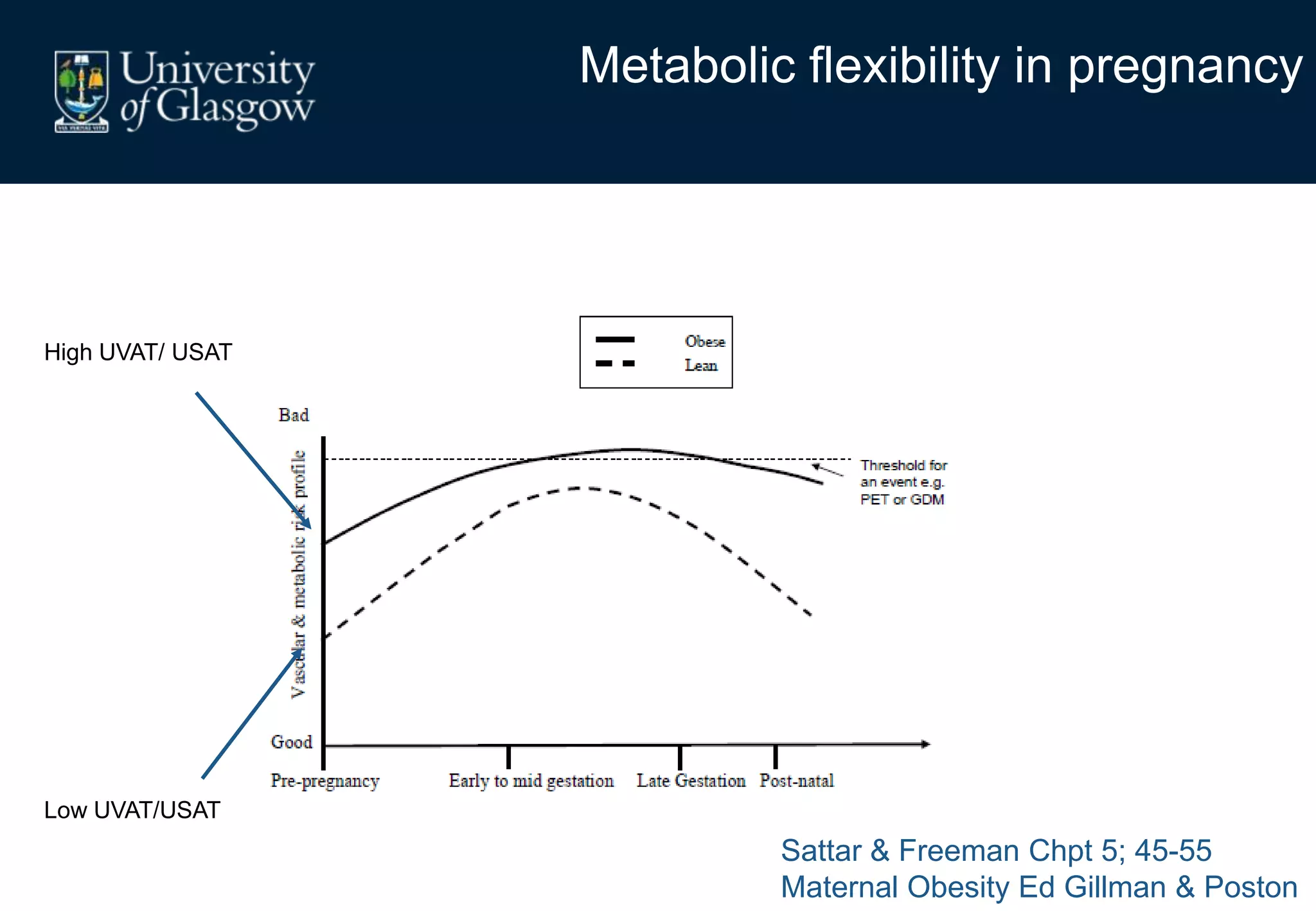
Metabolic flexibility in pregnancy
High UVAT/ USAT
Low UVAT/USAT
Sattar & Freeman Chpt 5; 45-55
Maternal Obesity Ed Gillman & Poston
Obese pregnancy & microvascular
function
Predictors of endothelium-dependent
microvascular function in obese
pregnancy:
• obesity, 19.3%, p<0.001
• gestation, 11.2% p<0.001
• IL-6, 4.0%, p=0.002
• IL-10, 2.4%. P=0.018
Endothelium dependent
Endothelium independent
Stewart et al JCEM 2007
P<0.001
P=0.021
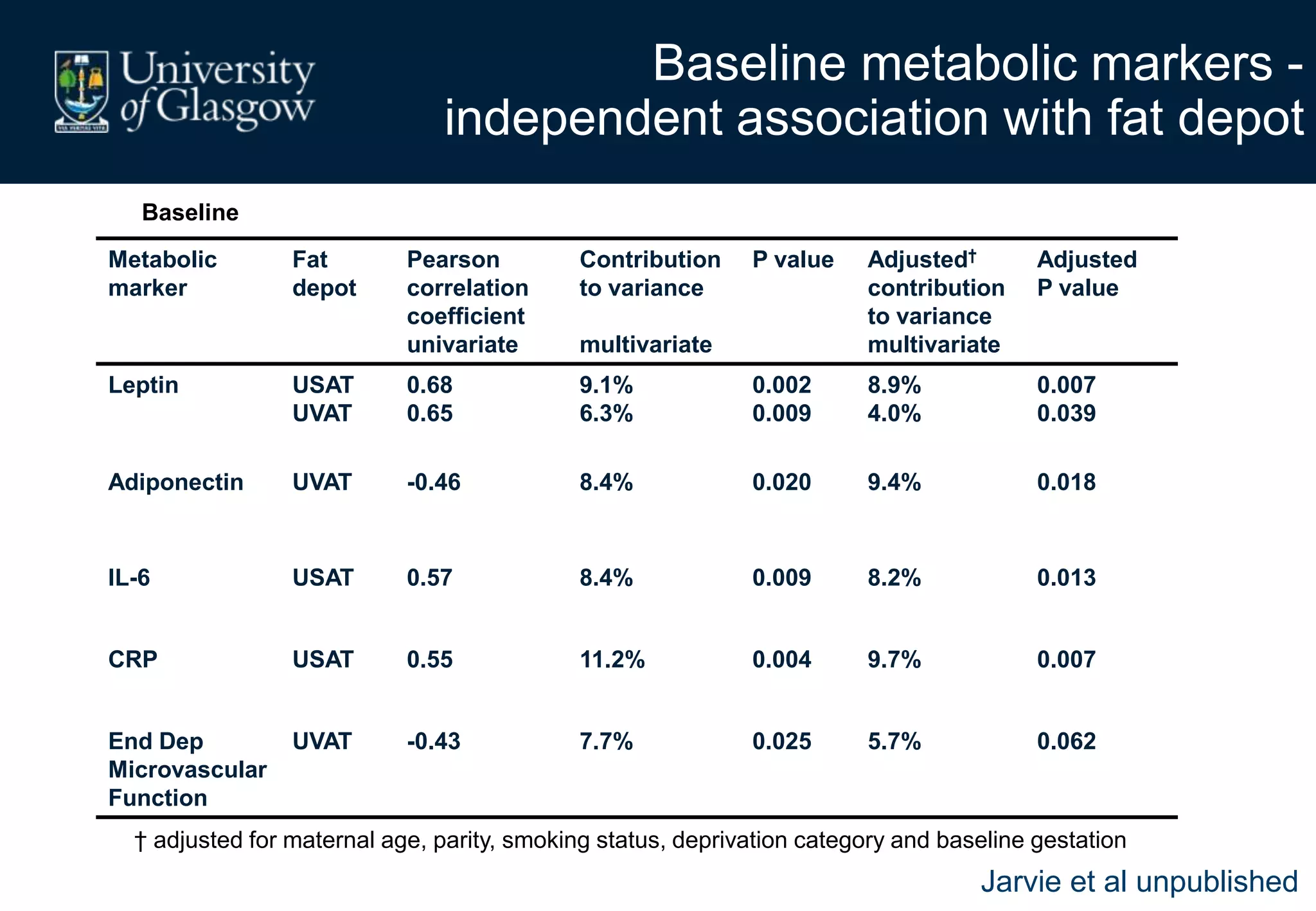
Baseline metabolic markers -
independent association with fat depot
Metabolic
marker
Fat
depot
Pearson
correlation
coefficient
univariate
Contribution
to variance
multivariate
P value Adjusted†
contribution
to variance
multivariate
Adjusted
P value
Leptin USAT
UVAT
0.68
0.65
9.1%
6.3%
0.002
0.009
8.9%
4.0%
0.007
0.039
Adiponectin UVAT -0.46 8.4% 0.020 9.4% 0.018
IL-6 USAT 0.57 8.4% 0.009 8.2% 0.013
CRP USAT 0.55 11.2% 0.004 9.7% 0.007
End Dep
Microvascular
Function
UVAT -0.43 7.7% 0.025 5.7% 0.062
† adjusted for maternal age, parity, smoking status, deprivation category and baseline gestation
Baseline
Jarvie et al unpublished
Hypertrophy vs hyperplasia of adipocytes
Increased flux of non-esterified fatty acids (NEFA)
Central obesity
Non-obese or lower
body obesity
macrophage infiltration
and adipokine secretion
lipolysis
Hypertrophy Hyperplasia
Ex-vivo maternal USAT adipocyte
CRP secretion
USAT and UVAT adipocytes
were prepared by collagen
digestion from fat biopsies at C-
section.
CRP secretion from these
adipocytes was measured using
a suspension array (Bioplex).
USAT, but not UVAT, adipocyte
CRP secretion correlated with
third trimester maternal plasma
CRP levels.
3.02.52.01.51.0
1.2
1.0
0.8
0.6
0.4
0.2
0.0
log CRP basal release (SAT)
logmaternalCRP(plasma)
r=0.66
r=0.66, p=0.005
Huda et al unpublished
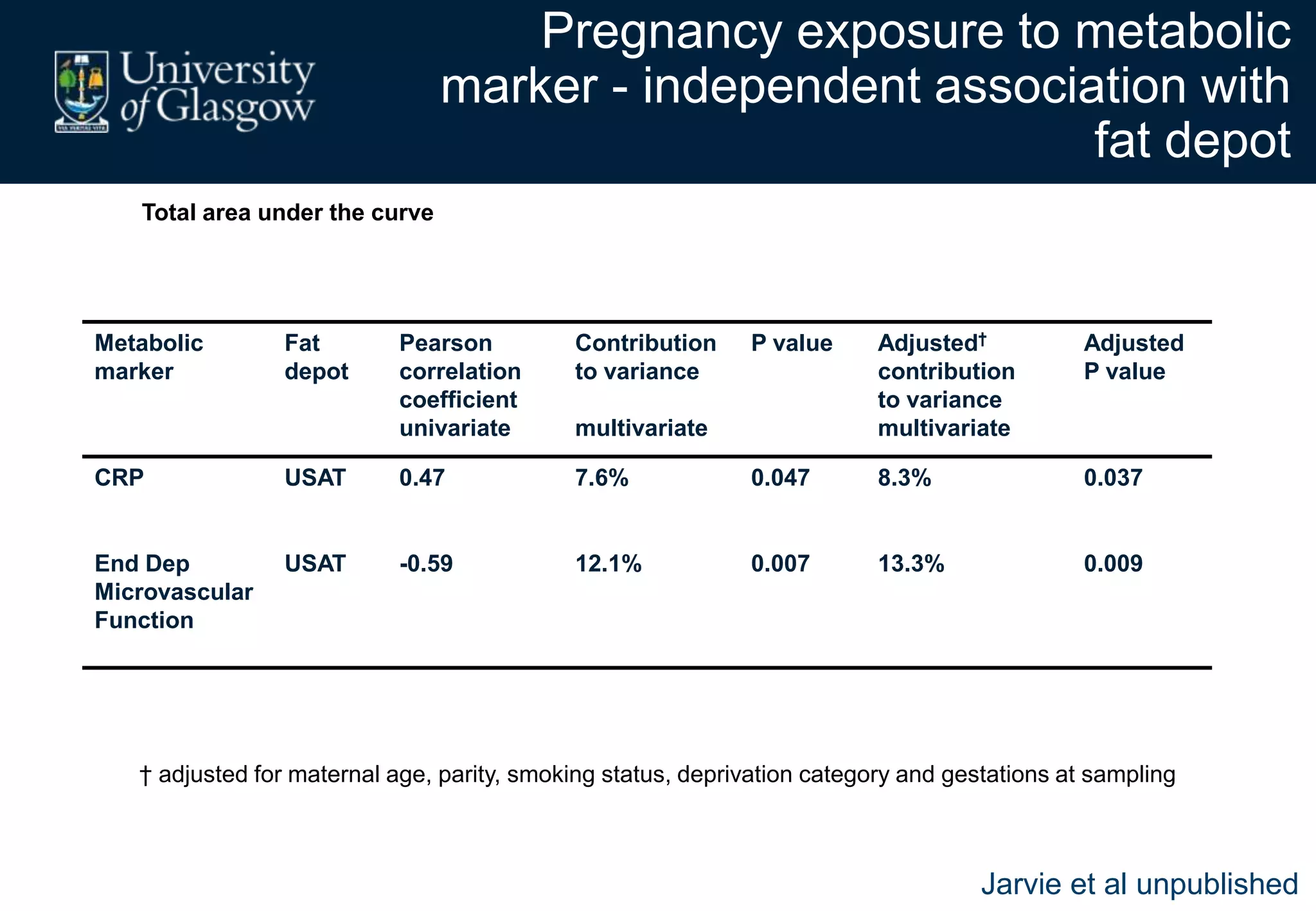
Pregnancy exposure to metabolic
marker - independent association with
fat depot
Metabolic
marker
Fat
depot
Pearson
correlation
coefficient
univariate
Contribution
to variance
multivariate
P value Adjusted†
contribution
to variance
multivariate
Adjusted
P value
CRP USAT 0.47 7.6% 0.047 8.3% 0.037
End Dep
Microvascular
Function
USAT -0.59 12.1% 0.007 13.3% 0.009
Total area under the curve
† adjusted for maternal age, parity, smoking status, deprivation category and gestations at sampling
Jarvie et al unpublished
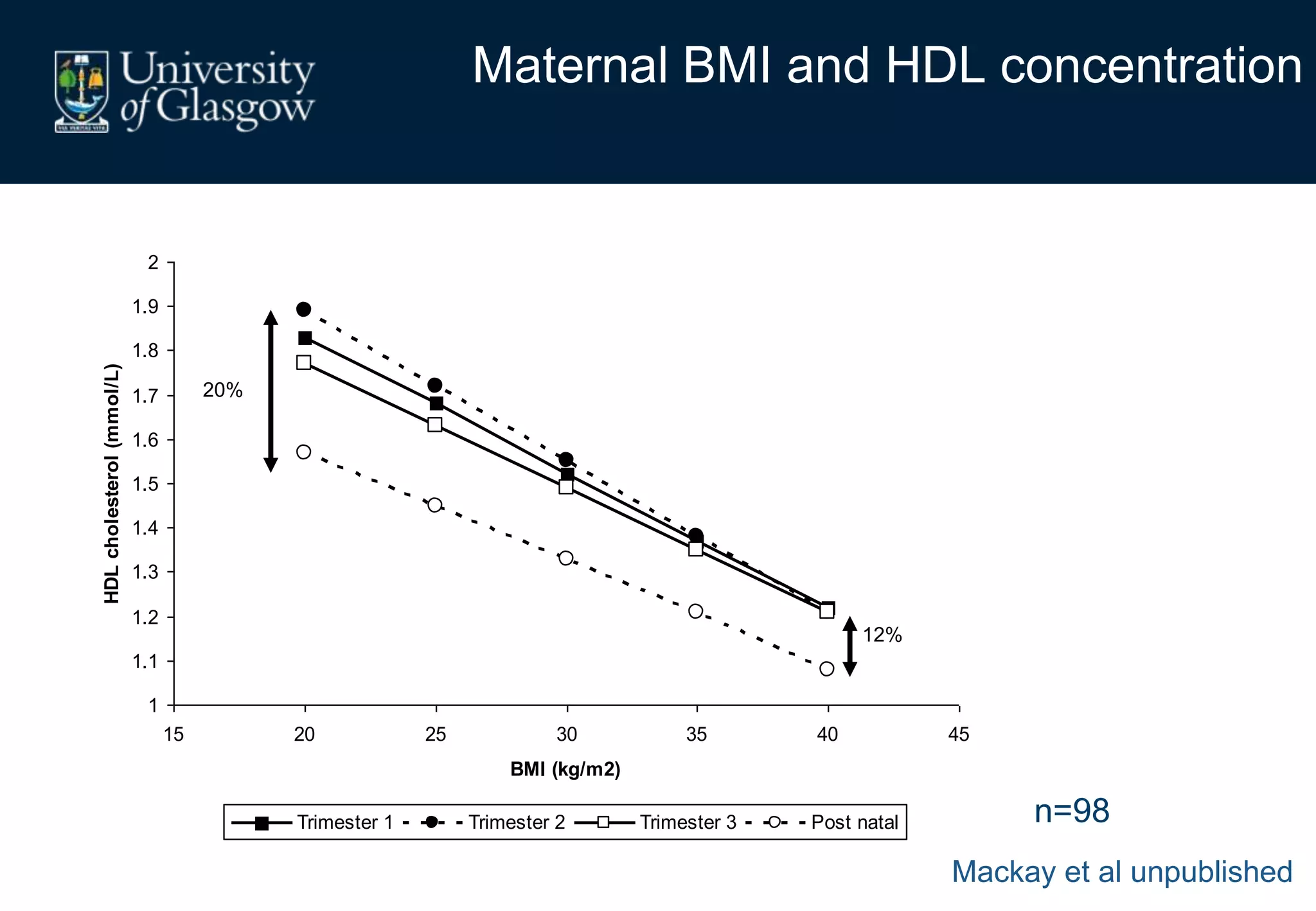
Maternal BMI and HDL concentration
1
1.1
1.2
1.3
1.4
1.5
1.6
1.7
1.8
1.9
2
15 20 25 30 35 40 45
BMI (kg/m2)
HDLcholesterol(mmol/L)
Trimester 1 Trimester 2 Trimester 3 Post natal
20%
12%
n=98
Mackay et al unpublished
Pregnancy Complications
O’Brien et al (2003) Epidemiology
1 BMI unit 0.5% PE prevalence
Torloni et al (2009) Obesity Rev
1 BMI unit 0.9% GDM prevalence
Maternal BMI and incidence of GDM
and PE
Obesity and the development of type 2
diabetes in the non-pregnant
Excess dietary fat
NEFA spillover
pancreatic beta cell
muscle
liver
Hypertrophic obesity
Ectopic lipid accumulation
Adipocyte function in PE
FCISI
control vs. PE
FCISI(%)
-50
0
50
100
150
Control ControlPE PE
SAT
VAT
0.04
FCISI
Control vs. PE
Fat cell insulin sensitivity index (FCISI) –
the ability of insulin to suppress beta
adrenergic stimulated lipolysis
Huda et al unpublished
In PE, SAT adipocytes as insulin resistant
as VAT
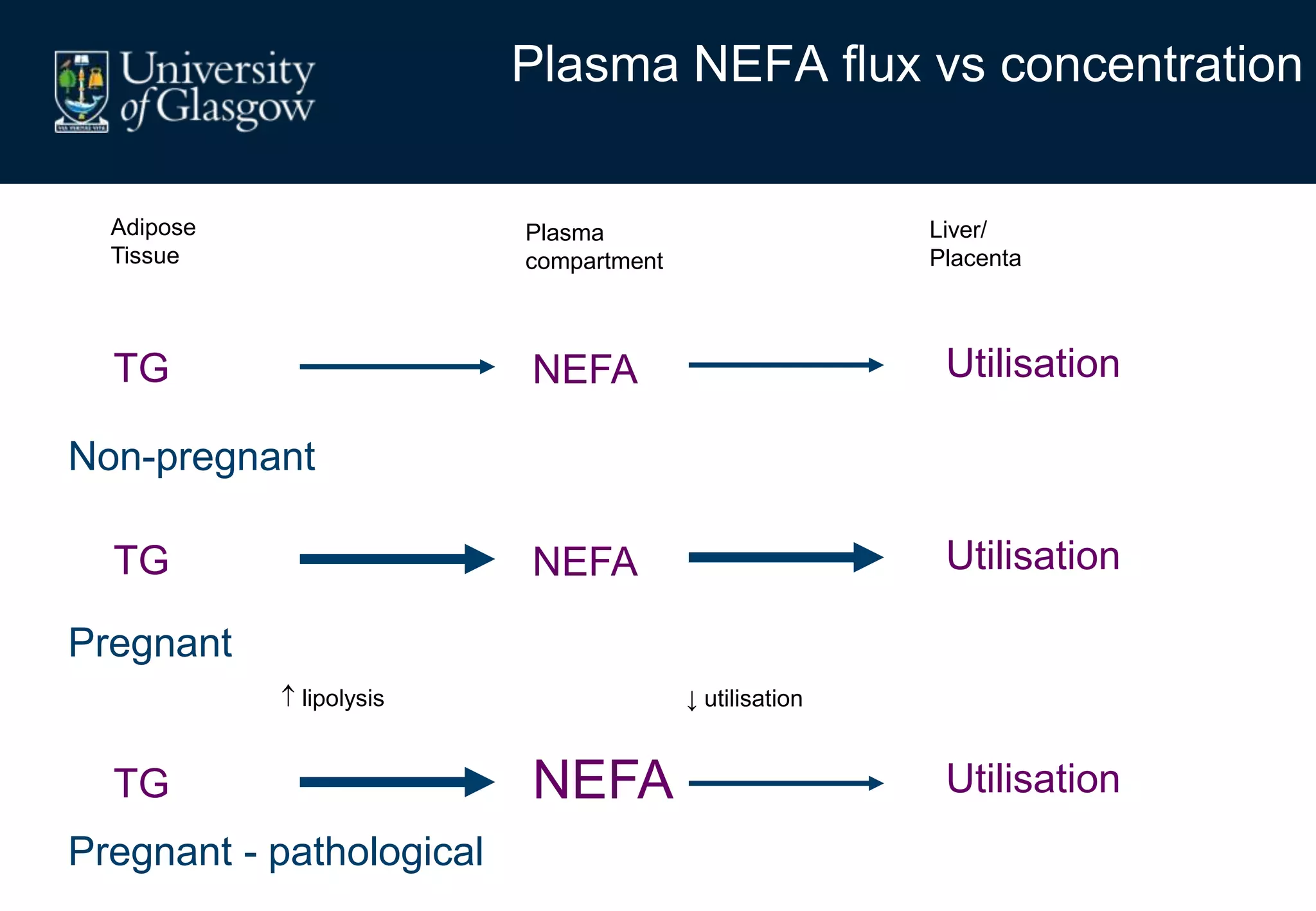
Plasma NEFA flux vs concentration
TG NEFA
Adipose
Tissue
Plasma
compartment
Liver/
Placenta
Utilisation
TG NEFA Utilisation
TG NEFA Utilisation
lipolysis ↓ utilisation
Non-pregnant
Pregnant
Pregnant - pathological
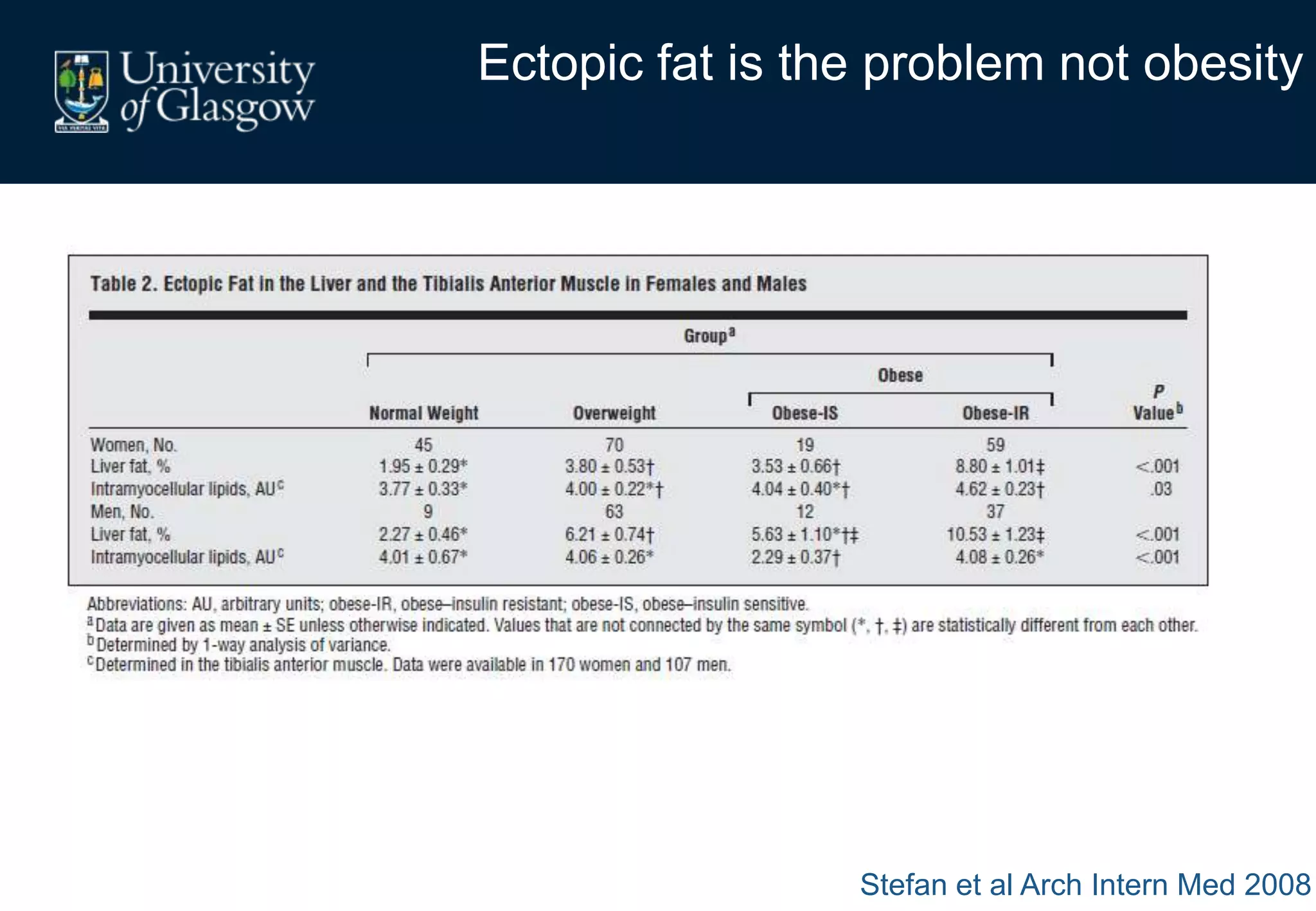
Ectopic fat is the problem not obesity
Stefan et al Arch Intern Med 2008
Plasma markers of liver fat in the
non-pregnant
• Fatty liver is a powerful determinant of plasma small dense LDL
(Sugino et al J Atheroscler Thromb 2011;18:1-7)
• Fatty liver in type 2 diabetes is associated with increased small
dense LDL (Toledo et al Diabetes Care 2006;29:1845-50)
• In NAFLD there is depletion of LC PUFA possibly via reduced
5- and 6-desaturase activities (Videla et al, Free Radic Biol Med 2004)
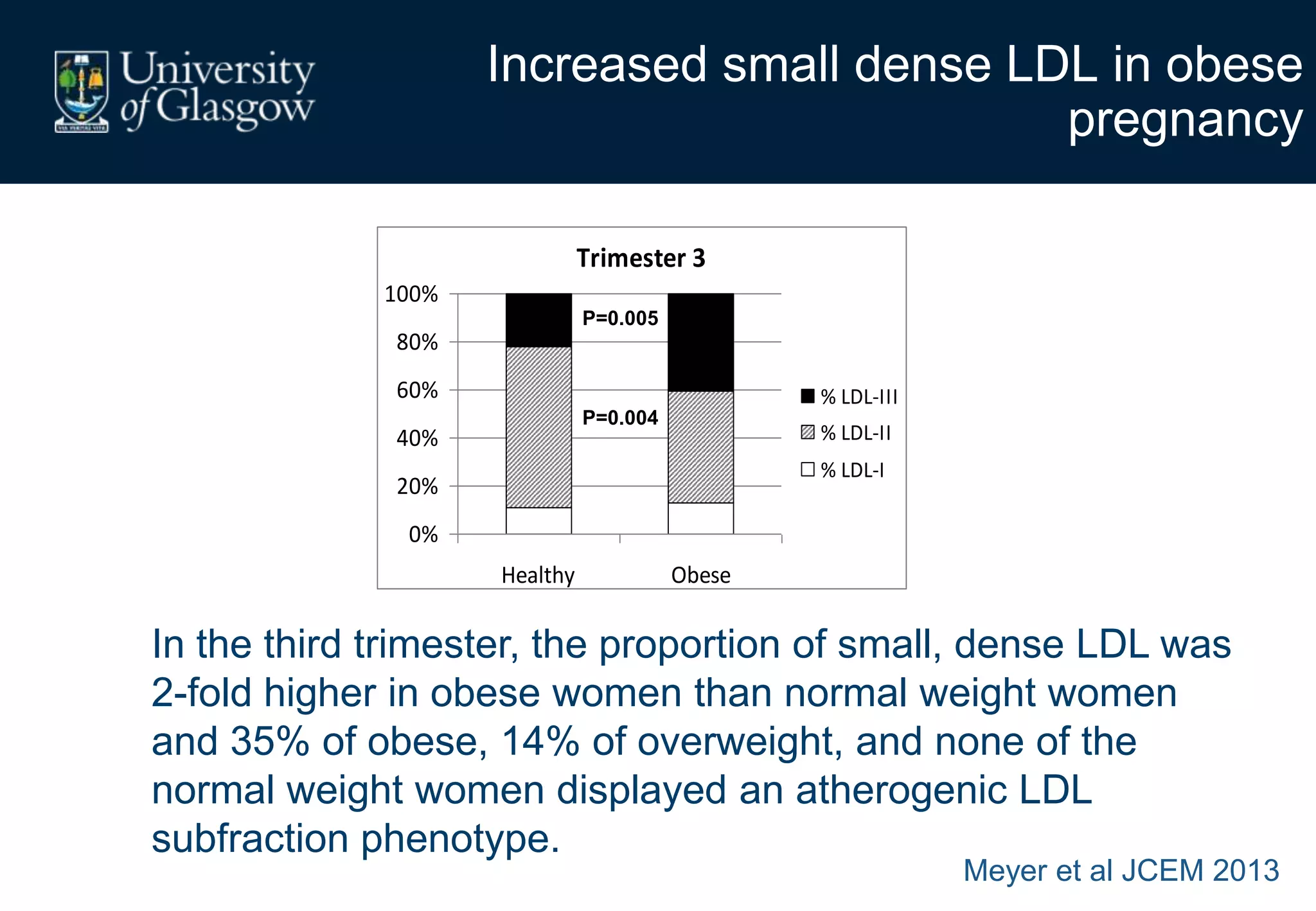
Increased small dense LDL in obese
pregnancy
In the third trimester, the proportion of small, dense LDL was
2-fold higher in obese women than normal weight women
and 35% of obese, 14% of overweight, and none of the
normal weight women displayed an atherogenic LDL
subfraction phenotype.
Trimester 3
0%
20%
40%
60%
80%
100%
Healthy Obese
% LDL-III
% LDL-II
% LDL-I
P=0.004
P=0.005
Meyer et al JCEM 2013
Evidence for ectopic fat in PE -
decreased LC PUFA synthesis
Maternal Cord
Maternal and cord blood LC PUFA
concentrations
Subcutaneous adipose tissue
enzyme mRNA expression
FADS1 - 5 desaturase
FADS2 - 5 desaturase
SCD - stearoyl coA desaturase
ELOVL2- very long chain FA elongase
ELOVL6 – long chain FA elongase
MacKay et al Hypertension 2012
Subcutaneous adipose tissue
0
2
4
6
8
10
12
14
FADS1 FADS2 SCD ELOVL2 ELOVL6
mRNAexpression(sqrttarget/PPIA)
Control
PE
IUGR
P=0.020
*
P=0.001
*
P=0.043
#
Excess dietary fat
pancreas placenta?liver
Hypertrophic obesity
Ectopic lipid accumulation
Ectopic sites of fat storage in
pregnancy
NEFA
spillover
visceral
adipose tissue
blood
vessel
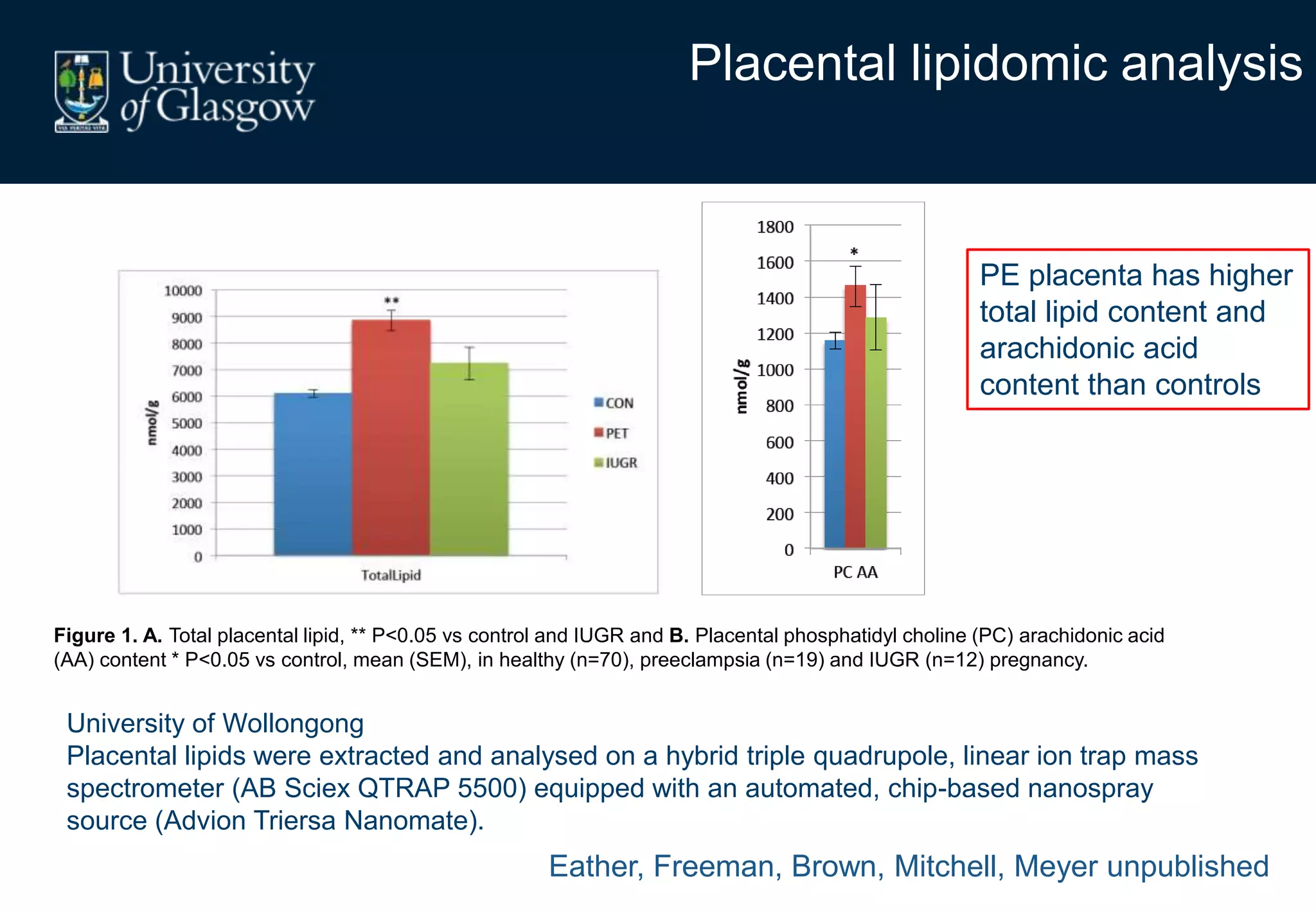
Placental lipidomic analysis
Figure 1. A. Total placental lipid, ** P<0.05 vs control and IUGR and B. Placental phosphatidyl choline (PC) arachidonic acid
(AA) content * P<0.05 vs control, mean (SEM), in healthy (n=70), preeclampsia (n=19) and IUGR (n=12) pregnancy.
Eather, Freeman, Brown, Mitchell, Meyer unpublished
University of Wollongong
Placental lipids were extracted and analysed on a hybrid triple quadrupole, linear ion trap mass
spectrometer (AB Sciex QTRAP 5500) equipped with an automated, chip-based nanospray
source (Advion Triersa Nanomate).
PE placenta has higher
total lipid content and
arachidonic acid
content than controls
Implications for placental function –
inflammation?
Figure 1: Placental samples showing CD68 positive macrophages (brown) under magnification
x 40. (A) BMI ≥35 kg/m2, (B) BMI <35 kg/m2. Scale bar (bottom right) represents 50 m.
Figure 1C: Boxplot comparing log macrophage counts in the BMI<35kg/m2 group compared to
the BMI≥35kg/m2 group. Represented as median, inter-quartile range, maximum and minimum
of log transformed data.
A
B
>or=35<35
3.5
3.0
2.5
2.0
1.5
1.0
0.5
BMI (kg/m2 )Logmacrophagedensity(countsperfield)
p=0.004
Huda et al unpublished
Pavan et al Endocrin 2004
……probably via LXR activation
OxLDL inhibits trophoblast invasion…..
Implications for placental function –
trophoblast function?
Decreased antioxidant defences in
preeclampsia
0
50
100
150
200
250
300
Control PE IUGR
Paraoxonaseactivity(ug/mL)
P=0.012
n=125 n=57 n=16
Lower paraoxonase activity in
preeclampsia
Dysfunctional HDL?
Mackay et al unpublished
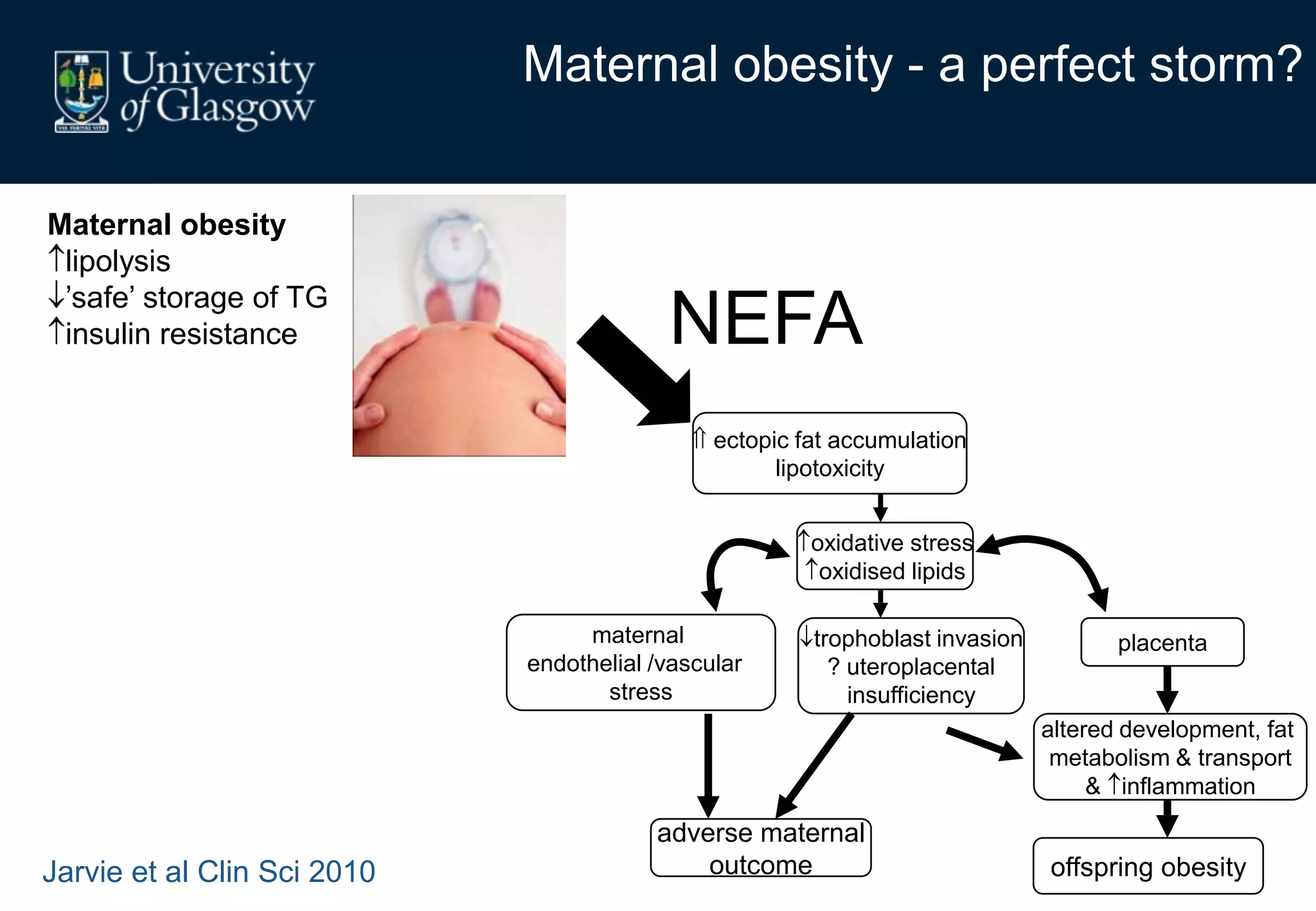
Maternal obesity - a perfect storm?
Maternal obesity
lipolysis
’safe’ storage of TG
insulin resistance
oxidative stress
oxidised lipids
ectopic fat accumulation
lipotoxicity
placenta
NEFA
maternal
endothelial /vascular
stress
trophoblast invasion
? uteroplacental
insufficiency
altered development, fat
metabolism & transport
& inflammation
offspring obesity
adverse maternal
outcomeJarvie et al Clin Sci 2010
Acknowledgements
ICAMS
Ellie Jarvie
Rachel Forrest
Ann Brown
Fiona Jordan
Vanessa Mackay (née
Rodie)
Frances Stewart
Christopher Onyiaodike
Naveed Sattar
Muriel Caslake
Glasgow Collaborators
Bill Ferrell
Shahzya Huda
Scott Nelson
University of Manchester
Mike Mackness
Project students
Jack Bray
Sam Eather
Louise McKenna
Iain Martin
Nicole Patterson
University of Wollongong
Barbara Meyer
Todd Mitchell
Simon Brown
University of Surrey
Bruce Griffin
University of Umea
Gunilla Olivecrona

Freeman o&p2013

  • 1.
    The impact ofobesity on the maternal metabolic adaptation to pregnancy Dilys J Freeman Institute for Cardiovascular and Medical Sciences University of Glasgow
  • 2.
    Dilys J Freeman Disclosedno conflict of interest Presenter Disclosure Information
  • 3.
    • Healthy pregnancy •Obese pregancy • Complicated pregnancy (preeclampsia)
  • 4.
  • 5.
    Gestational hormonal changes Paulevand Zubieta-Calleja, Textbook in Medical Physiology and Pathophysiology, 2nd Ed
  • 6.
    Taggart (1967) BrJ Nutr 21;439 Fat acquisition during pregnancy
  • 7.
    Adipose tissue adaptationto pregnancy First trimester gain in insulin sensitivity Gain in fat Mid-trimester loss of insulin sensitivity Increased adipose turnover Fetal growth Non-pregnant Mid gestation Term Huda et al Clinical Lipidology 2009 NEFA
  • 8.
    Plasma NEFA fluxvs concentration TG NEFA Adipose Tissue Plasma compartment Liver/ Placenta Utilisation TG NEFA Utilisation Non-pregnant Pregnant
  • 9.
    SAT physiological storagedepot in pregnancy ↑ NEFA release pregnancy hormones insulin resistance + VLDL
  • 10.
    Adipose tissue depots– relative contribution Visceral (VAT) Subcutaneous Upper body (USAT) Lower body (LSAT) 0 0.05 0.1 0.15 0.2 0.25 0.3 0.35 0.4 0.45 0.5 total lipolysis net lipolysis mmol/L/ugDNAglycerolorNEFA USAT VAT Huda et al submitted P=0.005 * P=0.026 * USAT is more lipolytic than VAT in the third trimester of pregnancy Ex-vivo basal adipocyte lipolysis experiments
  • 11.
    Effect on lipolysis: ++- + + + -/?-+/? Forrest et al unpublished SAT and VAT lipolysis regulated differently Receptor profile suggests: - in VAT pregnancy hormones reduce lipolysis - in SAT pregnancy hormones promote lipolysis and adrenergic-driven lipolysis is reduced
  • 12.
    SAT as areservoir of fatty acids in health • Based on the functionality and size of the SAT depot, we would suggest that in healthy pregnancy plasma NEFA are derived from this depot • In the non-pregnant (Jensen et al JCEM 2008), USAT is estimated to be the source of 60% of circulating NEFA, LSAT 15-20% and VAT 6-17% • SAT provides a “safer” depot for gestationally-acquired fat as VAT releases NEFA into the portal circulation and hence directly to the liver
  • 13.
    SAT vs VATlipolytic and lipogenic function 0 20 40 60 80 100 120 insulin sensitivity percentinhibitionofIPA stimulatedlipolysis% USAT VAT P=0.046 * Ex-vivo basal adipocyte lipolysis experiments Huda et al submitted USAT and UVAT mRNA expression Insulin sensitivity assessed as insulin suppression of isopreterenol-stimulated lipolysis ExpressionrelativetoPPIA(%) 0 5 10 15 Subcutaneous Visceral * INSR ExpressionrelativetoPPIA(%) 0 50 100 150 200 *** LPL Subcutaneous Visceral LPL is a lipogenic enzyme Insulin receptor Lipoprotein lipase
  • 14.
    Improved vascular functionis a key adaptation to pregnancy Endothelium-dependent microvascular function Stewart et al JCEM 2007 P<0.001 Required for placental formation and perfusion
  • 15.
    Hypertriglyceridaemia: the need forvascular protection Rasmussen et al Scan J Clin Lab Inv 2009 Data compiled from different overlapping longitudinal studies * Significantly different from baseline 0.00 0.50 1.00 1.50 2.00 2.50 3.00 3.50 0 5 10 15 20 25 30 35 40 45 50 55 60 65 weeks (gestation) mmol/LTriglyceride Triglyceride * * * * * Mackay et al unpublished
  • 16.
    Late gestational lipidmetabolism Huda et al Clinical Lipidology 2009
  • 17.
    High Density Lipoprotein(HDL) Reverse cholesterol transport Delivery of cholesterol to steroidogenic tissues Vascular protection:- • Prevents LDL oxidation • Inhibits ROS generation and inflammatory signalling • Inhibits apoptosis & necrosis • Promotes cell survival by carrying protective agents such as S-1-P
  • 18.
    1.00 1.20 1.40 1.60 1.80 2.00 2.20 0 5 1015 20 25 30 35 40 45 50 55 60 65 weeks (gestation) mmol/LHDL 0.00 0.50 1.00 1.50 2.00 2.50 3.00 3.50 mmol/Ltriglyceride HDL Triglyceride HDL increases over gestation Delivery 30% increase Placental circulation established Data compiled from different overlapping longitudinal studies n=225 Mackay et al unpublished
  • 19.
    HDL and endothelium-dependentvascular function in pregnancy 1.000.750.500.250.00-0.25-0.50 10000 5000 0 -5000 -10000 -15000 -20000 Gestational change in HDL (mmol/L) GestationalchangeinEDMVF(PUMOhm.min) r=0.42, p=0.013, r2=18% independent of maternal age, parity and smoking status Gestational change = Post natal HDL - T3 HDL No significant association with endothelium- independent microvascular function n=34 Mackay et al unpublished
  • 20.
    Concentration vs function But............. HDLconcentration tells us nothing about HDL function
  • 21.
    10.07.55.02.50.0-2.5-5.0 2500 2000 1500 1000 500 0 -500 -1000 incremental AUC HDL(mmol/L*weeks) incrementalAUCparaoxonase(ug/mL*weeks) r=0.47, p=0.043, r2=17% Paraoxonase – PON-1 • Responsible for most of the anti- oxidative effects of HDL • Protects against atherogenesis • Synthesised in the liver, carried by HDL • Hydrolytic activity decreases lipid peroxides • Mixed data on the effect of gestation on PON-1 activity n=19 Mackay et al unpublished
  • 22.
  • 23.
    Maternal obesity andhormones Meyer et al JCEM 2013 Huda et al unpublished P=0.038 0 2 4 6 8 10 12 14 16 Progesterone Placental lactogen Progesteroneorplacental lactogen(ug/mL) healthy overweight obese
  • 24.
    Jarvie et alunpublished Fat acquisition during pregnancy in lean and obese women 0 5 10 15 20 25 30 35 40 45 50 15 25 35 gestation (weeks) fatmass(kg) lean obese Lean 4.3 kg Obese 4.0 kg Lean and obese women accumulate similar mass of fat See Ellie’s poster No. 15 for more detail on the contributory elements of energy metabolism to this fat gain in lean and obese women
  • 25.
    Maternal BMI andtriglyceride response to pregnancy 0 0.5 1 1.5 2 2.5 3 3.5 15 20 25 30 35 40 45 BMI (kg/m2) Triglyceride(mmol/L) Trimester 1 Trimester 2 Trimester 3 Postnatal 154% 66% Meyer et al JCEM 2013 Actually a larger TG response in healthy weight than obese women Healthy weight women are more metabolically flexible
  • 26.
    baseline gestation (weeks) metabolic marker (concentration) Location offat and adaptation to pregnancy Metabolic marker Fat depot Pearson correlation coefficient univariate Contribution to variance multivariate P value Adjusted† contribution to variance multivariate Adjusted P value VLDL-1 UVAT -0.23 19.3% 0.005 13.3% 0.026 USAT 0.15 14.4% 0.013 12.9% 0.028 VLDL-2 UVAT -0.32 13.1% 0.027 5.3% 0.075 Incremental area under the curve † adjusted for maternal age, parity, smoking status, deprivation category and gestations at sampling Jarvie et al unpublished
  • 27.
    Metabolic flexibility inpregnancy High UVAT/ USAT Low UVAT/USAT Sattar & Freeman Chpt 5; 45-55 Maternal Obesity Ed Gillman & Poston
  • 28.
    Obese pregnancy &microvascular function Predictors of endothelium-dependent microvascular function in obese pregnancy: • obesity, 19.3%, p<0.001 • gestation, 11.2% p<0.001 • IL-6, 4.0%, p=0.002 • IL-10, 2.4%. P=0.018 Endothelium dependent Endothelium independent Stewart et al JCEM 2007 P<0.001 P=0.021
  • 29.
    Baseline metabolic markers- independent association with fat depot Metabolic marker Fat depot Pearson correlation coefficient univariate Contribution to variance multivariate P value Adjusted† contribution to variance multivariate Adjusted P value Leptin USAT UVAT 0.68 0.65 9.1% 6.3% 0.002 0.009 8.9% 4.0% 0.007 0.039 Adiponectin UVAT -0.46 8.4% 0.020 9.4% 0.018 IL-6 USAT 0.57 8.4% 0.009 8.2% 0.013 CRP USAT 0.55 11.2% 0.004 9.7% 0.007 End Dep Microvascular Function UVAT -0.43 7.7% 0.025 5.7% 0.062 † adjusted for maternal age, parity, smoking status, deprivation category and baseline gestation Baseline Jarvie et al unpublished
  • 30.
    Hypertrophy vs hyperplasiaof adipocytes Increased flux of non-esterified fatty acids (NEFA) Central obesity Non-obese or lower body obesity macrophage infiltration and adipokine secretion lipolysis Hypertrophy Hyperplasia
  • 31.
    Ex-vivo maternal USATadipocyte CRP secretion USAT and UVAT adipocytes were prepared by collagen digestion from fat biopsies at C- section. CRP secretion from these adipocytes was measured using a suspension array (Bioplex). USAT, but not UVAT, adipocyte CRP secretion correlated with third trimester maternal plasma CRP levels. 3.02.52.01.51.0 1.2 1.0 0.8 0.6 0.4 0.2 0.0 log CRP basal release (SAT) logmaternalCRP(plasma) r=0.66 r=0.66, p=0.005 Huda et al unpublished
  • 32.
    Pregnancy exposure tometabolic marker - independent association with fat depot Metabolic marker Fat depot Pearson correlation coefficient univariate Contribution to variance multivariate P value Adjusted† contribution to variance multivariate Adjusted P value CRP USAT 0.47 7.6% 0.047 8.3% 0.037 End Dep Microvascular Function USAT -0.59 12.1% 0.007 13.3% 0.009 Total area under the curve † adjusted for maternal age, parity, smoking status, deprivation category and gestations at sampling Jarvie et al unpublished
  • 33.
    Maternal BMI andHDL concentration 1 1.1 1.2 1.3 1.4 1.5 1.6 1.7 1.8 1.9 2 15 20 25 30 35 40 45 BMI (kg/m2) HDLcholesterol(mmol/L) Trimester 1 Trimester 2 Trimester 3 Post natal 20% 12% n=98 Mackay et al unpublished
  • 34.
  • 35.
    O’Brien et al(2003) Epidemiology 1 BMI unit 0.5% PE prevalence Torloni et al (2009) Obesity Rev 1 BMI unit 0.9% GDM prevalence Maternal BMI and incidence of GDM and PE
  • 36.
    Obesity and thedevelopment of type 2 diabetes in the non-pregnant Excess dietary fat NEFA spillover pancreatic beta cell muscle liver Hypertrophic obesity Ectopic lipid accumulation
  • 37.
    Adipocyte function inPE FCISI control vs. PE FCISI(%) -50 0 50 100 150 Control ControlPE PE SAT VAT 0.04 FCISI Control vs. PE Fat cell insulin sensitivity index (FCISI) – the ability of insulin to suppress beta adrenergic stimulated lipolysis Huda et al unpublished In PE, SAT adipocytes as insulin resistant as VAT
  • 38.
    Plasma NEFA fluxvs concentration TG NEFA Adipose Tissue Plasma compartment Liver/ Placenta Utilisation TG NEFA Utilisation TG NEFA Utilisation lipolysis ↓ utilisation Non-pregnant Pregnant Pregnant - pathological
  • 39.
    Ectopic fat isthe problem not obesity Stefan et al Arch Intern Med 2008
  • 40.
    Plasma markers ofliver fat in the non-pregnant • Fatty liver is a powerful determinant of plasma small dense LDL (Sugino et al J Atheroscler Thromb 2011;18:1-7) • Fatty liver in type 2 diabetes is associated with increased small dense LDL (Toledo et al Diabetes Care 2006;29:1845-50) • In NAFLD there is depletion of LC PUFA possibly via reduced 5- and 6-desaturase activities (Videla et al, Free Radic Biol Med 2004)
  • 41.
    Increased small denseLDL in obese pregnancy In the third trimester, the proportion of small, dense LDL was 2-fold higher in obese women than normal weight women and 35% of obese, 14% of overweight, and none of the normal weight women displayed an atherogenic LDL subfraction phenotype. Trimester 3 0% 20% 40% 60% 80% 100% Healthy Obese % LDL-III % LDL-II % LDL-I P=0.004 P=0.005 Meyer et al JCEM 2013
  • 42.
    Evidence for ectopicfat in PE - decreased LC PUFA synthesis Maternal Cord Maternal and cord blood LC PUFA concentrations Subcutaneous adipose tissue enzyme mRNA expression FADS1 - 5 desaturase FADS2 - 5 desaturase SCD - stearoyl coA desaturase ELOVL2- very long chain FA elongase ELOVL6 – long chain FA elongase MacKay et al Hypertension 2012 Subcutaneous adipose tissue 0 2 4 6 8 10 12 14 FADS1 FADS2 SCD ELOVL2 ELOVL6 mRNAexpression(sqrttarget/PPIA) Control PE IUGR P=0.020 * P=0.001 * P=0.043 #
  • 43.
    Excess dietary fat pancreasplacenta?liver Hypertrophic obesity Ectopic lipid accumulation Ectopic sites of fat storage in pregnancy NEFA spillover visceral adipose tissue blood vessel
  • 44.
    Placental lipidomic analysis Figure1. A. Total placental lipid, ** P<0.05 vs control and IUGR and B. Placental phosphatidyl choline (PC) arachidonic acid (AA) content * P<0.05 vs control, mean (SEM), in healthy (n=70), preeclampsia (n=19) and IUGR (n=12) pregnancy. Eather, Freeman, Brown, Mitchell, Meyer unpublished University of Wollongong Placental lipids were extracted and analysed on a hybrid triple quadrupole, linear ion trap mass spectrometer (AB Sciex QTRAP 5500) equipped with an automated, chip-based nanospray source (Advion Triersa Nanomate). PE placenta has higher total lipid content and arachidonic acid content than controls
  • 45.
    Implications for placentalfunction – inflammation? Figure 1: Placental samples showing CD68 positive macrophages (brown) under magnification x 40. (A) BMI ≥35 kg/m2, (B) BMI <35 kg/m2. Scale bar (bottom right) represents 50 m. Figure 1C: Boxplot comparing log macrophage counts in the BMI<35kg/m2 group compared to the BMI≥35kg/m2 group. Represented as median, inter-quartile range, maximum and minimum of log transformed data. A B >or=35<35 3.5 3.0 2.5 2.0 1.5 1.0 0.5 BMI (kg/m2 )Logmacrophagedensity(countsperfield) p=0.004 Huda et al unpublished
  • 46.
    Pavan et alEndocrin 2004 ……probably via LXR activation OxLDL inhibits trophoblast invasion….. Implications for placental function – trophoblast function?
  • 47.
    Decreased antioxidant defencesin preeclampsia 0 50 100 150 200 250 300 Control PE IUGR Paraoxonaseactivity(ug/mL) P=0.012 n=125 n=57 n=16 Lower paraoxonase activity in preeclampsia Dysfunctional HDL? Mackay et al unpublished
  • 48.
    Maternal obesity -a perfect storm? Maternal obesity lipolysis ’safe’ storage of TG insulin resistance oxidative stress oxidised lipids ectopic fat accumulation lipotoxicity placenta NEFA maternal endothelial /vascular stress trophoblast invasion ? uteroplacental insufficiency altered development, fat metabolism & transport & inflammation offspring obesity adverse maternal outcomeJarvie et al Clin Sci 2010
  • 49.
    Acknowledgements ICAMS Ellie Jarvie Rachel Forrest AnnBrown Fiona Jordan Vanessa Mackay (née Rodie) Frances Stewart Christopher Onyiaodike Naveed Sattar Muriel Caslake Glasgow Collaborators Bill Ferrell Shahzya Huda Scott Nelson University of Manchester Mike Mackness Project students Jack Bray Sam Eather Louise McKenna Iain Martin Nicole Patterson University of Wollongong Barbara Meyer Todd Mitchell Simon Brown University of Surrey Bruce Griffin University of Umea Gunilla Olivecrona

Editor's Notes

  • #11 The anti-lipolytic alpha2 and the pro-lipolyic beta2 are more highly expressed in the subcutaneous depot.The beta-3 adrenoceptor is more highly expressed in the subcutaneous depot however, it’s physiological role is still debated as it isn’t thought to contribute to catecholamine-induced lipolysis in human adipocytes.B1 and B2 shown to be higher in visceral in non-pregnant – thought to be responsible for differences in catecholamine responses