Design variations for freeform aspheric telescopes 
David Shafer 
David Shafer Optical Design
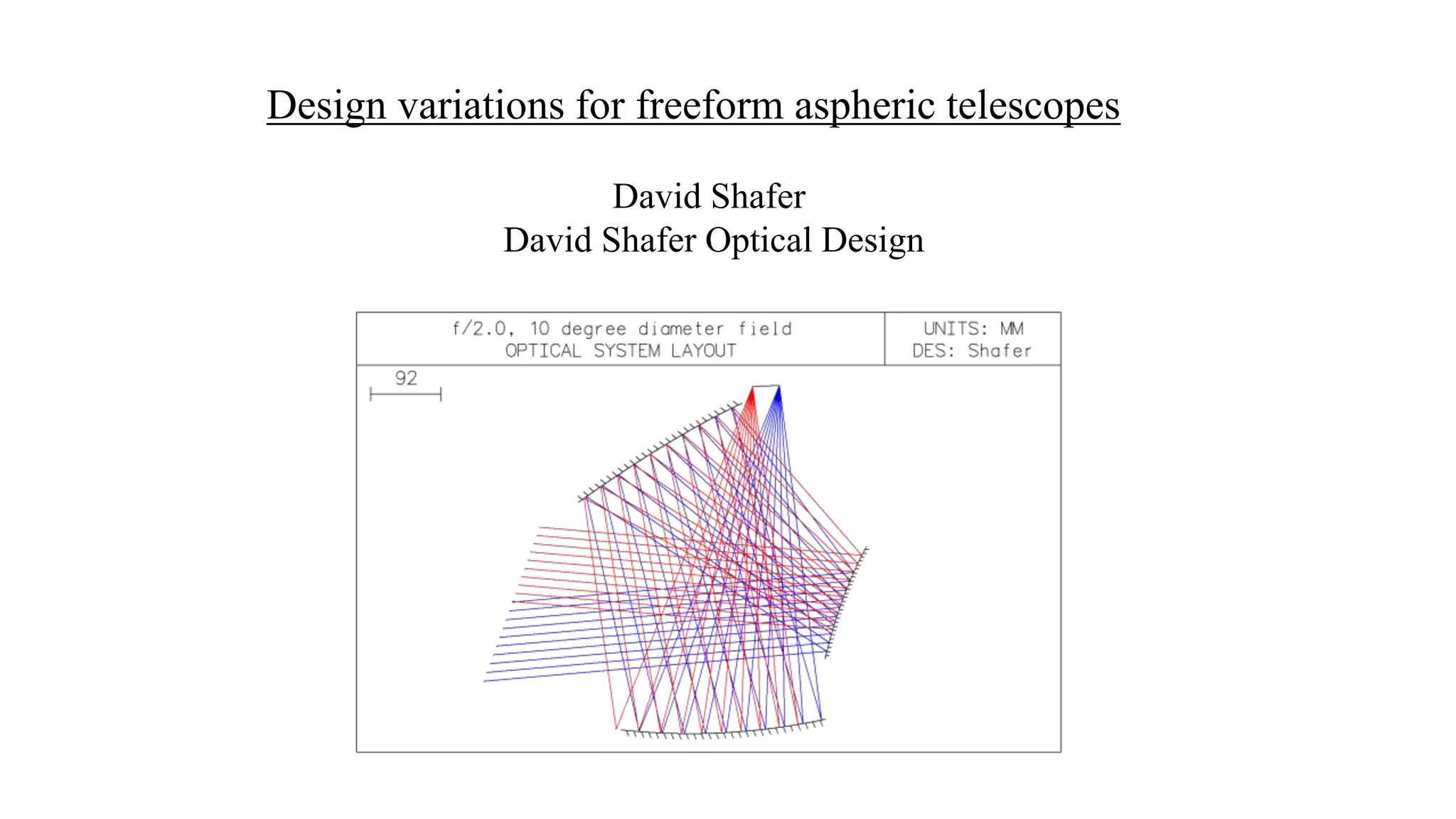
• Freeform aspherics allow for design variations that are 
impossible with conventional aspherics 
• Once a good freeform aspheric design has been found, based 
on a conventional aspheric design, new variations can be 
explored 
• These may have advantages such as better baffling
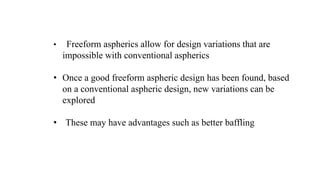
This freeform design is 
based on a conventional 
aspheric design
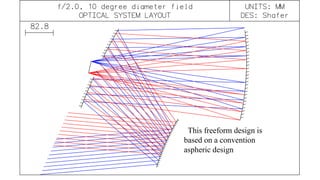
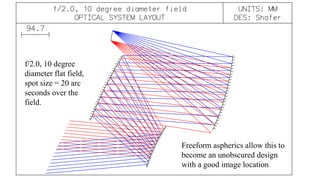
Freeform aspherics allow this to 
become an unobscured design 
with a good image location 
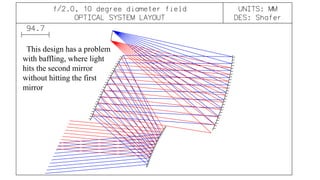
f/2.0, 10 degree 
diameter flat field, 
spot size = 20 arc 
seconds over the 
field.
This design has a problem 
with baffling, where light 
hits the third mirror without 
hitting the first mirror
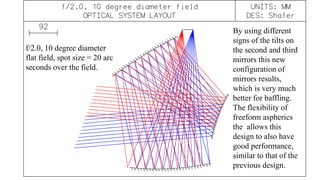
By using different 
signs of the tilts on 
the second and third 
mirrors this new 
configuration of 
mirrors results, 
which is very much 
better for baffling. 
The flexibility of 
freeform aspherics 
the allows this 
design to also have 
good performance, 
similar to that of the 
previous design. 
f/2.0, 10 degree diameter 
flat field, spot size = 20 arc 
seconds over the field.
These designs are only partially optimized and 
better performance is probably possible 
This shows how alternate versions of a 
freeform aspheric design may exist with 
desirable properties like good baffling.

Freeform aspherics in telescope design, #3

  • 1.
    Design variations forfreeform aspheric telescopes David Shafer David Shafer Optical Design
  • 2.
    • Freeform asphericsallow for design variations that are impossible with conventional aspherics • Once a good freeform aspheric design has been found, based on a conventional aspheric design, new variations can be explored • These may have advantages such as better baffling
  • 3.
    This freeform designis based on a conventional aspheric design
  • 4.
    Freeform aspherics allowthis to become an unobscured design with a good image location f/2.0, 10 degree diameter flat field, spot size = 20 arc seconds over the field.
  • 5.
    This design hasa problem with baffling, where light hits the third mirror without hitting the first mirror
  • 6.
    By using different signs of the tilts on the second and third mirrors this new configuration of mirrors results, which is very much better for baffling. The flexibility of freeform aspherics the allows this design to also have good performance, similar to that of the previous design. f/2.0, 10 degree diameter flat field, spot size = 20 arc seconds over the field.
  • 7.
    These designs areonly partially optimized and better performance is probably possible This shows how alternate versions of a freeform aspheric design may exist with desirable properties like good baffling.