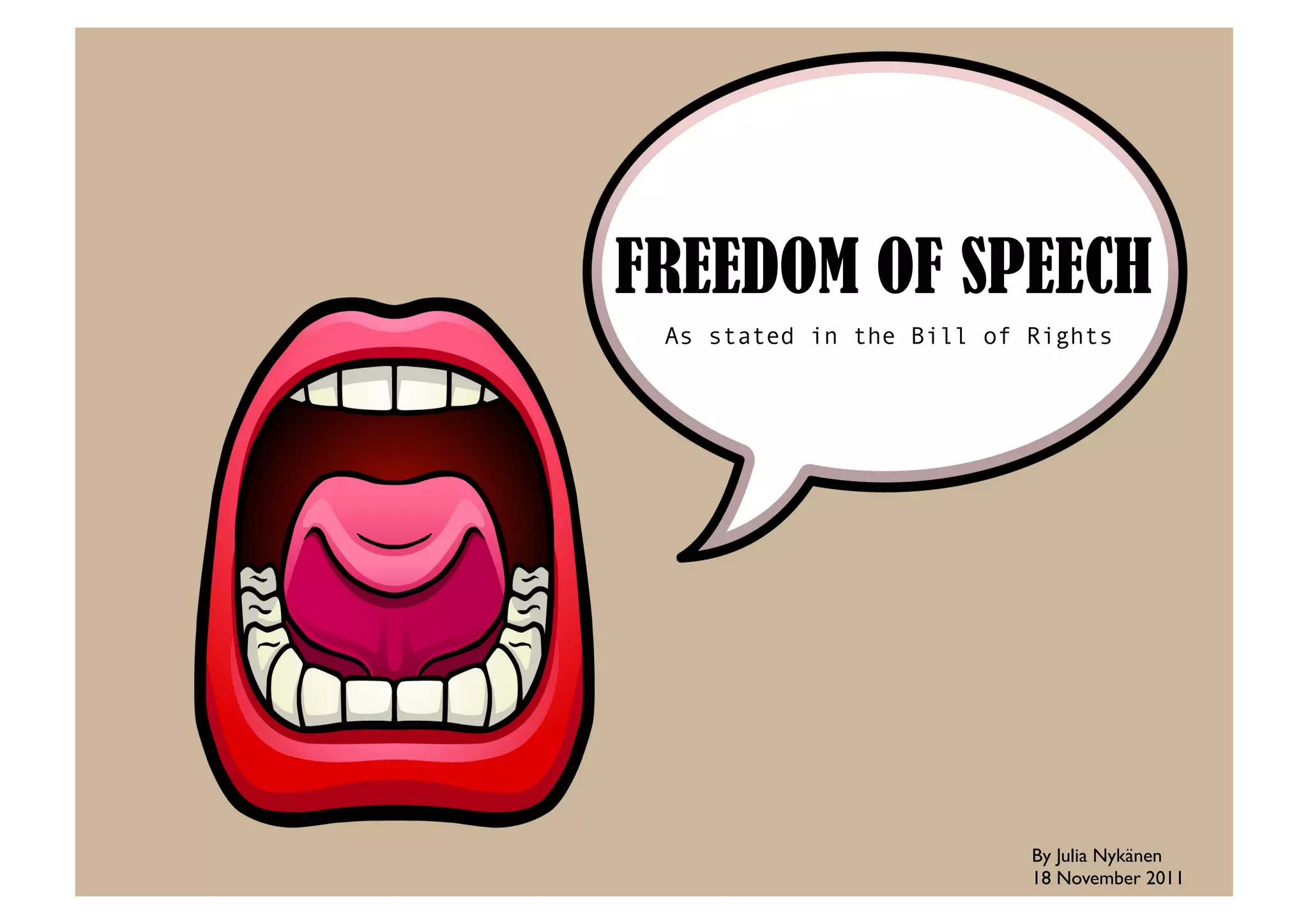
FREEDOM OF SPEECH
 As stated in the Bill of Rights


                          By Julia Nykänen	

                          18 November 2011
In this presentation. . .


  What does it mean?
   History & development

   Television

   Newspapers & magazines

   Internet
What does it
       mean?
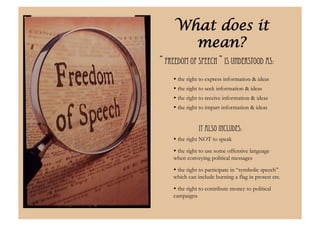
“ Freedom of speech ” is understood as:
     the right to express information & ideas
     the right to seek information & ideas
     the right to receive information & ideas
     the right to impart information & ideas


               It also includes:"
     the right NOT to speak
     the right to use some offensive language
    when conveying political messages

     the right to participate in “symbolic speech”
    which can include burning a flag in protest etc.

     the right to contribute money to political
    campaigns
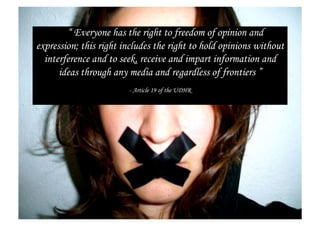
 “ Everyone has the right to freedom of opinion and
expression; this right includes the right to hold opinions without
  interference and to seek, receive and impart information and
      ideas through any media and regardless of frontiers ”
                        - Article 19 of the UDHR
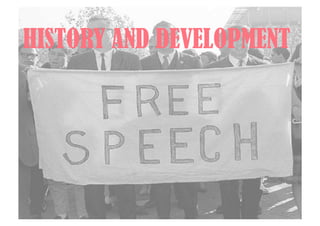
HISTORY AND DEVELOPMENT
470—399	
  B.C.	
  Socrates	
  trial	
  
1516	
  The	
  Educa=on	
  of	
  a	
  Chris=an	
  Prince	
  by	
  
Erasmus.	
  'In	
  a	
  free	
  state,	
  tongues	
  too	
  should	
  be	
  
free	
  
1644	
  'Areopagi=ca',	
  a	
  pamphlet	
  by	
  the	
  poet	
  John	
  
Milton,	
  argues	
  against	
  restric=ons	
  of	
  freedom	
  of	
  the	
  
press	
  

1689	
  Bill	
  of	
  Rights	
  grants	
  'freedom	
  of	
  speech	
  in	
  Parliament'	
  
aNer	
  James	
  II	
  is	
  overthrown	
  and	
  William	
  and	
  Mary	
  installed	
  
as	
  co-­‐rulers.	
  

1789	
  'The	
  Declara=on	
  of	
  the	
  Rights	
  of	
  Man',	
  a	
  fundamental	
  
document	
  of	
  the	
  French	
  Revolu=on	
  

1791	
  The	
  First	
  Amendment	
  of	
  the	
  US	
  Bill	
  of	
  
Rights	
  gives	
  four	
  freedoms:	
  religion,	
  
speech,	
  press	
  &	
  	
  right	
  to	
  assemble	
  

1948	
  The	
  Universal	
  Declara=on	
  of	
  Human	
  Rights	
  is	
  adopted	
  by	
  the	
  UN	
  General	
  Assembly	
  

2005	
  The	
  Serious	
  Organised	
  Crime	
  and	
  Police	
  Act	
  bans	
  protest	
  without	
  permit	
  
within	
  1km	
  of	
  the	
  Bri=sh	
  Parliament.	
  
Television

All	
  broadcast	
  media	
  is	
  very	
               Mature	
  rated	
  programs	
  not	
  
powerful	
  –	
  needs	
  regula8ons	
                  allowed	
  during	
  day8me	


Government	
  granted	
  license	
  to	
                Government	
  cannot	
  limit	
  
broadcast	
                                             expression	
  just	
  because	
  any	
  
                                                        listener,	
  or	
  even	
  the	
  majority	
  of	
  a	
  
Broadcas8ng	
  through	
  TV	
  –	
  more	
  	
  	
     community,	
  is	
  offended	
  by	
  its	
  
of	
  a	
  privilege	
                                  content	
  
        License	
  renewed	
  OR	
  not	
  
                                                        Restric8ons	
  only	
  if	
  it	
  clearly	
  
                                                        causes	
  direct	
  and	
  
                                                        imminent	
  harm	
  to	
  an	
  
                                                        important	
  societal	
  interest	
  
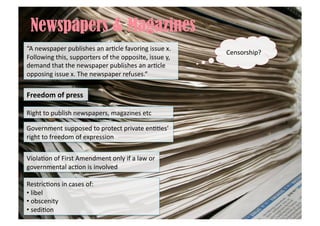
Newspapers & Magazines
“A	
  newspaper	
  publishes	
  an	
  ar8cle	
  favoring	
  issue	
  x.	
  
                                                                                Censorship?	
  
Following	
  this,	
  supporters	
  of	
  the	
  opposite,	
  issue	
  y,	
  
demand	
  that	
  the	
  newspaper	
  publishes	
  an	
  ar8cle	
  
opposing	
  issue	
  x.	
  The	
  newspaper	
  refuses.”	
  

Freedom	
  of	
  press	
  

Right	
  to	
  publish	
  newspapers,	
  magazines	
  etc	
  

Government	
  supposed	
  to	
  protect	
  private	
  en88es’	
  
right	
  to	
  freedom	
  of	
  expression	


Viola8on	
  of	
  First	
  Amendment	
  only	
  if	
  a	
  law	
  or	
  
governmental	
  ac8on	
  is	
  involved	


Restric8ons	
  in	
  cases	
  of:	
  
• 	
  libel	
  
• 	
  obscenity	
  
• 	
  sedi8on	
  	
  
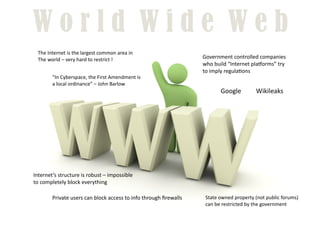
World Wide Web
  The	
  Internet	
  is	
  the	
  largest	
  common	
  area	
  in	
  
  The	
  world	
  –	
  very	
  hard	
  to	
  restrict	
  !	
                                      Government	
  controlled	
  companies	
  
                                                                                                  who	
  build	
  “Internet	
  plaUorms”	
  try	
  
                                                                                                  to	
  imply	
  regula8ons	
  
            “In	
  Cyberspace,	
  the	
  First	
  Amendment	
  is	
  
            a	
  local	
  ordinance”	
  –	
  John	
  Barlow	
  
                                                                                                            Google	
              Wikileaks	


Internet’s	
  structure	
  is	
  robust	
  –	
  impossible	
  
to	
  completely	
  block	
  everything	
  

            Private	
  users	
  can	
  block	
  access	
  to	
  info	
  through	
  firewalls	
      State	
  owned	
  property	
  (not	
  public	
  forums)	
  
                                                                                                   can	
  be	
  restricted	
  by	
  the	
  government	
  
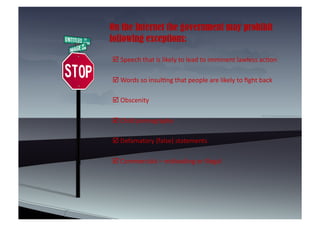
On the Internet the government may prohibit
following exceptions:

 	
  Speech	
  that	
  is	
  likely	
  to	
  lead	
  to	
  imminent	
  lawless	
  ac8on	


 	
  Words	
  so	
  insul8ng	
  that	
  people	
  are	
  likely	
  to	
  fight	
  back	
  

 	
  Obscenity	


 	
  Child	
  pornography	
  

 	
  Defamatory	
  (false)	
  statements	
  

 	
  Commercials	
  –	
  misleading	
  or	
  illegal	
  	
  
S O U R C E S
h[p://cyber.law.harvard.edu/ilaw/Speech/	
  

h[p://www.livinginternet.com/i/ip_speech.htm	
  

h[p://ifea.net/	
  

h[p://www.state.gov/secretary/rm/2011/02/156619.htm	
  

h[p://cornellsun.com/node/36482	
  

h[p://dic8onary.reference.com/browse/freedom+of+the+press	
  

h[p://www.freedomhouse.org/template.cfm?page=16	
  

h[p://www.fff.org/freedom/fd0407a.asp	
  

h[p://www.aclu.org/free-­‐speech/freedom-­‐expression-­‐arts-­‐and	
  
-­‐entertainment	
  

h[p://www.caslon.com.au/censorshipguide21.htm	
  

Freedom of speech

  • 1.
    FREEDOM OF SPEECH As stated in the Bill of Rights By Julia Nykänen 18 November 2011
  • 2.
    In this presentation.. .        What does it mean?   History & development   Television   Newspapers & magazines   Internet
  • 3.
    What does it mean? “ Freedom of speech ” is understood as:  the right to express information & ideas  the right to seek information & ideas  the right to receive information & ideas  the right to impart information & ideas It also includes:"  the right NOT to speak  the right to use some offensive language when conveying political messages  the right to participate in “symbolic speech” which can include burning a flag in protest etc.  the right to contribute money to political campaigns
  • 4.
     “ Everyone hasthe right to freedom of opinion and expression; this right includes the right to hold opinions without interference and to seek, receive and impart information and ideas through any media and regardless of frontiers ” - Article 19 of the UDHR
  • 5.
  • 6.
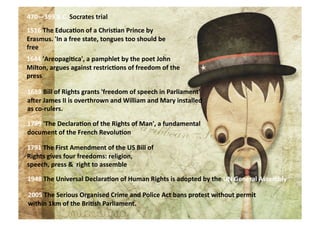
    470—399  B.C.  Socrates  trial   1516  The  Educa=on  of  a  Chris=an  Prince  by   Erasmus.  'In  a  free  state,  tongues  too  should  be   free   1644  'Areopagi=ca',  a  pamphlet  by  the  poet  John   Milton,  argues  against  restric=ons  of  freedom  of  the   press   1689  Bill  of  Rights  grants  'freedom  of  speech  in  Parliament'   aNer  James  II  is  overthrown  and  William  and  Mary  installed   as  co-­‐rulers.   1789  'The  Declara=on  of  the  Rights  of  Man',  a  fundamental   document  of  the  French  Revolu=on   1791  The  First  Amendment  of  the  US  Bill  of   Rights  gives  four  freedoms:  religion,   speech,  press  &    right  to  assemble   1948  The  Universal  Declara=on  of  Human  Rights  is  adopted  by  the  UN  General  Assembly   2005  The  Serious  Organised  Crime  and  Police  Act  bans  protest  without  permit   within  1km  of  the  Bri=sh  Parliament.  
  • 7.
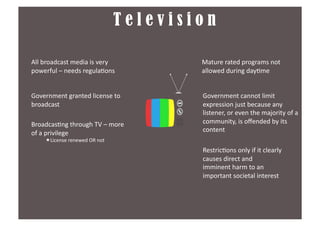
    Television All  broadcast  media  is  very   Mature  rated  programs  not   powerful  –  needs  regula8ons   allowed  during  day8me     Government  granted  license  to   Government  cannot  limit   broadcast   expression  just  because  any   listener,  or  even  the  majority  of  a   Broadcas8ng  through  TV  –  more       community,  is  offended  by  its   of  a  privilege   content    License  renewed  OR  not   Restric8ons  only  if  it  clearly   causes  direct  and   imminent  harm  to  an   important  societal  interest  
  • 8.
    Newspapers & Magazines “A  newspaper  publishes  an  ar8cle  favoring  issue  x.   Censorship?   Following  this,  supporters  of  the  opposite,  issue  y,   demand  that  the  newspaper  publishes  an  ar8cle   opposing  issue  x.  The  newspaper  refuses.”   Freedom  of  press   Right  to  publish  newspapers,  magazines  etc   Government  supposed  to  protect  private  en88es’   right  to  freedom  of  expression   Viola8on  of  First  Amendment  only  if  a  law  or   governmental  ac8on  is  involved     Restric8ons  in  cases  of:   •   libel   •   obscenity   •   sedi8on    
  • 9.
    World Wide Web The  Internet  is  the  largest  common  area  in   The  world  –  very  hard  to  restrict  !   Government  controlled  companies   who  build  “Internet  plaUorms”  try   to  imply  regula8ons   “In  Cyberspace,  the  First  Amendment  is   a  local  ordinance”  –  John  Barlow   Google   Wikileaks   Internet’s  structure  is  robust  –  impossible   to  completely  block  everything   Private  users  can  block  access  to  info  through  firewalls   State  owned  property  (not  public  forums)   can  be  restricted  by  the  government  
  • 10.
    On the Internetthe government may prohibit following exceptions:    Speech  that  is  likely  to  lead  to  imminent  lawless  ac8on        Words  so  insul8ng  that  people  are  likely  to  fight  back      Obscenity        Child  pornography      Defamatory  (false)  statements      Commercials  –  misleading  or  illegal    
  • 11.
    S O UR C E S h[p://cyber.law.harvard.edu/ilaw/Speech/   h[p://www.livinginternet.com/i/ip_speech.htm   h[p://ifea.net/   h[p://www.state.gov/secretary/rm/2011/02/156619.htm   h[p://cornellsun.com/node/36482   h[p://dic8onary.reference.com/browse/freedom+of+the+press   h[p://www.freedomhouse.org/template.cfm?page=16   h[p://www.fff.org/freedom/fd0407a.asp   h[p://www.aclu.org/free-­‐speech/freedom-­‐expression-­‐arts-­‐and   -­‐entertainment   h[p://www.caslon.com.au/censorshipguide21.htm