Free Radical; Defense From Aging
Rajkumar Kirtania
M.Sc,4th semester
Regd. No.-240313020
Exam Roll No -151303020
INDIAN INSTITUTE OF ENGINEERING
SCIENCE AND TECHNOLOGY,SHIBPUR
DEPT. OF CHEMISTRY
 Free Radicals.
 Various Sources.
 Harmful Effect.
 Defense via Antioxidant.
CONTENT 2
Free Radicals are molecules with an unpaired electron and are important
intermediates in natural processes.
Involving cytotoxicity, control of vascular tone, and neurotransmission.
Free radicals are very unstable and react quickly with other compounds,
and try to capture the needed electron to gain stability.
A chain reaction thus gets started.
FREE RADICAL 3
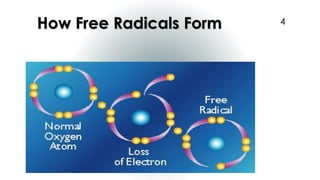
How Free Radicals Form 4
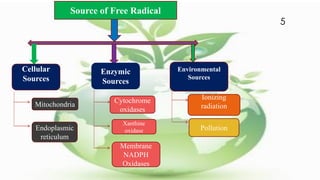
Sources of free Radicals
Cellular
Sources
Enzymic
Sources
Environmental
Sources
Mitochondria
Endoplasmic
reticulum
Cytochrome
oxidases
Xanthine
oxidase
Ionizing
radiation
Pollution
Membrane
NADPH
Oxidases
Source of Free Radical
5
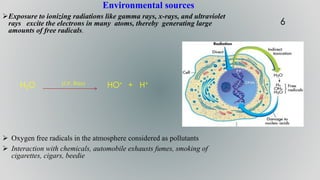
Environmental sources
Exposure to ionizing radiations like gamma rays, x-rays, and ultraviolet
rays excite the electrons in many atoms, thereby generating large
amounts of free radicals.
H2O U.V. Rays HO▪ + H+
 Oxygen free radicals in the atmosphere considered as pollutants
 Interaction with chemicals, automobile exhausts fumes, smoking of
cigarettes, cigars, beedie
6
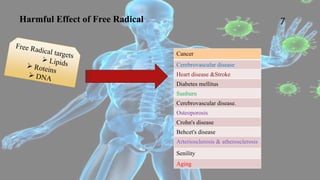
Harmful Effect of Free Radical
Cancer
Cerebrovascular disease
Heart disease &Stroke
Diabetes mellitus
Sunburn
Cerebrovascular disease.
Osteoporosis
Crohn's disease
Behcet's disease
Arteriosclerosis & atherosclerosis
Senility
Aging
7
FREE RADICAL THEORY OF AGING
 In 1956s Dr. Denham Harman proposed that-
Cells continuously produce free radicals by normal metabolism and oxidation of organic
compounds and these free radicals damage cellular macromolecules ( like DNA , lipid
, proteins ) and due accumulation of these damage over time period cause aging.
8
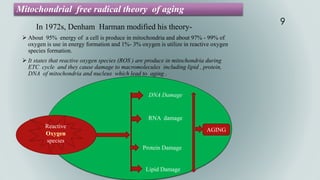
Mitochondrial free radical theory of aging
In 1972s, Denham Harman modified his theory-
 About 95% energy of a cell is produce in mitochondria and about 97% - 99% of
oxygen is use in energy formation and 1%- 3% oxygen is utilize in reactive oxygen
species formation.
 It states that reactive oxygen species (ROS ) are produce in mitochondria during
ETC cycle and they cause damage to macromolecules including lipid , protein,
DNA of mitochondria and nucleus which lead to aging .
DNA Damage
RNA damage
Protein Damage
Lipid Damage
Reactive
species
AGING
9
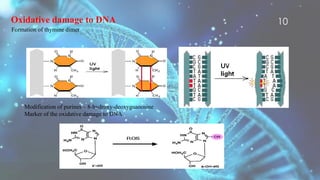
 Formation of thymine dimer
Oxidative damage to DNA
Modification of purines – 8-hydroxy-deoxyguanosine
Marker of the oxidative damage to DNA
10
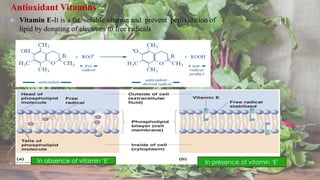
Antioxidant Vitamins --
 Vitamin E-It is a fat soluble vitamin and prevent peroxidation of
lipid by donating of electrons to free radicals
In absence of vitamin ‘E’ In presence of vitamin ‘E’
11
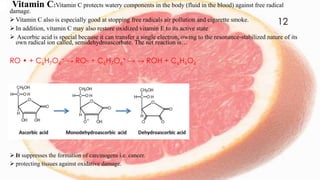
Vitamin C:Vitamin C protects watery components in the body (fluid in the blood) against free radical
damage.
 Vitamin C also is especially good at stopping free radicals air pollution and cigarette smoke.
 In addition, vitamin C may also restore oxidized vitamin E to its active state
 Ascorbic acid is special because it can transfer a single electron, owing to the resonance-stabilized nature of its
own radical ion called, semidehydroascorbate. The net reaction is…
RO • + C6H7O6
− → RO- + C6H7O6
• → → ROH + C6H6O6
 It suppresses the formation of carcinogens i.e. cancer.
 protecting tissues against oxidative damage.
12
CONCLUSION
 To Avoid Exposure Of Free Radical ,we Should Avoid Sunshine & Our Diet
Should Be Full Of Vitamins With an Antioxidant
 Monitoring and rapid detection of free radical is necessary to combat the spread of
various diseases
 So if we can intensify our knowledge regarding free radicals & go deep into it we
can easily prove the proverb “PREVENTION IS BETTER THAN CURE”
Prevention Is Better Than Cure
13
References
 Wikipedia
 C. J. Rhodes, An overview of the role of free radicals in biology.
 CRC Handbook of Free Radicals and Antioxidants, 1989, 1: 209-221.
 P, Larsen, "Aging and resistance to oxidative damage in Caenorhabditis
elegans". Proc Natl Acad Sci U S A, 1993, 90 (19):8905-9.
 Exercise, Oxidative Damage and Effects of Antioxidant Manipulation
(review). Journal of Nutrition, 1992, 122(3): 766-73.
14
ACKNOWLEDGEMENT
I would like to acknowledge
 My project supervisor, Dr. Jhuma Ganguly,
 Head of the department Prof. P. K. Nandi,
 All the teachers of our department ,
15
16

Free radical aging

  • 1.
    Free Radical; DefenseFrom Aging Rajkumar Kirtania M.Sc,4th semester Regd. No.-240313020 Exam Roll No -151303020 INDIAN INSTITUTE OF ENGINEERING SCIENCE AND TECHNOLOGY,SHIBPUR DEPT. OF CHEMISTRY
  • 2.
     Free Radicals. Various Sources.  Harmful Effect.  Defense via Antioxidant. CONTENT 2
  • 3.
    Free Radicals aremolecules with an unpaired electron and are important intermediates in natural processes. Involving cytotoxicity, control of vascular tone, and neurotransmission. Free radicals are very unstable and react quickly with other compounds, and try to capture the needed electron to gain stability. A chain reaction thus gets started. FREE RADICAL 3
  • 4.
  • 5.
    Sources of freeRadicals Cellular Sources Enzymic Sources Environmental Sources Mitochondria Endoplasmic reticulum Cytochrome oxidases Xanthine oxidase Ionizing radiation Pollution Membrane NADPH Oxidases Source of Free Radical 5
  • 6.
    Environmental sources Exposure toionizing radiations like gamma rays, x-rays, and ultraviolet rays excite the electrons in many atoms, thereby generating large amounts of free radicals. H2O U.V. Rays HO▪ + H+  Oxygen free radicals in the atmosphere considered as pollutants  Interaction with chemicals, automobile exhausts fumes, smoking of cigarettes, cigars, beedie 6
  • 7.
    Harmful Effect ofFree Radical Cancer Cerebrovascular disease Heart disease &Stroke Diabetes mellitus Sunburn Cerebrovascular disease. Osteoporosis Crohn's disease Behcet's disease Arteriosclerosis & atherosclerosis Senility Aging 7
  • 8.
    FREE RADICAL THEORYOF AGING  In 1956s Dr. Denham Harman proposed that- Cells continuously produce free radicals by normal metabolism and oxidation of organic compounds and these free radicals damage cellular macromolecules ( like DNA , lipid , proteins ) and due accumulation of these damage over time period cause aging. 8
  • 9.
    Mitochondrial free radicaltheory of aging In 1972s, Denham Harman modified his theory-  About 95% energy of a cell is produce in mitochondria and about 97% - 99% of oxygen is use in energy formation and 1%- 3% oxygen is utilize in reactive oxygen species formation.  It states that reactive oxygen species (ROS ) are produce in mitochondria during ETC cycle and they cause damage to macromolecules including lipid , protein, DNA of mitochondria and nucleus which lead to aging . DNA Damage RNA damage Protein Damage Lipid Damage Reactive species AGING 9
  • 10.
     Formation ofthymine dimer Oxidative damage to DNA Modification of purines – 8-hydroxy-deoxyguanosine Marker of the oxidative damage to DNA 10
  • 11.
    Antioxidant Vitamins -- Vitamin E-It is a fat soluble vitamin and prevent peroxidation of lipid by donating of electrons to free radicals In absence of vitamin ‘E’ In presence of vitamin ‘E’ 11
  • 12.
    Vitamin C:Vitamin Cprotects watery components in the body (fluid in the blood) against free radical damage.  Vitamin C also is especially good at stopping free radicals air pollution and cigarette smoke.  In addition, vitamin C may also restore oxidized vitamin E to its active state  Ascorbic acid is special because it can transfer a single electron, owing to the resonance-stabilized nature of its own radical ion called, semidehydroascorbate. The net reaction is… RO • + C6H7O6 − → RO- + C6H7O6 • → → ROH + C6H6O6  It suppresses the formation of carcinogens i.e. cancer.  protecting tissues against oxidative damage. 12
  • 13.
    CONCLUSION  To AvoidExposure Of Free Radical ,we Should Avoid Sunshine & Our Diet Should Be Full Of Vitamins With an Antioxidant  Monitoring and rapid detection of free radical is necessary to combat the spread of various diseases  So if we can intensify our knowledge regarding free radicals & go deep into it we can easily prove the proverb “PREVENTION IS BETTER THAN CURE” Prevention Is Better Than Cure 13
  • 14.
    References  Wikipedia  C.J. Rhodes, An overview of the role of free radicals in biology.  CRC Handbook of Free Radicals and Antioxidants, 1989, 1: 209-221.  P, Larsen, "Aging and resistance to oxidative damage in Caenorhabditis elegans". Proc Natl Acad Sci U S A, 1993, 90 (19):8905-9.  Exercise, Oxidative Damage and Effects of Antioxidant Manipulation (review). Journal of Nutrition, 1992, 122(3): 766-73. 14
  • 15.
    ACKNOWLEDGEMENT I would liketo acknowledge  My project supervisor, Dr. Jhuma Ganguly,  Head of the department Prof. P. K. Nandi,  All the teachers of our department , 15
  • 16.