Hi. I am…


             fred
     social enterprise practitioner
         www.reddengreen.com
             www.sse.org.au
What would I know?

                            fred
•  DECS
•  Wheelchair Sport / SIU / APC
•  SPARC Disability Foundation
•  SA Mental Health
•  CanTeen
•  Consulting – NDS
•  Youthinc
•  School for Social Entrepreneurs
The starting point for any good
discussion, meeting, or
workshop on social enterprise
should be a shared
understanding of what a social
enterprise actually is.
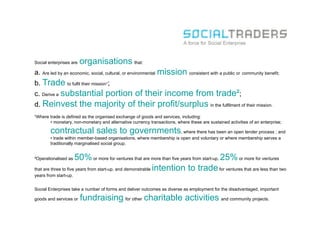
Social enterprises are   organisations that:
a. Are led by an economic, social, cultural, or environmental mission consistent with a public or community benefit;
b. Trade to fulfil their mission¹;
c. Derive a substantial portion of their income from trade²;
d. Reinvest              the majority of their profit/surplus in the fulfilment of their mission.
¹Where trade is defined as the organised exchange of goods and services, including:
       •  monetary, non-monetary and alternative currency transactions, where these are sustained activities of an enterprise;

        contractual sales to governments, where there has been an open tender process ; and
        •  trade within member-based organisations, where membership is open and voluntary or where membership serves a
        traditionally marginalised social group.


²Operationalised as   50% or more for ventures that are more than five years from start-up, 25% or more for ventures
that are three to five years from start-up, and demonstrable intention to trade for ventures that are less than two
years from start-up.


Social Enterprises take a number of forms and deliver outcomes as diverse as employment for the disadvantaged, important

goods and services or    fundraising for other charitable activities and community projects.
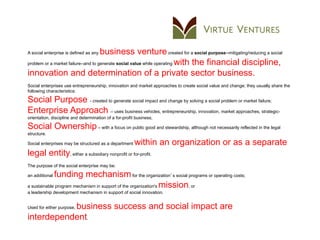
A social enterprise is defined as anybusiness venture created for a social purpose--mitigating/reducing a social
problem or a market failure--and to generate social value while operating with the financial discipline,

innovation and determination of a private sector business.
Social enterprises use entrepreneurship, innovation and market approaches to create social value and change; they usually share the
following characteristics:

Social Purpose - created to generate social impact and change by solving a social problem or market failure;
Enterprise Approach – uses business vehicles, entrepreneurship, innovation, market approaches, strategic-
orientation, discipline and determination of a for-profit business;

Social Ownership – with a focus on public good and stewardship, although not necessarily reflected in the legal
structure.

Social enterprises may be structured as a department     within an organization or as a separate
legal entity, either a subsidiary nonprofit or for-profit.
The purpose of the social enterprise may be:

an additionalfunding mechanism for the organization s social programs or operating costs;
a sustainable program mechanism in support of the organization's mission; or
a leadership development mechanism in support of social innovation.


           business success and social impact are
Used for either purpose,

interdependent.
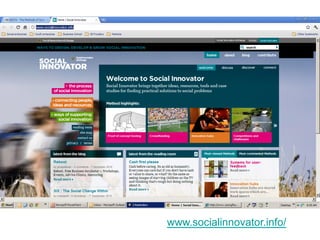
www.socialinnovator.info/
WARNING:
What follows is a
non-profit-centric
view of the world(!)
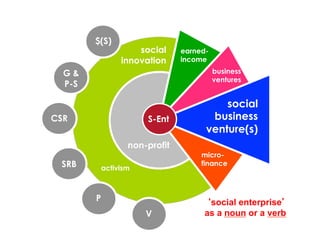
$(S)
                     social     earned-
                 innovation     income

  G&                                      business
                                          ventures
  P-S

                                          social
CSR                    S-Ent           business
                                      venture(s)
                   non-profit
                                     micro-
 SRB        activism
                                     finance


        P                             social enterprise
                       V             as a noun or a verb
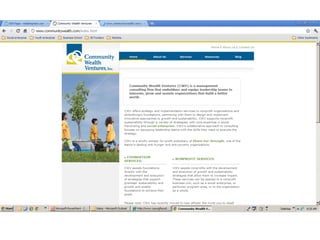
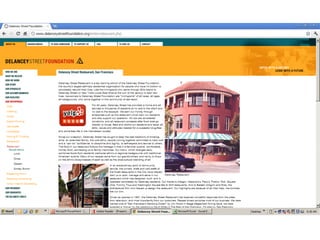
Social enterprise in South Australia.
Via the rest of the world…
UK
(2007)
USA NYC,
 Wash.
 (2008)
USA/CAN
 SF, Vanc.
 (2010)
South
Australia
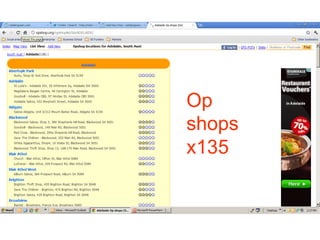
Op
shops
x135
Some observations:
•  disconnectedness
•  co-opetition
•  welfare / charity / CRM
•  innovation, more than SBV
•  e.g. Jobs Fund (8 & 1)
•  no gathering around SE (noun)
Interesting opportunities:
•  TACSI
•  social enterprise hub
•  Renew Adelaide
•  Indigenous social enterprise
•  SEDIF
•  Adelaide SSE
"At least half the non-profit executives
in this country now understand that they
have to do something different…
probably the best 2% to 3% of them
understand what needs to be done and
have the guts to actually try it."
                     (Jerr Boschee, 2007)

  http://www.inc.com/magazine/19970515/1497.html
At the end of the day…
•  grants V earned-income
•  guidelines V innovation
•  funders V clients
•  compliance V relationships
•  strings V self-determination
•  funding V self-sufficiency
•  survival V social impact

           Take a look around…
SSE &
                study tour…


   fred
  M: 0411 864 820
www.reddengreen.com
  www.sse.org.au

Fred Heidt

  • 1.
    Hi. I am… fred social enterprise practitioner www.reddengreen.com www.sse.org.au
  • 2.
    What would Iknow? fred •  DECS •  Wheelchair Sport / SIU / APC •  SPARC Disability Foundation •  SA Mental Health •  CanTeen •  Consulting – NDS •  Youthinc •  School for Social Entrepreneurs
  • 3.
    The starting pointfor any good discussion, meeting, or workshop on social enterprise should be a shared understanding of what a social enterprise actually is.
  • 4.
    Social enterprises are organisations that: a. Are led by an economic, social, cultural, or environmental mission consistent with a public or community benefit; b. Trade to fulfil their mission¹; c. Derive a substantial portion of their income from trade²; d. Reinvest the majority of their profit/surplus in the fulfilment of their mission. ¹Where trade is defined as the organised exchange of goods and services, including: •  monetary, non-monetary and alternative currency transactions, where these are sustained activities of an enterprise; contractual sales to governments, where there has been an open tender process ; and •  trade within member-based organisations, where membership is open and voluntary or where membership serves a traditionally marginalised social group. ²Operationalised as 50% or more for ventures that are more than five years from start-up, 25% or more for ventures that are three to five years from start-up, and demonstrable intention to trade for ventures that are less than two years from start-up. Social Enterprises take a number of forms and deliver outcomes as diverse as employment for the disadvantaged, important goods and services or fundraising for other charitable activities and community projects.
  • 5.
    A social enterpriseis defined as anybusiness venture created for a social purpose--mitigating/reducing a social problem or a market failure--and to generate social value while operating with the financial discipline, innovation and determination of a private sector business. Social enterprises use entrepreneurship, innovation and market approaches to create social value and change; they usually share the following characteristics: Social Purpose - created to generate social impact and change by solving a social problem or market failure; Enterprise Approach – uses business vehicles, entrepreneurship, innovation, market approaches, strategic- orientation, discipline and determination of a for-profit business; Social Ownership – with a focus on public good and stewardship, although not necessarily reflected in the legal structure. Social enterprises may be structured as a department within an organization or as a separate legal entity, either a subsidiary nonprofit or for-profit. The purpose of the social enterprise may be: an additionalfunding mechanism for the organization s social programs or operating costs; a sustainable program mechanism in support of the organization's mission; or a leadership development mechanism in support of social innovation. business success and social impact are Used for either purpose, interdependent.
  • 7.
  • 8.
    WARNING: What follows isa non-profit-centric view of the world(!)
  • 9.
    $(S) social earned- innovation income G& business ventures P-S social CSR S-Ent business venture(s) non-profit micro- SRB activism finance P social enterprise V as a noun or a verb
  • 10.
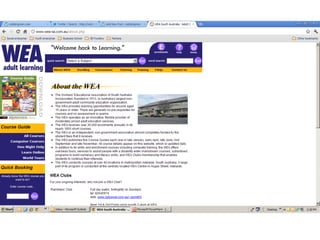
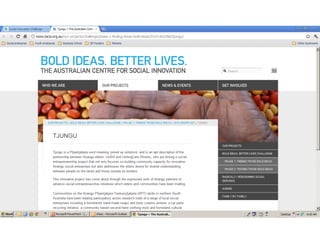
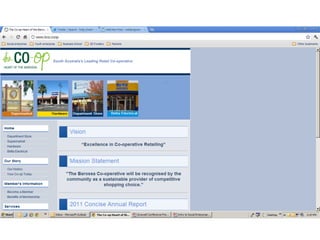
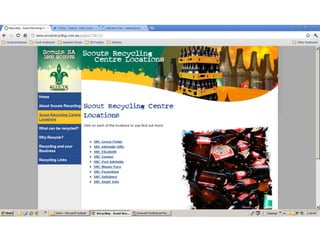
    Social enterprise inSouth Australia. Via the rest of the world…
  • 11.
  • 21.
  • 26.
  • 32.
  • 45.
  • 61.
    Some observations: •  disconnectedness • co-opetition •  welfare / charity / CRM •  innovation, more than SBV •  e.g. Jobs Fund (8 & 1) •  no gathering around SE (noun)
  • 62.
    Interesting opportunities: •  TACSI • social enterprise hub •  Renew Adelaide •  Indigenous social enterprise •  SEDIF •  Adelaide SSE
  • 63.
    "At least halfthe non-profit executives in this country now understand that they have to do something different… probably the best 2% to 3% of them understand what needs to be done and have the guts to actually try it." (Jerr Boschee, 2007) http://www.inc.com/magazine/19970515/1497.html
  • 64.
    At the endof the day… •  grants V earned-income •  guidelines V innovation •  funders V clients •  compliance V relationships •  strings V self-determination •  funding V self-sufficiency •  survival V social impact Take a look around…
  • 65.
    SSE & study tour… fred M: 0411 864 820 www.reddengreen.com www.sse.org.au