The document discusses social entrepreneurship and social entrepreneurs. It defines social entrepreneurship as applying entrepreneurial principles to creating social value rather than private gain. Social entrepreneurs pursue innovative solutions to social problems and seek to make sustainable change. The document provides examples of social entrepreneurs and their social enterprises, and discusses some of the key drivers and challenges of social entrepreneurship.
Learning objectives andoverview To understand: what social entrepreneurship is and what social entrepreneurs do key drivers of social entrepreneurship the complex challenges that social entrepreneurs face and one social innovation model as a potential solution, illustrated through the use of a case example (REAL project, Inverness)
3.
Learning objectives andoverview To consider: some critiques of social entrepreneurship some research implications social entrepreneurship as a career option
4.
Course booklet Thegrowth of social enterprises. Small enterprises until recently were seen purely as profit motivated organisations with an owner manager or owner managed team. It has been realised that entrepreneurship can also be important in the public sector or non-profit charity sector . There are many small social enterprises emerging, encouraged by Government as a useful complement to Government activities to improve social welfare and wellbeing.
5.
What is SocialEntrepreneurship and what do social entrepreneurs do? In your groups discuss the examples of the Edinburgh-based social enterprises you have discovered
6.
Some local examplesSocial Enterprise Edinburgh http://www.go4see.info/ Social Entrepreneur Network Scotland (Senscot): http://www.senscot.net First Port: http://www.firstport.org.uk/ Forth Sector: http://www.forthsector.org.uk/ Local People Leading: http://www.localpeopleleading.co.uk/ Greener Leith: http://www.greenerleith.org/
7.
Some local examplesMelting Pot: www.themeltingpotedinburgh.org.uk Scottish Music Group: http://www.scotsmusic.org/ Waste Innovations Portal: http://www.wasteinnovations.com/portal.php Real Education Active Lives (REAL): http://www.glinet.org/inspiredetail.asp?id=2887&CatID=321
8.
Social entrepreneurship videoshttp://video.google.co.uk/videoplay?docid=3436222252046327&hl=en http://www.youtube.com/watch?v=wu_K9TBiMVQ
9.
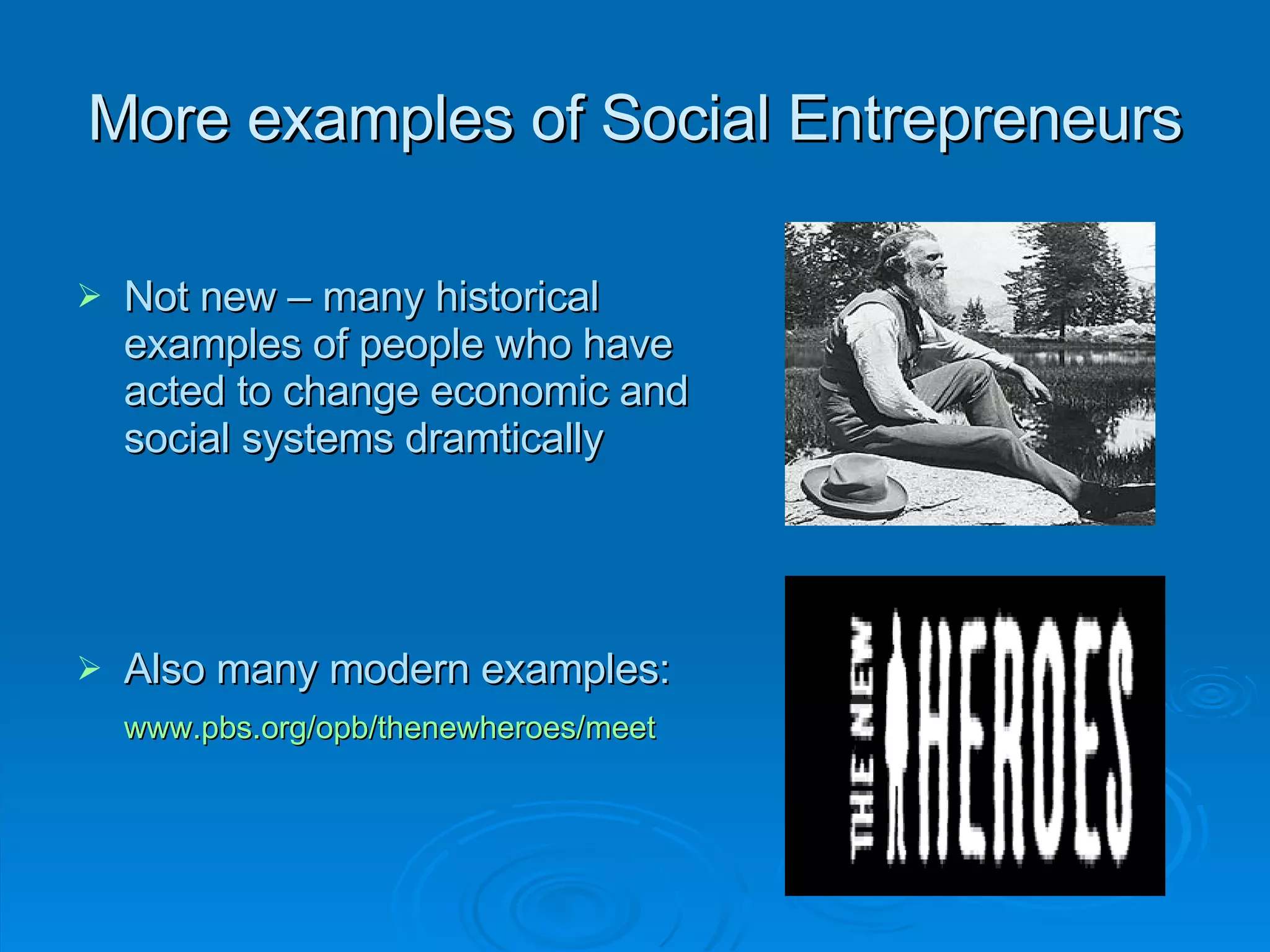
More examples ofSocial Entrepreneurs Not new – many historical examples of people who have acted to change economic and social systems dramtically Also many modern examples: www.pbs.org/opb/thenewheroes/meet
10.
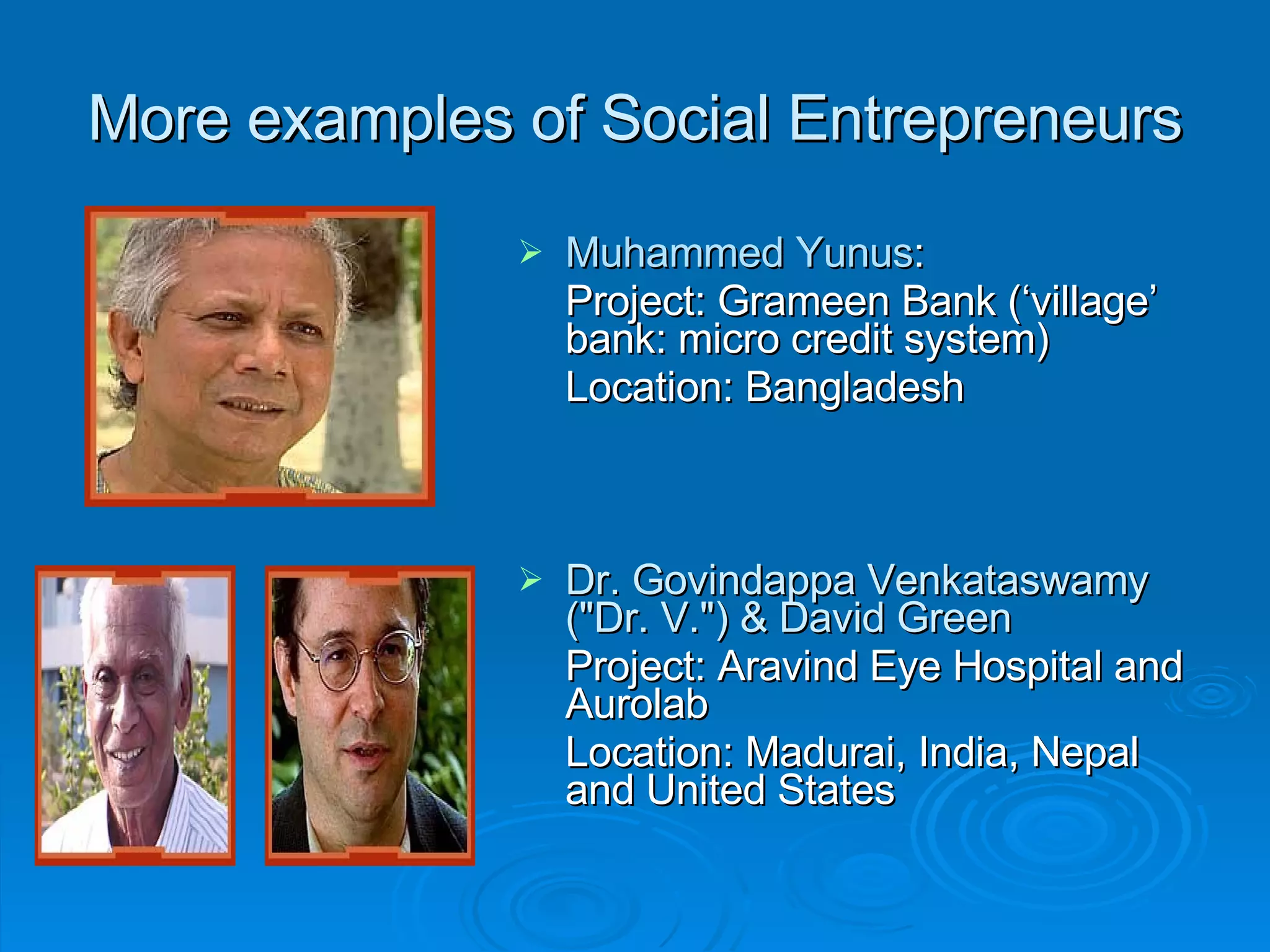
More examples ofSocial Entrepreneurs Muhammed Yunus : Project: Grameen Bank (‘village’ bank: micro credit system) Location: Bangladesh Dr. Govindappa Venkataswamy ("Dr. V.") & David Green Project: Aravind Eye Hospital and Aurolab Location: Madurai, India, Nepal and United States
11.
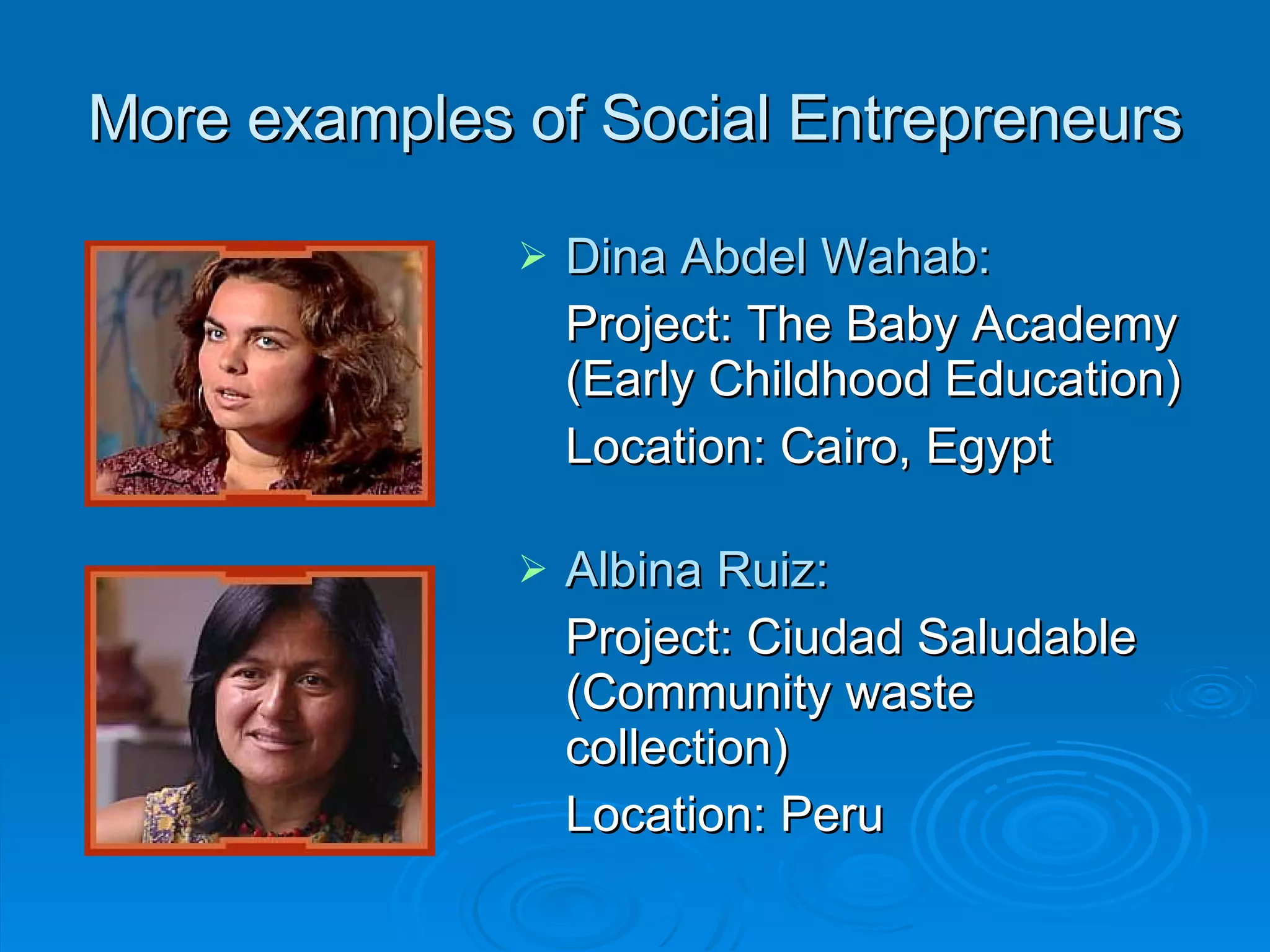
More examples ofSocial Entrepreneurs Dina Abdel Wahab: Project: The Baby Academy (Early Childhood Education) Location: Cairo, Egypt Albina Ruiz: Project: Ciudad Saludable (Community waste collection) Location: Peru
12.
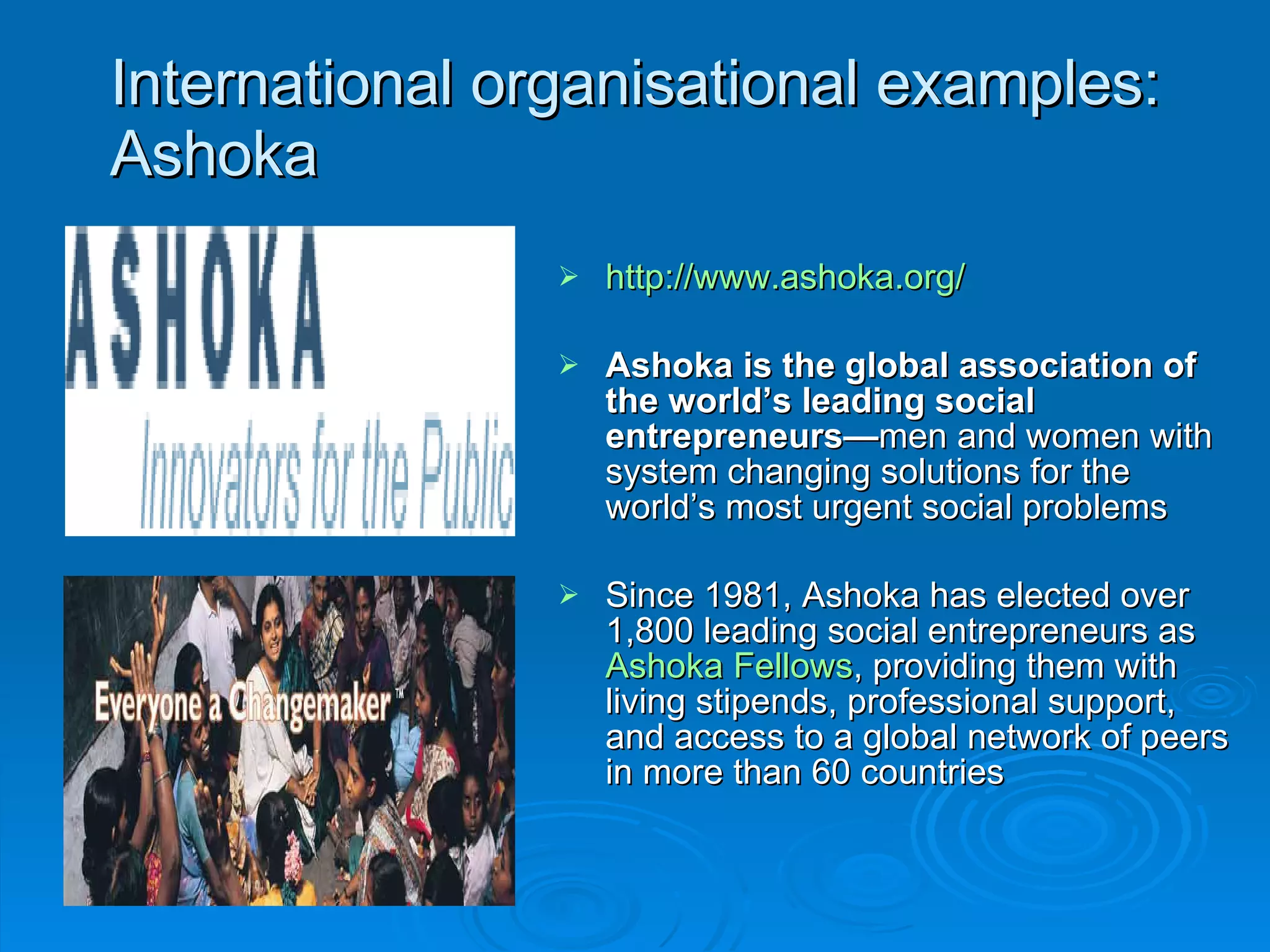
International organisational examples:Ashoka http://www.ashoka.org/ Ashoka is the global association of the world’s leading social entrepreneurs— men and women with system changing solutions for the world’s most urgent social problems Since 1981, Ashoka has elected over 1,800 leading social entrepreneurs as Ashoka Fellows , providing them with living stipends, professional support, and access to a global network of peers in more than 60 countries
13.
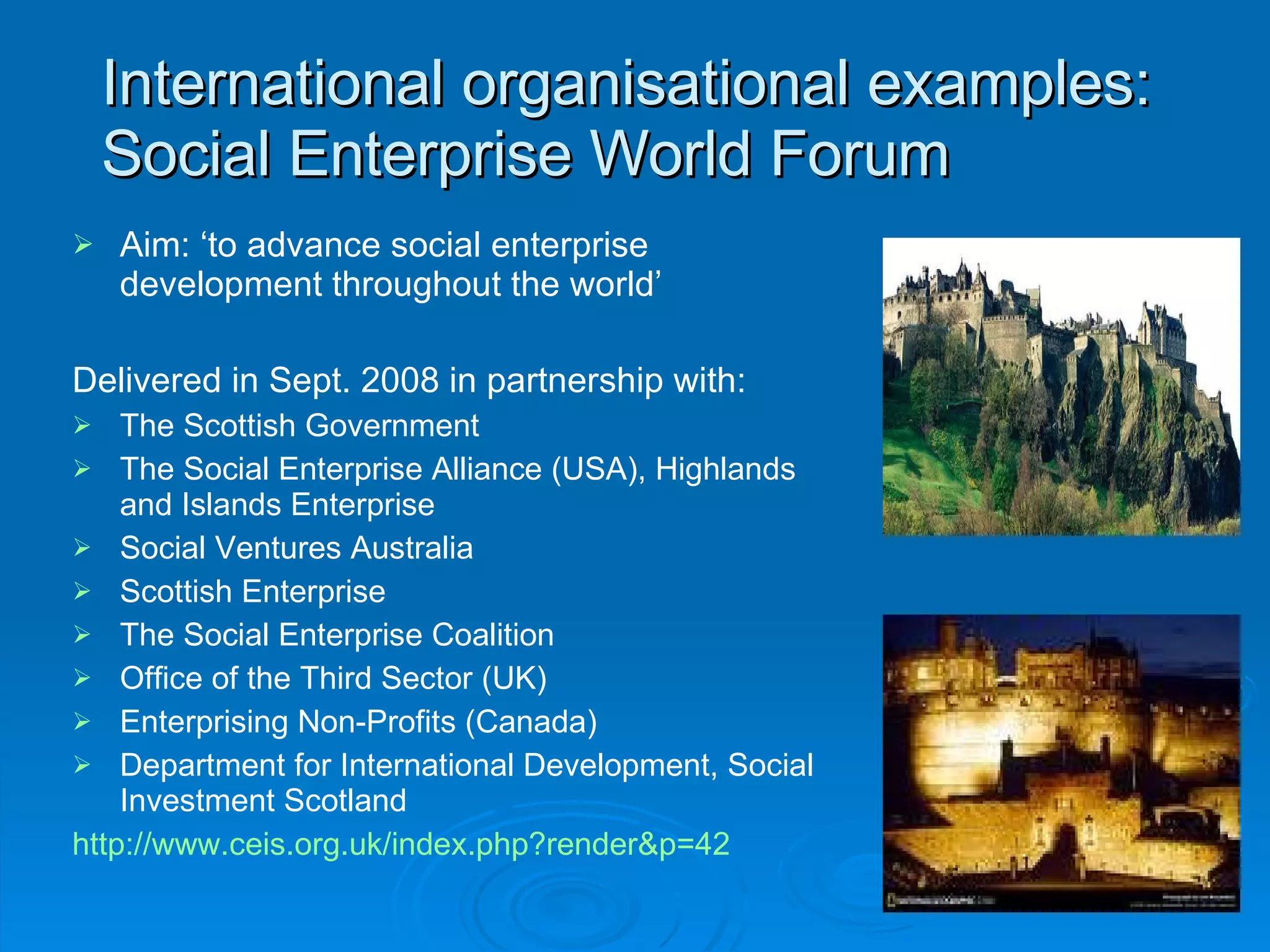
International organisational examples: Social Enterprise World Forum Aim: ‘to advance social enterprise development throughout the world’ Delivered in Sept. 2008 in partnership with: The Scottish Government The Social Enterprise Alliance (USA), Highlands and Islands Enterprise Social Ventures Australia Scottish Enterprise The Social Enterprise Coalition Office of the Third Sector (UK) Enterprising Non-Profits (Canada) Department for International Development, Social Investment Scotland http://www.ceis.org.uk/index.php?render&p=42
14.
International organisational examples: Net Impact Net Impact is a global network of leaders who are changing the world through business http://www.netimpact.org/
15.
What is socialentrepreneurship and what do social entrepreneurs do? Entrepreneurship is usually discussed in a business context Creative pursuit of private profit and gain underpins entrepreneurship Since early 1990s there has been recognition that entrepreneurs can operate for non private gain Such individuals are called social entrepreneurs and what they practice is called social entrepreneurship
16.
What is socialentrepreneurship and what do social entrepreneurs do? Not just philanthropy / good works / basic altruism Mobilisation of sound entrepreneurial principles Targeted at making long-term sustainable change Double or triple bottom line objectives (Carter & Jones-Evans, 2000)
17.
What is socialentrepreneurship and what do social entrepreneurs do? Usual problems of definition .... … there are many definitions of: social entrepreneurship social entrepreneurs social enterprises
18.
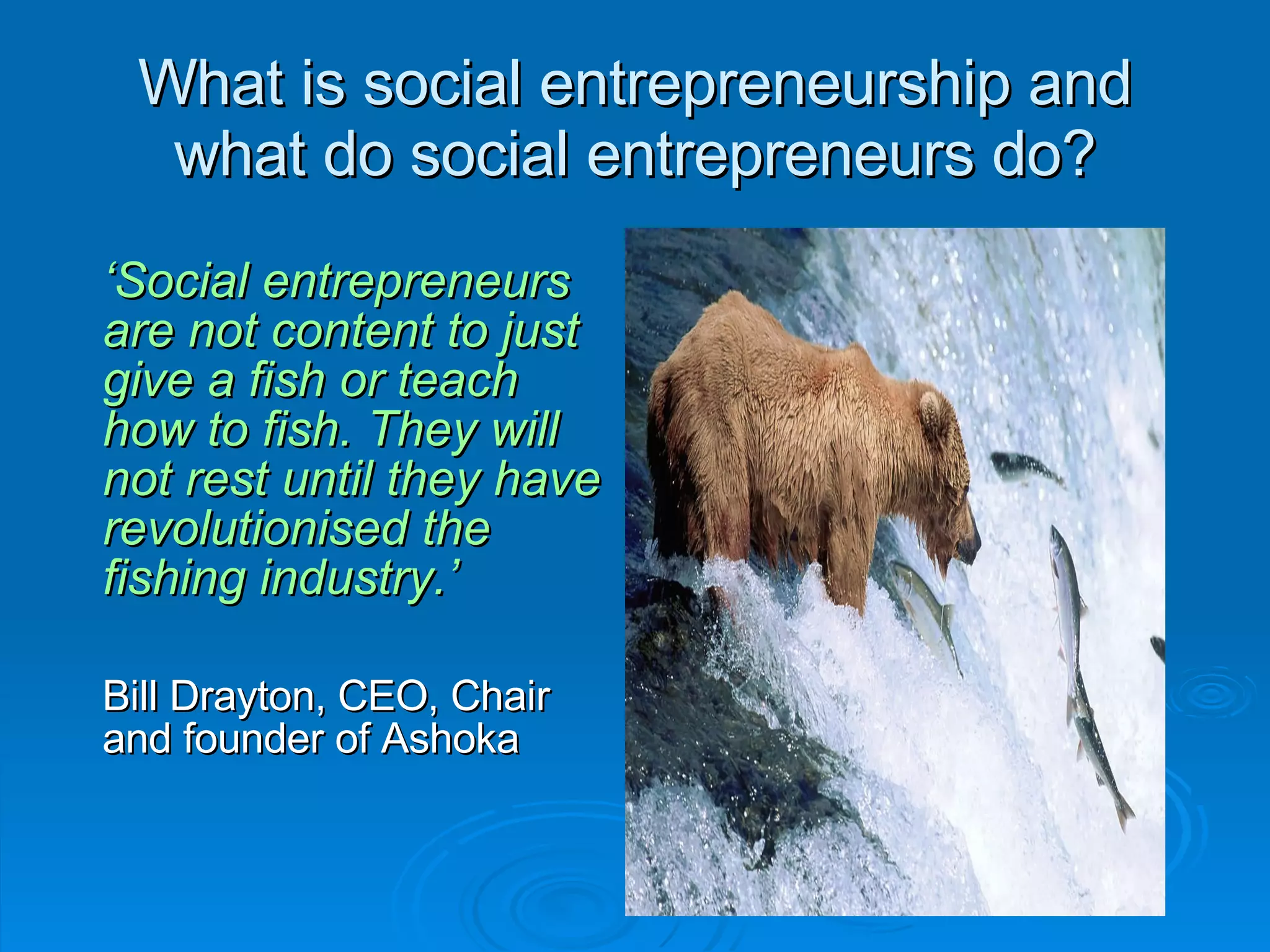
What is socialentrepreneurship and what do social entrepreneurs do? ‘ Social entrepreneurs are not content to just give a fish or teach how to fish. They will not rest until they have revolutionised the fishing industry.’ Bill Drayton, CEO, Chair and founder of Ashoka
19.
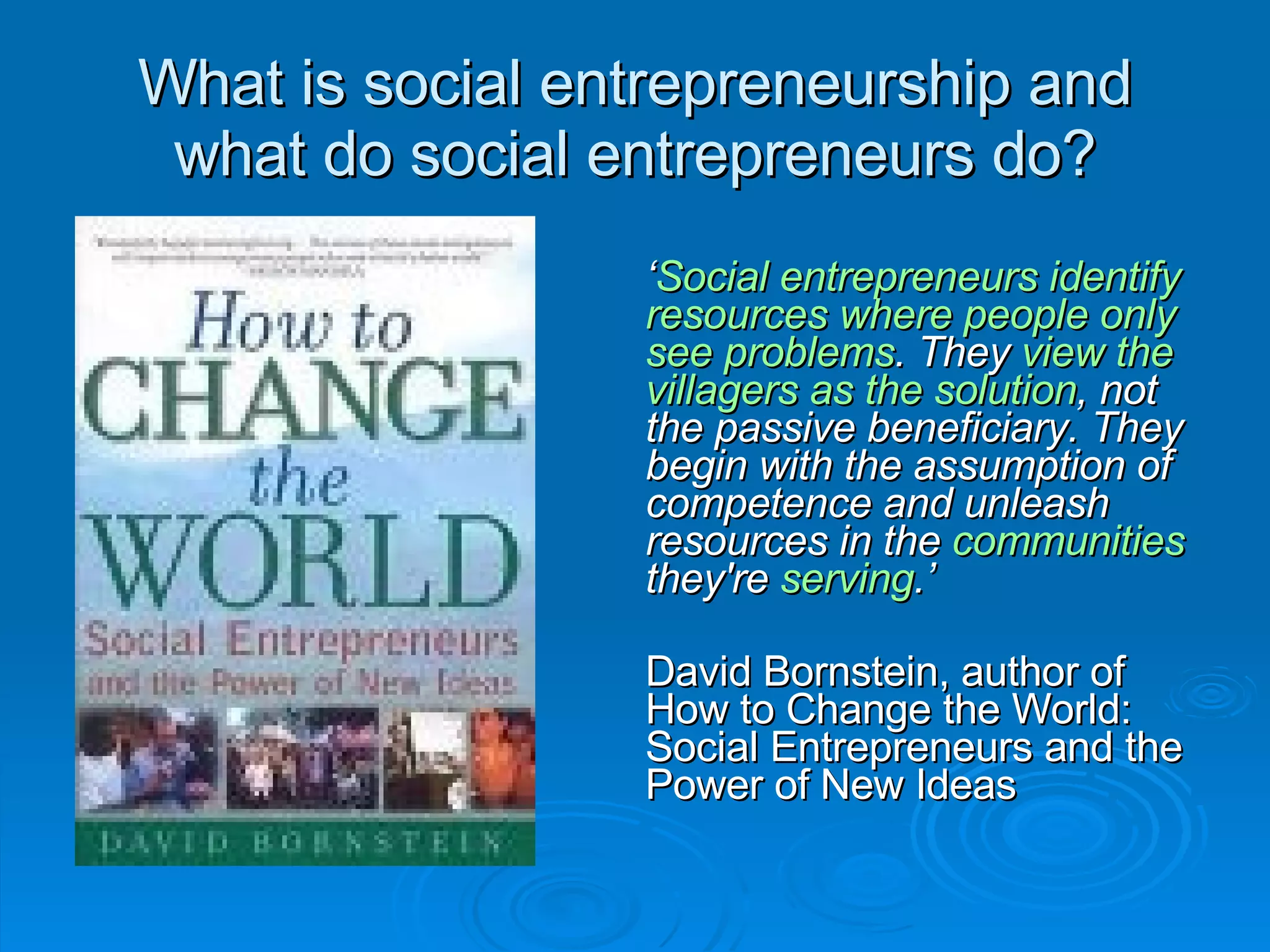
What is socialentrepreneurship and what do social entrepreneurs do? ‘ Social entrepreneurs identify resources where people only see problems . They view the villagers as the solution , not the passive beneficiary. They begin with the assumption of competence and unleash resources in the communities they're serving .’ David Bornstein, author of How to Change the World: Social Entrepreneurs and the Power of New Ideas
20.
What is socialentrepreneurship and what do social entrepreneurs do? “ Social entrepreneurship is the process of recognizing and resourcefully pursuing opportunities to create social value . Social entrepreneurs are innovative , resourceful, and results oriented. They draw upon the best thinking in both the business and non-profit worlds to develop strategies that maximize their social impact. These entrepreneurial leaders operate in all kinds of organizations : large and small; new and old; religious and secular; non-profit, for-profit, and hybrid. These organizations comprise the ‘social sector’. ” http://www.fuqua.duke.edu/centers/case/about/whatissocialentrepreneurship/
21.
What is socialentrepreneurship and what do social entrepreneurs do? “ Social entrepreneurs are unreasonable people. They are the mavericks who refuse to accept the status quo. They look at the world, are dissatisfied with what they see, and resolve to change it. They are both dreamers and doers ; imagining a brighter future and setting about making that dream into a reality. They are true entrepreneurs; innovators who are passionate and resourceful , who are prepared to take risks and who apply their energy, drive and ambition to effecting social change in Ireland.” http://www.socialentrepreneurs.ie/pages/social-entrepreneurs.php
22.
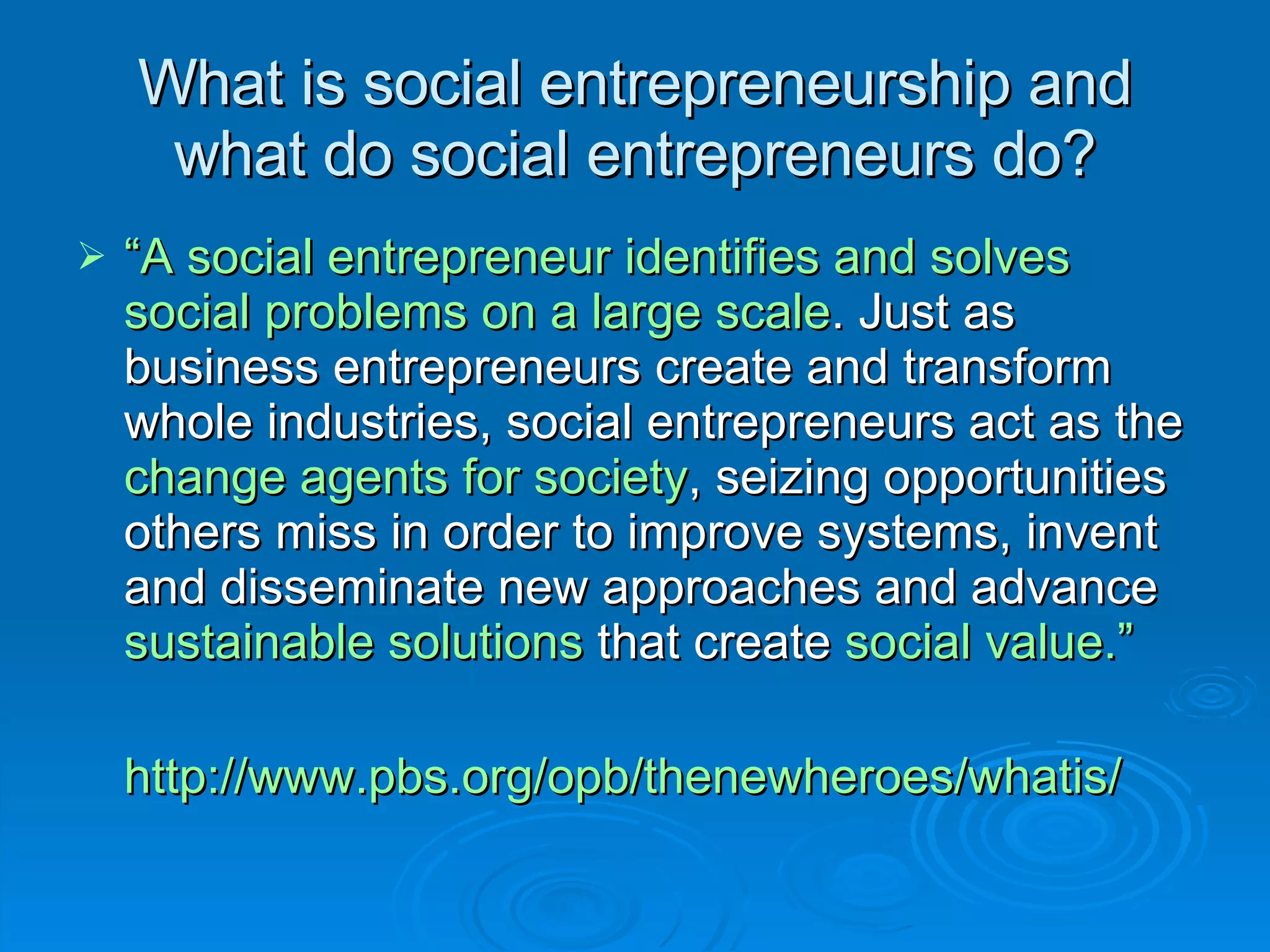
What is socialentrepreneurship and what do social entrepreneurs do? “ A social entrepreneur identifies and solves social problems on a large scale . Just as business entrepreneurs create and transform whole industries, social entrepreneurs act as the change agents for society , seizing opportunities others miss in order to improve systems, invent and disseminate new approaches and advance sustainable solutions that create social value.” http://www.pbs.org/opb/thenewheroes/whatis/
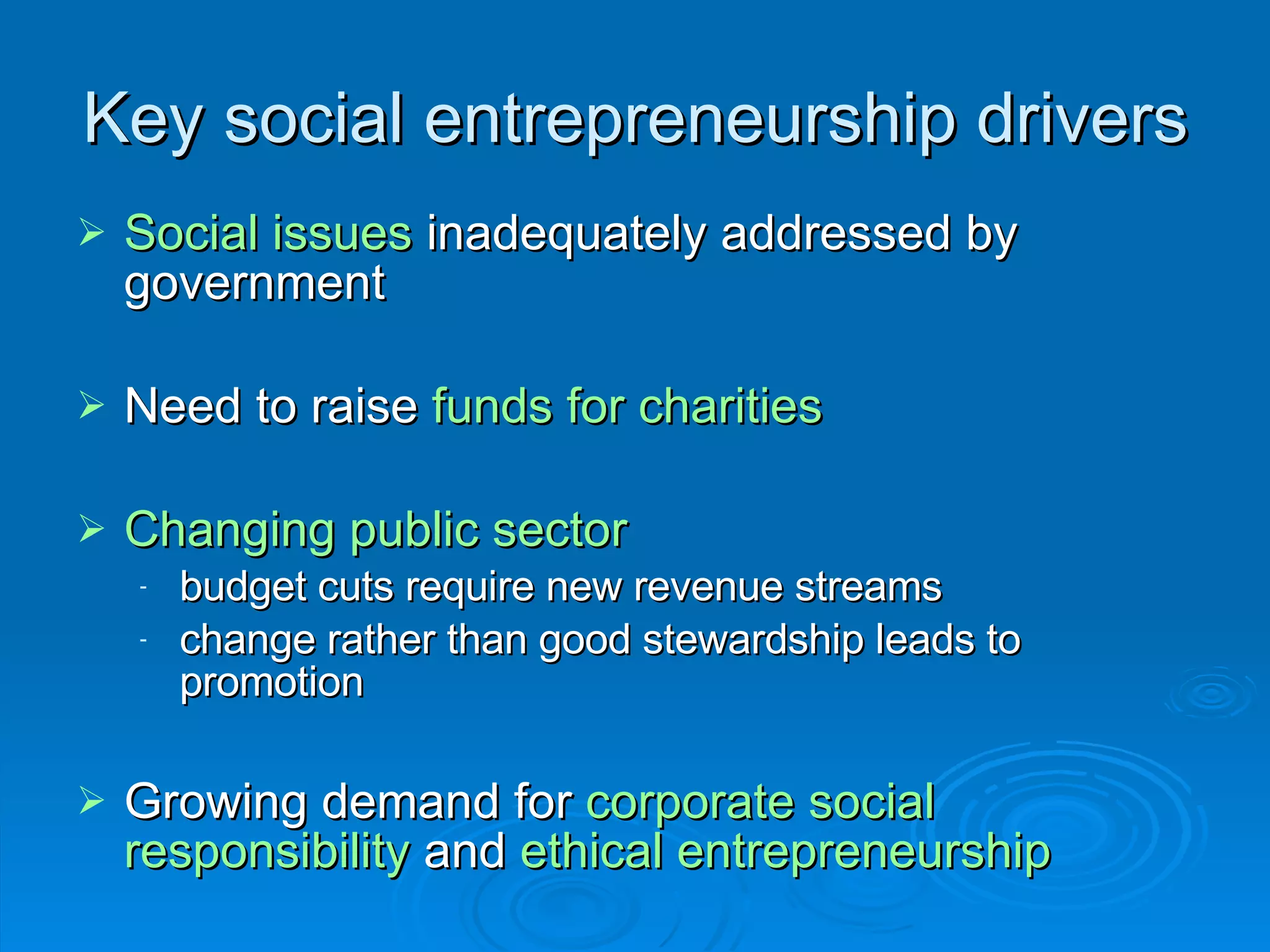
Key social entrepreneurshipdrivers Social issues inadequately addressed by government Need to raise funds for charities Changing public sector budget cuts require new revenue streams change rather than good stewardship leads to promotion Growing demand for corporate social responsibility and ethical entrepreneurship
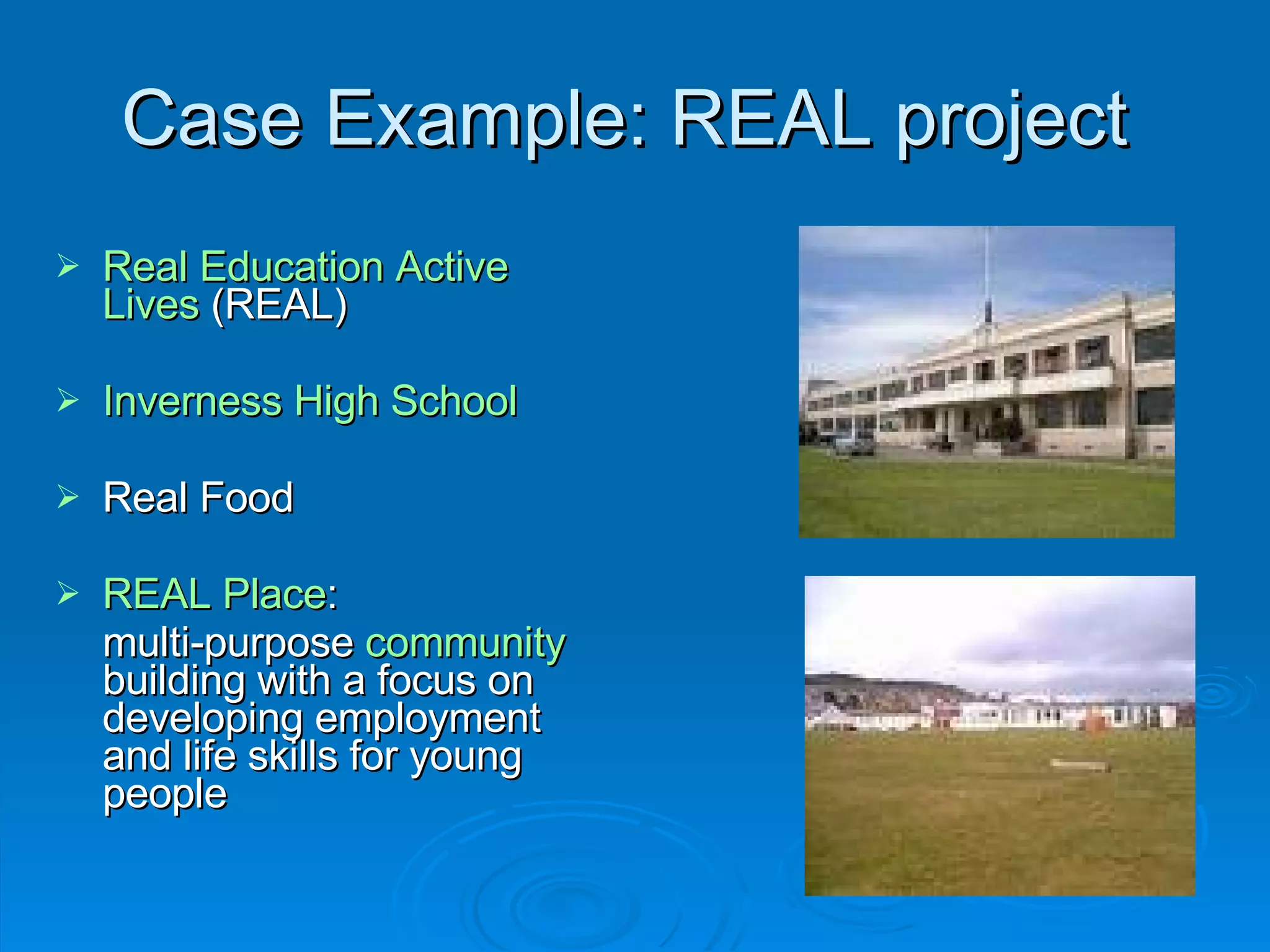
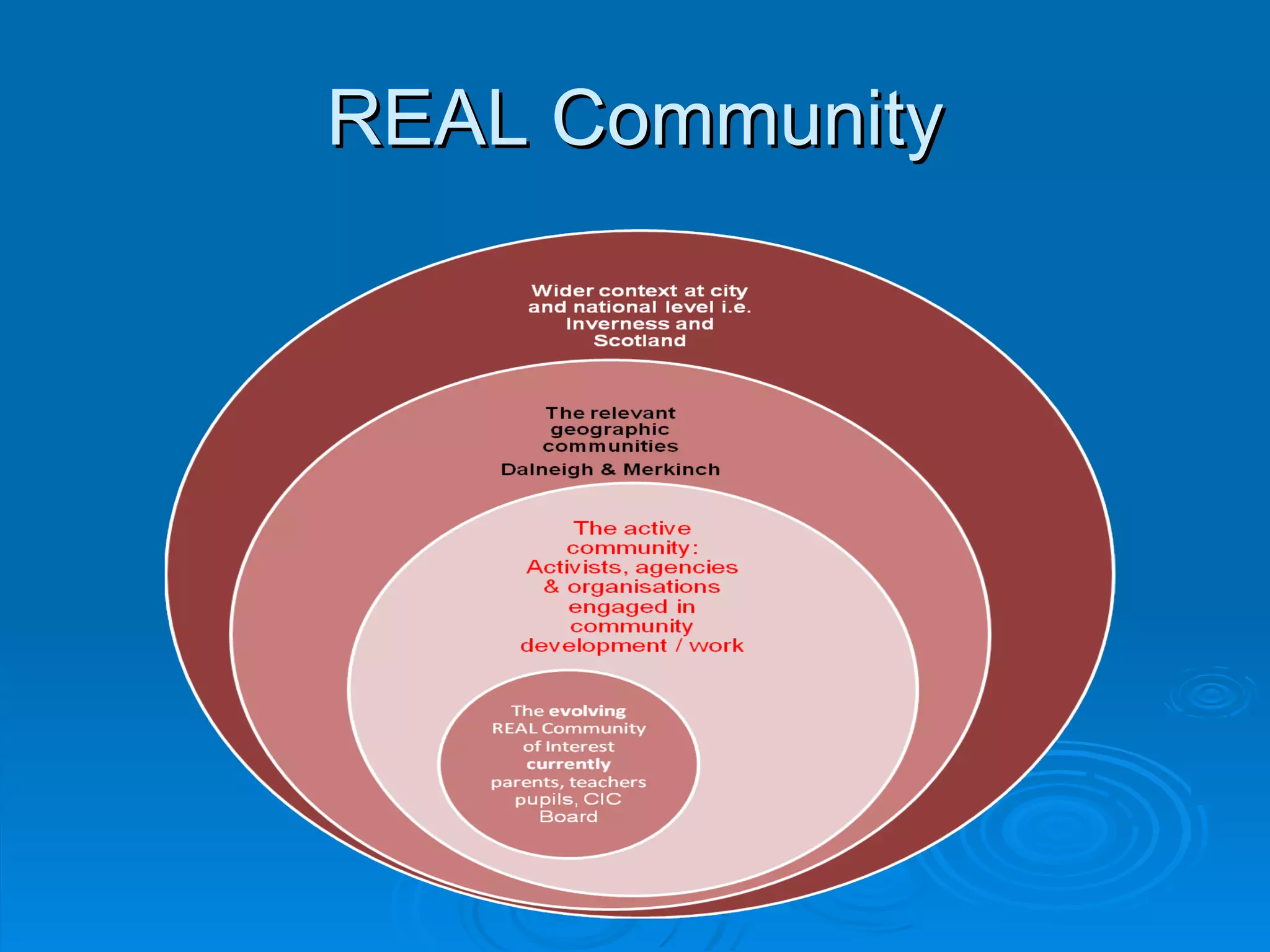
Case Example: REALproject Real Education Active Lives (REAL) Inverness High School Real Food REAL Place : multi-purpose community building with a focus on developing employment and life skills for young people
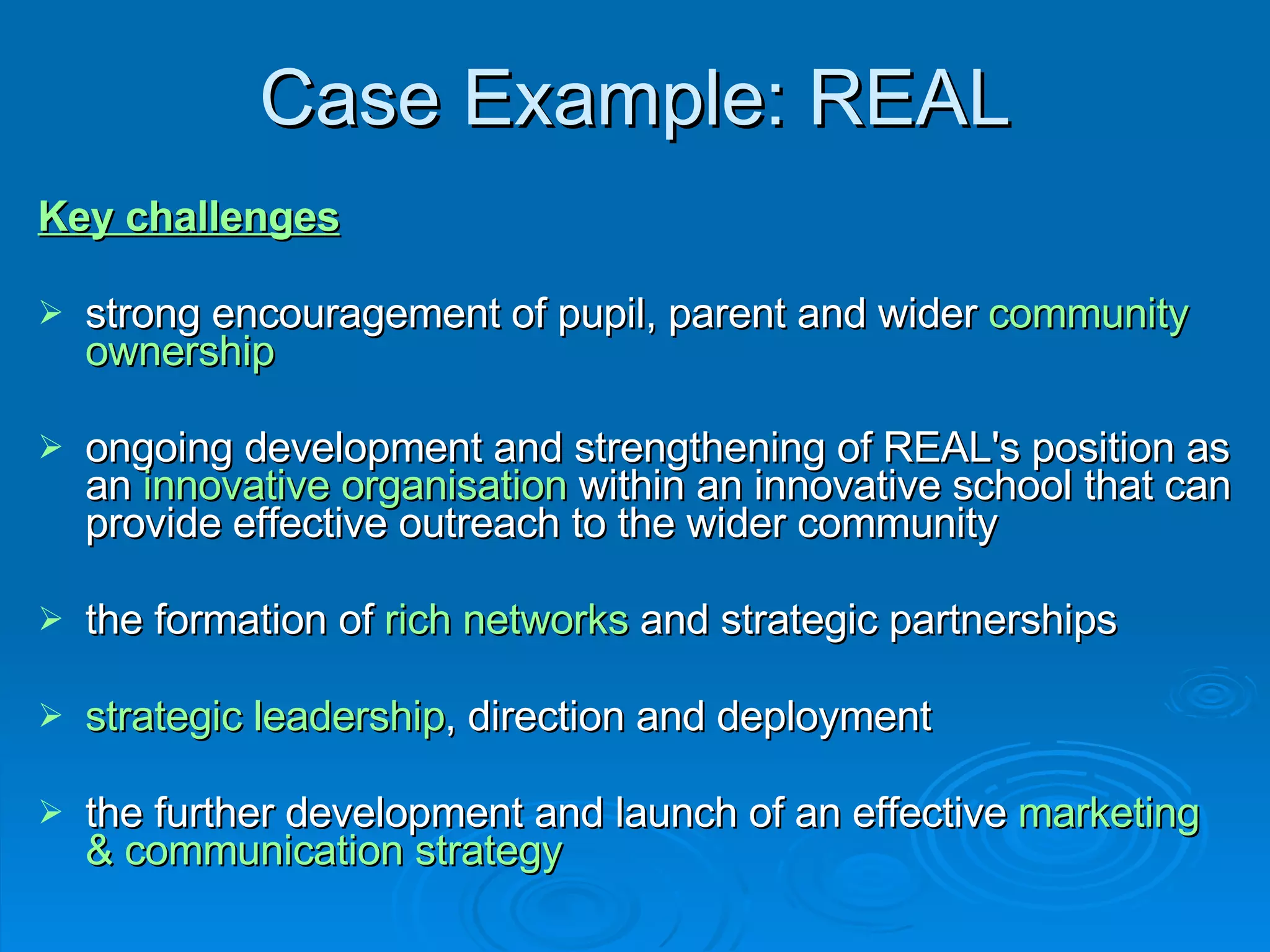
Case Example: REALKey challenges strong encouragement of pupil, parent and wider community ownership ongoing development and strengthening of REAL's position as an innovative organisation within an innovative school that can provide effective outreach to the wider community the formation of rich networks and strategic partnerships strategic leadership , direction and deployment the further development and launch of an effective marketing & communication strategy
29.
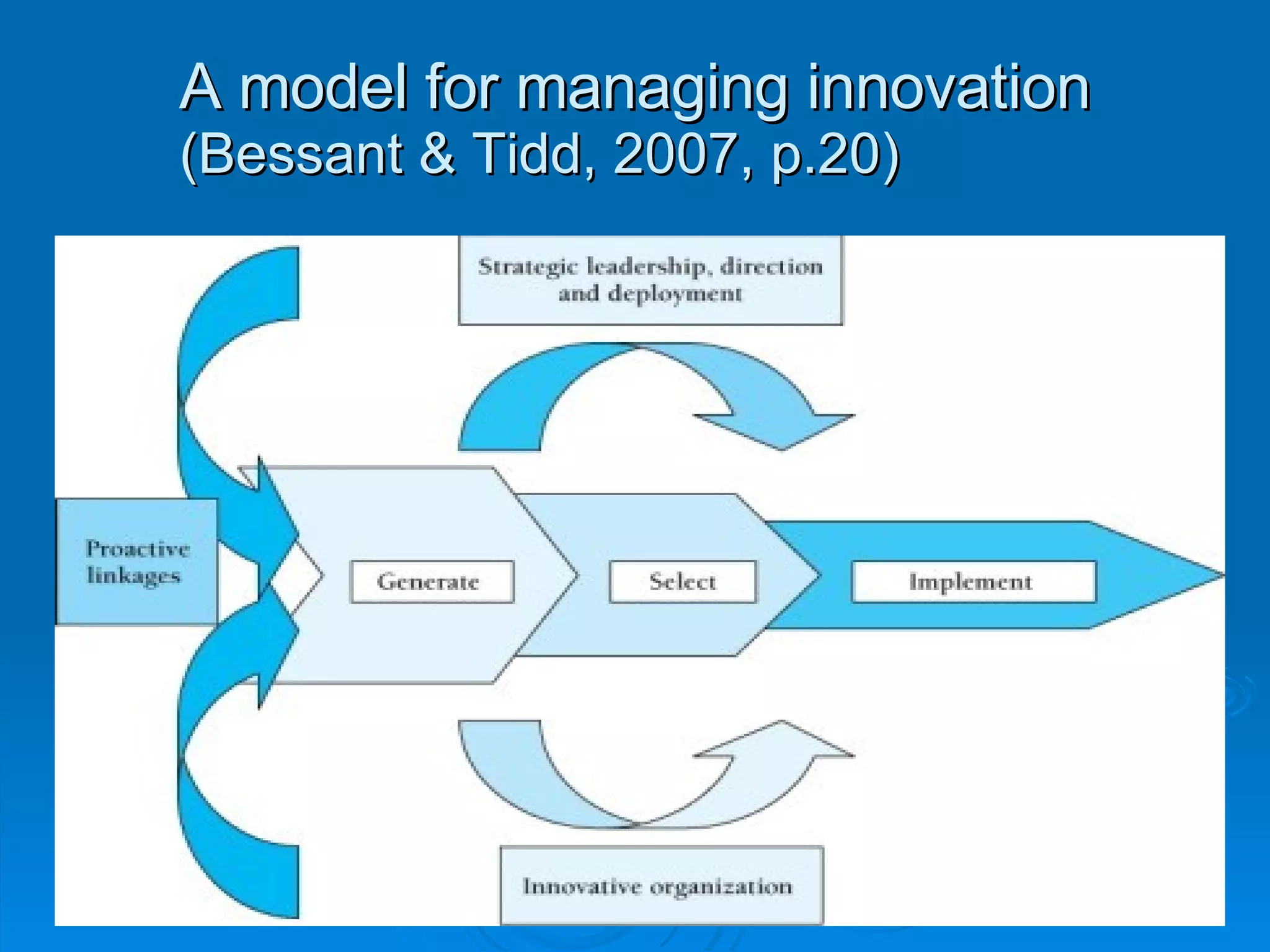
A model formanaging innovation (Bessant & Tidd, 2007, p.20)
30.
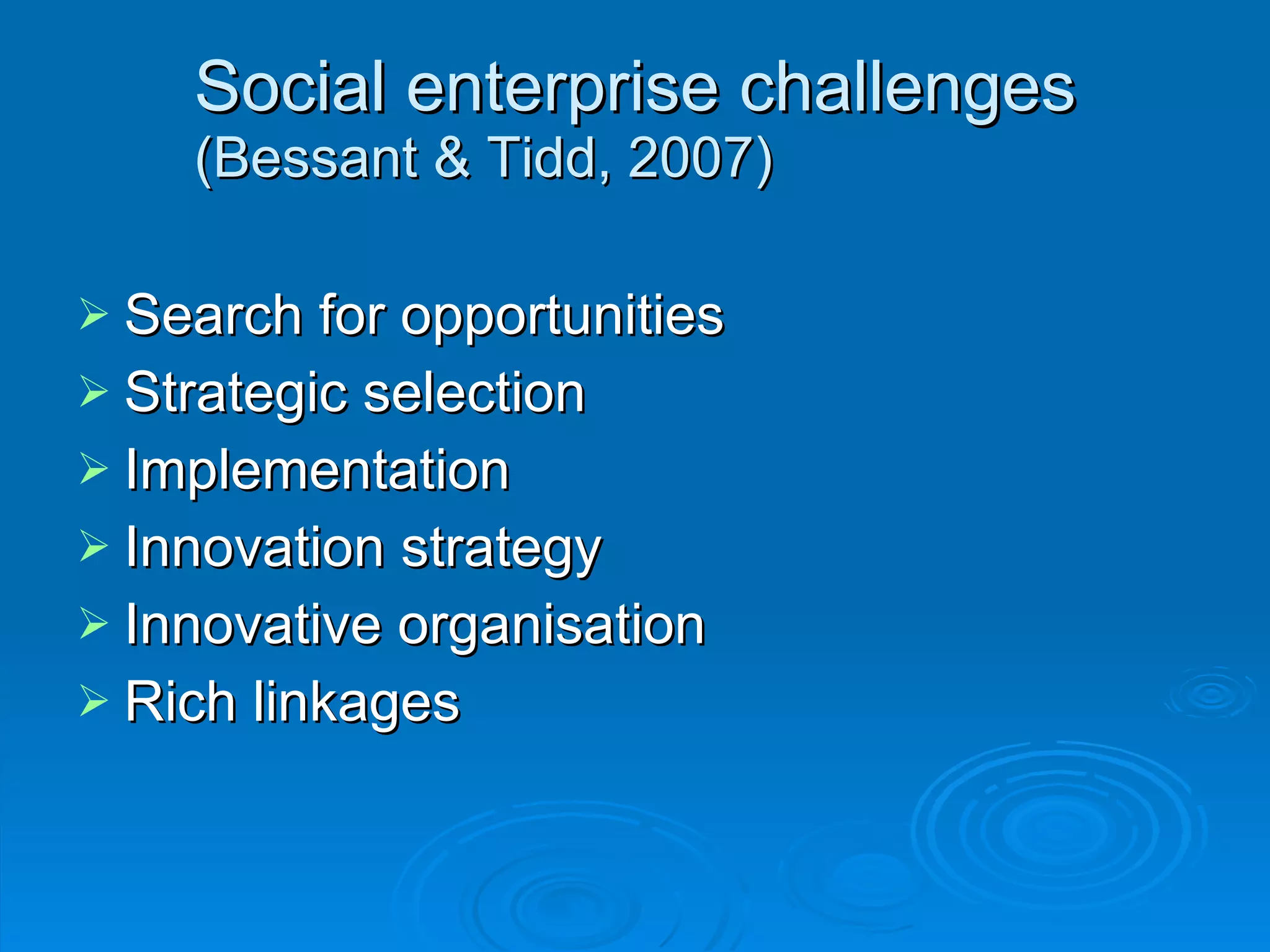
Social enterprise challenges(Bessant & Tidd, 2007) Search for opportunities Strategic selection Implementation Innovation strategy Innovative organisation Rich linkages
31.
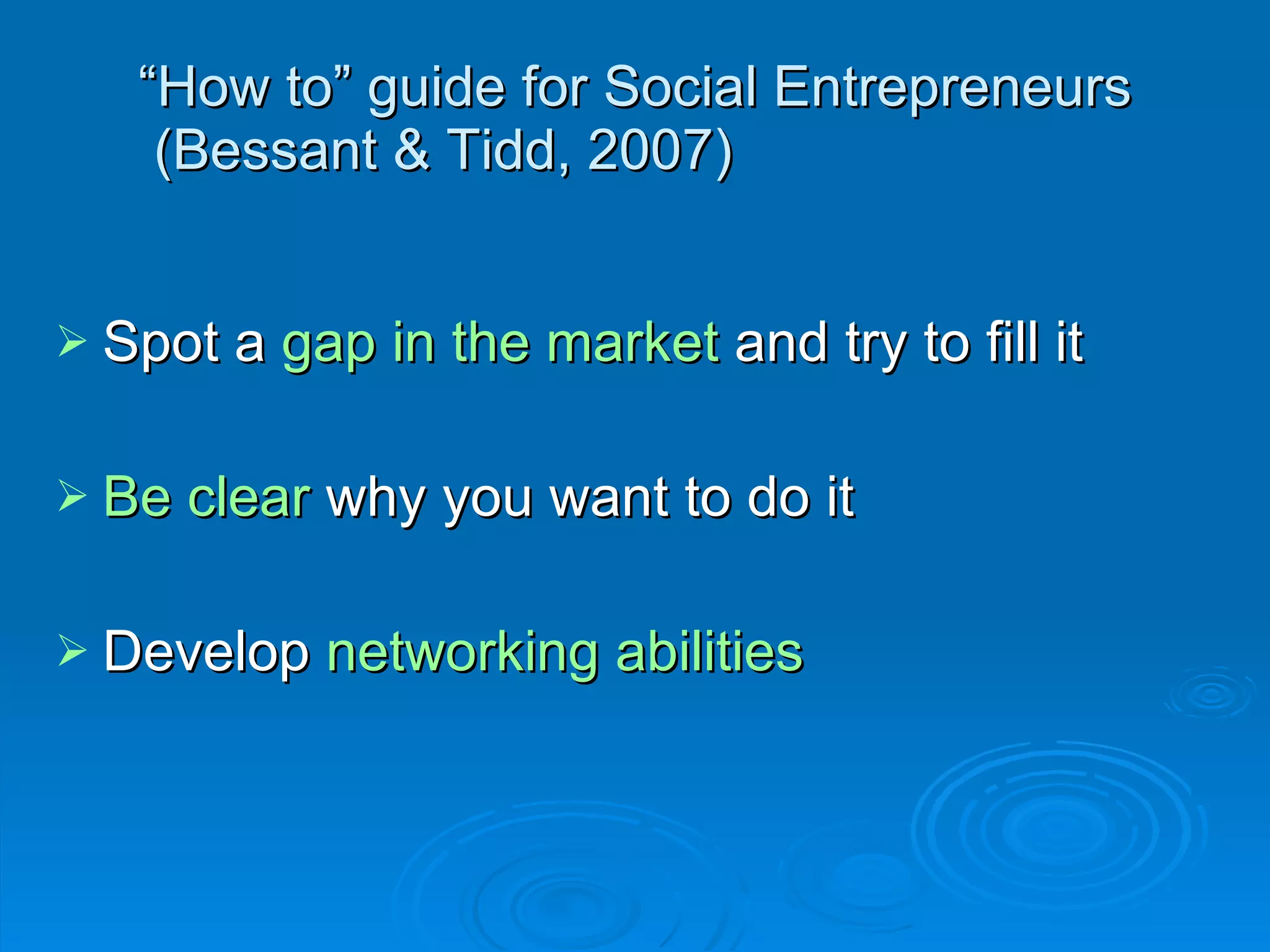
“ How to”guide for Social Entrepreneurs (Bessant & Tidd, 2007) Spot a gap in the market and try to fill it Be clear why you want to do it Develop networking abilities
32.
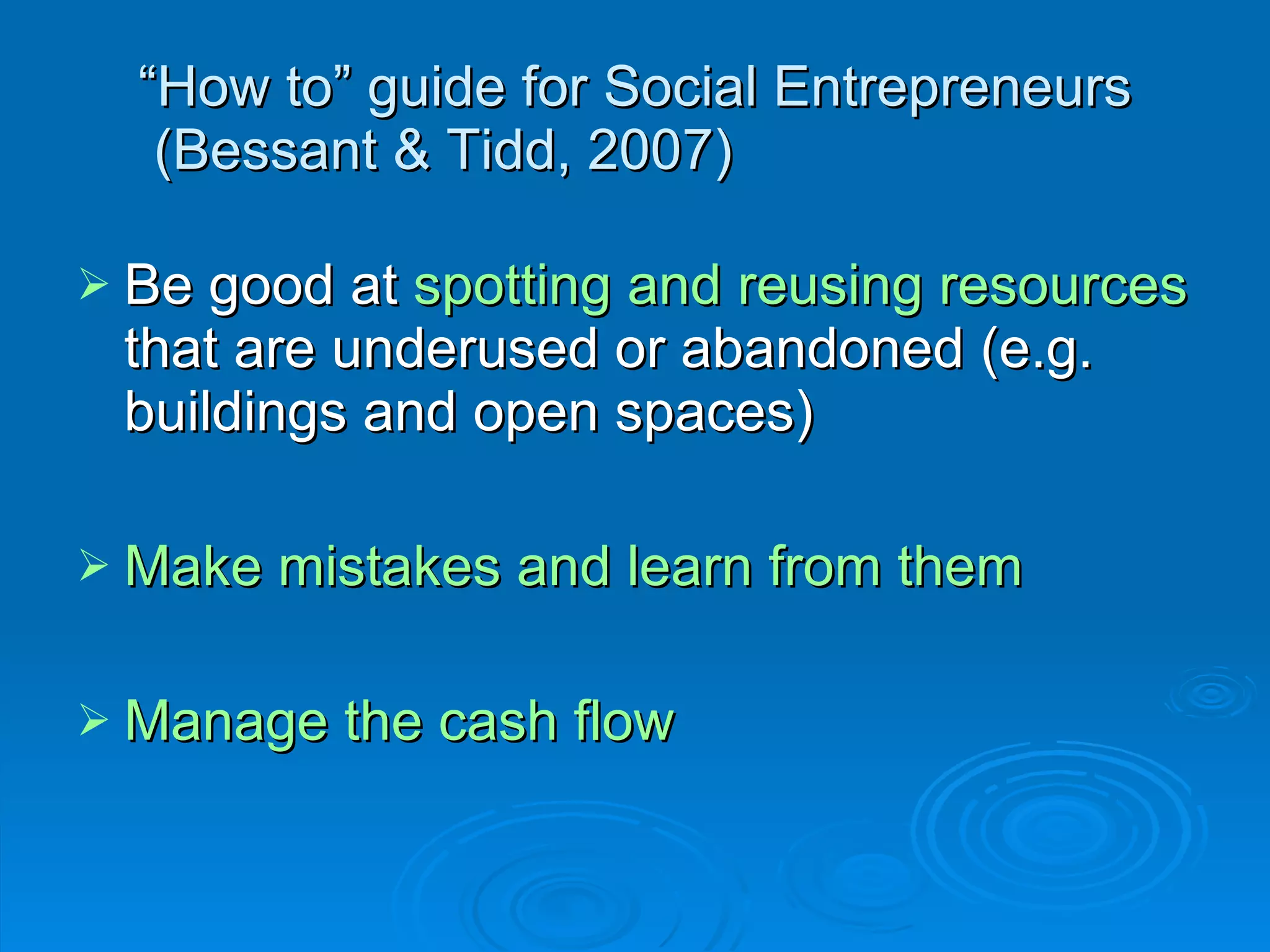
“ How to”guide for Social Entrepreneurs (Bessant & Tidd, 2007) Be good at spotting and reusing resources that are underused or abandoned (e.g. buildings and open spaces) Make mistakes and learn from them Manage the cash flow
33.
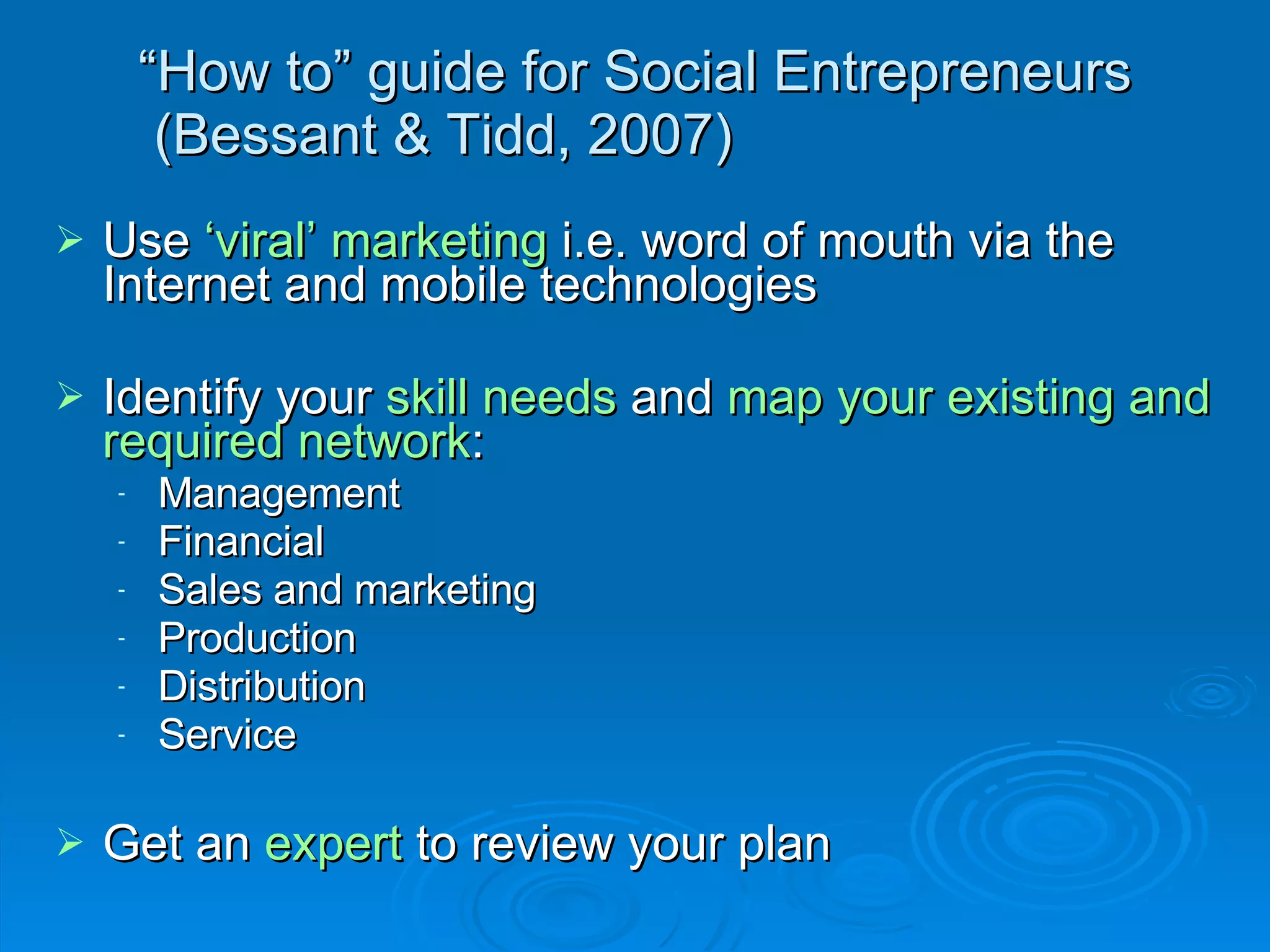
“ How to”guide for Social Entrepreneurs (Bessant & Tidd, 2007) Use ‘viral’ marketing i.e. word of mouth via the Internet and mobile technologies Identify your skill needs and map your existing and required network : Management Financial Sales and marketing Production Distribution Service Get an expert to review your plan
Critiques of socialentrepreneurship The idea of people spotting and pursuing opportunities within public and social contexts, and making a significant impact on society, is a powerful one, but how useful is it? Almost any form of human achievement could be labelled as social entrepreneurship Social entrepreneurship and social engineering are closely related? Sinister motives can underlie apparent philanthropy (Professor Peter Rosa lecture notes, The University of Edinburgh, 2008)
36.
Critiques of socialentrepreneurship Inherent tensions within the social entrepreneurship model: Social entrepreneur as hero can ignore vital community involvement Depoliticalisation of social problems – effective social entrepreneurs can let governments ‘off the hook’ ‘ Selling out’ if social action = business processes Constant strategic focus on innovation and change can lead to overvaluation of potentially short-term objectives Tendency to seek high-impact interventions can lead to unsustainable project-based approach (Carter & Jones-Evans, 2006)
Some research implicationsNew organisational models and ways of working are developing Thus, potential contribution of social entrepreneurship to organizational theory and practice Scope for interdisciplinary research e.g. Entrepreneurship, Innovation, Community Development, Urban and Rural Regeneration, Regional Development, Leadership, Change Management etc.
Future career path?“ The idea of social entrepreneurship has struck a responsive chord. It is a phrase well suited to our times. It combines the passion of a social mission with an image of business-like discipline, innovation, and determination commonly associated with, for instance, the high-tech pioneers of Silicon Valley . The time is certainly ripe for entrepreneurial approaches to social problems. Many governmental and philanthropic efforts have fallen far short of our expectations. Major social sector institutions are often viewed as inefficient, ineffective, and unresponsive. Social entrepreneurs are needed to develop new models for a new century .” http://www.fuqua.duke.edu/centers/case/about/whatissocialentrepreneurship/
Summary Social entrepreneurship= New paradigm of social value creation Reflects a dynamic revolution in the social sector and its importance is being increasingly recognised in the corporate sector ‘ Social entrepreneurs’ recognise social problems and use traditional entrepreneurial principles Complex challenges e.g. triple bottom line objectives
43.
Summary Requires learningand absorbing a new set of skills for managing innovation along with current management thinking: Identify and engage a wide range of stakeholders Understand and meet their very diverse expectations Mobilise resources across networks Build coalition of support for socially valuable ideas
44.
Summary Various critiquesof social entrepreneurship Nevertheless, social entrepreneurship appears to be pioneering extraordinary changes in the social fabric of many communities worldwide Generates benefits through the creation of social capital improved and more efficient provision of public goods Establishment of new ‘hybrid’ business forms
Key Reading Bessant,J. and Tidd, J. (2007) Innovation and Entrepreneurship , Chapter 9 , Wiley Carter, S. and Jones-Evans, D. (2006) Enterprise and Small Business: Principles , Practice and Policy, 2 nd edition, Chapter 12 , FT Prentice Hall
47.
Further reading Andresen,K. (2006) Robin Hood Marketing: Stealing Corporate Savvy to Sell Just Causes, Jossey-Bass Bornstein, D. (2004) How to Change the World: Social Entrepreneurs and the Power of New Ideas . Oxford University Press DH (2006) Welcoming social enterprise into health and social care – a resource pack for social enterprise providers and commissioners http://www.library.nhs.uk/healthmanagement/ViewResource.aspx?resID=236145&tabID=290&catID=4031 Mair, J., Robinson, J. & Hockerts, K. (eds.) (2006) Social Entrepreneurship, Palgrave McLaughlin, K. et al. (eds.) (2006) New Public Management , Routledge
48.
Further reading Sachs,J. (2005) The End of Poverty: How we can make it happen in our lifetime . Penguin Schumacher, E.F. (1993) Small is Beautiful , Vintage Schumpeter, J. (1950) Capitalism, Socialism and Democracy . Harper & Row, New York Sirolli, E. (2006) Ripples from the Zambezi , New Society Publishers Thake, S. (1995) Staying the Course: The Role and Structures of Community Regeneration Organisations , Joseph Rowntree Foundation, York Thompson & Doherty (2006) The diverse world of social enterprise: A collection of social enterprise stories, International Journal of Social Economics , 33(5/6):361-375
49.
Online resources Centre for Social Innovation: http://socialinnovation.ca/ Community Action Network: www.can-online.org.uk/ Dublin City Enterprise Board: http://www.dceb.ie/knowledge-centre/general-business-issues/entrepreneurship-&-not-for-profit How to change the world: www.howtochangetheworld.org Grameen Bank: www.grameen-info.org Harvard University Social Enterprise Initiative: http://www.hbs.edu/socialenterprise/ Institute for Social Entrepreneurs: www.socialent.org Net Impact: http://www.netimpact.org/ REAL: http://real-ihs.blogspot.com/ Rural Social Enterprise: http://www.socialenterprisemag.co.uk/upload/documents/document11.pdf Said Business School Skoll Centre for Social Entrepreneurship: http://www.sbs.ox.ac.uk/skoll/ School for Social Entrepreneurs: http://www.sse.org.uk/ Skoll Fountation: www.skollfoundation.com Social Enterprise Coalition: www.socialenterprise.org.uk
50.
Online resources Social Entrepreneurs Ireland: http://www.socialentrepreneurs.ie Social Enterprise Magazine: http://www.socialenterprisemag.co.uk Social Enterprise Magazine (2008) Corporate leaders make waves with social entrepreneurs. Retrieved November 2008 from: http://www.socialenterprisemag.co.uk/sem/news/detail/index.asp?id=697 Social Entrepreneur Network Scotland (Senscot): http://www.senscot.net Stanford University Centre for Social Innovation: http://www.gsb.stanford.edu/csi/ Stanford University’s Entrepreneurs website: http://edcorner.stanford.edu Stanford Social Innovation Review: www.ssireview.org/ Stanford University’s Entrepreneurs website: http://edcorner.stanford.edu (has video links of social entrepreneurs discussing their projects) Times Online article: http://business.timesonline.co.uk/tol/business/related_reports/social_entrepreneurs/ The New Heroes: http://www.pbs.org/opb/thenewheroes The Trinity College Dublin Centre for Nonprofit Management: http://www.cnm.tcd.ie/ UnLtd: http://www.unltd.org.uk/ Wind up radio: www.freeplayenergy.com
![Social Entrepreneurship Entrepreneurship & Small Firms: Lecture 6 James Carr [email_address] Wednesday 25 th February 2009](https://image.slidesharecdn.com/lecture6-socialentrepreneurship-090507195315-phpapp02/75/Lecture-6-Social-Entrepreneurship-1-2048.jpg)