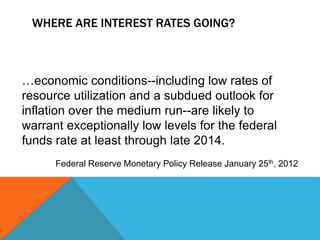
…economic conditions--including low rates of
resource utilization and a subdued outlook for
inflation over the medium run--are likely to
warrant exceptionally low levels for the federal
funds rate at least through late 2014.
Federal Reserve Monetary Policy Release January 25th, 2012
WHERE ARE INTEREST RATES GOING?
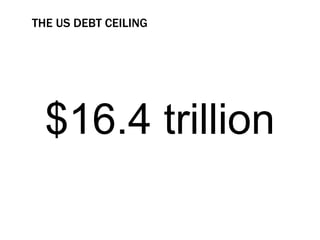
$16.4 trillion
THE US DEBT CEILING
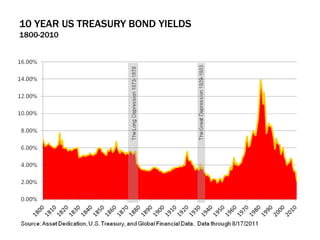
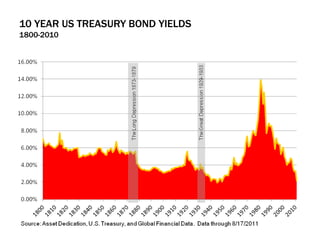
10 YEAR US TREASURY BOND YIELDS
1800-2010
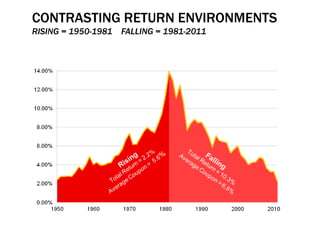
CONTRASTING RETURN ENVIRONMENTS
RISING = 1950-1981 FALLING = 1981-2011
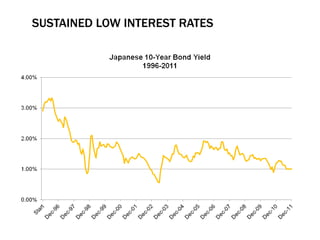
SUSTAINED LOW INTEREST RATES
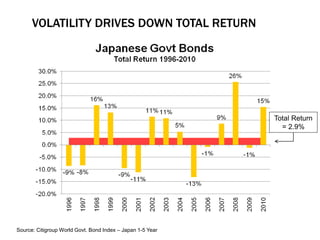
VOLATILITY DRIVES DOWN TOTAL RETURN
Source: Citigroup World Govt. Bond Index – Japan 1-5 Year
Total Return
= 2.9%
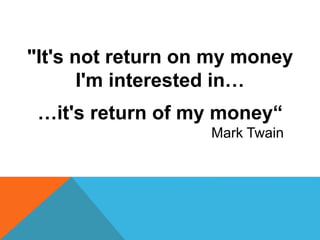
"It's not return on my money
I'm interested in…
…it's return of my money“
Mark Twain
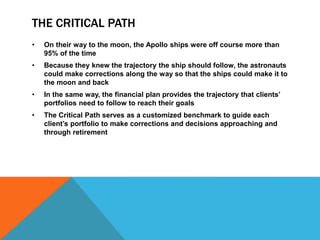
THE CRITICAL PATH
• On their way to the moon, the Apollo ships were off course more than
95% of the time
• Because they knew the trajectory the ship should follow, the astronauts
could make corrections along the way so that the ships could make it to
the moon and back
• In the same way, the financial plan provides the trajectory that clients’
portfolios need to follow to reach their goals
• The Critical Path serves as a customized benchmark to guide each
client’s portfolio to make corrections and decisions approaching and
through retirement
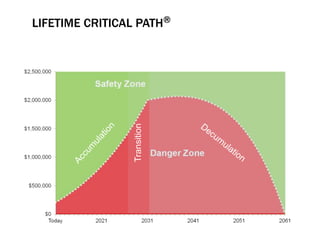
LIFETIME CRITICAL PATH®
Transition
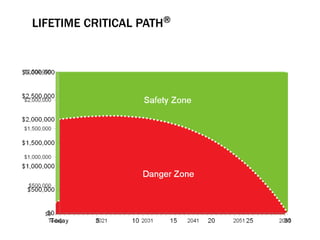
LIFETIME CRITICAL PATH®
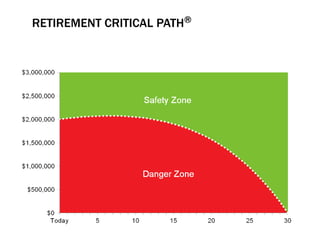
RETIREMENT CRITICAL PATH®
BRINGING INVESTMENTS AND PLANS TOGETHER
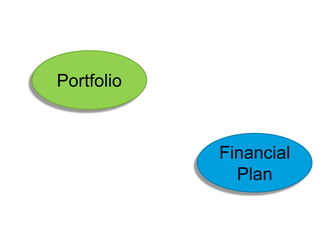
• The financial plan articulates how investors plan to spend their money
• Investments ought to reflect the goals they are funding instead of risk
tolerance that is not tied to the goals
• There are numerous behavioral benefits for having the investments flow
from the plan
Portfolio
Financial
Plan
SPLITTING THE PORTFOLIO TO REFLECT GOALS
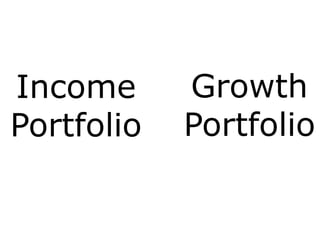
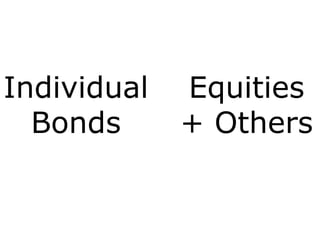
• Sub-portfolios are dedicated to specific purposes – Income and Growth
• Each sub-portfolio is made up of asset classes best suited to their
purpose
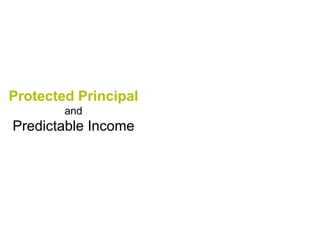
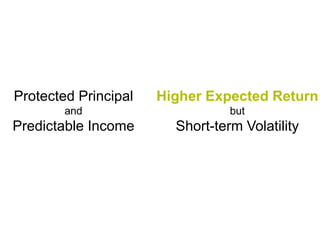
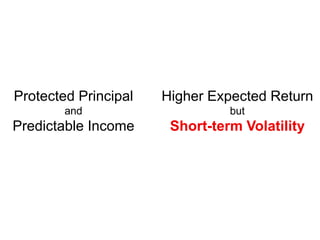
• The Income Portfolio is dedicated to protecting principal and providing
predictable cash flows using individual bonds
• The Growth Portfolio is tasked with delivering long-term growth using
equities and other growth oriented assets
Portfolio
Growth
Portfolio
Income
Portfolio
Equities
+ Others
Individual
Bonds
Protected Principal
and
Predictable Income
Protected Principal
and
Predictable Income
Higher Expected Return
but
Short-term Volatility
Protected Principal
and
Predictable Income
Protected Principal
and
Predictable Income
Higher Expected Return
but
Short-term Volatility
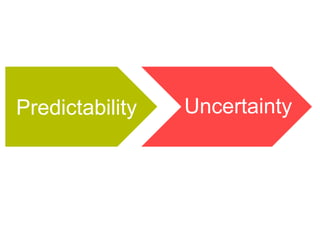
Predictability Uncertainty
Systematically transfer uncertainty
of equities to predictability of
bonds to reduce the volatility of
funding retirement spending.
DE-RISKING THE PORTFOLIO
1. Protect Principal
2. Reduce uncertainty of funding spending
needs
3. Reduce sensitivity to market risks
• Interest rate risk
• Equity market risk
BEHAVIORAL BENEFITS
1. Mental accounting
2. Dedicate assets to the purpose they best
serve
3. Tie portfolio performance to the goals
outlined in the financial plan
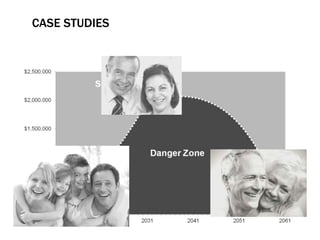
CASE STUDIES
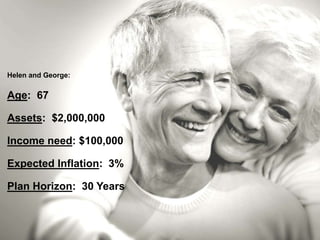
Helen and George:
Age: 67
Assets: $2,000,000
Income need: $100,000
Expected Inflation: 3%
Plan Horizon: 30 Years
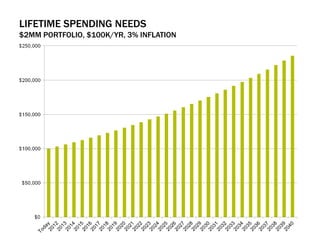
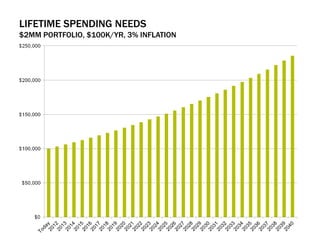
LIFETIME SPENDING NEEDS
$2MM PORTFOLIO, $100K/YR, 3% INFLATION
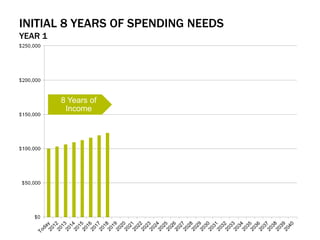
INITIAL 8 YEARS OF SPENDING NEEDS
YEAR 1
8 Years of
Income
Year Issue Principal Interest
Portfolio
Cash
Flows
Target
Cash
Flows
2012 CD $77,000 $22,905 $99,905 $100,000
2013 CD $82,000 $21,416 $103,416 $103,000
2014 CD $86,000 $20,035 $106,035 $106,090
2015 CD $91,000 $17,818 $108,818 $109,273
2016 CD $98,000 $14,855 $112,855 $112,551
2017 CD $104,000 $11,713 $115,713 $115,927
2018 CD $112,000 $7,455 $119,455 $119,405
2019 Agency Bond $121,000 $2,496 $123,496 $122,987
$889,692 $889,234
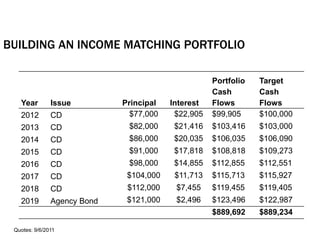
BUILDING AN INCOME MATCHING PORTFOLIO
Quotes: 9/6/2011
Year Issue Principal Interest
Portfolio
Cash
Flows
Target
Cash
Flows
2012 CD $77,000 $22,905 $99,905 $100,000
2013 CD $82,000 $21,416 $103,416 $103,000
2014 CD $86,000 $20,035 $106,035 $106,090
2015 CD $91,000 $17,818 $108,818 $109,273
2016 CD $98,000 $14,855 $112,855 $112,551
2017 CD $104,000 $11,713 $115,713 $115,927
2018 CD $112,000 $7,455 $119,455 $119,405
2019 Agency Bond $121,000 $2,496 $123,496 $122,987
$889,692 $889,234
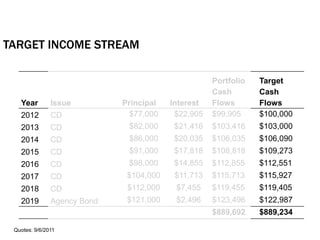
TARGET INCOME STREAM
Quotes: 9/6/2011
Year Issue Principal Interest
Portfolio
Cash
Flows
Target
Cash
Flows
2012 CD $77,000 $22,905 $99,905 $100,000
2013 CD $82,000 $21,416 $103,416 $103,000
2014 CD $86,000 $20,035 $106,035 $106,090
2015 CD $91,000 $17,818 $108,818 $109,273
2016 CD $98,000 $14,855 $112,855 $112,551
2017 CD $104,000 $11,713 $115,713 $115,927
2018 CD $112,000 $7,455 $119,455 $119,405
2019 Agency Bond $121,000 $2,496 $123,496 $122,987
$889,692 $889,234
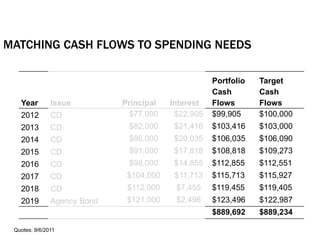
MATCHING CASH FLOWS TO SPENDING NEEDS
Quotes: 9/6/2011
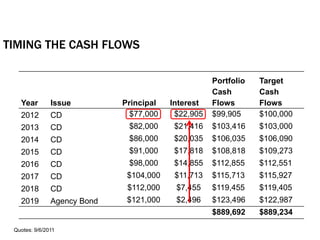
Year Issue Principal Interest
Portfolio
Cash
Flows
Target
Cash
Flows
2012 CD $77,000 $22,905 $99,905 $100,000
2013 CD $82,000 $21,416 $103,416 $103,000
2014 CD $86,000 $20,035 $106,035 $106,090
2015 CD $91,000 $17,818 $108,818 $109,273
2016 CD $98,000 $14,855 $112,855 $112,551
2017 CD $104,000 $11,713 $115,713 $115,927
2018 CD $112,000 $7,455 $119,455 $119,405
2019 Agency Bond $121,000 $2,496 $123,496 $122,987
$889,692 $889,234
TIMING THE CASH FLOWS
Quotes: 9/6/2011
PORTFOLIO COSTS
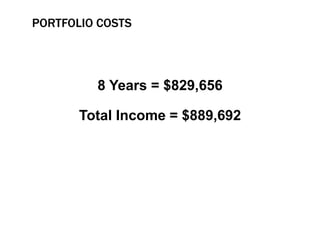
8 Years = $829,656
Total Income = $889,692
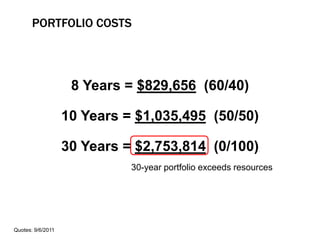
PORTFOLIO COSTS
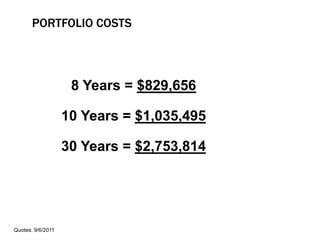
8 Years = $829,656 (60/40)
10 Years = $1,035,495 (50/50)
30 Years = $2,753,814 (0/100)
Quotes: 9/6/2011
PORTFOLIO COSTS
8 Years = $829,656 (60/40)
10 Years = $1,035,495 (50/50)
30 Years = $2,753,814 (0/100)
Quotes: 9/6/2011
30-year portfolio exceeds resources
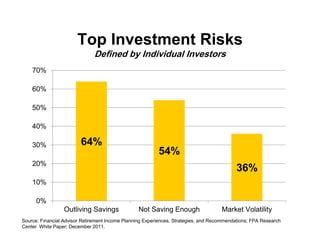
Top Investment Risks
Defined by Individual Investors
64%
54%
36%
0%
10%
20%
30%
40%
50%
60%
70%
Outliving Savings Not Saving Enough Market Volatility
Source: Financial Advisor Retirement Income Planning Experiences, Strategies, and Recommendations; FPA Research
Center White Paper; December 2011.
LIFETIME SPENDING NEEDS
$2MM PORTFOLIO, $100K/YR, 3% INFLATION
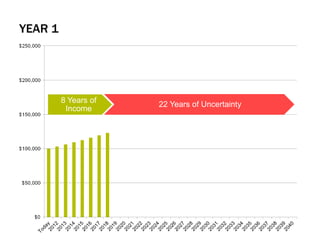
YEAR 1
8 Years of
Income
22 Years of Uncertainty
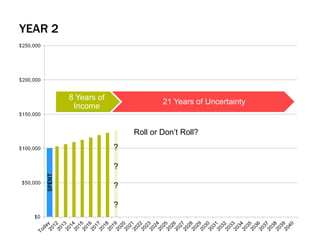
YEAR 2
8 Years of
Income
21 Years of Uncertainty
?
?
?
?
Roll or Don’t Roll?
8 Years of
Income
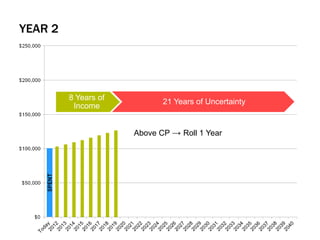
YEAR 2
8 Years of
Income
21 Years of Uncertainty
Above CP → Roll 1 Year
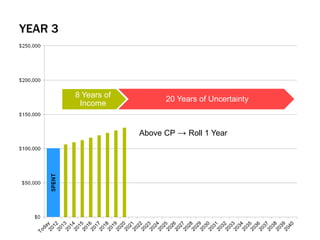
YEAR 3
8 Years of
Income
20 Years of Uncertainty
Above CP → Roll 1 Year
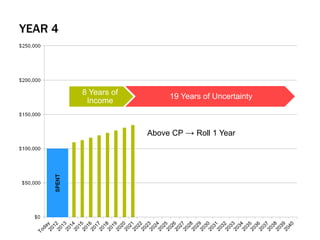
YEAR 4
8 Years of
Income
19 Years of Uncertainty
Above CP → Roll 1 Year
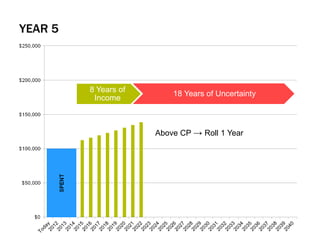
YEAR 5
8 Years of
Income
18 Years of Uncertainty
Above CP → Roll 1 Year
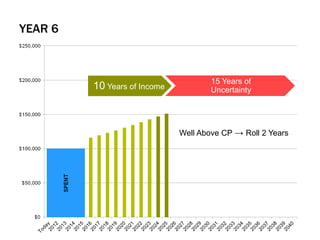
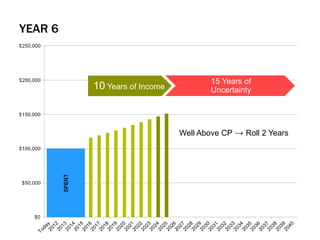
YEAR 6
10 Years of Income
15 Years of
Uncertainty
Well Above CP → Roll 2 Years
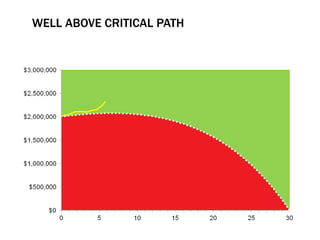
WELL ABOVE CRITICAL PATH
YEAR 6
10 Years of Income
15 Years of
Uncertainty
Well Above CP → Roll 2 Years
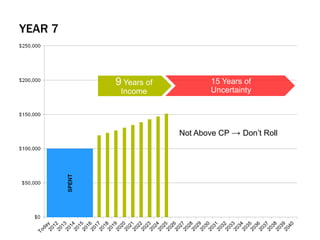
YEAR 7
9 Years of
Income
15 Years of
Uncertainty
Not Above CP → Don’t Roll
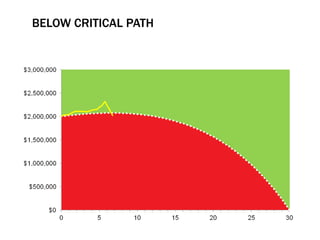
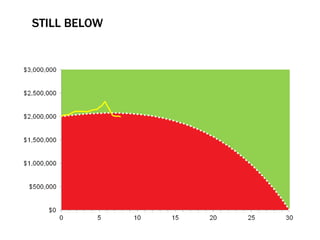
BELOW CRITICAL PATH
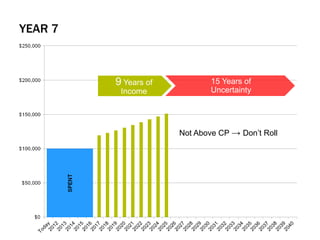
YEAR 7
9 Years of
Income
15 Years of
Uncertainty
Not Above CP → Don’t Roll
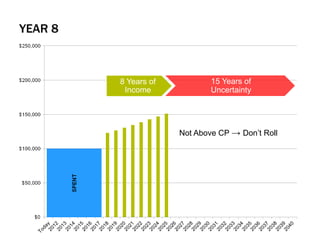
YEAR 8
8 Years of
Income
15 Years of
Uncertainty
Not Above CP → Don’t Roll
STILL BELOW
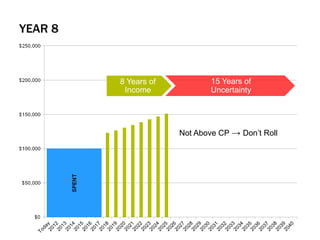
YEAR 8
8 Years of
Income
15 Years of
Uncertainty
Not Above CP → Don’t Roll
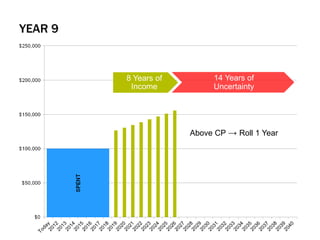
YEAR 9
8 Years of
Income
14 Years of
Uncertainty
Above CP → Roll 1 Year
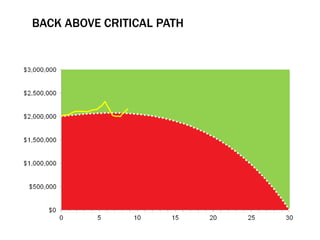
BACK ABOVE CRITICAL PATH
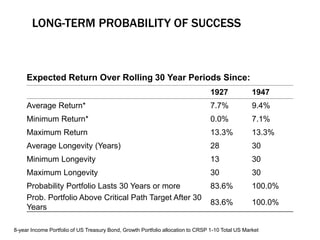
LONG-TERM PROBABILITY OF SUCCESS
Expected Return Over Rolling 30 Year Periods Since:
1927 1947
Average Return* 7.7% 9.4%
Minimum Return* 0.0% 7.1%
Maximum Return 13.3% 13.3%
Average Longevity (Years) 28 30
Minimum Longevity 13 30
Maximum Longevity 30 30
Probability Portfolio Lasts 30 Years or more 83.6% 100.0%
Prob. Portfolio Above Critical Path Target After 30
Years
83.6% 100.0%
8-year Income Portfolio of US Treasury Bond, Growth Portfolio allocation to CRSP 1-10 Total US Market
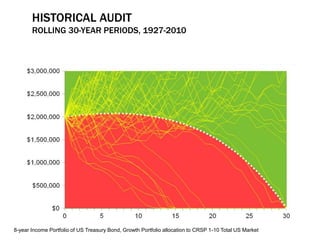
HISTORICAL AUDIT
ROLLING 30-YEAR PERIODS, 1927-2010
8-year Income Portfolio of US Treasury Bond, Growth Portfolio allocation to CRSP 1-10 Total US Market
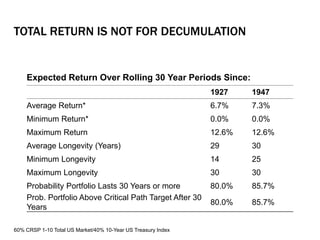
TOTAL RETURN IS NOT FOR DECUMULATION
Expected Return Over Rolling 30 Year Periods Since:
1927 1947
Average Return* 6.7% 7.3%
Minimum Return* 0.0% 0.0%
Maximum Return 12.6% 12.6%
Average Longevity (Years) 29 30
Minimum Longevity 14 25
Maximum Longevity 30 30
Probability Portfolio Lasts 30 Years or more 80.0% 85.7%
Prob. Portfolio Above Critical Path Target After 30
Years
80.0% 85.7%
60% CRSP 1-10 Total US Market/40% 10-Year US Treasury Index
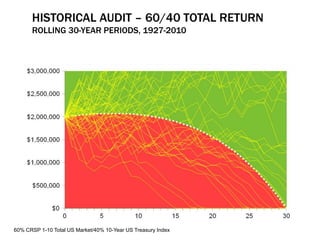
HISTORICAL AUDIT – 60/40 TOTAL RETURN
ROLLING 30-YEAR PERIODS, 1927-2010
60% CRSP 1-10 Total US Market/40% 10-Year US Treasury Index
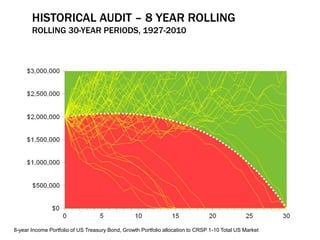
HISTORICAL AUDIT – 8 YEAR ROLLING
ROLLING 30-YEAR PERIODS, 1927-2010
8-year Income Portfolio of US Treasury Bond, Growth Portfolio allocation to CRSP 1-10 Total US Market
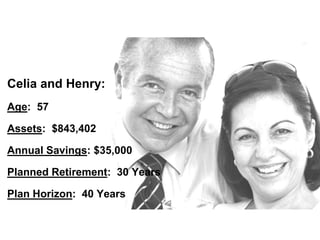
Celia and Henry:
Age: 57
Assets: $843,402
Annual Savings: $35,000
Planned Retirement: 30 Years
Plan Horizon: 40 Years
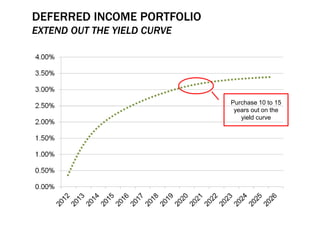
DEFERRED INCOME PORTFOLIO
EXTEND OUT THE YIELD CURVE
Purchase 10 to 15
years out on the
yield curve
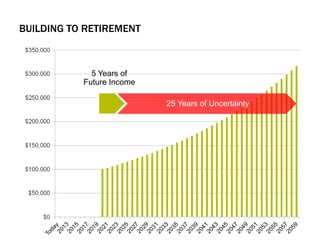
BUILDING TO RETIREMENT
25 Years of Uncertainty
5 Years of
Future Income
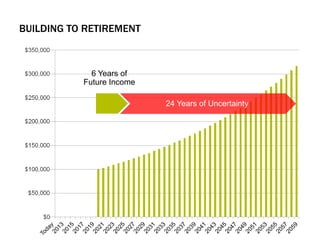
BUILDING TO RETIREMENT
24 Years of Uncertainty
6 Years of
Future Income
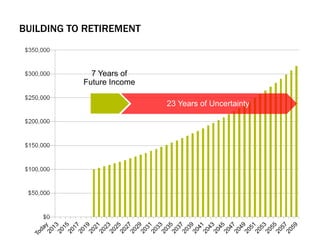
BUILDING TO RETIREMENT
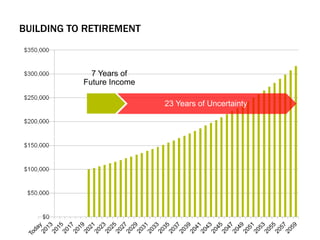
23 Years of Uncertainty
7 Years of
Future Income
BUILDING TO RETIREMENT
23 Years of Uncertainty
7 Years of
Future Income
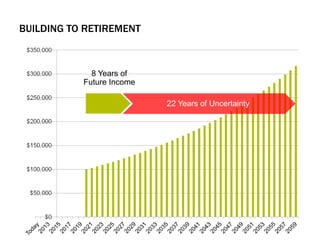
BUILDING TO RETIREMENT
22 Years of Uncertainty
8 Years of
Future Income
WHY NOT A BOND FUND?
1. Volatility around funding
2. Sensitivity to rising interest rates
3. Lack of control
10 YEAR US TREASURY BOND YIELDS
1800-2010
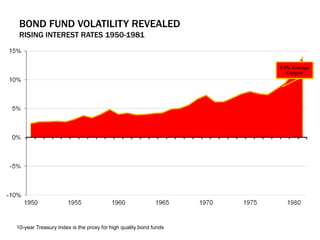
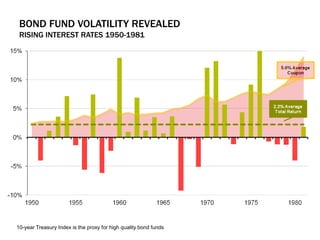
BOND FUND VOLATILITY REVEALED
RISING INTEREST RATES 1950-1981
10-year Treasury Index is the proxy for high quality bond funds
BOND FUND VOLATILITY REVEALED
RISING INTEREST RATES 1950-1981
10-year Treasury Index is the proxy for high quality bond funds
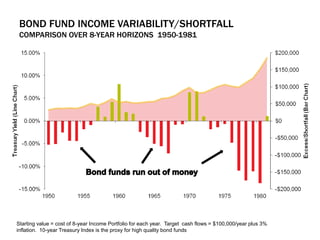
BOND FUND INCOME VARIABILITY/SHORTFALL
COMPARISON OVER 8-YEAR HORIZONS 1950-1981
Starting value = cost of 8-year Income Portfolio for each year. Target cash flows = $100,000/year plus 3%
inflation. 10-year Treasury Index is the proxy for high quality bond funds
WHY NOT A BOND LADDER?
1. Cash flows are not tied to actual needs
2. Income is more expensive
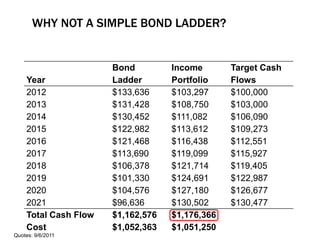
WHY NOT A SIMPLE BOND LADDER?
Year
Bond
Ladder
Income
Portfolio
Target Cash
Flows
2012 $133,636 $103,297 $100,000
2013 $131,428 $108,750 $103,000
2014 $130,452 $111,082 $106,090
2015 $122,982 $113,612 $109,273
2016 $121,468 $116,438 $112,551
2017 $113,690 $119,099 $115,927
2018 $106,378 $121,714 $119,405
2019 $101,330 $124,691 $122,987
2020 $104,576 $127,180 $126,677
2021 $96,636 $130,502 $130,477
Total Cash Flow $1,162,576 $1,176,366
Cost $1,052,363 $1,051,250
Quotes: 9/6/2011
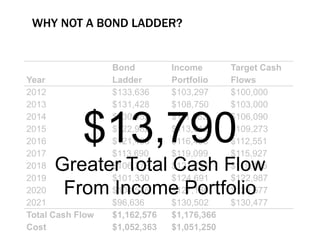
WHY NOT A BOND LADDER?
Year
Bond
Ladder
Income
Portfolio
Target Cash
Flows
2012 $133,636 $103,297 $100,000
2013 $131,428 $108,750 $103,000
2014 $130,452 $111,082 $106,090
2015 $122,982 $113,612 $109,273
2016 $121,468 $116,438 $112,551
2017 $113,690 $119,099 $115,927
2018 $106,378 $121,714 $119,405
2019 $101,330 $124,691 $122,987
2020 $104,576 $127,180 $126,677
2021 $96,636 $130,502 $130,477
Total Cash Flow $1,162,576 $1,176,366
Cost $1,052,363 $1,051,250
$13,790
Greater Total Cash Flow
From Income Portfolio
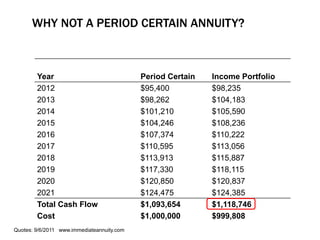
WHY NOT A PERIOD CERTAIN ANNUITY?
1. Expensive
2. Inflexible
WHY NOT A PERIOD CERTAIN ANNUITY?
Year Period Certain Income Portfolio
2012 $95,400 $98,235
2013 $98,262 $104,183
2014 $101,210 $105,590
2015 $104,246 $108,236
2016 $107,374 $110,222
2017 $110,595 $113,056
2018 $113,913 $115,887
2019 $117,330 $118,115
2020 $120,850 $120,837
2021 $124,475 $124,385
Total Cash Flow $1,093,654 $1,118,746
Cost $1,000,000 $999,808
Quotes: 9/6/2011 www.immediateannuity.com
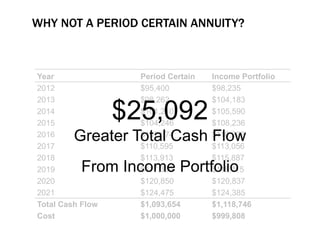
WHY NOT A PERIOD CERTAIN ANNUITY?
Year Period Certain Income Portfolio
2012 $95,400 $98,235
2013 $98,262 $104,183
2014 $101,210 $105,590
2015 $104,246 $108,236
2016 $107,374 $110,222
2017 $110,595 $113,056
2018 $113,913 $115,887
2019 $117,330 $118,115
2020 $120,850 $120,837
2021 $124,475 $124,385
Total Cash Flow $1,093,654 $1,118,746
Cost $1,000,000 $999,808
$25,092
Greater Total Cash Flow
From Income Portfolio
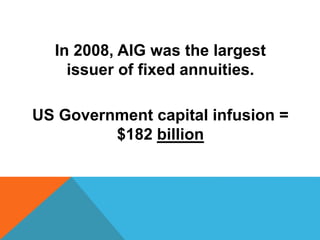
In 2008, AIG was the largest
issuer of fixed annuities.
US Government capital infusion =
$182 billion
Which is safer?
1. FDIC Insured CDs and
Government Agency bonds
OR
2. Insurance companies
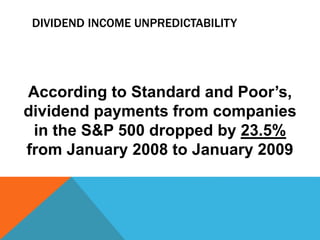
DIVIDEND INCOME UNPREDICTABILITY
According to Standard and Poor’s,
dividend payments from companies
in the S&P 500 dropped by 23.5%
from January 2008 to January 2009
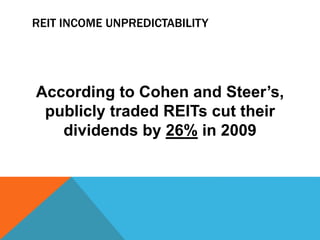
REIT INCOME UNPREDICTABILITY
According to Cohen and Steer’s,
publicly traded REITs cut their
dividends by 26% in 2009
White Papers:
The Cost of Waiting for Rates to Rise
De-risking Retirement Income
The Safety of Investment Grade Bonds
Slides:
Presentation
Financial Inspiration (Joke)

FPA NCA 2012 winter educational symposium asset dedication slides

  • 2.
    …economic conditions--including lowrates of resource utilization and a subdued outlook for inflation over the medium run--are likely to warrant exceptionally low levels for the federal funds rate at least through late 2014. Federal Reserve Monetary Policy Release January 25th, 2012 WHERE ARE INTEREST RATES GOING?
  • 3.
  • 4.
    10 YEAR USTREASURY BOND YIELDS 1800-2010
  • 5.
    CONTRASTING RETURN ENVIRONMENTS RISING= 1950-1981 FALLING = 1981-2011
  • 6.
  • 7.
    VOLATILITY DRIVES DOWNTOTAL RETURN Source: Citigroup World Govt. Bond Index – Japan 1-5 Year Total Return = 2.9%
  • 8.
    "It's not returnon my money I'm interested in… …it's return of my money“ Mark Twain
  • 9.
    THE CRITICAL PATH •On their way to the moon, the Apollo ships were off course more than 95% of the time • Because they knew the trajectory the ship should follow, the astronauts could make corrections along the way so that the ships could make it to the moon and back • In the same way, the financial plan provides the trajectory that clients’ portfolios need to follow to reach their goals • The Critical Path serves as a customized benchmark to guide each client’s portfolio to make corrections and decisions approaching and through retirement
  • 11.
  • 12.
  • 13.
  • 14.
    BRINGING INVESTMENTS ANDPLANS TOGETHER • The financial plan articulates how investors plan to spend their money • Investments ought to reflect the goals they are funding instead of risk tolerance that is not tied to the goals • There are numerous behavioral benefits for having the investments flow from the plan
  • 15.
  • 16.
    SPLITTING THE PORTFOLIOTO REFLECT GOALS • Sub-portfolios are dedicated to specific purposes – Income and Growth • Each sub-portfolio is made up of asset classes best suited to their purpose • The Income Portfolio is dedicated to protecting principal and providing predictable cash flows using individual bonds • The Growth Portfolio is tasked with delivering long-term growth using equities and other growth oriented assets
  • 17.
  • 18.
  • 19.
  • 20.
  • 21.
  • 22.
    Higher Expected Return but Short-termVolatility Protected Principal and Predictable Income
  • 23.
    Protected Principal and Predictable Income HigherExpected Return but Short-term Volatility
  • 24.
  • 25.
    Systematically transfer uncertainty ofequities to predictability of bonds to reduce the volatility of funding retirement spending.
  • 26.
    DE-RISKING THE PORTFOLIO 1.Protect Principal 2. Reduce uncertainty of funding spending needs 3. Reduce sensitivity to market risks • Interest rate risk • Equity market risk
  • 27.
    BEHAVIORAL BENEFITS 1. Mentalaccounting 2. Dedicate assets to the purpose they best serve 3. Tie portfolio performance to the goals outlined in the financial plan
  • 28.
  • 29.
    Helen and George: Age:67 Assets: $2,000,000 Income need: $100,000 Expected Inflation: 3% Plan Horizon: 30 Years
  • 30.
    LIFETIME SPENDING NEEDS $2MMPORTFOLIO, $100K/YR, 3% INFLATION
  • 31.
    INITIAL 8 YEARSOF SPENDING NEEDS YEAR 1 8 Years of Income
  • 32.
    Year Issue PrincipalInterest Portfolio Cash Flows Target Cash Flows 2012 CD $77,000 $22,905 $99,905 $100,000 2013 CD $82,000 $21,416 $103,416 $103,000 2014 CD $86,000 $20,035 $106,035 $106,090 2015 CD $91,000 $17,818 $108,818 $109,273 2016 CD $98,000 $14,855 $112,855 $112,551 2017 CD $104,000 $11,713 $115,713 $115,927 2018 CD $112,000 $7,455 $119,455 $119,405 2019 Agency Bond $121,000 $2,496 $123,496 $122,987 $889,692 $889,234 BUILDING AN INCOME MATCHING PORTFOLIO Quotes: 9/6/2011
  • 33.
    Year Issue PrincipalInterest Portfolio Cash Flows Target Cash Flows 2012 CD $77,000 $22,905 $99,905 $100,000 2013 CD $82,000 $21,416 $103,416 $103,000 2014 CD $86,000 $20,035 $106,035 $106,090 2015 CD $91,000 $17,818 $108,818 $109,273 2016 CD $98,000 $14,855 $112,855 $112,551 2017 CD $104,000 $11,713 $115,713 $115,927 2018 CD $112,000 $7,455 $119,455 $119,405 2019 Agency Bond $121,000 $2,496 $123,496 $122,987 $889,692 $889,234 TARGET INCOME STREAM Quotes: 9/6/2011
  • 34.
    Year Issue PrincipalInterest Portfolio Cash Flows Target Cash Flows 2012 CD $77,000 $22,905 $99,905 $100,000 2013 CD $82,000 $21,416 $103,416 $103,000 2014 CD $86,000 $20,035 $106,035 $106,090 2015 CD $91,000 $17,818 $108,818 $109,273 2016 CD $98,000 $14,855 $112,855 $112,551 2017 CD $104,000 $11,713 $115,713 $115,927 2018 CD $112,000 $7,455 $119,455 $119,405 2019 Agency Bond $121,000 $2,496 $123,496 $122,987 $889,692 $889,234 MATCHING CASH FLOWS TO SPENDING NEEDS Quotes: 9/6/2011
  • 35.
    Year Issue PrincipalInterest Portfolio Cash Flows Target Cash Flows 2012 CD $77,000 $22,905 $99,905 $100,000 2013 CD $82,000 $21,416 $103,416 $103,000 2014 CD $86,000 $20,035 $106,035 $106,090 2015 CD $91,000 $17,818 $108,818 $109,273 2016 CD $98,000 $14,855 $112,855 $112,551 2017 CD $104,000 $11,713 $115,713 $115,927 2018 CD $112,000 $7,455 $119,455 $119,405 2019 Agency Bond $121,000 $2,496 $123,496 $122,987 $889,692 $889,234 TIMING THE CASH FLOWS Quotes: 9/6/2011
  • 36.
    PORTFOLIO COSTS 8 Years= $829,656 Total Income = $889,692
  • 37.
    PORTFOLIO COSTS 8 Years= $829,656 (60/40) 10 Years = $1,035,495 (50/50) 30 Years = $2,753,814 (0/100) Quotes: 9/6/2011
  • 38.
    PORTFOLIO COSTS 8 Years= $829,656 (60/40) 10 Years = $1,035,495 (50/50) 30 Years = $2,753,814 (0/100) Quotes: 9/6/2011 30-year portfolio exceeds resources
  • 40.
    Top Investment Risks Definedby Individual Investors 64% 54% 36% 0% 10% 20% 30% 40% 50% 60% 70% Outliving Savings Not Saving Enough Market Volatility Source: Financial Advisor Retirement Income Planning Experiences, Strategies, and Recommendations; FPA Research Center White Paper; December 2011.
  • 41.
    LIFETIME SPENDING NEEDS $2MMPORTFOLIO, $100K/YR, 3% INFLATION
  • 42.
    YEAR 1 8 Yearsof Income 22 Years of Uncertainty
  • 43.
    YEAR 2 8 Yearsof Income 21 Years of Uncertainty ? ? ? ? Roll or Don’t Roll? 8 Years of Income
  • 44.
    YEAR 2 8 Yearsof Income 21 Years of Uncertainty Above CP → Roll 1 Year
  • 45.
    YEAR 3 8 Yearsof Income 20 Years of Uncertainty Above CP → Roll 1 Year
  • 46.
    YEAR 4 8 Yearsof Income 19 Years of Uncertainty Above CP → Roll 1 Year
  • 47.
    YEAR 5 8 Yearsof Income 18 Years of Uncertainty Above CP → Roll 1 Year
  • 48.
    YEAR 6 10 Yearsof Income 15 Years of Uncertainty Well Above CP → Roll 2 Years
  • 49.
  • 50.
    YEAR 6 10 Yearsof Income 15 Years of Uncertainty Well Above CP → Roll 2 Years
  • 51.
    YEAR 7 9 Yearsof Income 15 Years of Uncertainty Not Above CP → Don’t Roll
  • 52.
  • 53.
    YEAR 7 9 Yearsof Income 15 Years of Uncertainty Not Above CP → Don’t Roll
  • 54.
    YEAR 8 8 Yearsof Income 15 Years of Uncertainty Not Above CP → Don’t Roll
  • 55.
  • 56.
    YEAR 8 8 Yearsof Income 15 Years of Uncertainty Not Above CP → Don’t Roll
  • 57.
    YEAR 9 8 Yearsof Income 14 Years of Uncertainty Above CP → Roll 1 Year
  • 58.
  • 60.
    LONG-TERM PROBABILITY OFSUCCESS Expected Return Over Rolling 30 Year Periods Since: 1927 1947 Average Return* 7.7% 9.4% Minimum Return* 0.0% 7.1% Maximum Return 13.3% 13.3% Average Longevity (Years) 28 30 Minimum Longevity 13 30 Maximum Longevity 30 30 Probability Portfolio Lasts 30 Years or more 83.6% 100.0% Prob. Portfolio Above Critical Path Target After 30 Years 83.6% 100.0% 8-year Income Portfolio of US Treasury Bond, Growth Portfolio allocation to CRSP 1-10 Total US Market
  • 61.
    HISTORICAL AUDIT ROLLING 30-YEARPERIODS, 1927-2010 8-year Income Portfolio of US Treasury Bond, Growth Portfolio allocation to CRSP 1-10 Total US Market
  • 62.
    TOTAL RETURN ISNOT FOR DECUMULATION Expected Return Over Rolling 30 Year Periods Since: 1927 1947 Average Return* 6.7% 7.3% Minimum Return* 0.0% 0.0% Maximum Return 12.6% 12.6% Average Longevity (Years) 29 30 Minimum Longevity 14 25 Maximum Longevity 30 30 Probability Portfolio Lasts 30 Years or more 80.0% 85.7% Prob. Portfolio Above Critical Path Target After 30 Years 80.0% 85.7% 60% CRSP 1-10 Total US Market/40% 10-Year US Treasury Index
  • 63.
    HISTORICAL AUDIT –60/40 TOTAL RETURN ROLLING 30-YEAR PERIODS, 1927-2010 60% CRSP 1-10 Total US Market/40% 10-Year US Treasury Index
  • 64.
    HISTORICAL AUDIT –8 YEAR ROLLING ROLLING 30-YEAR PERIODS, 1927-2010 8-year Income Portfolio of US Treasury Bond, Growth Portfolio allocation to CRSP 1-10 Total US Market
  • 65.
    Celia and Henry: Age:57 Assets: $843,402 Annual Savings: $35,000 Planned Retirement: 30 Years Plan Horizon: 40 Years
  • 66.
    DEFERRED INCOME PORTFOLIO EXTENDOUT THE YIELD CURVE Purchase 10 to 15 years out on the yield curve
  • 67.
    BUILDING TO RETIREMENT 25Years of Uncertainty 5 Years of Future Income
  • 68.
    BUILDING TO RETIREMENT 24Years of Uncertainty 6 Years of Future Income
  • 69.
    BUILDING TO RETIREMENT 23Years of Uncertainty 7 Years of Future Income
  • 70.
    BUILDING TO RETIREMENT 23Years of Uncertainty 7 Years of Future Income
  • 71.
    BUILDING TO RETIREMENT 22Years of Uncertainty 8 Years of Future Income
  • 73.
    WHY NOT ABOND FUND? 1. Volatility around funding 2. Sensitivity to rising interest rates 3. Lack of control
  • 74.
    10 YEAR USTREASURY BOND YIELDS 1800-2010
  • 75.
    BOND FUND VOLATILITYREVEALED RISING INTEREST RATES 1950-1981 10-year Treasury Index is the proxy for high quality bond funds
  • 76.
    BOND FUND VOLATILITYREVEALED RISING INTEREST RATES 1950-1981 10-year Treasury Index is the proxy for high quality bond funds
  • 77.
    BOND FUND INCOMEVARIABILITY/SHORTFALL COMPARISON OVER 8-YEAR HORIZONS 1950-1981 Starting value = cost of 8-year Income Portfolio for each year. Target cash flows = $100,000/year plus 3% inflation. 10-year Treasury Index is the proxy for high quality bond funds
  • 78.
    WHY NOT ABOND LADDER? 1. Cash flows are not tied to actual needs 2. Income is more expensive
  • 79.
    WHY NOT ASIMPLE BOND LADDER? Year Bond Ladder Income Portfolio Target Cash Flows 2012 $133,636 $103,297 $100,000 2013 $131,428 $108,750 $103,000 2014 $130,452 $111,082 $106,090 2015 $122,982 $113,612 $109,273 2016 $121,468 $116,438 $112,551 2017 $113,690 $119,099 $115,927 2018 $106,378 $121,714 $119,405 2019 $101,330 $124,691 $122,987 2020 $104,576 $127,180 $126,677 2021 $96,636 $130,502 $130,477 Total Cash Flow $1,162,576 $1,176,366 Cost $1,052,363 $1,051,250 Quotes: 9/6/2011
  • 80.
    WHY NOT ABOND LADDER? Year Bond Ladder Income Portfolio Target Cash Flows 2012 $133,636 $103,297 $100,000 2013 $131,428 $108,750 $103,000 2014 $130,452 $111,082 $106,090 2015 $122,982 $113,612 $109,273 2016 $121,468 $116,438 $112,551 2017 $113,690 $119,099 $115,927 2018 $106,378 $121,714 $119,405 2019 $101,330 $124,691 $122,987 2020 $104,576 $127,180 $126,677 2021 $96,636 $130,502 $130,477 Total Cash Flow $1,162,576 $1,176,366 Cost $1,052,363 $1,051,250 $13,790 Greater Total Cash Flow From Income Portfolio
  • 81.
    WHY NOT APERIOD CERTAIN ANNUITY? 1. Expensive 2. Inflexible
  • 82.
    WHY NOT APERIOD CERTAIN ANNUITY? Year Period Certain Income Portfolio 2012 $95,400 $98,235 2013 $98,262 $104,183 2014 $101,210 $105,590 2015 $104,246 $108,236 2016 $107,374 $110,222 2017 $110,595 $113,056 2018 $113,913 $115,887 2019 $117,330 $118,115 2020 $120,850 $120,837 2021 $124,475 $124,385 Total Cash Flow $1,093,654 $1,118,746 Cost $1,000,000 $999,808 Quotes: 9/6/2011 www.immediateannuity.com
  • 83.
    WHY NOT APERIOD CERTAIN ANNUITY? Year Period Certain Income Portfolio 2012 $95,400 $98,235 2013 $98,262 $104,183 2014 $101,210 $105,590 2015 $104,246 $108,236 2016 $107,374 $110,222 2017 $110,595 $113,056 2018 $113,913 $115,887 2019 $117,330 $118,115 2020 $120,850 $120,837 2021 $124,475 $124,385 Total Cash Flow $1,093,654 $1,118,746 Cost $1,000,000 $999,808 $25,092 Greater Total Cash Flow From Income Portfolio
  • 85.
    In 2008, AIGwas the largest issuer of fixed annuities. US Government capital infusion = $182 billion
  • 86.
    Which is safer? 1.FDIC Insured CDs and Government Agency bonds OR 2. Insurance companies
  • 87.
    DIVIDEND INCOME UNPREDICTABILITY Accordingto Standard and Poor’s, dividend payments from companies in the S&P 500 dropped by 23.5% from January 2008 to January 2009
  • 88.
    REIT INCOME UNPREDICTABILITY Accordingto Cohen and Steer’s, publicly traded REITs cut their dividends by 26% in 2009
  • 89.
    White Papers: The Costof Waiting for Rates to Rise De-risking Retirement Income The Safety of Investment Grade Bonds Slides: Presentation Financial Inspiration (Joke)