Income Matching Using Individual BondsAn Alternative to Annuities and Bond FundsPresented by:Stephen Huxley, PhDBrent Burns
RiskThings may not always turn out the way you planned© Asset Dedication, LLC 2011
Market TimingSometimes it’s hard to guess where the market is going.© Asset Dedication, LLC 2011
Hot StocksJust because Cramer says it’s a good idea doesn’t mean it’s right for you© Asset Dedication, LLC 2011
RiskThe worst case scenario seemed a lot less likely a few minutes ago© Asset Dedication, LLC 2011
Stock PickingMuch more scientific than chimpanzees throwing darts
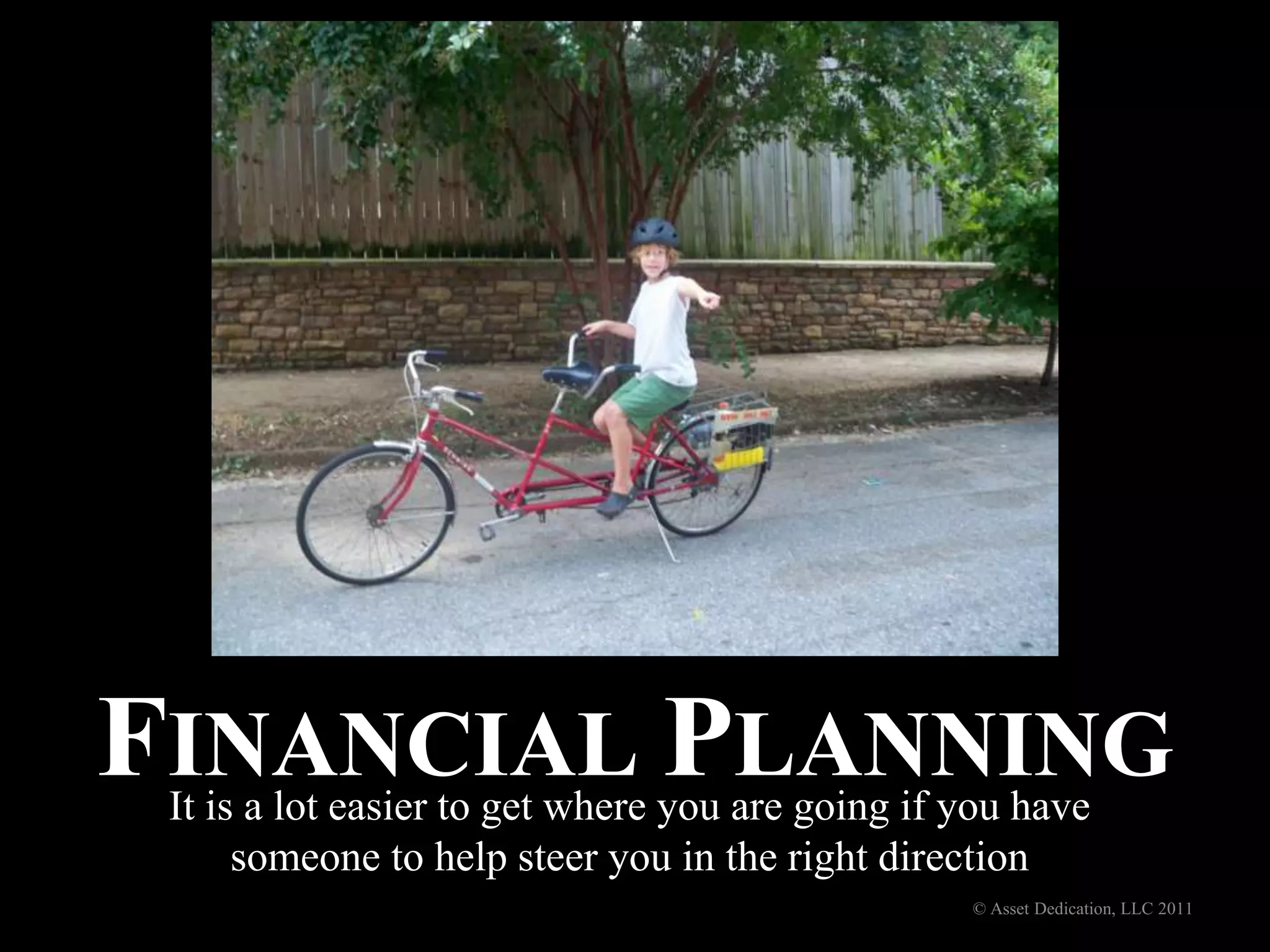
Financial PlanningIt is a lot easier to get where you are going if you have someone to help steer you in the right direction© Asset Dedication, LLC 2011
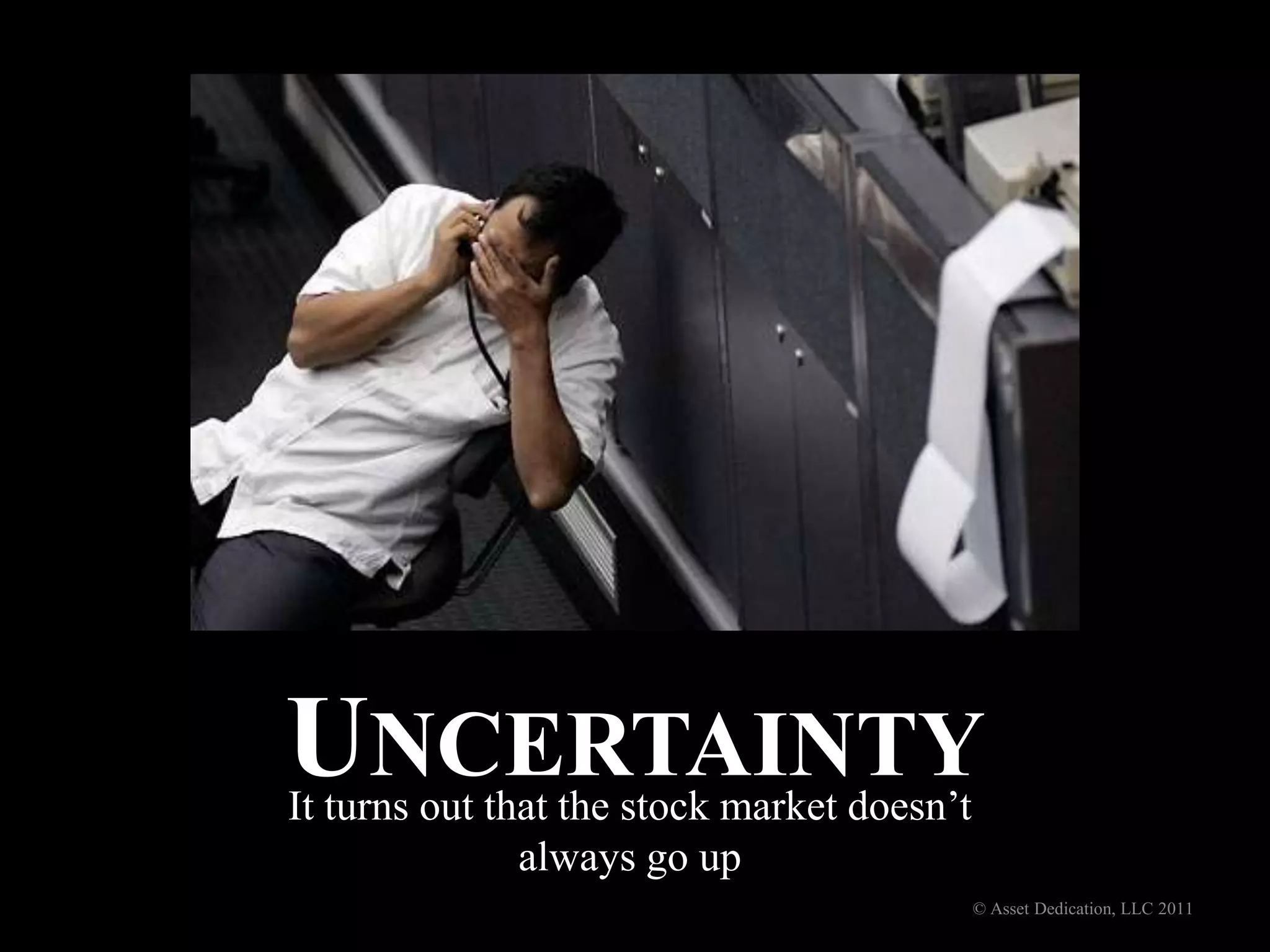
UncertaintyIt turns out that the stock market doesn’t always go up© Asset Dedication, LLC 2011
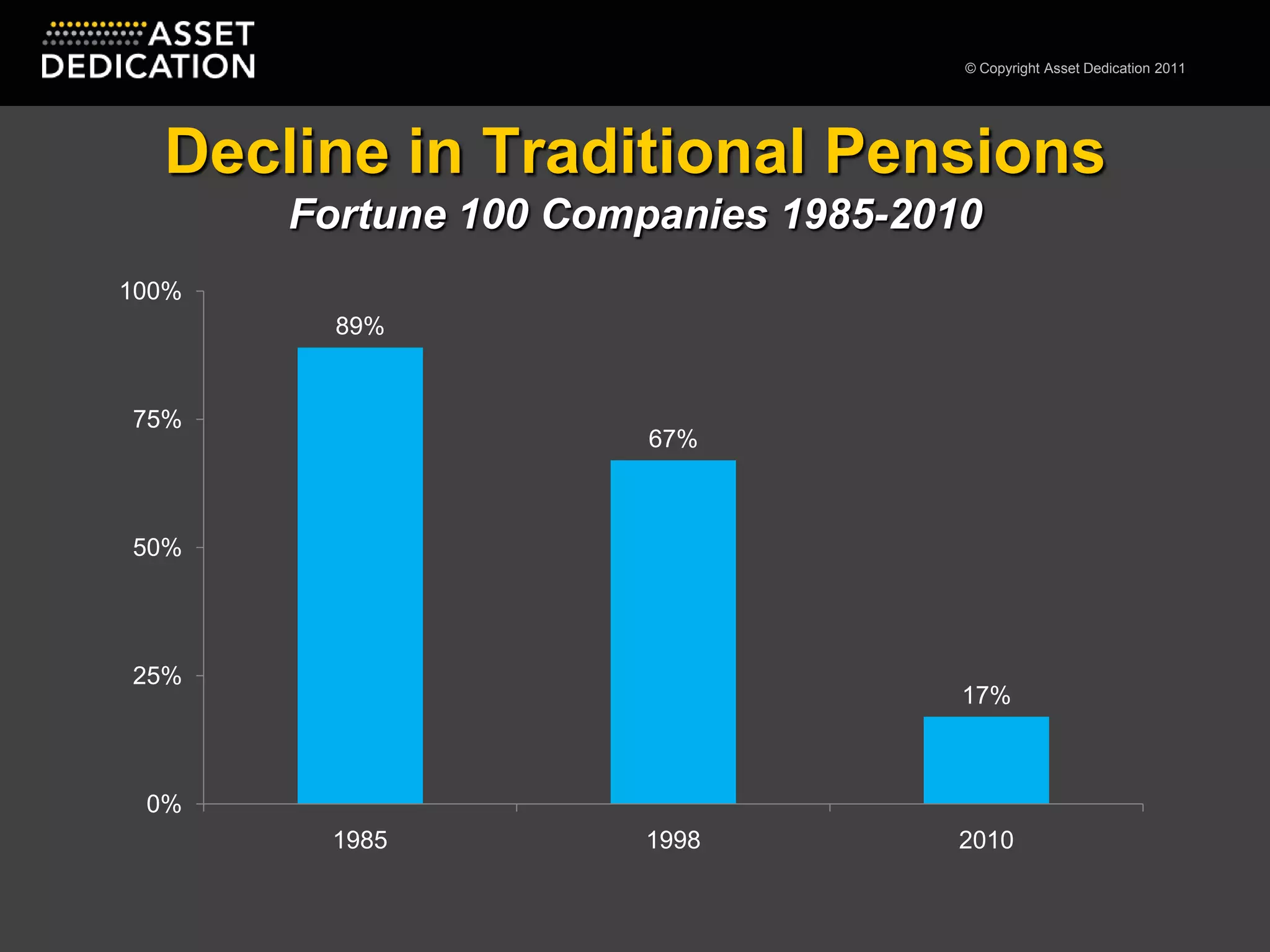
Decline in Traditional PensionsFortune 100 Companies 1985-2010
Liability-driven investing (LDI) is an investment strategy of a company or individual based on the cash flows needed to fund future liabilitiesSource: Wikipediacash flowsfuture liabilities
Behavioral Finance Meets Asset Allocation
Clients with multiple goals and varying timelines have trouble relating to stocks, bonds and cash are blended into a single portfolio.  People tend to use mental accounts to manage various goals in their head. A pure Total Return approach creates a single portfolio that isn’t intuitively linked to the underlying goals.
Client NeedsLiquidity for current expensesPredictable near-term cash flows to cover near-term expenses (usually 8-10 years for those in retirement)Long-term growth to ensure sufficient growth to cover future needs
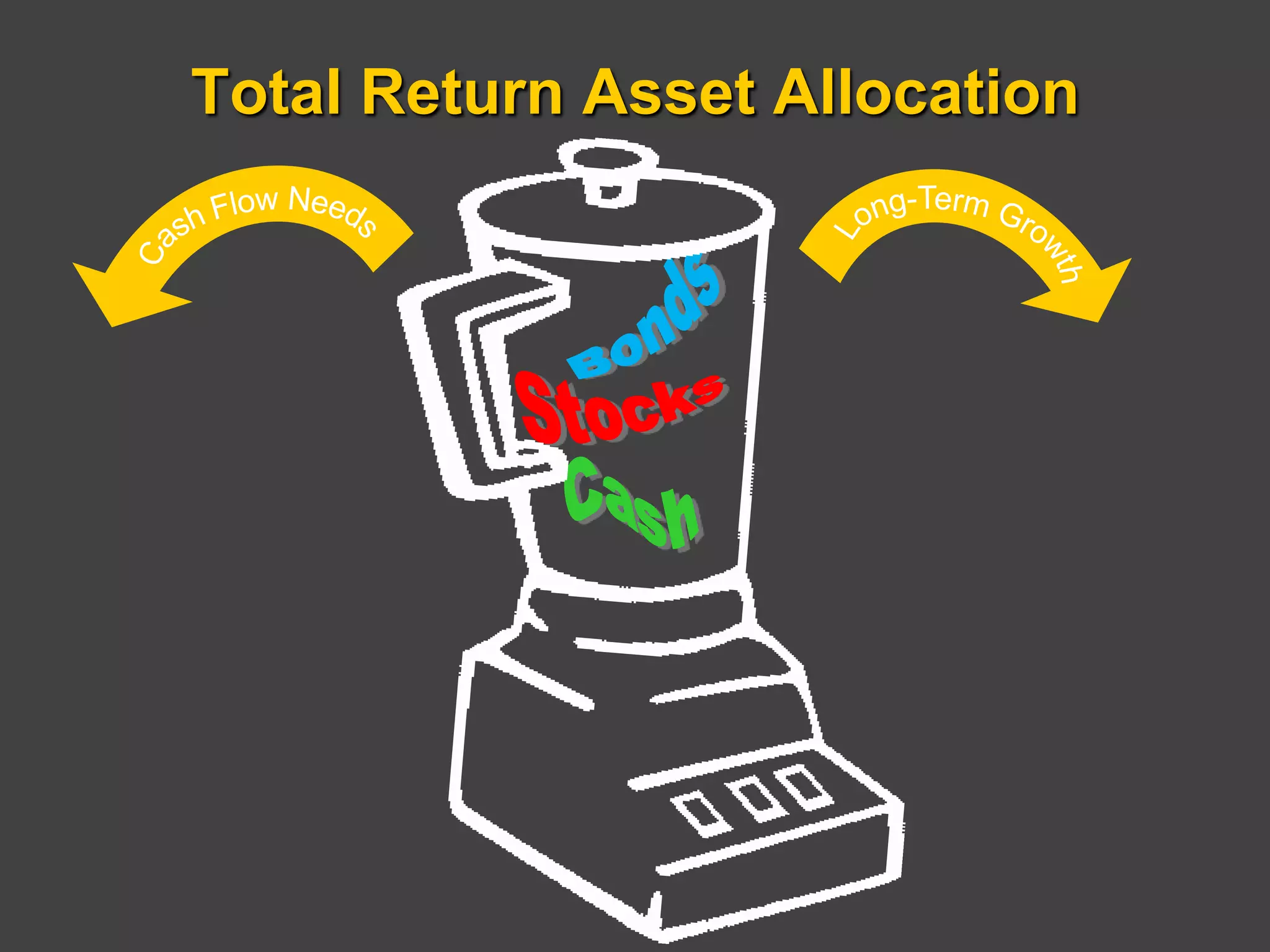
Total Return Asset AllocationLong-Term GrowthCash Flow NeedsBondsStocksCash
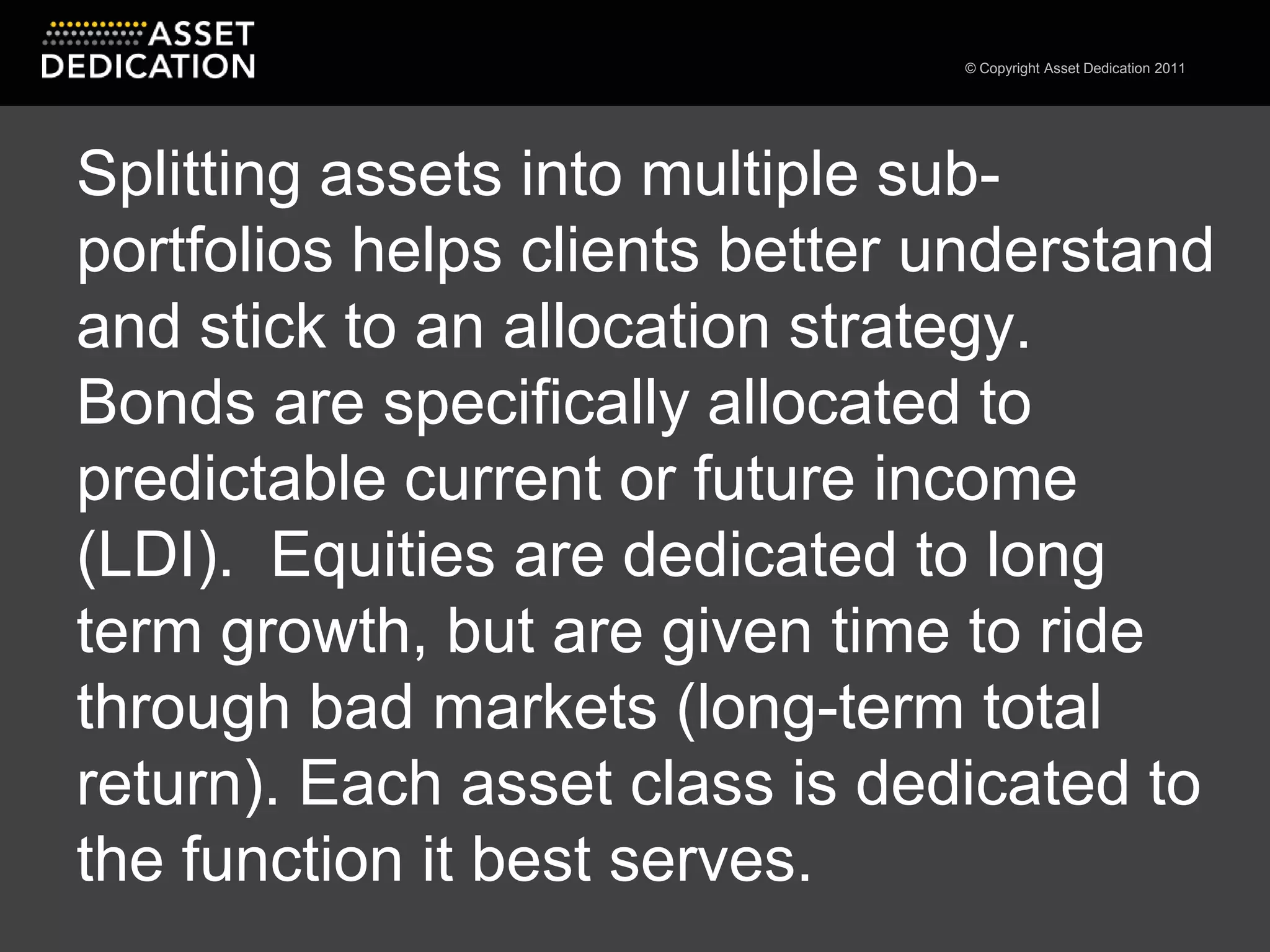
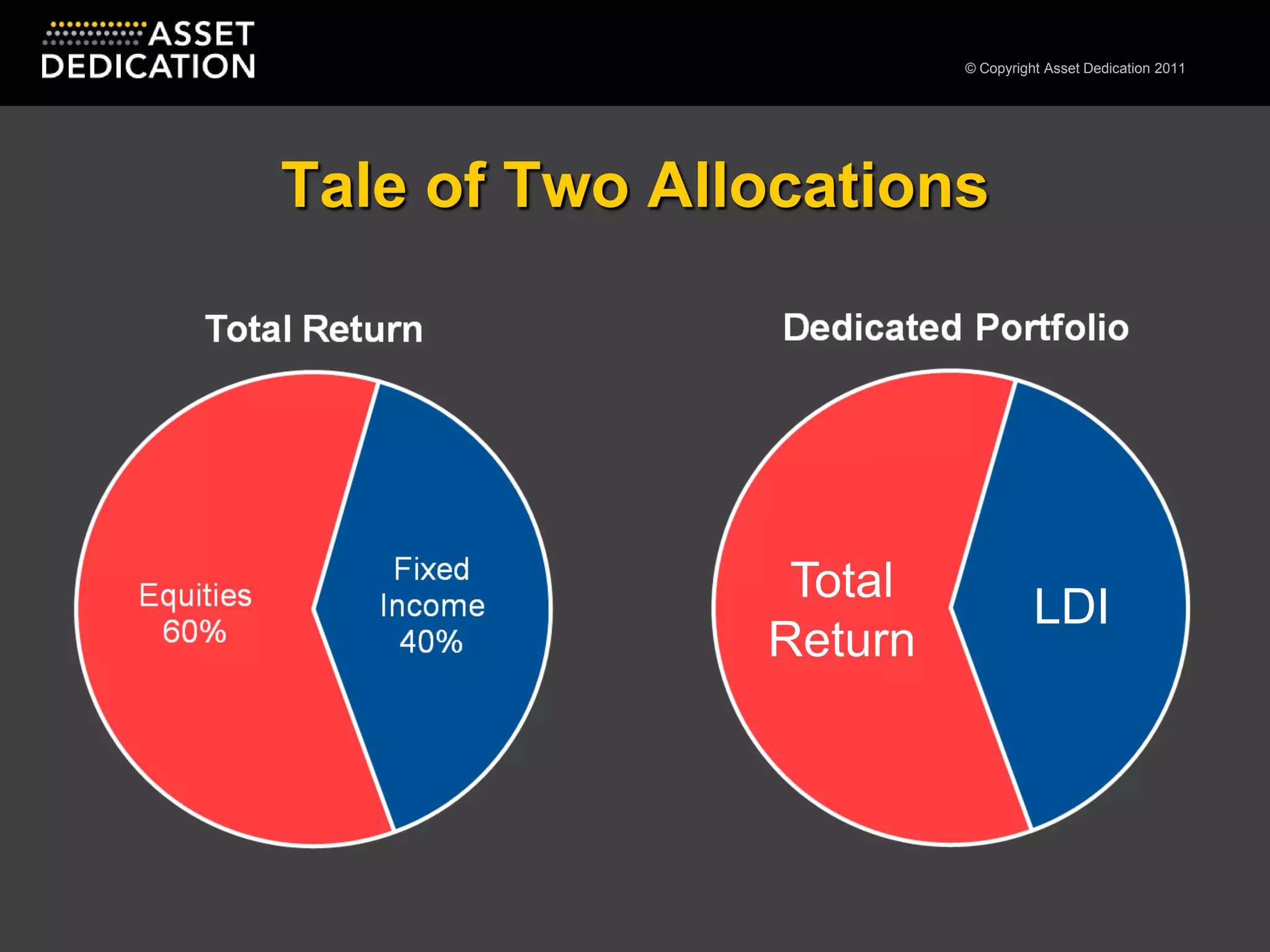
Splitting assets into multiple sub-portfolios helps clients better understand and stick to an allocation strategy. Bonds are specifically allocated to predictable current or future income (LDI).  Equities are dedicated to long term growth, but are given time to ride through bad markets (long-term total return). Each asset class is dedicated to the function it best serves.
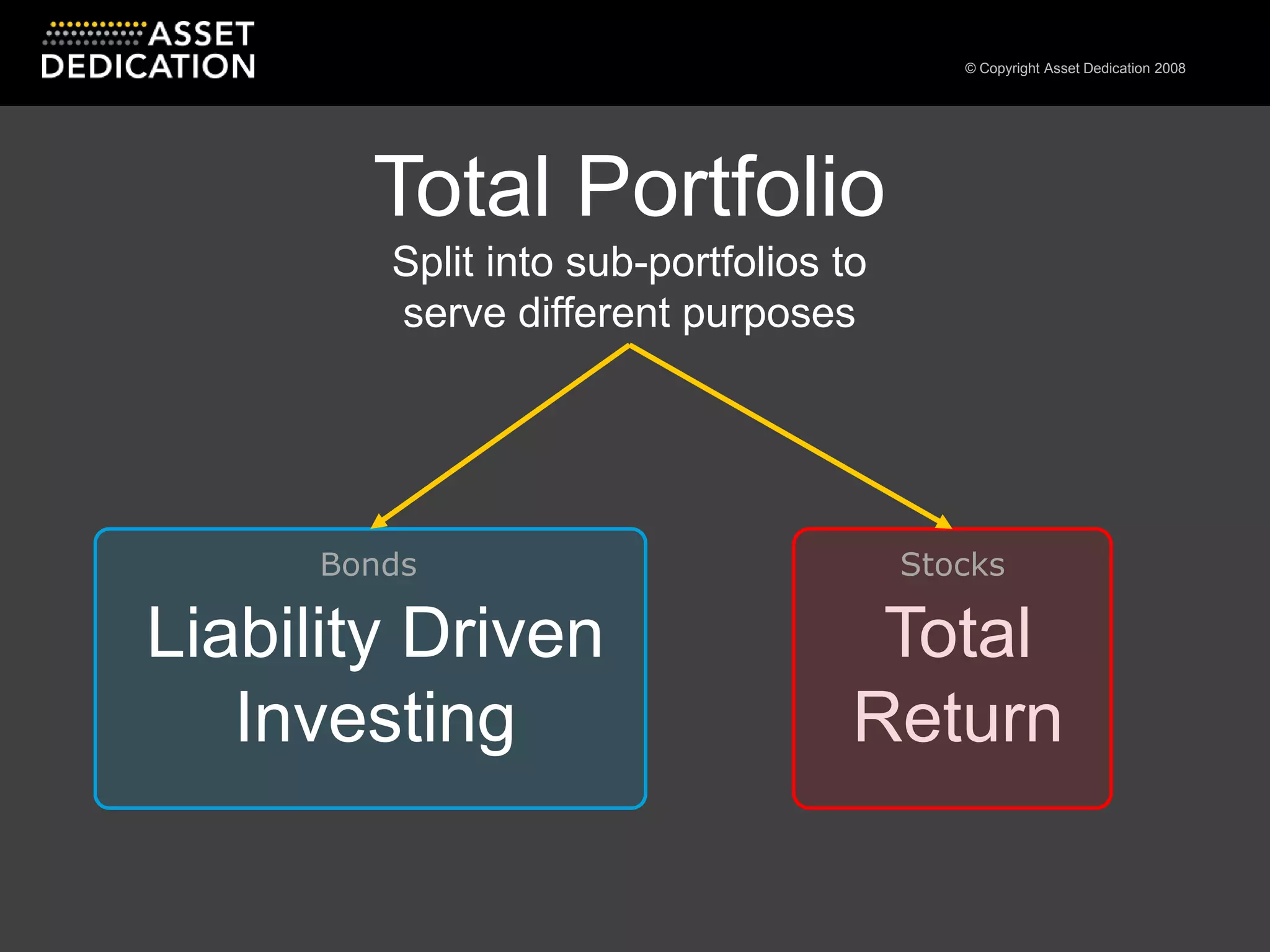
Total PortfolioSplit into sub-portfolios to serve different purposesBondsStocksTotalReturnLiability Driven Investing
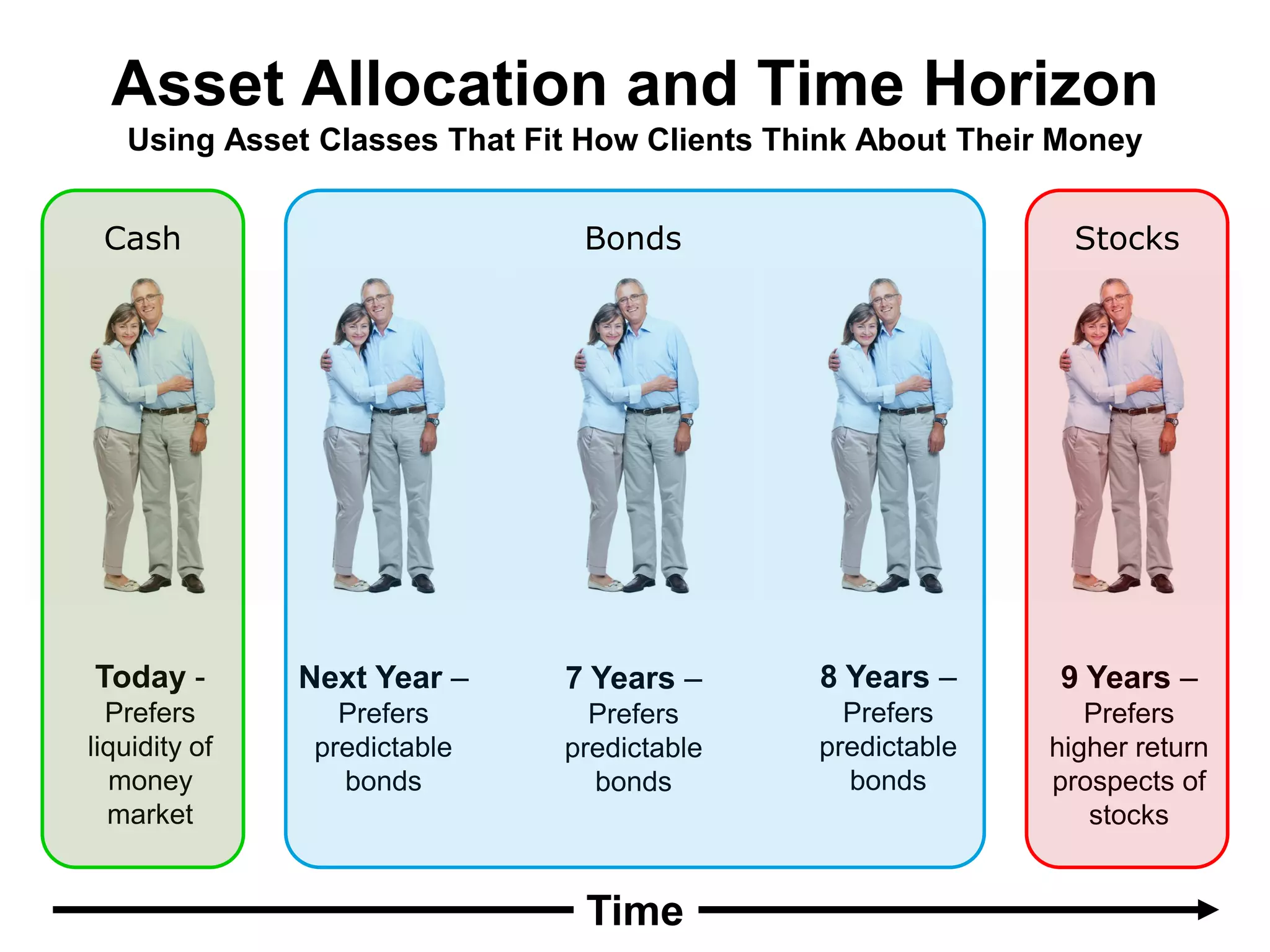
Asset Allocation and Time HorizonUsing Asset Classes That Fit How Clients Think About Their MoneyStocksBondsCash8 Years – Prefers predictable bonds Today -Prefers liquidity of money market9 Years – Prefers higher return prospects of stocksNext Year – Prefers predictable bonds 7 Years – Prefers predictable bonds Time
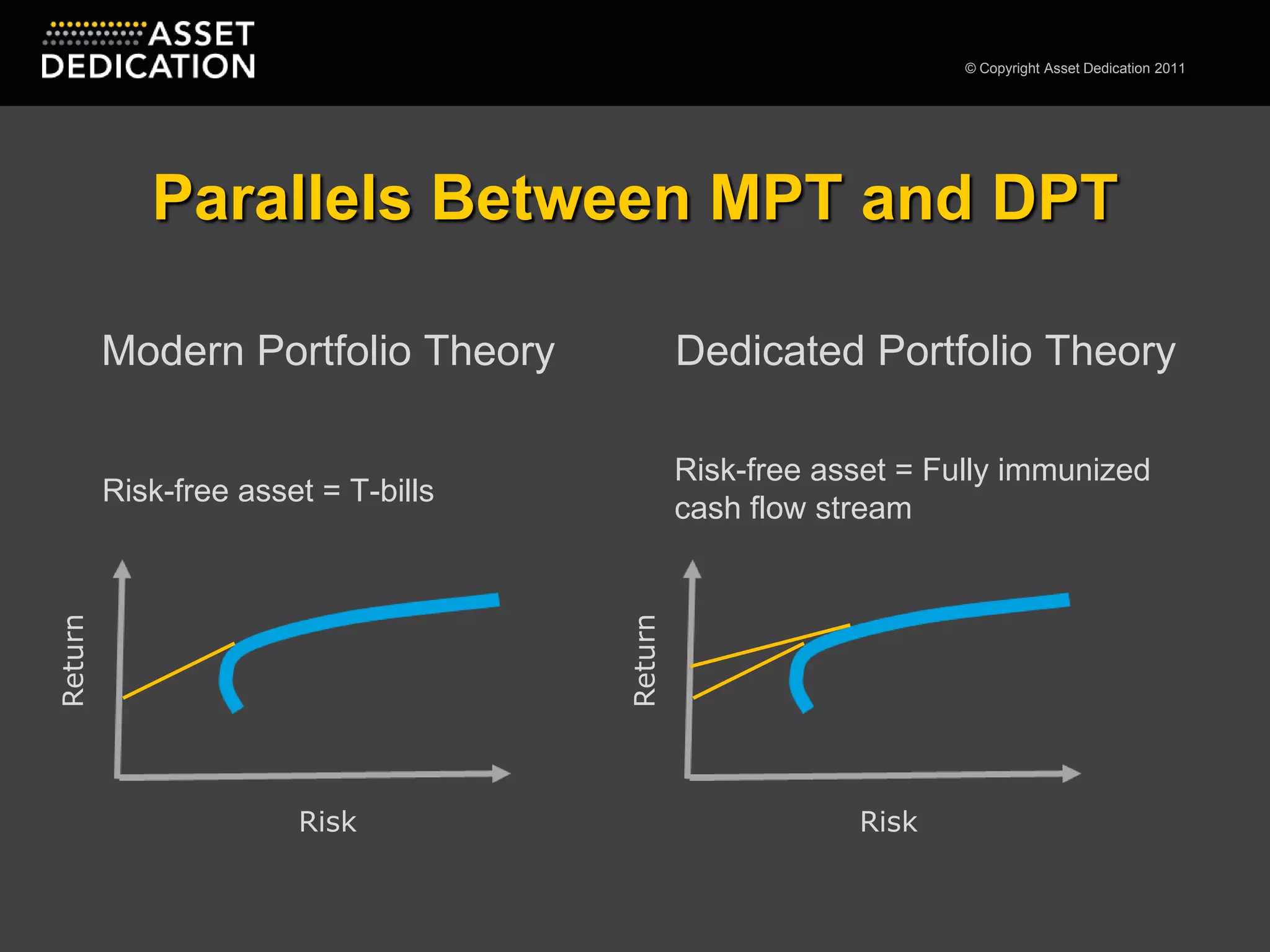
Parallels Between MPT and DPT Modern Portfolio TheoryDedicated Portfolio TheoryRisk-free asset = T-billsRisk-free asset = Fully immunized cash flow streamReturnReturnRiskRisk
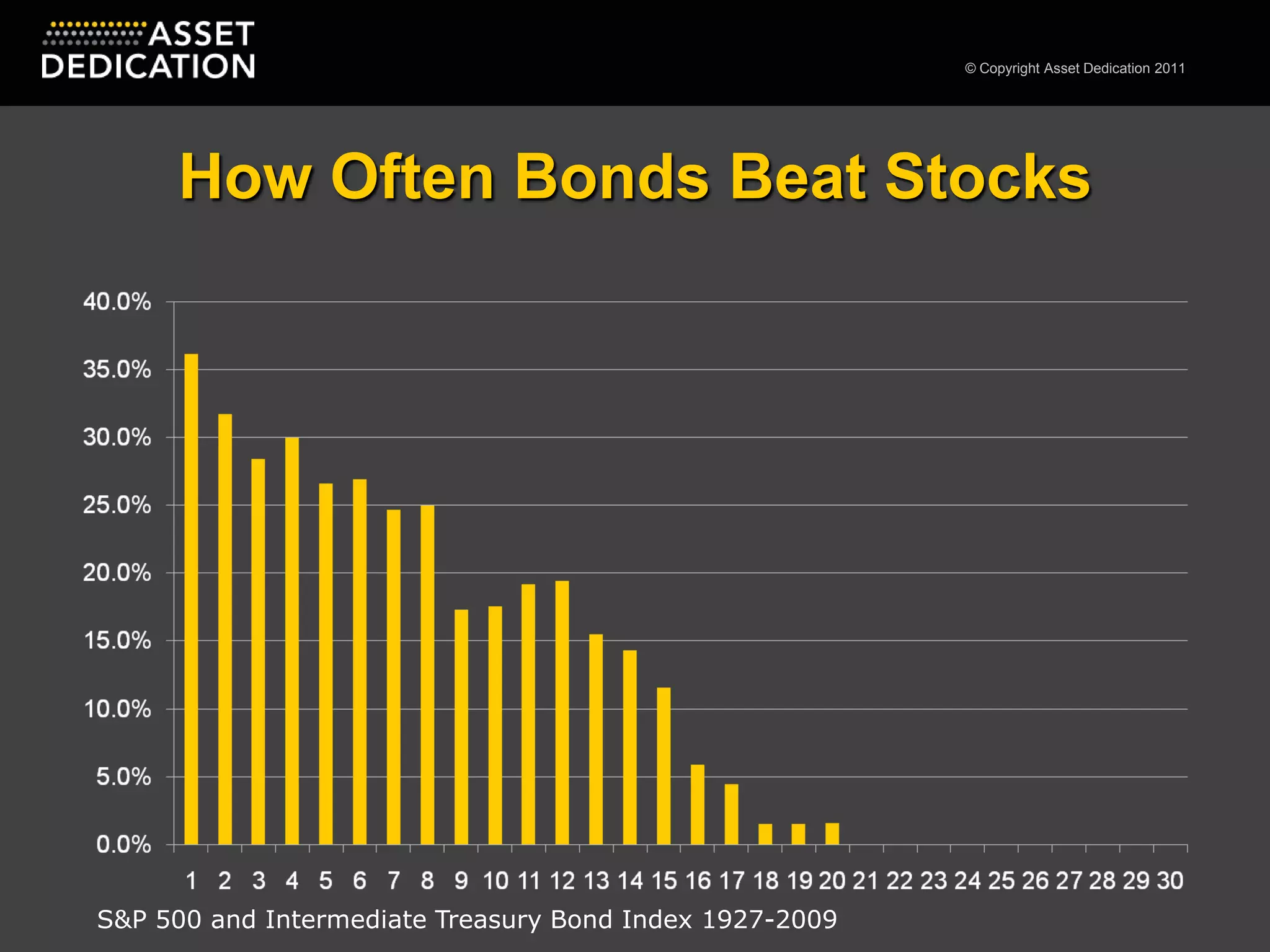
How Often Bonds Beat StocksS&P 500 and Intermediate Treasury Bond Index 1927-2009
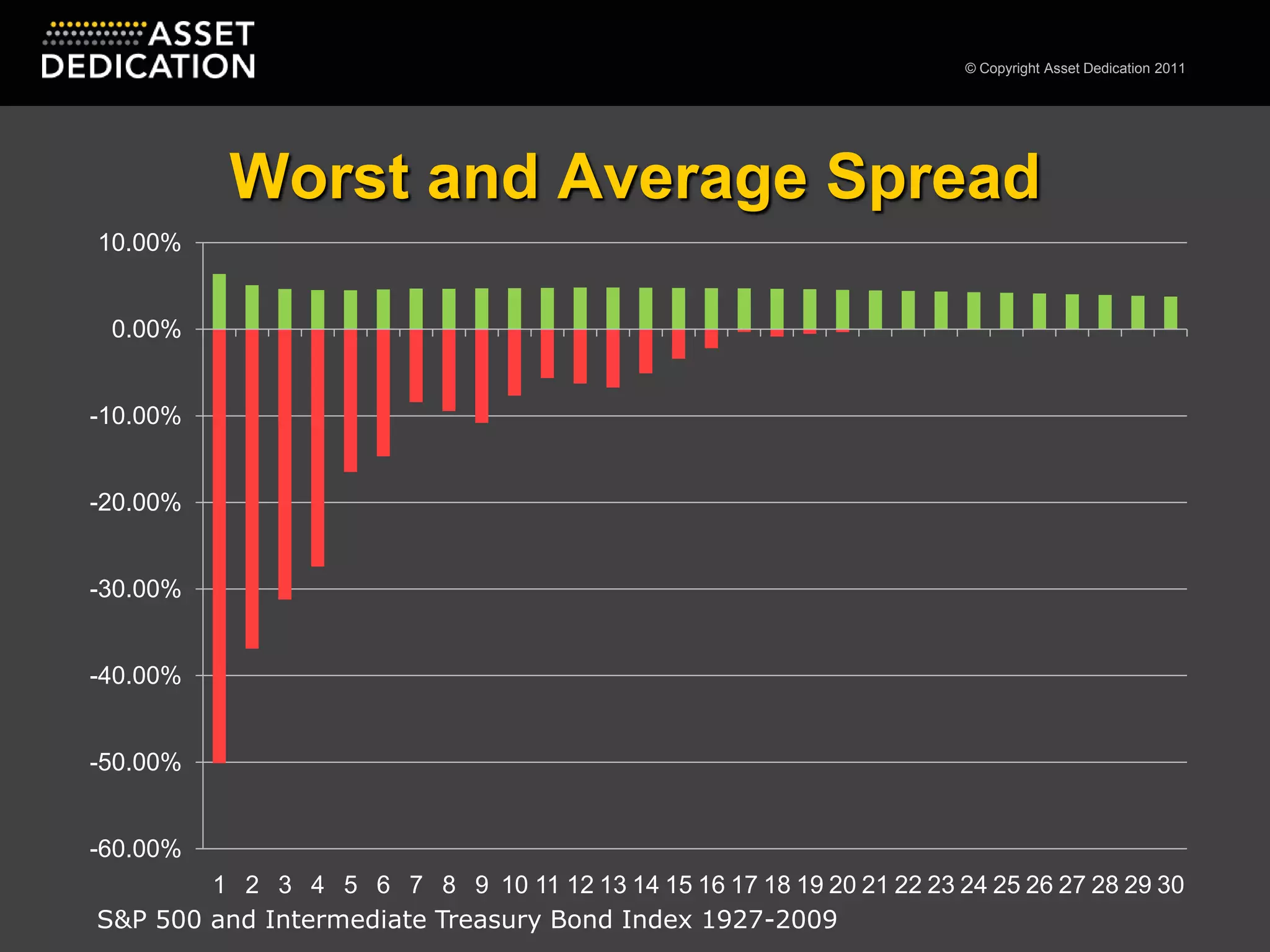
Worst and Average SpreadS&P 500 and Intermediate Treasury Bond Index 1927-2009
Using Individual Bonds to Build Income-Matching LDI Portfolios
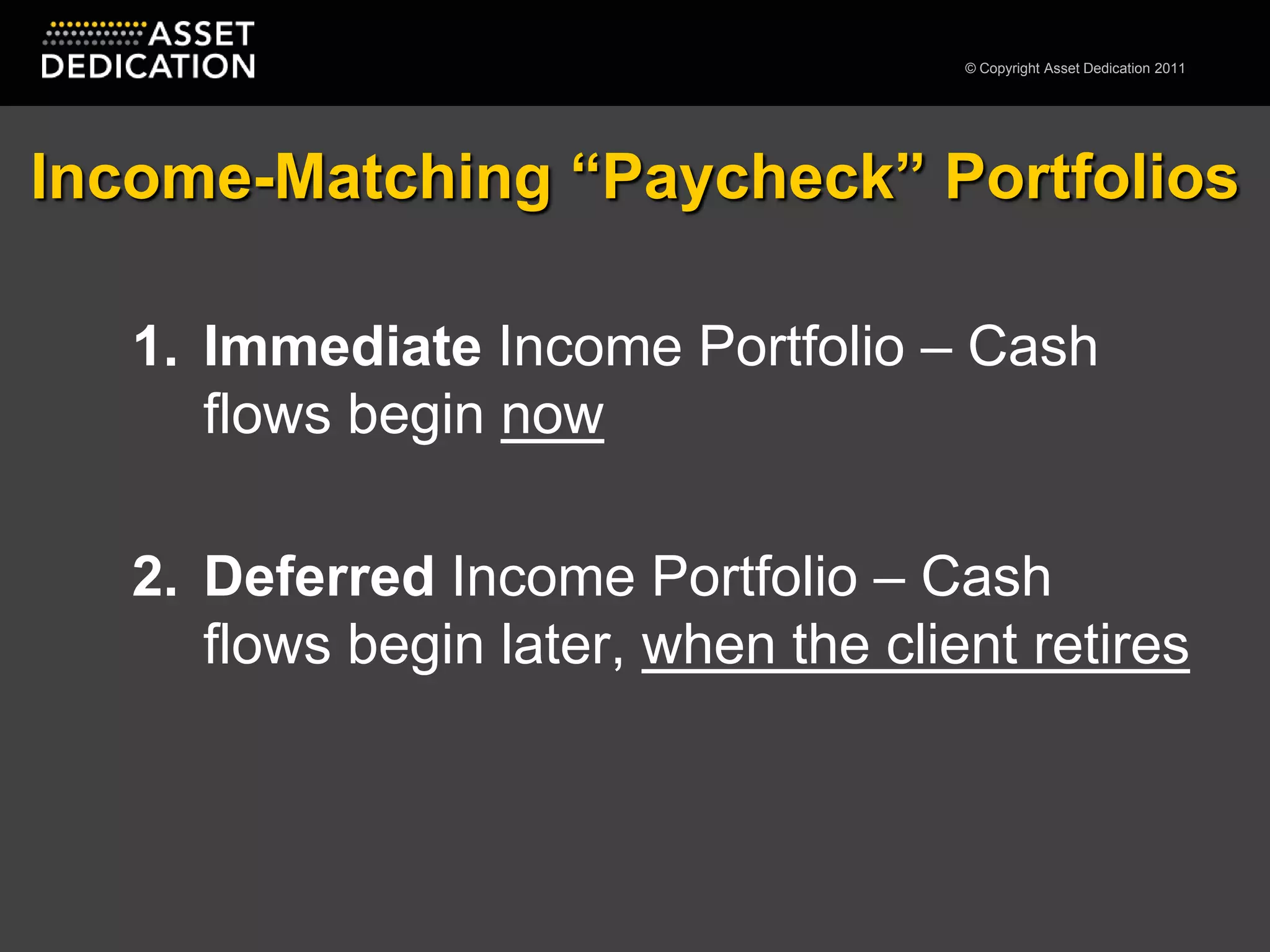
Income-Matching “Paycheck” PortfoliosImmediate Income Portfolio – Cash flows begin nowDeferred Income Portfolio – Cash flows begin later, when the client retires
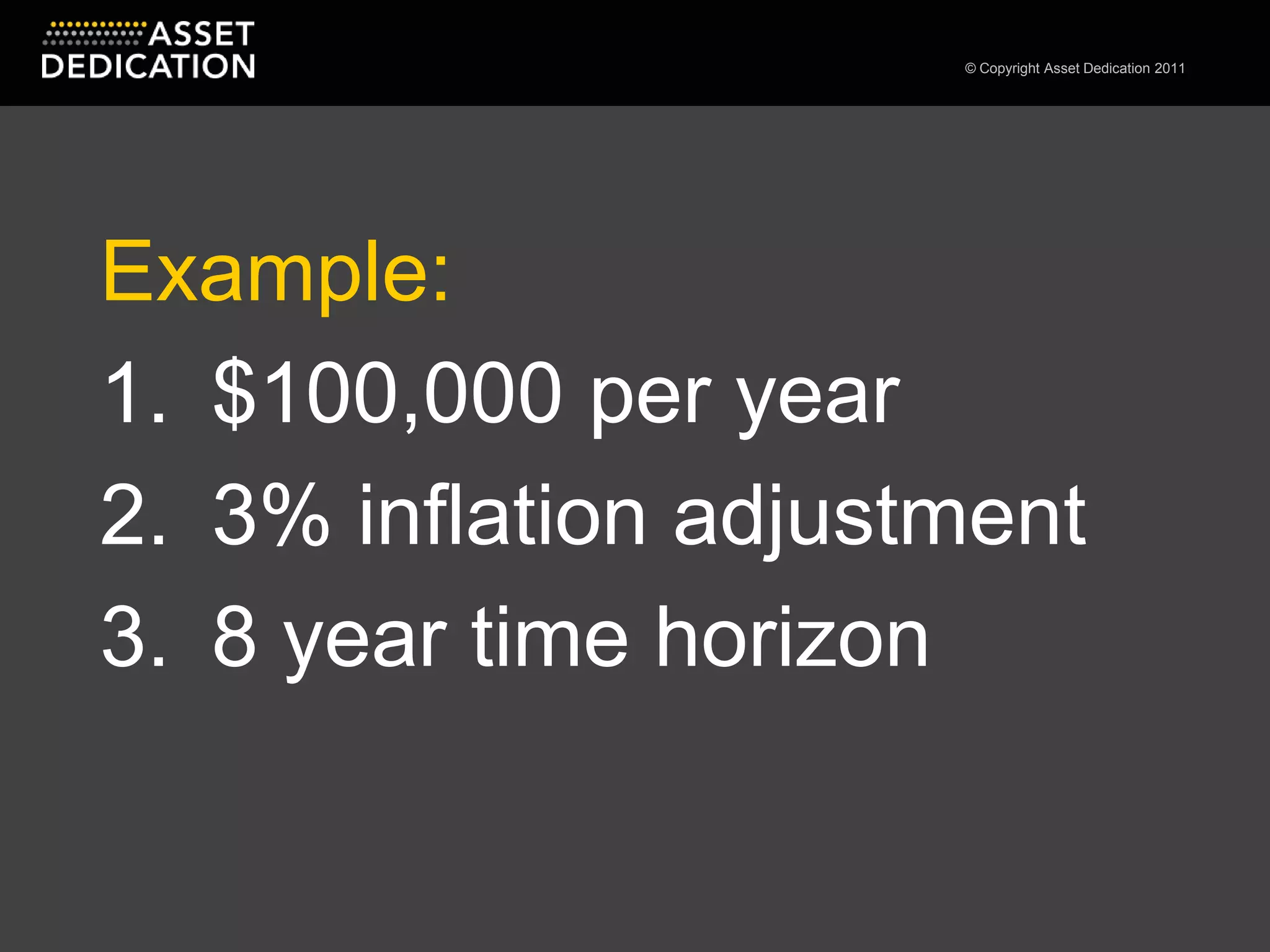
Example:$100,000 per year3% inflation adjustment8 year time horizon
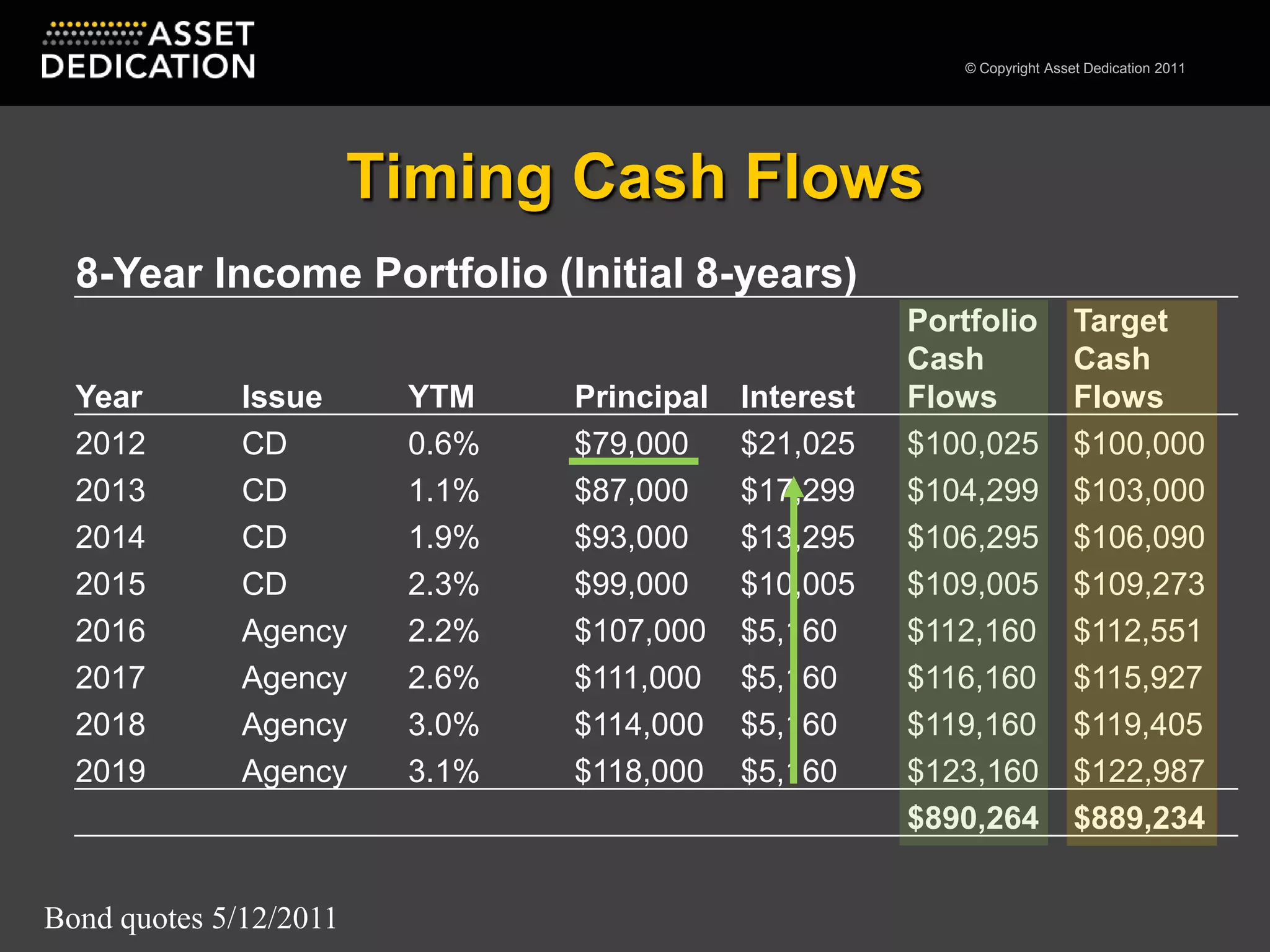
Timing Cash FlowsBond quotes 5/12/2011
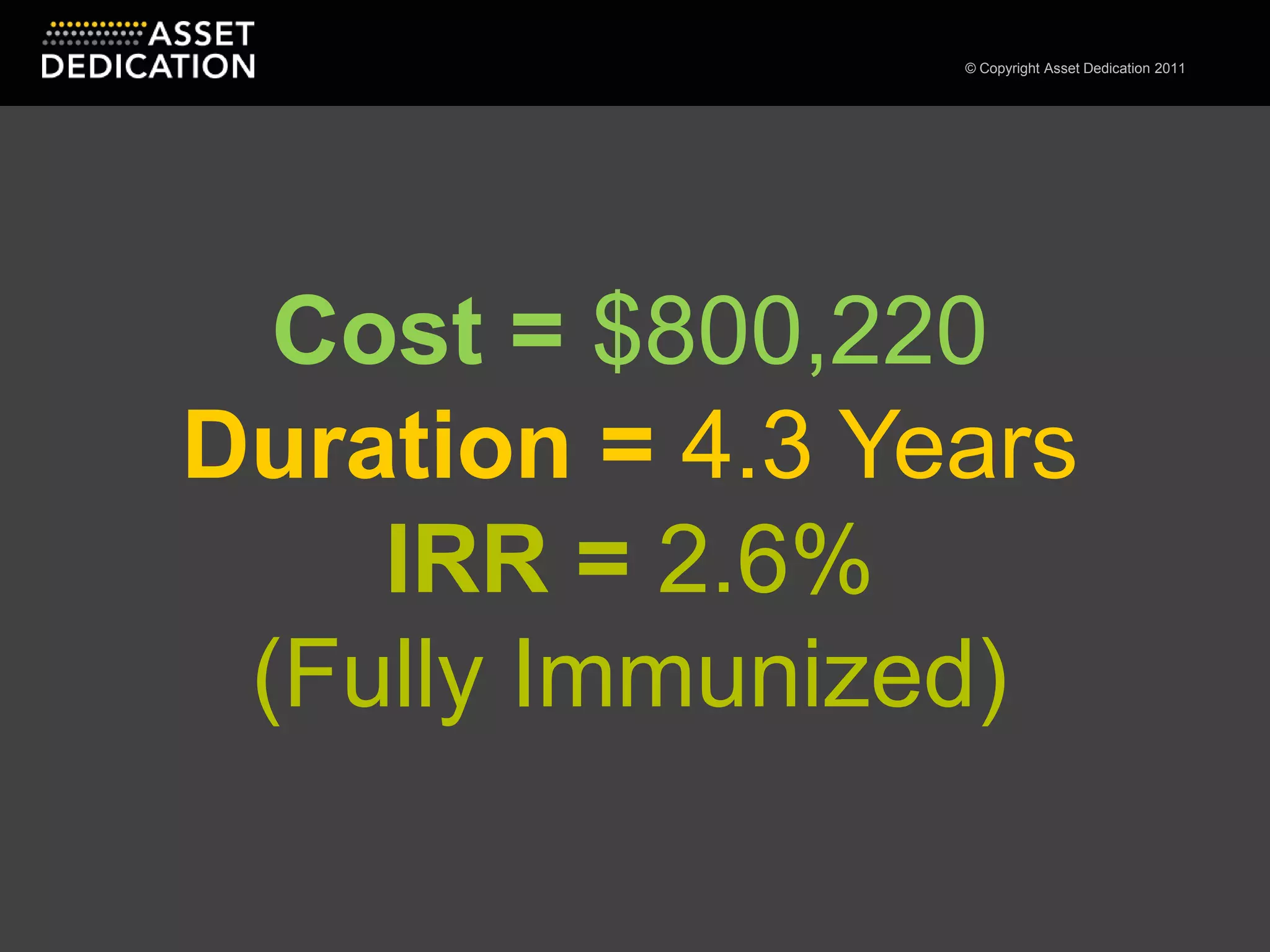
Cost = $800,220 Duration = 4.3 YearsIRR = 2.6%(Fully Immunized)
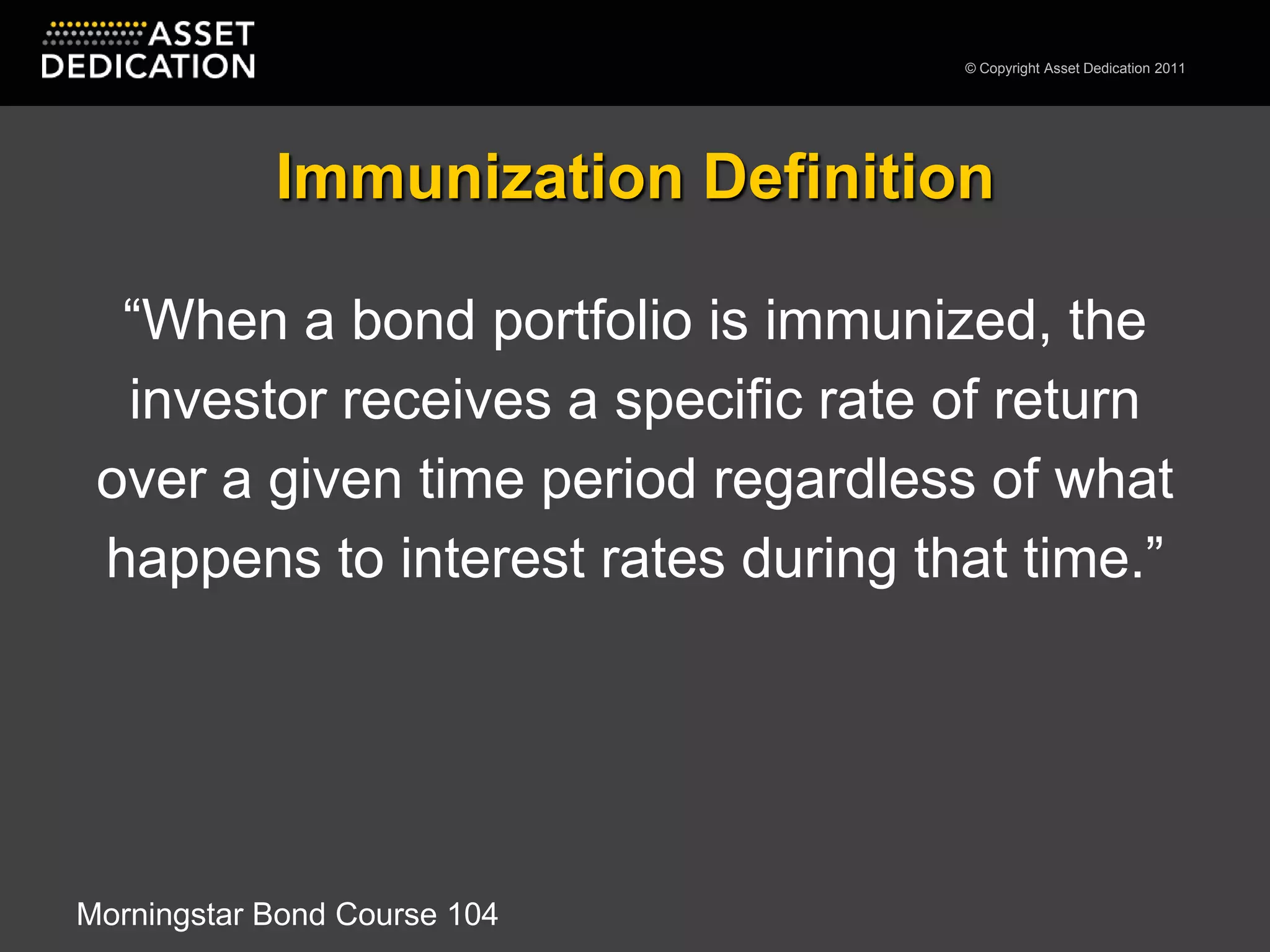
Immunization Definition“When a bond portfolio is immunized, the investor receives a specific rate of return over a given time period regardless of what happens to interest rates during that time.”Morningstar Bond Course 104
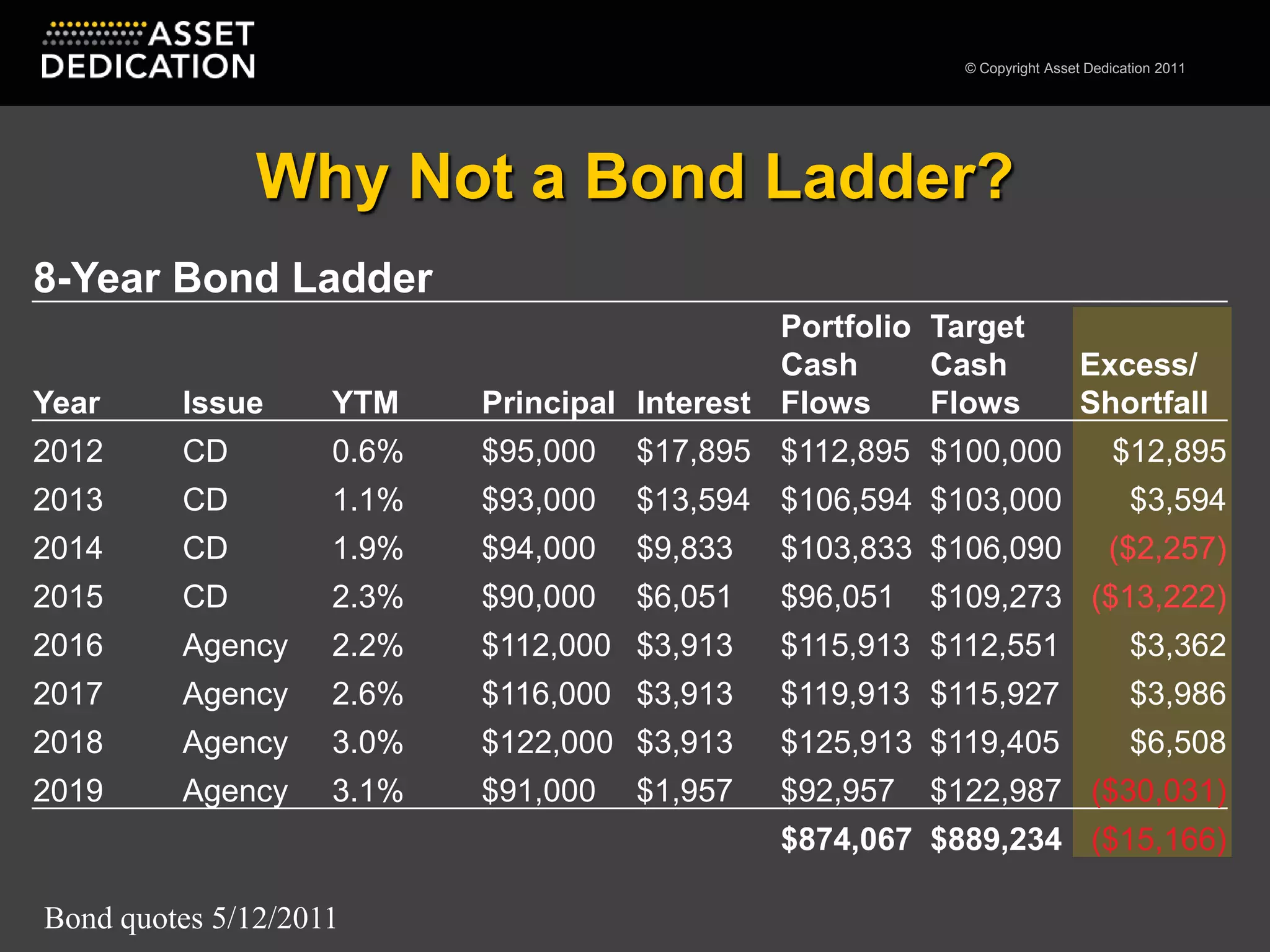
Why Not a Bond Ladder?Bond quotes 5/12/2011
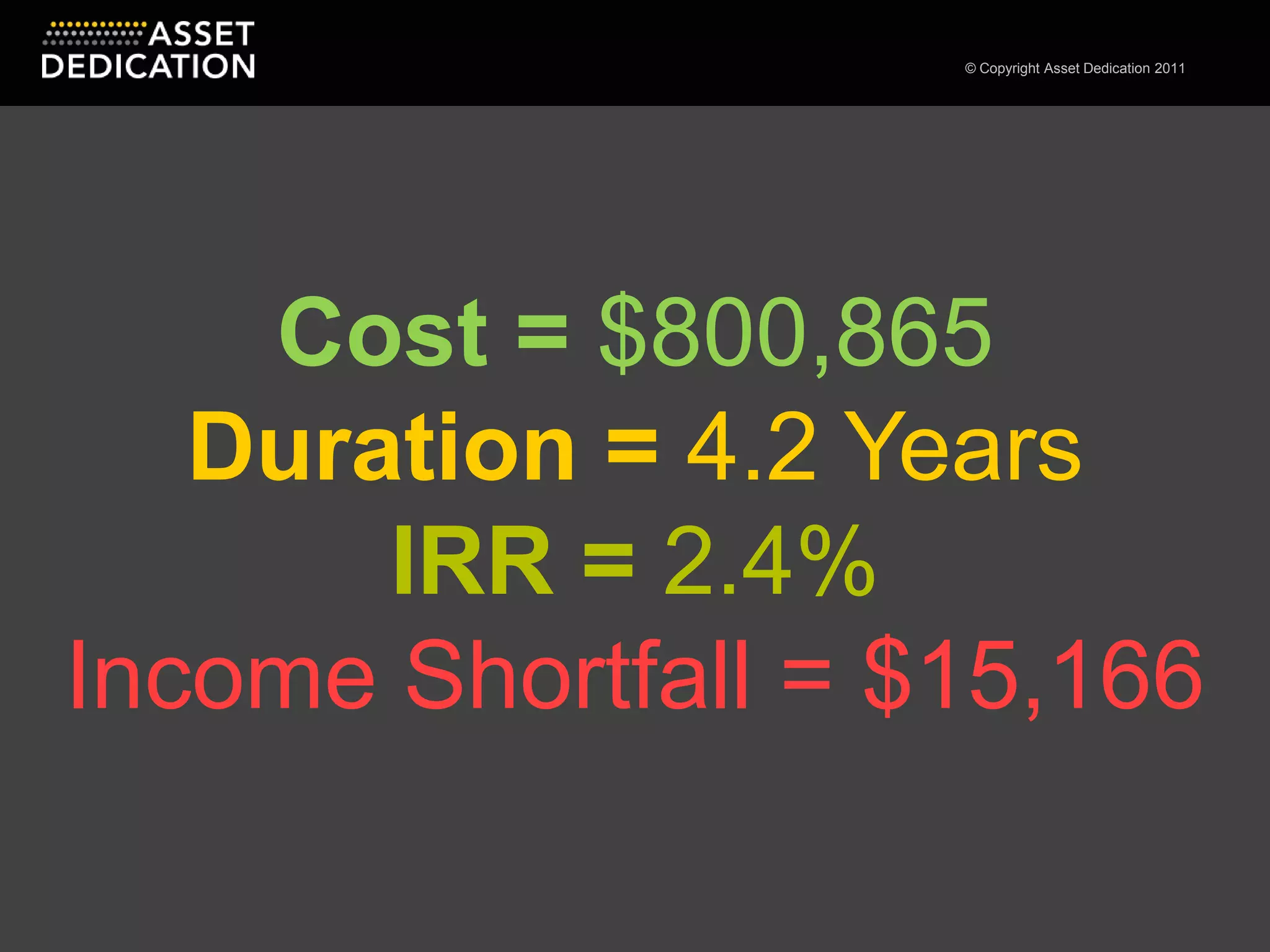
Cost = $800,865 Duration = 4.2 YearsIRR = 2.4%Income Shortfall = $15,166
Tale of Two AllocationsTotal ReturnLDI
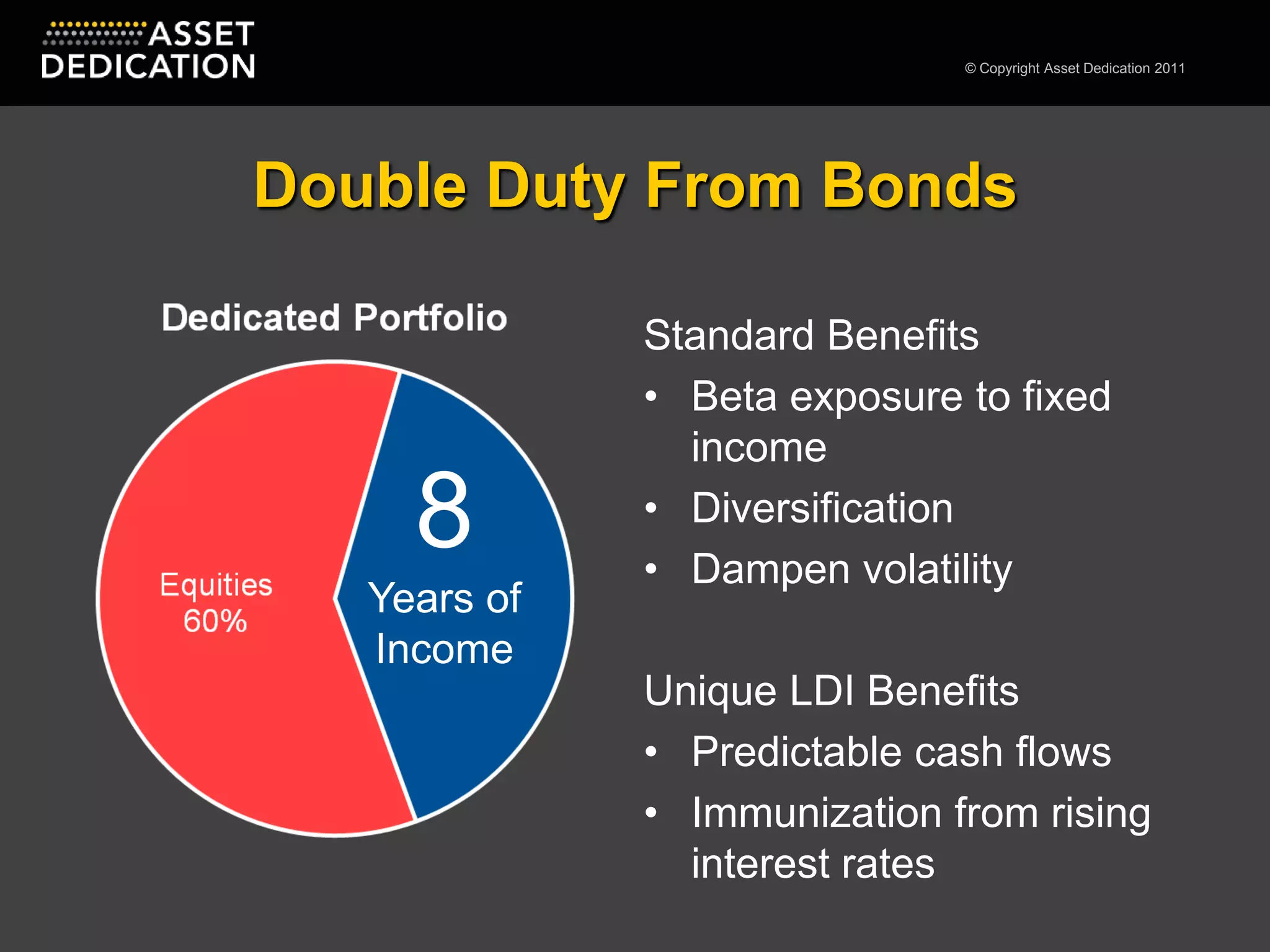
Double Duty From BondsStandard BenefitsBeta exposure to fixed incomeDiversificationDampen volatilityUnique LDI BenefitsPredictable cash flowsImmunization from rising interest rates8Years of Income
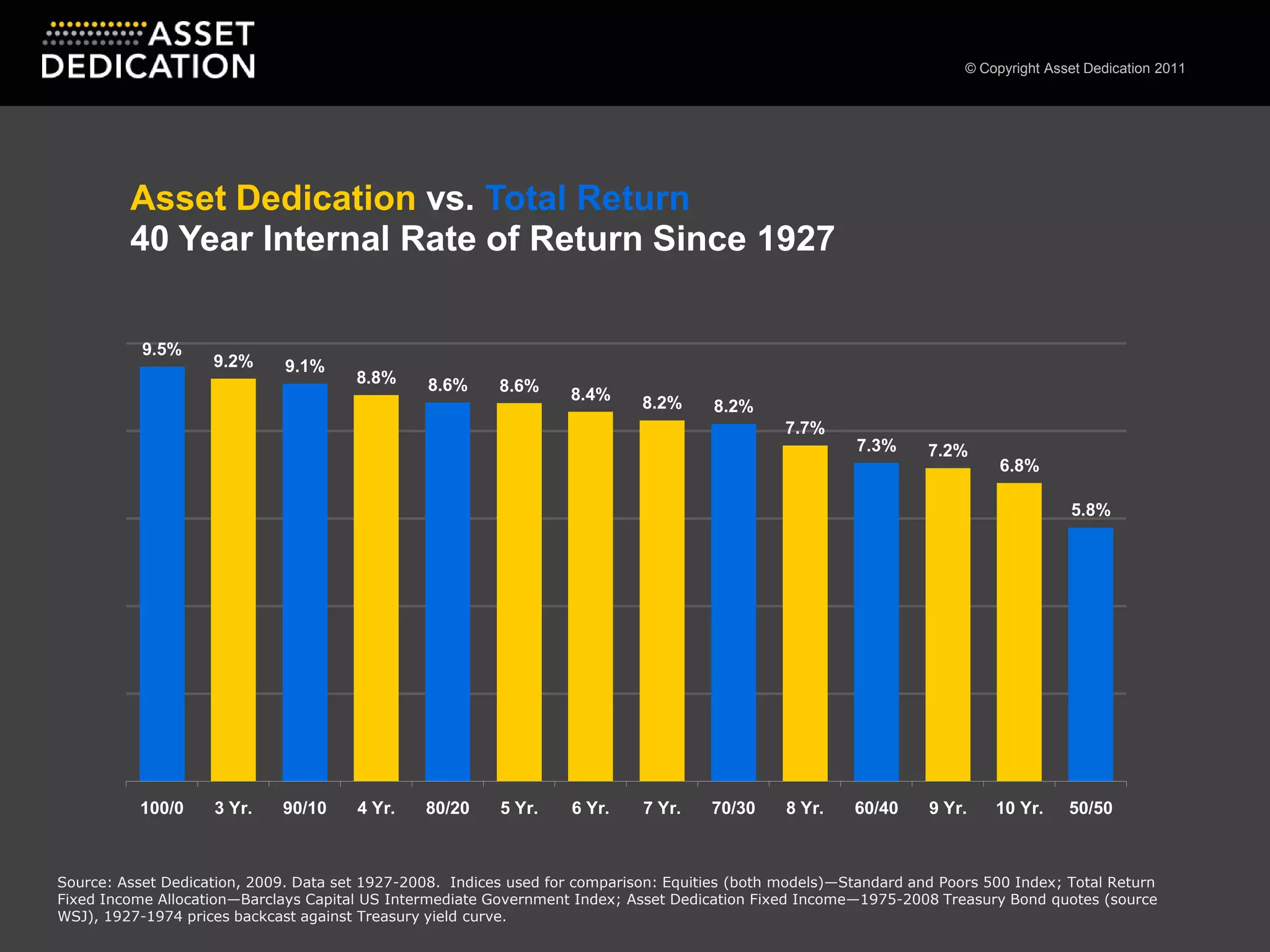
Source: Asset Dedication, 2009. Data set 1927-2008.  Indices used for comparison: Equities (both models)—Standard and Poors 500 Index; Total Return Fixed Income Allocation—Barclays Capital US Intermediate Government Index; Asset Dedication Fixed Income—1975-2008 Treasury Bond quotes (source WSJ), 1927-1974 prices backcast against Treasury yield curve.
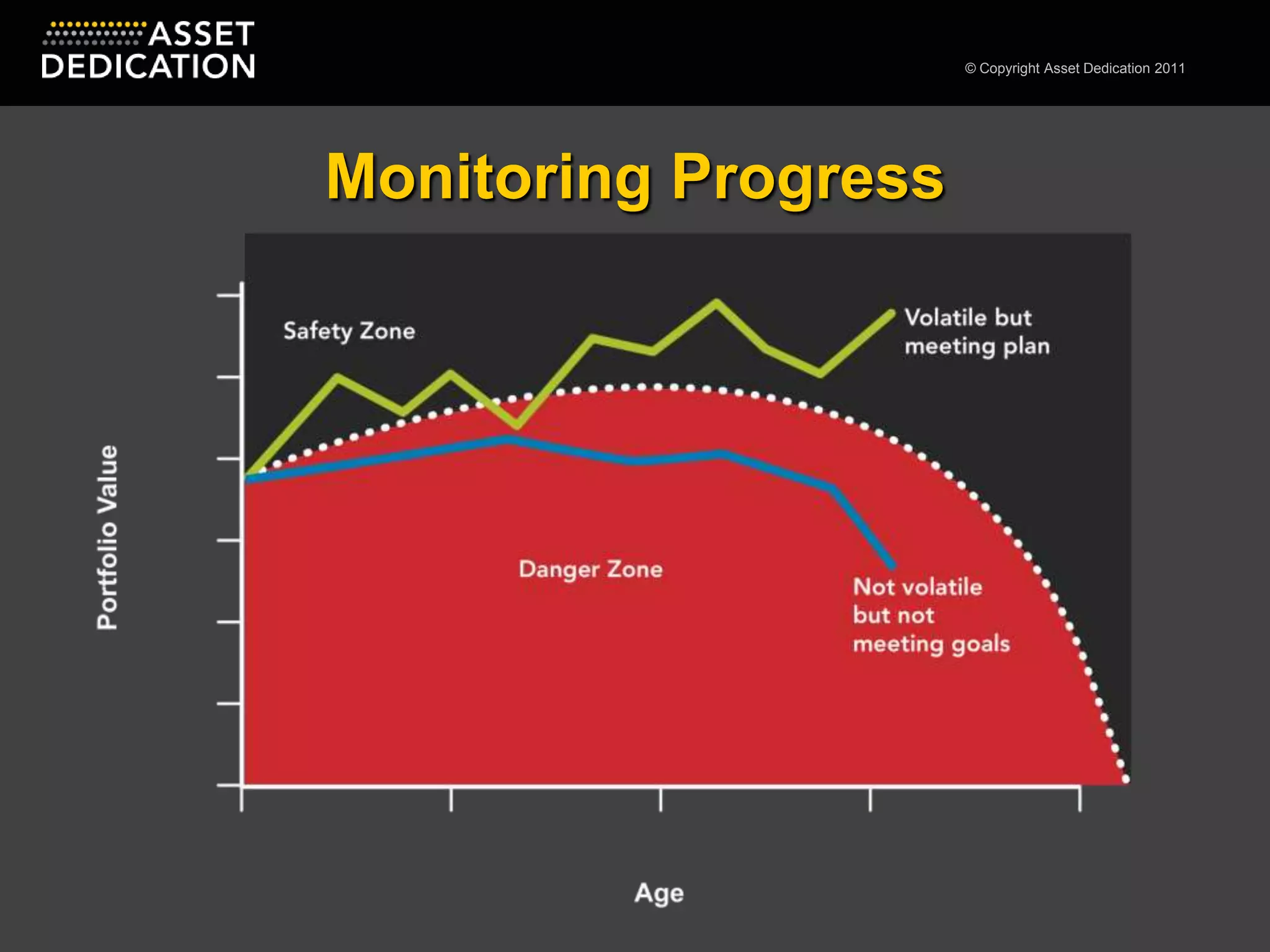
Monitoring Progress
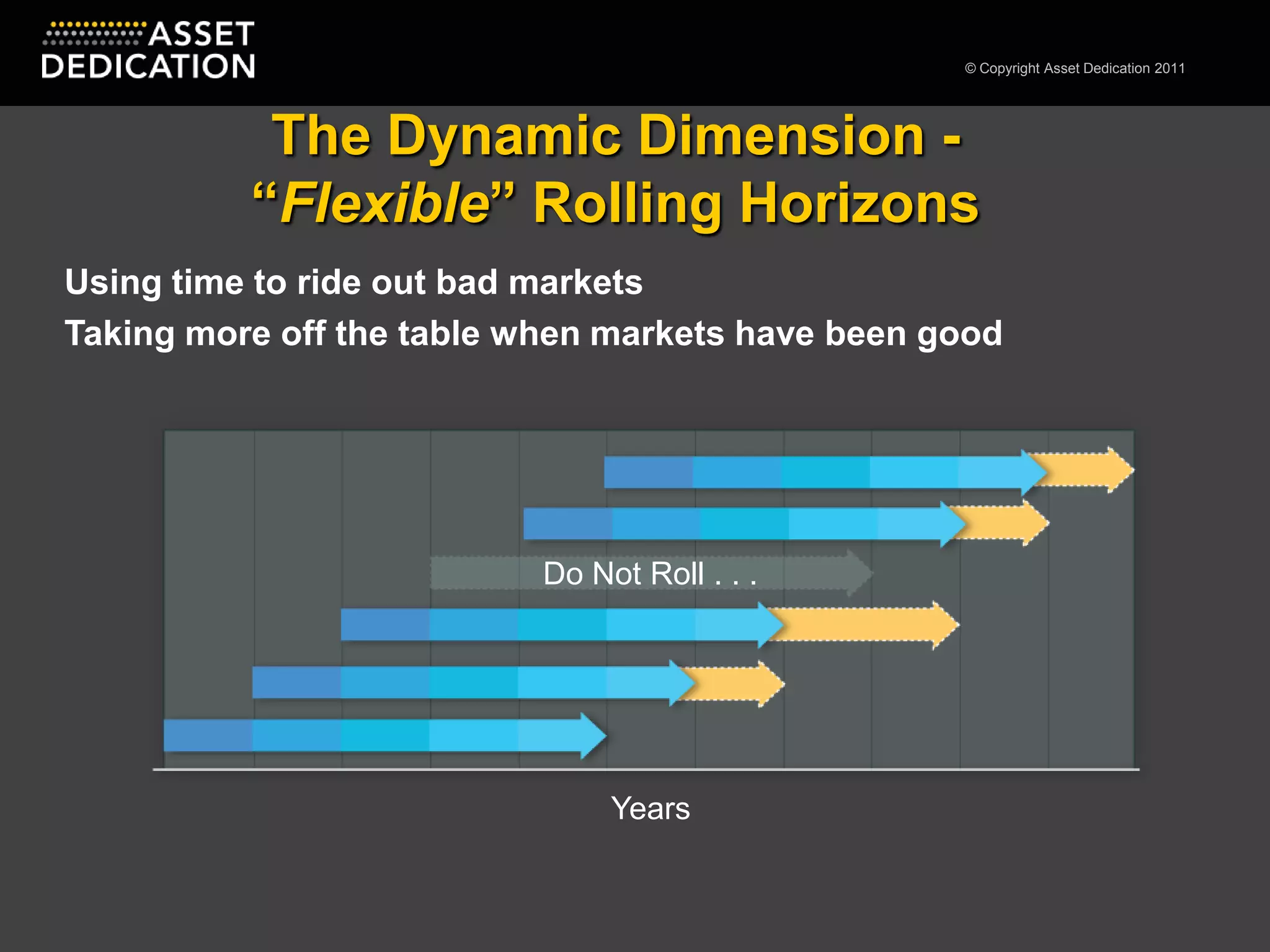
The Dynamic Dimension -“Flexible” Rolling HorizonsUsing time to ride out bad marketsTaking more off the table when markets have been goodDo Not Roll . . .Years
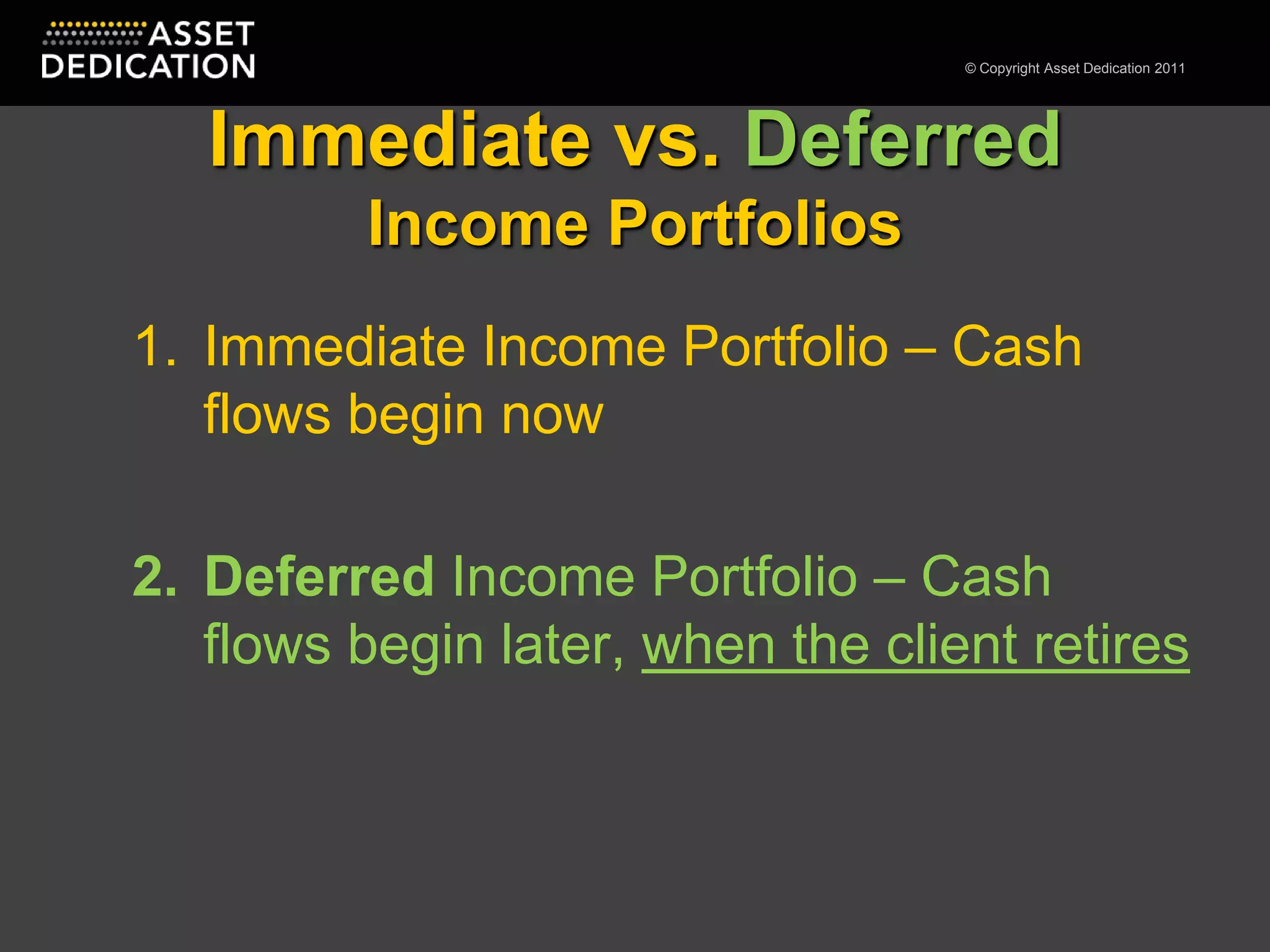
Immediate vs. DeferredIncome PortfoliosImmediate Income Portfolio – Cash flows begin nowDeferredIncome Portfolio – Cash flows begin later, when the client retires
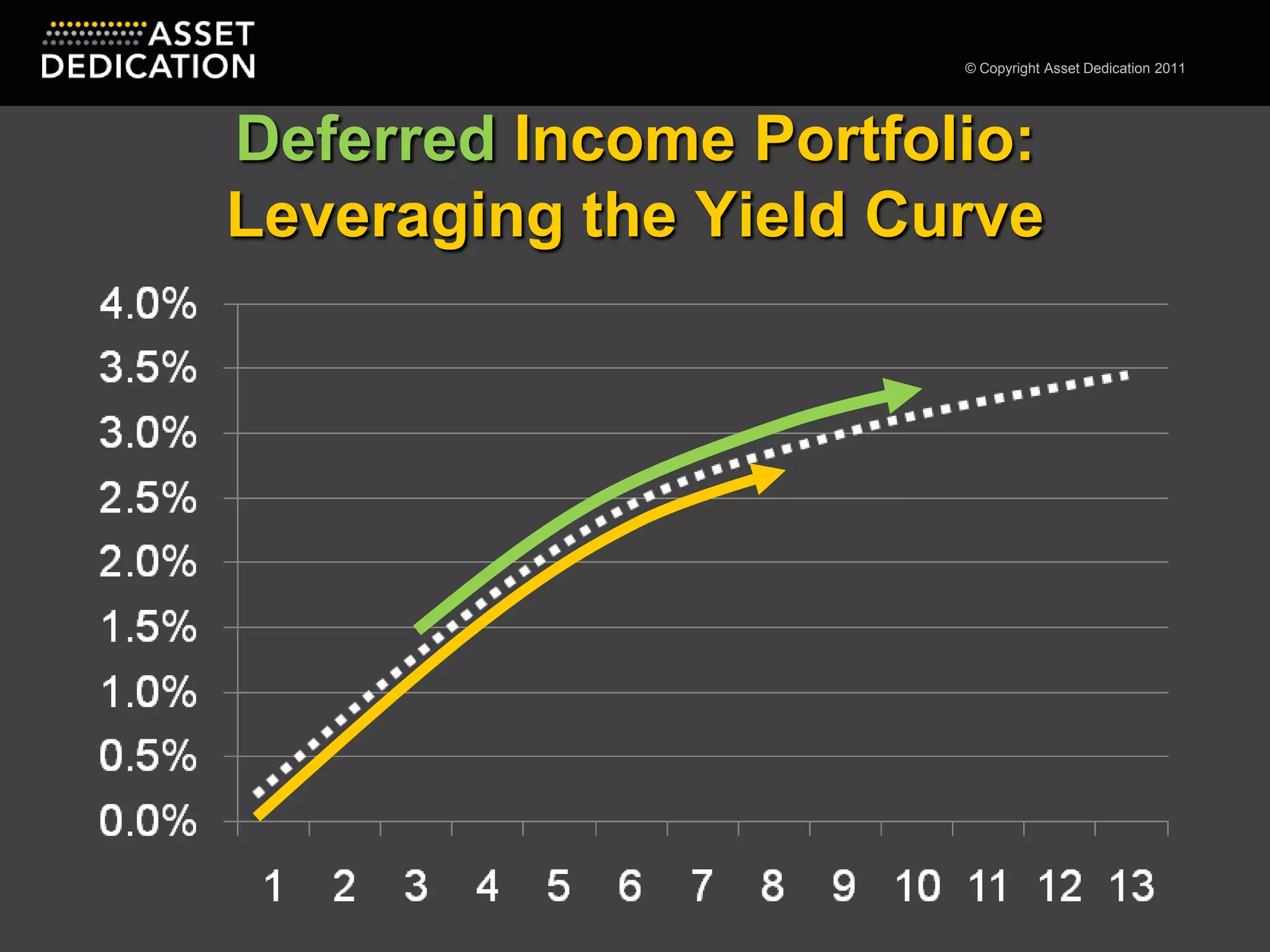
Deferred Income Portfolio: Leveraging the Yield Curve
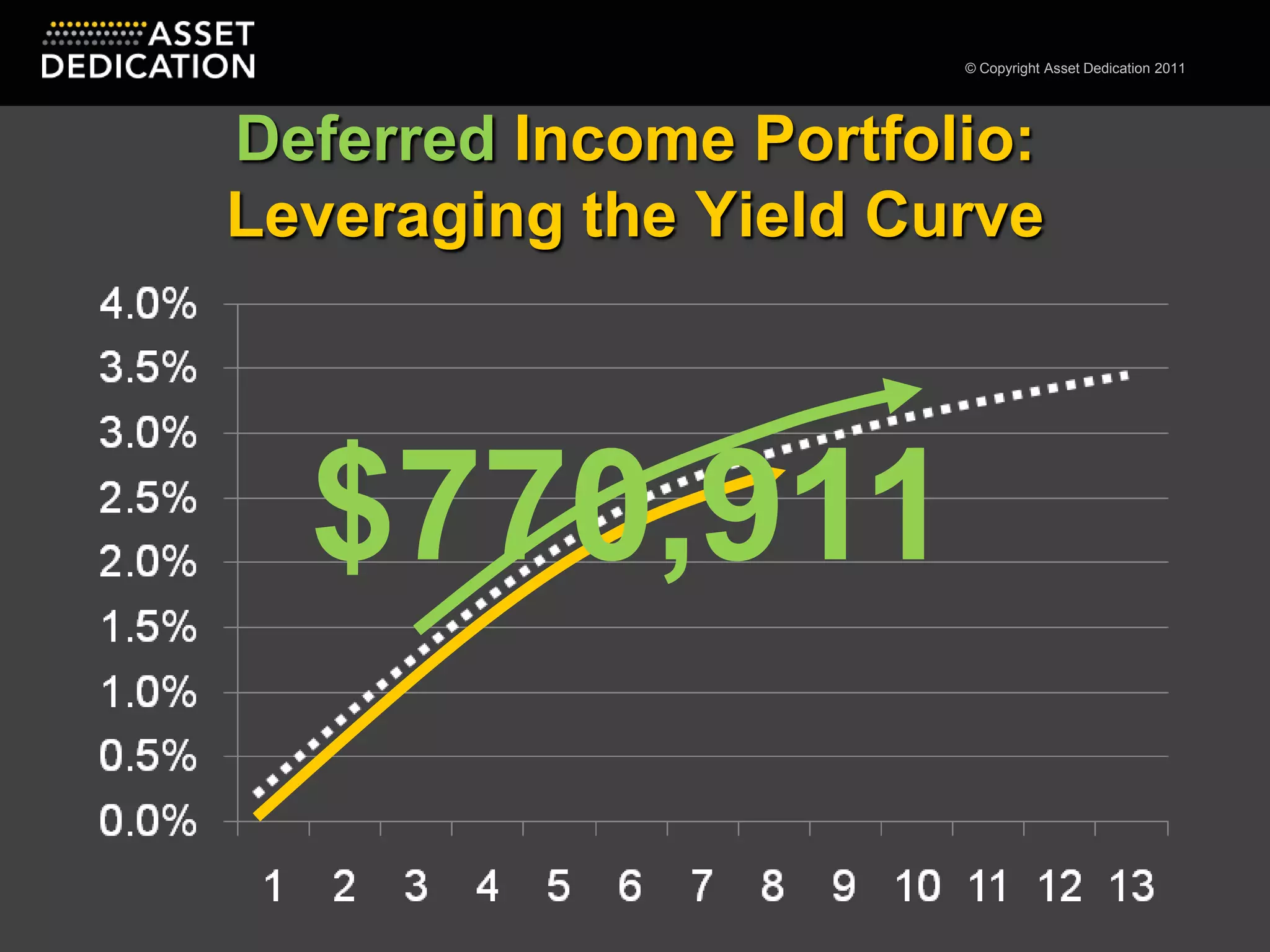
Deferred Income Portfolio: Leveraging the Yield Curve$770,911
De-Risk
Interest Rate Risk
Timing Risk
Planning Risks
Behavioral Risks
Why Individual Bonds?
Individual BondsVs.Bond Funds
Legal ObligationVs.Mutual Fund
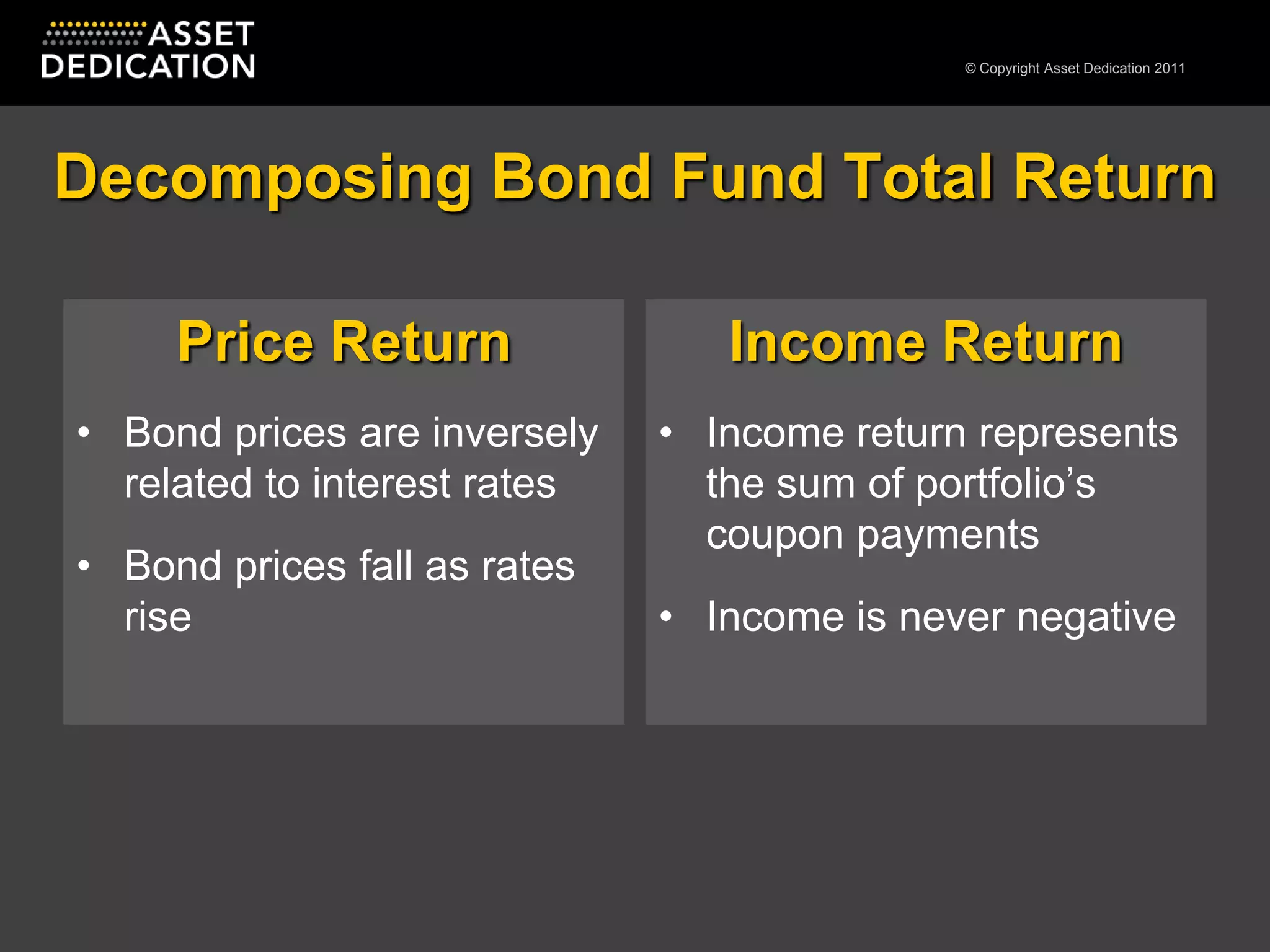
Decomposing Bond Fund Total ReturnIncome ReturnIncome return represents the sum of portfolio’s coupon paymentsIncome is never negativePrice ReturnBond prices are inversely related to interest ratesBond prices fall as rates rise
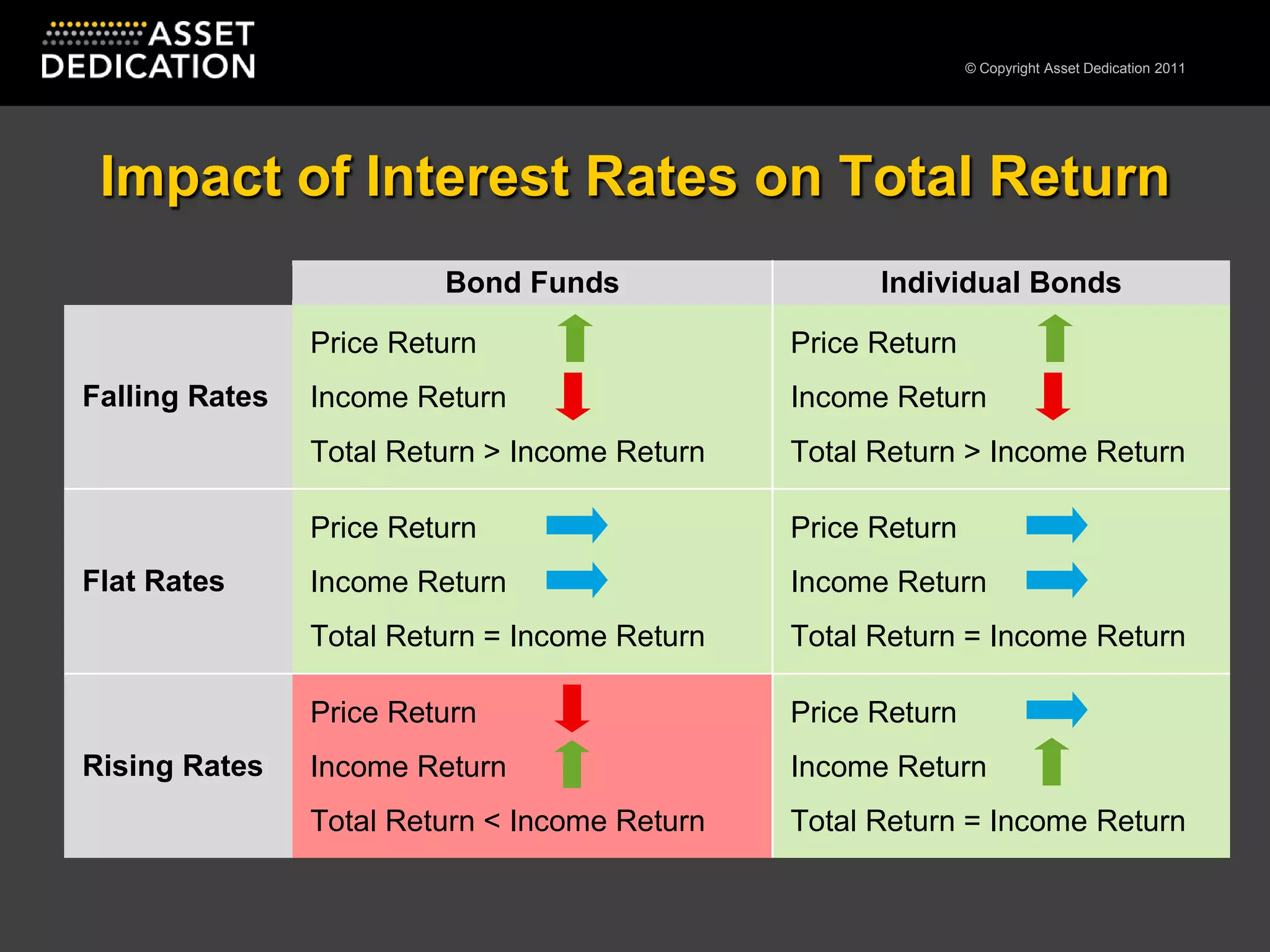
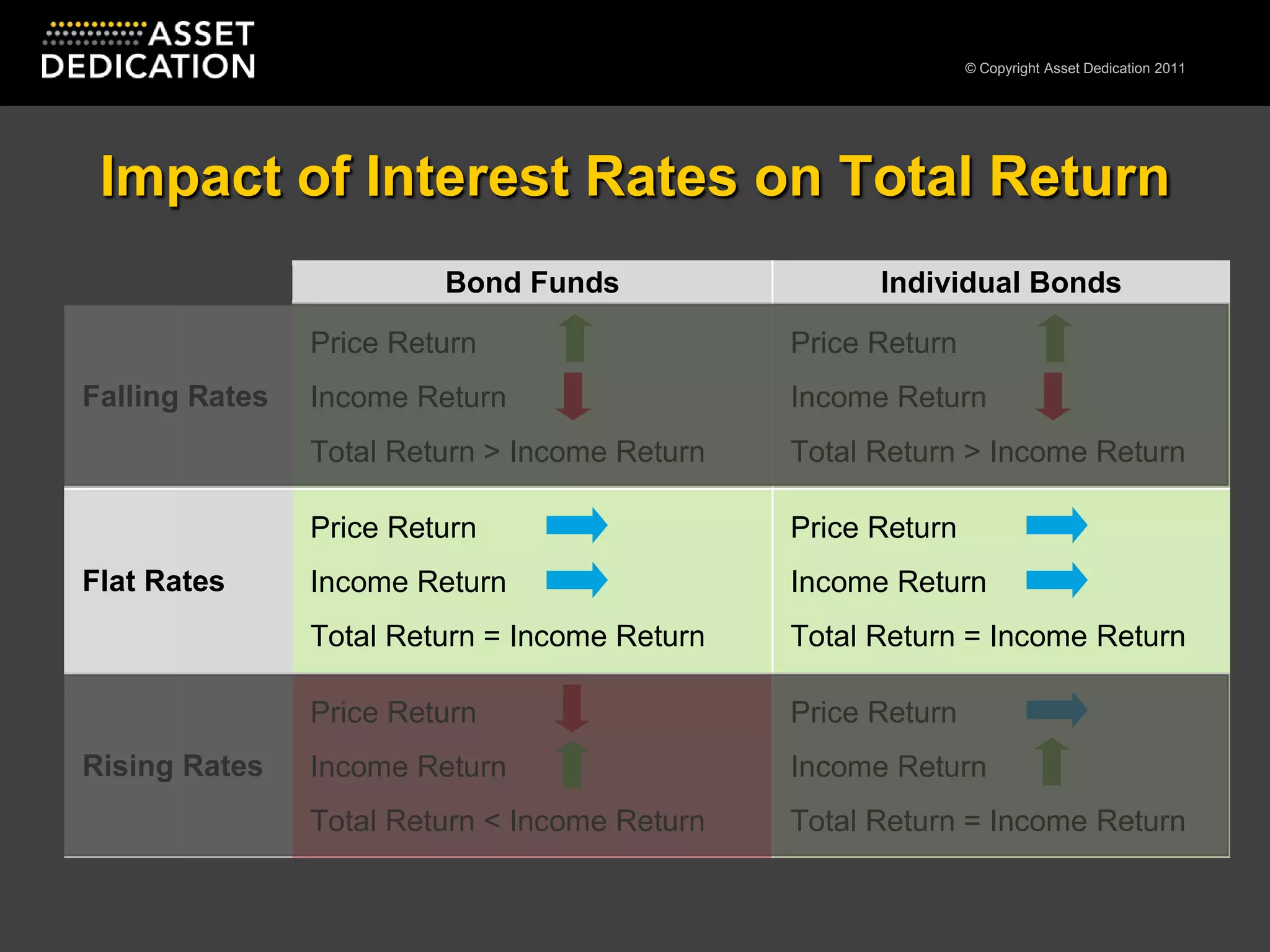
Impact of Interest Rates on Total Return
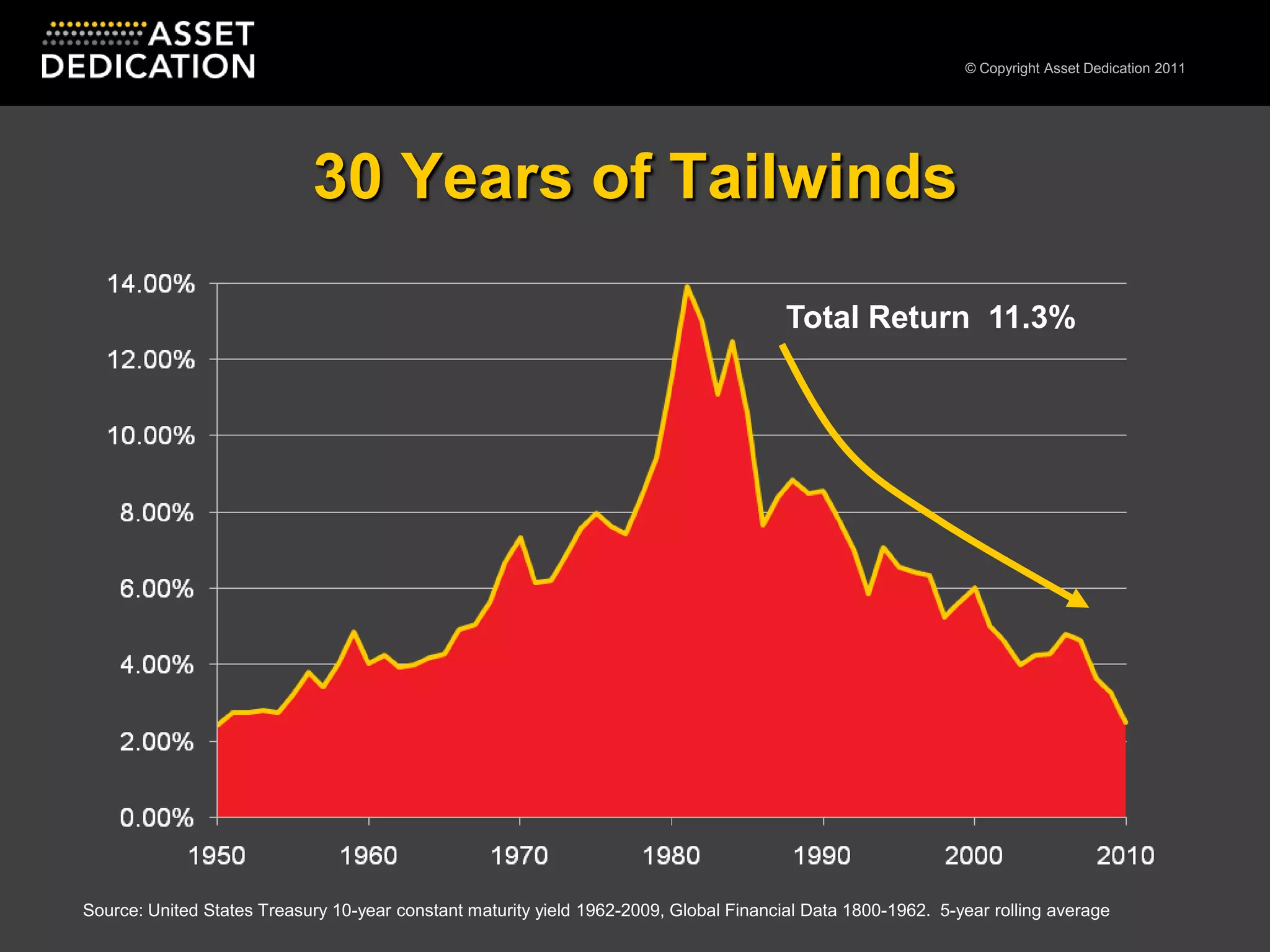
30 Years of TailwindsTotal Return  11.3%Source: United States Treasury 10-year constant maturity yield 1962-2009, Global Financial Data 1800-1962.  5-year rolling average
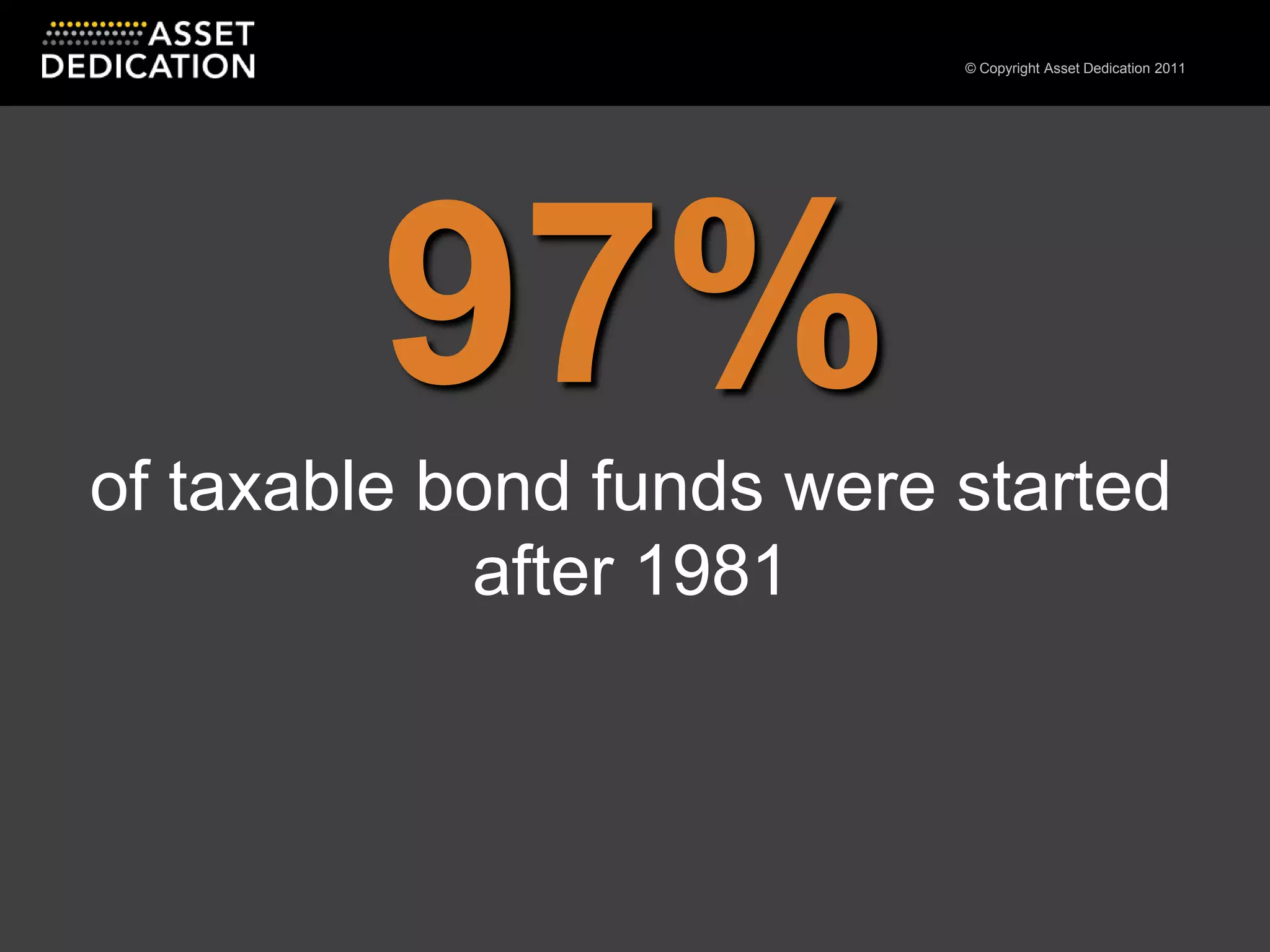
97%of taxable bond funds were started after 1981
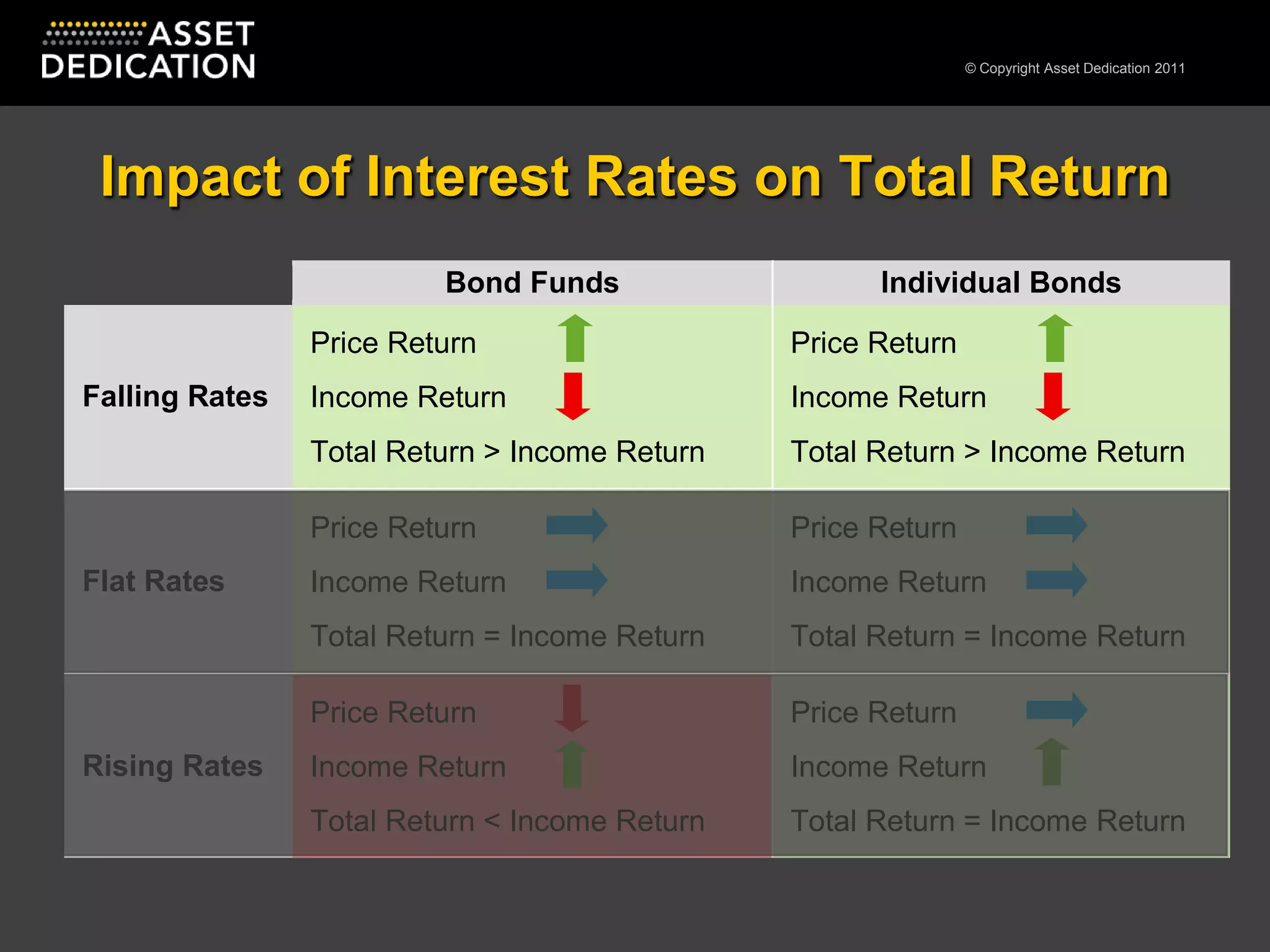
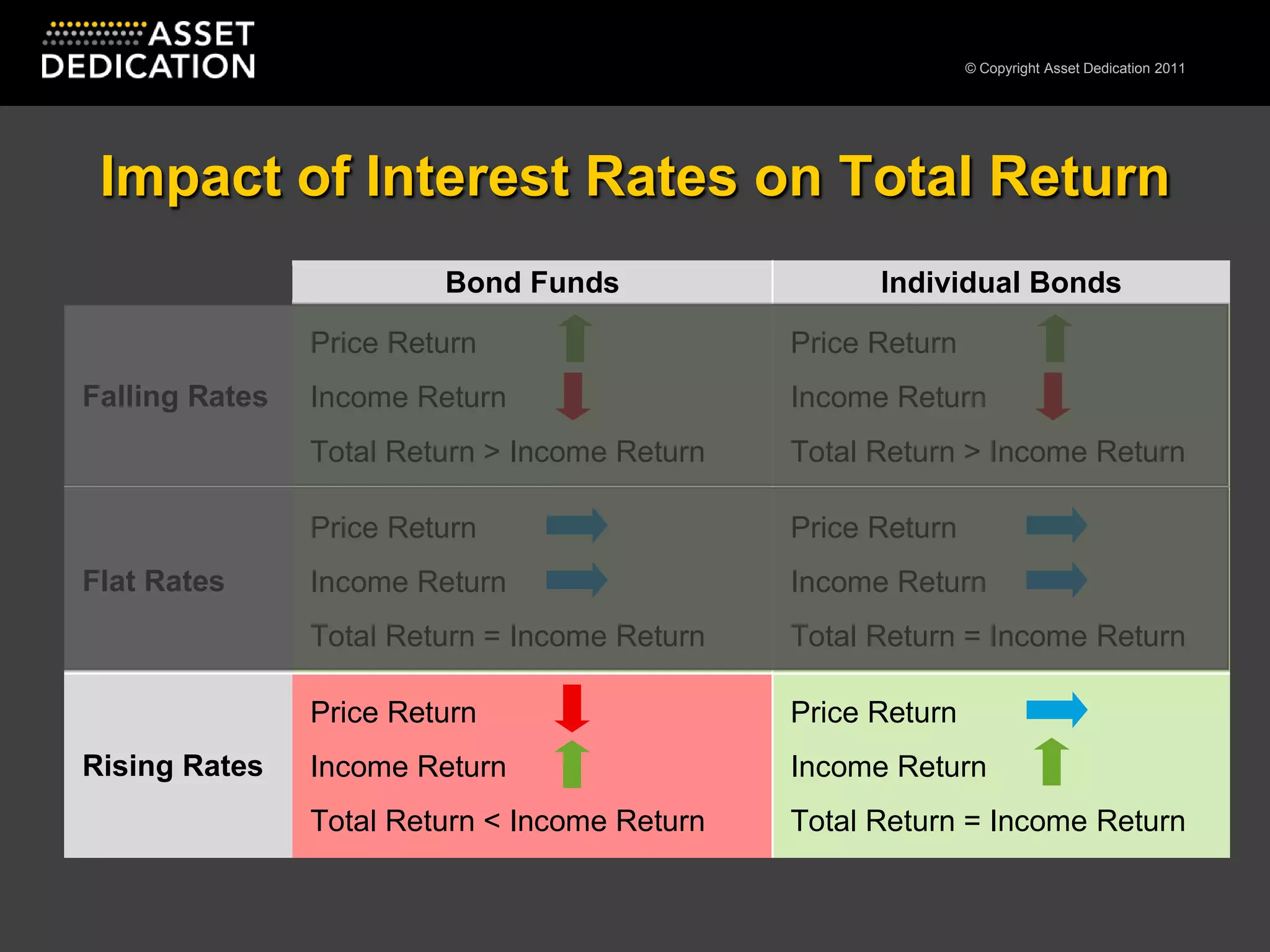
Impact of Interest Rates on Total Return
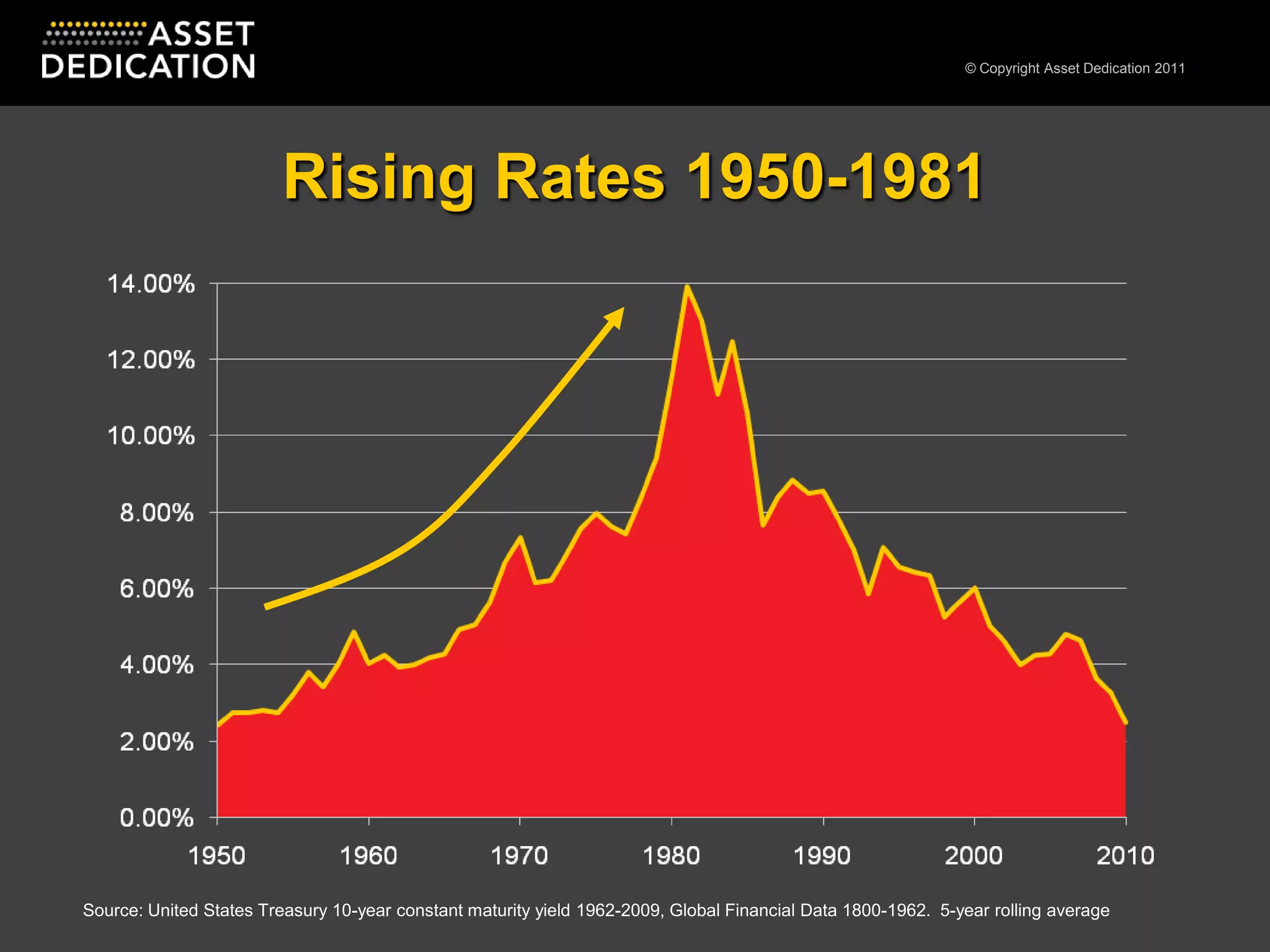
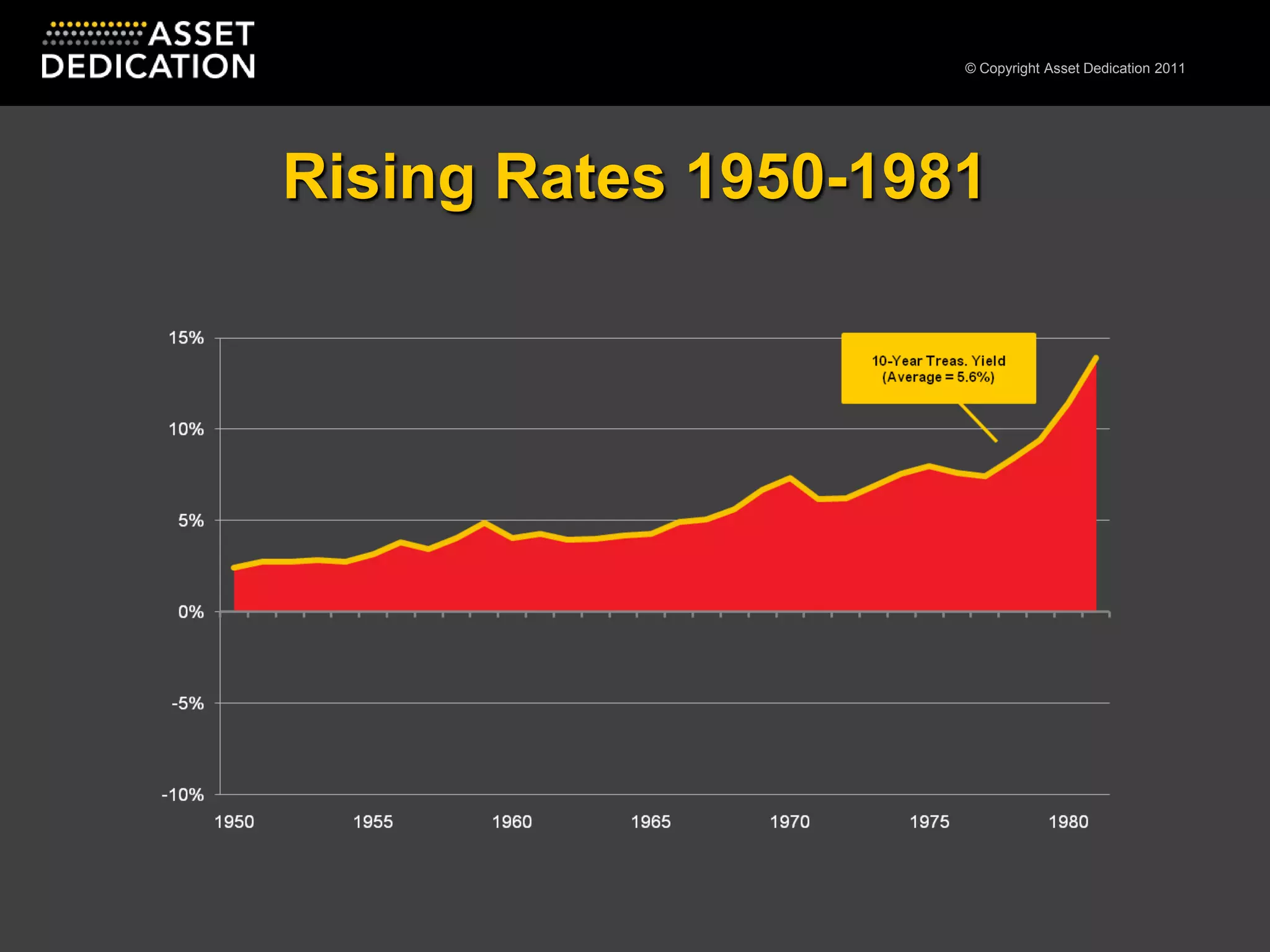
Rising Rates 1950-1981Source: United States Treasury 10-year constant maturity yield 1962-2009, Global Financial Data 1800-1962.  5-year rolling average
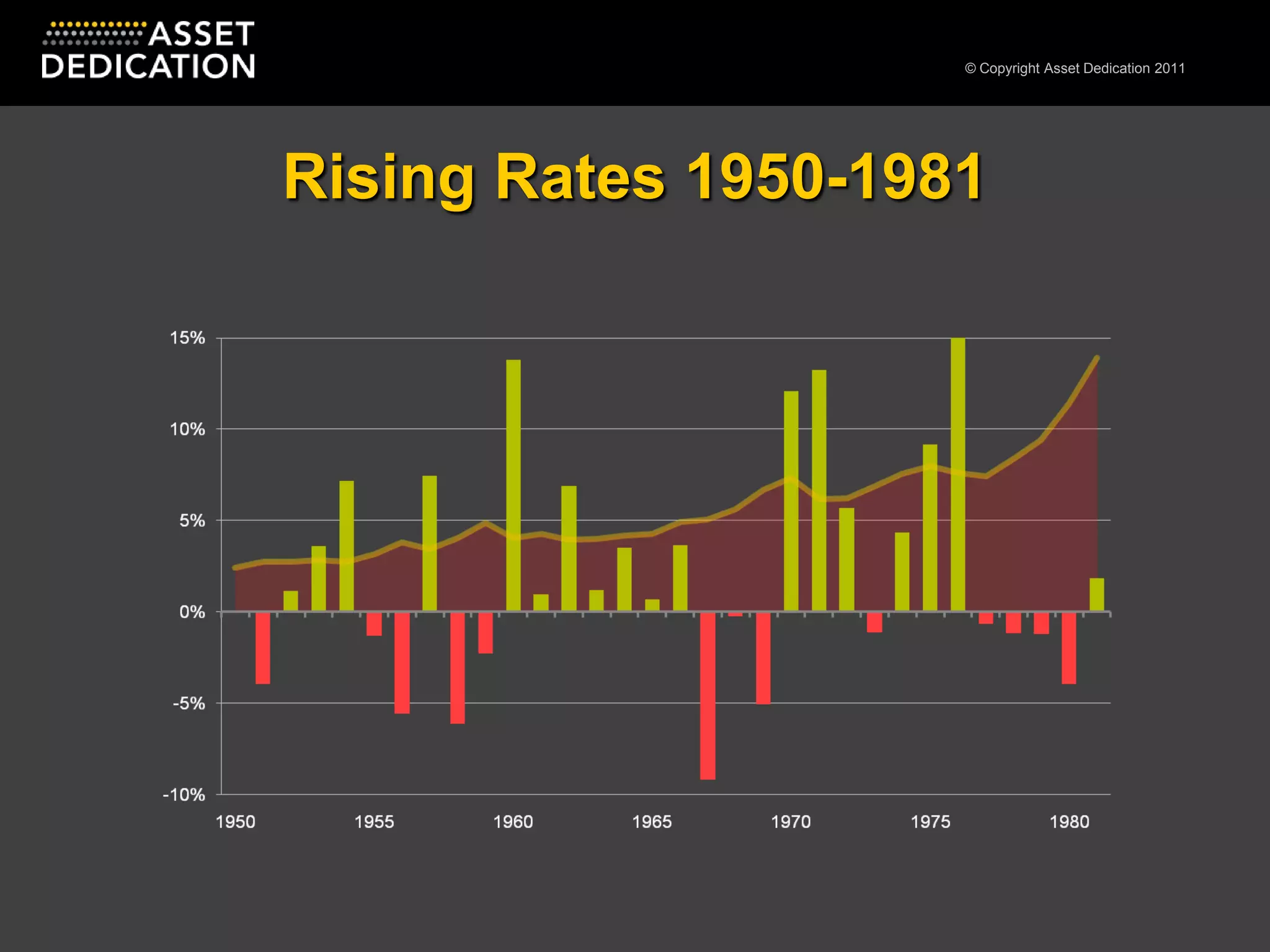
Rising Rates 1950-1981
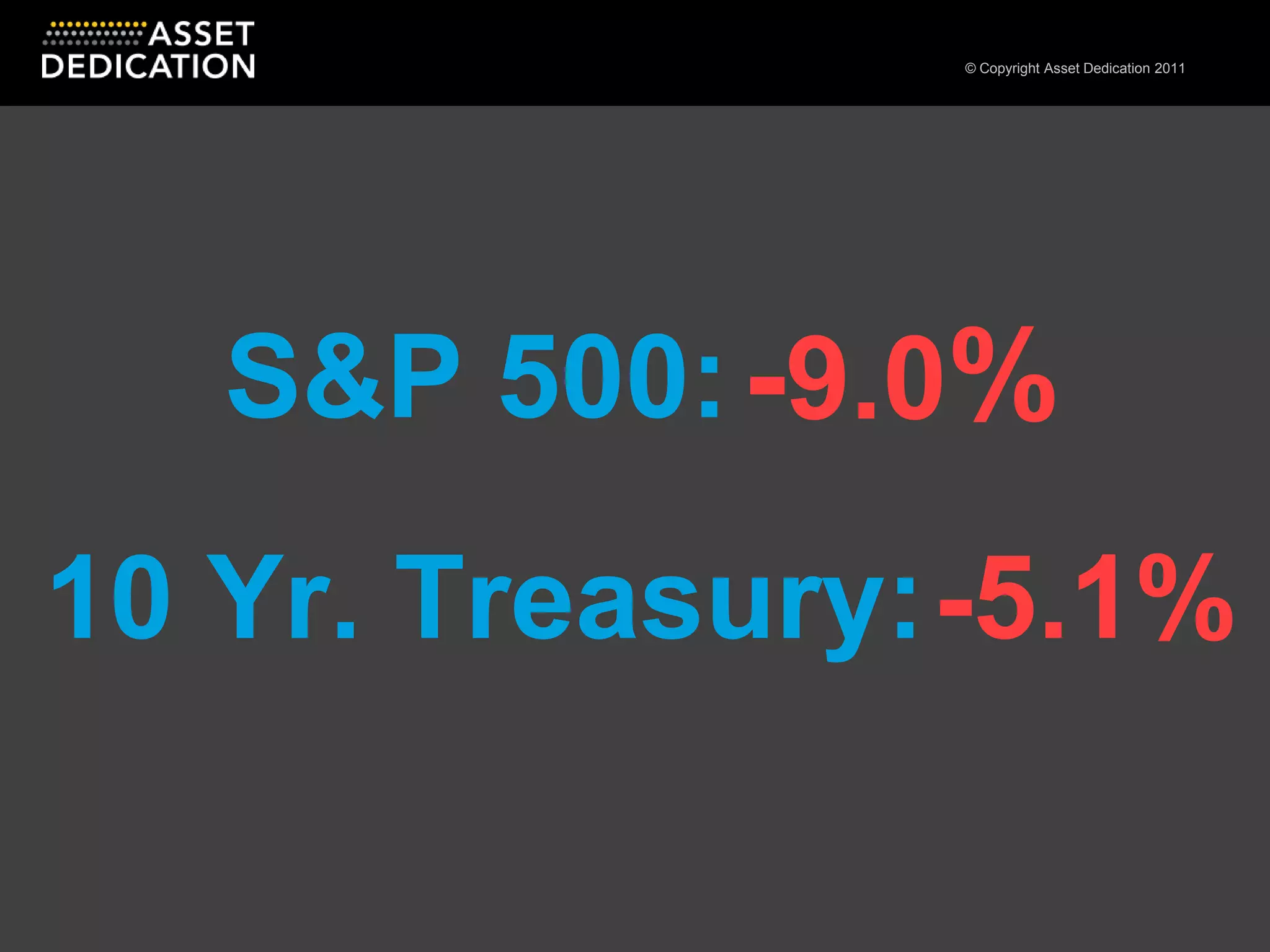
-9.0%S&P 500:10 Yr. Treasury:-5.1%
Catch-22 for Bond Fund Investors
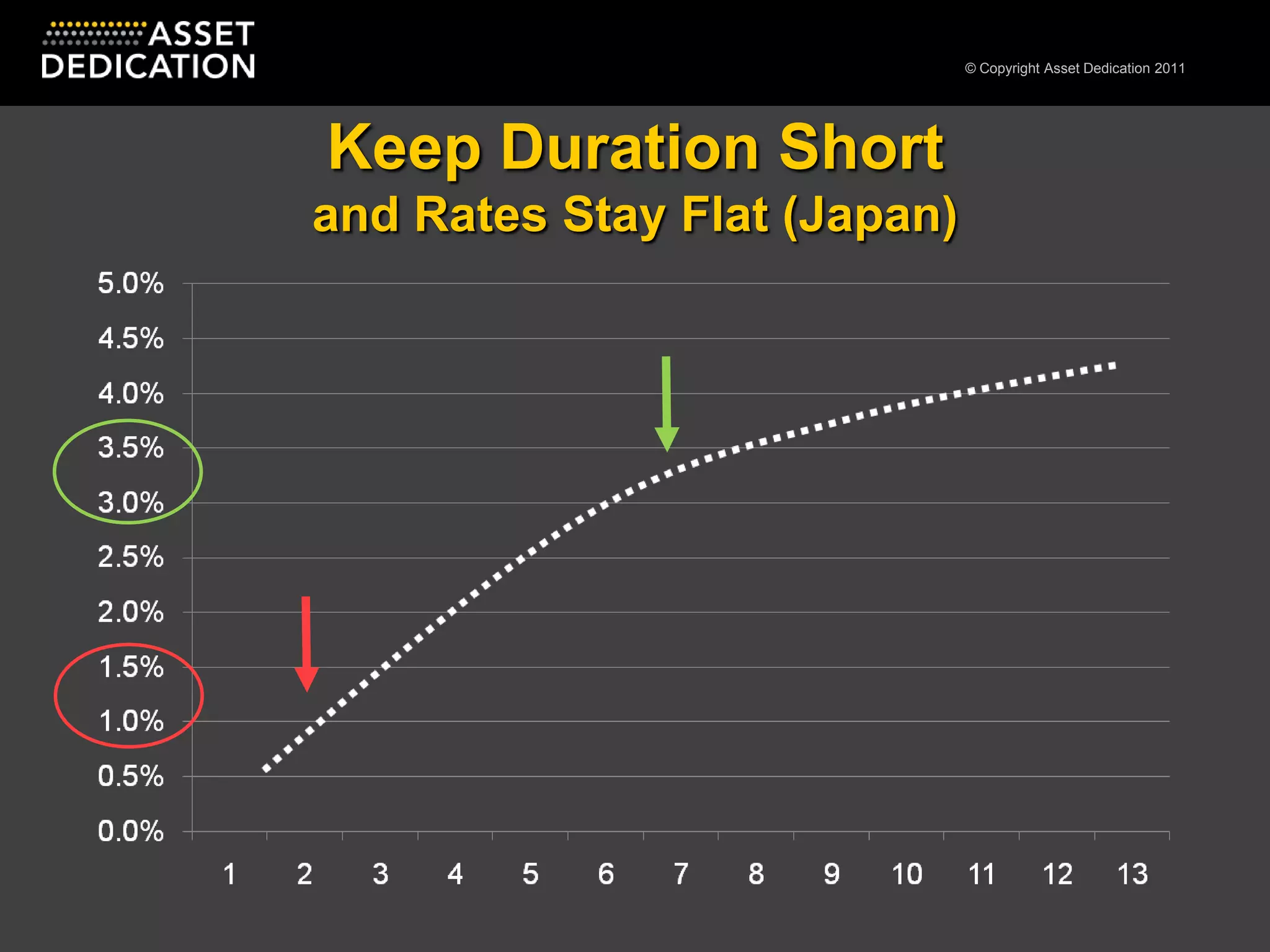
Keep Duration Short and Rates Stay Flat (Japan)
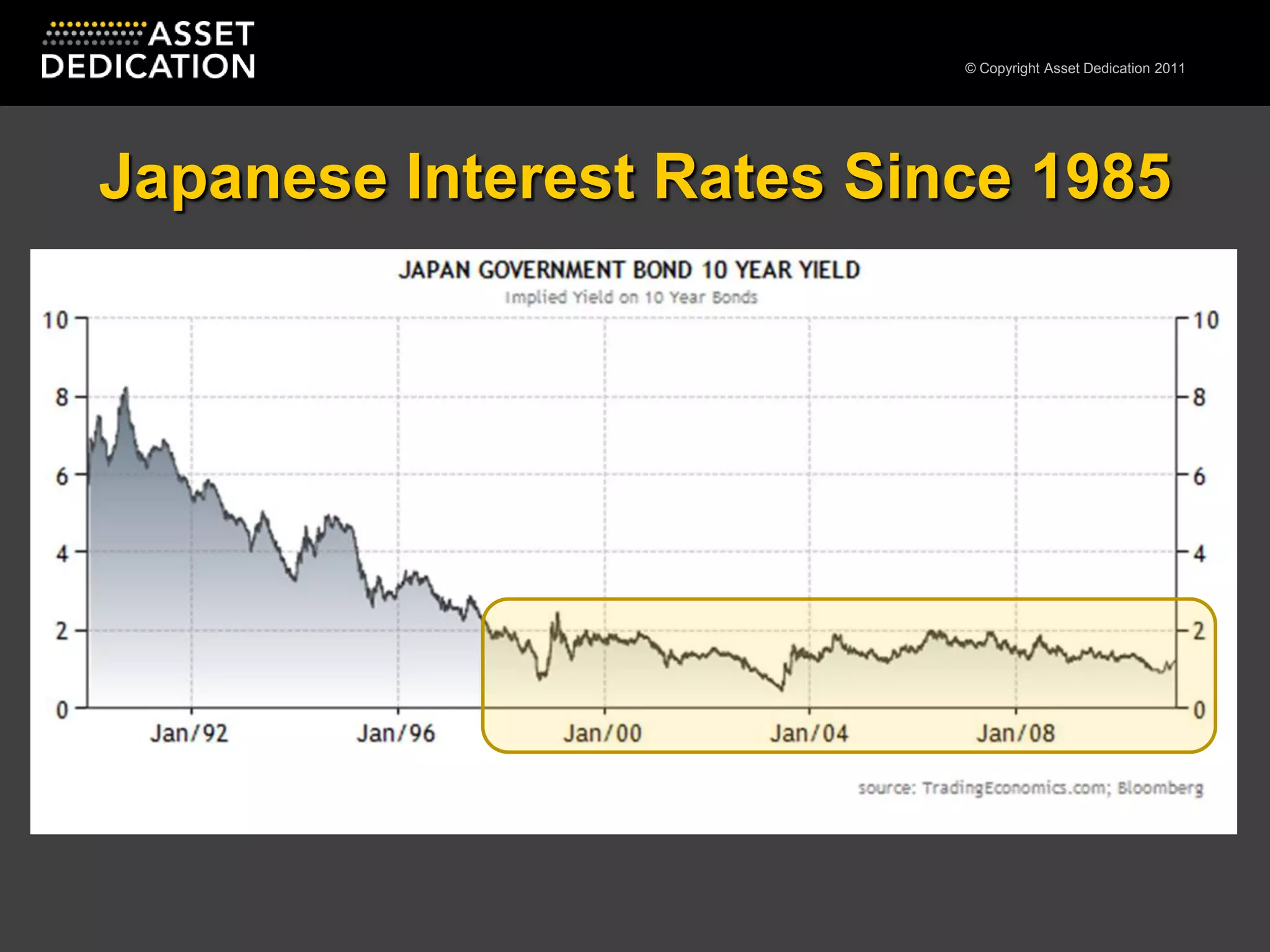
Japanese Interest Rates Since 1985
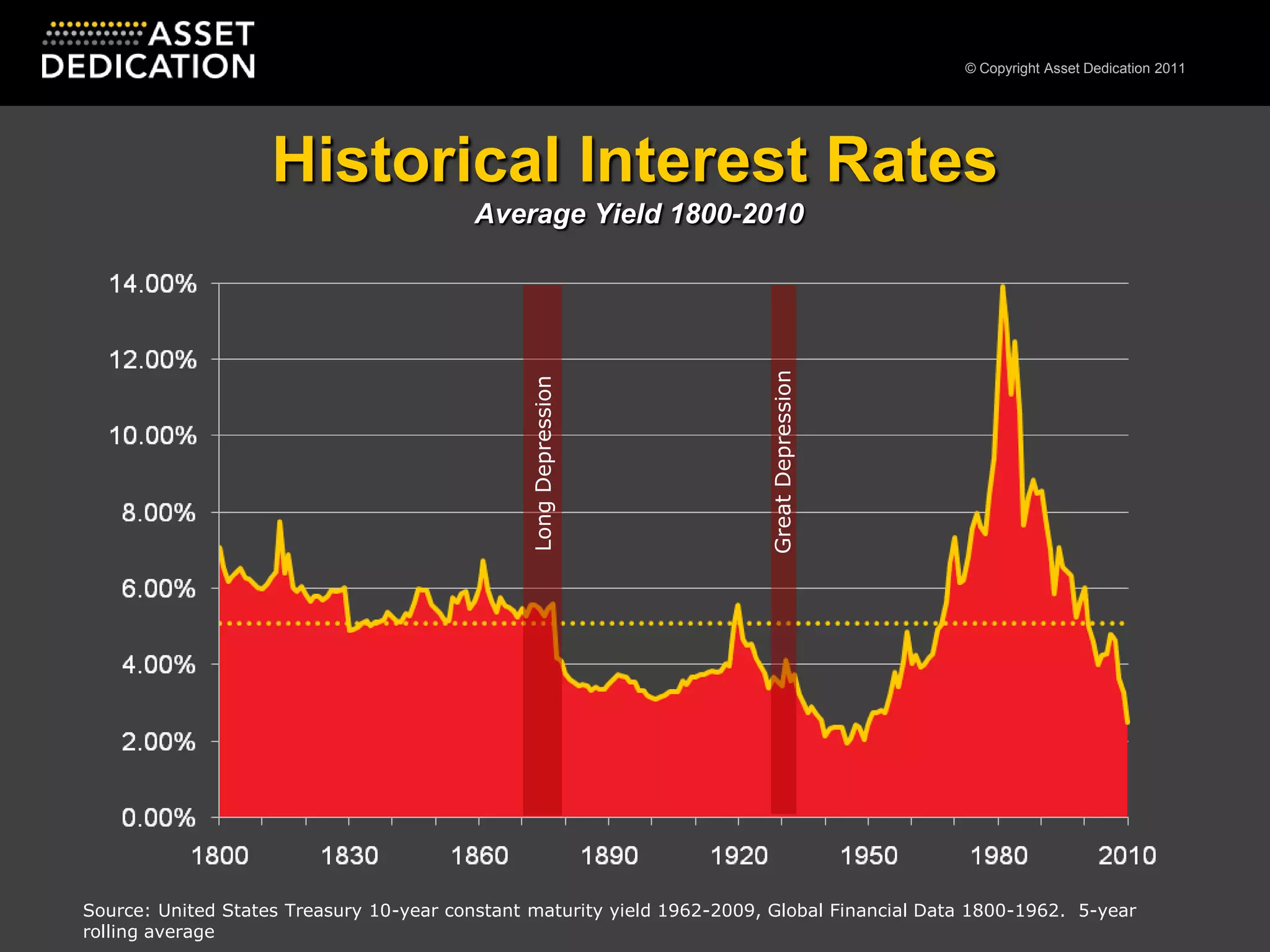
Historical Interest Rates Average Yield 1800-2010Long Depression	Great Depression	Source: United States Treasury 10-year constant maturity yield 1962-2009, Global Financial Data 1800-1962.  5-year rolling average
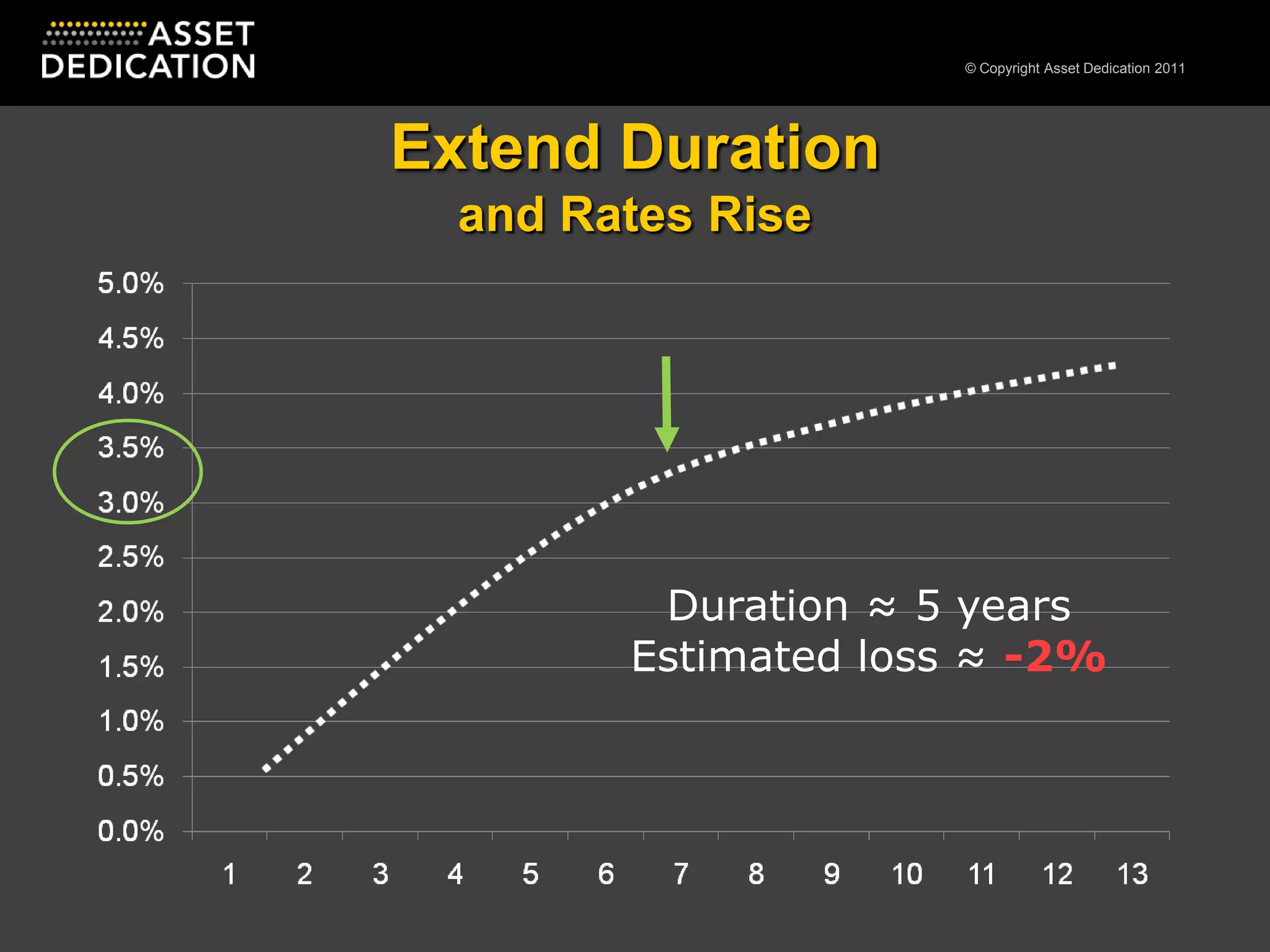
Extend Duration and Rates RiseDuration ≈ 5 yearsEstimated loss ≈ -2%
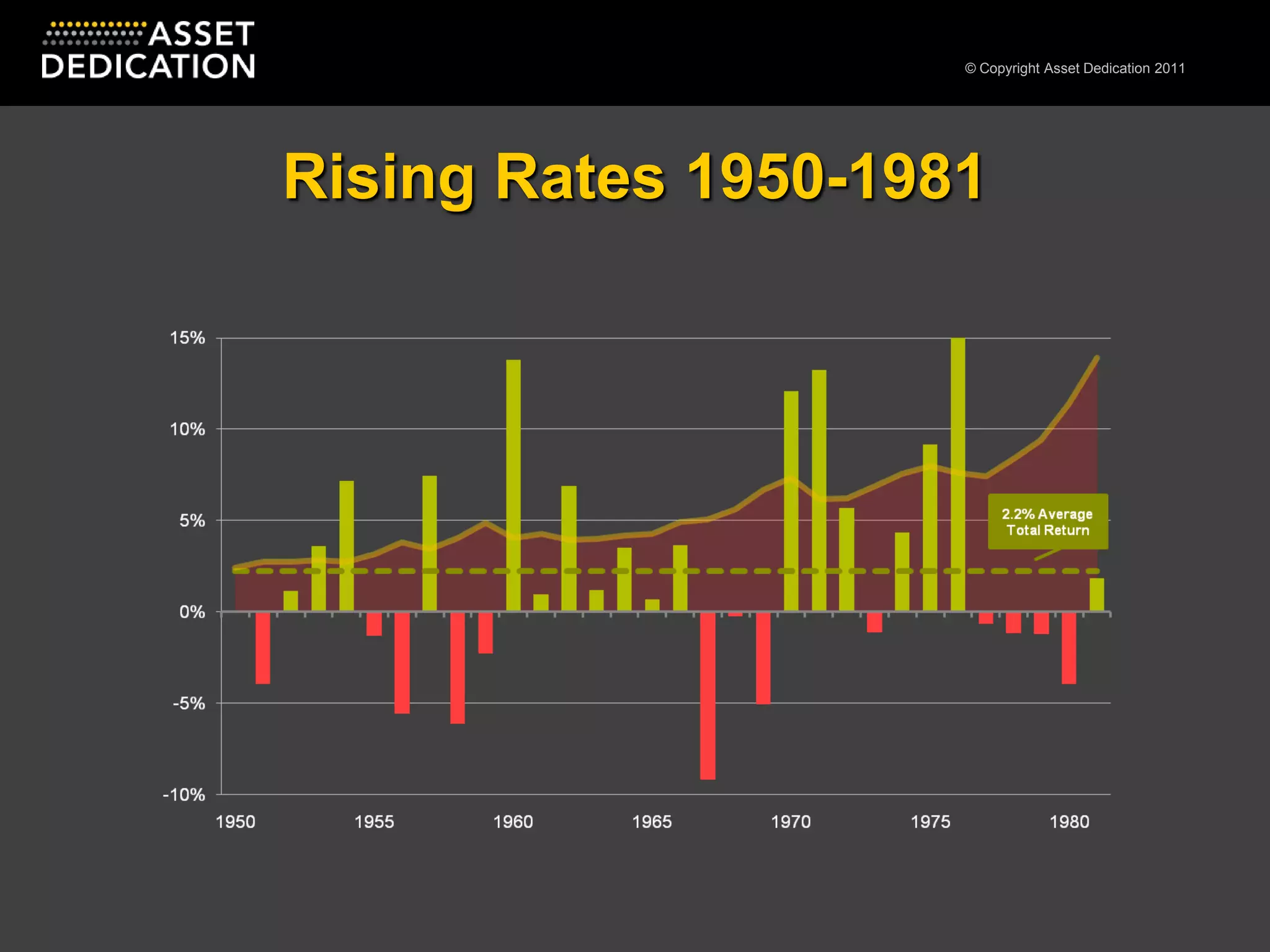
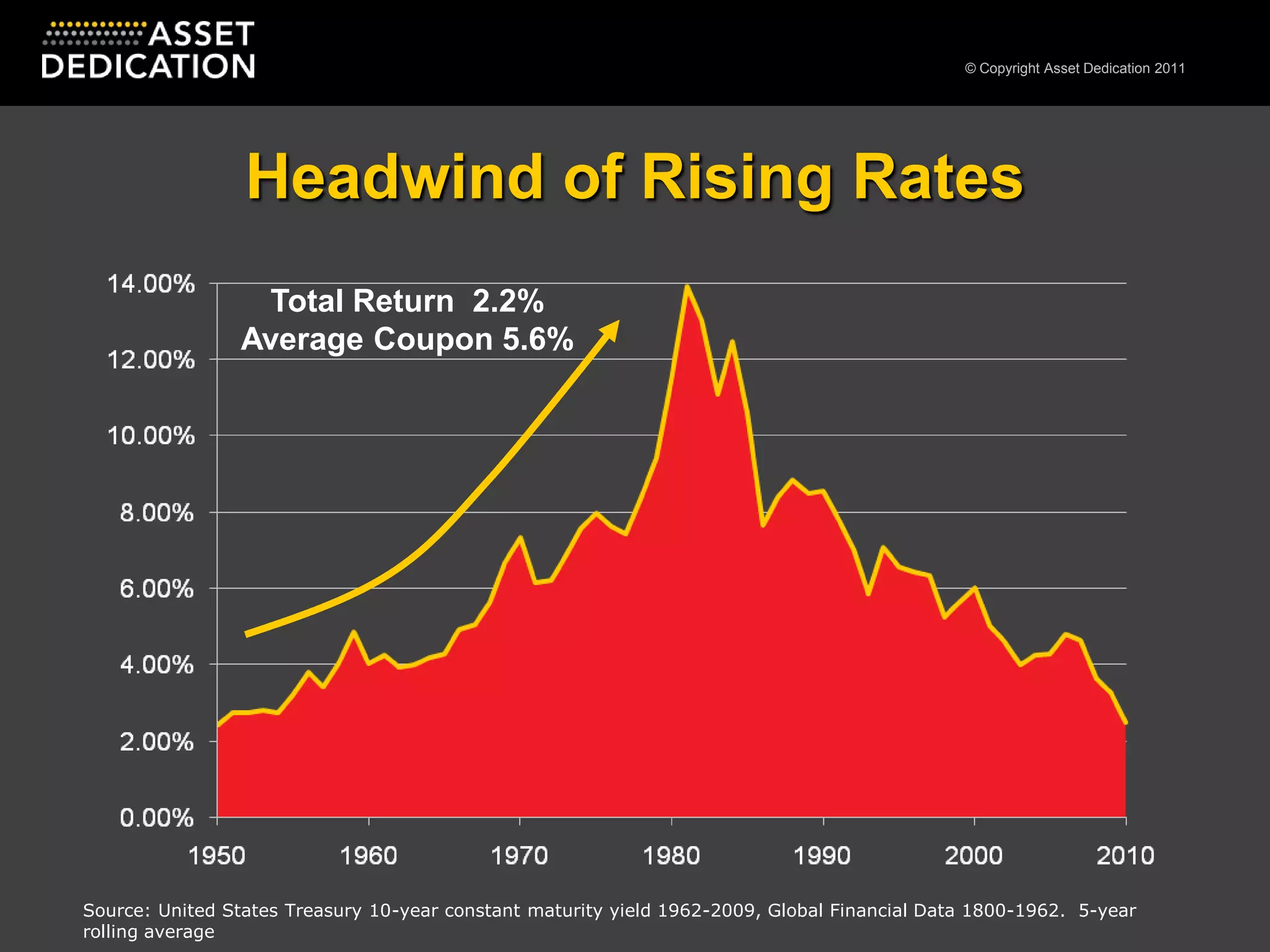
Headwind of Rising RatesTotal Return  2.2%Average Coupon 5.6%Source: United States Treasury 10-year constant maturity yield 1962-2009, Global Financial Data 1800-1962.  5-year rolling average
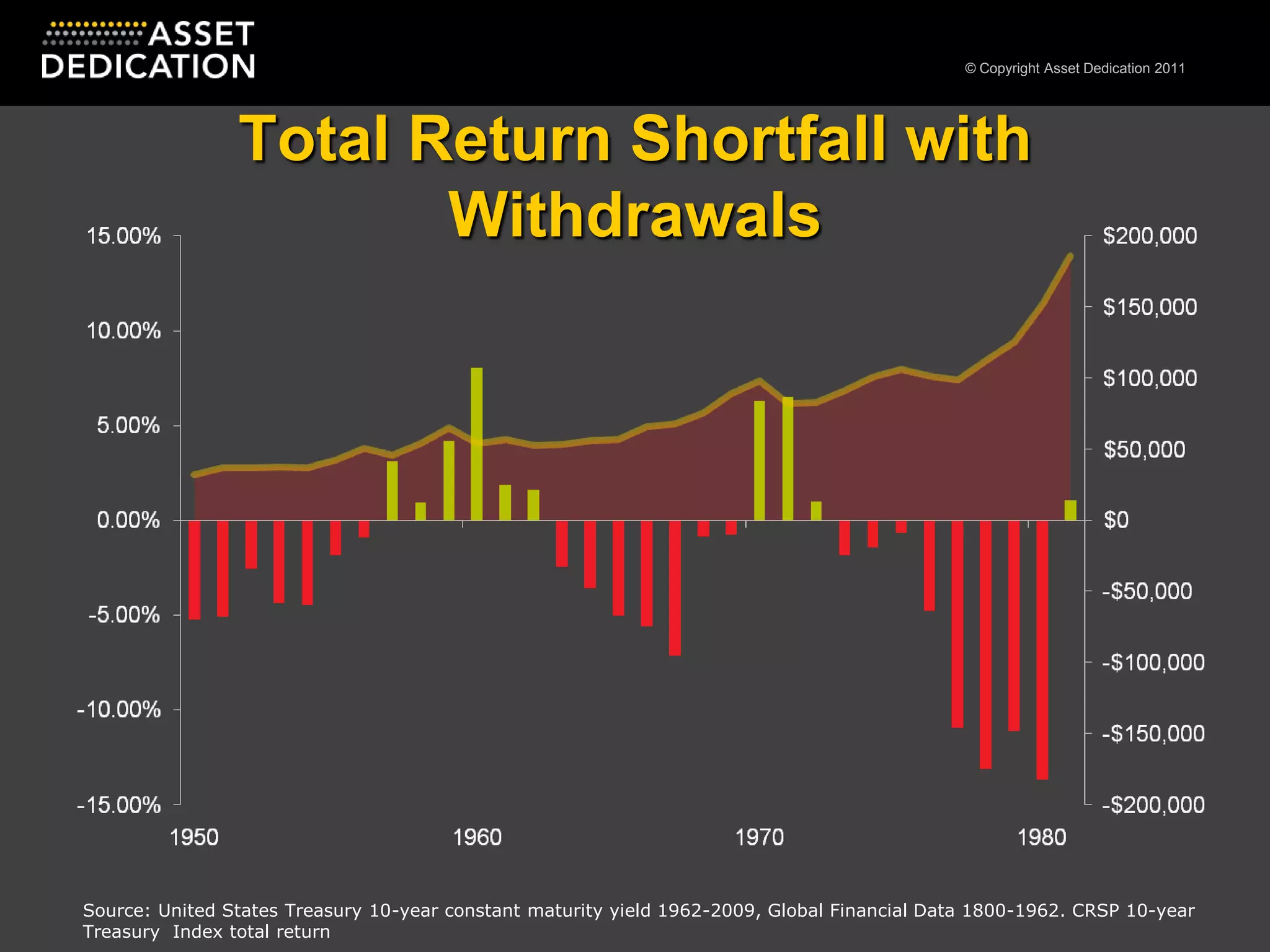
Total Return Shortfall with WithdrawalsSource: United States Treasury 10-year constant maturity yield 1962-2009, Global Financial Data 1800-1962. CRSP 10-year Treasury  Index total return
“People have unrealistic expectations of what a portfolio manager can do in a rising-rate environment.” Jim Jessee, president of MFS Fund Distributors Inc. Investment News mutual fund round table in New York on Feb. 9, 2010
Other Income StrategiesAnnuitiesDividend paying stocksReal Estate/REITs
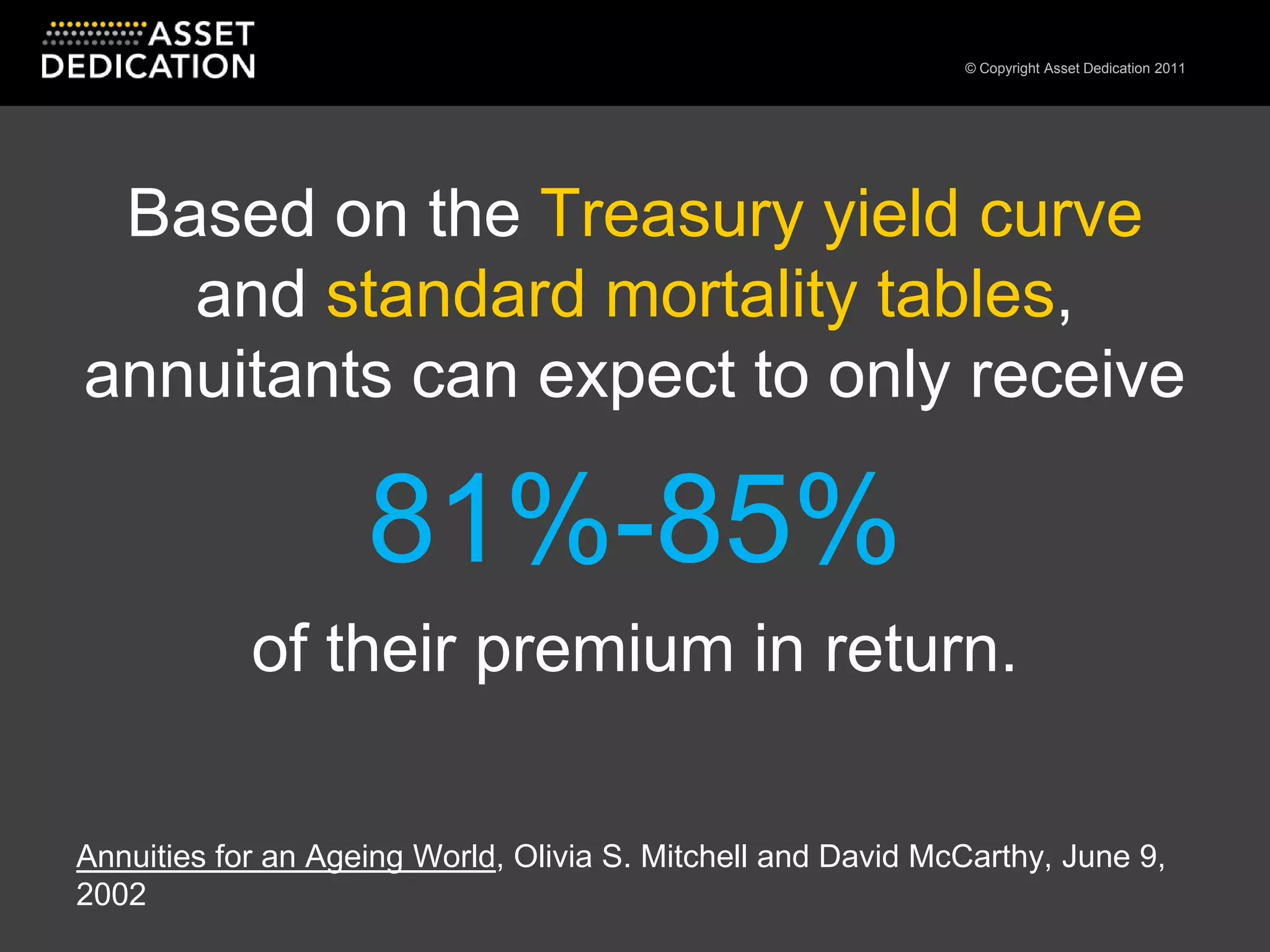
Based on the Treasury yield curve and standard mortality tables, annuitants can expect to only receive 81%-85% of their premium in return.Annuities for an Ageing World, Olivia S. Mitchell and David McCarthy, June 9, 2002
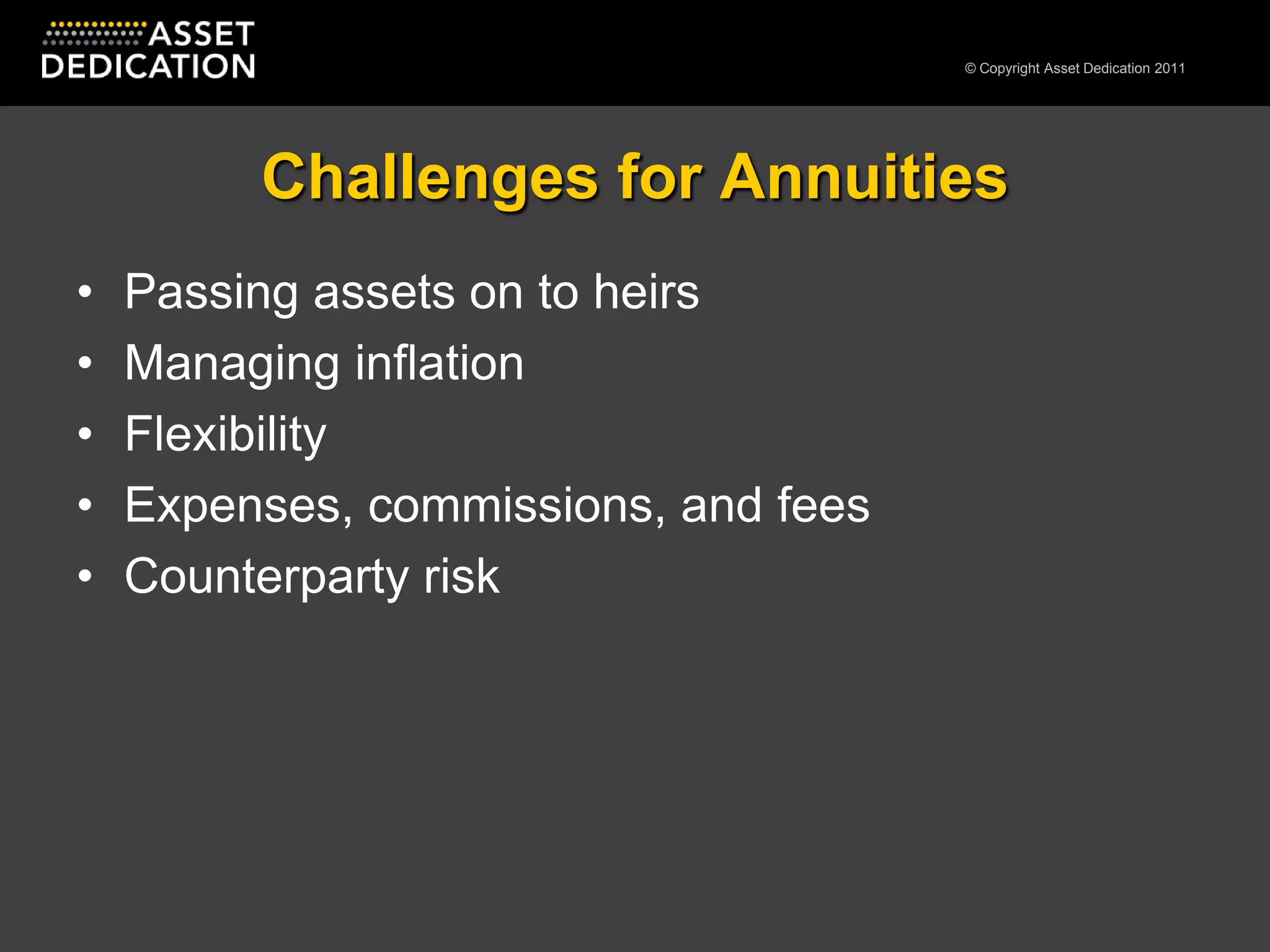
Challenges for AnnuitiesPassing assets on to heirsManaging inflationFlexibilityExpenses, commissions, and feesCounterparty risk
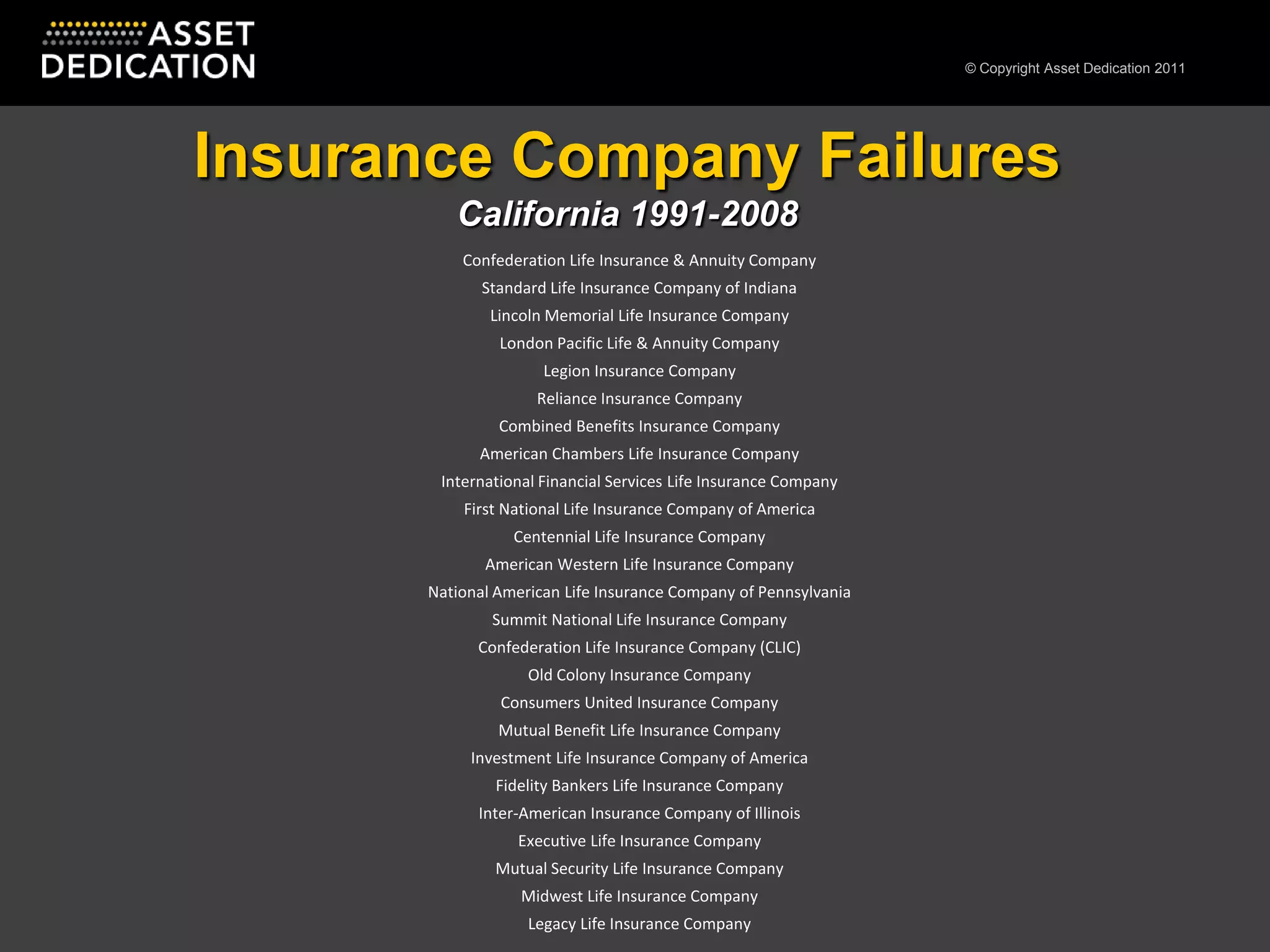
Insurance Company Failures California 1991-2008
Other Income StrategiesAnnuitiesDividend paying stocksReal Estate/REITs
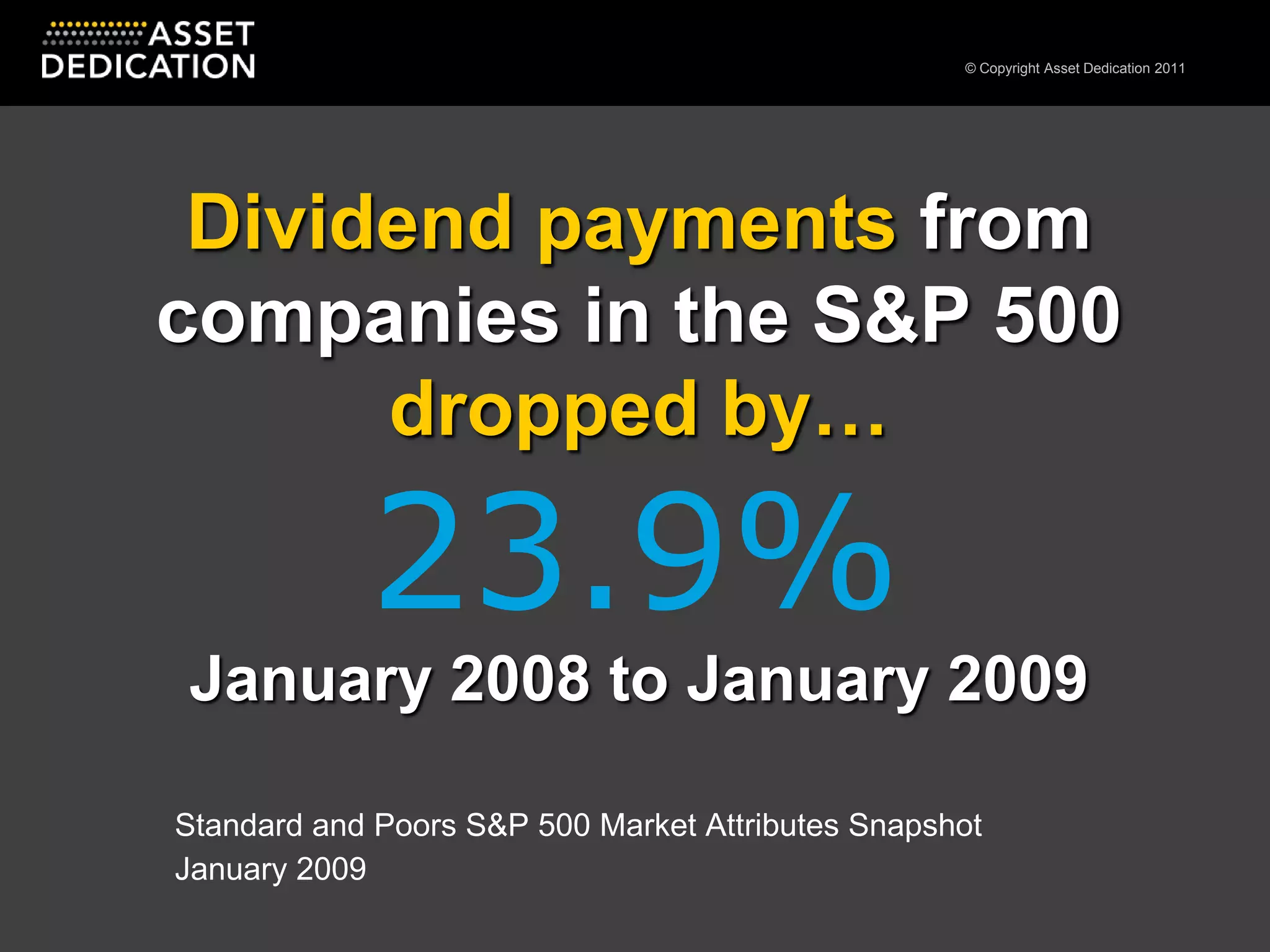
Dividend payments from companies in the S&P 500 dropped by…January 2008 to January 200923.9%Standard and Poors S&P 500 Market Attributes SnapshotJanuary 2009
Other Income StrategiesAnnuitiesDividend paying stocksReal Estate/REITs
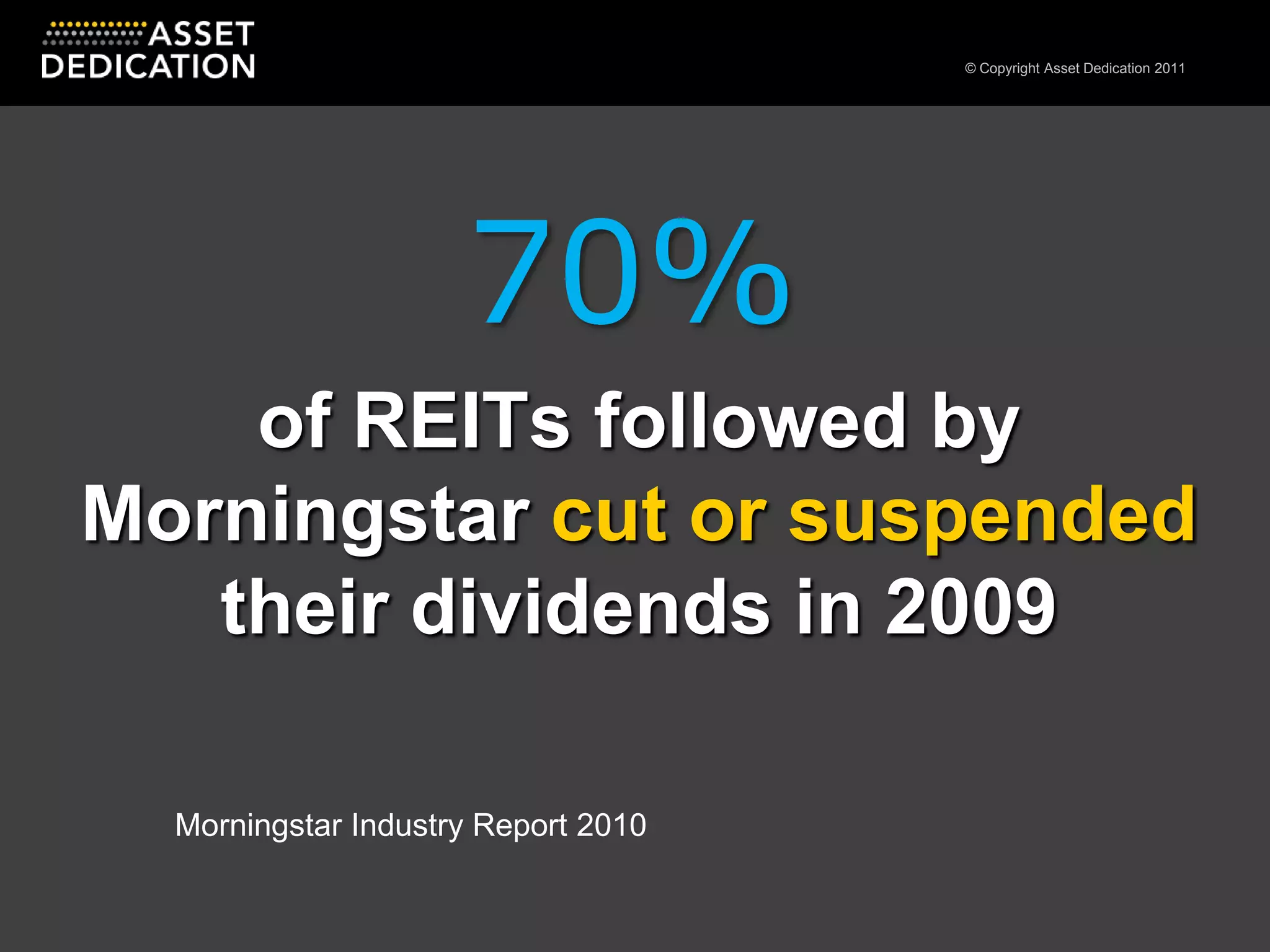
70%of REITs followed by Morningstar cut or suspended their dividends in 2009Morningstar Industry Report 2010
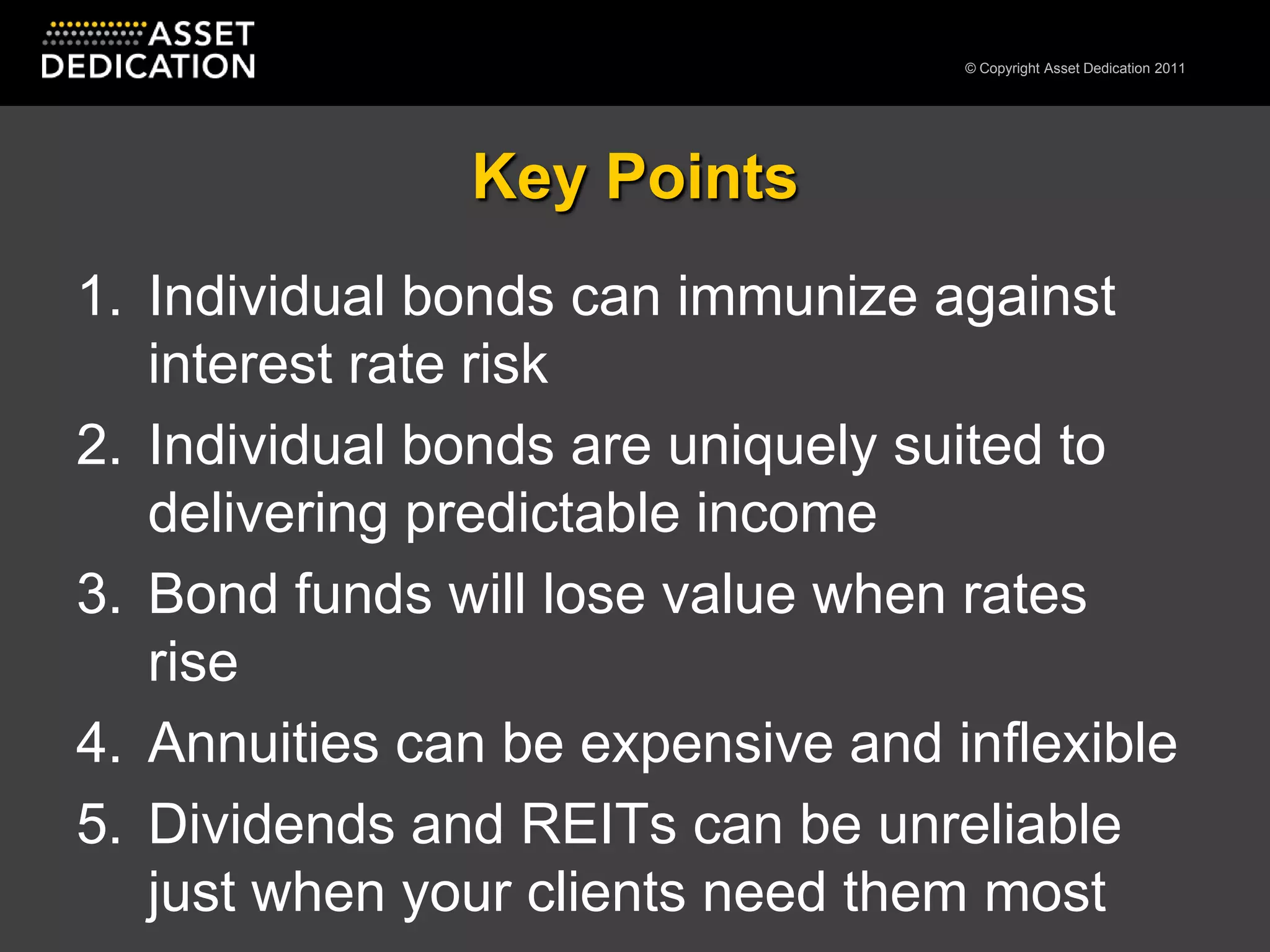
Key PointsIndividual bonds can immunize against interest rate riskIndividual bonds are uniquely suited to delivering predictable incomeBond funds will lose value when rates riseAnnuities can be expensive and inflexibleDividends and REITs can be unreliable just when your clients need them most
Questions?
DisclosuresPast performance may not be indicative of future results. Therefore, no current or prospective client should assume that future performance of any specific investment or investment strategy (including the investments and/or investment strategies recommended or undertaken by Asset Dedication) made reference to directly or indirectly by Asset Dedication in their literature or otherwise will be profitable or equal the corresponding indicated performance level(s). Different types of investments involve varying degrees of risk, and there can be no assurance that any specific investment will either be suitable or profitable for a client or prospective client’s investment portfolio. Historical performance results for investment indices and/or categories generally do not reflect the deduction of transaction and/or custodial charges, the deduction of an investment management fee, nor the impact of taxes, the incurrence of which would have the effect of decreasing historical performance results.Please remember that different types of investments involve varying degrees of risk, and there can be no assurance that the future performance of any specific investment or investment strategy (including those undertaken or recommended by Asset Dedication), will be profitable or equal any historical performance level(s).

Income Matching Using Bonds NorCal 2011

  • 1.
    Income Matching UsingIndividual BondsAn Alternative to Annuities and Bond FundsPresented by:Stephen Huxley, PhDBrent Burns
  • 2.
    RiskThings may notalways turn out the way you planned© Asset Dedication, LLC 2011
  • 3.
    Market TimingSometimes it’shard to guess where the market is going.© Asset Dedication, LLC 2011
  • 4.
    Hot StocksJust becauseCramer says it’s a good idea doesn’t mean it’s right for you© Asset Dedication, LLC 2011
  • 5.
    RiskThe worst casescenario seemed a lot less likely a few minutes ago© Asset Dedication, LLC 2011
  • 6.
    Stock PickingMuch morescientific than chimpanzees throwing darts
  • 7.
    Financial PlanningIt isa lot easier to get where you are going if you have someone to help steer you in the right direction© Asset Dedication, LLC 2011
  • 8.
    UncertaintyIt turns outthat the stock market doesn’t always go up© Asset Dedication, LLC 2011
  • 10.
    Decline in TraditionalPensionsFortune 100 Companies 1985-2010
  • 11.
    Liability-driven investing (LDI)is an investment strategy of a company or individual based on the cash flows needed to fund future liabilitiesSource: Wikipediacash flowsfuture liabilities
  • 12.
    Behavioral Finance MeetsAsset Allocation
  • 13.
    Clients with multiplegoals and varying timelines have trouble relating to stocks, bonds and cash are blended into a single portfolio. People tend to use mental accounts to manage various goals in their head. A pure Total Return approach creates a single portfolio that isn’t intuitively linked to the underlying goals.
  • 14.
    Client NeedsLiquidity forcurrent expensesPredictable near-term cash flows to cover near-term expenses (usually 8-10 years for those in retirement)Long-term growth to ensure sufficient growth to cover future needs
  • 15.
    Total Return AssetAllocationLong-Term GrowthCash Flow NeedsBondsStocksCash
  • 16.
    Splitting assets intomultiple sub-portfolios helps clients better understand and stick to an allocation strategy. Bonds are specifically allocated to predictable current or future income (LDI). Equities are dedicated to long term growth, but are given time to ride through bad markets (long-term total return). Each asset class is dedicated to the function it best serves.
  • 17.
    Total PortfolioSplit intosub-portfolios to serve different purposesBondsStocksTotalReturnLiability Driven Investing
  • 18.
    Asset Allocation andTime HorizonUsing Asset Classes That Fit How Clients Think About Their MoneyStocksBondsCash8 Years – Prefers predictable bonds Today -Prefers liquidity of money market9 Years – Prefers higher return prospects of stocksNext Year – Prefers predictable bonds 7 Years – Prefers predictable bonds Time
  • 19.
    Parallels Between MPTand DPT Modern Portfolio TheoryDedicated Portfolio TheoryRisk-free asset = T-billsRisk-free asset = Fully immunized cash flow streamReturnReturnRiskRisk
  • 20.
    How Often BondsBeat StocksS&P 500 and Intermediate Treasury Bond Index 1927-2009
  • 21.
    Worst and AverageSpreadS&P 500 and Intermediate Treasury Bond Index 1927-2009
  • 22.
    Using Individual Bondsto Build Income-Matching LDI Portfolios
  • 23.
    Income-Matching “Paycheck” PortfoliosImmediateIncome Portfolio – Cash flows begin nowDeferred Income Portfolio – Cash flows begin later, when the client retires
  • 24.
    Example:$100,000 per year3%inflation adjustment8 year time horizon
  • 25.
    Timing Cash FlowsBondquotes 5/12/2011
  • 26.
    Cost = $800,220Duration = 4.3 YearsIRR = 2.6%(Fully Immunized)
  • 27.
    Immunization Definition“When abond portfolio is immunized, the investor receives a specific rate of return over a given time period regardless of what happens to interest rates during that time.”Morningstar Bond Course 104
  • 28.
    Why Not aBond Ladder?Bond quotes 5/12/2011
  • 29.
    Cost = $800,865Duration = 4.2 YearsIRR = 2.4%Income Shortfall = $15,166
  • 30.
    Tale of TwoAllocationsTotal ReturnLDI
  • 31.
    Double Duty FromBondsStandard BenefitsBeta exposure to fixed incomeDiversificationDampen volatilityUnique LDI BenefitsPredictable cash flowsImmunization from rising interest rates8Years of Income
  • 32.
    Source: Asset Dedication,2009. Data set 1927-2008. Indices used for comparison: Equities (both models)—Standard and Poors 500 Index; Total Return Fixed Income Allocation—Barclays Capital US Intermediate Government Index; Asset Dedication Fixed Income—1975-2008 Treasury Bond quotes (source WSJ), 1927-1974 prices backcast against Treasury yield curve.
  • 33.
  • 34.
    The Dynamic Dimension-“Flexible” Rolling HorizonsUsing time to ride out bad marketsTaking more off the table when markets have been goodDo Not Roll . . .Years
  • 35.
    Immediate vs. DeferredIncomePortfoliosImmediate Income Portfolio – Cash flows begin nowDeferredIncome Portfolio – Cash flows begin later, when the client retires
  • 36.
    Deferred Income Portfolio:Leveraging the Yield Curve
  • 37.
    Deferred Income Portfolio:Leveraging the Yield Curve$770,911
  • 38.
  • 39.
  • 40.
  • 41.
  • 42.
  • 43.
  • 44.
  • 45.
  • 46.
    Decomposing Bond FundTotal ReturnIncome ReturnIncome return represents the sum of portfolio’s coupon paymentsIncome is never negativePrice ReturnBond prices are inversely related to interest ratesBond prices fall as rates rise
  • 47.
    Impact of InterestRates on Total Return
  • 48.
    Impact of InterestRates on Total Return
  • 49.
    30 Years ofTailwindsTotal Return 11.3%Source: United States Treasury 10-year constant maturity yield 1962-2009, Global Financial Data 1800-1962. 5-year rolling average
  • 50.
    97%of taxable bondfunds were started after 1981
  • 51.
    Impact of InterestRates on Total Return
  • 52.
    Impact of InterestRates on Total Return
  • 53.
    Rising Rates 1950-1981Source:United States Treasury 10-year constant maturity yield 1962-2009, Global Financial Data 1800-1962. 5-year rolling average
  • 54.
  • 55.
  • 56.
  • 60.
    -9.0%S&P 500:10 Yr.Treasury:-5.1%
  • 61.
    Catch-22 for BondFund Investors
  • 62.
    Keep Duration Shortand Rates Stay Flat (Japan)
  • 63.
  • 64.
    Historical Interest RatesAverage Yield 1800-2010Long Depression Great Depression Source: United States Treasury 10-year constant maturity yield 1962-2009, Global Financial Data 1800-1962. 5-year rolling average
  • 65.
    Extend Duration andRates RiseDuration ≈ 5 yearsEstimated loss ≈ -2%
  • 66.
    Headwind of RisingRatesTotal Return 2.2%Average Coupon 5.6%Source: United States Treasury 10-year constant maturity yield 1962-2009, Global Financial Data 1800-1962. 5-year rolling average
  • 67.
    Total Return Shortfallwith WithdrawalsSource: United States Treasury 10-year constant maturity yield 1962-2009, Global Financial Data 1800-1962. CRSP 10-year Treasury Index total return
  • 68.
    “People have unrealisticexpectations of what a portfolio manager can do in a rising-rate environment.” Jim Jessee, president of MFS Fund Distributors Inc. Investment News mutual fund round table in New York on Feb. 9, 2010
  • 69.
    Other Income StrategiesAnnuitiesDividendpaying stocksReal Estate/REITs
  • 70.
    Other Income StrategiesAnnuitiesDividendpaying stocksReal Estate/REITs
  • 71.
    Based on theTreasury yield curve and standard mortality tables, annuitants can expect to only receive 81%-85% of their premium in return.Annuities for an Ageing World, Olivia S. Mitchell and David McCarthy, June 9, 2002
  • 72.
    Challenges for AnnuitiesPassingassets on to heirsManaging inflationFlexibilityExpenses, commissions, and feesCounterparty risk
  • 73.
    Insurance Company FailuresCalifornia 1991-2008
  • 74.
    Other Income StrategiesAnnuitiesDividendpaying stocksReal Estate/REITs
  • 75.
    Dividend payments fromcompanies in the S&P 500 dropped by…January 2008 to January 200923.9%Standard and Poors S&P 500 Market Attributes SnapshotJanuary 2009
  • 76.
    Other Income StrategiesAnnuitiesDividendpaying stocksReal Estate/REITs
  • 77.
    70%of REITs followedby Morningstar cut or suspended their dividends in 2009Morningstar Industry Report 2010
  • 78.
    Key PointsIndividual bondscan immunize against interest rate riskIndividual bonds are uniquely suited to delivering predictable incomeBond funds will lose value when rates riseAnnuities can be expensive and inflexibleDividends and REITs can be unreliable just when your clients need them most
  • 79.
  • 80.
    DisclosuresPast performance maynot be indicative of future results. Therefore, no current or prospective client should assume that future performance of any specific investment or investment strategy (including the investments and/or investment strategies recommended or undertaken by Asset Dedication) made reference to directly or indirectly by Asset Dedication in their literature or otherwise will be profitable or equal the corresponding indicated performance level(s). Different types of investments involve varying degrees of risk, and there can be no assurance that any specific investment will either be suitable or profitable for a client or prospective client’s investment portfolio. Historical performance results for investment indices and/or categories generally do not reflect the deduction of transaction and/or custodial charges, the deduction of an investment management fee, nor the impact of taxes, the incurrence of which would have the effect of decreasing historical performance results.Please remember that different types of investments involve varying degrees of risk, and there can be no assurance that the future performance of any specific investment or investment strategy (including those undertaken or recommended by Asset Dedication), will be profitable or equal any historical performance level(s).

Editor's Notes

  • #20 BBSpeaking the same language tradeoffs in both. Slightly different approach but you can see the paralells
  • #33 BBA lot of you are wondering about how the dedicated portfolio approach would have worked over time. In addition to intuitive for clients, it works. Let us show you some of the empirical research that gets us excited.
  • #51 BB
  • #69 SH