UNIT V
FOREIGN DIRECT INVESTMENT
By
Dr.M.Devaki
Assistant Professor
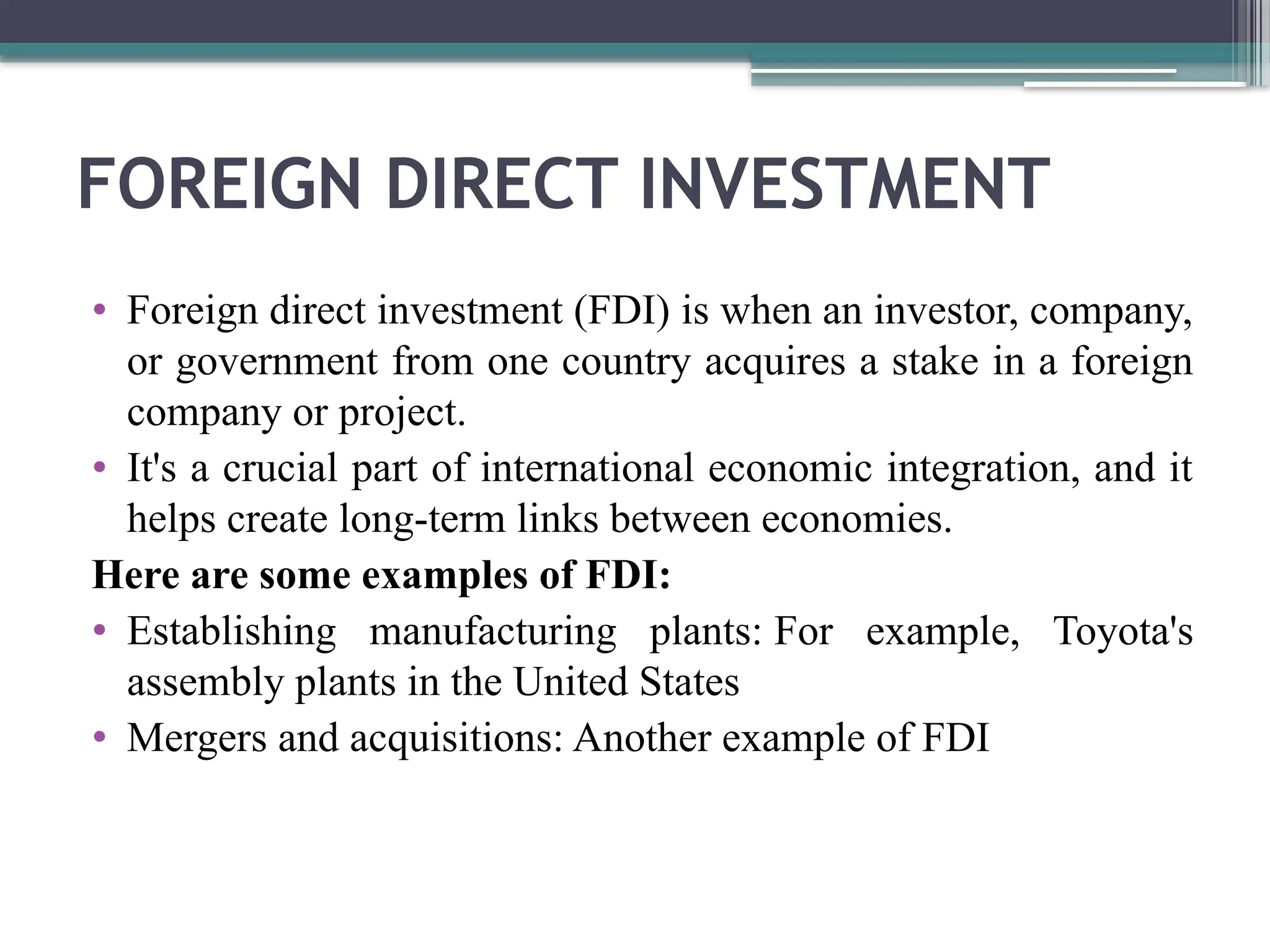
FOREIGN DIRECT INVESTMENT
• Foreign direct investment (FDI) is when an investor, company,
or government from one country acquires a stake in a foreign
company or project.
• It's a crucial part of international economic integration, and it
helps create long-term links between economies.
Here are some examples of FDI:
• Establishing manufacturing plants: For example, Toyota's
assembly plants in the United States
• Mergers and acquisitions: Another example of FDI
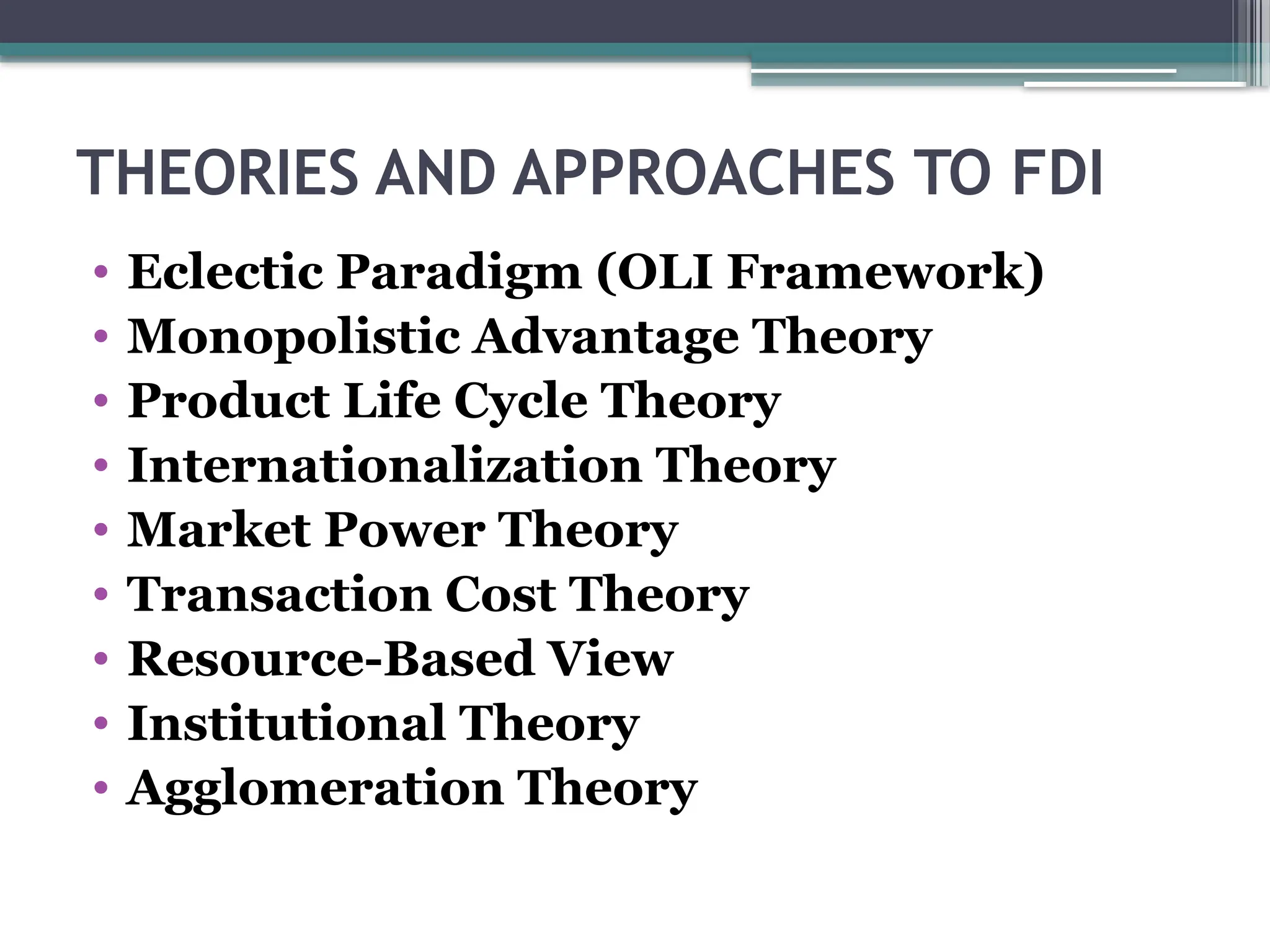
THEORIES AND APPROACHES TO FDI
• Eclectic Paradigm (OLI Framework)
• Monopolistic Advantage Theory
• Product Life Cycle Theory
• Internationalization Theory
• Market Power Theory
• Transaction Cost Theory
• Resource-Based View
• Institutional Theory
• Agglomeration Theory
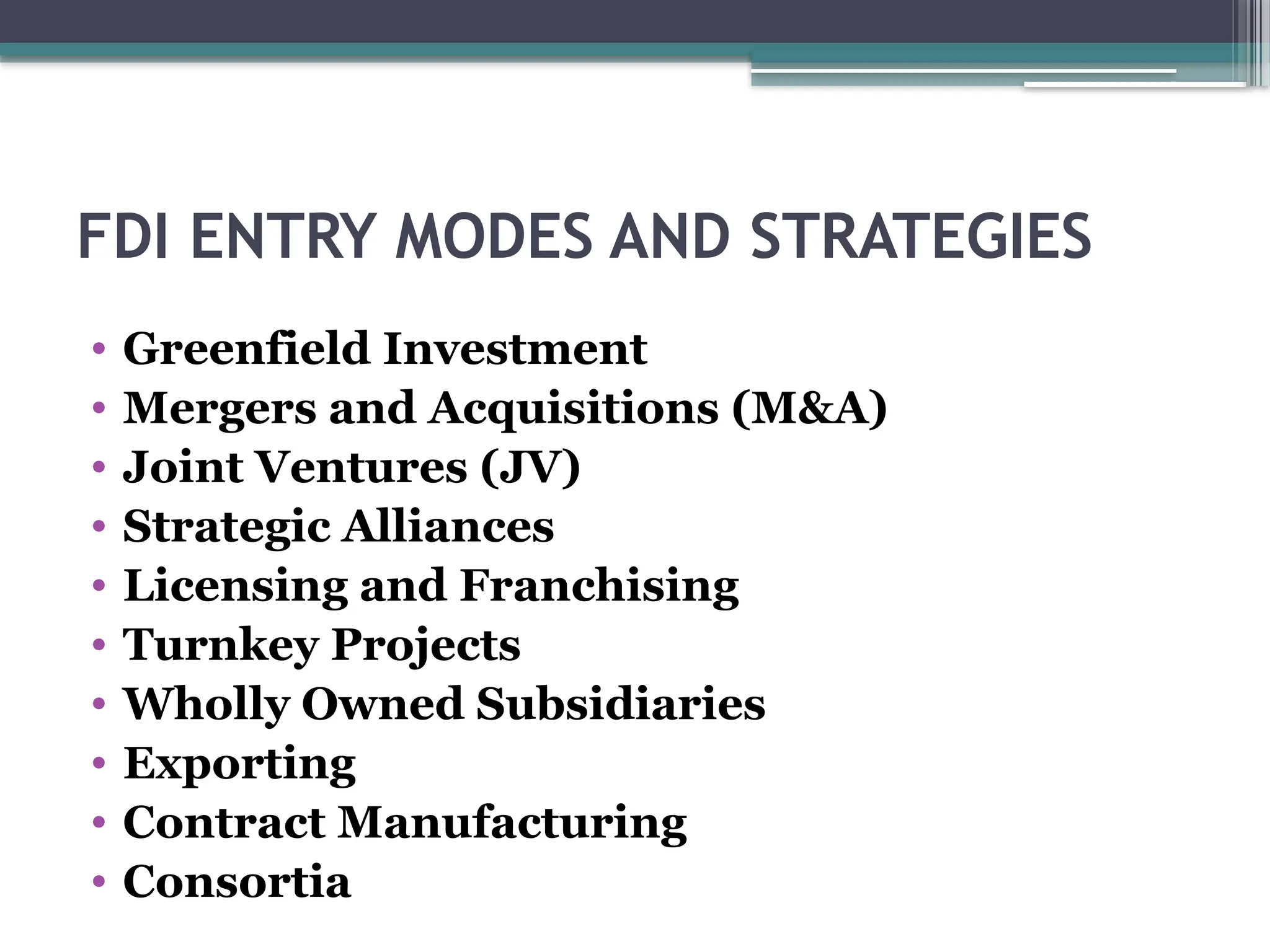
FDI ENTRY MODES AND STRATEGIES
• Greenfield Investment
• Mergers and Acquisitions (M&A)
• Joint Ventures (JV)
• Strategic Alliances
• Licensing and Franchising
• Turnkey Projects
• Wholly Owned Subsidiaries
• Exporting
• Contract Manufacturing
• Consortia
Strategic Considerations in FDI Entry Modes
• Market Size and Growth Potential
• Risk Tolerance
• Control and Ownership
• Regulatory Environment
• Cultural Distance
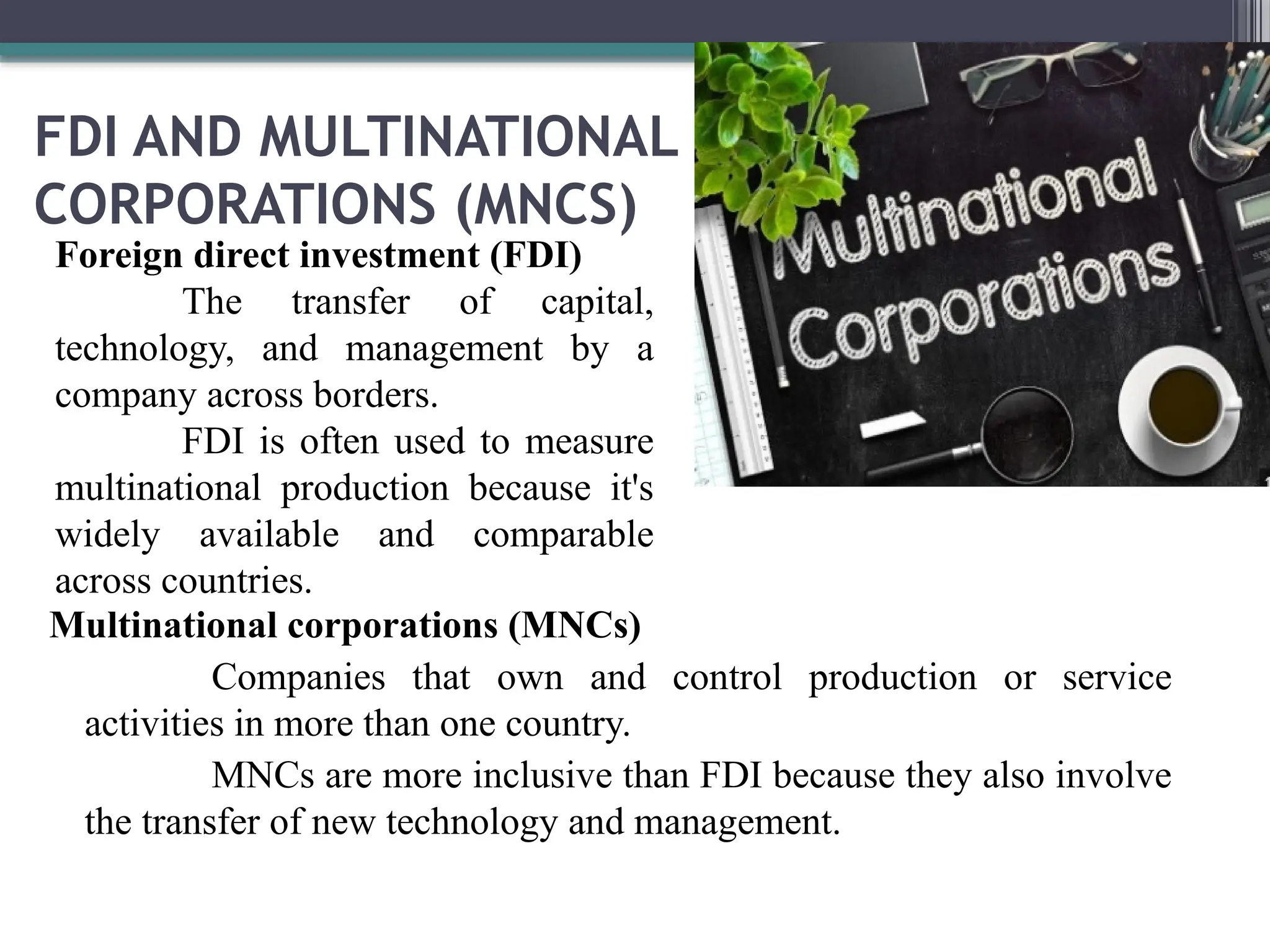
FDI AND MULTINATIONAL
CORPORATIONS (MNCS)
Multinational corporations (MNCs)
Companies that own and control production or service
activities in more than one country.
MNCs are more inclusive than FDI because they also involve
the transfer of new technology and management.
Foreign direct investment (FDI)
The transfer of capital,
technology, and management by a
company across borders.
FDI is often used to measure
multinational production because it's
widely available and comparable
across countries.
Some benefits that MNCs can bring to host countries include:
• Jobs
• Improved working conditions
• Economic development
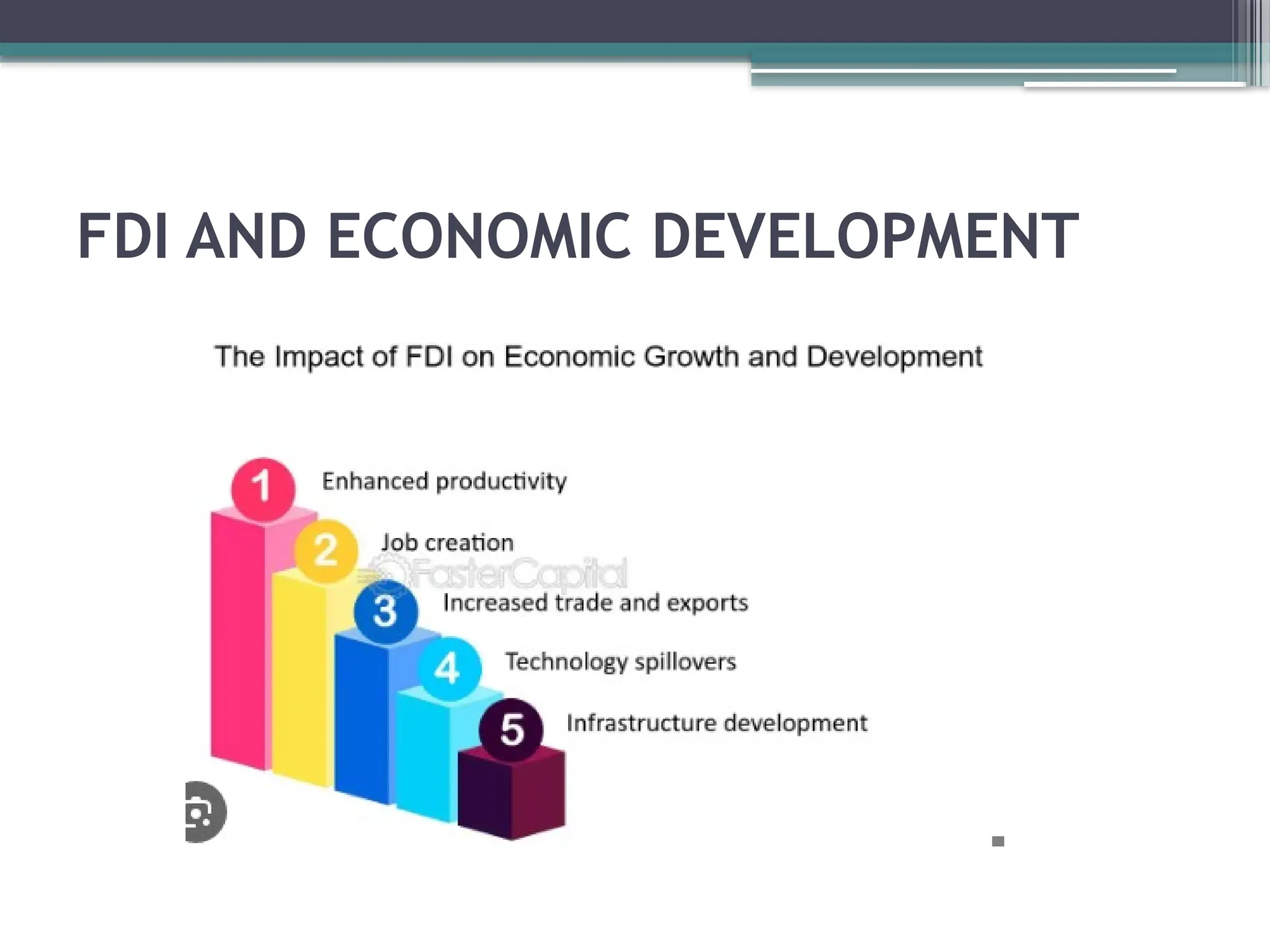
FDI AND ECONOMIC DEVELOPMENT
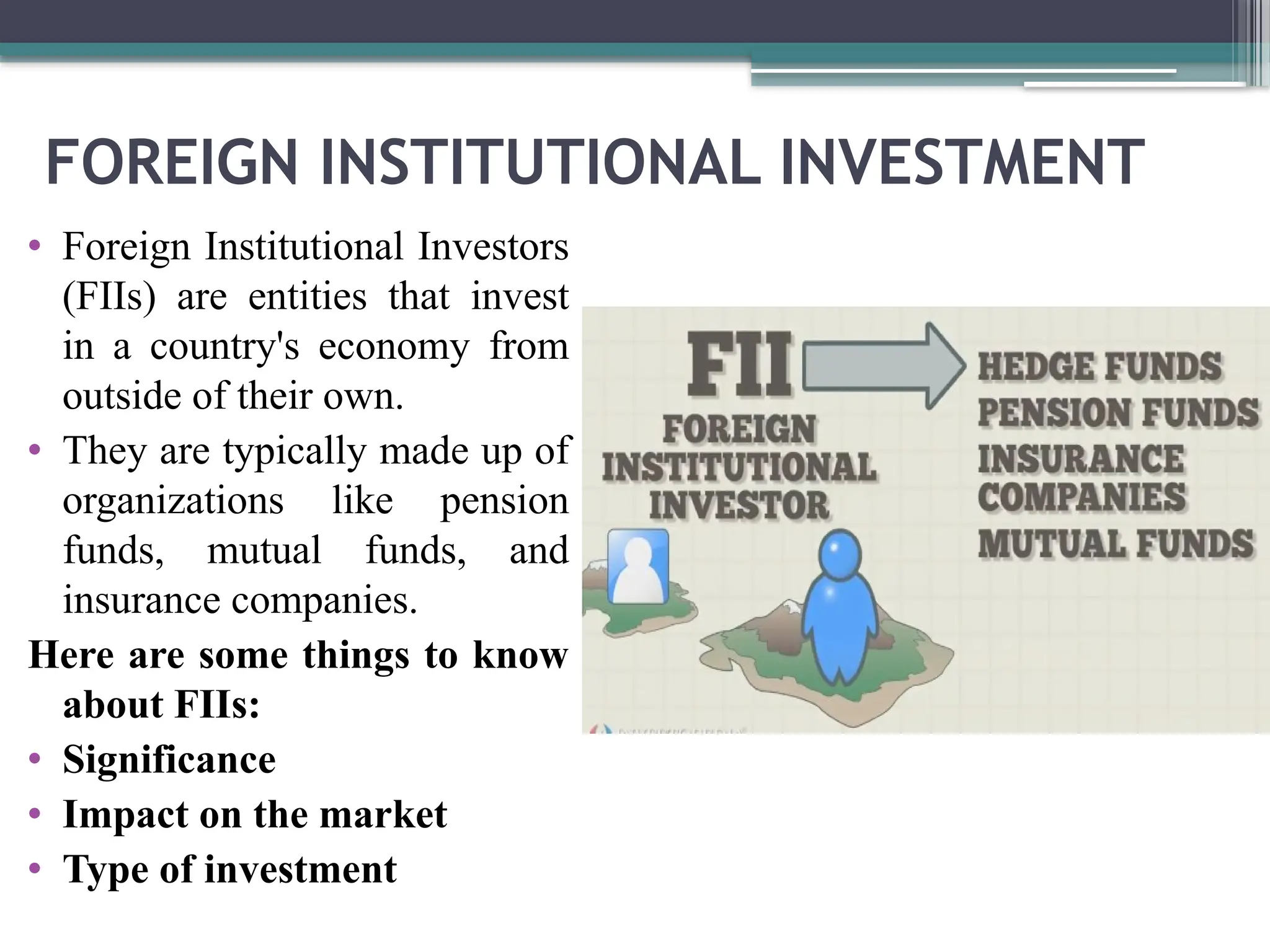
FOREIGN INSTITUTIONAL INVESTMENT
• Foreign Institutional Investors
(FIIs) are entities that invest
in a country's economy from
outside of their own.
• They are typically made up of
organizations like pension
funds, mutual funds, and
insurance companies.
Here are some things to know
about FIIs:
• Significance
• Impact on the market
• Type of investment
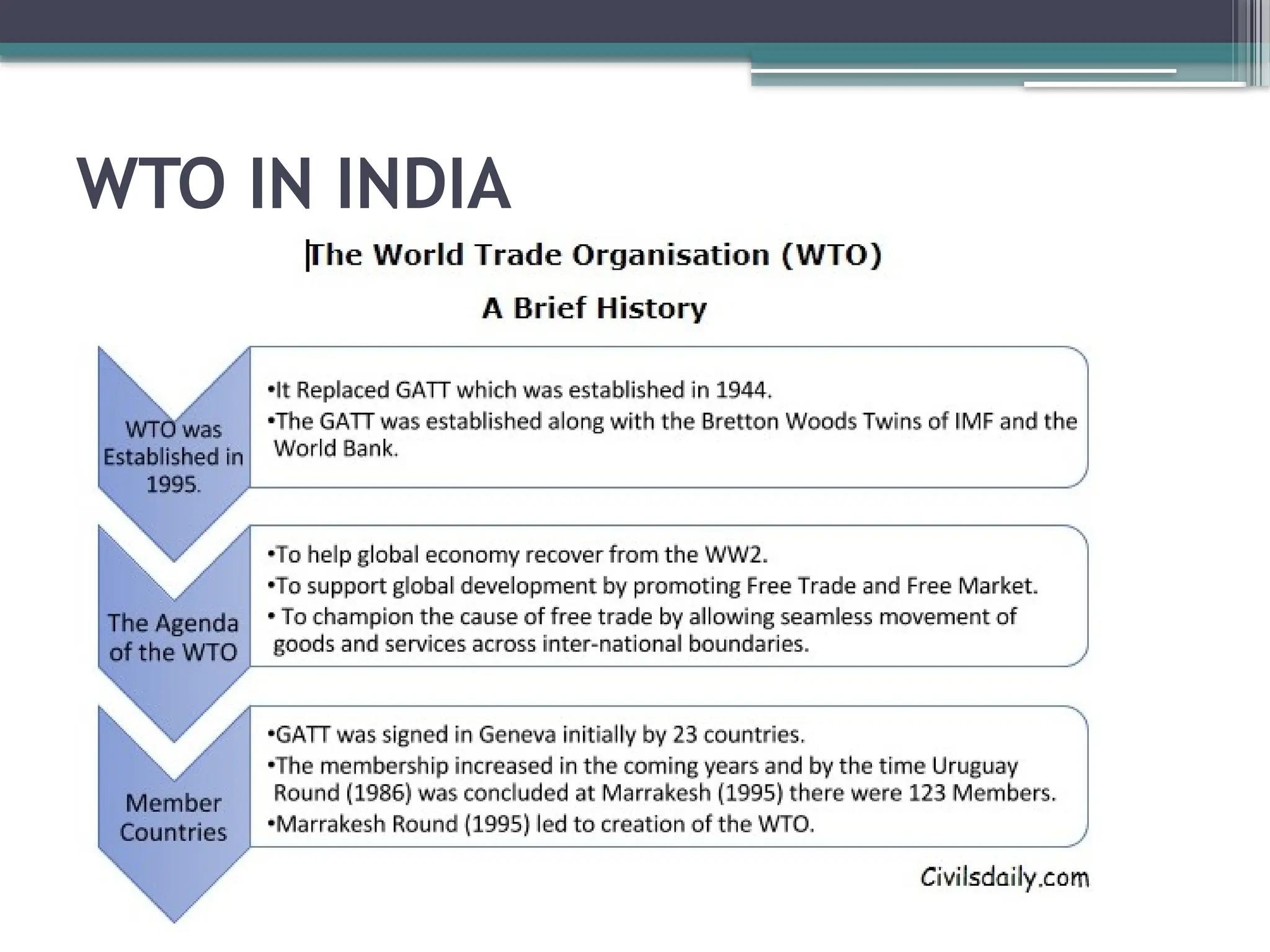
WTO IN INDIA
WTO IN INDIA
• India has been a member of the World Trade Organization
(WTO) since January 1, 1995, and was a founding member of
the organization.
• The WTO is an international organization that deals with
international trade rules, and its role is to help countries
develop through trade.
• WTO's role
• WTO's agreements
• India's role
• WTO's impact on India
• WTO's structure
REGULATION OF FOREIGN TRADE
• In India, the Foreign Trade (Development and
Regulation) Act of 1992 regulates foreign trade.
The act's objectives include:
• Increasing exports
• Improving access to raw materials
• Making quality goods and services available at
competitive prices
• Improving the technological strength of Indian
industries, agriculture, and services
• Improving competitiveness in global markets
DISINVESTMENT IN PUBLIC SECTOR UNITS
• Disinvestment is the process of selling or liquidating
a portion of a public sector unit (PSU) to the private
sector.
• It can also be called divestment or divestiture.
• Reducing the government's financial burden
• Improving public finances
• Introducing competition and market discipline
• Funding growth
• Encouraging wider share of ownership
• Depoliticizing non-essential services
Disinvestment can be done in a number of ways, including
• Strategic disinvestment
• Privatization
• Minority stake sale
FOREIGN DIRECT INVESTMENT - FDI ENTRY MODES AND STRATEGIES

FOREIGN DIRECT INVESTMENT - FDI ENTRY MODES AND STRATEGIES

  • 1.
    UNIT V FOREIGN DIRECTINVESTMENT By Dr.M.Devaki Assistant Professor
  • 2.
    FOREIGN DIRECT INVESTMENT •Foreign direct investment (FDI) is when an investor, company, or government from one country acquires a stake in a foreign company or project. • It's a crucial part of international economic integration, and it helps create long-term links between economies. Here are some examples of FDI: • Establishing manufacturing plants: For example, Toyota's assembly plants in the United States • Mergers and acquisitions: Another example of FDI
  • 3.
    THEORIES AND APPROACHESTO FDI • Eclectic Paradigm (OLI Framework) • Monopolistic Advantage Theory • Product Life Cycle Theory • Internationalization Theory • Market Power Theory • Transaction Cost Theory • Resource-Based View • Institutional Theory • Agglomeration Theory
  • 4.
    FDI ENTRY MODESAND STRATEGIES • Greenfield Investment • Mergers and Acquisitions (M&A) • Joint Ventures (JV) • Strategic Alliances • Licensing and Franchising • Turnkey Projects • Wholly Owned Subsidiaries • Exporting • Contract Manufacturing • Consortia
  • 5.
    Strategic Considerations inFDI Entry Modes • Market Size and Growth Potential • Risk Tolerance • Control and Ownership • Regulatory Environment • Cultural Distance
  • 6.
    FDI AND MULTINATIONAL CORPORATIONS(MNCS) Multinational corporations (MNCs) Companies that own and control production or service activities in more than one country. MNCs are more inclusive than FDI because they also involve the transfer of new technology and management. Foreign direct investment (FDI) The transfer of capital, technology, and management by a company across borders. FDI is often used to measure multinational production because it's widely available and comparable across countries.
  • 7.
    Some benefits thatMNCs can bring to host countries include: • Jobs • Improved working conditions • Economic development
  • 8.
    FDI AND ECONOMICDEVELOPMENT
  • 9.
    FOREIGN INSTITUTIONAL INVESTMENT •Foreign Institutional Investors (FIIs) are entities that invest in a country's economy from outside of their own. • They are typically made up of organizations like pension funds, mutual funds, and insurance companies. Here are some things to know about FIIs: • Significance • Impact on the market • Type of investment
  • 10.
  • 11.
    WTO IN INDIA •India has been a member of the World Trade Organization (WTO) since January 1, 1995, and was a founding member of the organization. • The WTO is an international organization that deals with international trade rules, and its role is to help countries develop through trade. • WTO's role • WTO's agreements • India's role • WTO's impact on India • WTO's structure
  • 12.
    REGULATION OF FOREIGNTRADE • In India, the Foreign Trade (Development and Regulation) Act of 1992 regulates foreign trade. The act's objectives include: • Increasing exports • Improving access to raw materials • Making quality goods and services available at competitive prices • Improving the technological strength of Indian industries, agriculture, and services • Improving competitiveness in global markets
  • 13.
    DISINVESTMENT IN PUBLICSECTOR UNITS • Disinvestment is the process of selling or liquidating a portion of a public sector unit (PSU) to the private sector. • It can also be called divestment or divestiture. • Reducing the government's financial burden • Improving public finances • Introducing competition and market discipline • Funding growth • Encouraging wider share of ownership • Depoliticizing non-essential services
  • 14.
    Disinvestment can bedone in a number of ways, including • Strategic disinvestment • Privatization • Minority stake sale