UNIT III
Ethical Issues
By
Dr.M.Devaki
Assistant Professor
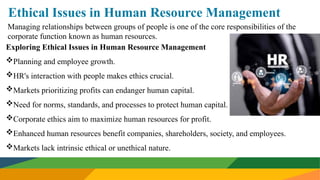
Ethical Issues in Human Resource Management
Managing relationships between groups of people is one of the core responsibilities of the
corporate function known as human resources.
Exploring Ethical Issues in Human Resource Management
Planning and employee growth.
HR's interaction with people makes ethics crucial.
Markets prioritizing profits can endanger human capital.
Need for norms, standards, and processes to protect human capital.
Corporate ethics aim to maximize human resources for profit.
Enhanced human resources benefit companies, shareholders, society, and employees.
Markets lack intrinsic ethical or unethical nature.
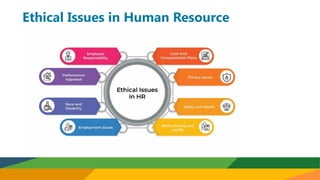
Ethical Issues in Human Resource
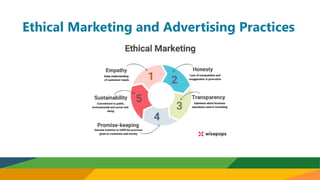
Ethical Marketing and Advertising Practices
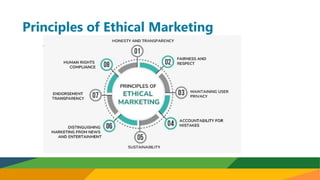
Principles of Ethical Marketing
Ethics in Supply Chain Management
Labor Practices
Fair Wages - Working Conditions - Child and Forced Labor
Environmental Sustainability
Resource Management - Pollution Reduction - Sustainable Sourcing
Transparency
Supply Chain Visibility - Traceability
Compliance and Regulations
Adherence to Laws - Standards and Certifications
Corporate Social Responsibility (CSR)
Community Engagement - Stakeholder Involvement
Anti-Corruption and Fair Trade
Bribery and Corruption - Fair Trade Practices
Continuous Improvement
Audits and Monitoring - Training and Development
Ethical Issues in Financial Management and
Accounting
Ethical issues are a significant concern for accountants and finance professionals.
Some ethical issues in financial management and accounting include:
Integrity
Confidentiality
Conflict of interest
Transparency
Competence
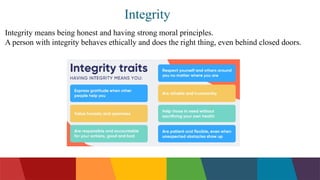
Integrity means being honest and having strong moral principles.
A person with integrity behaves ethically and does the right thing, even behind closed doors.
Integrity
Confidentiality
Conflict of interest
Transparency
Competence
Integrity
Confidentiality
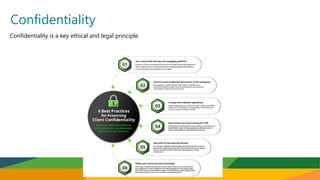
Confidentiality is a key ethical and legal principle.
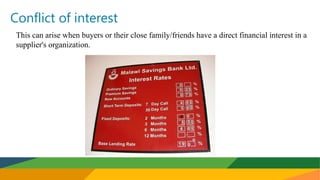
Conflict of interest
This can arise when buyers or their close family/friends have a direct financial interest in a
supplier's organization.
Transparency
Transparency is a key driver of ethical business culture, and helps ensure that leaders and
employees are accountable for their actions.
1. It’s All About Trust
2. Transparency Pays Off in the Medium Term
3. Transparency Can Be a Rallying Mission
4. Transparency Can Be Analyzed by Data Science
5. “Transparency” Doesn’t Mean You Have to Disclose Everything; Rather It Means to Be Honest When You Do Disclose
6. Transparent Disclosure Means That It Can Be Easily Understood
7. Transparency Has No Shortage of Enemies
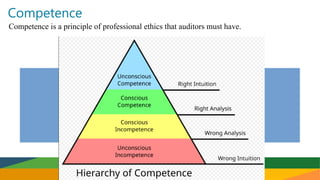
Competence
Competence is a principle of professional ethics that auditors must have.
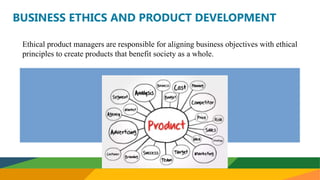
BUSINESS ETHICS AND PRODUCT DEVELOPMENT
Ethical product managers are responsible for aligning business objectives with ethical
principles to create products that benefit society as a whole.
Key aspects
Ethical Product Design
User Safety, Accessibility, Environmental Impact
Transparent Marketing
Truthful Advertising, Consumer Privacy, Fair Pricing
Supply Chain Ethics
Labor Practices, Sustainable Sourcing, Supplier Relations
Social Responsibility
Community Impact, Corporate Social Responsibility (CSR), Stakeholder
Engagement
Regulatory Compliance
Adherence to Laws, Proactive Compliance
Innovation and Ethics
Balancing Profit and Ethics, Long-term Vision
Benefits of Ethical Product Development
Brand Loyalty
Consumers are more likely to remain loyal to brands they perceive as ethical.
Risk Management
Reduces the risk of legal issues and scandals that can arise from unethical practices.
Competitive Advantage
Differentiates the company in a crowded market, appealing to ethically conscious
consumers.
Employee Satisfaction
Attracts and retains employees who want to work for ethically responsible
companies.
ETHICAL CUSTOMER RELATIONS AND SERVICES
Customer relations refers to methodologies.
Customer service refers to reactive.
The customer service team plays a key role in
growing customer relationships, as they are usually
the first point of contact for customers.
The Ethical Imperative in Customer Relationship
Management
1. Privacy and Data Protection
2. Transparency and Honesty
3. Customer Consent and Choice
4. Fair Treatment
Building Ethical Customer Relationships
To build ethical customer relationships within the framework of CRM,
businesses can adopt the following strategies:
Ethical Guidelines and Training
Data Security
Customer Education
Ethical Marketing
Social Responsibility Initiatives
Feedback Mechanisms
ETHICAL ISSUES IN TECHNOLOGY AND DATA PRIVACY
Ethical issues in technology and data privacy are increasingly critical as technology
advances and data becomes more central to our daily lives.
Key ethical concerns
1. Data Privacy and Security – Informed Consent, Data
Protection
2. Surveillance and Monitoring - Government Surveillance,
Workplace Monitoring
3. Algorithmic Bias and Discrimination – Fairness,
Transparency
4. Artificial Intelligence and Automation – Accountability,
Ethical Design
5. Intellectual Property and Digital Rights - Digital Piracy,
Copyright Laws
Cont…
6. Social Media and Misinformation – Content
Moderation, User Manipulation.
7. Digital Divide and Access to Technology – Inclusivity,
Digital Literacy
8. Health Data and Biotechnology - Genetic Privacy,
Bioethics
9. Environmental Impact - E-Waste, Sustainable Design
10.Autonomous Systems and Robotics – Safety, Ethical
Decision-Making
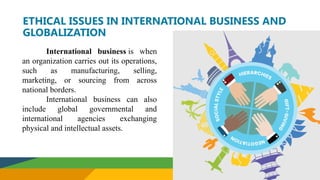
ETHICAL ISSUES IN INTERNATIONAL BUSINESS AND
GLOBALIZATION
International business is when
an organization carries out its operations,
such as manufacturing, selling,
marketing, or sourcing from across
national borders.
International business can also
include global governmental and
international agencies exchanging
physical and intellectual assets.
Ethical issues in international business include:
Child labor
Workplace diversity
Working standards
Human rights
Equal employment opportunity
Trust and integrity
Environmental preservation
THANK YOU

Ethical Issues in Human Resource Management

  • 1.
  • 2.
    Ethical Issues inHuman Resource Management Managing relationships between groups of people is one of the core responsibilities of the corporate function known as human resources. Exploring Ethical Issues in Human Resource Management Exploring Ethical Issues in Human Resource Management Exploring Ethical Issues in Human Resource Management Planning and employee growth. HR's interaction with people makes ethics crucial. Markets prioritizing profits can endanger human capital. Need for norms, standards, and processes to protect human capital. Corporate ethics aim to maximize human resources for profit. Enhanced human resources benefit companies, shareholders, society, and employees. Markets lack intrinsic ethical or unethical nature.
  • 3.
    Ethical Issues inHuman Resource
  • 4.
    Ethical Marketing andAdvertising Practices
  • 5.
  • 6.
    Ethics in SupplyChain Management Labor Practices Fair Wages - Working Conditions - Child and Forced Labor Environmental Sustainability Resource Management - Pollution Reduction - Sustainable Sourcing Transparency Supply Chain Visibility - Traceability Compliance and Regulations Adherence to Laws - Standards and Certifications Corporate Social Responsibility (CSR) Community Engagement - Stakeholder Involvement Anti-Corruption and Fair Trade Bribery and Corruption - Fair Trade Practices Continuous Improvement Audits and Monitoring - Training and Development
  • 7.
    Ethical Issues inFinancial Management and Accounting Ethical issues are a significant concern for accountants and finance professionals. Some ethical issues in financial management and accounting include: Integrity Confidentiality Conflict of interest Transparency Competence
  • 8.
    Integrity means beinghonest and having strong moral principles. A person with integrity behaves ethically and does the right thing, even behind closed doors. Integrity Confidentiality Conflict of interest Transparency Competence Integrity
  • 9.
    Confidentiality Confidentiality is akey ethical and legal principle.
  • 10.
    Conflict of interest Thiscan arise when buyers or their close family/friends have a direct financial interest in a supplier's organization.
  • 11.
    Transparency Transparency is akey driver of ethical business culture, and helps ensure that leaders and employees are accountable for their actions. 1. It’s All About Trust 2. Transparency Pays Off in the Medium Term 3. Transparency Can Be a Rallying Mission 4. Transparency Can Be Analyzed by Data Science 5. “Transparency” Doesn’t Mean You Have to Disclose Everything; Rather It Means to Be Honest When You Do Disclose 6. Transparent Disclosure Means That It Can Be Easily Understood 7. Transparency Has No Shortage of Enemies
  • 12.
    Competence Competence is aprinciple of professional ethics that auditors must have.
  • 13.
    BUSINESS ETHICS ANDPRODUCT DEVELOPMENT Ethical product managers are responsible for aligning business objectives with ethical principles to create products that benefit society as a whole.
  • 14.
    Key aspects Ethical ProductDesign User Safety, Accessibility, Environmental Impact Transparent Marketing Truthful Advertising, Consumer Privacy, Fair Pricing Supply Chain Ethics Labor Practices, Sustainable Sourcing, Supplier Relations Social Responsibility Community Impact, Corporate Social Responsibility (CSR), Stakeholder Engagement Regulatory Compliance Adherence to Laws, Proactive Compliance Innovation and Ethics Balancing Profit and Ethics, Long-term Vision
  • 15.
    Benefits of EthicalProduct Development Brand Loyalty Consumers are more likely to remain loyal to brands they perceive as ethical. Risk Management Reduces the risk of legal issues and scandals that can arise from unethical practices. Competitive Advantage Differentiates the company in a crowded market, appealing to ethically conscious consumers. Employee Satisfaction Attracts and retains employees who want to work for ethically responsible companies.
  • 16.
    ETHICAL CUSTOMER RELATIONSAND SERVICES Customer relations refers to methodologies. Customer service refers to reactive. The customer service team plays a key role in growing customer relationships, as they are usually the first point of contact for customers. The Ethical Imperative in Customer Relationship Management 1. Privacy and Data Protection 2. Transparency and Honesty 3. Customer Consent and Choice 4. Fair Treatment
  • 17.
    Building Ethical CustomerRelationships To build ethical customer relationships within the framework of CRM, businesses can adopt the following strategies: Ethical Guidelines and Training Data Security Customer Education Ethical Marketing Social Responsibility Initiatives Feedback Mechanisms
  • 18.
    ETHICAL ISSUES INTECHNOLOGY AND DATA PRIVACY Ethical issues in technology and data privacy are increasingly critical as technology advances and data becomes more central to our daily lives. Key ethical concerns 1. Data Privacy and Security – Informed Consent, Data Protection 2. Surveillance and Monitoring - Government Surveillance, Workplace Monitoring 3. Algorithmic Bias and Discrimination – Fairness, Transparency 4. Artificial Intelligence and Automation – Accountability, Ethical Design 5. Intellectual Property and Digital Rights - Digital Piracy, Copyright Laws
  • 19.
    Cont… 6. Social Mediaand Misinformation – Content Moderation, User Manipulation. 7. Digital Divide and Access to Technology – Inclusivity, Digital Literacy 8. Health Data and Biotechnology - Genetic Privacy, Bioethics 9. Environmental Impact - E-Waste, Sustainable Design 10.Autonomous Systems and Robotics – Safety, Ethical Decision-Making
  • 20.
    ETHICAL ISSUES ININTERNATIONAL BUSINESS AND GLOBALIZATION International business is when an organization carries out its operations, such as manufacturing, selling, marketing, or sourcing from across national borders. International business can also include global governmental and international agencies exchanging physical and intellectual assets.
  • 21.
    Ethical issues ininternational business include: Child labor Workplace diversity Working standards Human rights Equal employment opportunity Trust and integrity Environmental preservation
  • 22.