OBJECTIVES
OBJECTIVES
The students are expected to:
 define force by giving examples.
 describe motion as a push or a pull
• determine the effects of force on
motion
Rearrange the jumbled letters to
form the magic word.
FORCE
ACTIVITY # 1
Charade
One student act out an activity
that involve some kind of
force, while the rest guesses
what action is portrayed.
ACTIVITY # 2
1,2,3, GO!
One student moves the ball.
Second student stop the ball.
Third student increase the velocity of
the ball.
Fourth student change the direction
Of the ball.
ACTIVITY # 2
1,2,3, GO!
How did you make the ball move?
How did you stop the ball?
How did you accelerate the ball?
How did you change the direction
of the ball?
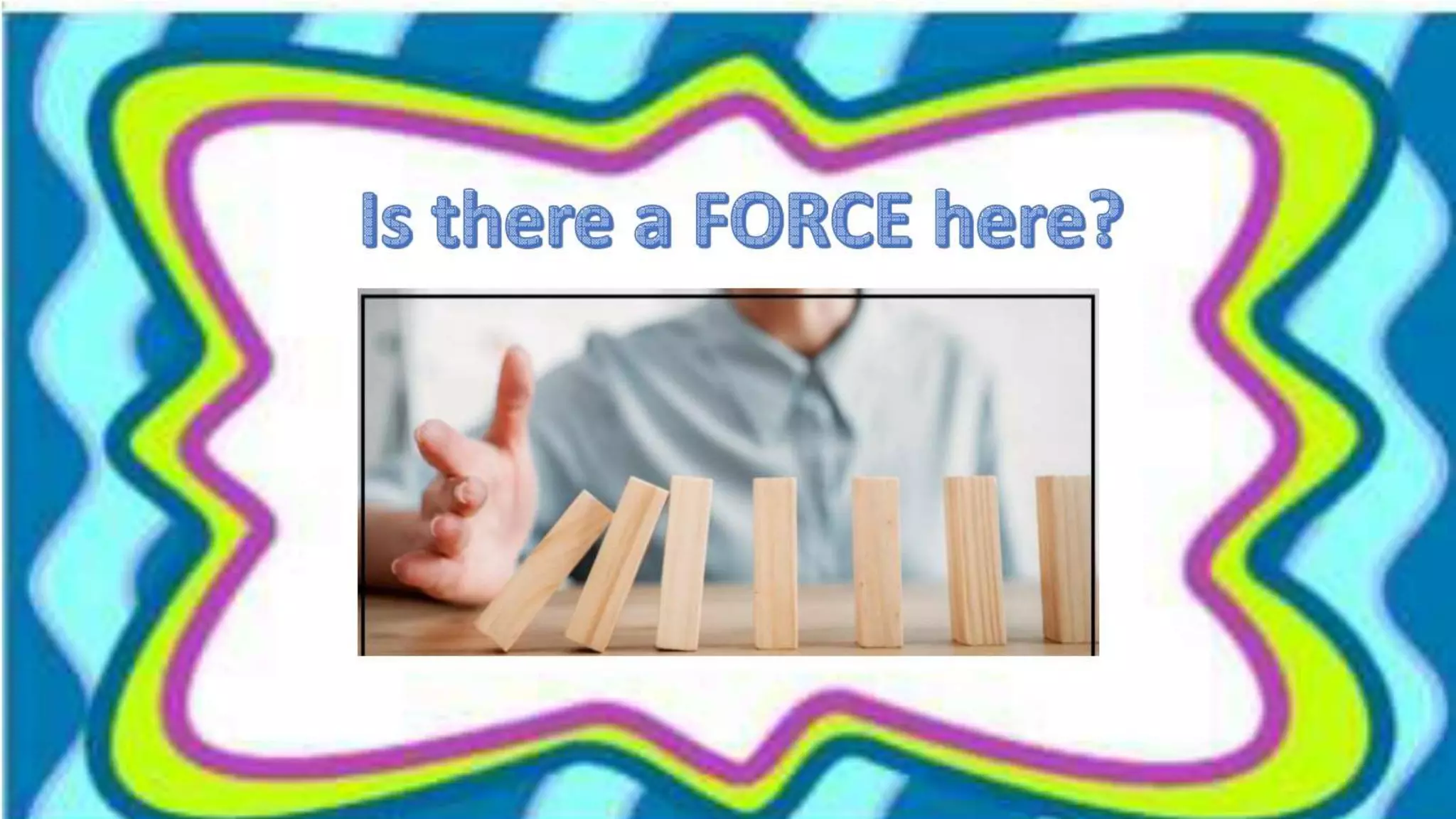
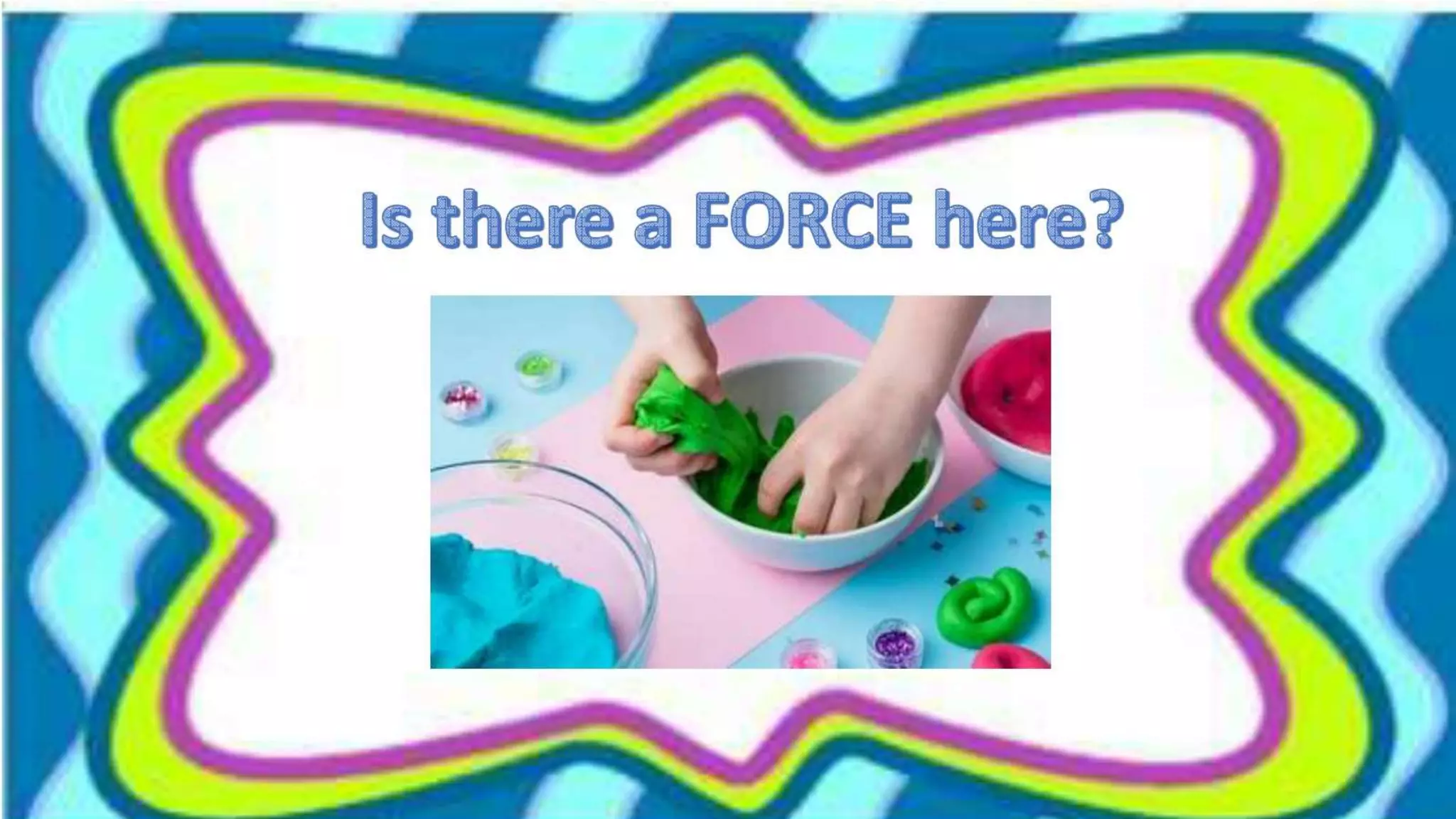
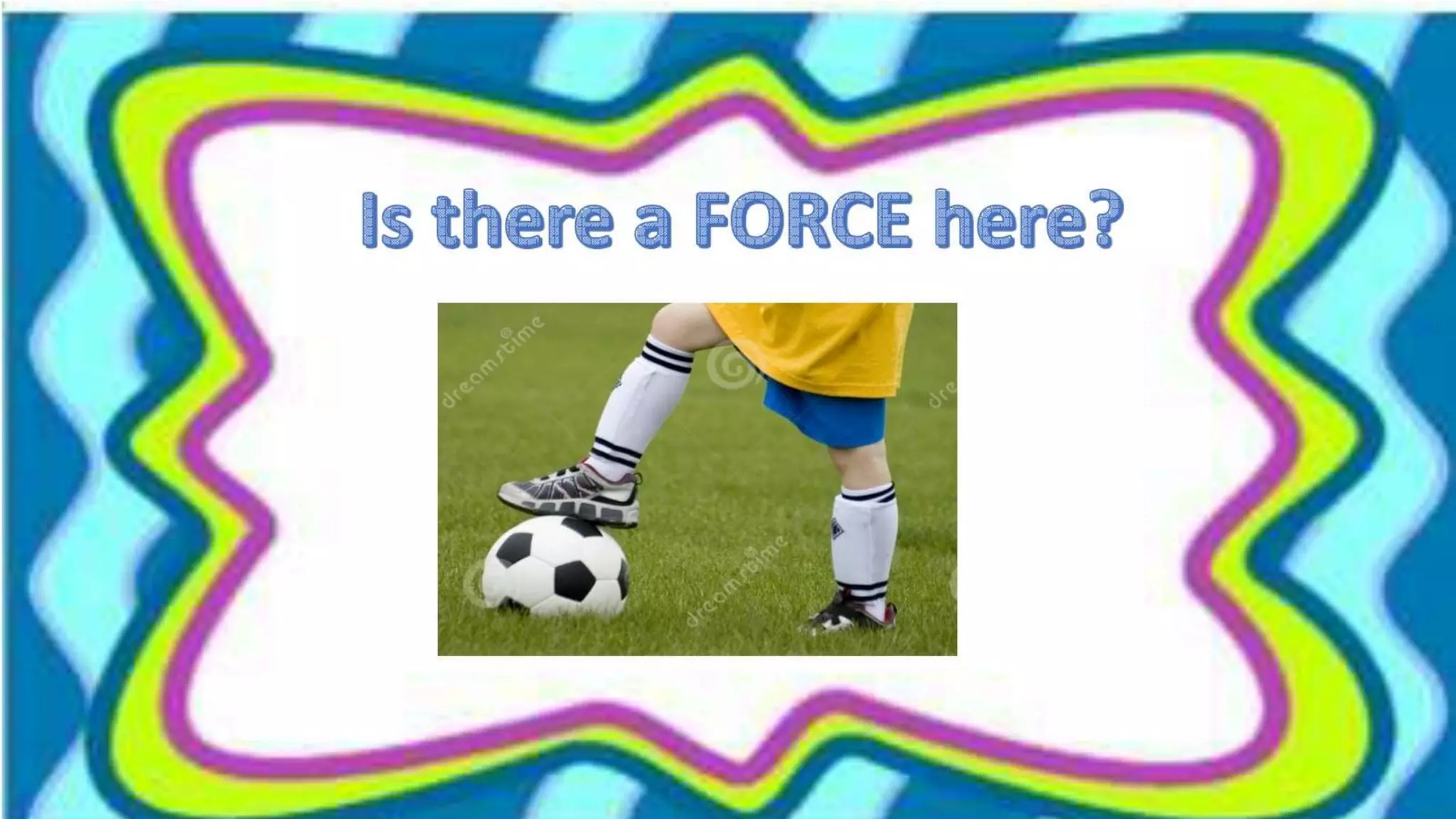
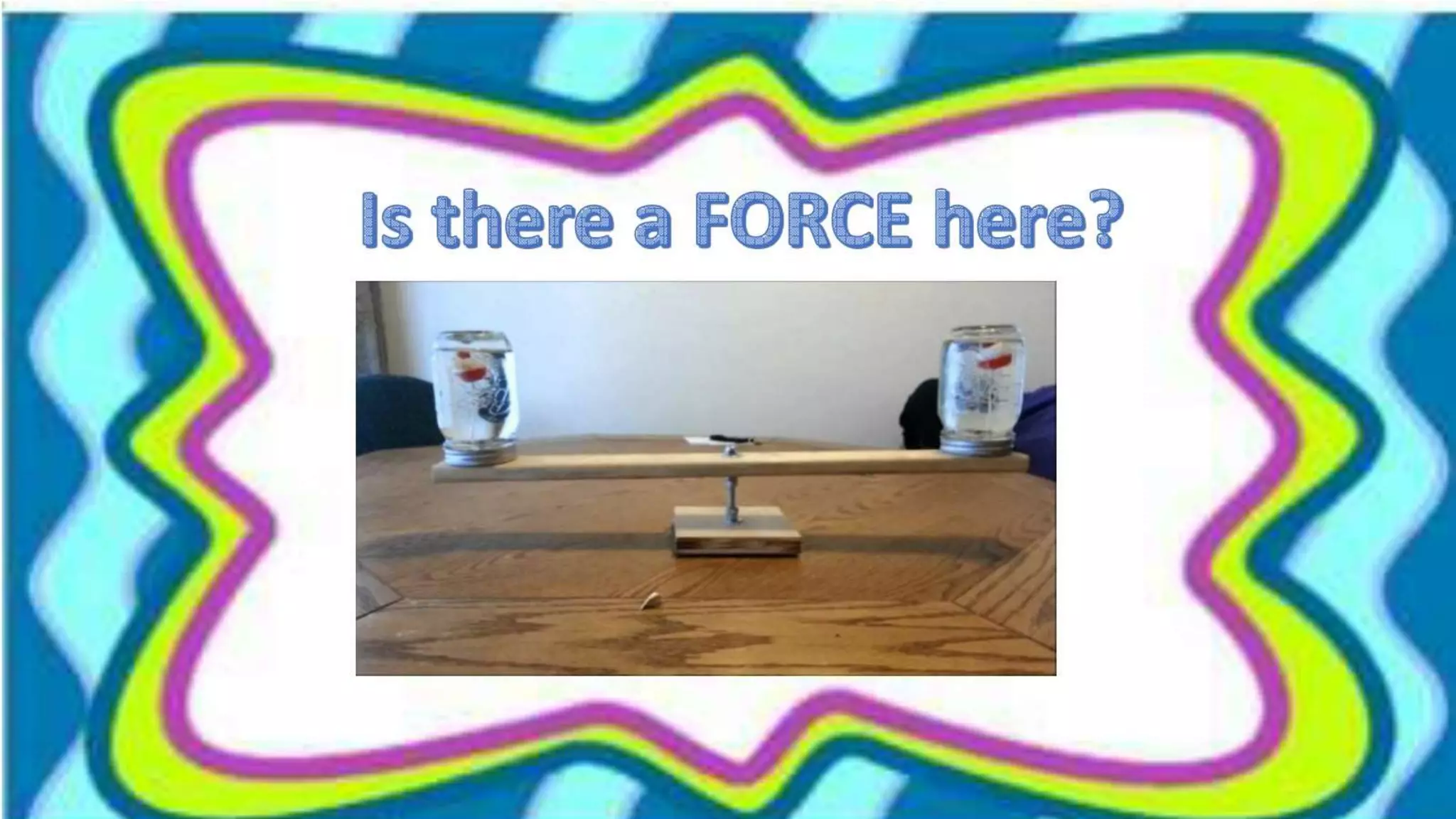
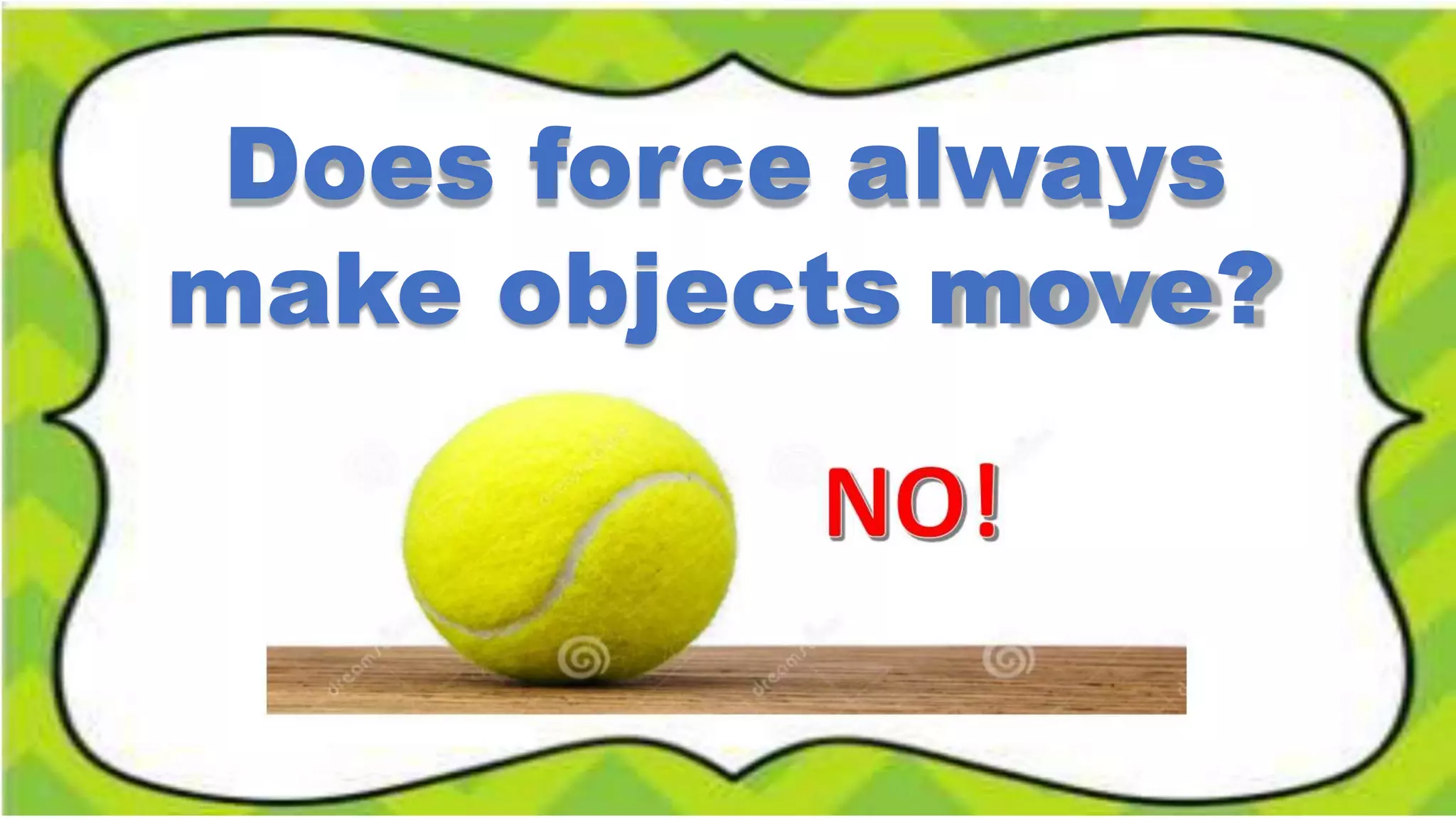
Does force always
make objects move?
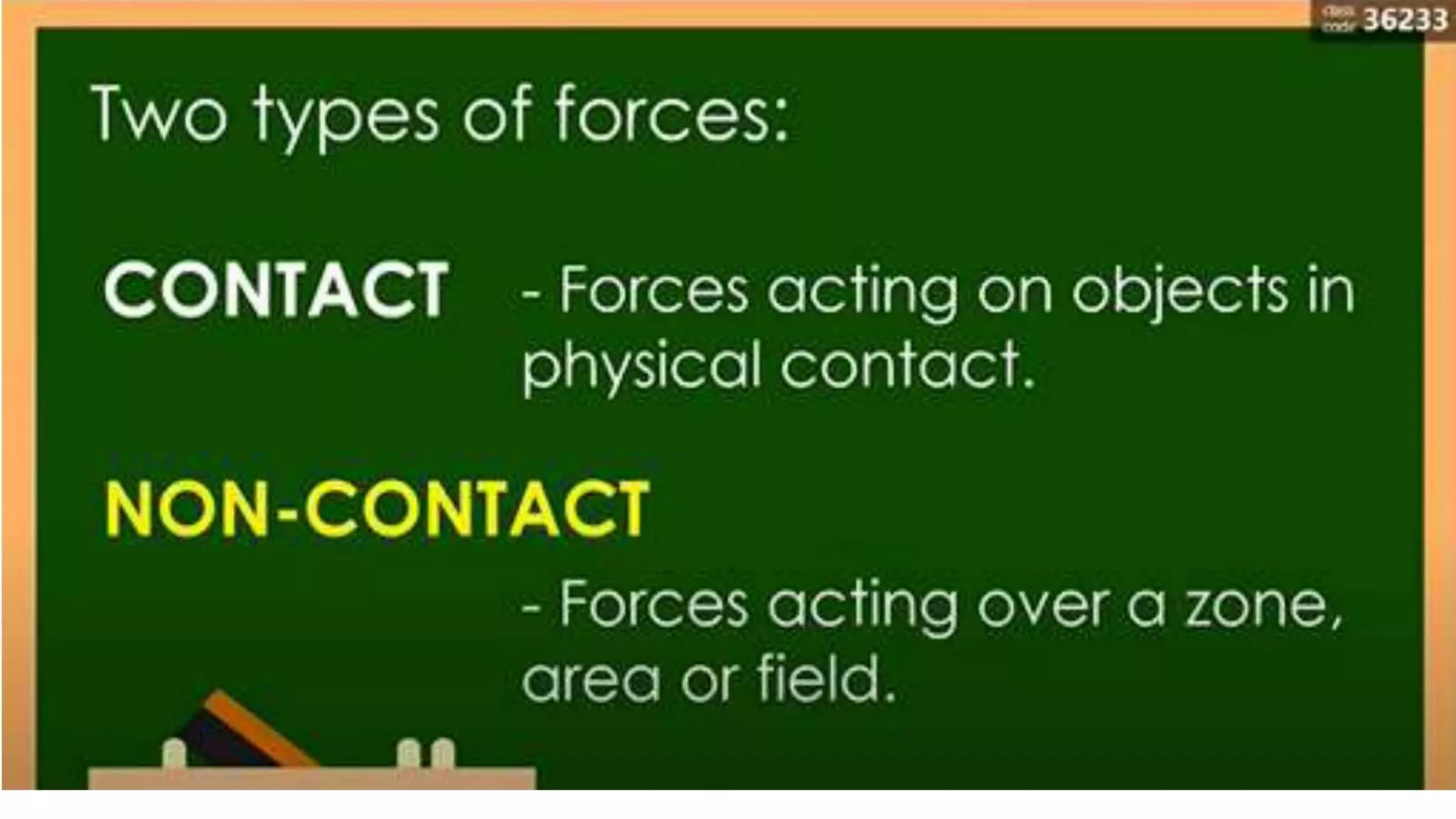
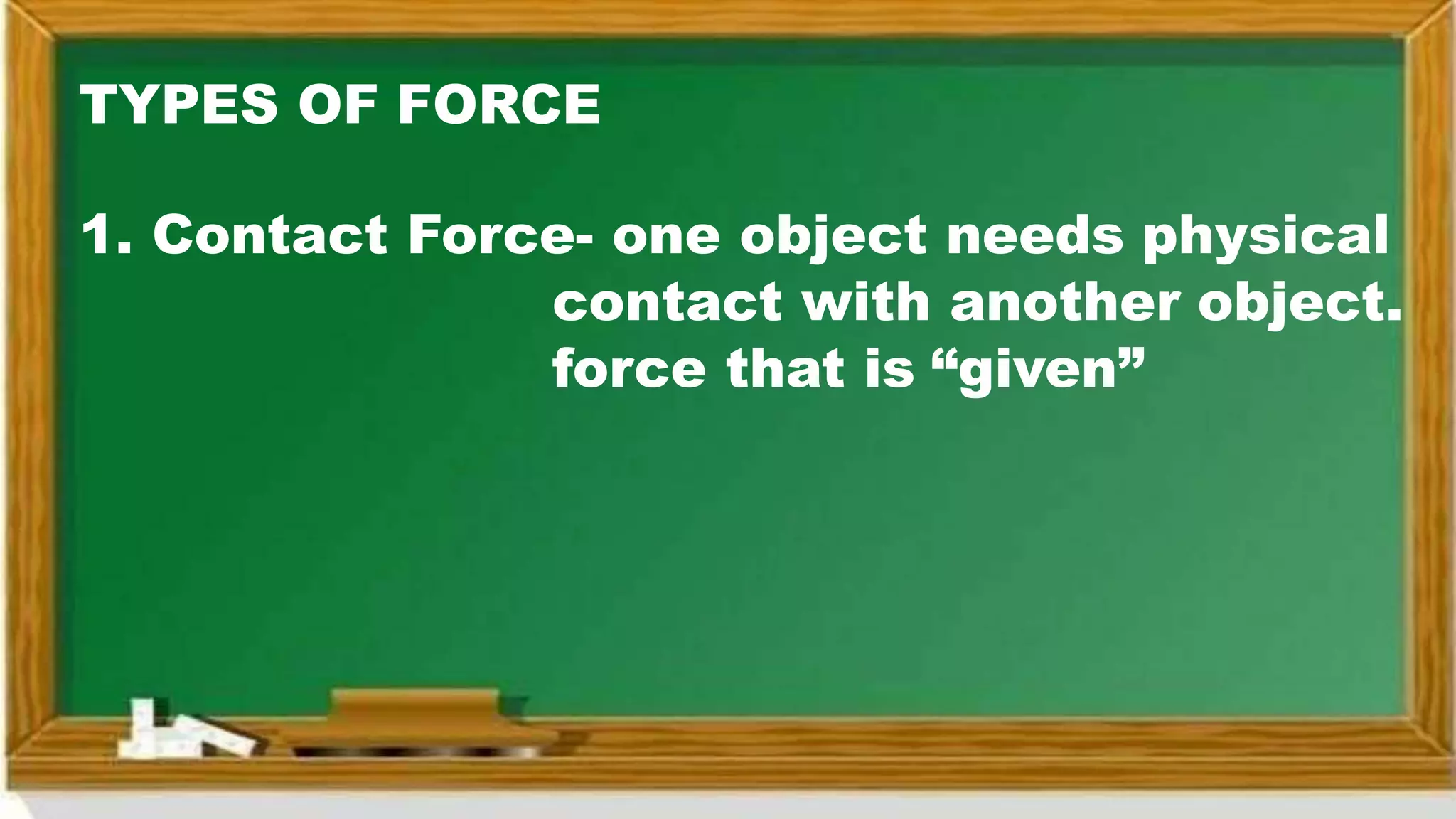
TYPES OF FORCE
1. Contact Force- one object needs physical
contact with another object.
force that is “given”
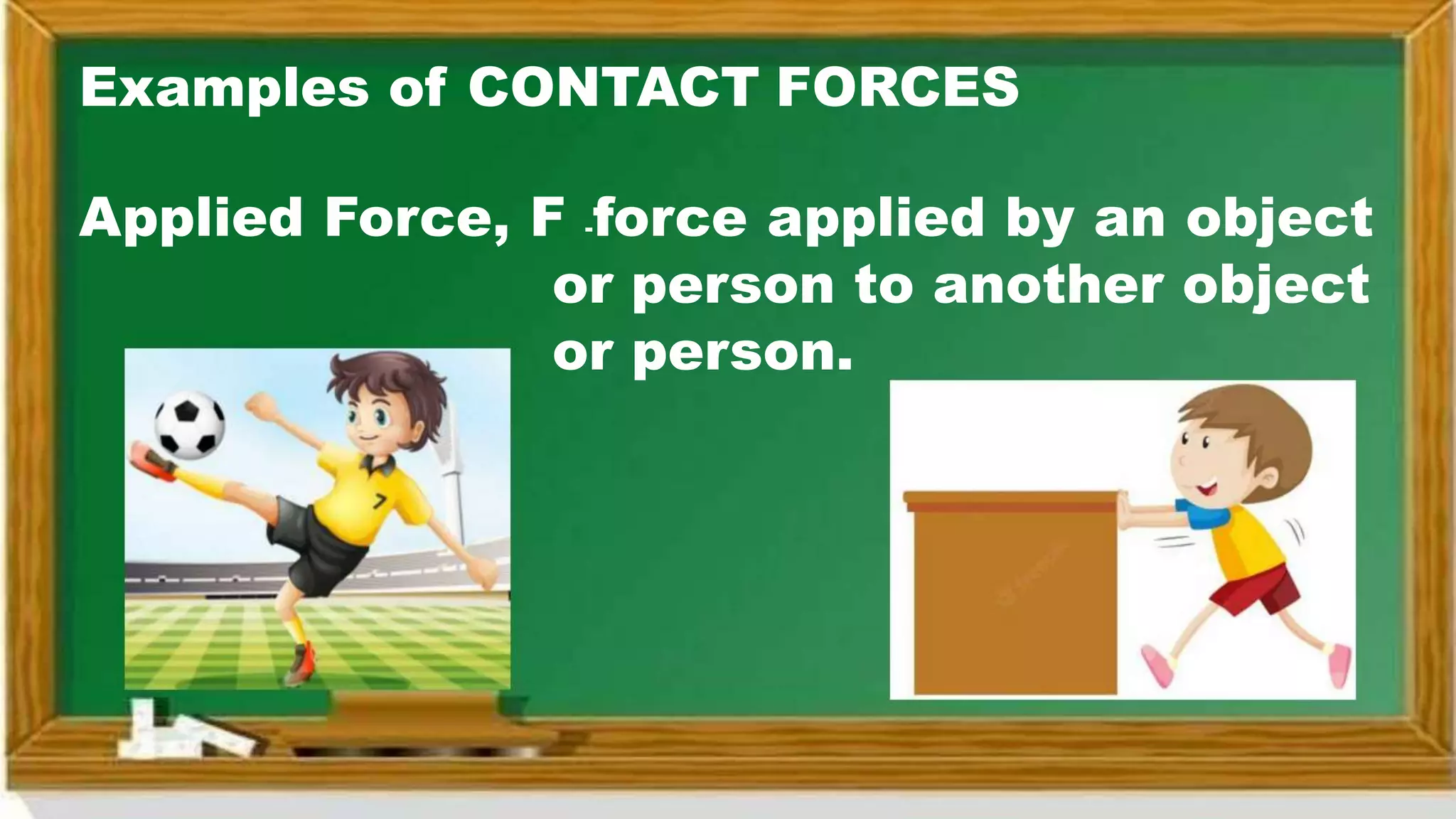
Examples of CONTACT FORCES
Applied Force, F -force applied by an object
or person to another object
or person.
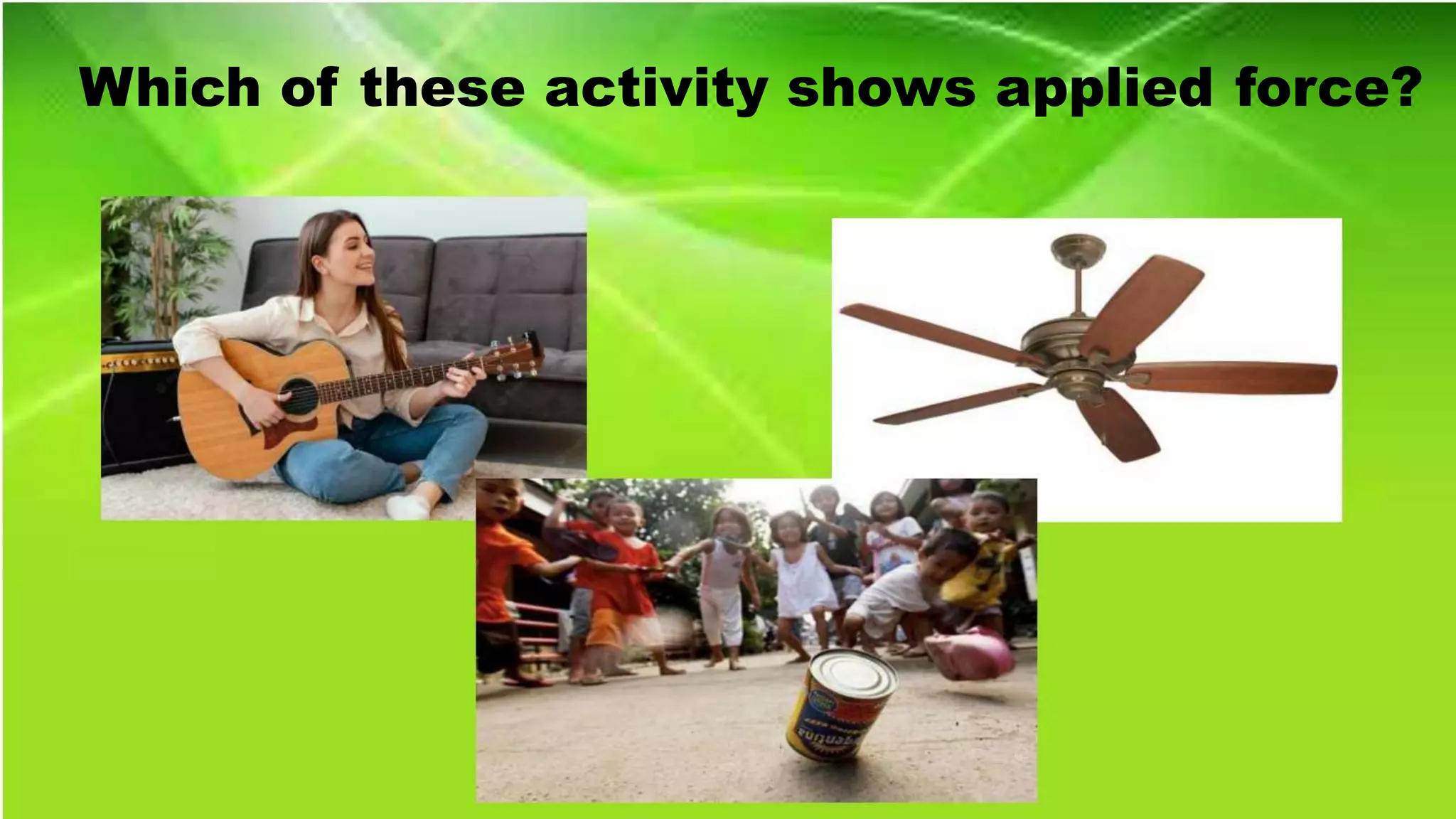
Which of these activity shows applied force?
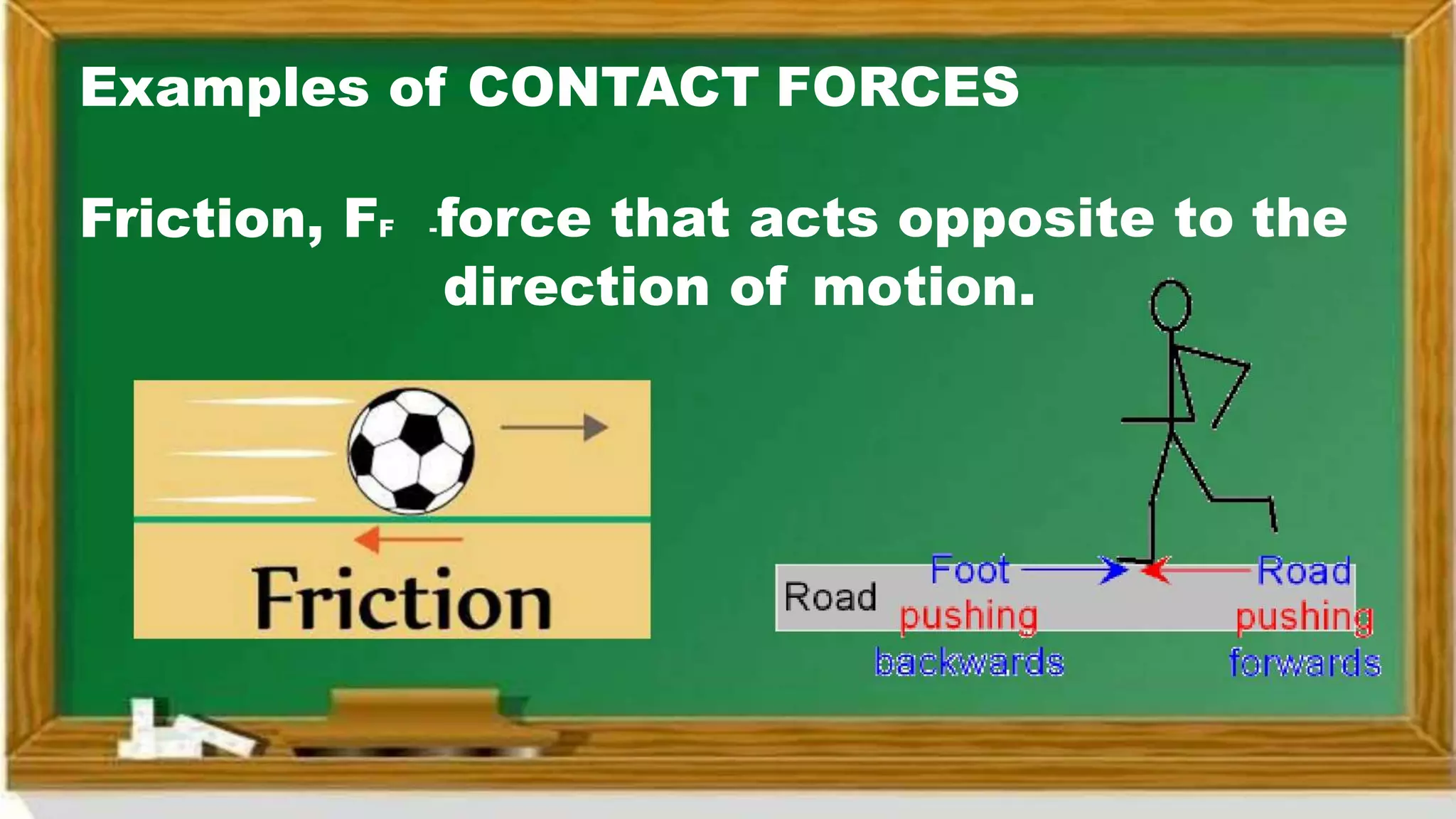
Examples of CONTACT FORCES
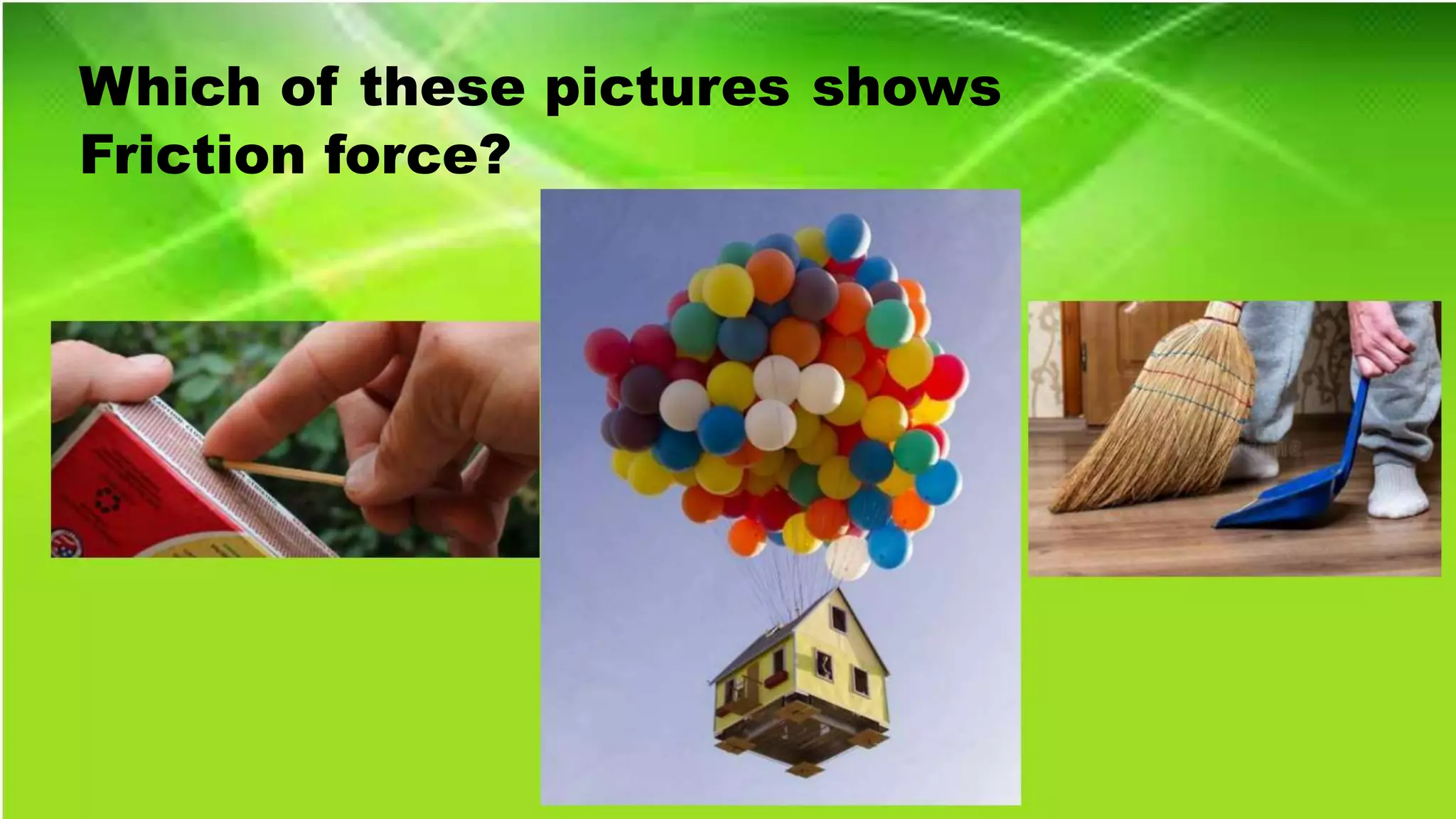
Friction, FF -force that acts opposite to the
direction of motion.
Which of these pictures shows
Friction force?
Examples of CONTACT FORCES
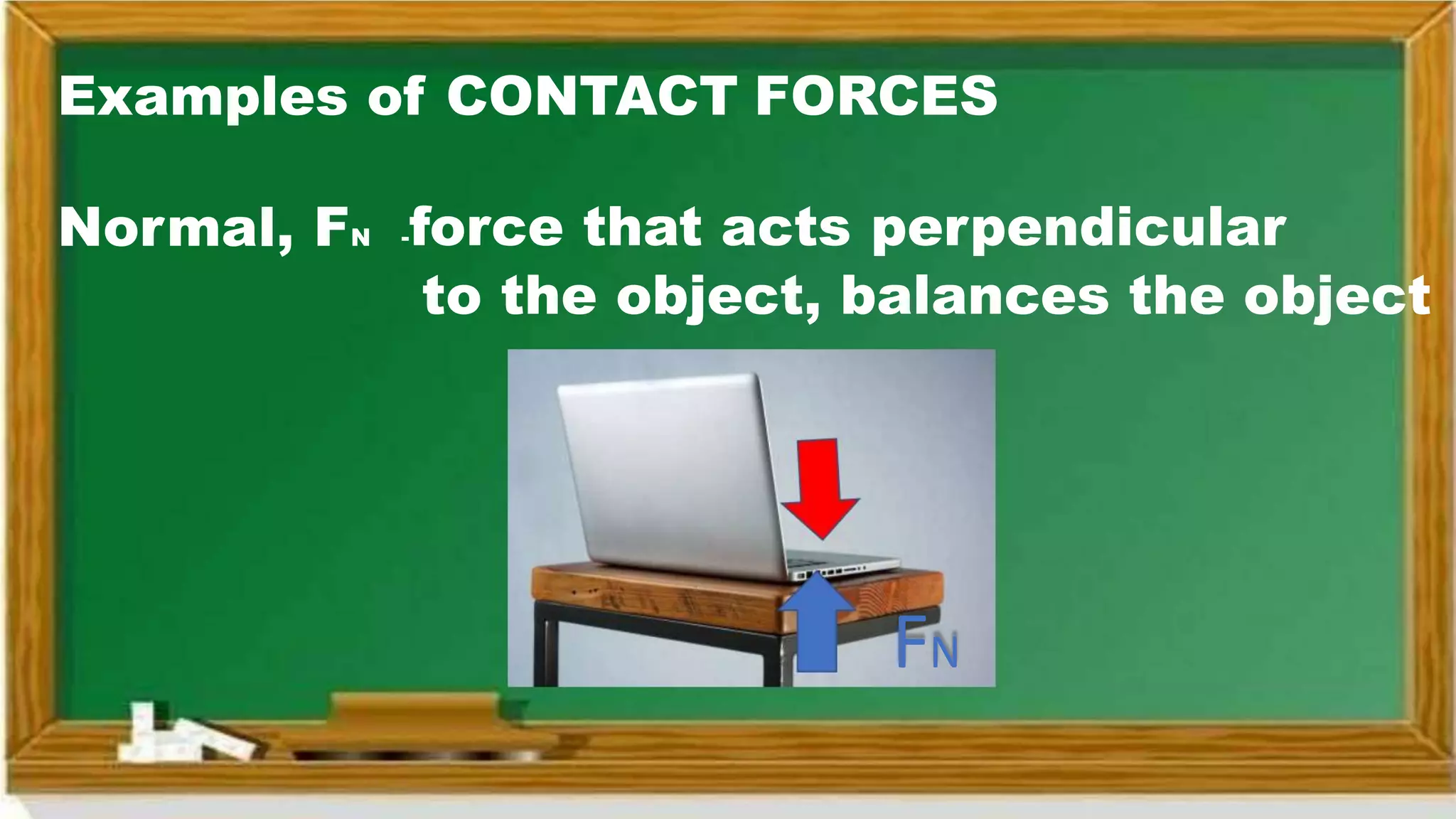
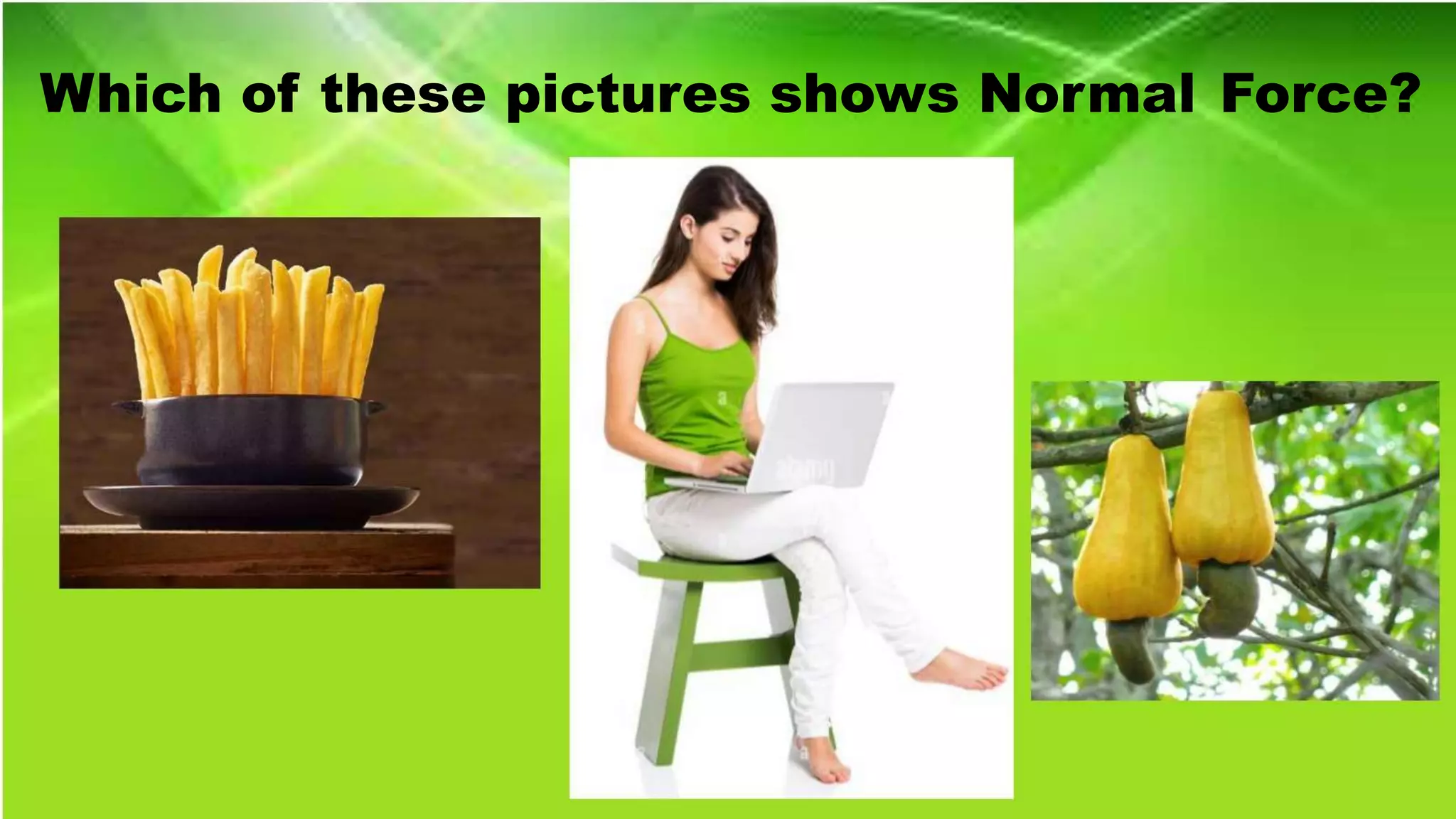
Normal, FN -force that acts perpendicular
to the object, balances the object
FN
Which of these pictures shows Normal Force?
Examples of CONTACT FORCES
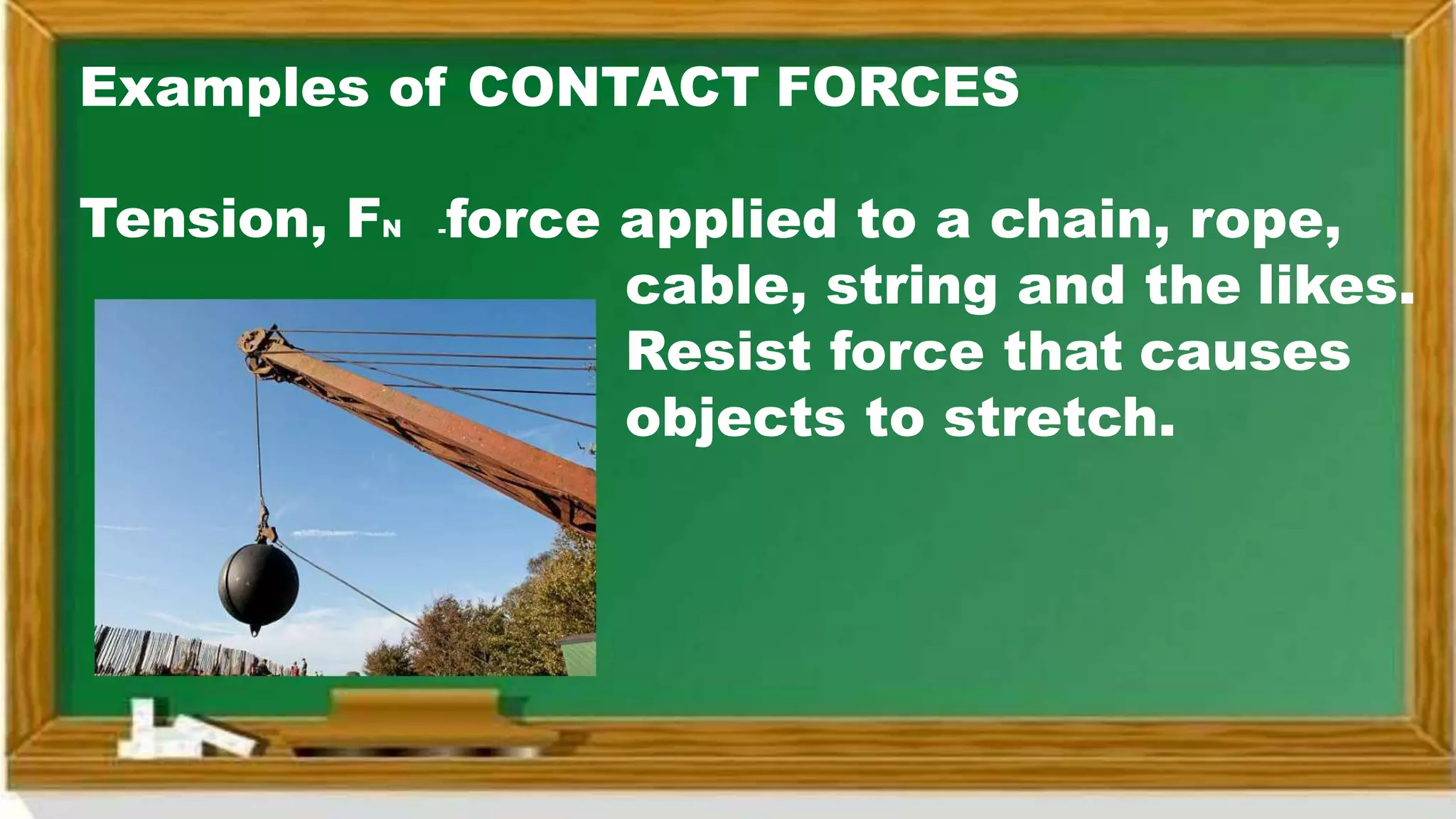
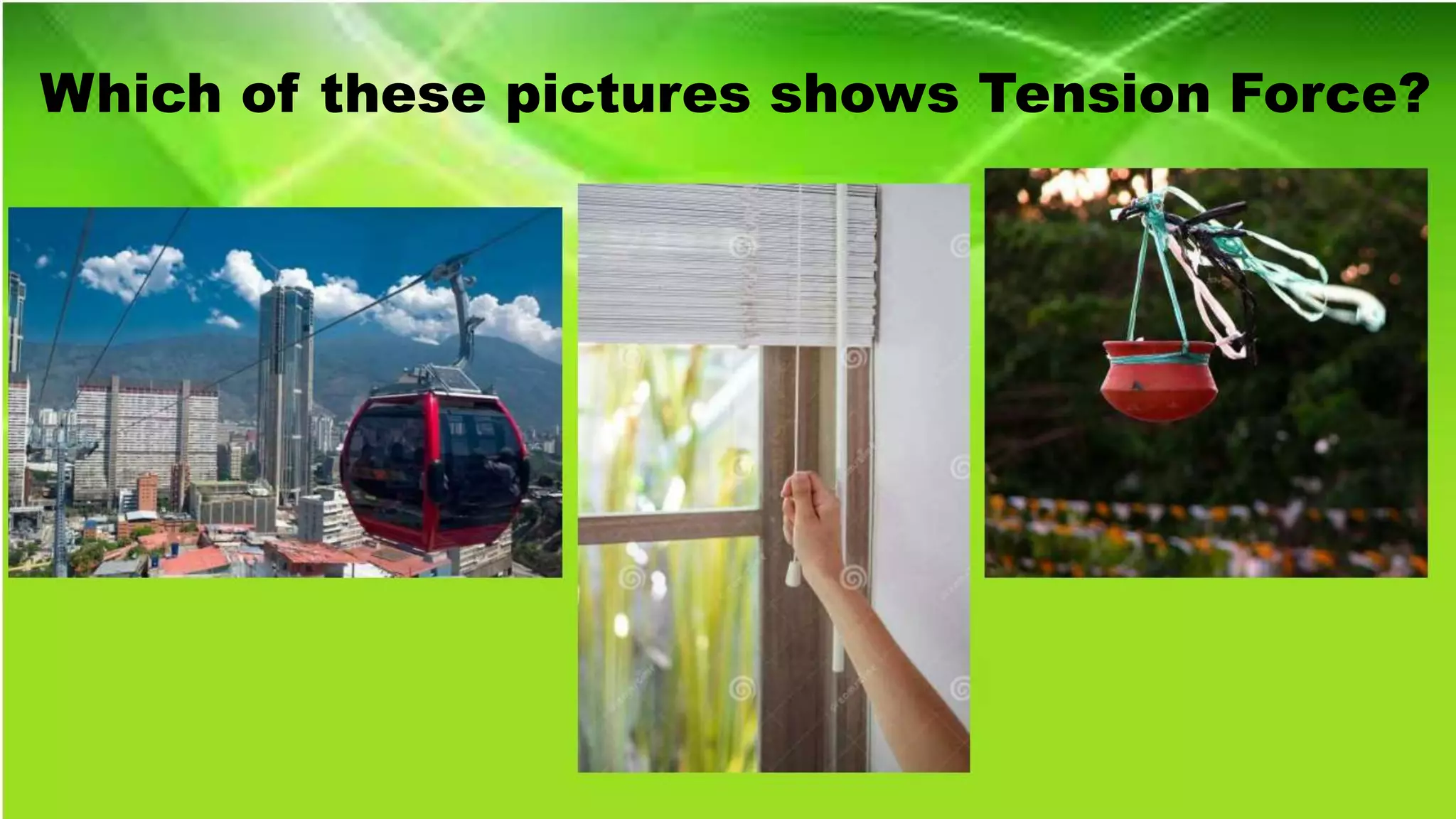
Tension, FN -force applied to a chain, rope,
cable, string and the likes.
Resist force that causes
objects to stretch.
Which of these pictures shows Tension Force?
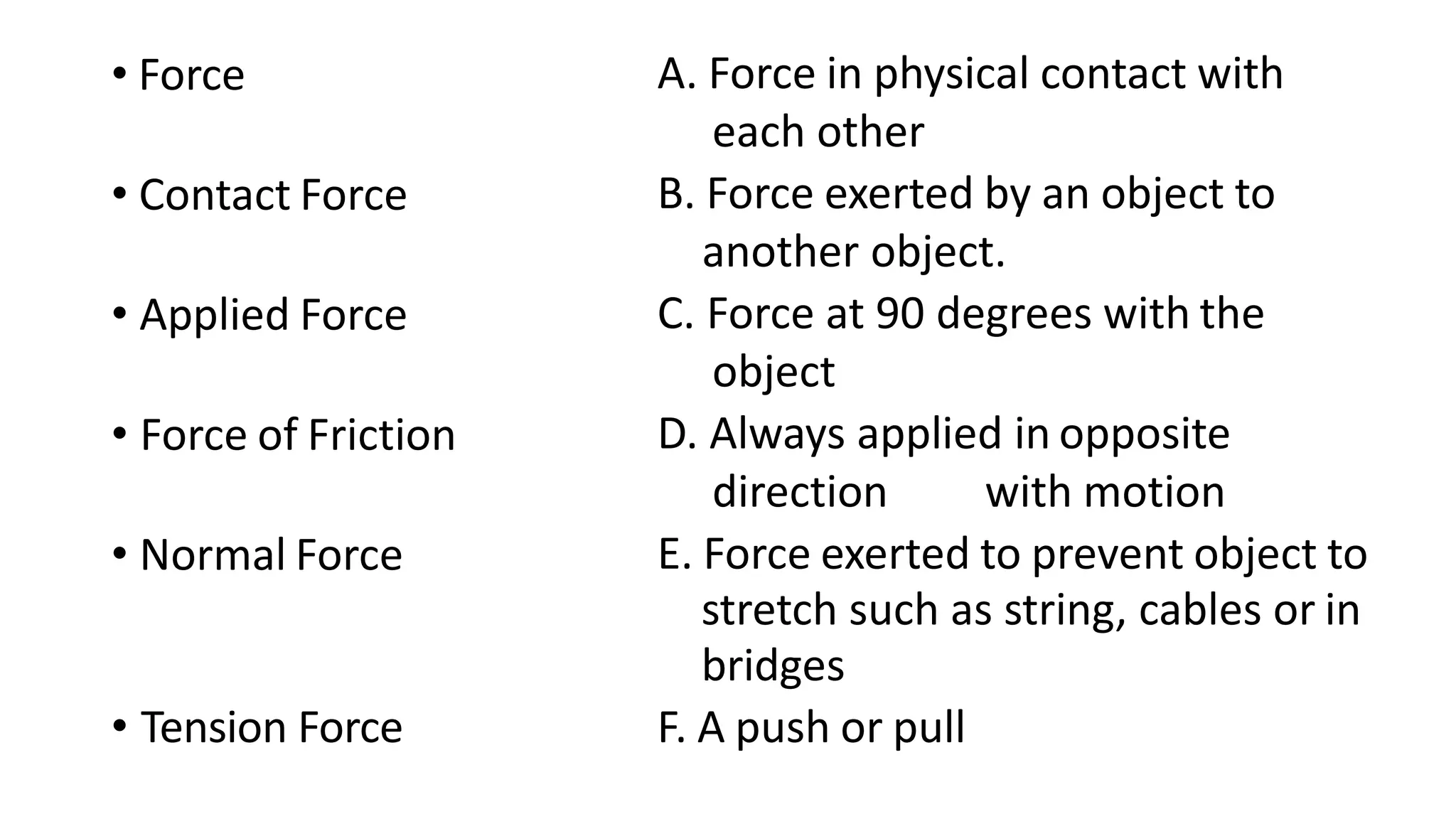
• Force A. Force in physical contact with
each other
• Contact Force B. Force exerted by an object to
another object.
• Applied Force C. Force at 90 degrees with the
object
• Force of Friction D. Always applied in opposite
direction with motion
• Normal Force E. Force exerted to prevent object to
stretch such as string, cables or in
bridges
• Tension Force F. A push or pull

force and motion.pptx

  • 2.
    OBJECTIVES OBJECTIVES The students areexpected to:  define force by giving examples.  describe motion as a push or a pull • determine the effects of force on motion
  • 3.
    Rearrange the jumbledletters to form the magic word. FORCE
  • 13.
    ACTIVITY # 1 Charade Onestudent act out an activity that involve some kind of force, while the rest guesses what action is portrayed.
  • 14.
    ACTIVITY # 2 1,2,3,GO! One student moves the ball. Second student stop the ball. Third student increase the velocity of the ball. Fourth student change the direction Of the ball.
  • 15.
    ACTIVITY # 2 1,2,3,GO! How did you make the ball move? How did you stop the ball? How did you accelerate the ball? How did you change the direction of the ball?
  • 16.
  • 22.
    TYPES OF FORCE 1.Contact Force- one object needs physical contact with another object. force that is “given”
  • 23.
    Examples of CONTACTFORCES Applied Force, F -force applied by an object or person to another object or person.
  • 24.
    Which of theseactivity shows applied force?
  • 25.
    Examples of CONTACTFORCES Friction, FF -force that acts opposite to the direction of motion.
  • 26.
    Which of thesepictures shows Friction force?
  • 27.
    Examples of CONTACTFORCES Normal, FN -force that acts perpendicular to the object, balances the object FN
  • 28.
    Which of thesepictures shows Normal Force?
  • 29.
    Examples of CONTACTFORCES Tension, FN -force applied to a chain, rope, cable, string and the likes. Resist force that causes objects to stretch.
  • 30.
    Which of thesepictures shows Tension Force?
  • 31.
    • Force A.Force in physical contact with each other • Contact Force B. Force exerted by an object to another object. • Applied Force C. Force at 90 degrees with the object • Force of Friction D. Always applied in opposite direction with motion • Normal Force E. Force exerted to prevent object to stretch such as string, cables or in bridges • Tension Force F. A push or pull