FOODPANDA
ONLINE FOOD ORDERING COMPANY
Bringing good food into your everyday.
- Mission
CONTENTS
 Introduction
 History
 Culture
 Value
 Marketing Strategy
 Business Model
 Revenue Generation Methods
 SWOT
 References
INTRODUCTION
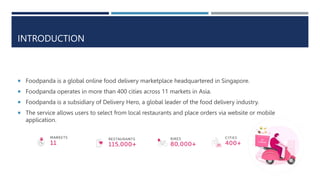
 Foodpanda is a global online food delivery marketplace headquartered in Singapore.
 Foodpanda operates in more than 400 cities across 11 markets in Asia.
 Foodpanda is a subsidiary of Delivery Hero, a global leader of the food delivery industry.
 The service allows users to select from local restaurants and place orders via website or mobile
application.
HISTORY
 In 2012, Swiss Lukas Nagel and Rico Wyder established Foodpanda in Singapore, before expanding to
Malaysia, Indonesia, the Philippines, Taiwan and Thailand.
 A year later in 2013, Foodpanda was launched in Bangladesh and Romania. With more than 20,000
employees operating in their company, Foodpanda became the largest food delivery service in
Bangladesh.
 The company stated that it aimed to move into 40 nations in Asia, Europe, Latin America, the Middle East
and Africa by the end of 2014.
 Fast forward to 2022, Foodpanda collaborated with digital investment platform Syfe.
CULTURE
 Flat hierarchy and an “execution mind-set” within the team makes it possible to influence and create a
lot on your own.
 Very steep learning curve.
 Award recognition for the best performer.
“Works on Flexibility, Dynamism, Young employees”
VALUE
 Foodpanda underlines its focus on customer delight and value.
“If Foodpanda likes it, you will love it.”
MARKETING STRATEGY
 Traditional Marketing.
 Online discount Coupon.
 Customer sharing blogs on foodpanda to win prizes.
 Referral Program.
 Tie ups with bloggers.
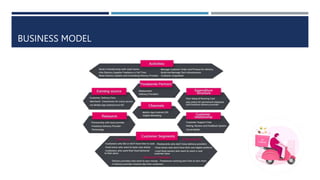
BUSINESS MODEL
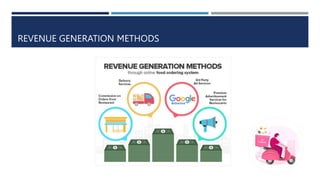
REVENUE GENERATION METHODS
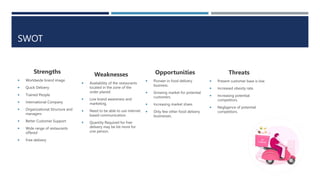
SWOT
Strengths
 Worldwide brand image
 Quick Delivery
 Trained People
 International Company
 Organizational Structure and
managers
 Better Customer Support
 Wide range of restaurants
offered
 Free delivery
Weaknesses
 Availability of the restaurants
located in the zone of the
order placed.
 Low brand awareness and
marketing.
 Need to be able to use internet
based communication.
 Quantity Required for free
delivery may be bit more for
one person.
Opportunities
 Pioneer in food delivery
business.
 Growing market for potential
customers.
 Increasing market share.
 Only few other food delivery
businesses.
Threats
 Present customer base is low.
 Increased obesity rate.
 Increasing potential
competitors.
 Negligence of potential
competitors.
REFERENCES
 Foodpanda (slideshare.net)
 Foodpanda – Wikipedia
 About • foodpanda | food and more, delivered
Bye, Have a Great Time!

Foodpanda.pptx

  • 1.
    FOODPANDA ONLINE FOOD ORDERINGCOMPANY Bringing good food into your everyday. - Mission
  • 2.
    CONTENTS  Introduction  History Culture  Value  Marketing Strategy  Business Model  Revenue Generation Methods  SWOT  References
  • 3.
    INTRODUCTION  Foodpanda isa global online food delivery marketplace headquartered in Singapore.  Foodpanda operates in more than 400 cities across 11 markets in Asia.  Foodpanda is a subsidiary of Delivery Hero, a global leader of the food delivery industry.  The service allows users to select from local restaurants and place orders via website or mobile application.
  • 4.
    HISTORY  In 2012,Swiss Lukas Nagel and Rico Wyder established Foodpanda in Singapore, before expanding to Malaysia, Indonesia, the Philippines, Taiwan and Thailand.  A year later in 2013, Foodpanda was launched in Bangladesh and Romania. With more than 20,000 employees operating in their company, Foodpanda became the largest food delivery service in Bangladesh.  The company stated that it aimed to move into 40 nations in Asia, Europe, Latin America, the Middle East and Africa by the end of 2014.  Fast forward to 2022, Foodpanda collaborated with digital investment platform Syfe.
  • 5.
    CULTURE  Flat hierarchyand an “execution mind-set” within the team makes it possible to influence and create a lot on your own.  Very steep learning curve.  Award recognition for the best performer. “Works on Flexibility, Dynamism, Young employees”
  • 6.
    VALUE  Foodpanda underlinesits focus on customer delight and value. “If Foodpanda likes it, you will love it.”
  • 7.
    MARKETING STRATEGY  TraditionalMarketing.  Online discount Coupon.  Customer sharing blogs on foodpanda to win prizes.  Referral Program.  Tie ups with bloggers.
  • 8.
  • 9.
  • 10.
    SWOT Strengths  Worldwide brandimage  Quick Delivery  Trained People  International Company  Organizational Structure and managers  Better Customer Support  Wide range of restaurants offered  Free delivery Weaknesses  Availability of the restaurants located in the zone of the order placed.  Low brand awareness and marketing.  Need to be able to use internet based communication.  Quantity Required for free delivery may be bit more for one person. Opportunities  Pioneer in food delivery business.  Growing market for potential customers.  Increasing market share.  Only few other food delivery businesses. Threats  Present customer base is low.  Increased obesity rate.  Increasing potential competitors.  Negligence of potential competitors.
  • 11.
    REFERENCES  Foodpanda (slideshare.net) Foodpanda – Wikipedia  About • foodpanda | food and more, delivered Bye, Have a Great Time!