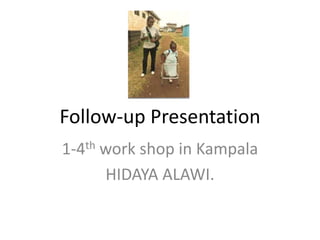
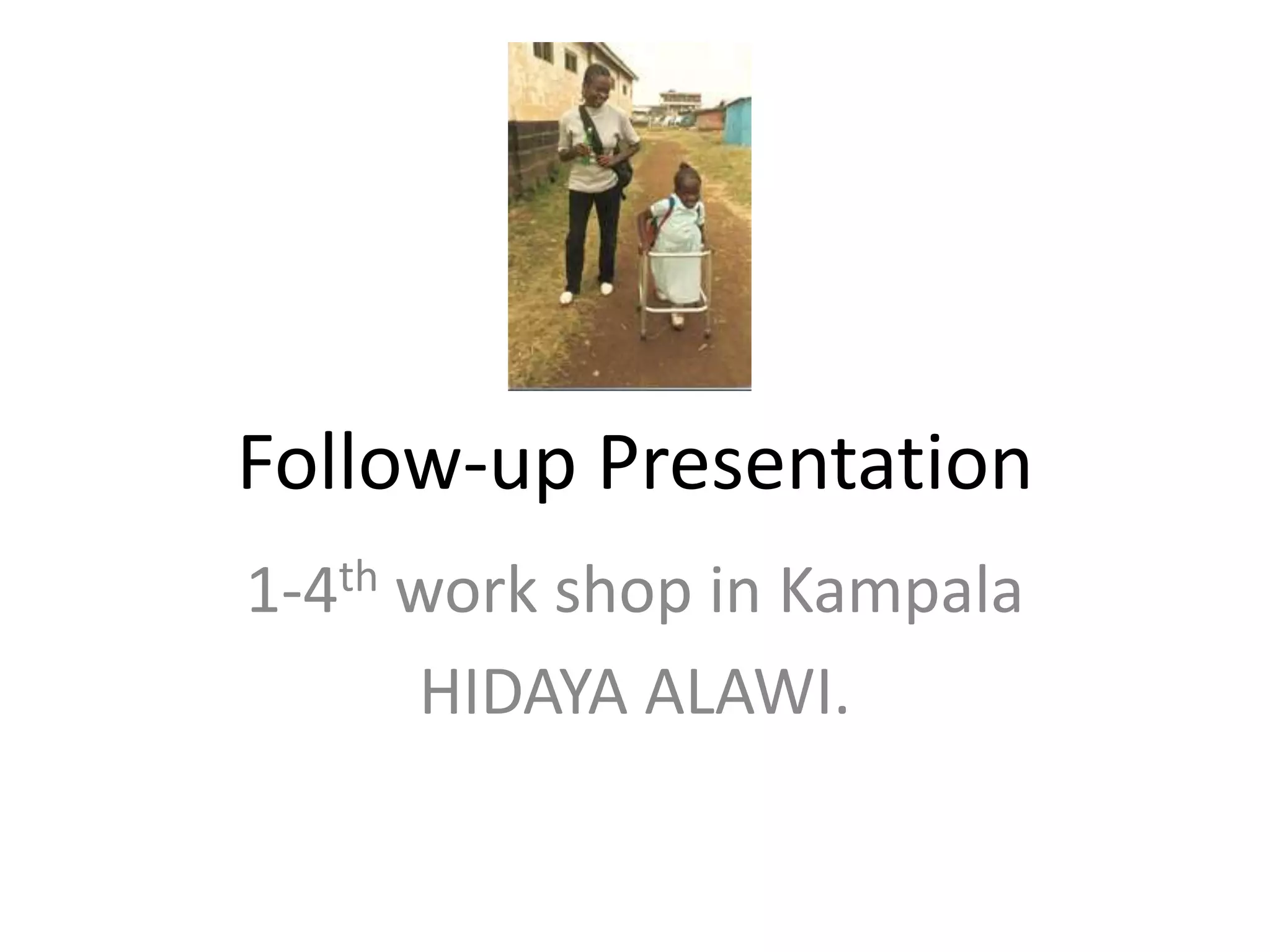
Follow-up Presentation
1-4th work shop in Kampala
      HIDAYA ALAWI.
What is it!


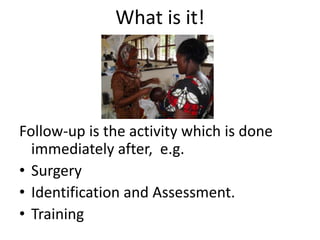
Follow-up is the activity which is done
  immediately after, e.g.
• Surgery
• Identification and Assessment.
• Training
WHY FOLLOW-UP!
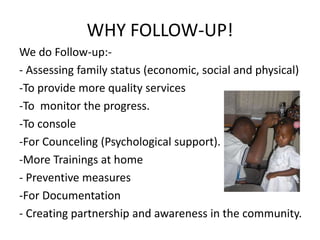
We do Follow-up:-
- Assessing family status (economic, social and physical)
-To provide more quality services
-To monitor the progress.
-To console
-For Counceling (Psychological support).
-More Trainings at home
- Preventive measures
-For Documentation
- Creating partnership and awareness in the community.
How!
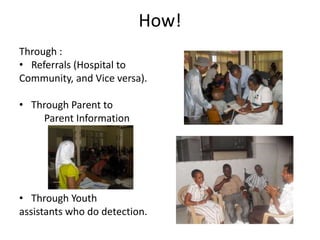
Through :
• Referrals (Hospital to
Community, and Vice versa).

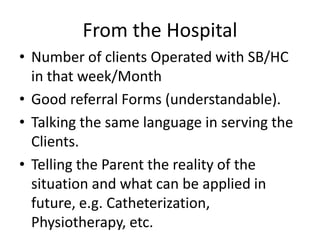
• Through Parent to
    Parent Information


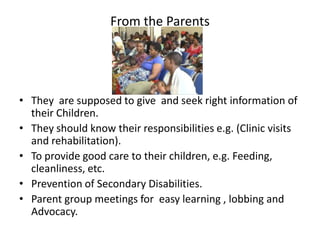
• Through Youth
assistants who do detection.
From the Hospital
• Number of clients Operated with SB/HC
  in that week/Month
• Good referral Forms (understandable).
• Talking the same language in serving the
  Clients.
• Telling the Parent the reality of the
  situation and what can be applied in
  future, e.g. Catheterization,
  Physiotherapy, etc.
From the Parents


• They are supposed to give and seek right information of
  their Children.
• They should know their responsibilities e.g. (Clinic visits
  and rehabilitation).
• To provide good care to their children, e.g. Feeding,
  cleanliness, etc.
• Prevention of Secondary Disabilities.
• Parent group meetings for easy learning , lobbing and
  Advocacy.
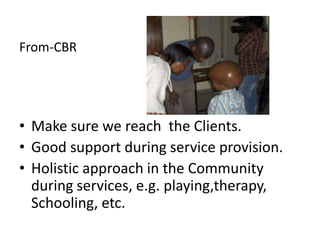
From-CBR


• Make sure we reach the Clients.
• Good support during service provision.
• Holistic approach in the Community
  during services, e.g. playing,therapy,
  Schooling, etc.
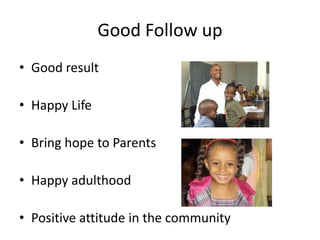
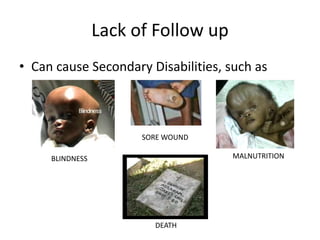
Good Follow up
• Good result

• Happy Life

• Bring hope to Parents

• Happy adulthood

• Positive attitude in the community
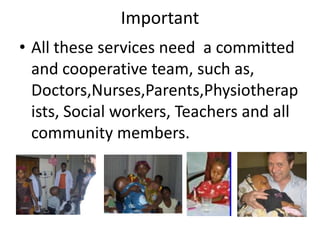
Lack of Follow up
• Can cause Secondary Disabilities, such as


                       SORE WOUND

     BLINDNESS                       MALNUTRITION


                         DEATH
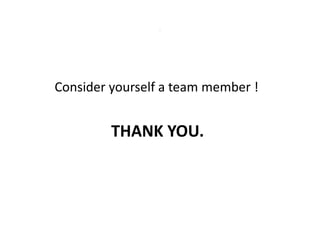
Important
• All these services need a committed
  and cooperative team, such as,
  Doctors,Nurses,Parents,Physiotherap
  ists, Social workers, Teachers and all
  community members.
.


Consider yourself a team member !


         THANK YOU.

Follow up from_the_perspective_of_parent_group_hidaya_alawi

  • 1.
    Follow-up Presentation 1-4th workshop in Kampala HIDAYA ALAWI.
  • 2.
    What is it! Follow-upis the activity which is done immediately after, e.g. • Surgery • Identification and Assessment. • Training
  • 3.
    WHY FOLLOW-UP! We doFollow-up:- - Assessing family status (economic, social and physical) -To provide more quality services -To monitor the progress. -To console -For Counceling (Psychological support). -More Trainings at home - Preventive measures -For Documentation - Creating partnership and awareness in the community.
  • 4.
    How! Through : • Referrals(Hospital to Community, and Vice versa). • Through Parent to Parent Information • Through Youth assistants who do detection.
  • 5.
    From the Hospital •Number of clients Operated with SB/HC in that week/Month • Good referral Forms (understandable). • Talking the same language in serving the Clients. • Telling the Parent the reality of the situation and what can be applied in future, e.g. Catheterization, Physiotherapy, etc.
  • 6.
    From the Parents •They are supposed to give and seek right information of their Children. • They should know their responsibilities e.g. (Clinic visits and rehabilitation). • To provide good care to their children, e.g. Feeding, cleanliness, etc. • Prevention of Secondary Disabilities. • Parent group meetings for easy learning , lobbing and Advocacy.
  • 7.
    From-CBR • Make surewe reach the Clients. • Good support during service provision. • Holistic approach in the Community during services, e.g. playing,therapy, Schooling, etc.
  • 8.
    Good Follow up •Good result • Happy Life • Bring hope to Parents • Happy adulthood • Positive attitude in the community
  • 9.
    Lack of Followup • Can cause Secondary Disabilities, such as SORE WOUND BLINDNESS MALNUTRITION DEATH
  • 10.
    Important • All theseservices need a committed and cooperative team, such as, Doctors,Nurses,Parents,Physiotherap ists, Social workers, Teachers and all community members.
  • 11.
    . Consider yourself ateam member ! THANK YOU.