European Social Fund:
 a practical example


          Stockholm, 16th June 2012
               « Finding our ways »

                           Stefania Pirani
         IF European Projects Coordinator
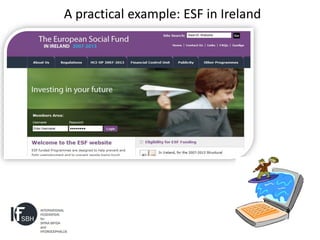
A practical example: ESF in Ireland


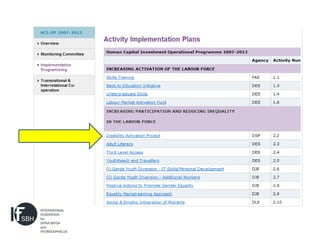
ESF in Ireland is channeled through a variety of different programmes

• Employment and Human Resources Development Operational
  Programme,2000-2006
• Border Midland & West Region
• South & East Region
• PEACE Programme II
• EQUAL Community Initiative
• Human Capital Investment Operational Programme 2007-2013
  (Revised 2009)
• Human Capital Investment Operational Programme 2007-2013 (
  2012 version)
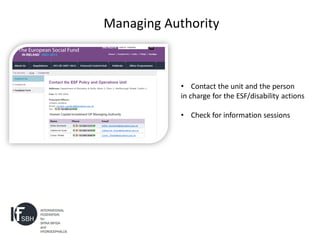
Managing Authority


            • Contact the unit and the person
            in charge for the ESF/disability actions

            • Check for information sessions
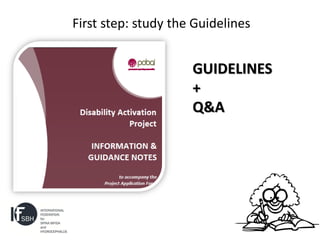
First step: study the Guidelines


                     GUIDELINES
                     +
                     Q&A
3 key elements
• Objective of the programme
What do they want to achieve throught my
project?
• Target Group
Who do they want to reach?
• Budget and Timescale
How big and for how long?
ELIGIBILITY CRITERIA
• Administrative eligibility criteria
 Deadline, applications forms, signatures,
documents attached

• Content of the proposal
Type of activities, geographical impact, type of
eligible costs
Scoring
• Selection Criteria
According to what criteria my application will be
evaluated? What’s the weight of each criteria?

• Check List
Documents required
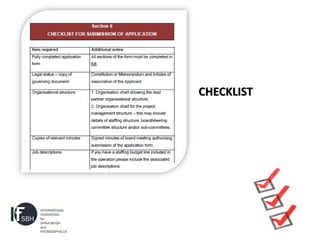
CHECKLIST
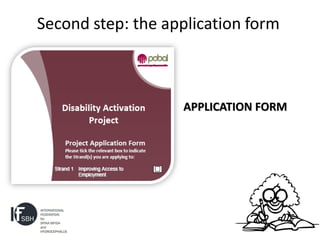
Second step: the application form


                   APPLICATION FORM
How to write the application
1) Organisation details
General information

2) Organisational Structure and Experience
Single applicant, consortium, relevant
exeperience
How to write the application
3) Project Details
 overall objective
 specific objective
 Inputs/means
 activities
 results
 outputs
 target group
 final beneficiaries
Important concepts
 overall objective
Broader, long-term changes (directly or indirectly; intended or
unintended) in the environment of the project. The project contributes
to the overall objective, but can not achieve it alone.

“to contribute to poverty reduction among vulnerable rural populations
of Laos”

 specific objective
Specific objective addressing the core problem(s) (e.g. improvements in
area of intervention due to the improved capacity of the target group)

“improvement of the living conditions by addressing needs and rights to
access to water, sanitation, health education and first aid in 30 villages in
the Vientiane and Sayabouri Provinces”
Important concepts

 Input/Means: resources used

 Activities:the steps undertaken to transform inputs into
  outputs, e.g. organization of the training sessions;

 Outputs: Goods and services delivered by the project (e.g. a
  training session);

 Results: Benefits derived from the outputs of the project
  (e.g. improved capacity of those who attended the training)
Important Concepts
target group
It is very specific (50 unemployed young people
with disability). Directly benefiting from the
activities of the project. They are involved.
final beneficiaries
benefiting from the operation in the long term
(impact), they might not be directly involved
(parents of 50 unemployed young people with
disability)
The terminology varies among different aid
agencies, donors and implementers which can
create confusion. It is especially important to
keep in mind the difference between Outputs
  and Results which are too often mixed up.
To be included

Dissemination and communication

Monitoring and evaluation

Sustainability
Budget
Human Resources
Salaries (gross salaries including social security
charges and other related costs)

Travel
Justifiable and appropriate rates, costs directly
relate to project activities

Overhead Cost
Cost directly related to the activities eg phone
Budget
Equipment
Computer etc
Programme Costs
Hire of rooms for trainings, communicaiton costs


        List of Cost/Activities ineligible
Thanks

  stefania.pirani@ifglobal.org

How to apply for European Social Funds

  • 1.
    European Social Fund: a practical example Stockholm, 16th June 2012 « Finding our ways » Stefania Pirani IF European Projects Coordinator
  • 2.
    A practical example:ESF in Ireland
  • 3.
    A practical example:ESF in Ireland ESF in Ireland is channeled through a variety of different programmes • Employment and Human Resources Development Operational Programme,2000-2006 • Border Midland & West Region • South & East Region • PEACE Programme II • EQUAL Community Initiative • Human Capital Investment Operational Programme 2007-2013 • Human Capital Investment Operational Programme 2007-2013 (Revised 2009) • Human Capital Investment Operational Programme 2007-2013 ( 2012 version)
  • 5.
    Managing Authority • Contact the unit and the person in charge for the ESF/disability actions • Check for information sessions
  • 6.
    First step: studythe Guidelines GUIDELINES + Q&A
  • 7.
    3 key elements •Objective of the programme What do they want to achieve throught my project? • Target Group Who do they want to reach? • Budget and Timescale How big and for how long?
  • 8.
    ELIGIBILITY CRITERIA • Administrativeeligibility criteria Deadline, applications forms, signatures, documents attached • Content of the proposal Type of activities, geographical impact, type of eligible costs
  • 9.
    Scoring • Selection Criteria Accordingto what criteria my application will be evaluated? What’s the weight of each criteria? • Check List Documents required
  • 10.
  • 11.
    Second step: theapplication form APPLICATION FORM
  • 12.
    How to writethe application 1) Organisation details General information 2) Organisational Structure and Experience Single applicant, consortium, relevant exeperience
  • 13.
    How to writethe application 3) Project Details  overall objective  specific objective  Inputs/means  activities  results  outputs  target group  final beneficiaries
  • 14.
    Important concepts  overallobjective Broader, long-term changes (directly or indirectly; intended or unintended) in the environment of the project. The project contributes to the overall objective, but can not achieve it alone. “to contribute to poverty reduction among vulnerable rural populations of Laos”  specific objective Specific objective addressing the core problem(s) (e.g. improvements in area of intervention due to the improved capacity of the target group) “improvement of the living conditions by addressing needs and rights to access to water, sanitation, health education and first aid in 30 villages in the Vientiane and Sayabouri Provinces”
  • 15.
    Important concepts  Input/Means:resources used  Activities:the steps undertaken to transform inputs into outputs, e.g. organization of the training sessions;  Outputs: Goods and services delivered by the project (e.g. a training session);  Results: Benefits derived from the outputs of the project (e.g. improved capacity of those who attended the training)
  • 16.
    Important Concepts target group Itis very specific (50 unemployed young people with disability). Directly benefiting from the activities of the project. They are involved. final beneficiaries benefiting from the operation in the long term (impact), they might not be directly involved (parents of 50 unemployed young people with disability)
  • 17.
    The terminology variesamong different aid agencies, donors and implementers which can create confusion. It is especially important to keep in mind the difference between Outputs and Results which are too often mixed up.
  • 18.
    To be included Disseminationand communication Monitoring and evaluation Sustainability
  • 19.
    Budget Human Resources Salaries (grosssalaries including social security charges and other related costs) Travel Justifiable and appropriate rates, costs directly relate to project activities Overhead Cost Cost directly related to the activities eg phone
  • 20.
    Budget Equipment Computer etc Programme Costs Hireof rooms for trainings, communicaiton costs List of Cost/Activities ineligible
  • 21.