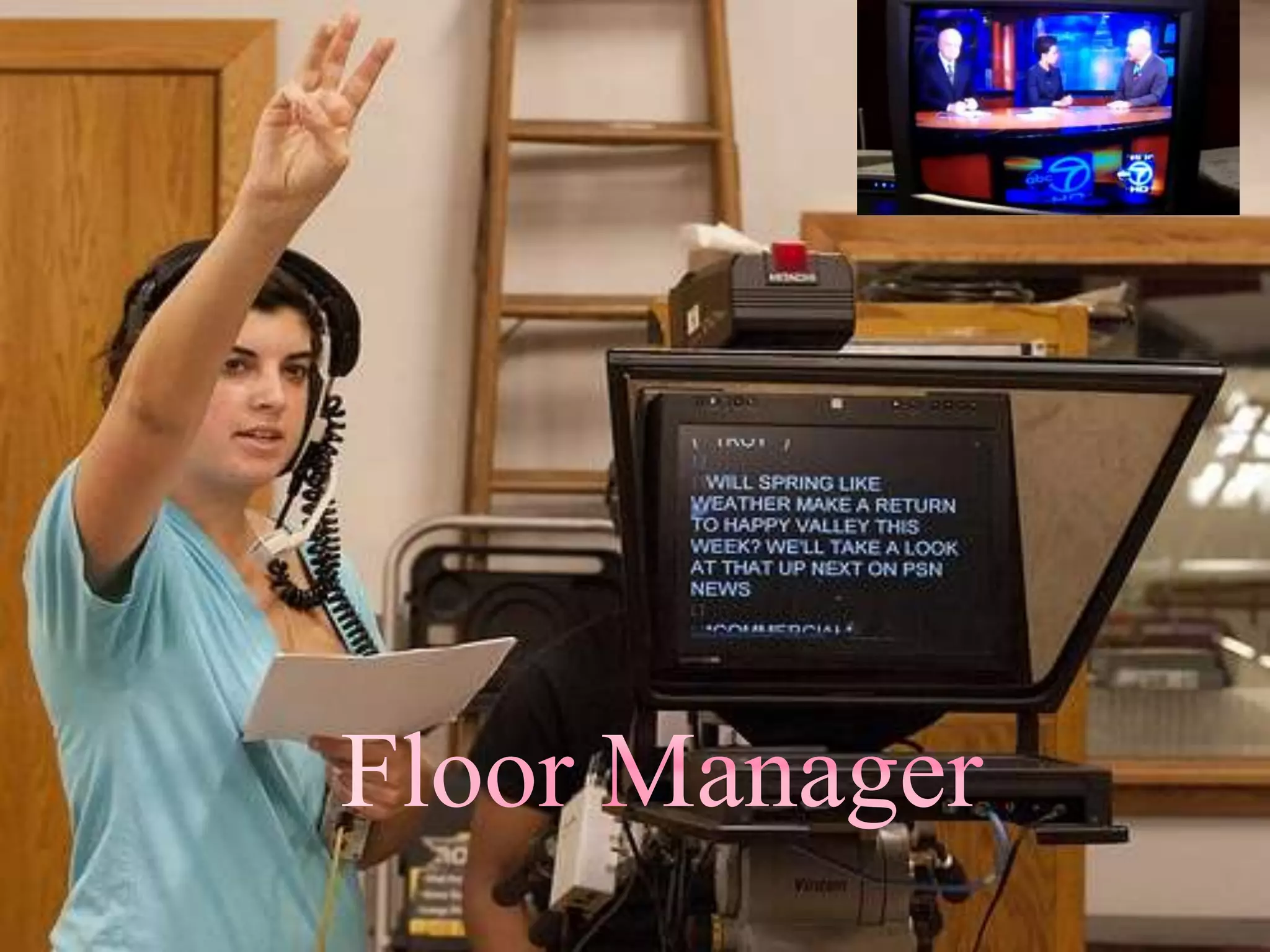
Who is a Floor
Manager?


He is the person in charge
of the production "floor".
S/he is one of the most important roles
within the studio area as they communicate
any vital information or instructions from the
     Who others within the gallery.
Director or  is a Floor Manager?
News Presenter


                                             Lights


                                             Camera
           Floor Manager                     Operator


Director
                                            Audience
                       And other
                         staff
1.   Assisting with production
     planning and consulting
     on logistics.


                                 2. Overseeing the work of
                                 other departments, such as
                                 sound, lighting and props.


                                 3. Ensuring all equipment is in
                                 place and technical checks
4. Checking the “talk-backs” and
cables

5. Briefing presenters and talent


                                    6. Preparing the audience


                                    7. Coordinating rehearsals;
                                           rehearsing live shows
8. referring to floor plans


9. assisting in the planning and
    preparation of productions


             10. assisting guests on the show
1. Anchor Movement


                                 2. Providing cues, timing and
                                     other information to presenters
                                     and talent


3. Relaying information among
the control room, floor staff
and talent.

4. Informing the director
of any relevant off-camera action.
5. looking ahead in the
   programme schedule
   for any required change or props


6. Overseeing safety issues


7. Briefing and looking after those
   involved in the programme;


8. Managing the audience
9. In outside broadcasts;
   liasing with venue staff,
   organizing talent, etc

10. organizing runners to make
    the best use of studio time;

11. dealing with any technical
    problems

12. controlling the studio and
    halting production if necessary
13. liaising with public relations staff to agree
     who will be interviewed

14. passing information and progress reports from
    live events to studio presenters
As a senior position it requires
     a high level of
maturity, competence and
confidence
Broad understanding of
television requirements and
 the positions of floor staff
Ability to work
       under stress
      and cope with
difficult situation calmly
excellent interpersonal skills
          and be
 unflinchingly diplomatic
a clear understanding
        of the
programme’s structure
Multi task person
       and
part of the team
A sense of timing and continuity is
              critical.
In simple words…
Normally, the talent is not
able to use a headset and
cannot receive instructions
directly from the director.


                              It is the prime responsibility
                               of the floor manager to act
                              as a liaison between the
                              talent and the director.
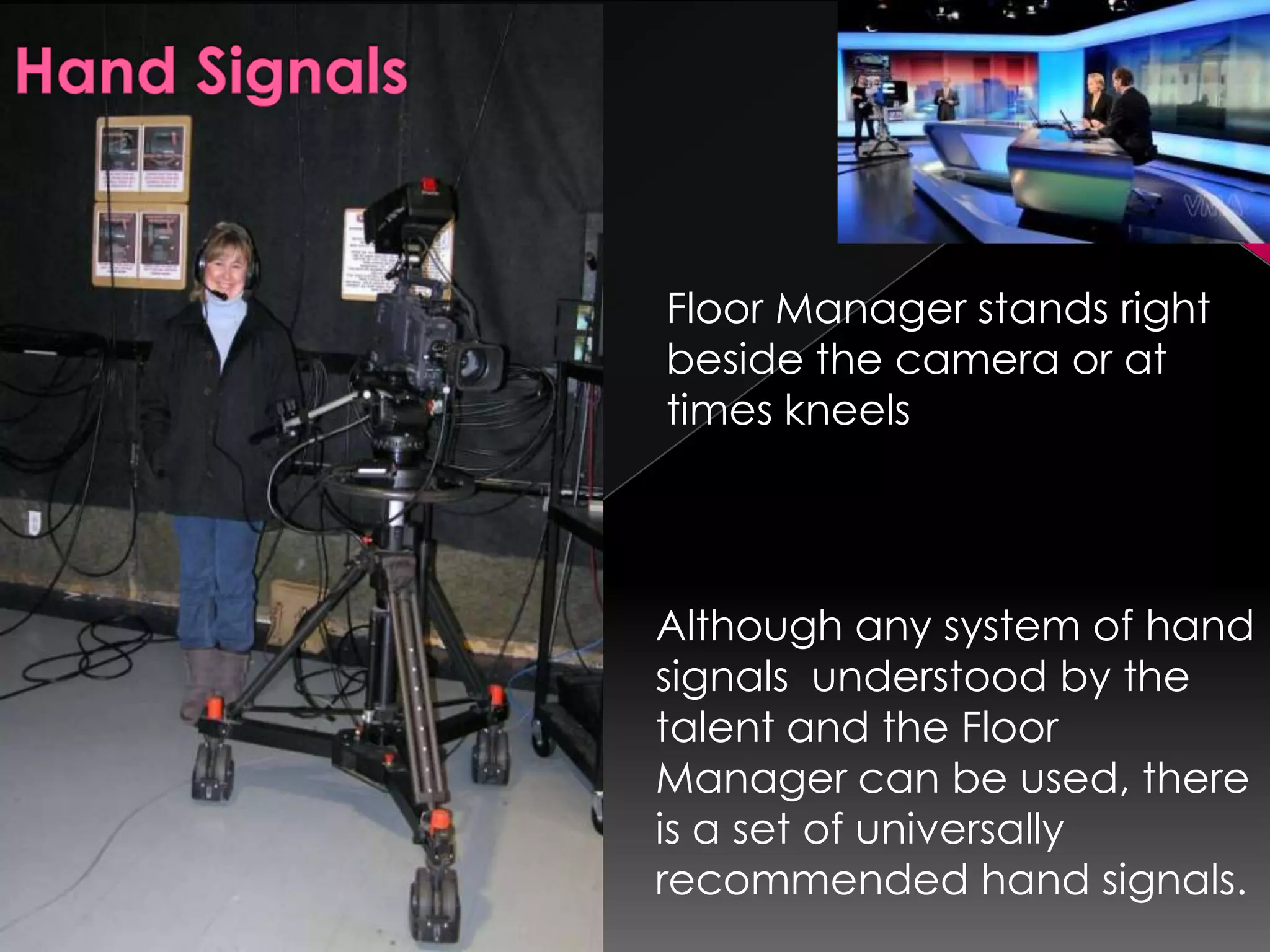
Floor Manager stands right
beside the camera or at
times kneels


Although any system of hand
signals understood by the
talent and the Floor
Manager can be used, there
is a set of universally
recommended hand signals.
Stand by.

For the hand signal to “stand by,” the
floor manager raises his hand and
 arm at the beginning of the show or
following a spot break
30 seconds to go

For the hand signal that there are 30
seconds remaining in the
show/segment,
the floor manager forms the letter
T with both hands or crosses the
hands at the neck with clenched fists.
15 seconds to go/wrap it up

For the hand signal
that there are 15 seconds remaining in the
show/segment and the talent should wrap up
what he is doing, the floor manager creates a
grabbing motion with his hand that results in a fist.
Cut.

For the hand signal to “cease
 talking” or “stop action,” the
floor manager draws his hand
across his throat in a slashing
motion.
Stretch.

     The floor manager pulls his hands
apart as if stretching a rubber band. Longer
amounts of time are indicated when the flo
or manager places his hands farther apart at
the end of the stretching motion; shorter time
amounts are indicated when the floor manager
places his hands closer together.
OK

For the hand signal that
“everything is fine,” the floor
manager makes a circle with
his thumb and forefinger.
Speak more softly

For the hand signal to “speak more
softly,” the floor manager raises the
palm of his hand to his mouth.
Speak up

For the hand signal to
“speak up,” the floor
manager cups his ear
with his hand.
Speak or look at this camera

 For the hand signal to “speak or look at this
camera,” the floor manager points to the on-
air camera with his
hand. A waving motion from one camera to
another alerts the talent that the director is
switching the shot to another on-air camera.
Be precise and deliberate

Do not wave your arms in the air frantically

Be aware of the expected camera
movements
With all the hand signals and the duties
To go…

Telivisioin Production Floor manager

  • 2.
    Who is aFloor Manager? He is the person in charge of the production "floor".
  • 3.
    S/he is oneof the most important roles within the studio area as they communicate any vital information or instructions from the Who others within the gallery. Director or is a Floor Manager?
  • 4.
    News Presenter Lights Camera Floor Manager Operator Director Audience And other staff
  • 6.
    1. Assisting with production planning and consulting on logistics. 2. Overseeing the work of other departments, such as sound, lighting and props. 3. Ensuring all equipment is in place and technical checks
  • 7.
    4. Checking the“talk-backs” and cables 5. Briefing presenters and talent 6. Preparing the audience 7. Coordinating rehearsals; rehearsing live shows
  • 8.
    8. referring tofloor plans 9. assisting in the planning and preparation of productions 10. assisting guests on the show
  • 9.
    1. Anchor Movement 2. Providing cues, timing and other information to presenters and talent 3. Relaying information among the control room, floor staff and talent. 4. Informing the director of any relevant off-camera action.
  • 10.
    5. looking aheadin the programme schedule for any required change or props 6. Overseeing safety issues 7. Briefing and looking after those involved in the programme; 8. Managing the audience
  • 11.
    9. In outsidebroadcasts; liasing with venue staff, organizing talent, etc 10. organizing runners to make the best use of studio time; 11. dealing with any technical problems 12. controlling the studio and halting production if necessary
  • 12.
    13. liaising withpublic relations staff to agree who will be interviewed 14. passing information and progress reports from live events to studio presenters
  • 14.
    As a seniorposition it requires a high level of maturity, competence and confidence
  • 15.
    Broad understanding of televisionrequirements and the positions of floor staff
  • 16.
    Ability to work under stress and cope with difficult situation calmly
  • 17.
    excellent interpersonal skills and be unflinchingly diplomatic
  • 18.
    a clear understanding of the programme’s structure
  • 19.
    Multi task person and part of the team
  • 20.
    A sense oftiming and continuity is critical.
  • 23.
  • 25.
    Normally, the talentis not able to use a headset and cannot receive instructions directly from the director. It is the prime responsibility of the floor manager to act as a liaison between the talent and the director.
  • 26.
    Floor Manager standsright beside the camera or at times kneels Although any system of hand signals understood by the talent and the Floor Manager can be used, there is a set of universally recommended hand signals.
  • 27.
    Stand by. For thehand signal to “stand by,” the floor manager raises his hand and arm at the beginning of the show or following a spot break
  • 28.
    30 seconds togo For the hand signal that there are 30 seconds remaining in the show/segment, the floor manager forms the letter T with both hands or crosses the hands at the neck with clenched fists.
  • 29.
    15 seconds togo/wrap it up For the hand signal that there are 15 seconds remaining in the show/segment and the talent should wrap up what he is doing, the floor manager creates a grabbing motion with his hand that results in a fist.
  • 31.
    Cut. For the handsignal to “cease talking” or “stop action,” the floor manager draws his hand across his throat in a slashing motion.
  • 32.
    Stretch. The floor manager pulls his hands apart as if stretching a rubber band. Longer amounts of time are indicated when the flo or manager places his hands farther apart at the end of the stretching motion; shorter time amounts are indicated when the floor manager places his hands closer together.
  • 34.
    OK For the handsignal that “everything is fine,” the floor manager makes a circle with his thumb and forefinger.
  • 35.
    Speak more softly Forthe hand signal to “speak more softly,” the floor manager raises the palm of his hand to his mouth.
  • 36.
    Speak up For thehand signal to “speak up,” the floor manager cups his ear with his hand.
  • 37.
    Speak or lookat this camera For the hand signal to “speak or look at this camera,” the floor manager points to the on- air camera with his hand. A waving motion from one camera to another alerts the talent that the director is switching the shot to another on-air camera.
  • 38.
    Be precise anddeliberate Do not wave your arms in the air frantically Be aware of the expected camera movements
  • 39.
    With all thehand signals and the duties
  • 40.