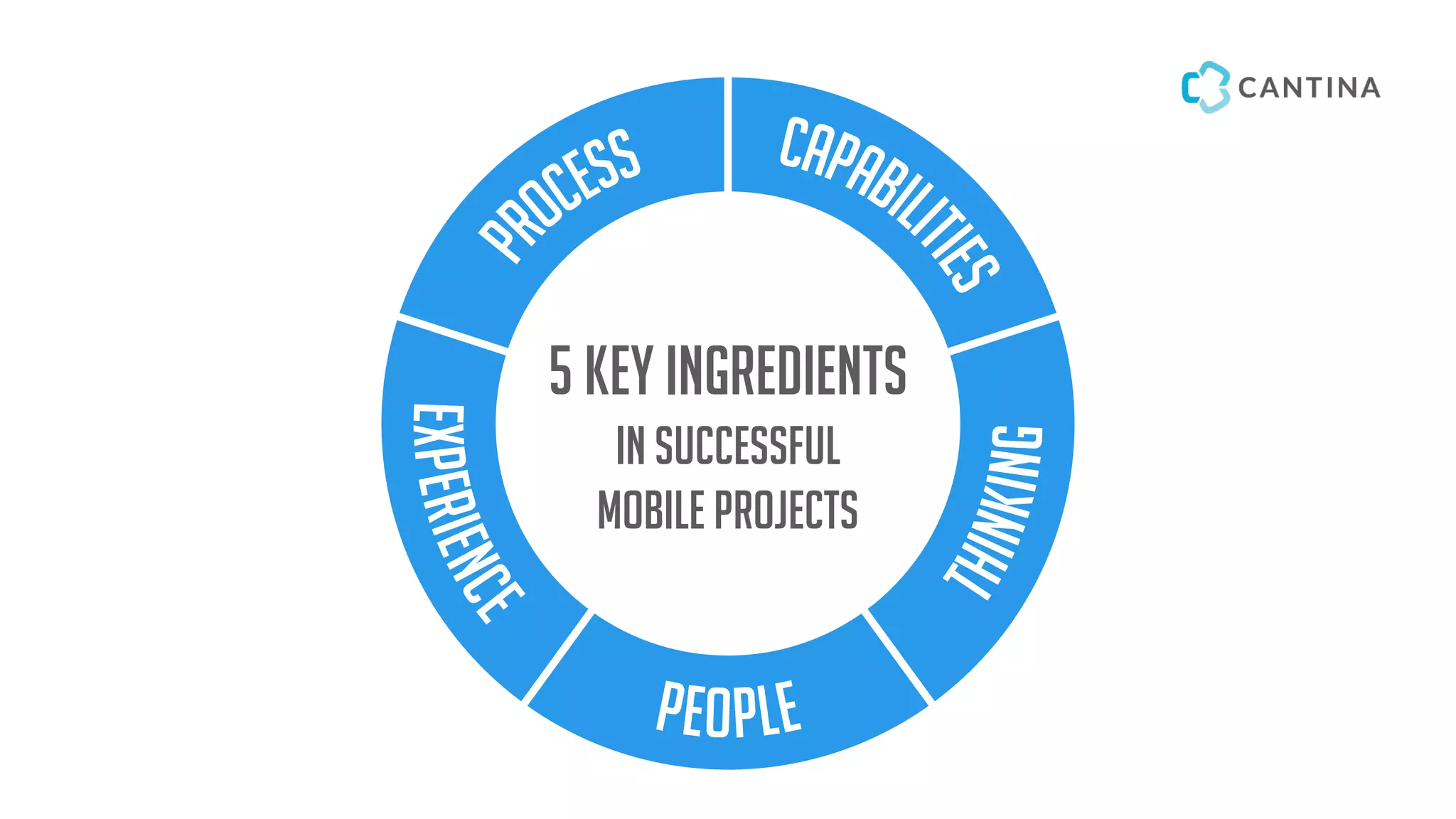
5 key ingredients in
successful mobile projects
Can!na 2016
#mobile5ingredients
The mobile world has matured,
especially for developers
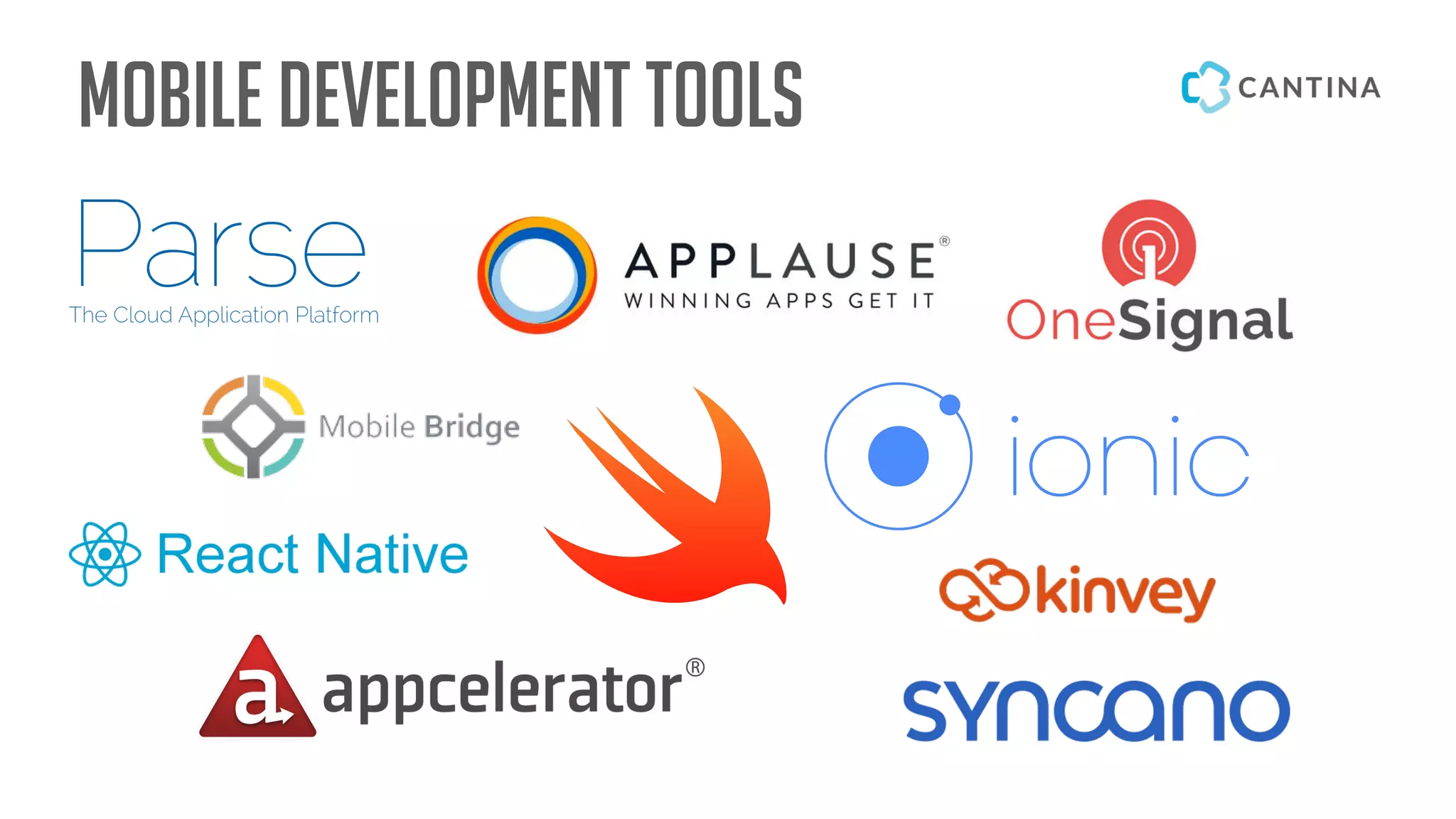
Mobile Development Tools
But a!aining mobile success
is s"ll proving to be a challenge
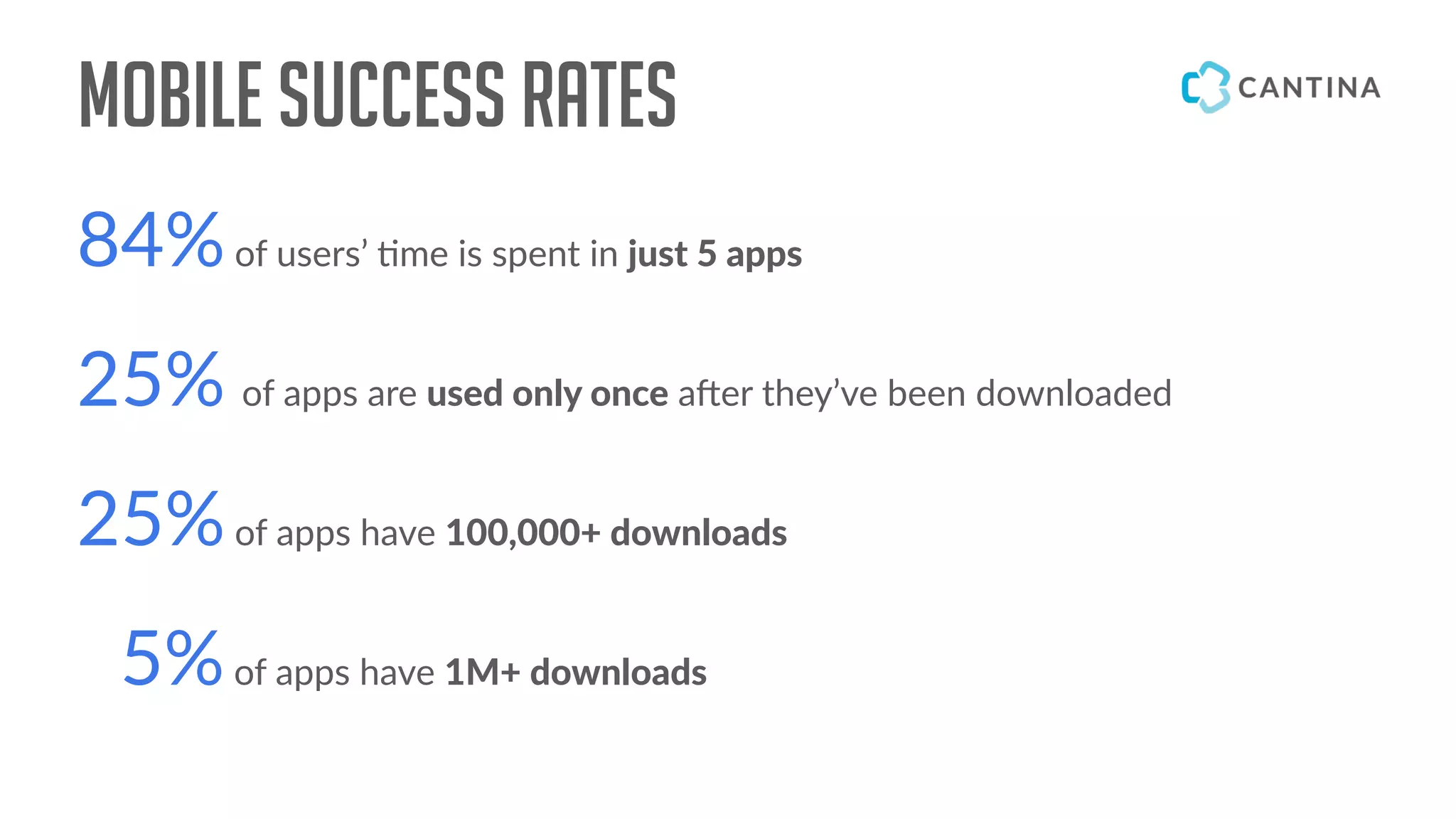
Mobile Success Rates
84%of users’ !me is spent in just 5 apps
25% of apps are used only once a"er they’ve been downloaded
25%of apps have 100,000+ downloads
5%of apps have 1M+ downloads
If apps are easier than ever to develop,
why are they so rarely successful?
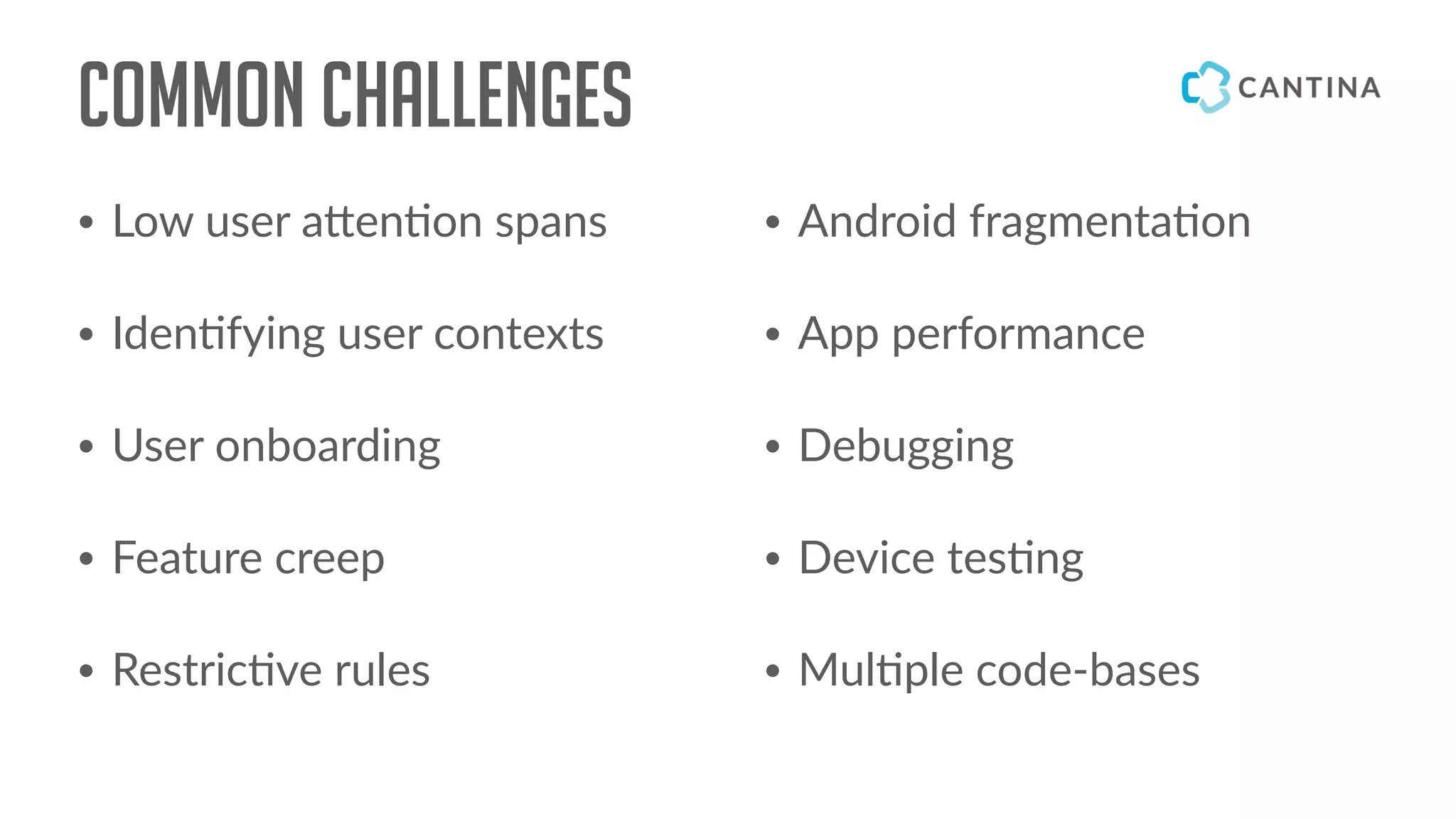
Common Challenges
• Low user a#en!on spans
• Iden!fying user contexts
• User onboarding
• Feature creep
• Restric!ve rules
• Android fragmenta!on
• App performance
• Debugging
• Device tes!ng
• Mul!ple code-bases
“How much will it cost
To build our app?”
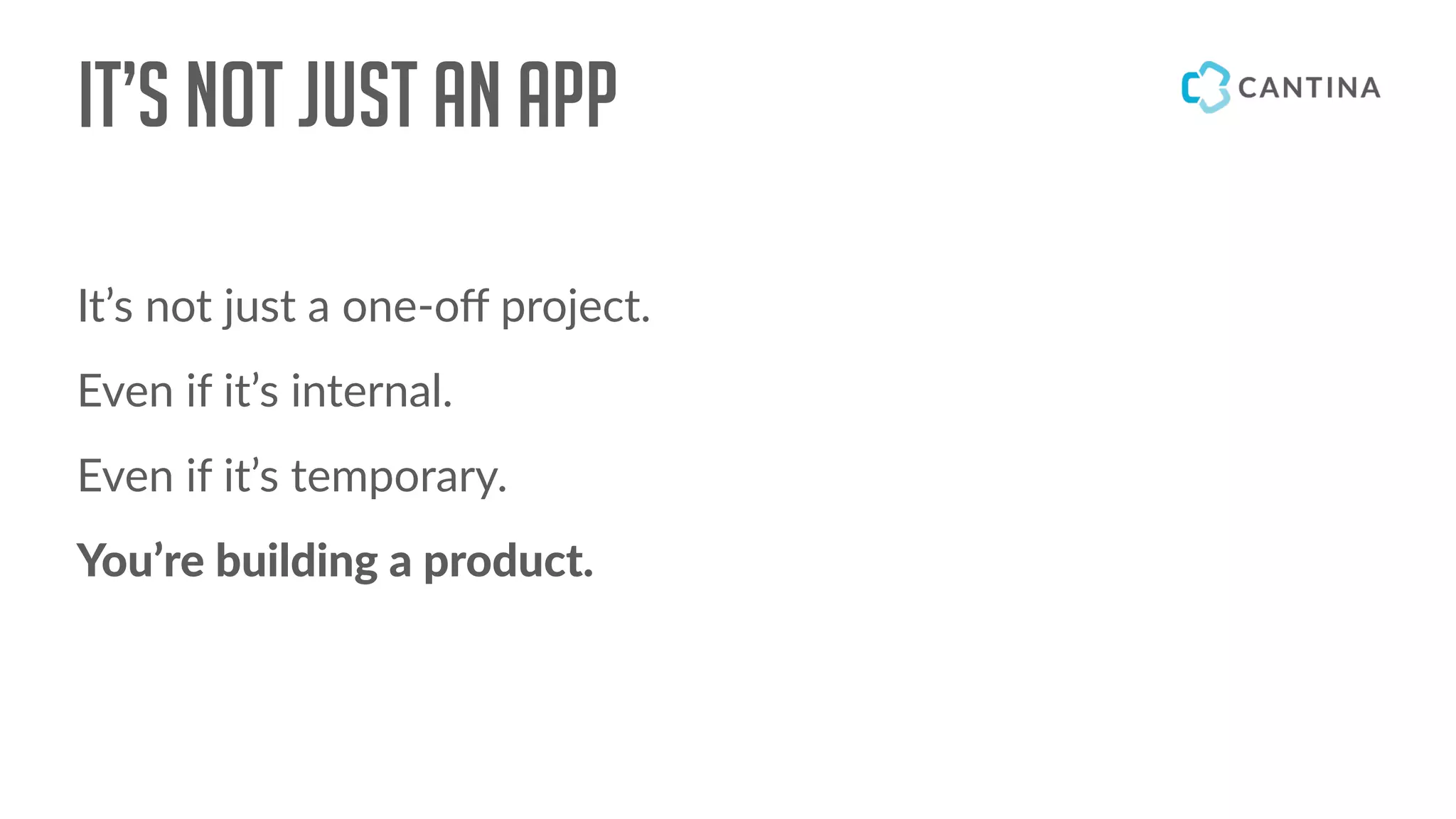
It’s not just an app
It’s not just a one-off project.
Even if it’s internal.
Even if it’s temporary.
You’re building a product.
“What will it take to build
the right product?”
It’s not enough to simply exist in the mobile
space. You must create mobile products that
cap"vate your customers and keep them
coming back.
The recipe is for a product
not just an app
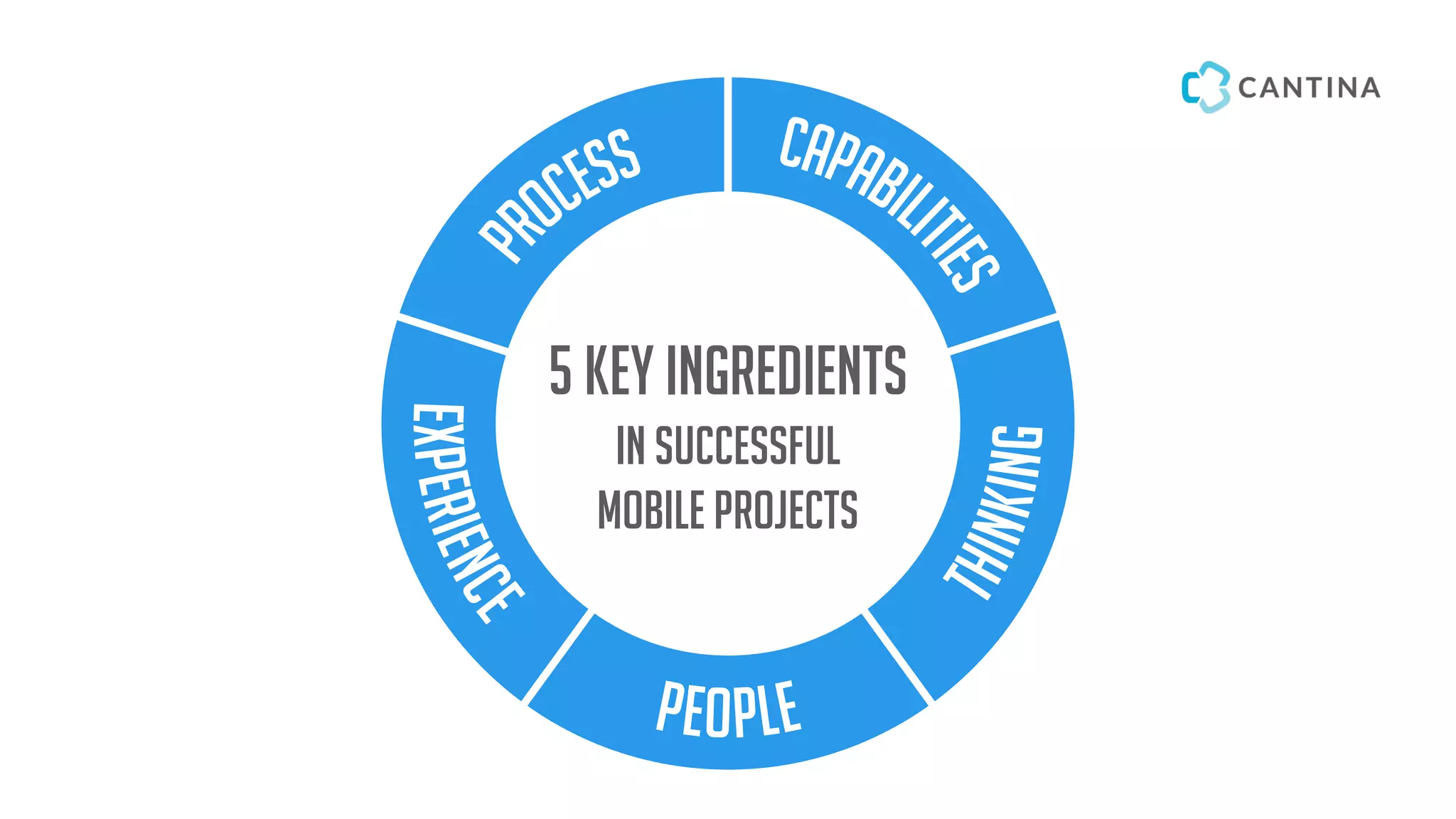
People
experience
thinking
capabili
ties
pr
ocess
5 key ingredients
in successful
mobile projects
Process
First step: Adopt a process geared
for holis"c product development
Use Lean & Agile methodologies
to hypothesize and validate
solutions
Product Development Process
Vision Define Design Deliver Measure
Big ideas
Shippable
product
Tested features
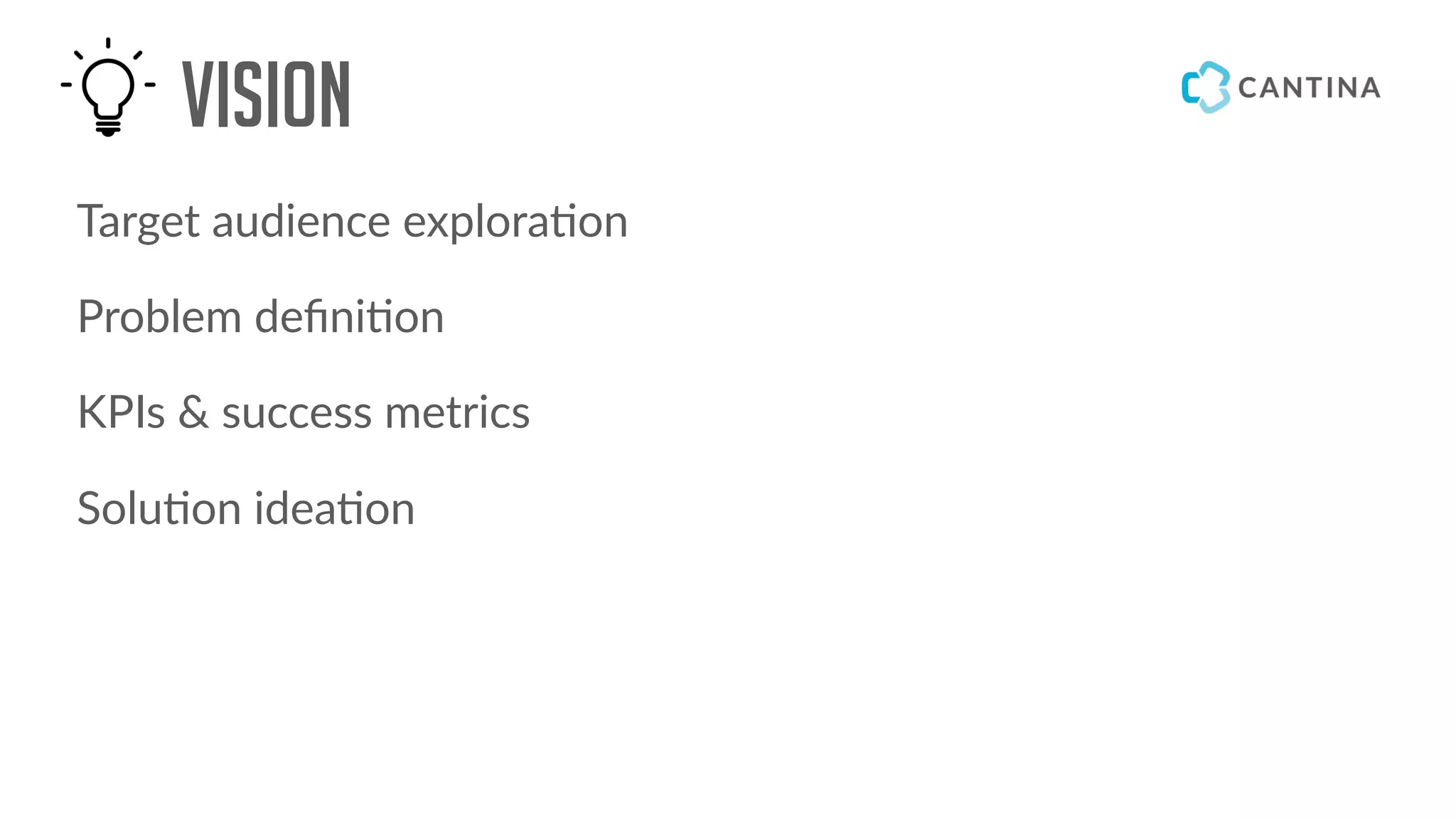
Vision
Target audience explora!on
Problem defini!on
KPIs & success metrics
Solu!on idea!on
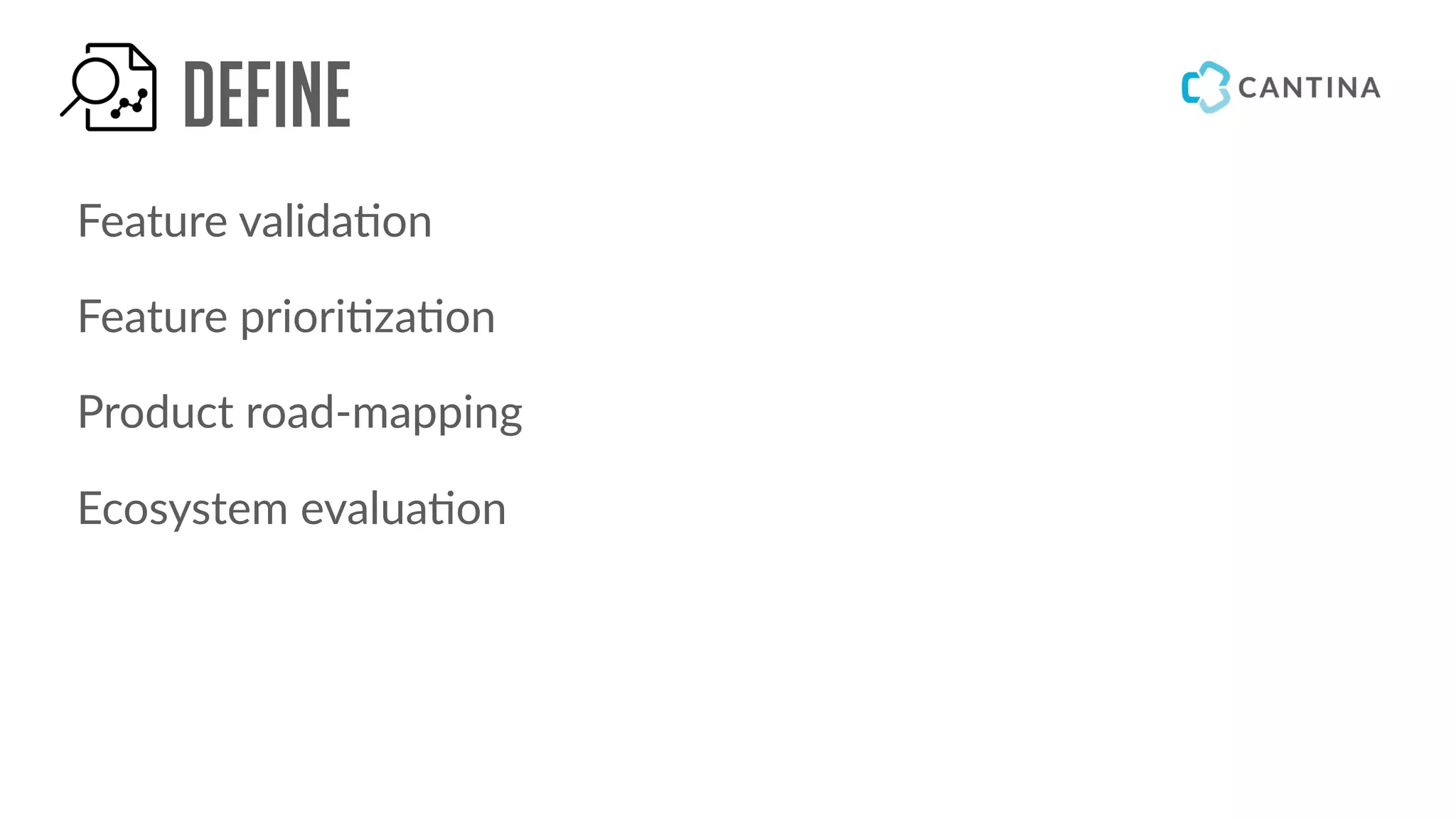
Define
Feature valida!on
Feature priori!za!on
Product road-mapping
Ecosystem evalua!on
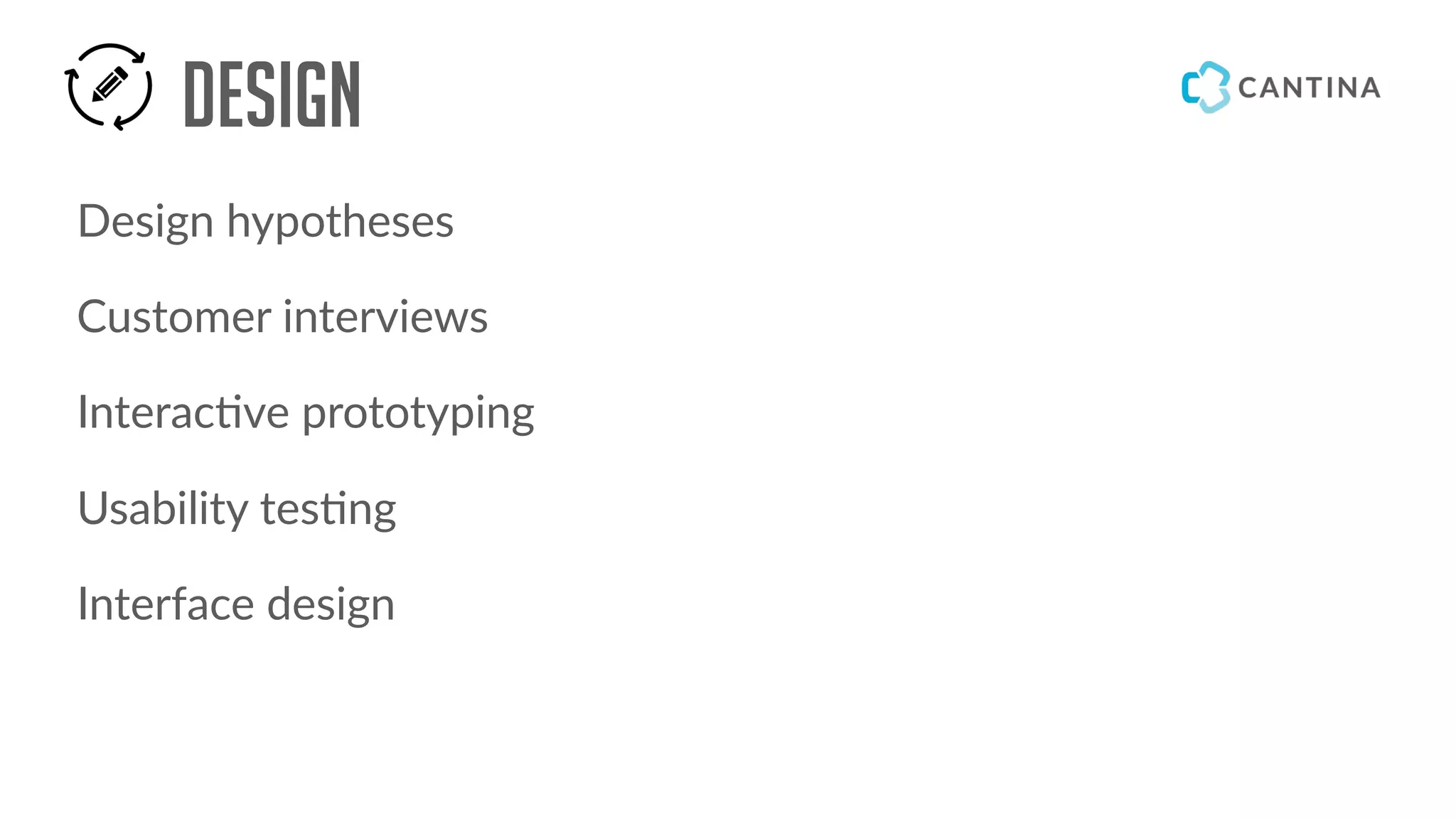
Design
Design hypotheses
Customer interviews
Interac!ve prototyping
Usability tes!ng
Interface design
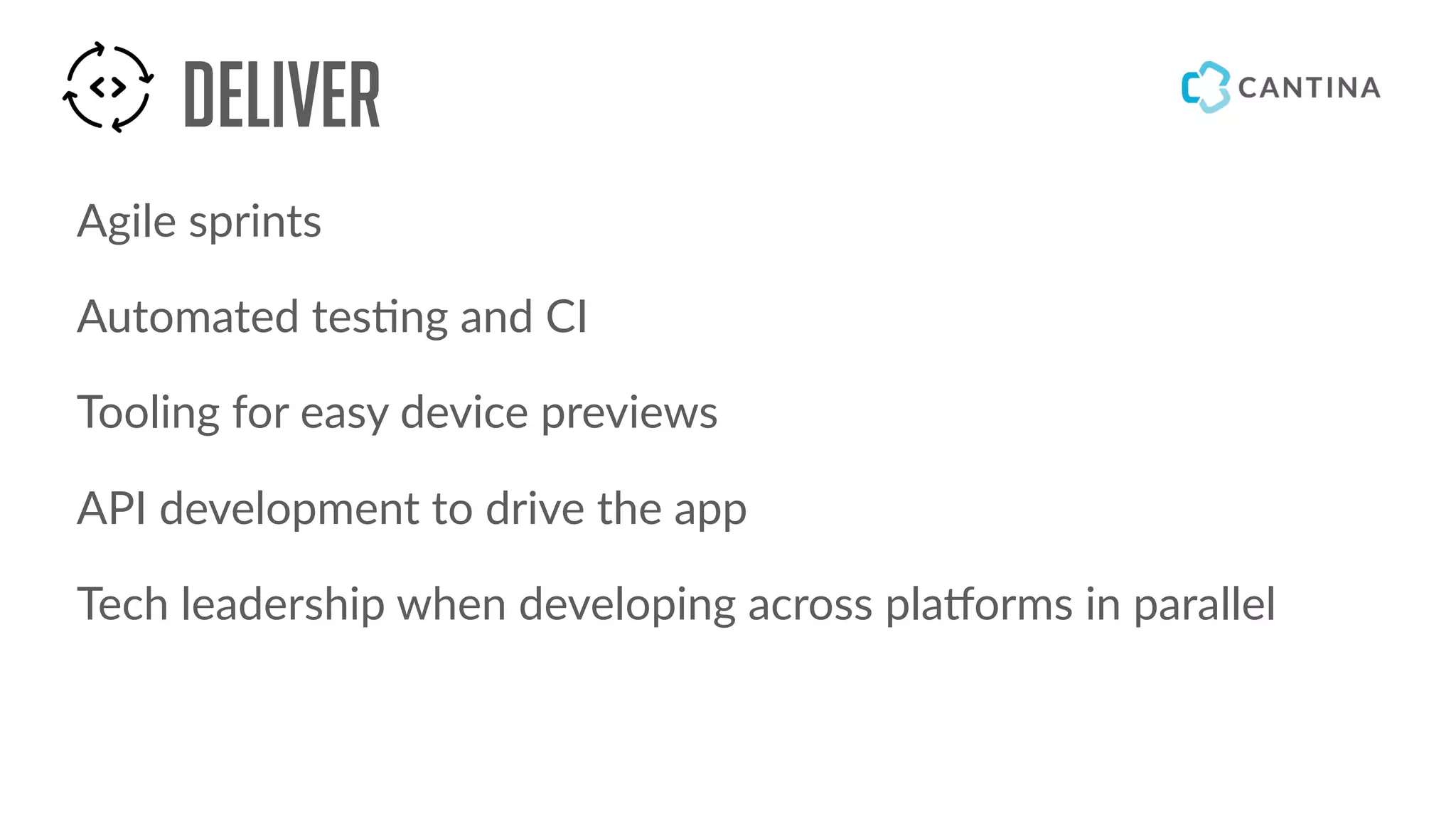
Deliver
Agile sprints
Automated tes!ng and CI
Tooling for easy device previews
API development to drive the app
Tech leadership when developing across pla%orms in parallel
Measure
Beta releases
Device tes!ng
Usage analy!cs
App Store reviews
Implemen"ng a lean, agile approach
will start your team in using a product
mindset
Capabilities
It’s not just about having iOS or
Android dev on hand
d
The right mix of capabilities
will unlock new opportunities
for your product
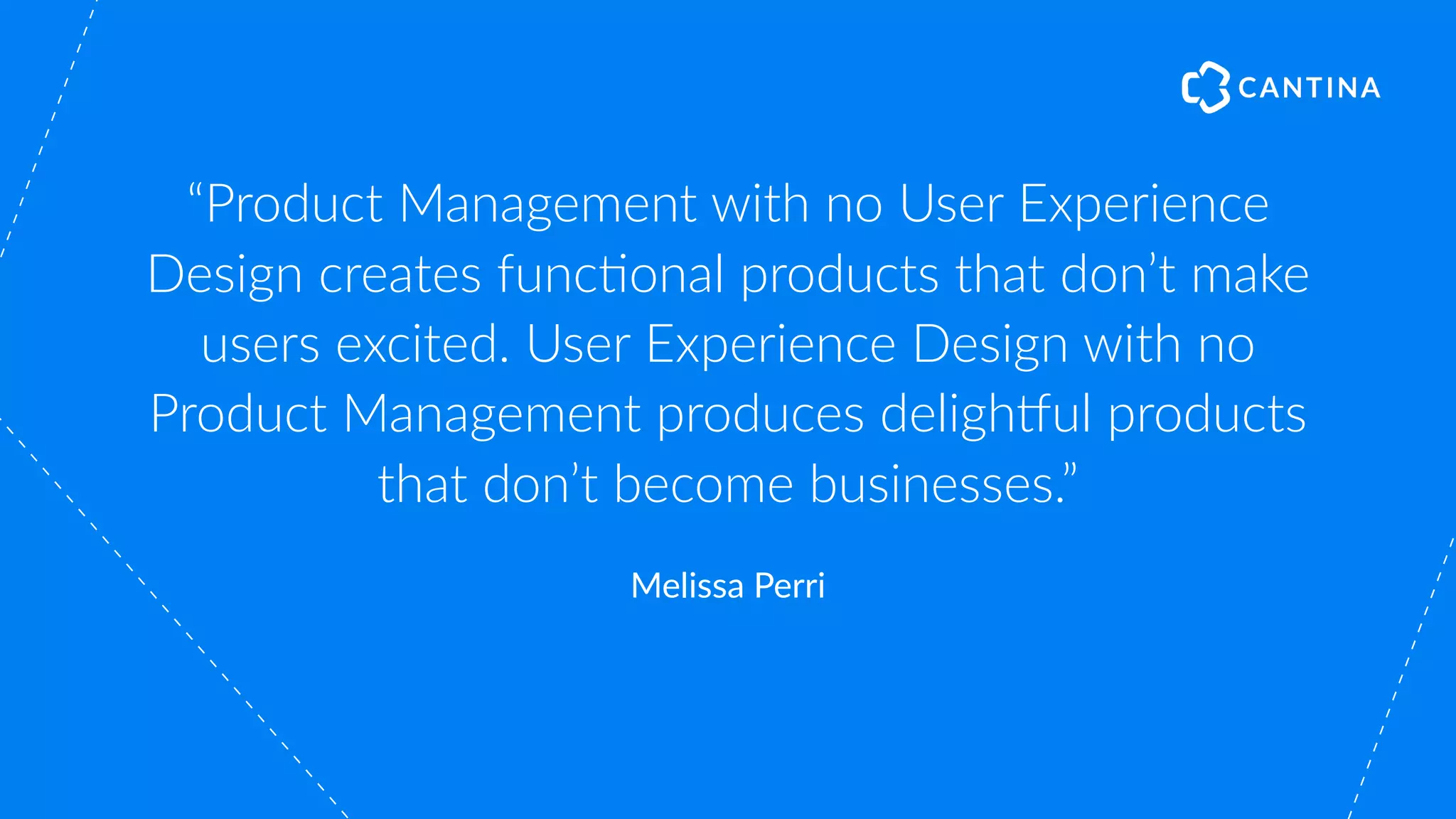
“Product Management with no User Experience
Design creates func"onal products that don’t make
users excited. User Experience Design with no
Product Management produces deligh#ul products
that don’t become businesses.”
Melissa Perri
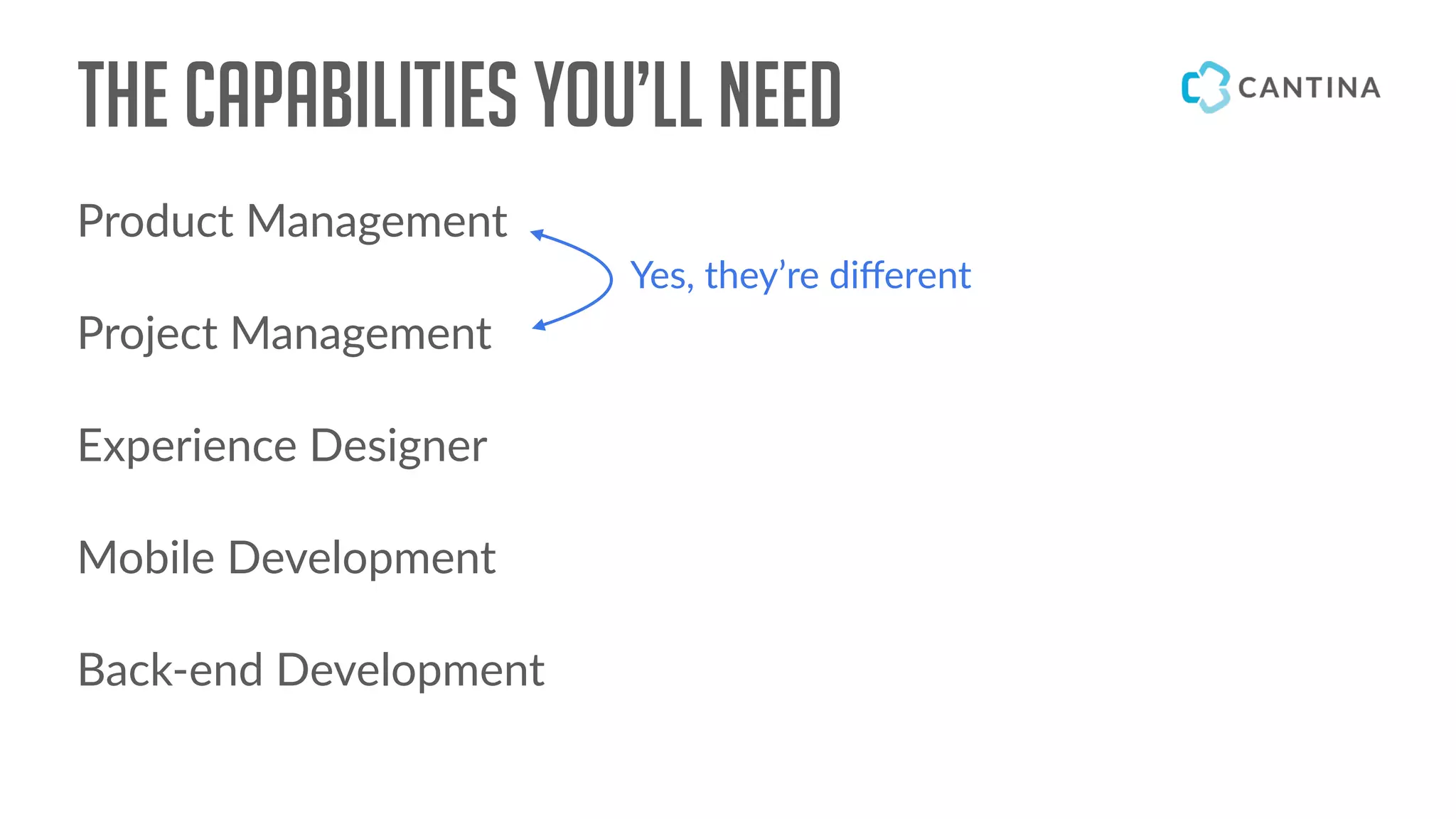
The capabilities You’ll need
Product Management
Project Management
Experience Designer
Mobile Development
Back-end Development
Yes, they’re different
Product Development Process
Vision Define Design Deliver Measure
Big ideas
Shippable
product
Tested features
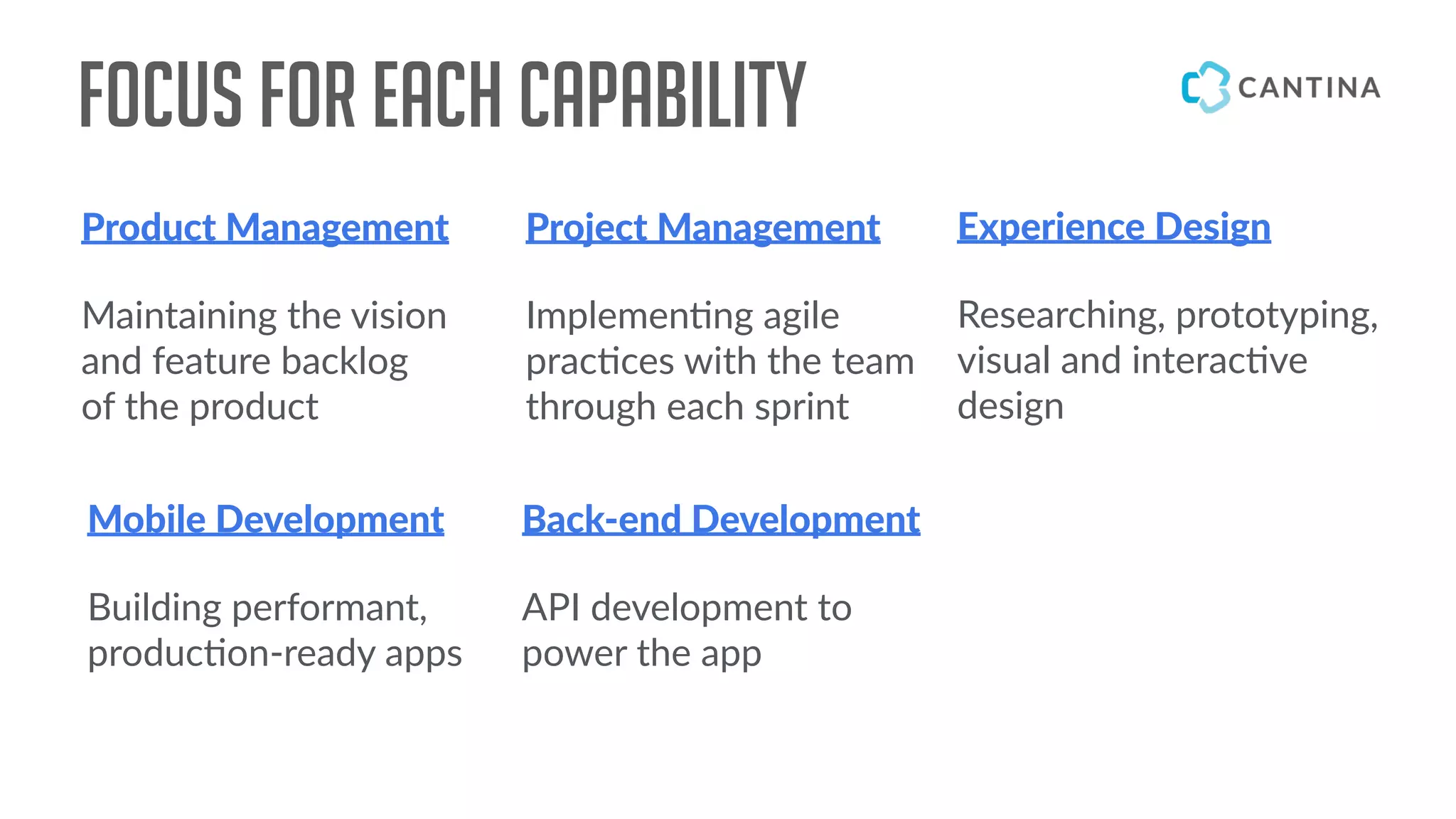
Focus for each capability
Product Management Project Management Experience Design
Mobile Development Back-end Development
Maintaining the vision
and feature backlog
of the product
Implemen!ng agile
prac!ces with the team
through each sprint
Researching, prototyping,
visual and interac!ve
design
Building performant,
produc!on-ready apps
API development to
power the app
A fully capable team will be able to
take the product from idea to launch
without stopping
Experience
Capabili"es are best backed up by
exper"se and experience
Faster to build
Faster to iterate
Faster to identify the features
your audience will love
Experienced designers
live for rapid prototypes
Experienced designers
know their design pa!erns
Experienced developers
understand the pla#orms
Experienced developers
can avoid common pi#alls
Experienced teams
know how to avoid feature creep
An experienced team will close the gap
between the product you’re building
and the product your audience wants
Thinking
Innova"ve solu"ons are
a product of innova"ve thinking
innovative thinking involves
problem solving and
breaking down complexity
The team should be thinking
about how to marry the user needs
with the business needs
The team should be thinking
about reducing the product to its
simplest form
The team should be thinking
about breaking down
technical complexi"es
The team should be thinking
about how the product fits in with
the user’s app ecosystem
The same style of innova"ve thinking is
used for solving product, design, and
technical challenges
People
Your people are the difference
between an idea and reality
Build up your team with people…
with a passion for mobile
with empathy for end users
who enjoy experimen!ng
who value open communica!on
who look to team up with others (hint: avoid “rockstars”)
The teams that consistently deliver
are the teams that trust each other
Embrace everyone on your delivery
team as a “designer”
If the people working on your product
don’t stand out, your product won’t
stand out
Wrap Up
Increase your likelihood for success
by focusing on the full recipe.
People
experience
thinking
capabili
ties
pr
ocess
5 key ingredients
in successful
mobile projects
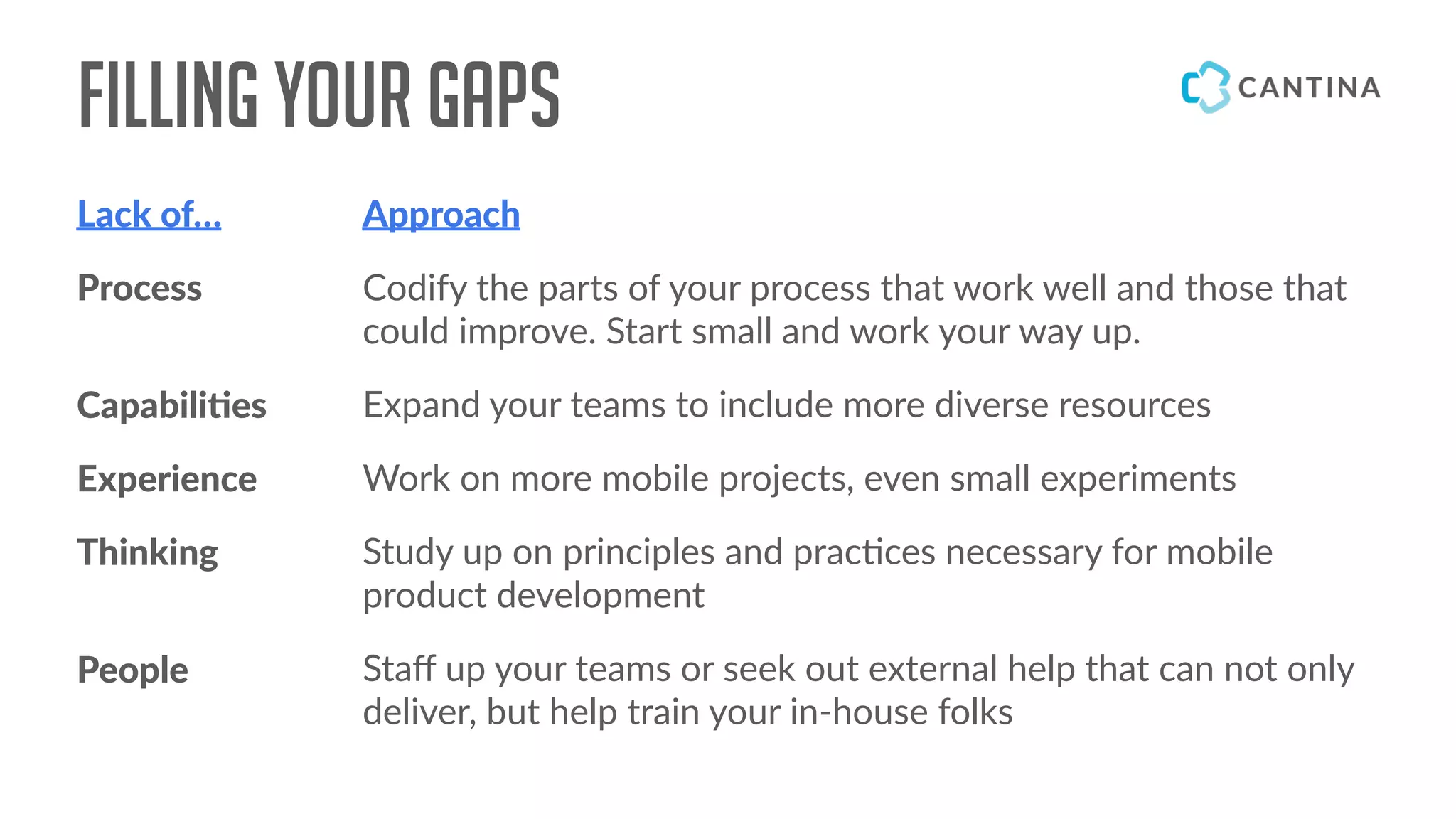
Filling your gaps
Lack of…
Process
Capabili!es
Experience
Thinking
People
Approach
Codify the parts of your process that work well and those that
could improve. Start small and work your way up.
Expand your teams to include more diverse resources
Work on more mobile projects, even small experiments
Study up on principles and prac!ces necessary for mobile
product development
Staff up your teams or seek out external help that can not only
deliver, but help train your in-house folks
Don’t get caught in the trap
of thinking how much
Your app costs
build your app the way you’d
build other products
Deliver the right product
to the right audience
Thank you
About cantina
• Boston-based digital design and development agency
• Founded in 2007, 60+ employees
• We help clients like Putnam Investments, John
Hancock, CUNA Mutual Group, Epsilon, and Pearson
deliver be#er digital products for their customers
• Can!na’s people turn great ideas into digital reality,
execu!ng with the best design and development
techniques available

Five Key Ingredients in Successful Mobile Projects