Influence of consumer
characteristics on
buying behavior
BEHAVIOR
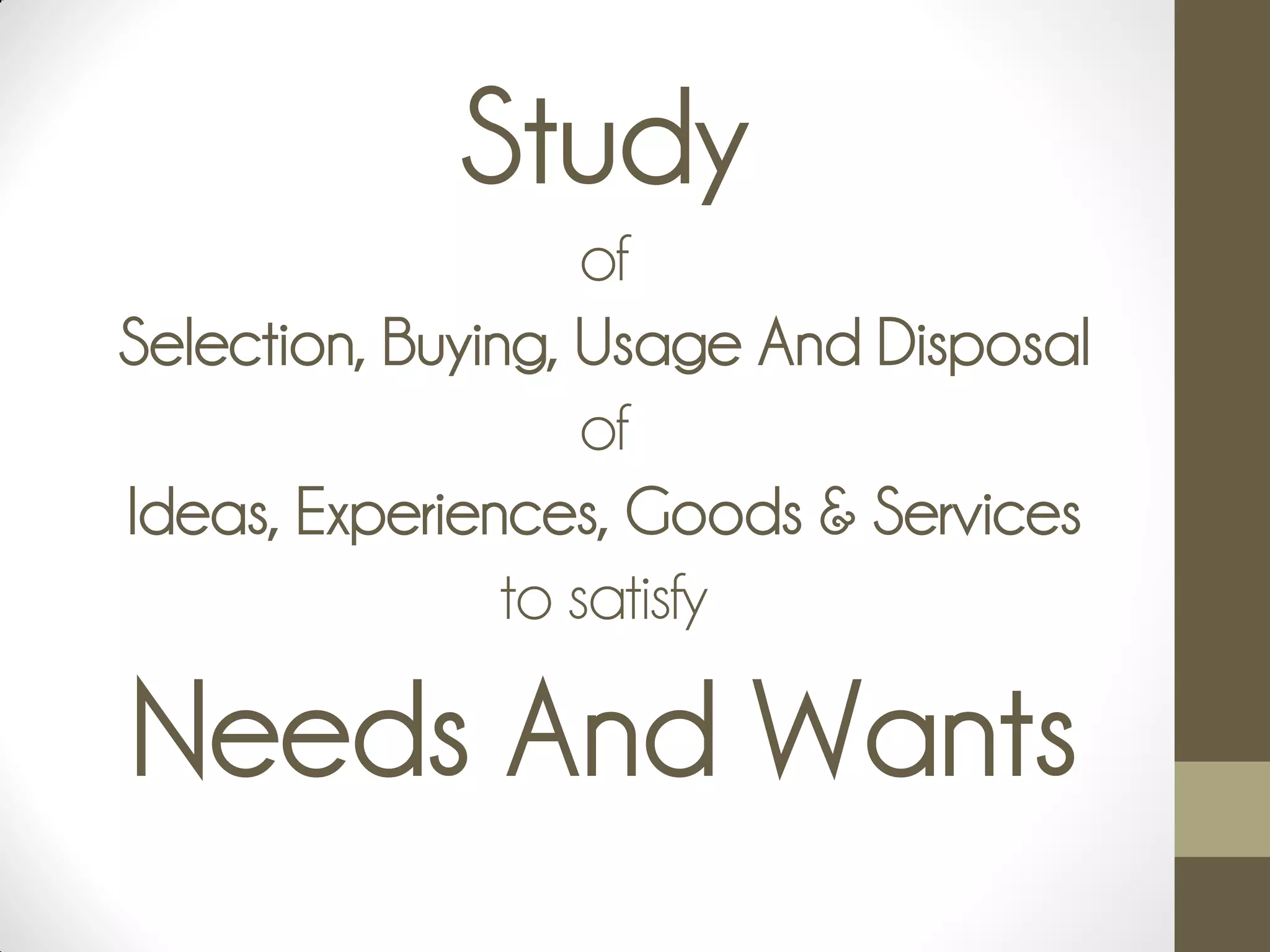
Study
of
Selection, Buying, Usage And Disposal
of
Ideas, Experiences, Goods & Services
to satisfy
Needs And Wants
FACTORS
RESPONSIBLE
CULTURAL
Culture is the fundamental
determinant of person’s
wants and behavior
SUBCULTURES
PROVIDES
MORE
Specific Identification
and
Socialization
INCLUDES
Nationalities
Religions
Racial Groups
Geographic Regions
Marketers develop
specialized marketing
programs for a particular
subcultures when required.
Indian Marketers uses
SEC(Socio-Economic Classification)
to classify buyers in India.
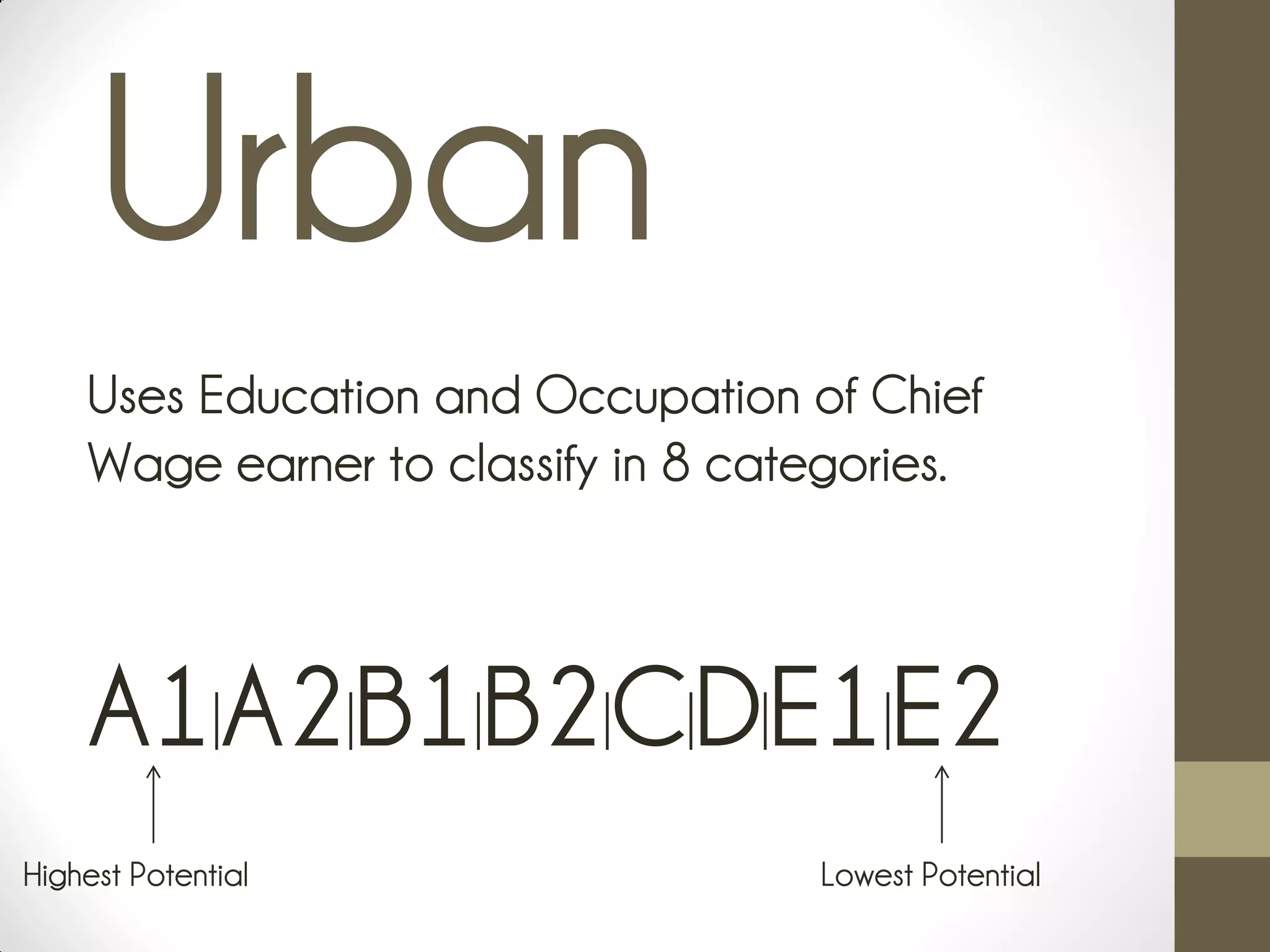
Urban
Uses Education and Occupation of Chief
Wage earner to classify in 8 categories.
A1|A2|B1|B2|C|D|E1|E2
Highest Potential Lowest Potential
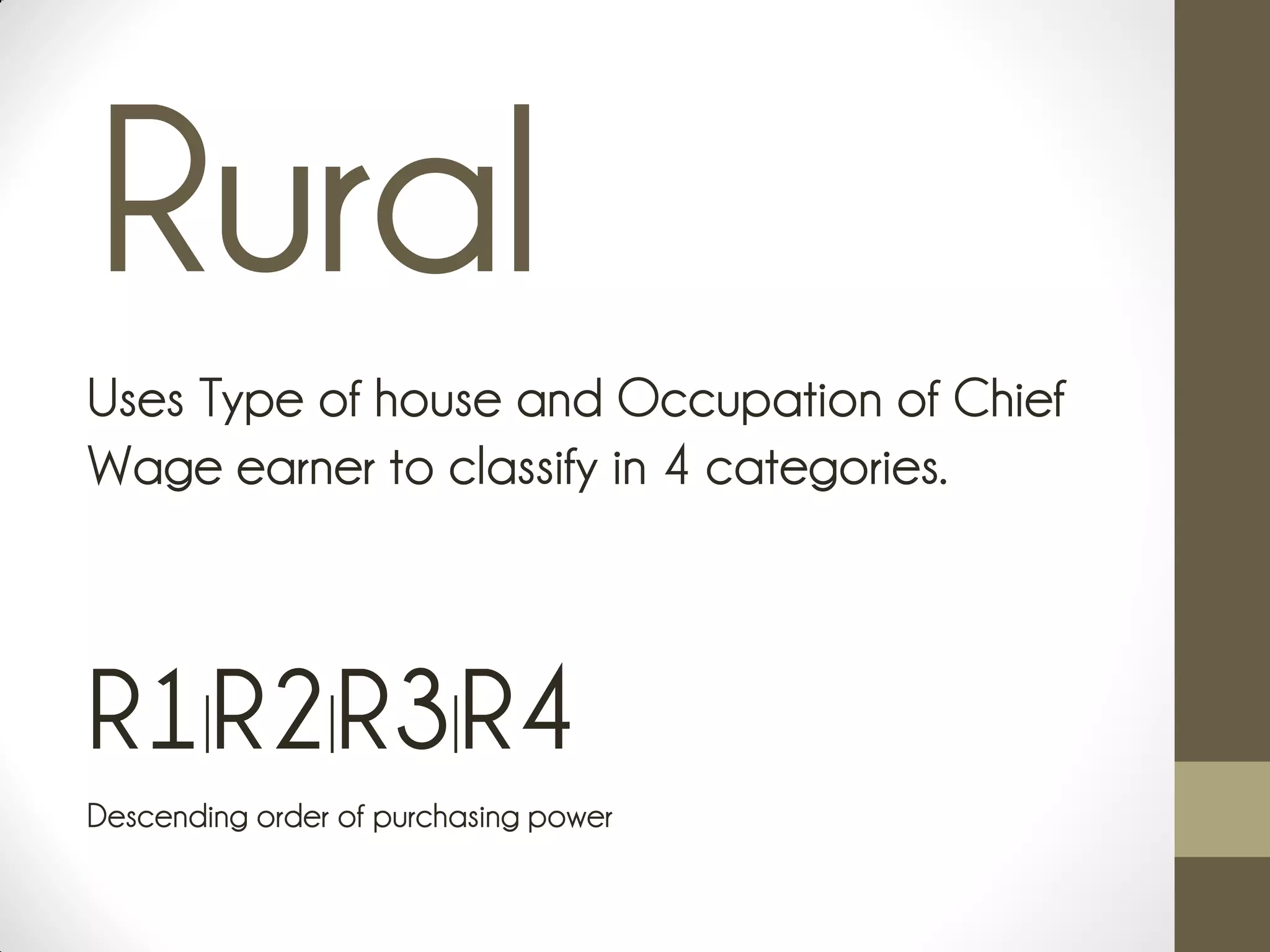
Rural
Uses Type of house and Occupation of Chief
Wage earner to classify in 4 categories.
R1|R2|R3|R4
Descending order of purchasing power
SOCIAL
Reference
groups
affects attitude or behavior
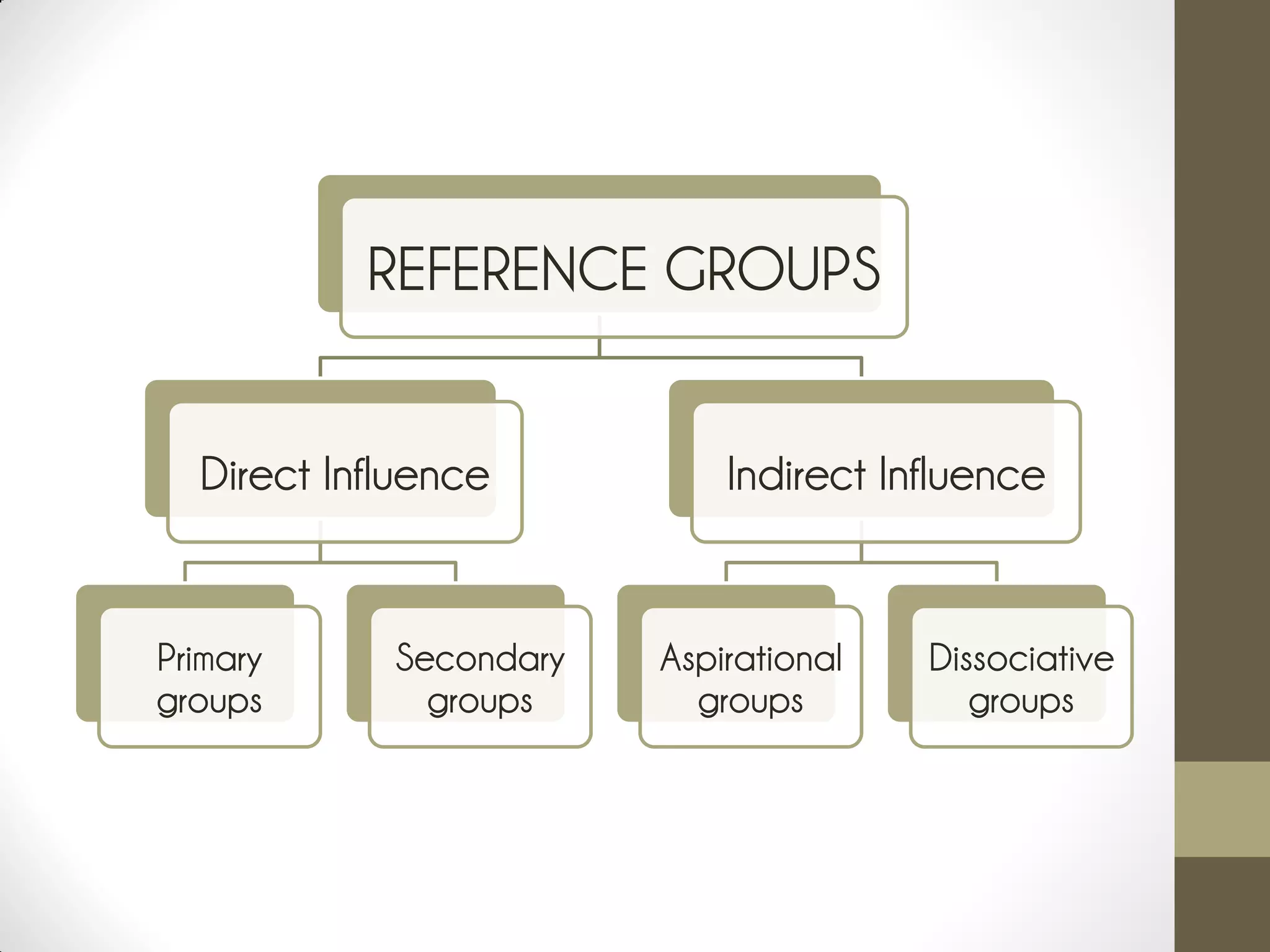
REFERENCE GROUPS
Direct Influence
Primary
groups
Secondary
groups
Indirect Influence
Aspirational
groups
Dissociative
groups
Direct
Influence
Groups to which one belongs informally
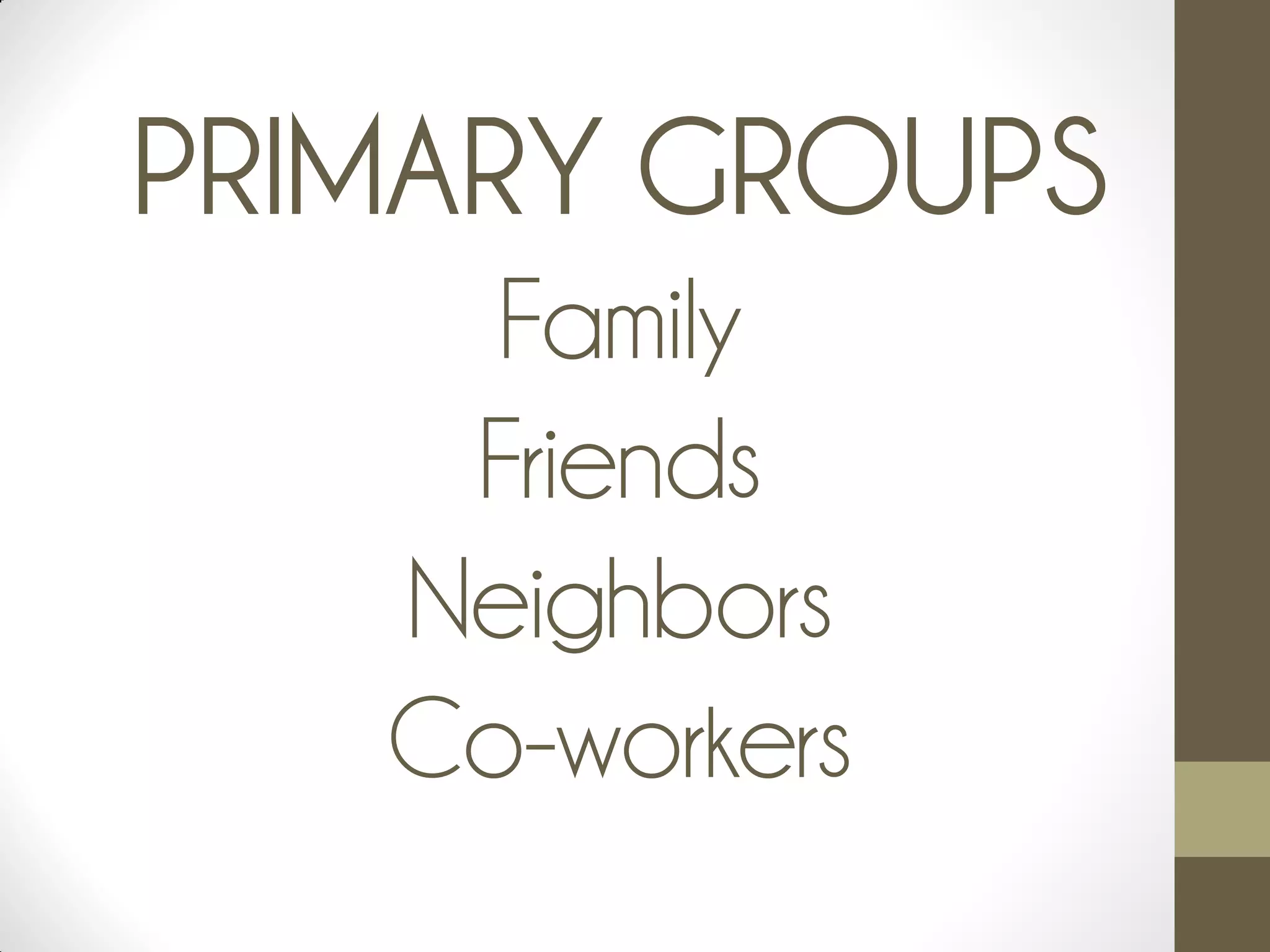
PRIMARY GROUPS
Family
Friends
Neighbors
Co-workers
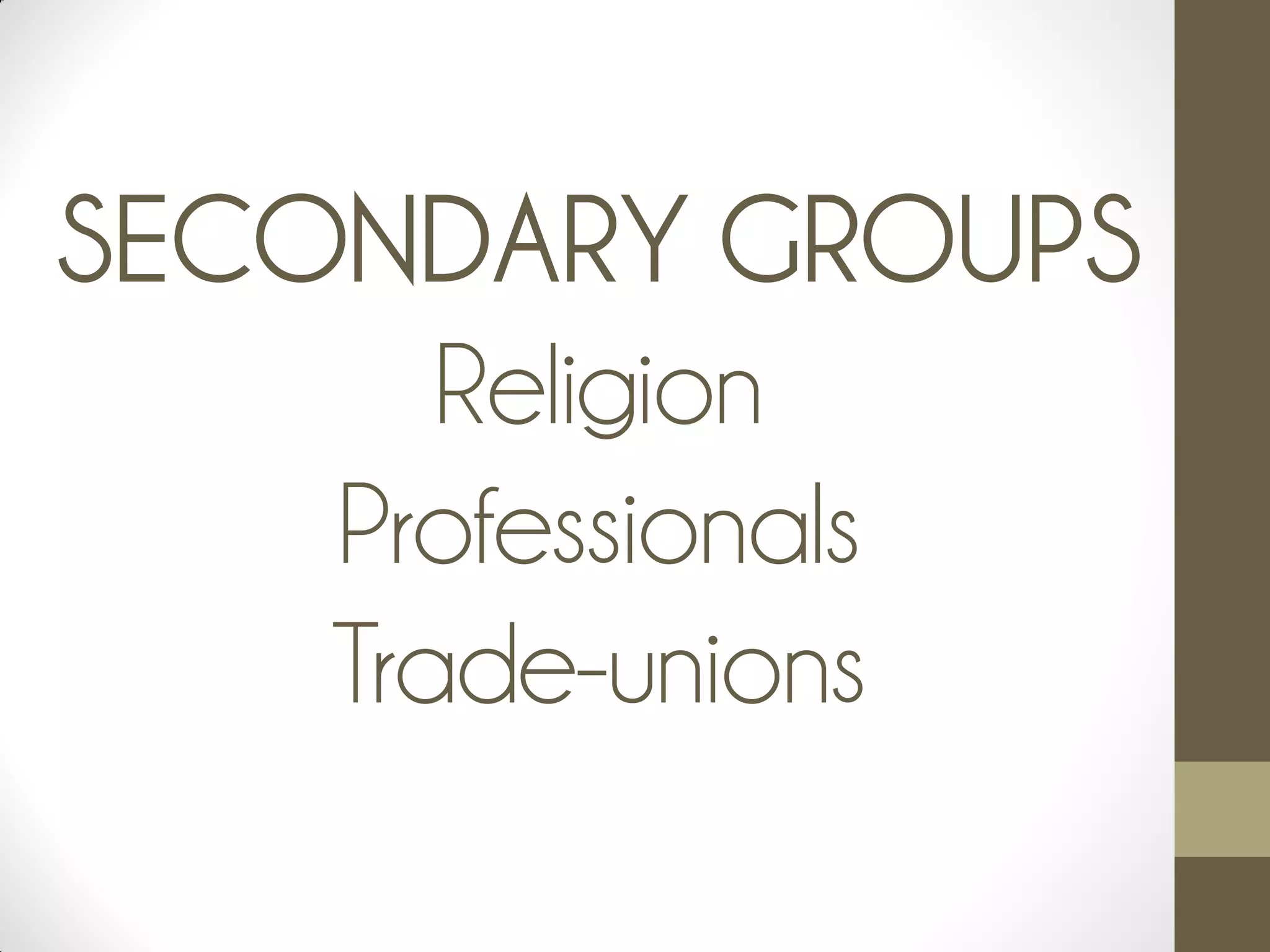
SECONDARY GROUPS
Religion
Professionals
Trade-unions
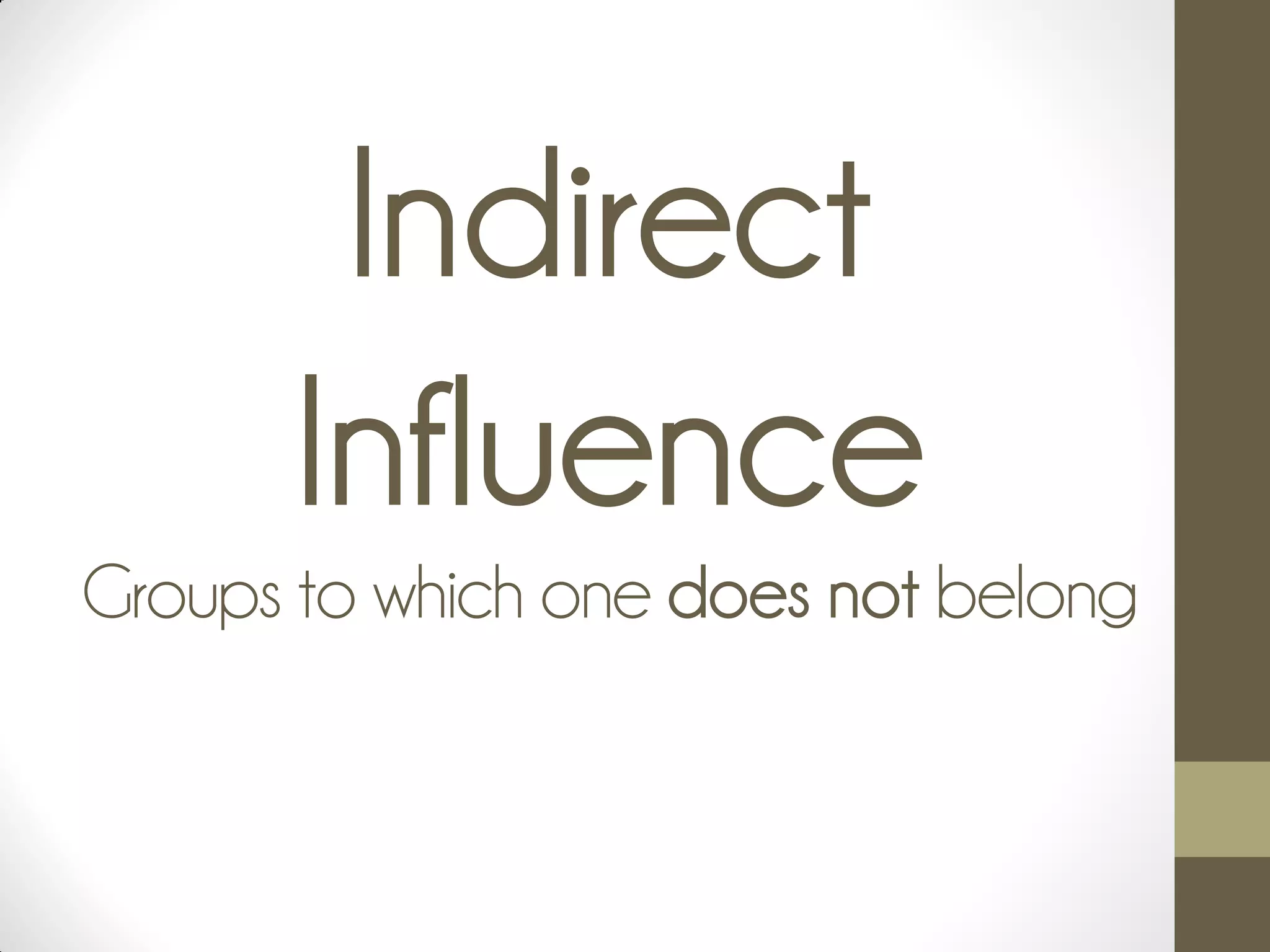
Indirect
Influence
Groups to which one does not belong
ASPIRATIONAL GROUPS
People hopes to join in
near future
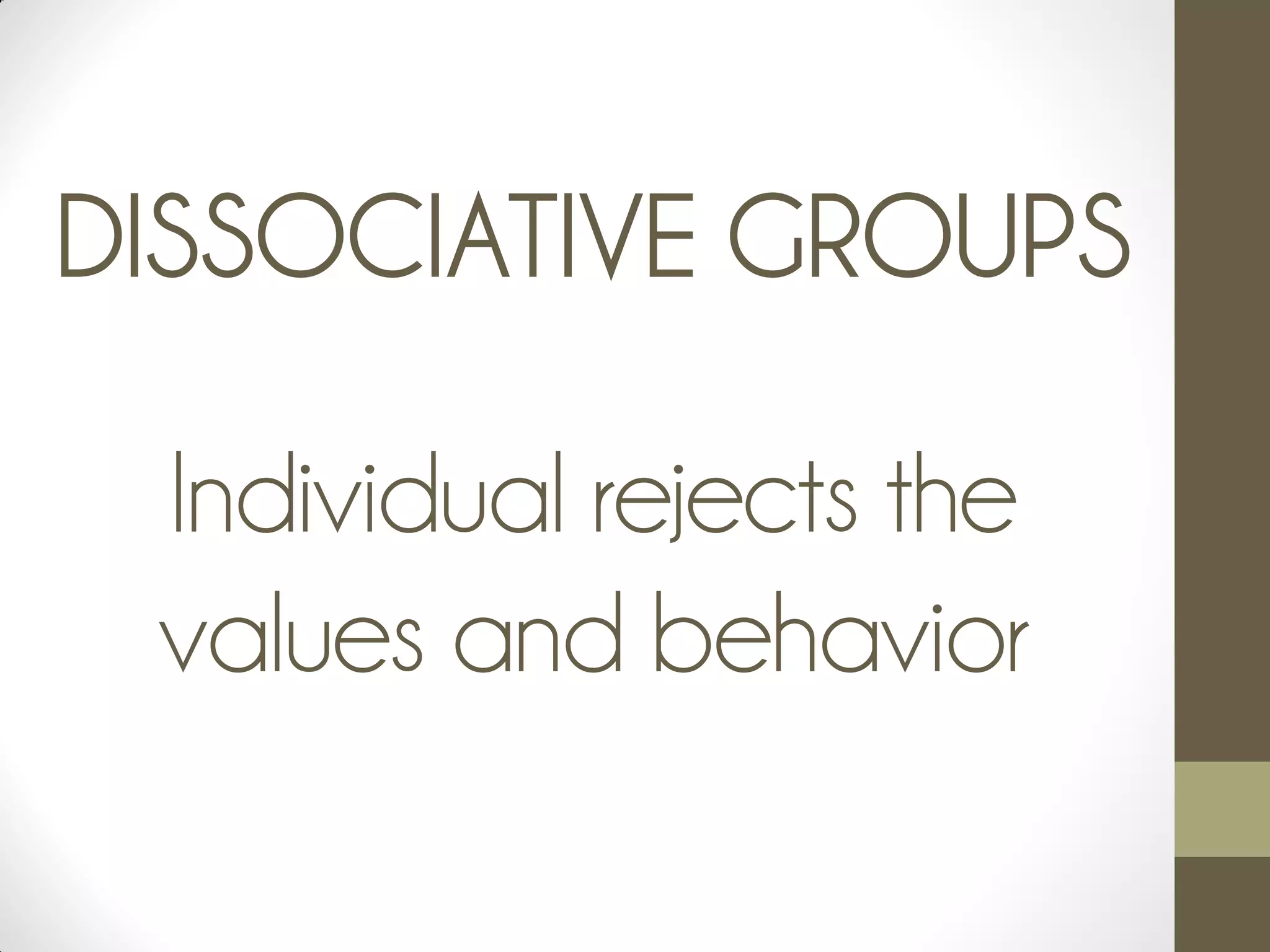
DISSOCIATIVE GROUPS
Individual rejects the
values and behavior
Family
most important consumer
buying organization
Family of Orientation
(parents and siblings)
Orient one’s thinking
towards religion,
politics, economics
and love
Influence is
significant
e.g., most families have auto
insurance as their parents
Family of Procreation
(spouse and children)
Husband-Wife
engagement
have varied by
product category
Wife acts as the
main purchasing
agent for food,
sundries and staple
clothing.
But
Roles are
changing now
Both husband and
wife are involved in
purchases and are
possible targets.
Research have shown that
more than two-thirds of 13-
21 years olds influence family
purchases in electronic
equipment.
Roles and
Status
Role consists of the activities
that are expected to be
performed by an individual
which in turn
connotes
STATUS
People choose product that
reflect and communicate
their role and their actual or
desired status in society.
Marketers must be aware
of status-symbol potential
of products and brands.
PERSONAL
Age & Stage
in Life Cycle
Taste in food, clothes,
furniture and recreation
is often related to age.
Psychological life-cycle
stages may matter.
Behavior changes as
people go through
passages in life and
give rise to new needs.
Therefore, marketers
should also consider
critical life events as
marriage, relocation,
career change,
divorce, etc.
Occupation
and Economic
Circumstances
Identify occupational
groups that have above
average interest in the
products and services
offered by the marketer.
Marketers often tailor
product as per the
needs of a particular
occupational groups.
If economic consideration
indicates to recession,
marketers redesign,
reposition and reprice.
Lifestyle
and
Value
Lifestyle is a person’s
pattern of living in the
world as expressed in
activities, interests and
opinions.
Marketers search for
relationships between their
products and lifestyle
groups.
There are two kind of
orientations that people
have: Money and Time
MONEY-ORIENTED
Create low cost products
and services.
TIME-ORIENTED
Create convenient
products and services
without limiting the cost
factor.
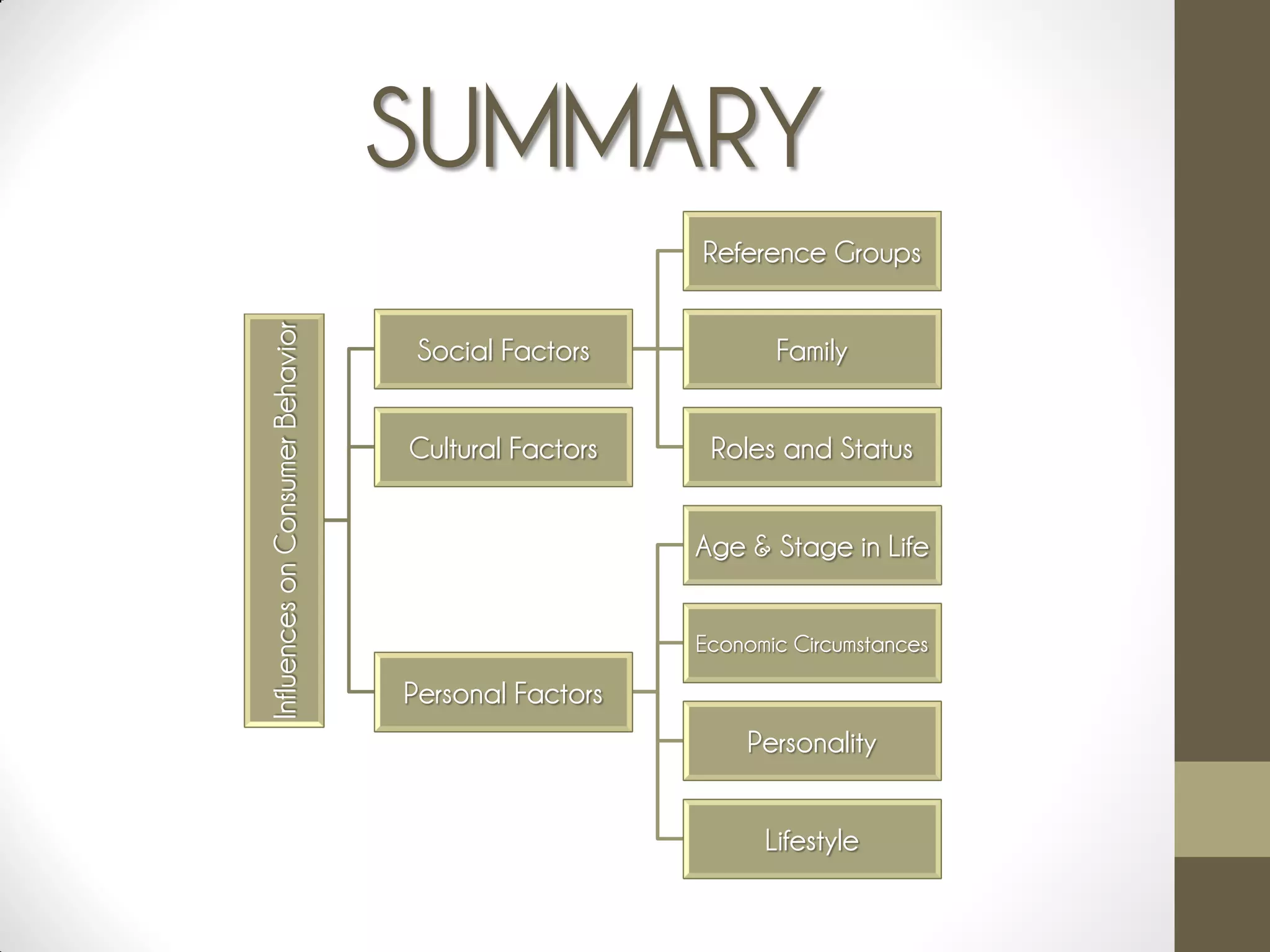
SUMMARY
InfluencesonConsumerBehavior
Social Factors
Reference Groups
Family
Roles and StatusCultural Factors
Personal Factors
Age & Stage in Life
Economic Circumstances
Personality
Lifestyle
THANK YOU

Influence of consumer characteristics on buying behavior