Fistula-in-ano:
                  a probing of the treatment options
                                     David Jayne
                                     Professor of Surgery
                  University of Leeds & Leeds Teaching Hospitals NHS Trust


John Goligher
Colorectal Unit
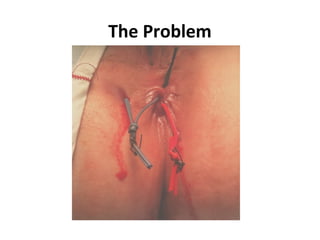
The Problem
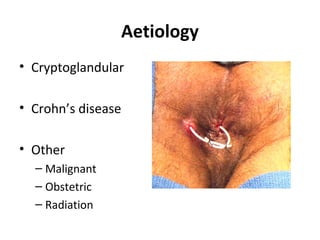
Aetiology
• Cryptoglandular

• Crohn’s disease

• Other
  – Malignant
  – Obstetric
  – Radiation
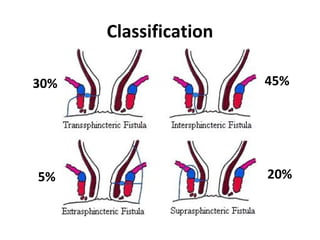
Classification

30%                    45%


5%                     20%
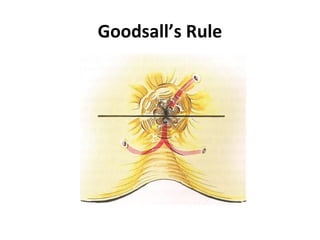
Goodsall’s Rule
Treatment Aims
• Eradicate disease (if possible)

• Preservation of continence


• Benign condition
• Quality of life
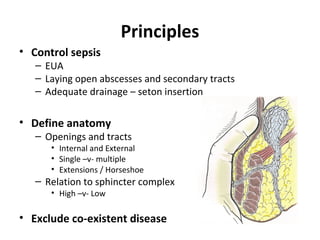
Principles
• Control sepsis
   – EUA
   – Laying open abscesses and secondary tracts
   – Adequate drainage – seton insertion

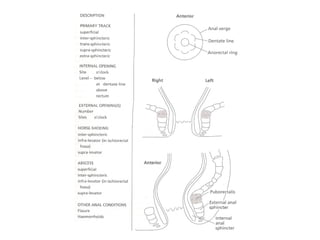
• Define anatomy
   – Openings and tracts
      • Internal and External
      • Single –v- multiple
      • Extensions / Horseshoe
   – Relation to sphincter complex
      • High –v- Low

• Exclude co-existent disease
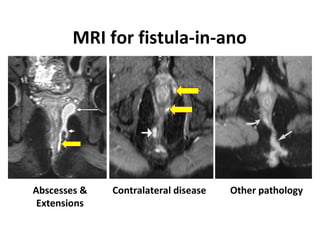
MRI for fistula-in-ano


Abscesses &   Contralateral disease     Other pathology
                                   HALLIGAN Radiology 2006
 Extensions
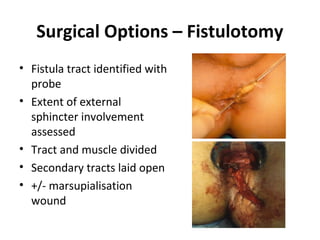
Surgical Options – Fistulotomy
• Fistula tract identified with
  probe
• Extent of external
  sphincter involvement
  assessed
• Tract and muscle divided
• Secondary tracts laid open
• +/- marsupialisation
  wound
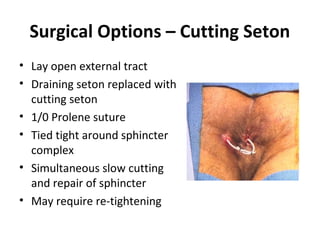
Surgical Options – Cutting Seton
• Lay open external tract
• Draining seton replaced with
  cutting seton
• 1/0 Prolene suture
• Tied tight around sphincter
  complex
• Simultaneous slow cutting
  and repair of sphincter
• May require re-tightening
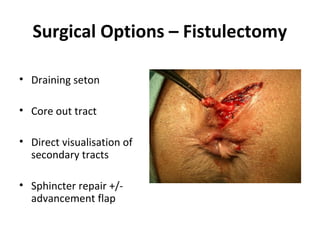
Surgical Options – Fistulectomy

• Draining seton

• Core out tract

• Direct visualisation of
  secondary tracts

• Sphincter repair +/-
  advancement flap
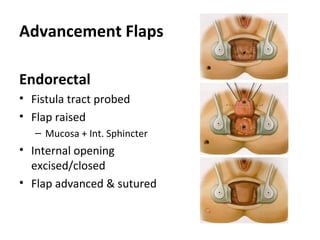
Advancement Flaps

Endorectal
• Fistula tract probed
• Flap raised
   – Mucosa + Int. Sphincter
• Internal opening
  excised/closed
• Flap advanced & sutured
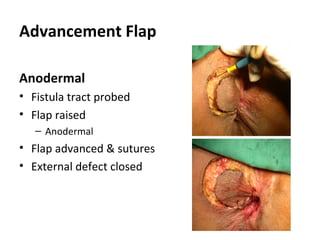
Advancement Flap

Anodermal
• Fistula tract probed
• Flap raised
   – Anodermal
• Flap advanced & sutures
• External defect closed
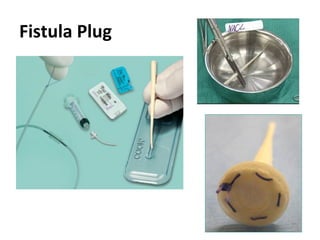
Fistula Plug
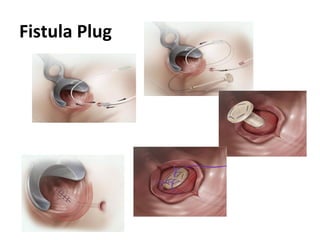
Fistula Plug
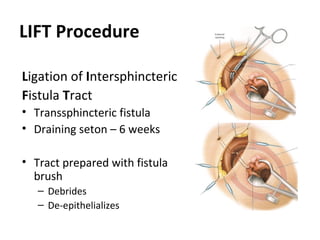
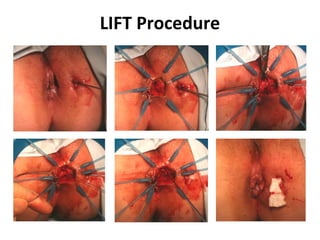
LIFT Procedure

Ligation of Intersphincteric
Fistula Tract
• Transsphincteric fistula
• Draining seton – 6 weeks

• Tract prepared with fistula
  brush
   – Debrides
   – De-epithelializes
LIFT Procedure
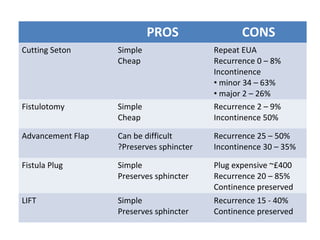
PROS                 CONS
Cutting Seton      Simple                 Repeat EUA
                   Cheap                  Recurrence 0 – 8%
                                          Incontinence
                                          • minor 34 – 63%
                                          • major 2 – 26%
Fistulotomy        Simple                 Recurrence 2 – 9%
                   Cheap                  Incontinence 50%

Advancement Flap   Can be difficult       Recurrence 25 – 50%
                   ?Preserves sphincter   Incontinence 30 – 35%

Fistula Plug       Simple                 Plug expensive ~£400
                   Preserves sphincter    Recurrence 20 – 85%
                                          Continence preserved
LIFT               Simple                 Recurrence 15 - 40%
                   Preserves sphincter    Continence preserved
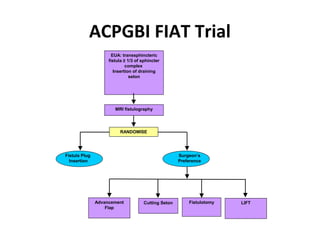
ACPGBI FIAT Trial
                      EUA: transsphincteric
                    fistula ≥ 1/3 of sphincter
                             complex
                       Insertion of draining
                               seton


                       MRI fistulography


                         RANDOMISE


Fistula Plug                                         Surgeon’s
  Insertion                                          Preference


               Advancement           Cutting Seton       Fistulotomy   LIFT
                   Flap
ACPGB&I FIAT
              Patient identification
              EUA & draining seton
                                                                     Primary end-points
                 Eligibility & Consent                               • Faecal incontinence QoL
                     MRI scan
                                                                     • Generic QoL

                 Randomisation
          1:1 plug –v- surgeon’s preference                          Secondary end-points
                      Surgery
                                                                     • Healing – 12 months
           (6-weeks post seton insertion)                            • Complications
                                    Surgeon’s preference             • Faecal incontinence
Surgisis® fistula plug      (fistulotomy, seton, advancement flap,
                                              LIFT)
                                                                     • Re-interventions
                                                                     • Health resource
                     6-week FU                                         utilisation
                     6-monthFU                                       • Cost effectiveness
                    12-month FU
                     + MRI scan
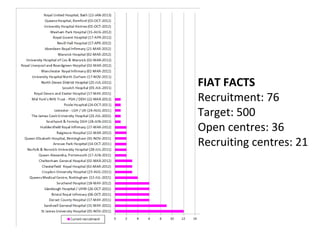
FIAT FACTS
Recruitment: 76
Target: 500
Open centres: 36
Recruiting centres: 21
Join the FIAT Trial!
Fistula-in-ano:
                  a probing of the treatment options
                                     David Jayne
                                     Professor of Surgery
                  University of Leeds & Leeds Teaching Hospitals NHS Trust


John Goligher
Colorectal Unit

Fistula in-ano

  • 1.
    Fistula-in-ano: a probing of the treatment options David Jayne Professor of Surgery University of Leeds & Leeds Teaching Hospitals NHS Trust John Goligher Colorectal Unit
  • 2.
  • 3.
    Aetiology • Cryptoglandular • Crohn’sdisease • Other – Malignant – Obstetric – Radiation
  • 4.
  • 6.
  • 7.
    Treatment Aims • Eradicatedisease (if possible) • Preservation of continence • Benign condition • Quality of life
  • 8.
    Principles • Control sepsis – EUA – Laying open abscesses and secondary tracts – Adequate drainage – seton insertion • Define anatomy – Openings and tracts • Internal and External • Single –v- multiple • Extensions / Horseshoe – Relation to sphincter complex • High –v- Low • Exclude co-existent disease
  • 9.
    MRI for fistula-in-ano Abscesses& Contralateral disease Other pathology HALLIGAN Radiology 2006 Extensions
  • 10.
    Surgical Options –Fistulotomy • Fistula tract identified with probe • Extent of external sphincter involvement assessed • Tract and muscle divided • Secondary tracts laid open • +/- marsupialisation wound
  • 11.
    Surgical Options –Cutting Seton • Lay open external tract • Draining seton replaced with cutting seton • 1/0 Prolene suture • Tied tight around sphincter complex • Simultaneous slow cutting and repair of sphincter • May require re-tightening
  • 12.
    Surgical Options –Fistulectomy • Draining seton • Core out tract • Direct visualisation of secondary tracts • Sphincter repair +/- advancement flap
  • 13.
    Advancement Flaps Endorectal • Fistulatract probed • Flap raised – Mucosa + Int. Sphincter • Internal opening excised/closed • Flap advanced & sutured
  • 14.
    Advancement Flap Anodermal • Fistulatract probed • Flap raised – Anodermal • Flap advanced & sutures • External defect closed
  • 15.
  • 16.
  • 17.
    LIFT Procedure Ligation ofIntersphincteric Fistula Tract • Transsphincteric fistula • Draining seton – 6 weeks • Tract prepared with fistula brush – Debrides – De-epithelializes
  • 18.
  • 19.
    PROS CONS Cutting Seton Simple Repeat EUA Cheap Recurrence 0 – 8% Incontinence • minor 34 – 63% • major 2 – 26% Fistulotomy Simple Recurrence 2 – 9% Cheap Incontinence 50% Advancement Flap Can be difficult Recurrence 25 – 50% ?Preserves sphincter Incontinence 30 – 35% Fistula Plug Simple Plug expensive ~£400 Preserves sphincter Recurrence 20 – 85% Continence preserved LIFT Simple Recurrence 15 - 40% Preserves sphincter Continence preserved
  • 20.
    ACPGBI FIAT Trial EUA: transsphincteric fistula ≥ 1/3 of sphincter complex Insertion of draining seton MRI fistulography RANDOMISE Fistula Plug Surgeon’s Insertion Preference Advancement Cutting Seton Fistulotomy LIFT Flap
  • 21.
    ACPGB&I FIAT Patient identification EUA & draining seton Primary end-points Eligibility & Consent • Faecal incontinence QoL MRI scan • Generic QoL Randomisation 1:1 plug –v- surgeon’s preference Secondary end-points Surgery • Healing – 12 months (6-weeks post seton insertion) • Complications Surgeon’s preference • Faecal incontinence Surgisis® fistula plug (fistulotomy, seton, advancement flap, LIFT) • Re-interventions • Health resource 6-week FU utilisation 6-monthFU • Cost effectiveness 12-month FU + MRI scan
  • 22.
    FIAT FACTS Recruitment: 76 Target:500 Open centres: 36 Recruiting centres: 21
  • 23.
  • 24.
    Fistula-in-ano: a probing of the treatment options David Jayne Professor of Surgery University of Leeds & Leeds Teaching Hospitals NHS Trust John Goligher Colorectal Unit