FORMS OF PUBLIC ENTERPRISES
PRESENTED BY
S.ATSHAYA
DEFINITION:
 Public enterprises is an enterprises ,which is established ,owned and
financed with the tax payers money by the government;
 With the motive of not at all making profit.
 But rendering essential commodities/ services to the consumers i.e.,
public.
 In recent years , the central and state governments in India have
established many public enterprises ,hence public enterprises are
expected to play a much greater role in the coming years.
DEPARTMENTAL UNDERTAKING:
 Is a public enterprise ,which runs as part of govt department ,and under
the direction of minister concerned .
 This is the oldest and traditional form of running any activity by the
government and is freely extended to the state or central enterprises.
FEATURES:
 Formation
 The are under the direct control of minister.
 Appointments.
 Management
 Audit
 Finance
 Administrative autonomy
 Accountability
MERITS:
 Ease of formation
 Effective control
 Source of revenue for govt
 Proper utilisation of fund .
 Decrease in tax burden of public
 Accountability
 DEMERITS
 Rigidity
 Red Tapism
 Delay in decision making
 Lot of political interference.
 Insensitive to consumer needs.
 Unable to take advantage of opportunities.
PUBLIC CORPORATION:
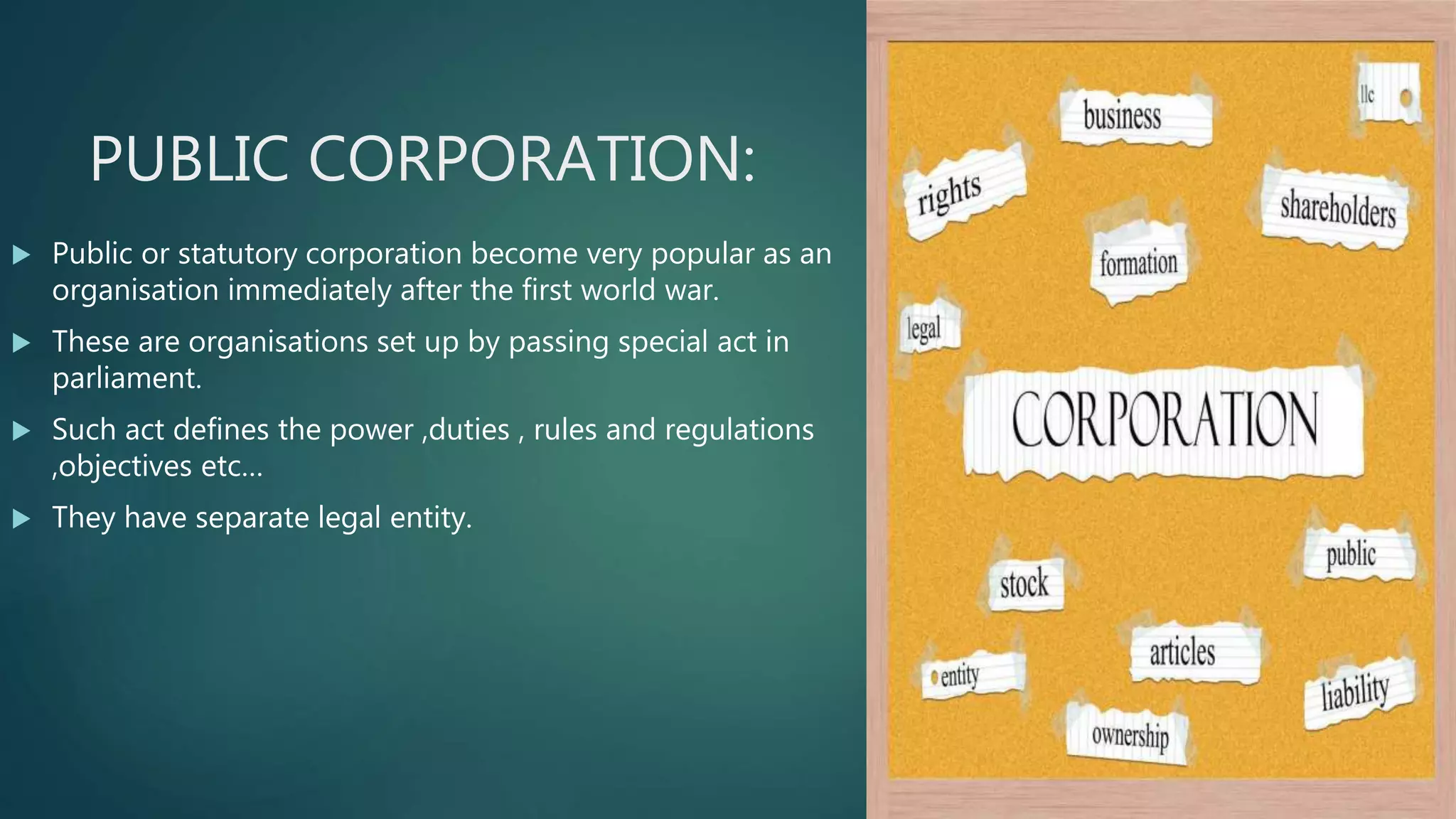
 Public or statutory corporation become very popular as an
organisation immediately after the first world war.
 These are organisations set up by passing special act in
parliament.
 Such act defines the power ,duties , rules and regulations
,objectives etc…
 They have separate legal entity.
Features:
 Owned and controlled by government.
 Losses may occur at any time.
 Body corporation.
 Freedom and budget control.
 No interference.
 Appointment of employees
 Audit
 Financing ,either by state or central government.
MERITS:
 Financial autonomy
 Autonomous organisation
 Social service motive
 Protection of public interest
 DEMERITS:
 Political interferences.
GOVERNMENT COMPANY:
 The companies act of 1956 defines a government company in which not less
than 51 percent of the share capita; is held by any state or central government or
party by central governments and partly by one or more state governments.
 The capital of government company may be either subscribed entirely by the
government or partly by the government and partly by the public.
 Such company is called mixed ownership corporation.
FEATURES:
 Ownership –min 51% share owned by state or central government.
 Management –by board of directors
 Employees – as per rules and regulations.
 Audit-by auditor appointed by central government.
 Annual report –presented to parliament.
MERITS:
 Easy of formation
 Separate legal entity.
 Autonomy in operations.
 Control unhealthy competitions
 Easy financing.
 Benefits of private participation
 DEMERITS:
 Parliament interference.
 Lack of continuity in policy.
fisheries legislation

fisheries legislation

  • 1.
    FORMS OF PUBLICENTERPRISES PRESENTED BY S.ATSHAYA
  • 2.
    DEFINITION:  Public enterprisesis an enterprises ,which is established ,owned and financed with the tax payers money by the government;  With the motive of not at all making profit.  But rendering essential commodities/ services to the consumers i.e., public.  In recent years , the central and state governments in India have established many public enterprises ,hence public enterprises are expected to play a much greater role in the coming years.
  • 5.
    DEPARTMENTAL UNDERTAKING:  Isa public enterprise ,which runs as part of govt department ,and under the direction of minister concerned .  This is the oldest and traditional form of running any activity by the government and is freely extended to the state or central enterprises.
  • 7.
    FEATURES:  Formation  Theare under the direct control of minister.  Appointments.  Management  Audit  Finance  Administrative autonomy  Accountability
  • 8.
    MERITS:  Ease offormation  Effective control  Source of revenue for govt  Proper utilisation of fund .  Decrease in tax burden of public  Accountability  DEMERITS  Rigidity  Red Tapism  Delay in decision making  Lot of political interference.  Insensitive to consumer needs.  Unable to take advantage of opportunities.
  • 9.
    PUBLIC CORPORATION:  Publicor statutory corporation become very popular as an organisation immediately after the first world war.  These are organisations set up by passing special act in parliament.  Such act defines the power ,duties , rules and regulations ,objectives etc…  They have separate legal entity.
  • 10.
    Features:  Owned andcontrolled by government.  Losses may occur at any time.  Body corporation.  Freedom and budget control.  No interference.  Appointment of employees  Audit  Financing ,either by state or central government.
  • 11.
    MERITS:  Financial autonomy Autonomous organisation  Social service motive  Protection of public interest  DEMERITS:  Political interferences.
  • 12.
    GOVERNMENT COMPANY:  Thecompanies act of 1956 defines a government company in which not less than 51 percent of the share capita; is held by any state or central government or party by central governments and partly by one or more state governments.  The capital of government company may be either subscribed entirely by the government or partly by the government and partly by the public.  Such company is called mixed ownership corporation.
  • 13.
    FEATURES:  Ownership –min51% share owned by state or central government.  Management –by board of directors  Employees – as per rules and regulations.  Audit-by auditor appointed by central government.  Annual report –presented to parliament.
  • 14.
    MERITS:  Easy offormation  Separate legal entity.  Autonomy in operations.  Control unhealthy competitions  Easy financing.  Benefits of private participation  DEMERITS:  Parliament interference.  Lack of continuity in policy.