 Fish Production
refers to the output
of fish by humans
both from capture
fisheries and
aquaculture.
Fisheries-a place where fish are
reared for commercial
purposes.
A fishing ground or area where
fish are caught.
The occupation or industry of
catching or rearing fish.
 Aquaculture- also known as
aqua farming, is the farming of
aquatic organisms such as fish,
crustaceans, mollusks and
aquatic
plants. Aquaculture involves
cultivating freshwater and
saltwater populations under
controlled conditions, and can
be contrasted with commercial
fishing, which is the harvesting
of wild fish.
Where must the
fishing be done?
Fishing can be
done both in
marine fisheries
and inland
fisheries.
 Marine fisheries – India’s marine fisheries
include 7500 of coast line and the deep seas
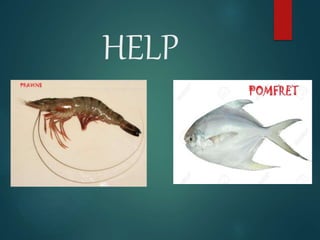
beyond it. Popular marine fish variety’s
include pomfret, mackerel, tuna, sardines and
bombay duck. Yields are increased by
locating large schools of fish in the open sea
using satellites and echo sounders. some
marine of high economic value are also
farmed in sea water this includes finned fishes
like mullets , bhekti, and pearl spots, shellfish
such as prawns, mussels and oyeasters as
well as seaweeds, oysters are also cultivated
for the pearl they make.
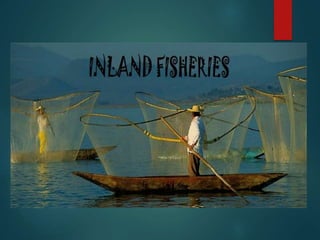
 Inland fisheries-fresh water resources
include canals, ponds, reservoirs and
rivers. Brackish water resources. where
seawater and freshwater mix together,
such as estuaries and lagoons are also
important fish reservoirs. while capture
fishing is also done in such inland water
bodies , where the yield is not that high.
Most fish production in from these
resources is through aquaculture.
 Problem with such composite fish culture is
that many of this fish breed only during
monsoon. Even if fish seed is collected
from the wild , it can be mixed up with that of
other species as well. So a major problem in
fish farming is the lack of availability of good
quality of seed. To overcome this problem,
ways have now been worked out to breed
these fish I ponds using hormonal
stimulation. This has ensured the supply of
pure fish seed in desired quantities.
HELP
HELP
HELP
HELP
HELP
HELP
Fish production

Fish production

  • 4.
     Fish Production refersto the output of fish by humans both from capture fisheries and aquaculture.
  • 6.
    Fisheries-a place wherefish are reared for commercial purposes. A fishing ground or area where fish are caught. The occupation or industry of catching or rearing fish.
  • 9.
     Aquaculture- alsoknown as aqua farming, is the farming of aquatic organisms such as fish, crustaceans, mollusks and aquatic plants. Aquaculture involves cultivating freshwater and saltwater populations under controlled conditions, and can be contrasted with commercial fishing, which is the harvesting of wild fish.
  • 11.
  • 12.
    Fishing can be doneboth in marine fisheries and inland fisheries.
  • 14.
     Marine fisheries– India’s marine fisheries include 7500 of coast line and the deep seas beyond it. Popular marine fish variety’s include pomfret, mackerel, tuna, sardines and bombay duck. Yields are increased by locating large schools of fish in the open sea using satellites and echo sounders. some marine of high economic value are also farmed in sea water this includes finned fishes like mullets , bhekti, and pearl spots, shellfish such as prawns, mussels and oyeasters as well as seaweeds, oysters are also cultivated for the pearl they make.
  • 16.
     Inland fisheries-freshwater resources include canals, ponds, reservoirs and rivers. Brackish water resources. where seawater and freshwater mix together, such as estuaries and lagoons are also important fish reservoirs. while capture fishing is also done in such inland water bodies , where the yield is not that high. Most fish production in from these resources is through aquaculture.
  • 19.
     Problem withsuch composite fish culture is that many of this fish breed only during monsoon. Even if fish seed is collected from the wild , it can be mixed up with that of other species as well. So a major problem in fish farming is the lack of availability of good quality of seed. To overcome this problem, ways have now been worked out to breed these fish I ponds using hormonal stimulation. This has ensured the supply of pure fish seed in desired quantities.
  • 20.
  • 21.
  • 22.
  • 23.
  • 24.
  • 25.